
Yuanverse Living Paradigms: A Contemporary Interpretation of Nomadic Heritage in Inner Mongolia
Cylindrical towers reinterpret Mongolian yurt heritage through contemporary co-living design, creating visual poetry across Inner Mongolia's dramatic grassland landscape.


Introduction: Where Tradition Meets Innovation on the Grasslands
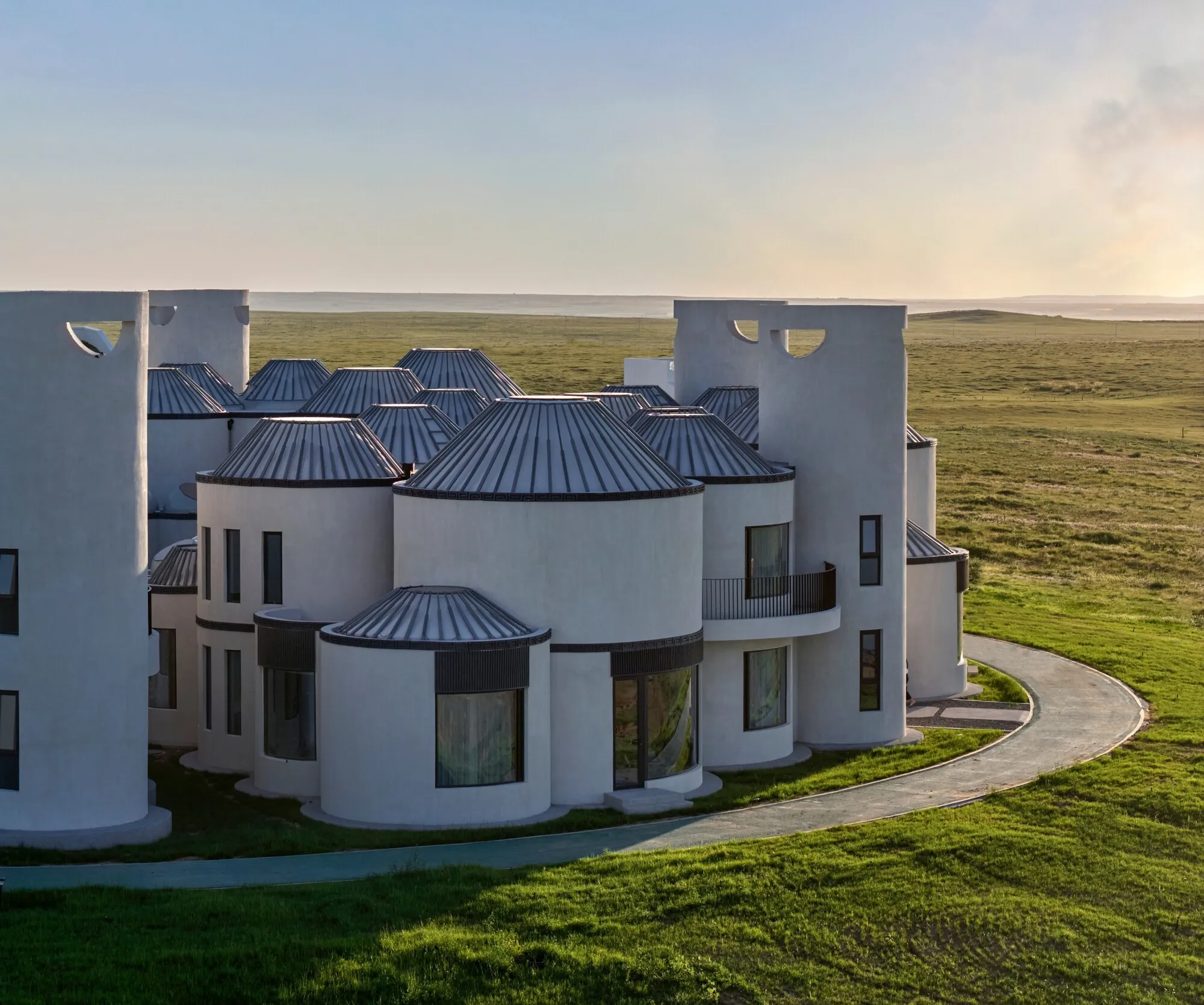
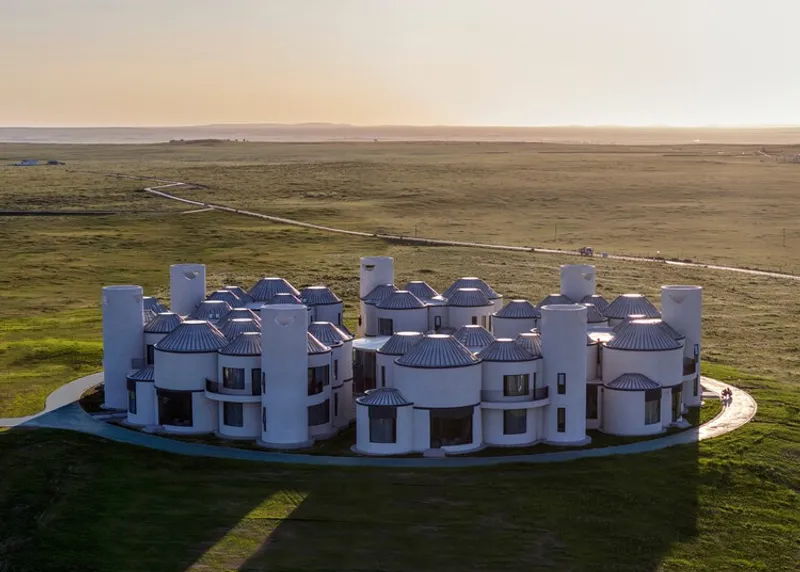
Rising from the expansive grasslands of Ordos, Inner Mongolia, the Yuanverse Living Paradigms project represents a bold architectural experiment in co-living design. Completed in 2025 by AOMOMO Studio in collaboration with Shanghai Jiao Tong University, this 3,349-square-meter complex reimagines traditional Mongolian yurt architecture through contemporary materials, construction techniques, and spatial configurations. The result is a striking ensemble of cylindrical structures that function simultaneously as living spaces, viewing platforms, and contemplative environments—creating a new paradigm for residential design in China's northern grasslands.
The project's name itself—"Yuanverse Living Paradigms"—suggests an ambitious vision. "Yuan" evokes both the circular forms that define the architecture and the Chinese concept of interconnected destiny, while "verse" implies multiple interpretations or dimensions of living. This is not merely housing; it is an exploration of how contemporary life can maintain dialogue with ancestral patterns of dwelling while embracing modern comfort and aesthetic expression.
Conceptual Foundation: The Yurt Reimagined
The traditional Mongolian yurt—known locally as a ger—has served as the primary dwelling type for nomadic populations across the Central Asian steppes for millennia. Its circular form, central smoke opening, wooden lattice structure, and felt covering represent an elegant solution to the demands of mobile pastoral life: easily assembled and disassembled, highly stable against wind, efficiently heated, and adaptable to various climatic conditions.
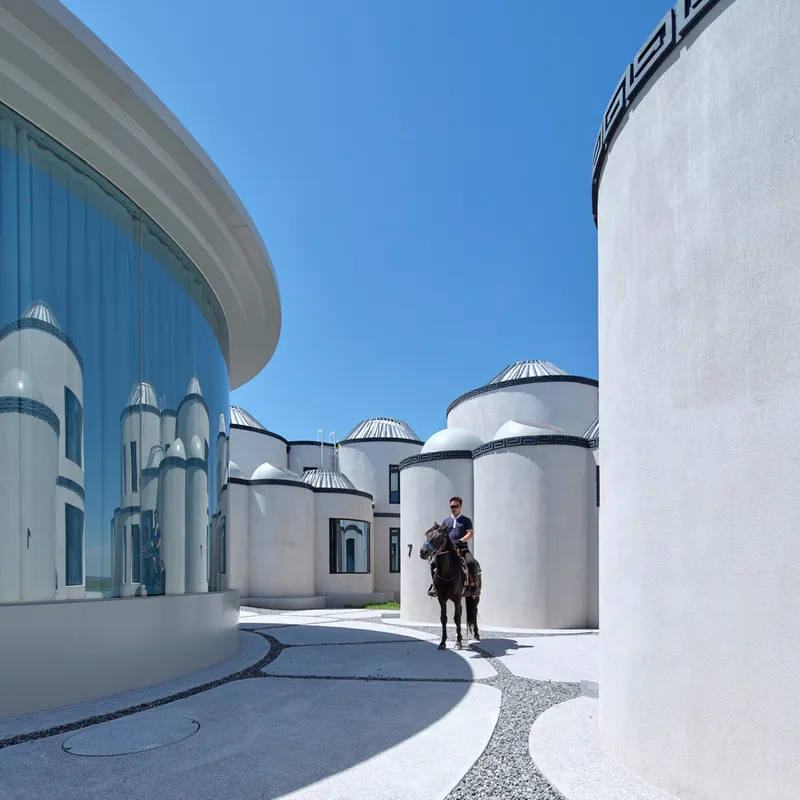
AOMOMO Studio's design doesn't attempt to recreate yurts literally but rather extracts their essential architectural DNA—circularity, centralized structure, vertical openings, and relationship to landscape—and translates these elements into permanent architecture. The project maintains the yurt's fundamental geometry while expanding its programmatic possibilities and material expression. Where traditional yurts were uniform structures serving multiple functions within a single space, the Yuanverse Living Paradigms disperses functions across multiple circular volumes, creating a constellation of specialized spaces that maintain visual and conceptual unity.
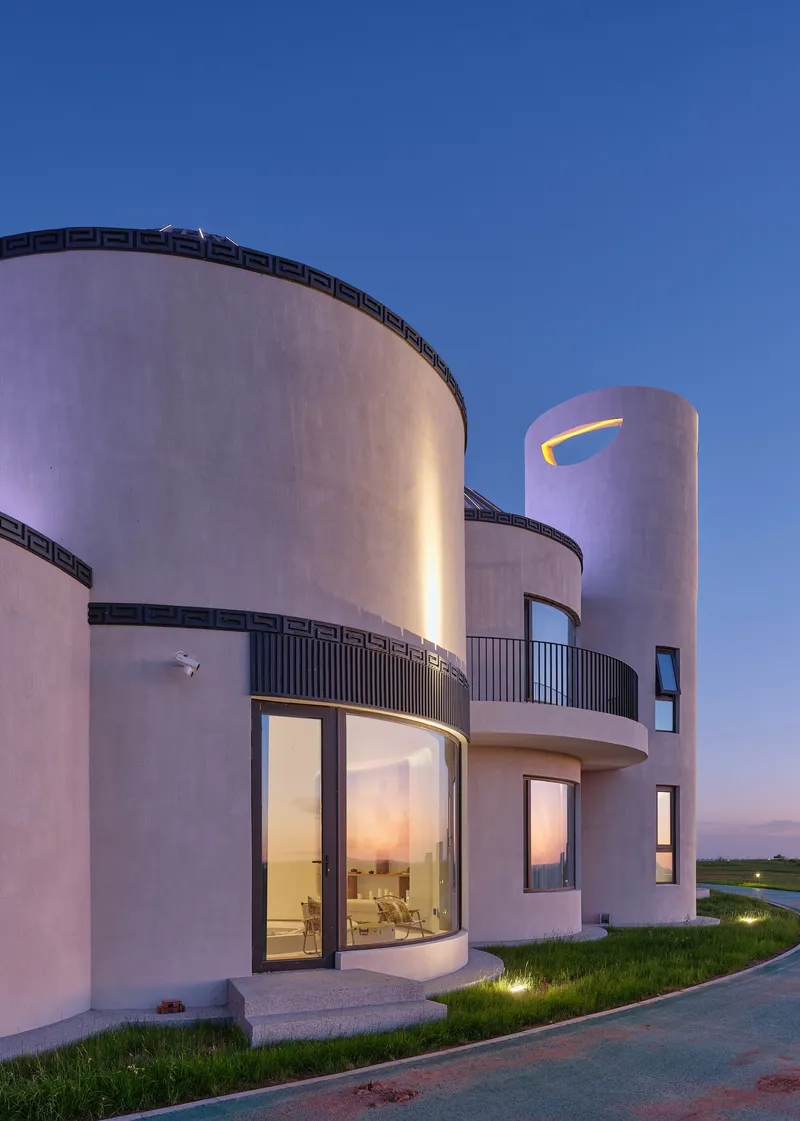
This approach represents what might be called "architectural translation" rather than "architectural replication." The design team has identified the principles that make yurt architecture meaningful—its relationship to the circular horizon, its central orientation, its integration with natural ventilation and lighting—and has reinterpreted these principles through contemporary construction methods and lifestyle requirements.
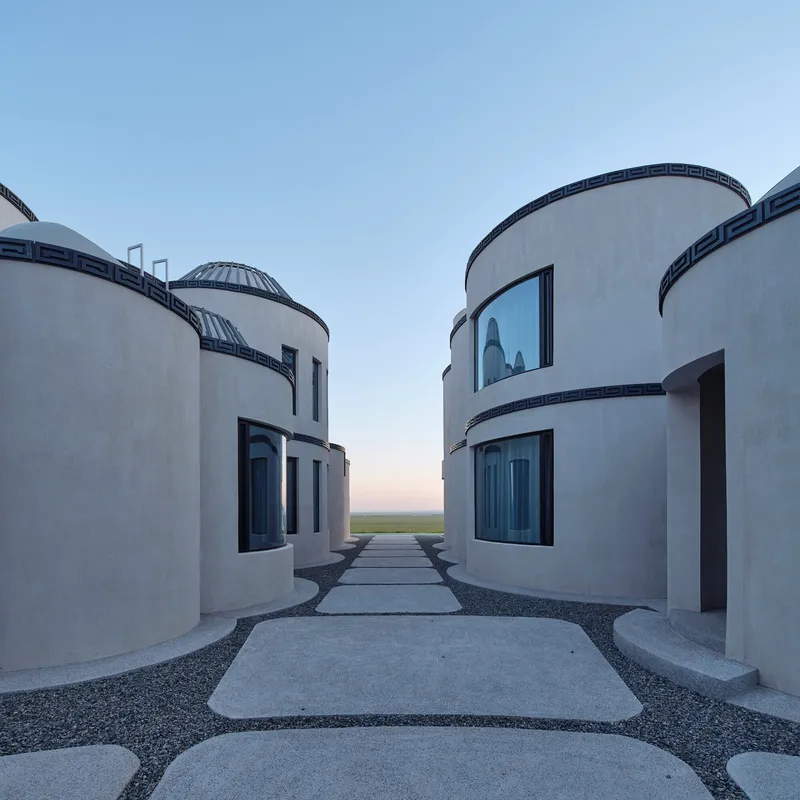
Architectural Language: Cylinders, Curves, and Cantilevers
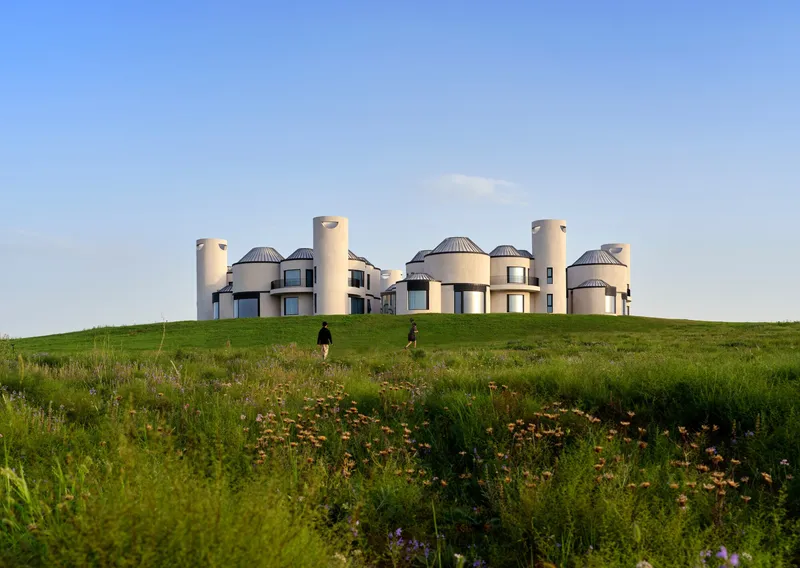
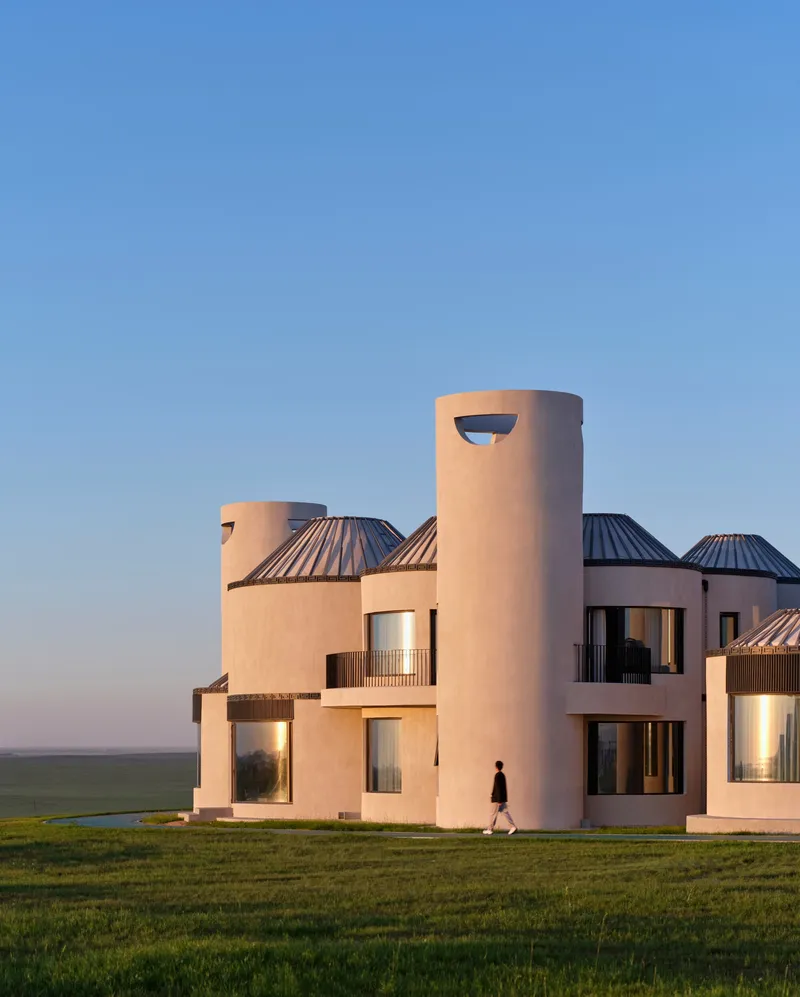
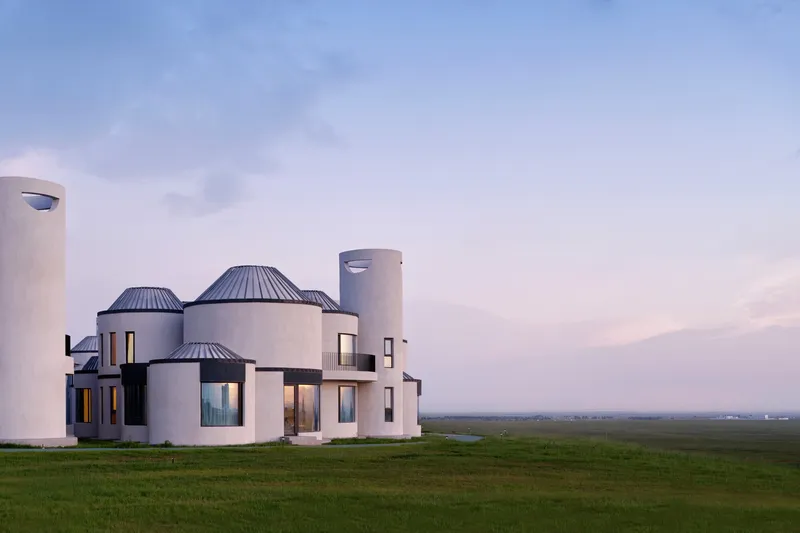
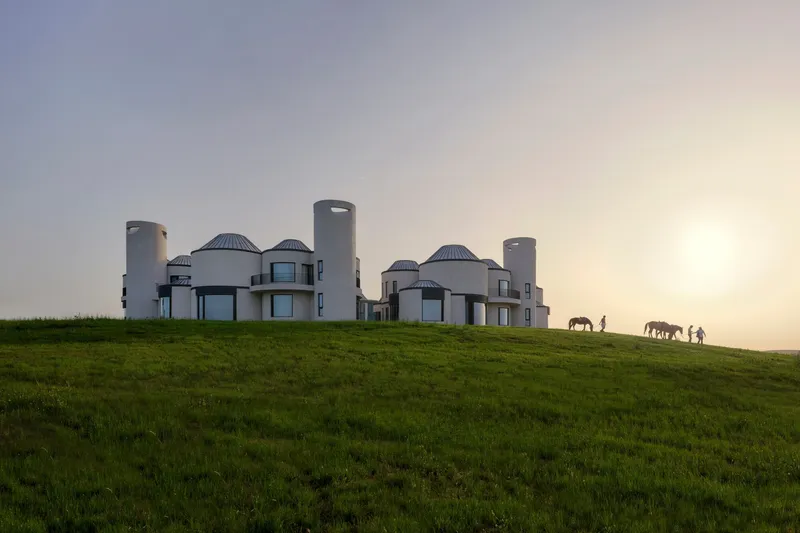
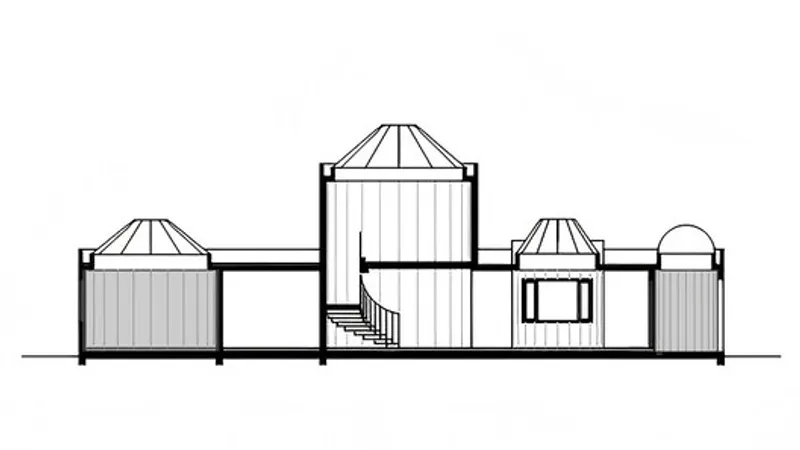
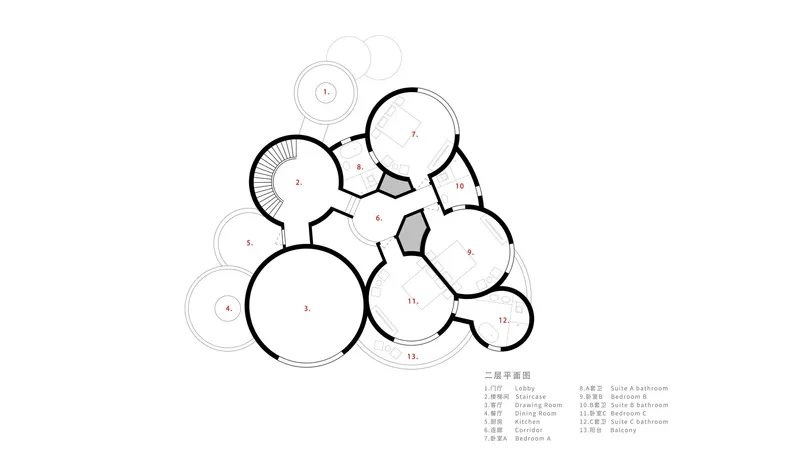
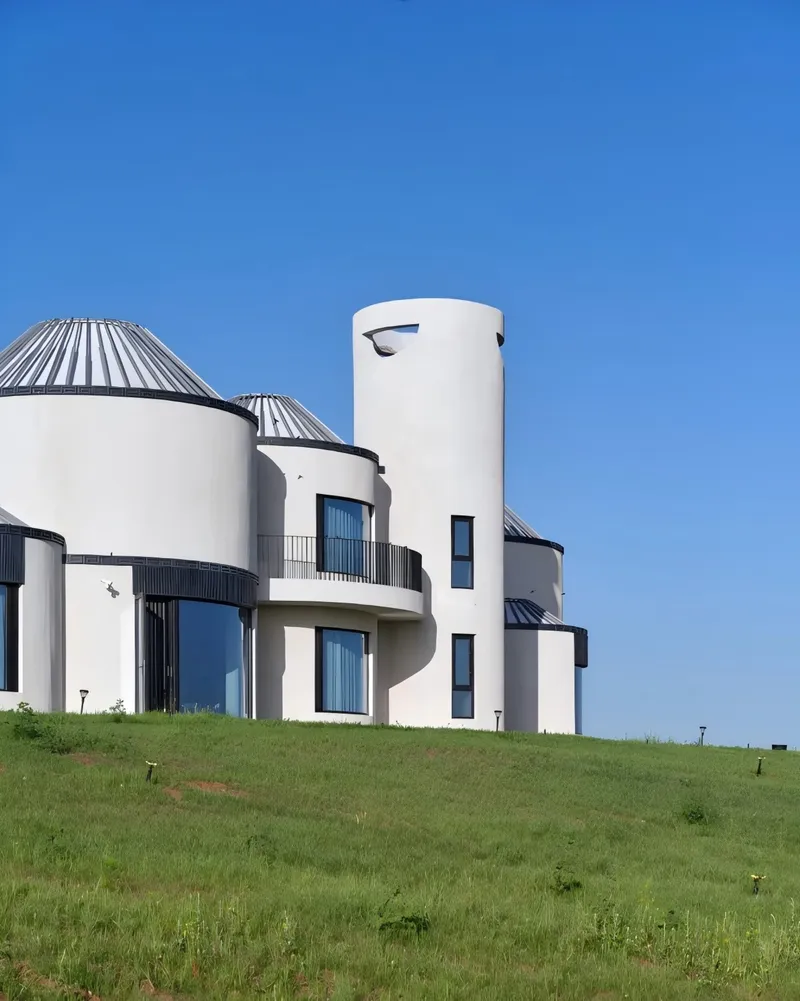
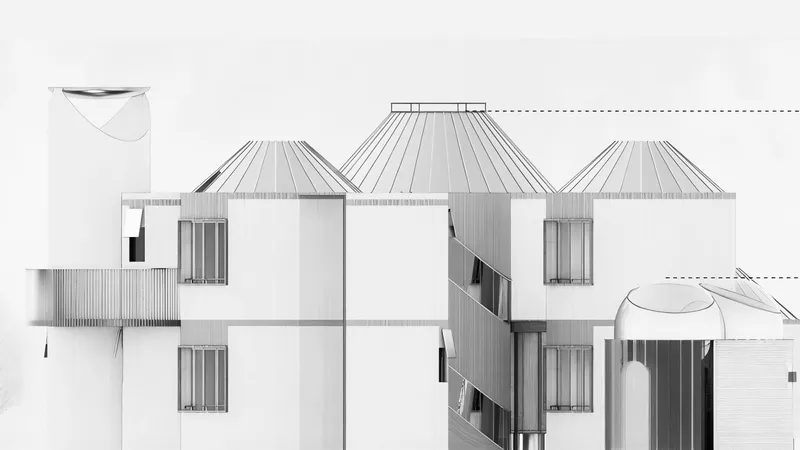
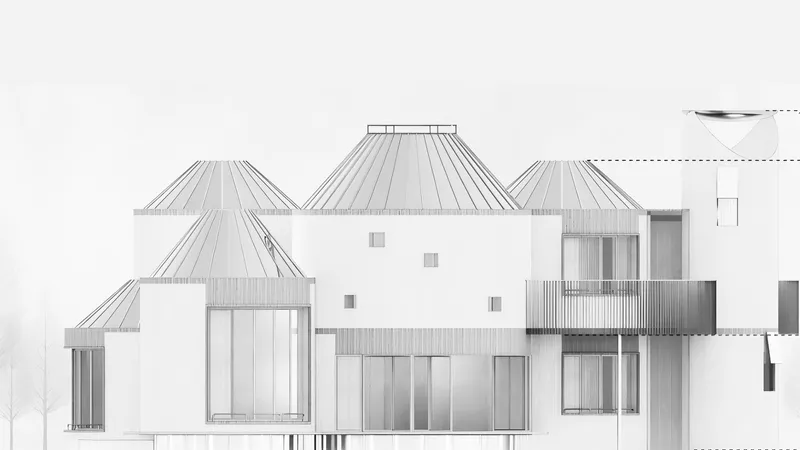
The most immediately striking aspect of the Yuanverse Living Paradigms is its bold formal composition. A cluster of cylindrical structures of varying heights creates a dynamic skyline that recalls both ancient settlements and futuristic visions. Each cylinder serves a specific function—living rooms, tea rooms, bedrooms, observation towers—yet all share a common geometric language that unifies the complex.
Cylindrical Volumes as Spatial Units
The decision to use cylinders as the basic building blocks offers multiple advantages. Circular plans maximize interior space while minimizing exterior surface area, improving thermal efficiency in Inner Mongolia's extreme climate. The absence of corners creates fluid interior spaces where movement feels natural and unobstructed. Psychologically, circular spaces feel embracing and communal, supporting the project's co-living function.
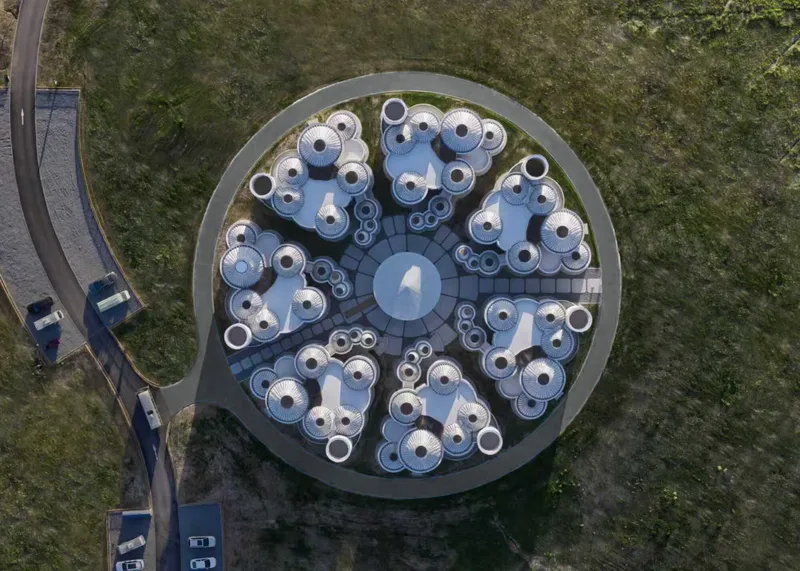
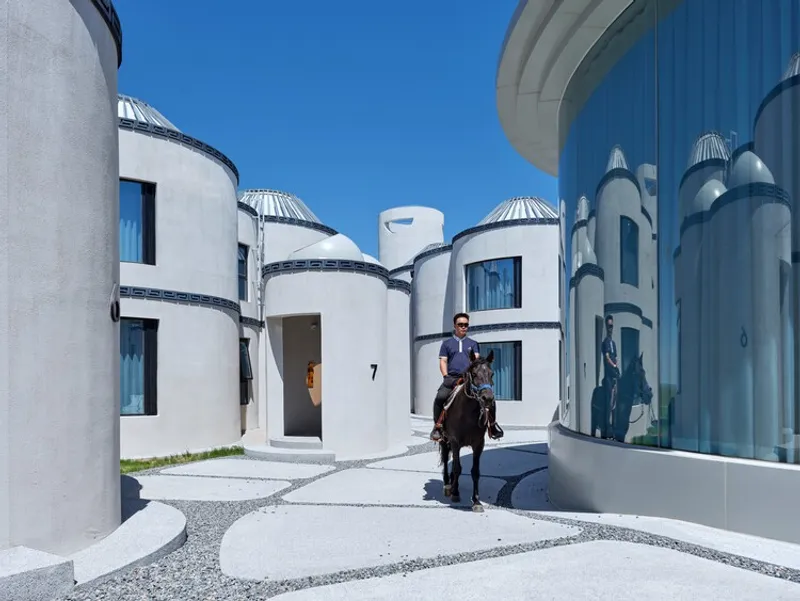
Each cylindrical unit possesses its own character determined by height, diameter, and roof treatment. Some volumes rise dramatically to create observation towers that offer panoramic views across the grassland. Others remain low and intimate, housing tea rooms designed for contemplation and conversation. This variation in scale creates a rich townscape where residents and visitors experience constant shifts in spatial enclosure and visual perspective as they move through the complex.
The Frustum-Shaped Metal Roof
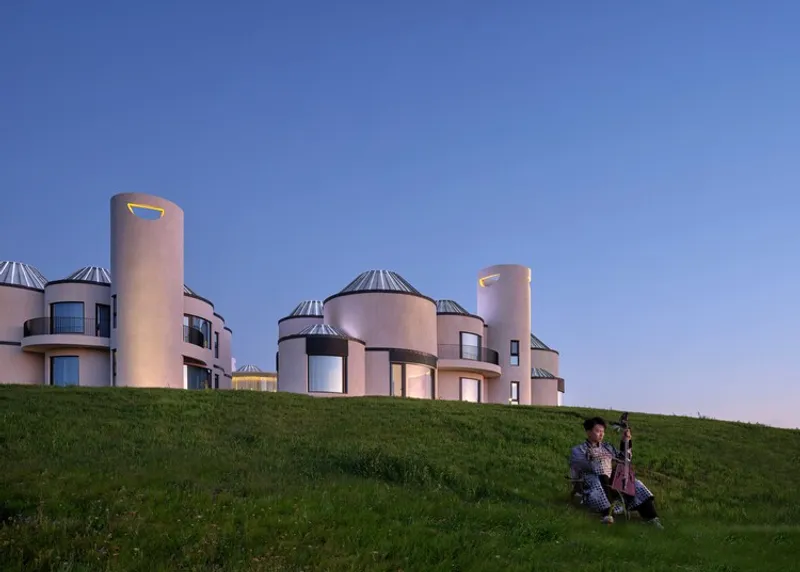
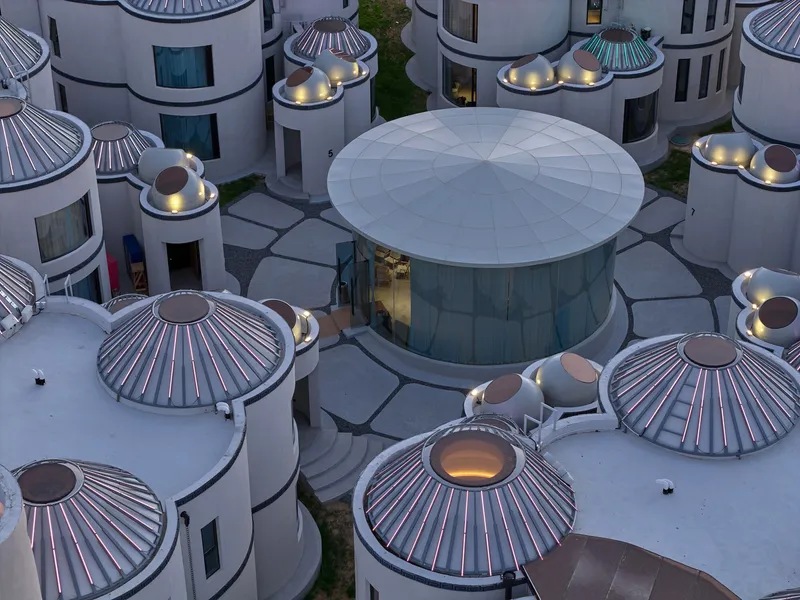
Perhaps the project's most distinctive feature is its use of frustum-shaped metal roofs—truncated cones that cap each cylindrical volume. These metallic crowns, rendered in what appears to be reflective or weathered metal, create a striking visual contrast with the concrete walls below. The frustum form serves multiple purposes: it provides weather protection while creating dramatic shadows, establishes a clear geometric hierarchy, and introduces a contemporary industrial aesthetic that distinguishes the project from purely traditional references.
The initial design proposal called for light steel structures with fiber cement cladding—a lighter, more experimental approach. However, the final design adopted concrete construction for the main walls, a pragmatic decision that improved structural stability, weather resistance, and construction feasibility while allowing the metal roofs to serve as the primary aesthetic statement. This combination of heavy base and light crown creates visual dynamism, suggesting buildings that are simultaneously grounded and aspiring upward.
Material Dialogue: Concrete and Metal
The material strategy establishes a productive tension between earthbound solidity and metallic lightness. The concrete walls, described in the architect's statement as achieving "a simpler, more rustic expression," provide thermal mass and structural stability. Their rough texture and muted color palette connect the buildings to the earth and stone of the grassland landscape.
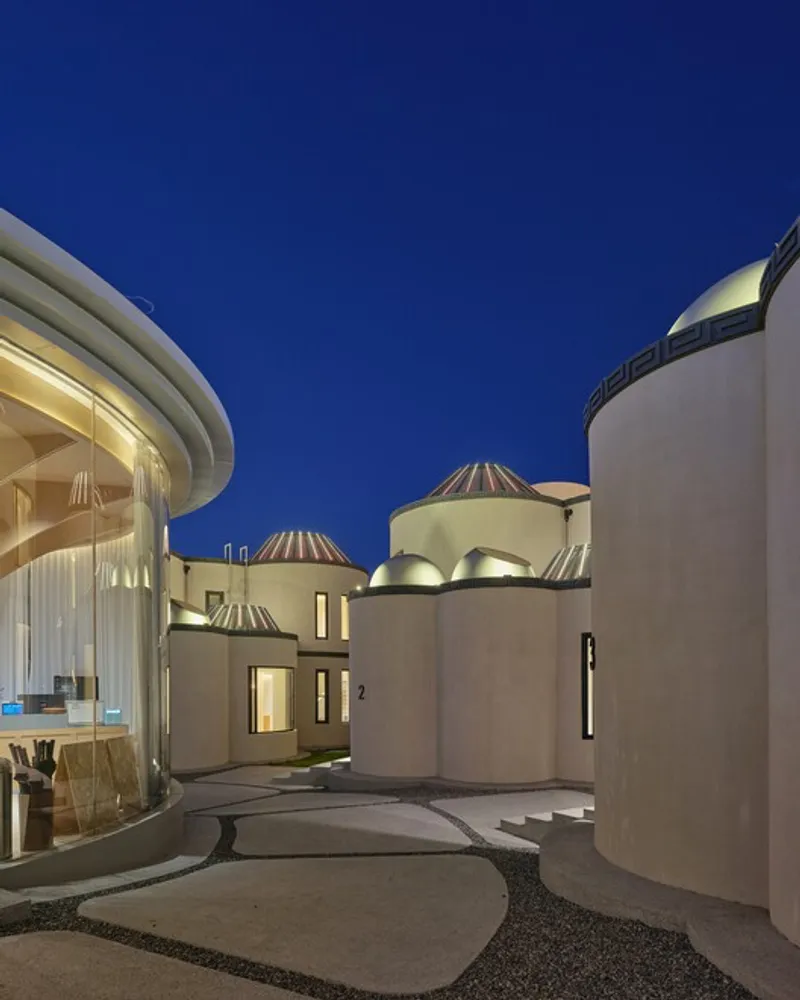
The metal roofs, by contrast, reflect sky and clouds, changing appearance throughout the day and season. This reflective quality makes the roofs appear almost dematerialized at times, as if the cylindrical volumes are open to the sky like traditional yurts with their smoke openings. The metal's industrial character also signals the project's contemporary identity, preventing any confusion with heritage reconstruction or theme park architecture.
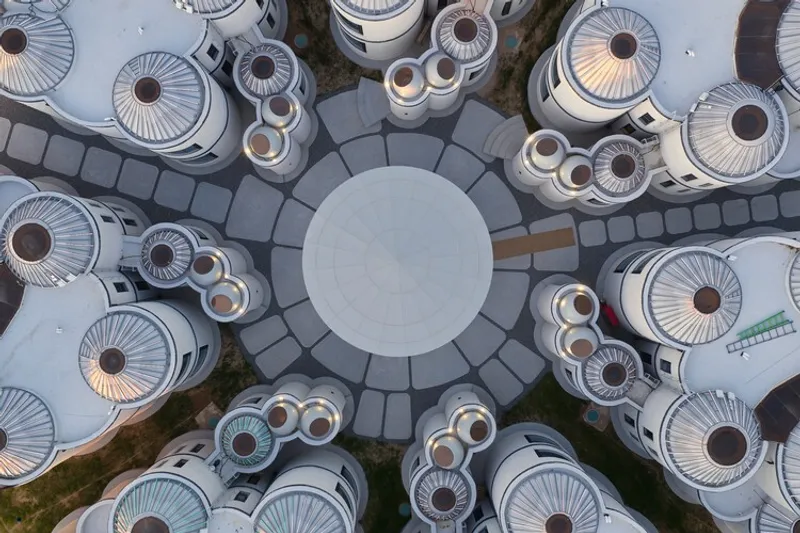
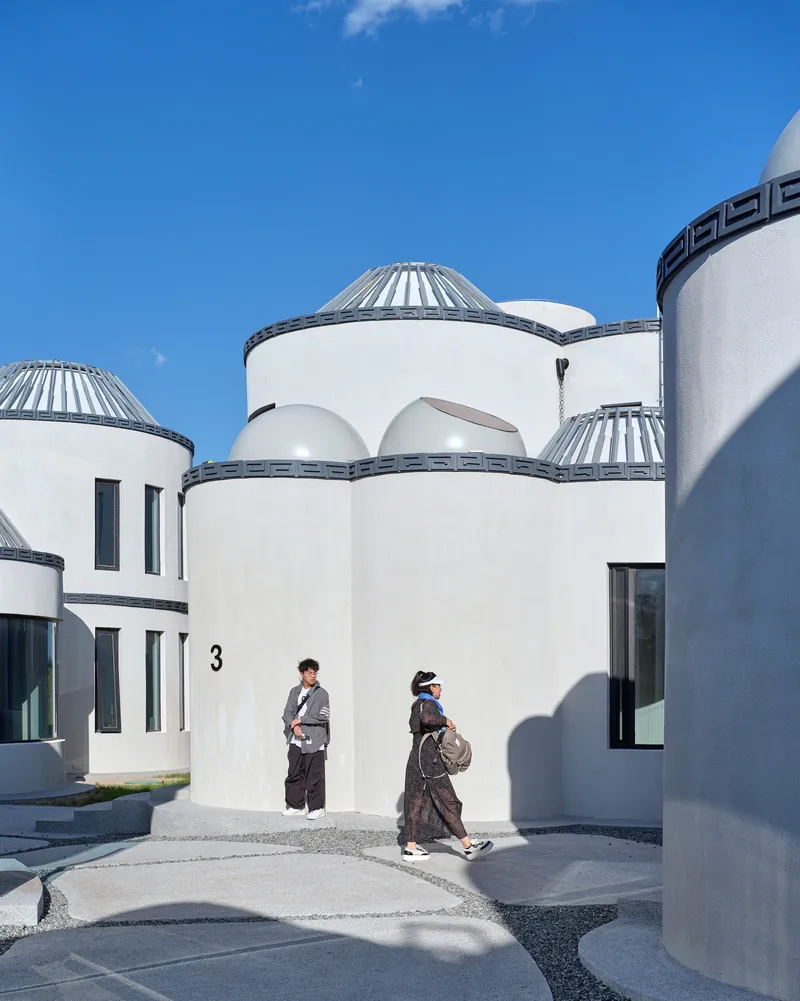
Black decorative edges with geometric patterns trace the building perimeters, functioning as visual "ribbons" that accentuate the curved forms while adding layers of detail and ceremonial presence. These elements demonstrate how careful attention to edge conditions can transform simple geometric forms into architecturally refined compositions.
The Inner Courtyard: Microclimate and Contemplation
At the heart of the complex lies an inner courtyard—a negative space defined by the surrounding cylindrical volumes. This courtyard functions as more than a simple outdoor room; it acts as a "microclimate regulator," providing shade, facilitating natural ventilation, and creating protected outdoor leisure areas within Inner Mongolia's sometimes harsh climate.
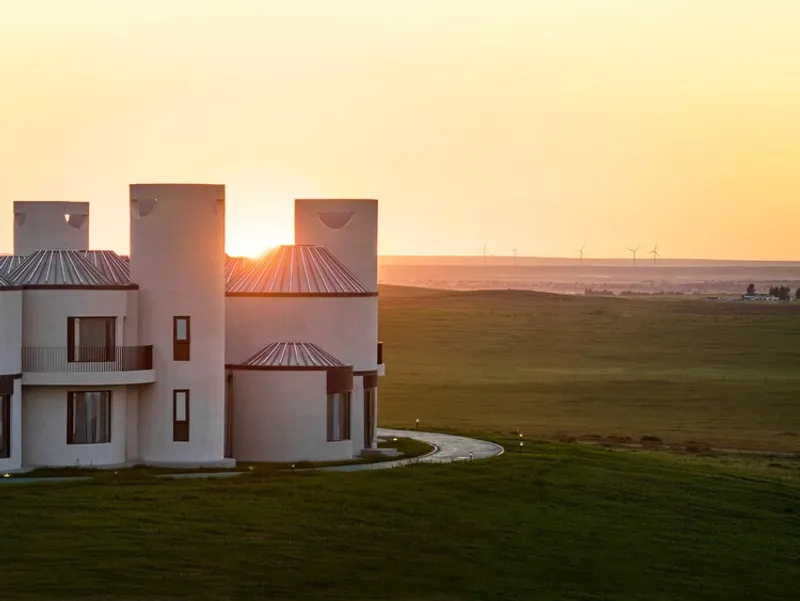
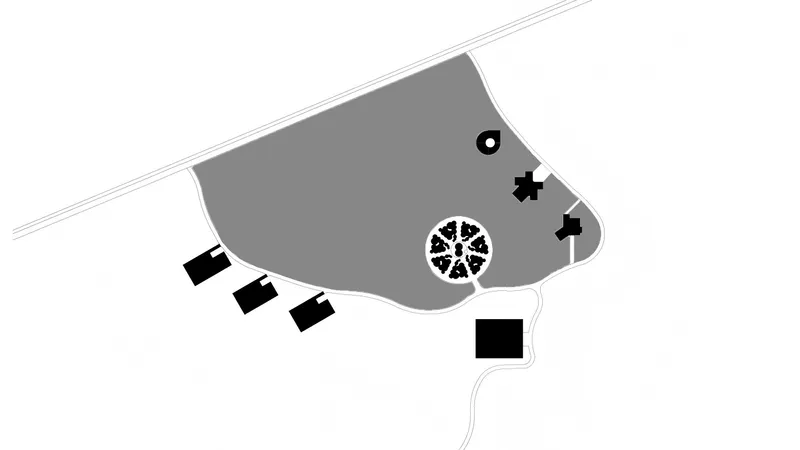
The courtyard's irregular boundary, created by the varied positioning of cylindrical structures, means it lacks the formal symmetry of traditional Chinese courtyards. Instead, it feels organic and discovered—a found space emerging from the constellation of buildings rather than a predetermined void. This informality suits the project's nomadic references, where settlement patterns responded to topography, wind direction, and social relationships rather than abstract geometric order.
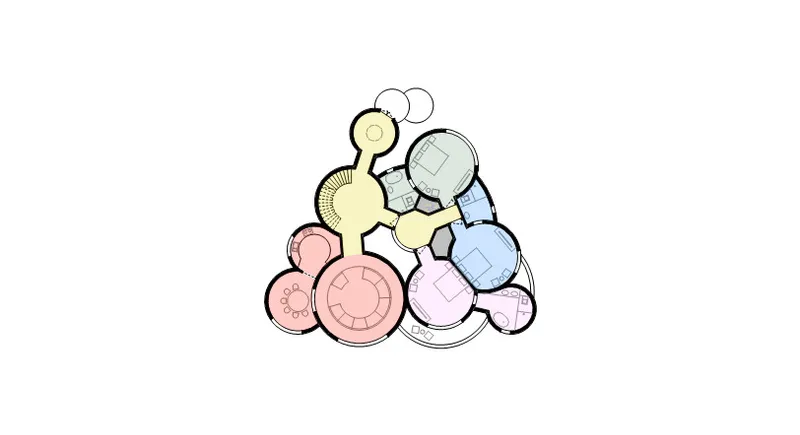
Gray spaces—covered but open-sided areas between and around structures—blur boundaries between interior and exterior. These semi-outdoor zones provide climatic buffering while creating threshold conditions where residents can linger between full exposure and full enclosure. In a climate of temperature extremes, these transitional spaces extend the periods when outdoor occupation is comfortable.
The architects note that "scattered circular units serve as visual guides, directing views toward distant scenery and the sky." This framing function transforms the courtyard into a viewing device—a place where architecture mediates between human scale and landscape scale, between the intimate and the infinite.
Detail and Craft: Small Surprises
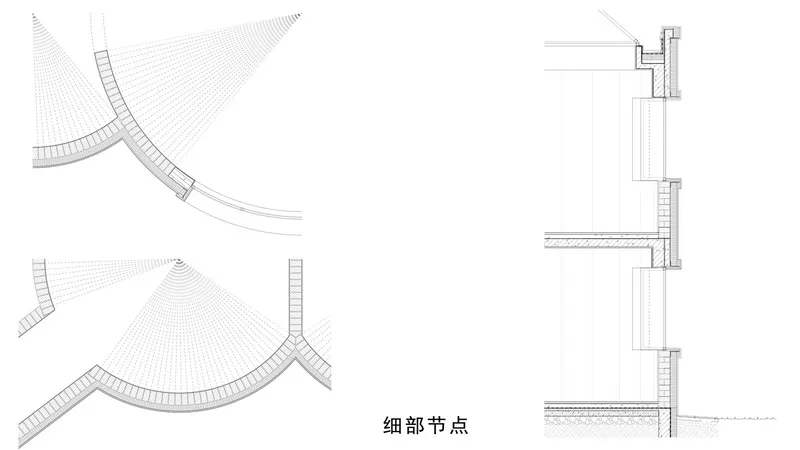
Throughout the project, careful attention to detail prevents the bold geometric forms from feeling monotonous. The architects describe every detail as "a carefully polished 'small surprise,'" ensuring that the building "exudes exquisite charm from overall to local."
Stone steps provide a particularly effective example. Their rough texture and regular form create a productive tension—natural material subjected to human ordering. The steps don't attempt to disappear or become minimalist abstractions; instead, they assert their materiality and crafted character, grounding the more abstract cylindrical forms in tactile reality.
The black decorative edges with geometric patterns that trace building perimeters add layers of visual interest without overwhelming the primary forms. These elements demonstrate sophisticated restraint—enough decoration to prevent austerity but not so much as to create visual clutter. They function like punctuation in written language, marking boundaries and creating rhythm without becoming the primary content.
Construction and Collaboration: Academic-Practice Partnership
The project represents a collaboration between AOMOMO Studio, a design practice, and Shanghai Jiao Tong University, one of China's premier research institutions. This academic-practice partnership likely contributed to the project's experimental character and willingness to challenge conventional residential design.
University involvement typically brings research-oriented approaches—extensive testing of ideas, exploration of alternatives, and documentation of processes. The built result benefits from this extended development period, showing a level of formal refinement and detail resolution that purely commercial projects often lack due to schedule and budget pressures.
Construction by Inner Mongolia Hongshengda Construction Group Co., Ltd. ensured local expertise in addressing regional climate challenges and construction practices. This combination of academic innovation, design creativity, and local construction knowledge produced architecture that is simultaneously conceptually sophisticated and practically grounded.
Photography and Representation: Capturing Experience
The project's documentation by ZY Architectural Photography plays a crucial role in communicating its qualities to wider audiences. The photographs capture not just the buildings' formal characteristics but their experiential qualities—the play of light across curved surfaces, the framing of landscape views, the relationship between human scale and architectural scale.
Particularly effective are images showing the buildings at dusk, when interior lighting transforms the cylinders into glowing lanterns. These photographs capture the "canvas for light" quality described in the architect's statement, demonstrating how the architecture's character shifts dramatically between day and night.
Aerial photographs reveal organizational patterns invisible at ground level, showing how the cylindrical volumes create ordered yet organic compositions. Interior shots emphasize the curved surfaces, dramatic oculi, and careful detailing that define the spatial experience.
All the Photographs are works of ZY Architectural Photography



Popular Articles
Popular articles from the community


The Ocean Hive: Sustainable Architecture for a Self-Sufficient Civilization at Sea
The Ocean Hive imagines sustainable architecture at sea, where modular habitats, algae, wave power and ocean waste sustain a growing colony.

Lunar Spiral: Space Architecture Shaped by the Mathematics of the Universe
Lunar Spiral reimagines space architecture through Fibonacci geometry, lunar regolith, levitating habitats, and self-sustaining Moon living.

Co-life: Sustainable Architecture for Age-Friendly Community Living
Co-life reimagines sustainable architecture for seniors through courtyards, rammed earth, shared gardens, and spaces designed for belonging.

Play: Fragments of Their World
Familiar architecture becomes modular playground design, creating safe spaces where displaced children can learn, connect, imagine and play.


Similar Reads
You might also enjoy these articles


Hodi-Mandai Geram
Project Function: Preservation and revitalization of the Intangible heritage and socio-spatial identity of the Hodi by Housing, Cultural Memory Center, Sacred Grove, landscape, local tourism economy


Olio Towers: A Mid-Rise for Performers That Fuses Housing, Rehearsal, and Stage
Located blocks from Houston's Theater District, this modular tower stacks living units around a central performance atrium.

Oasis: Modular Green Housing Carved into Dhaka's Urban Fabric
A shortlisted Plugin Housing entry reclaims unauthorized settlements in Dhaka with stepped concrete volumes, green roofs, and ventilation-driven design.

Black Hole: A Floating Megastructure for the Post-Physical Era
Emiliano Mazzarotto envisions a spherical, self-scaling arena where e-sports, digital hotels, and holographic stadiums replace traditional public space.

Explore Digital Nomad Housing Competitions
Discover active competitions in this discipline


Challenge to design mud housing for contemporary communities


Challenge to reimagine the Iron Throne


Photograph architecture without architects


Illustrate the lost glory of Angkor Wat - Render Challenge
Comments (0)
Please login or sign up to add comments
No comments yet. Be the first to comment!