
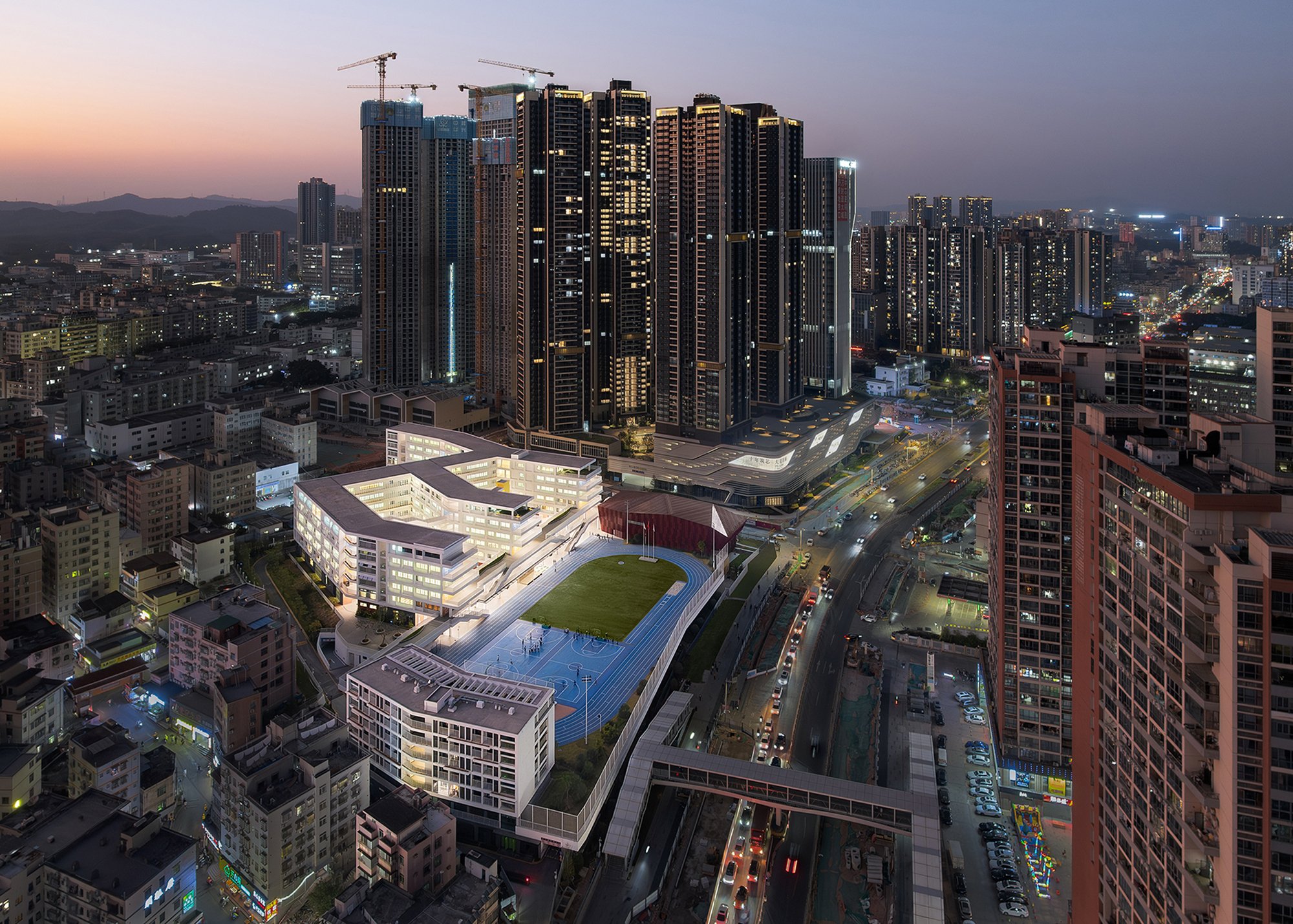
Z and Z STUDIO Stack a 54-Class School into Shenzhen's Dense Urban Village Fabric
Folded classroom plates, seasonal courtyards, and rooftop athletics give 2,520 students room to breathe in Longhua District.

Fitting a 54-class school for 2,520 students onto a 24,478-square-meter site in one of Shenzhen's densest urban villages is not a design exercise in restraint. It is an exercise in compression: how much program, how much daylight, how much play can you stack before the whole thing collapses into a parking garage with blackboards? At the Shenzhen Longhua Foreign Languages School (Fucheng Campus), Z and Z STUDIO answer that question with a 55,737-square-meter campus that folds, steps, and lifts its way to an unlikely generosity of space.
The real argument of the project is organizational. Three north-south classroom bars are folded like plates, hollowed out at the center to pull ventilation and light through the section. Between them, a sequence of four courtyards themed after the seasons runs from north to south. The sports field sits on the roof, the lecture hall and gymnasium face the street in bold color, and the teaching blocks retreat to the quieter western edge. It is a school designed as infrastructure: for the neighborhood on weekends, and for students the rest of the time.
Terraced Volumes in Urban Context
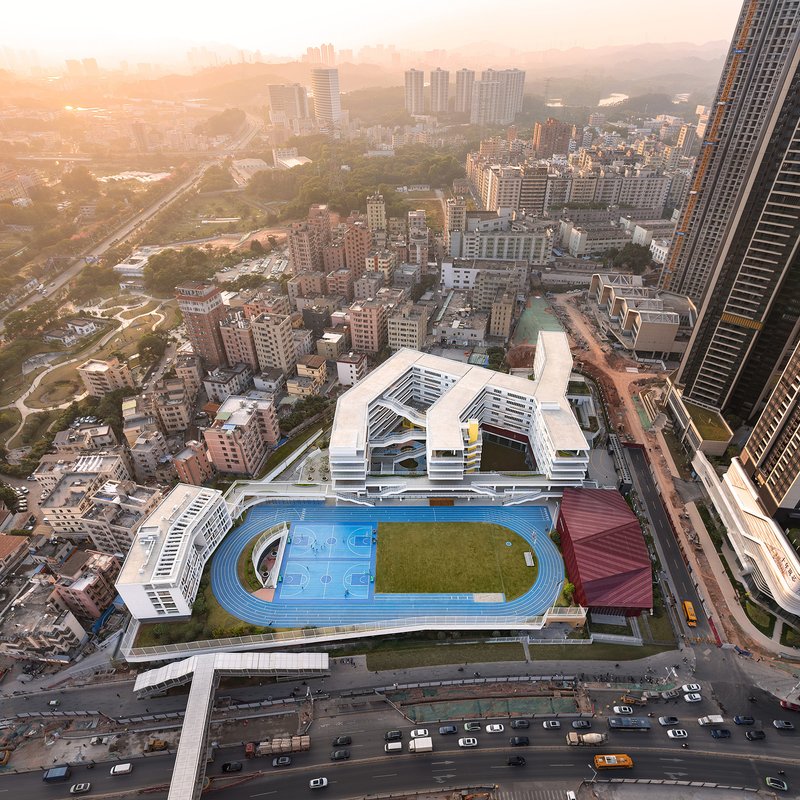
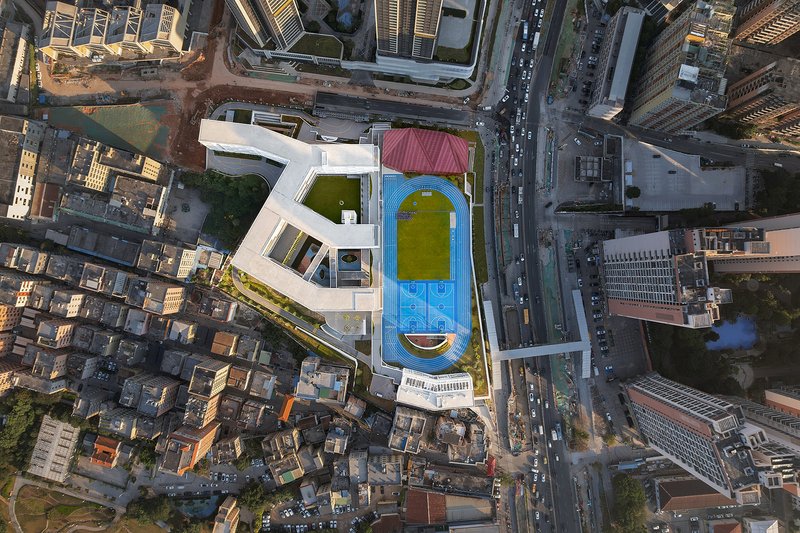
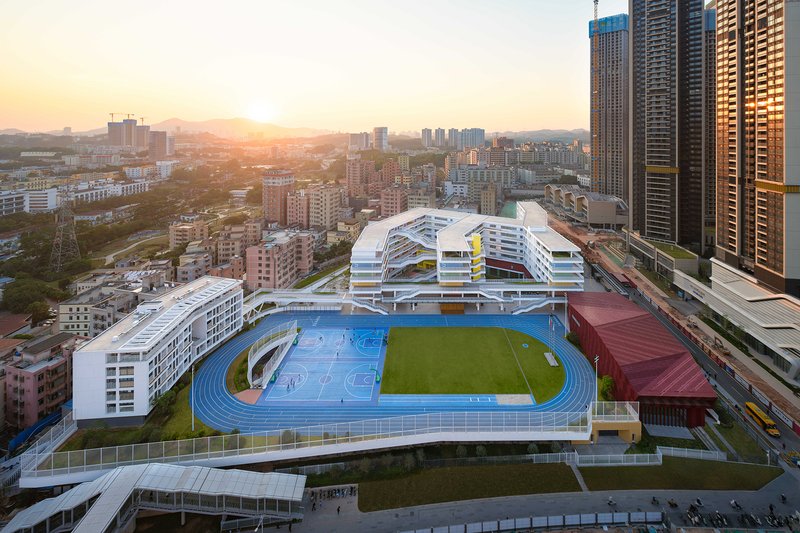
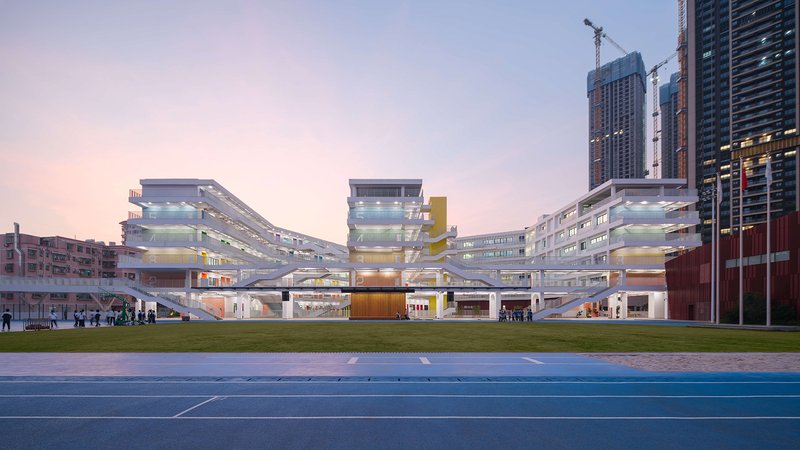
From the air, the campus reads as a white topography dropped into a sea of grey residential towers and remnant village fabric. The three classroom buildings step down toward the east, creating terraced profiles that echo the surrounding hillscape while opening panoramic views across the city. The rooftop running track and sports courts hover above the campus like an elevated park, a strategy that doubles the effective site area without consuming a single extra square meter of ground.
The stepped massing is not purely formal. Each terrace provides an outdoor platform, a planter, or a covered activity zone. The eastern elevation becomes a layered section of green setbacks and recessed balconies that modulate the building's visual mass when seen from the street. Against the backdrop of Longhua's tower-studded skyline, the school reads as a horizontal intervention: long, low, and deliberately earthbound.
Seasonal Courtyards as the Campus Spine
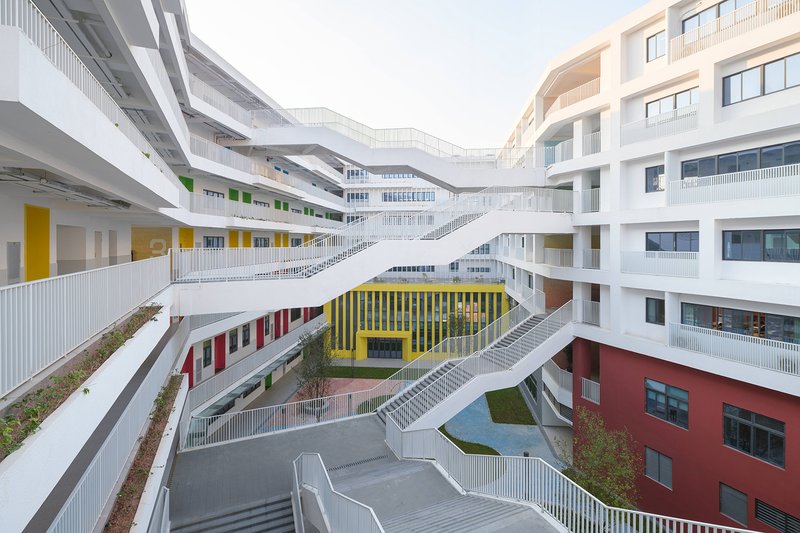
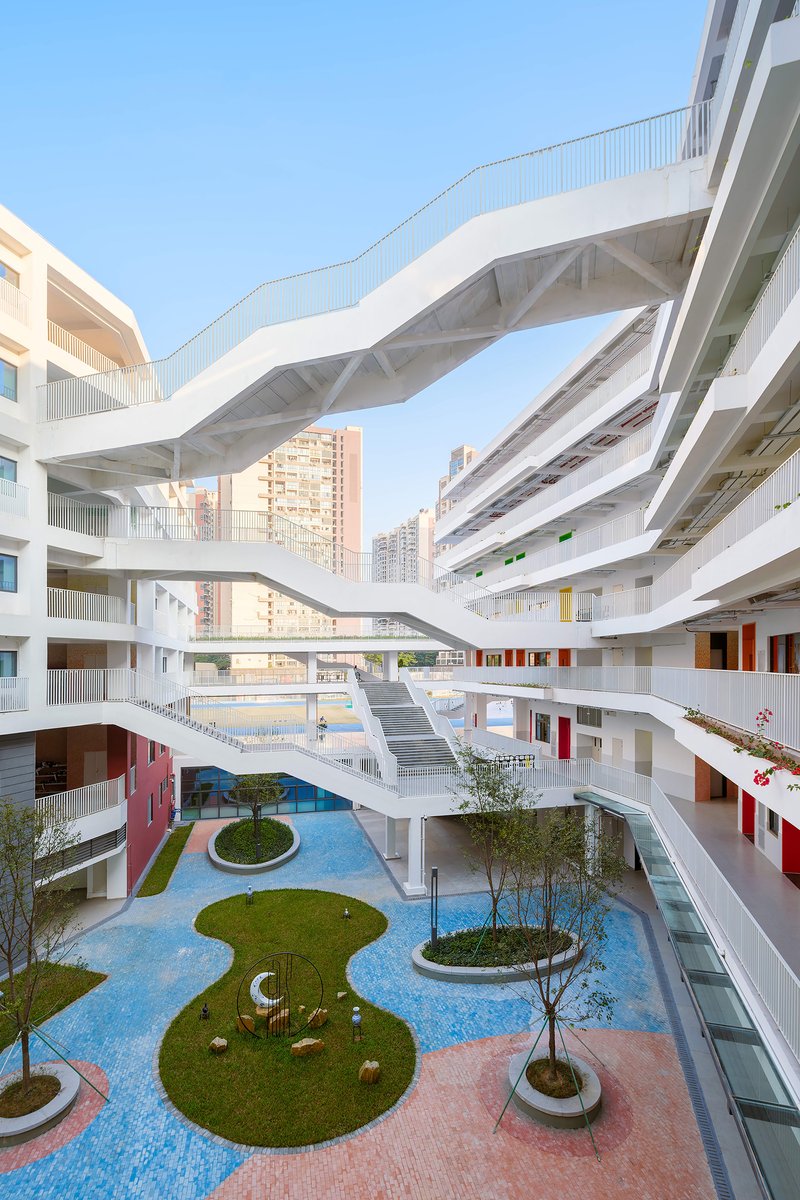
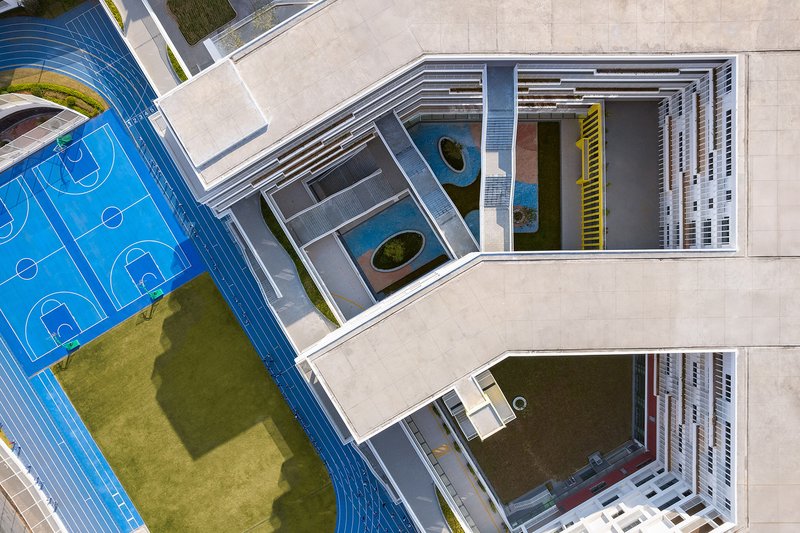
The four courtyards, Spring through Winter from north to south, are the connective tissue of the campus. They are not decorative leftover space between buildings. They are the primary organizational device: every corridor, bridge, and staircase touches at least one of them. Circular planters, blue paving fields, and planted slopes give each courtyard a distinct personality, while pedestrian bridges cross overhead at multiple levels, knitting the classroom blocks together into a single circulatory network.
What makes this sequence genuinely effective is the section. The folded plate arrangement of the classroom bars means the courtyards are not simply gaps between parallel walls. They are carved, angled voids that widen and narrow, catching prevailing winds and channeling daylight deep into the teaching floors. Shenzhen's subtropical climate demands this kind of passive strategy, and the courtyards deliver it without resorting to atria or mechanical ventilation gymnastics.
Color, Texture, and the Public Face
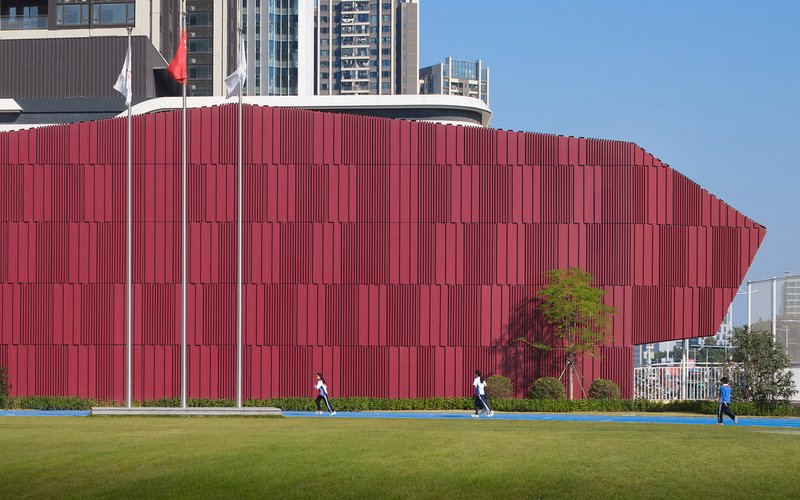
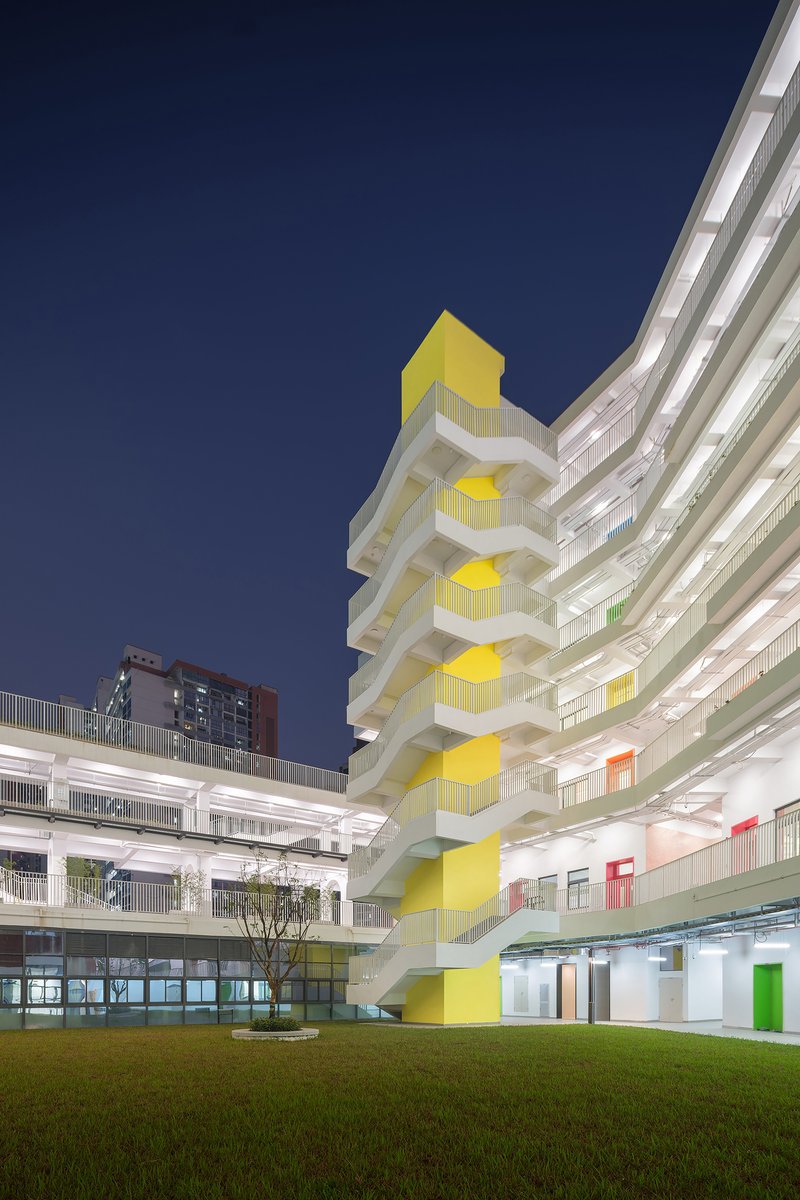
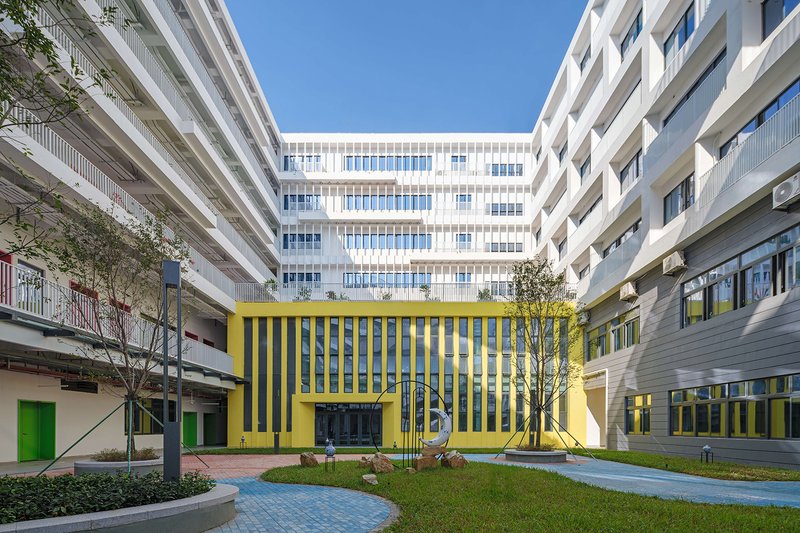
The campus reserves its loudest architectural gestures for the public-facing edges. A vertically ribbed red facade wraps the lecture hall along the northern frontage, acting as a civic signal visible from Guanlan Avenue. To the south and east, a yellow stacked staircase tower and a yellow-finned courtyard wall inject warmth into the otherwise white palette. These moments are calibrated rather than arbitrary: red and yellow mark shared, public-access spaces like the gymnasium, auditorium, and vertical circulation cores, while white horizontal bands define the repetitive classroom volumes.
The distinction matters because Z and Z STUDIO have designed the northern and eastern edges to remain active beyond school hours. The gymnasium and lecture hall can serve the surrounding community on weekends and holidays. Color-coding those spaces is not just legibility for students; it is wayfinding for an entire neighborhood.
Corridors as Social Infrastructure
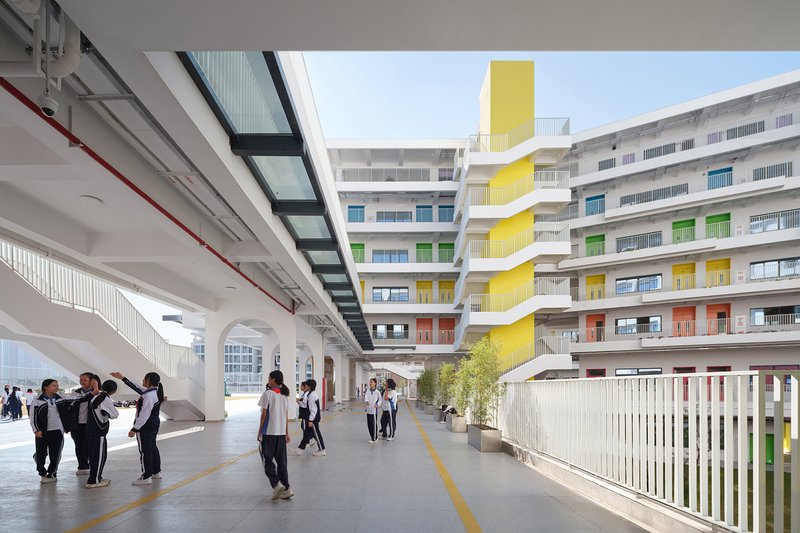
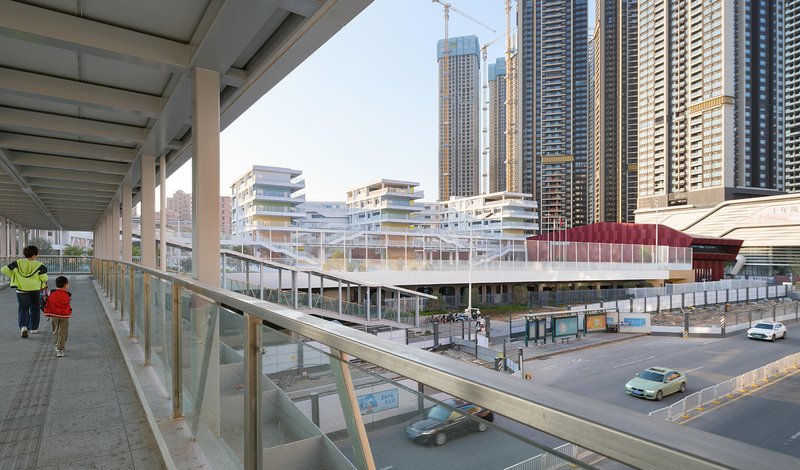
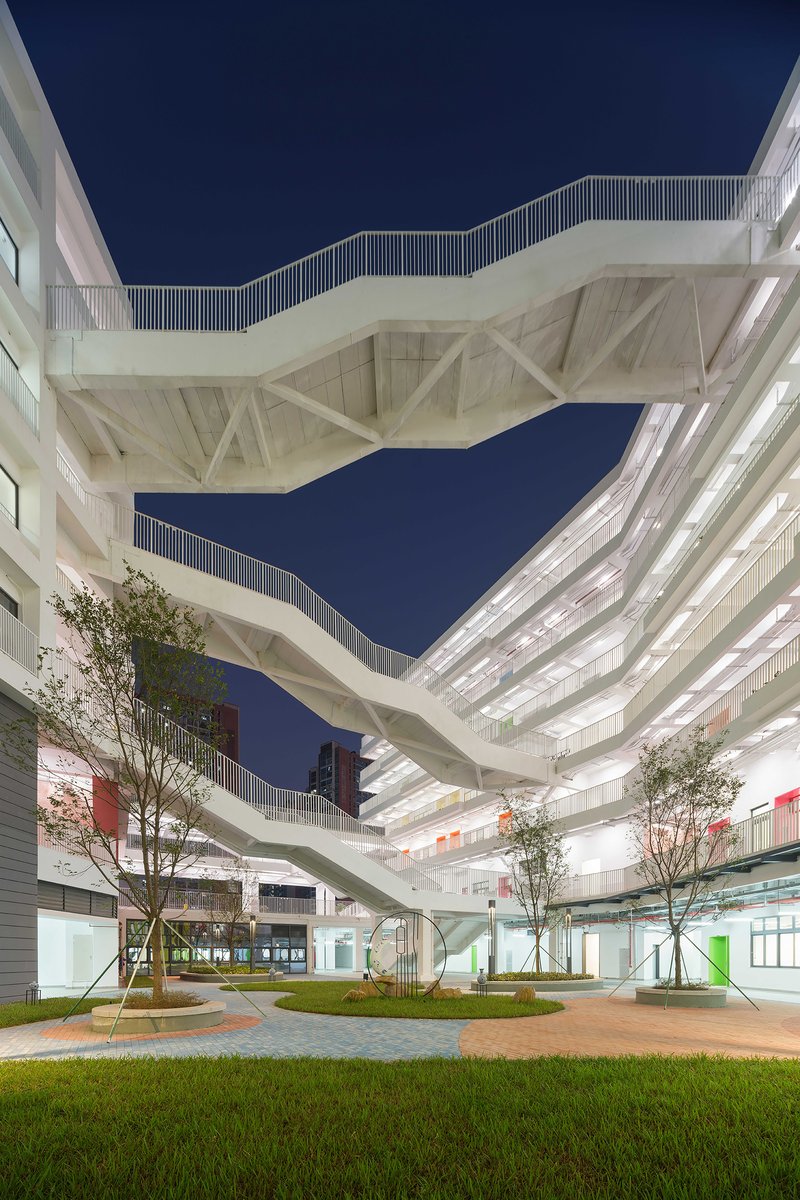
School corridors are normally throwaways: double-loaded slabs connecting classroom to staircase. Here, the covered circulation routes are widened, terraced, recessed, and protruded into a continuous landscape of informal social space. Planter boxes line the edges, colored facade panels break the monotony, and bridges with triangular truss structures span the courtyards at dusk like illuminated connective threads.
The design intention is that students encounter each other outside the classroom as much as inside it. The corridor network is deliberately over-connected, offering multiple paths between any two points on campus. This redundancy is pedagogical: it creates the conditions for spontaneous interaction, chance meetings, and the kind of unstructured social learning that rigid school plans actively suppress.
Rooftop Athletics and the Elevated Field
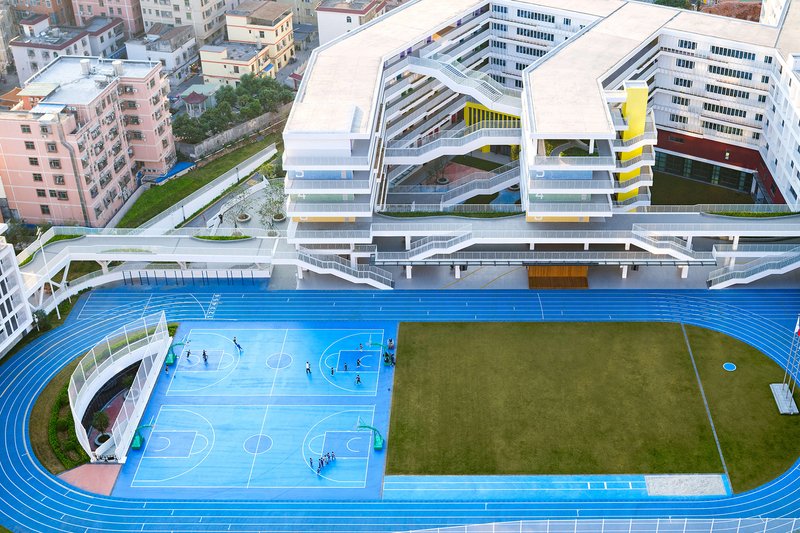
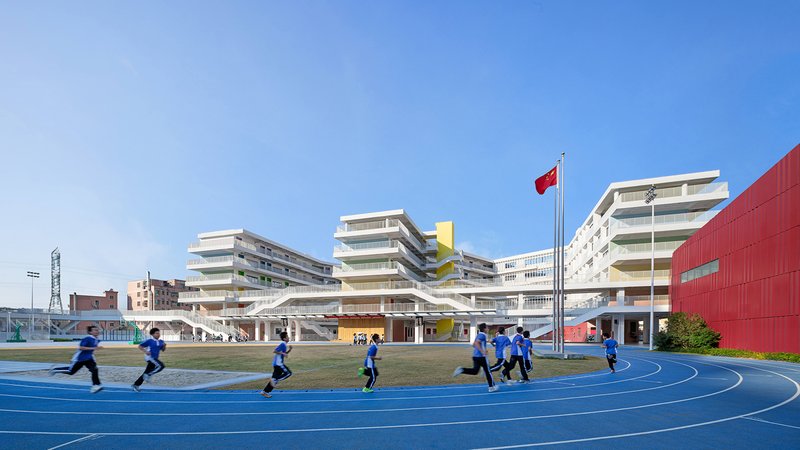
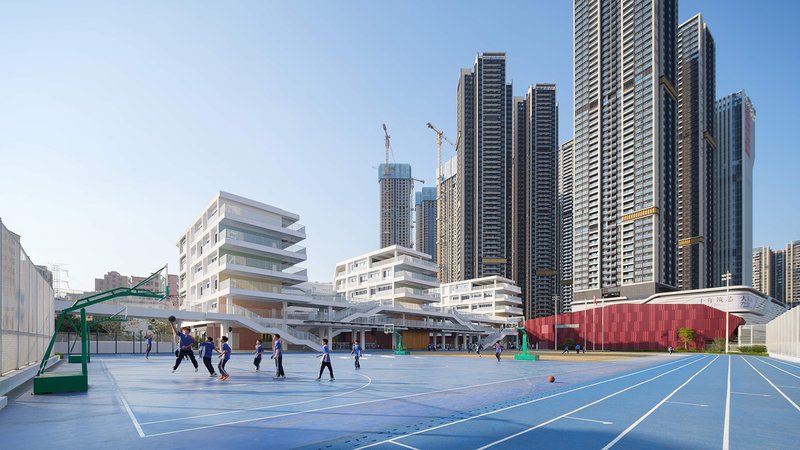
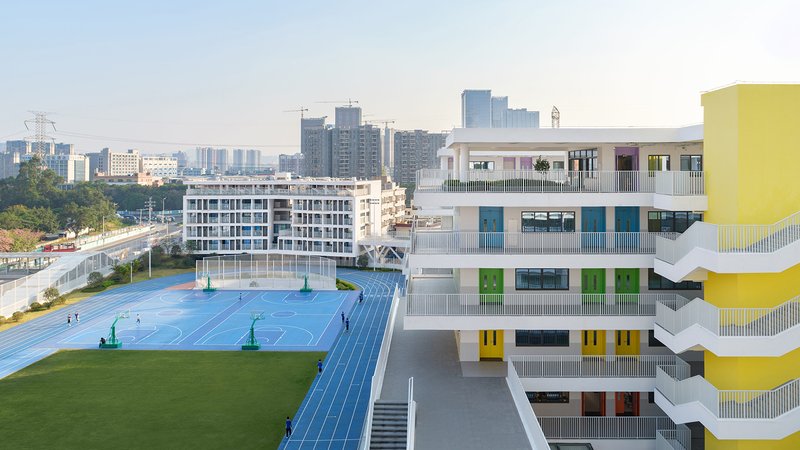
Elevating the sports field is the single most consequential planning move. On a site this constrained, placing a running track, basketball courts, and a green playing field at ground level would have consumed the entire footprint. By lifting athletics to the roof, the architects recover the ground plane for courtyards, covered play, and classroom entries. The sports field also acts as an acoustic and visual buffer along the eastern edge, shielding classrooms from street noise and the chaos of the surrounding urban renewal zone.
From within the campus, the layered section becomes legible when you stand on the blue track and look down through the terraced facades to the courtyard below. Students move through a vertical sandwich of landscape, sport, and learning, all stacked within the same structural frame.
Interior Assembly and Playful Insertions
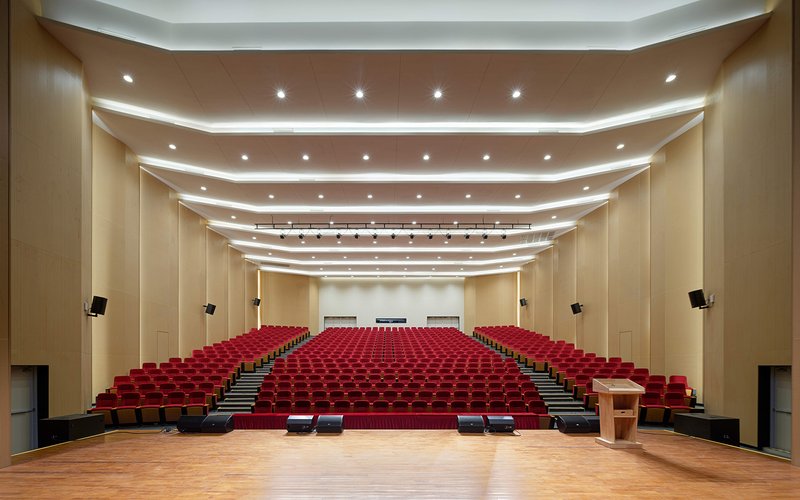
Inside the lecture hall, tiered red seating and a curved ceiling with recessed lighting coffers create an atmosphere more civic auditorium than school assembly room. This is consistent with the dual-use strategy: the space needs to work for a middle school awards ceremony and for a neighborhood lecture series. The fit-out is restrained, relying on the geometry of the coffers and the warmth of the timber stage rather than applied decoration.
Elsewhere, the architects describe playful insertions like a sloped-roof "fun box" in the summer courtyard and a "trumpet skylight" that funnels light down to the basement level. These gestures, visible in the colored balcony screens and terraced facades, keep the campus from feeling institutional. A school for 2,520 children can easily become a machine. The insertions are deliberate sabotage of that tendency.
Dusk and the Civic Reading
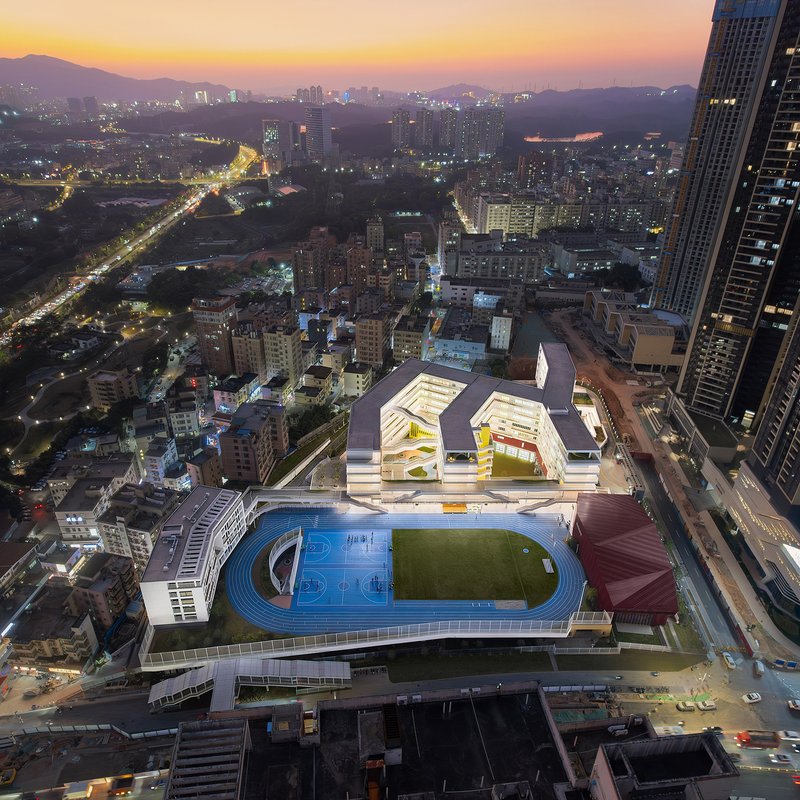
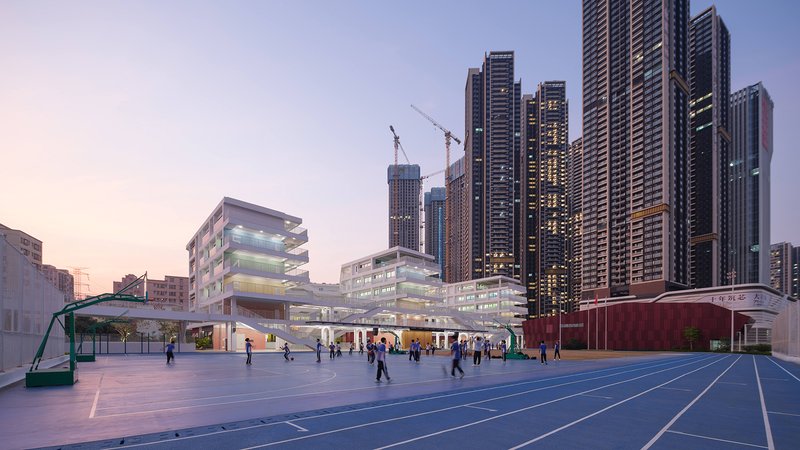
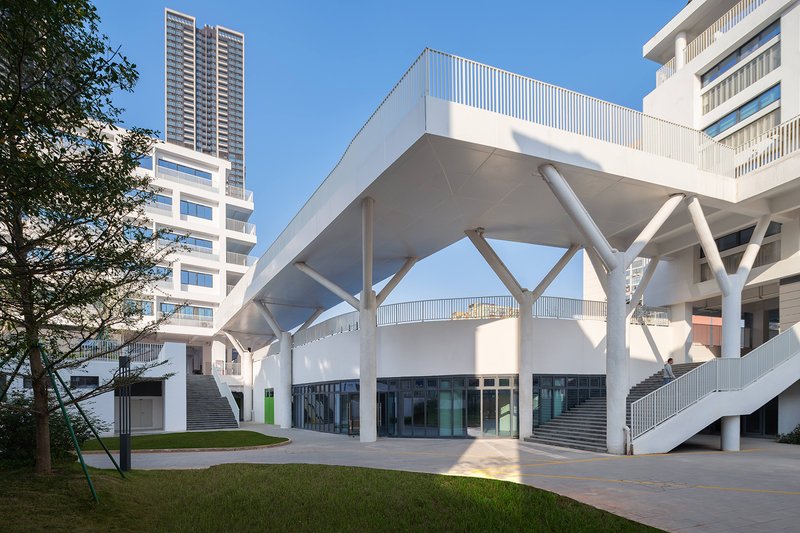
At twilight, the campus reveals its second identity. The illuminated facades, warm-toned accent towers, and glowing sports courts transform the school from a daytime educational facility into an evening landmark. The entrance canopy, with its branching white steel columns supporting a flat roof over a glazed facade, signals civic importance without the pomposity of a grand portico. It is the kind of understated move that works precisely because the rest of the campus is so visually active.
The broader urban argument is clear in the dusk photographs. Longhua District is undergoing rapid regeneration. The Tianbei Industrial Zone is being remade. In that context, a school campus that offers public sports facilities, a community lecture hall, and a visibly green landscape to the street is not just educational infrastructure. It is an anchor for an entire neighborhood in flux.
Plans and Drawings
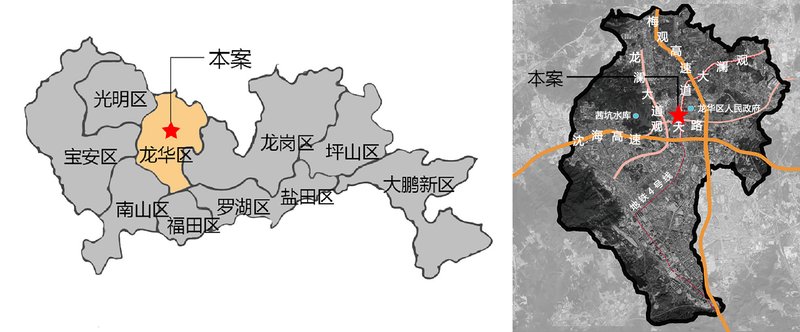
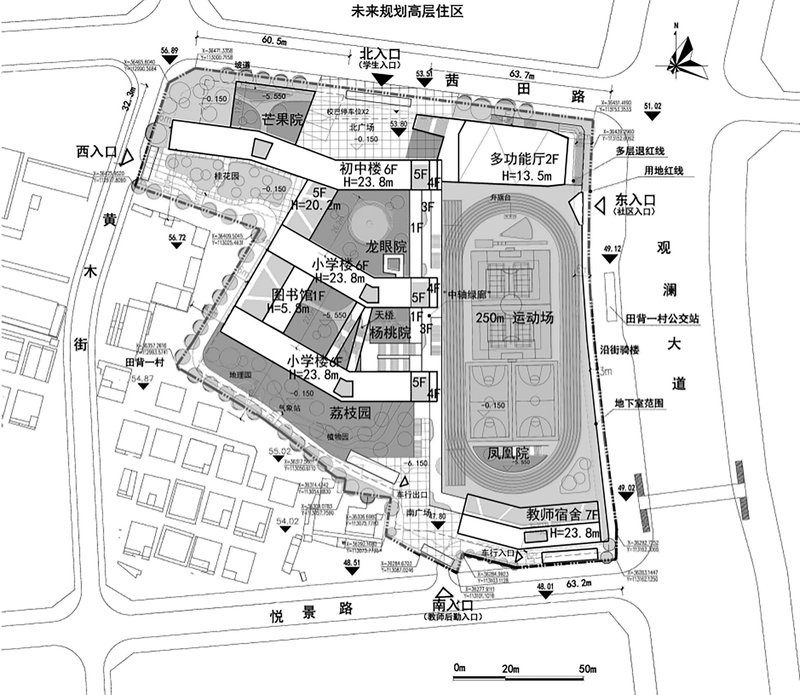
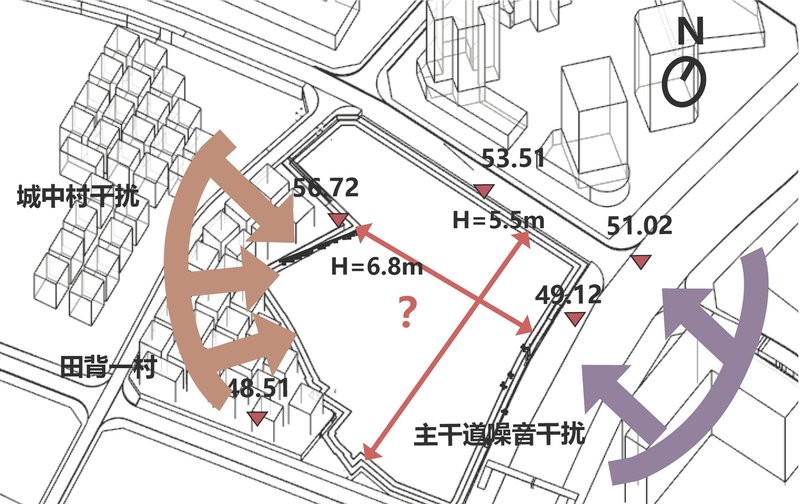
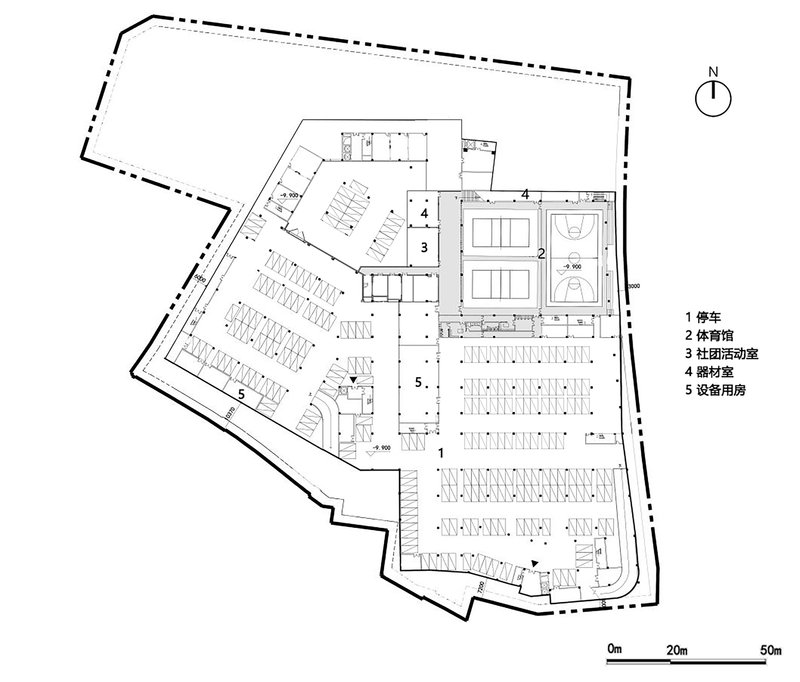
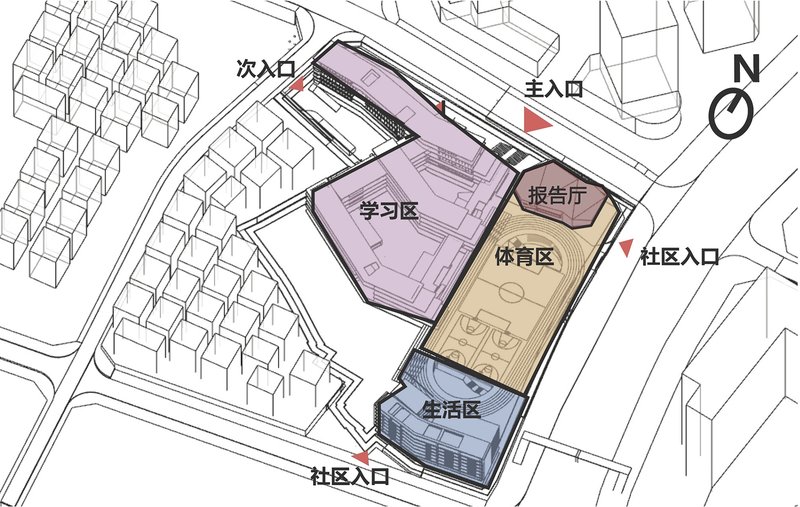
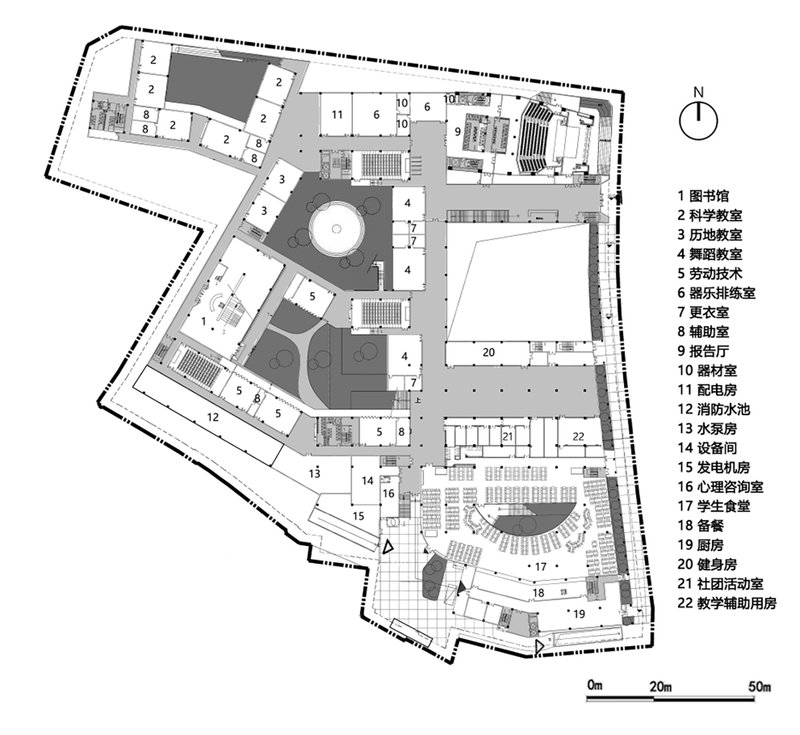
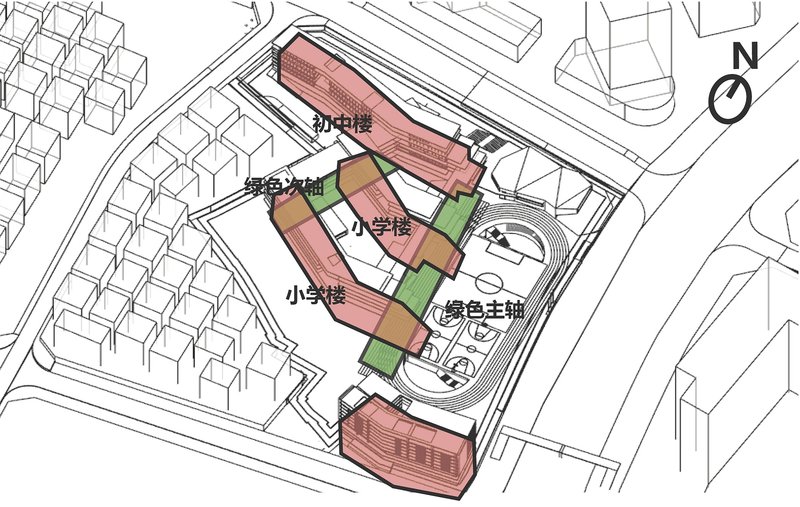
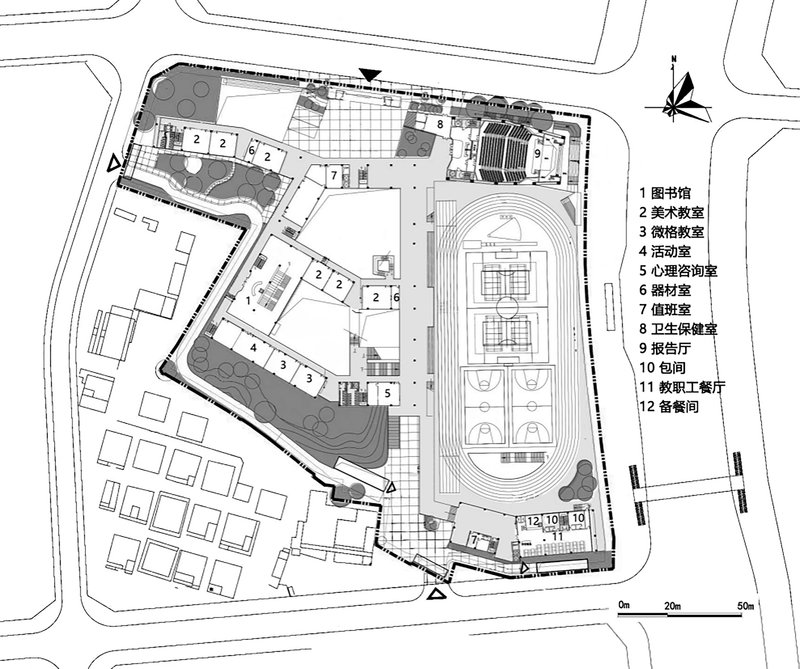
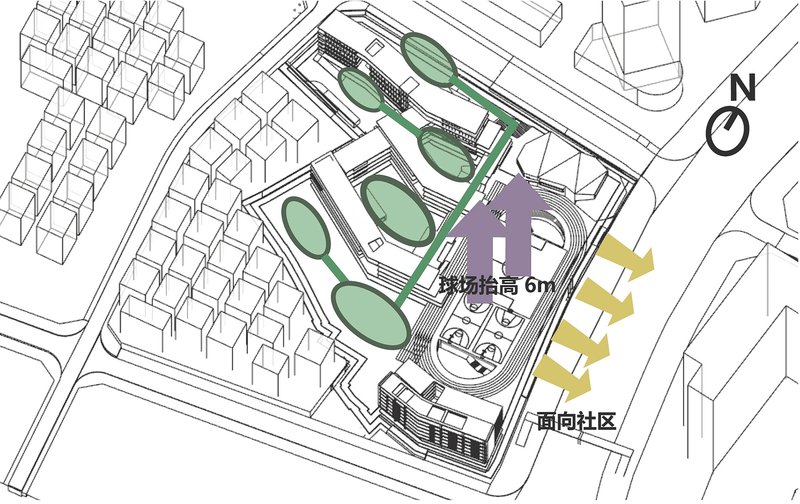
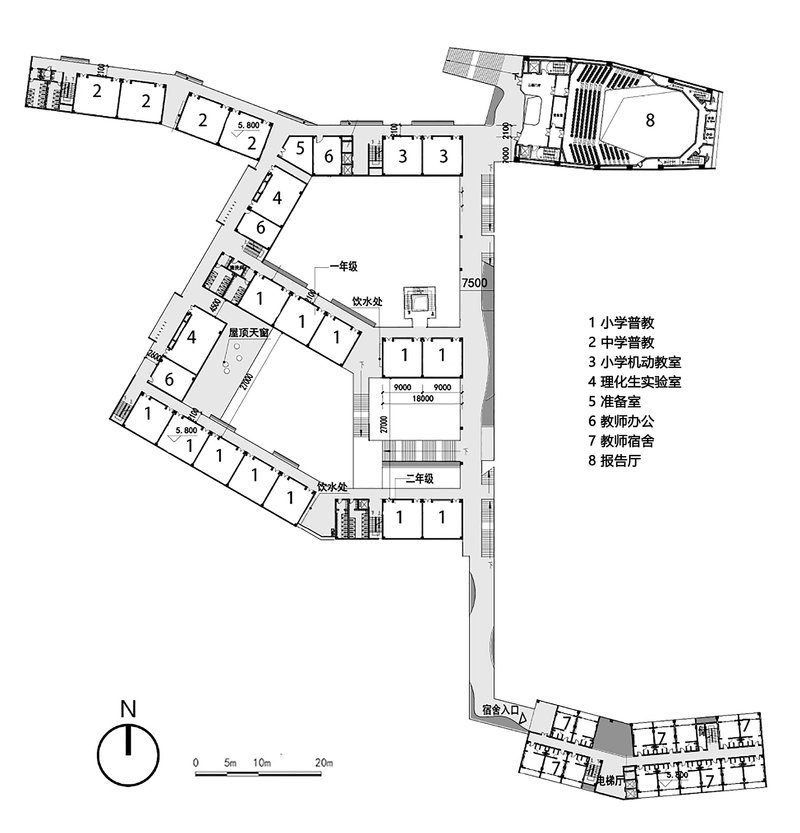
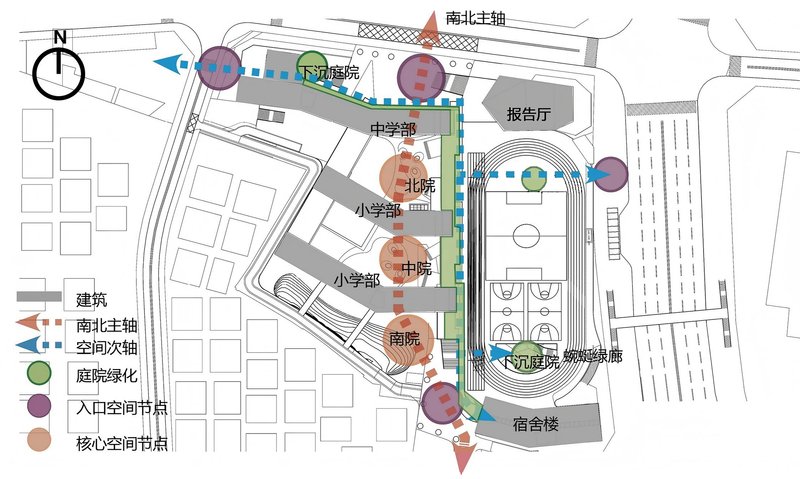
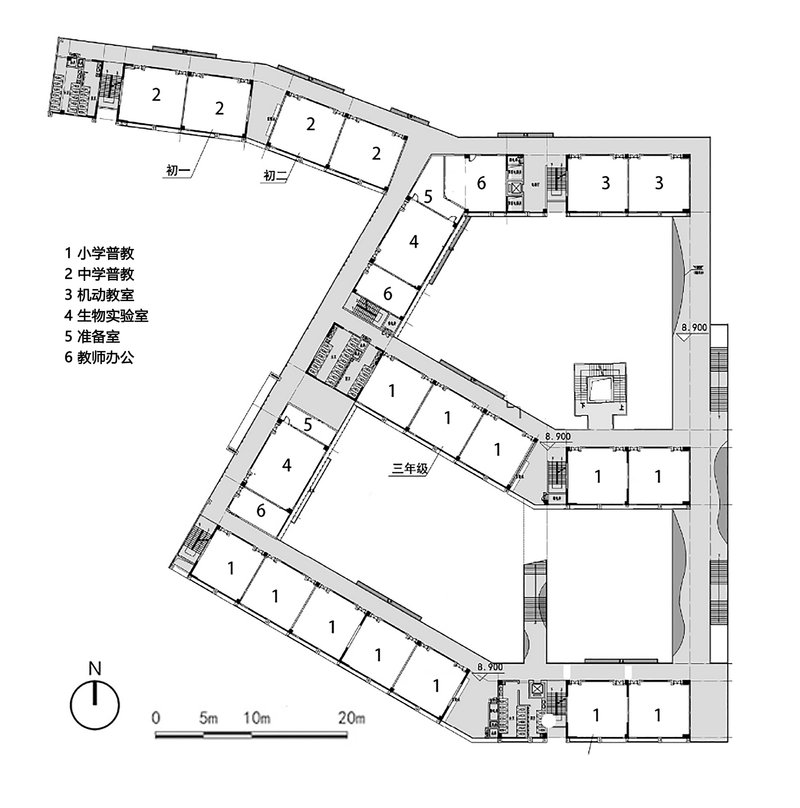
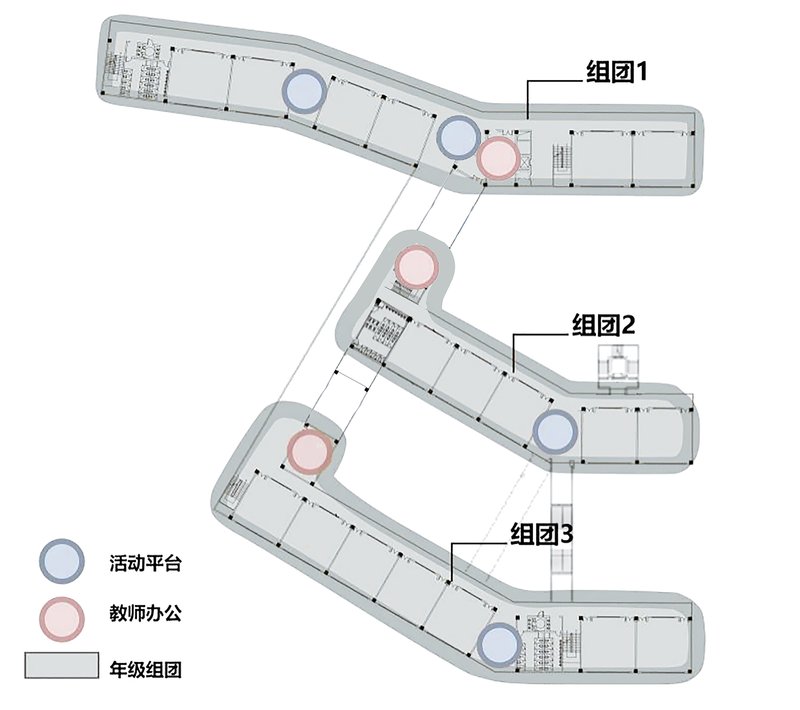
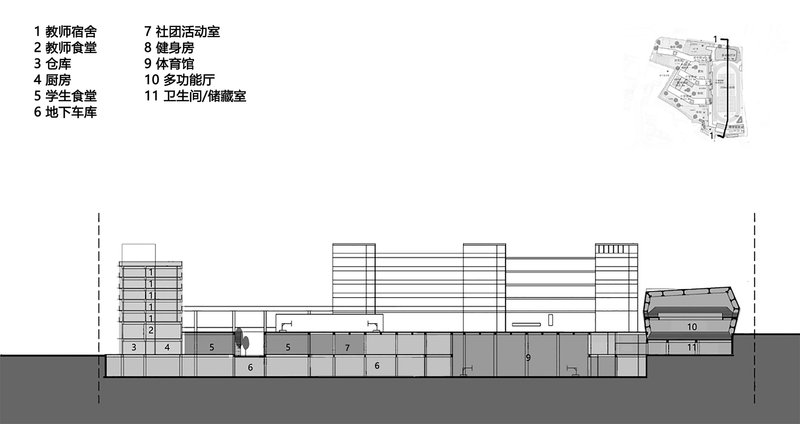
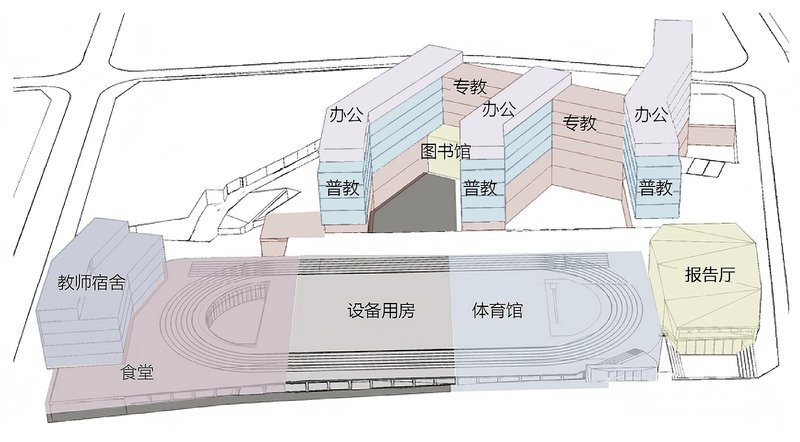
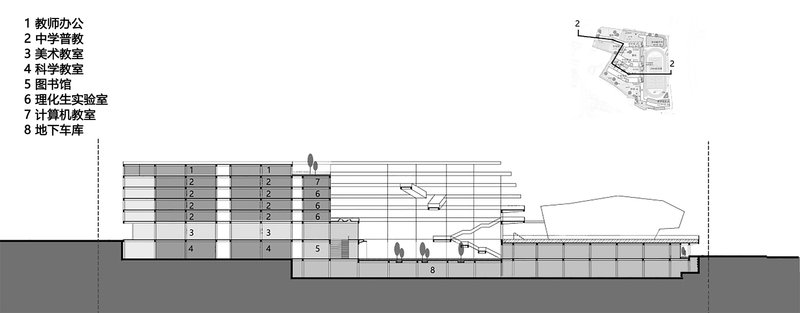
The drawings confirm what the photographs suggest: the campus is organized around a central green spine with sports facilities elevated to the east and teaching volumes arrayed along the quieter western boundary. The axonometric diagrams make the color-coded program zoning legible, separating public-access spaces (gymnasium, auditorium) from the classroom bars and service areas. Floor plans show the folded plate geometry of the classroom wings wrapping around courtyard voids, while sections reveal the full vertical complexity: basement parking and auxiliary spaces below, courtyards and teaching at grade, terraced outdoor platforms above, and the athletics deck crowning the composition.
The site plan is particularly telling. The school occupies its corner lot completely, with almost no setback wasted on token planting strips. Every square meter of open space is working: as courtyard, as sports surface, as planted buffer, or as covered circulation. On a site of this density, the plan is the design.
Why This Project Matters
The Fucheng Campus is a case study in what happens when architects refuse to treat a constrained urban school site as an excuse for a bland, stacked box. Z and Z STUDIO have built a campus that is genuinely three-dimensional: courtyards, bridges, terraces, rooftop fields, and basement connections create a section as rich as the plan. The folded plate arrangement is not a stylistic choice. It is a climate strategy, a daylighting strategy, and a social strategy rolled into one formal move.
More importantly, the project redefines the boundary between school and city. By placing public-use facilities at the urban edge and color-coding them for legibility, the architects have made a convincing argument that dense educational infrastructure can give back to its neighborhood rather than walling itself off. In a district undergoing wholesale urban renewal, that generosity is not a bonus. It is the whole point.
Shenzhen Longhua Foreign Languages School (Fucheng Campus) by Z and Z STUDIO. Shenzhen, China. 55,737 m². Completed 2025. Photography by Tianpei Zeng.
Share Your Own Work on uni.xyz
If projects like this are the kind of work you want to make, uni.xyz is a place to publish your own, find collaborators, and enter design competitions.




Popular Articles
Popular articles from the community

Pinto Builds a Faceless Pavilion Beneath Casuarina Trees on Thailand's Rayong Coast
SON Restaurant refuses a front door or a back wall, treating all four facades equally in a 260-square-meter brick and stucco grid.
Eco Chapel: A Green Architecture Pavilion Designed in Symbiosis with the Forest
Eco Chapel uses green architecture to weave prayer, learning and reuse into a forest pavilion shaped by modular hexagonal canopies for life.
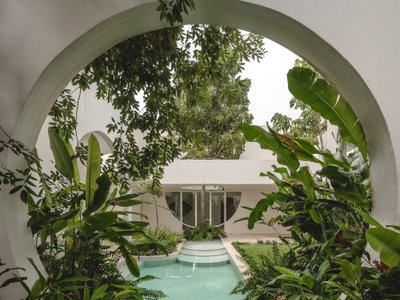
Etea and Ghostframe Carve a Surreal Domestic World from Arches and Circles in Mérida
Casa Eclipse wraps 385 square meters of sculptural living space around a lush courtyard pool in Mexico's Yucatán Peninsula.
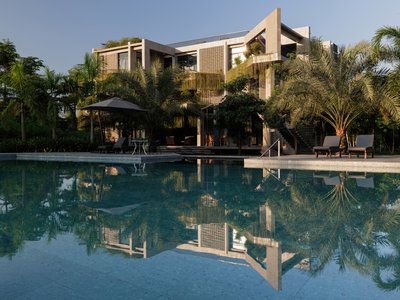
Reincarnation Weaves a Three-Story Retreat into the Green Landscape of Rural Bangladesh
Ara Manor in Narsingdi dissolves the line between domestic architecture and its lush surroundings through screens, courtyards, and planted rooftops.


Similar Reads
You might also enjoy these articles

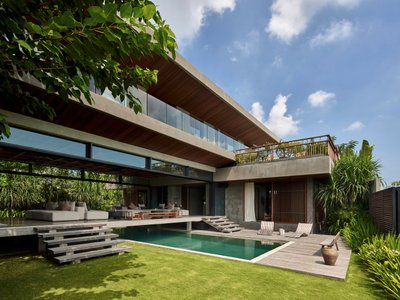
Freebird Residence by Alexis Dornier: A Tropical Modernist Sanctuary in Bali
Floating living pavilion above pool anchors H-shaped tropical villa, blending Japanese minimalism, sustainable strategies, lush landscape, and sculptural interiors.
127af Flips a Tiny Bagnolet Rowhouse Upside Down with a Handcrafted Roof Extension
A 55-square-meter terraced house on the edge of Paris gains a luminous upper living floor through lightweight timber and steel.
1.61 Design Workshop Wraps a 600-Square-Meter Café in Vietnam in Sculptural Burgundy Drama
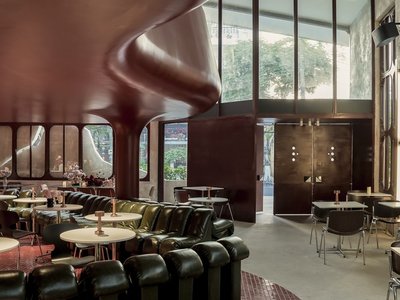
Reden Café & Bistro pairs a helical staircase, mosaic floors, and deep red interiors to rethink Vietnamese hospitality space.

The Unbound Brain: A School Shaped by Cognitive Architecture
Cylindrical learning pods radiate like neurons from a central cortex, turning the floor plan into a spatial model of human thought.


Explore Landscape Design Competitions
Discover active competitions in this discipline




The Global Benchmark for Architecture Dissertation Awards


Challenge to design public laboratory
Comments (0)
Please login or sign up to add comments
No comments yet. Be the first to comment!