
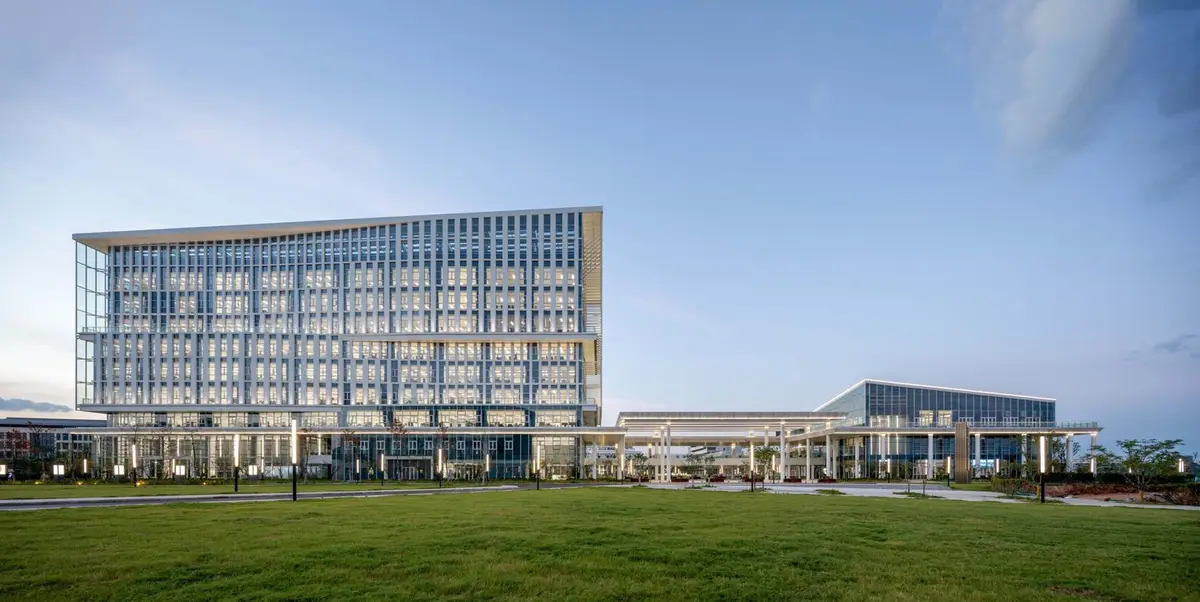
Zhejiang University “Two Institutes” in Quzhou by Architecturestudio: A Model of Sustainable, Interdisciplinary Campus Design
Zhejiang University’s Quzhou campus blends research, education, sustainability, and architecture into a modular, eco-friendly, and future-ready academic environment.


Designed by international firm Architecturestudio, the Zhejiang University “Two Institutes” campus in Quzhou, Zhejiang Province, China—home to the Zhejiang University Quzhou Research Institute and the Quzhou Branch of the College of Engineering—is a visionary fusion of education, research, and innovation set within an ecologically driven urban landscape.
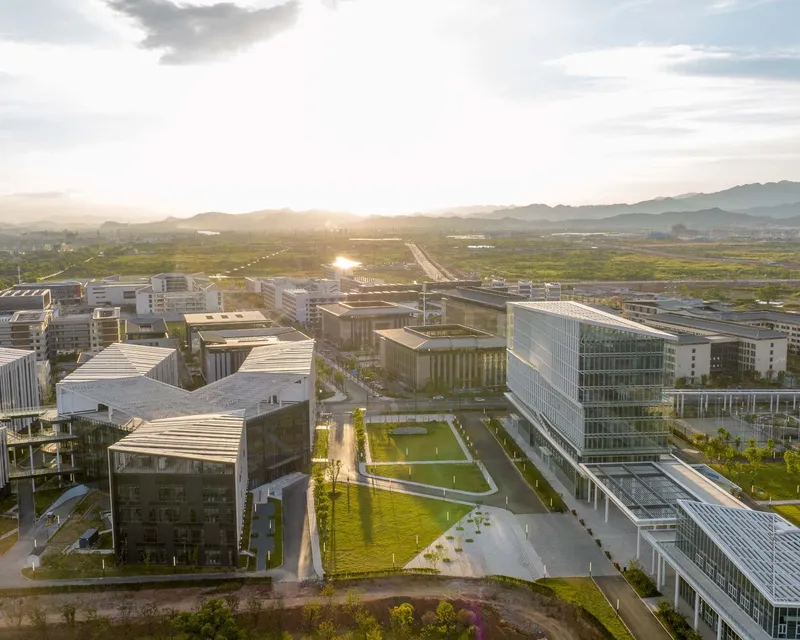
Spanning 163 acres with a built area of 159,000 square meters, the project was the winning design in an international architectural competition held in 2019. Realized in collaboration with China Shanghai Architectural Design & Research Institute Co., Ltd., the campus officially opened its doors in June 2022. The project embodies the idea of a "living campus"—an open, sustainable, and adaptive environment where people can work, live, study, and collaborateseamlessly.
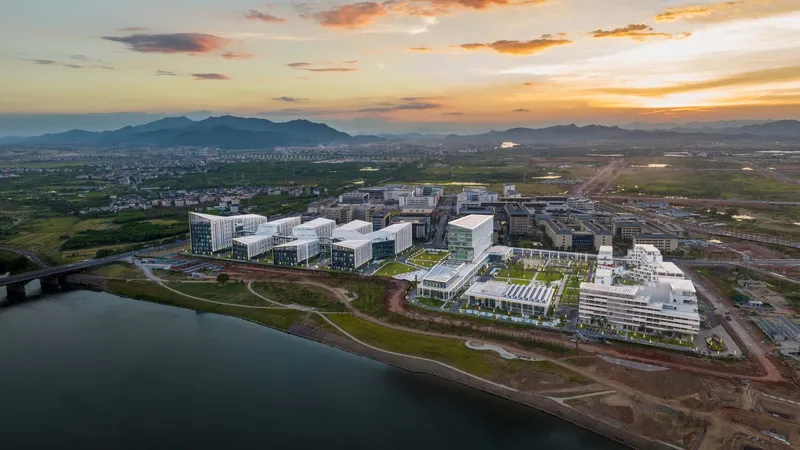
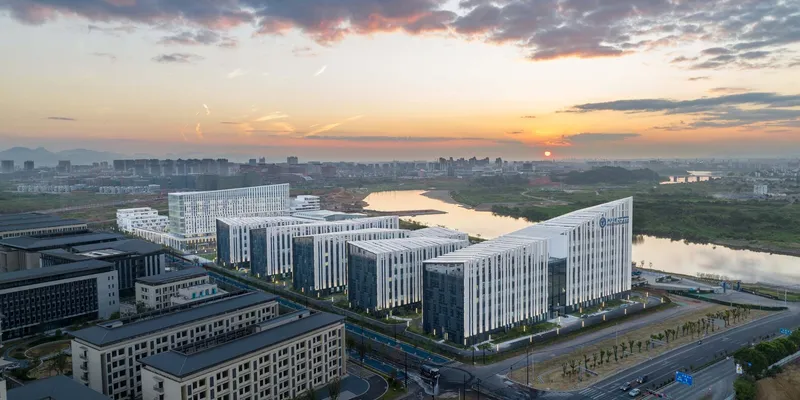
A Tree-Like Layout for the South Zone: Modular Science & Innovation Hub
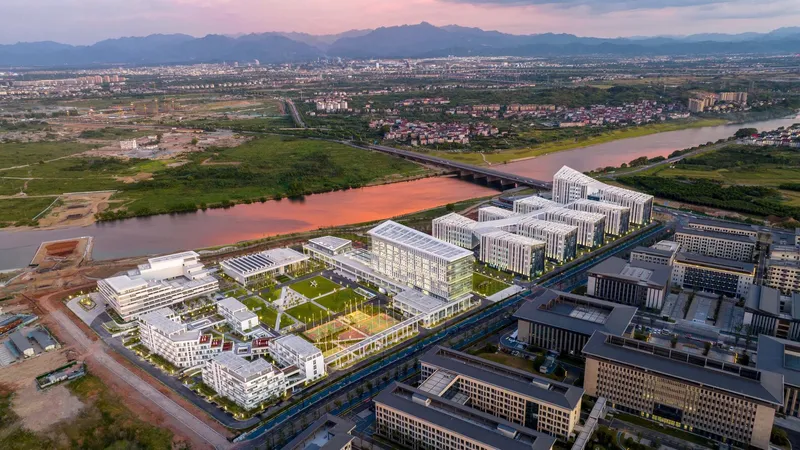
The South Zone of the campus is a dynamic scientific research and industrial incubation center. Conceptually designed with a tree-structured layout, this area consists of a network of interconnected buildings linked by open corridors to foster accessibility and interdisciplinary synergy. Research labs in this zone are modular and adaptable, built to accommodate evolving scientific demands while supporting long-term building sustainability.
Each lab can be reconfigured, combined, or divided based on functionality and collaboration requirements. This modular flexibility not only maximizes usage but also encourages cross-disciplinary research innovation, making it a progressive hub for technological incubation.
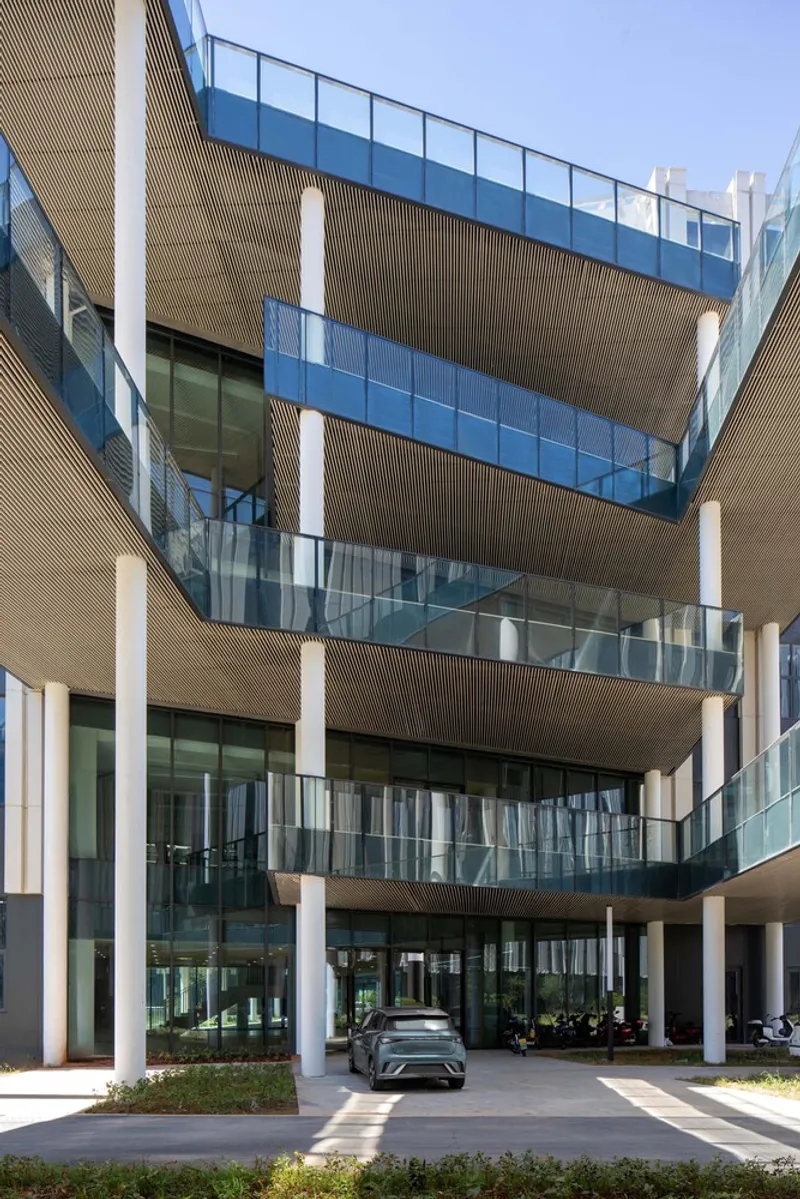
North Zone: Administrative, Academic, and Living Functions in One Ecosystem
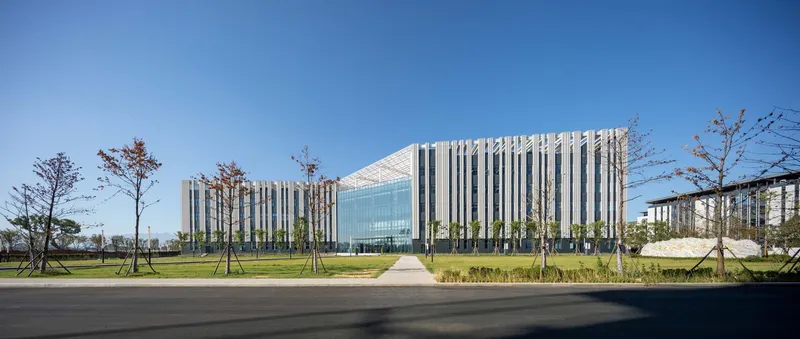
The North Zone of the campus integrates teaching, administration, student housing, and wellness facilities. At its heart stands the Administration Building, a landmark structure marking the main entrance to the university. Linked by a continuous podium, this area connects to the Conference Center, International Exchange Center, Gymnasium, and multiple Dormitory Blocks, all designed to maximize comfort, usability, and environmental harmony.
Innovative design strategies such as terraced green roofs, foldable gymnasium doors for indoor-outdoor flexibility, and multi-use public plazas enhance the functional and aesthetic qualities of the built environment. Dormitories are thoughtfully connected to public spaces, making student life more interactive and vibrant.
Architectural Language and Sustainable Features
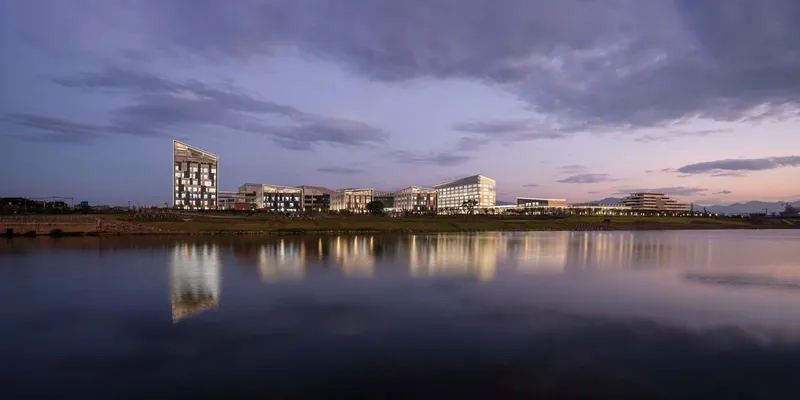
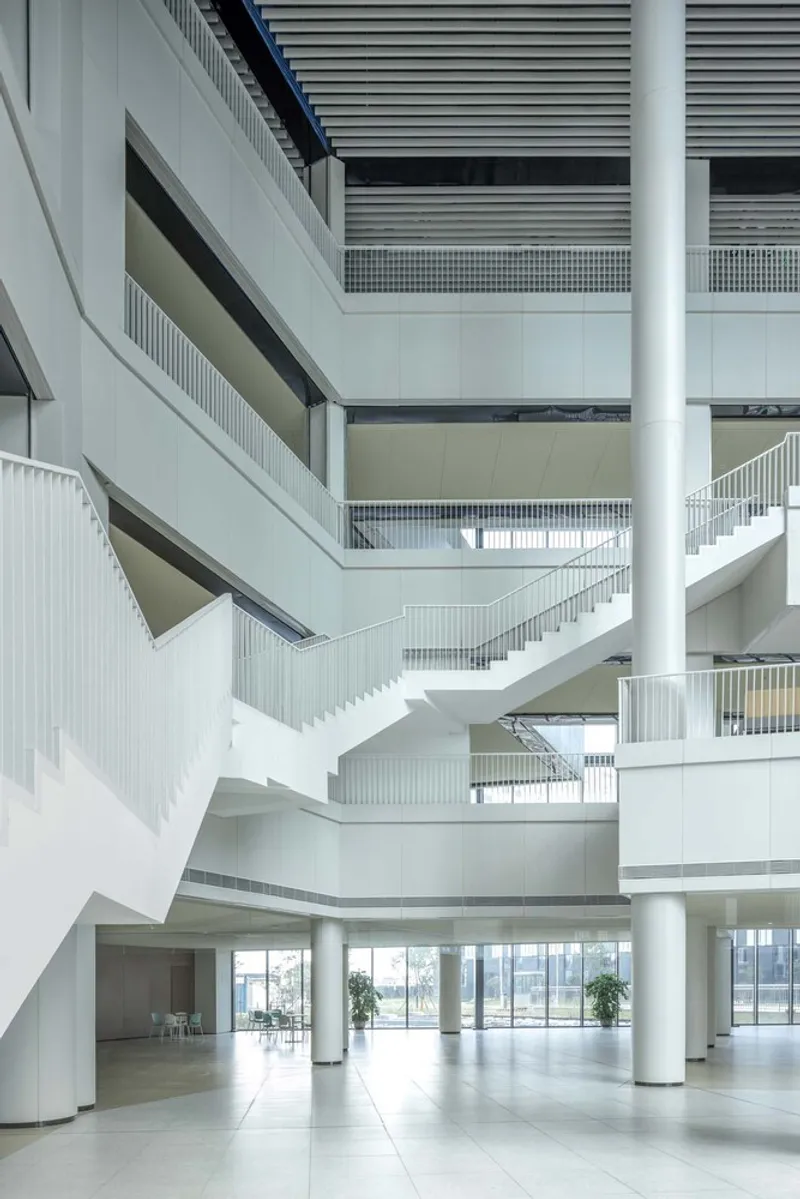
The campus is clad with white ceramic panels and milky white aluminum façades, creating a minimalist yet iconic architectural identity. The double-skin curtain walls used on the East and West facades promote natural ventilation, reduce heat gain, and enhance energy efficiency, in line with the campus’s low-carbon development vision.
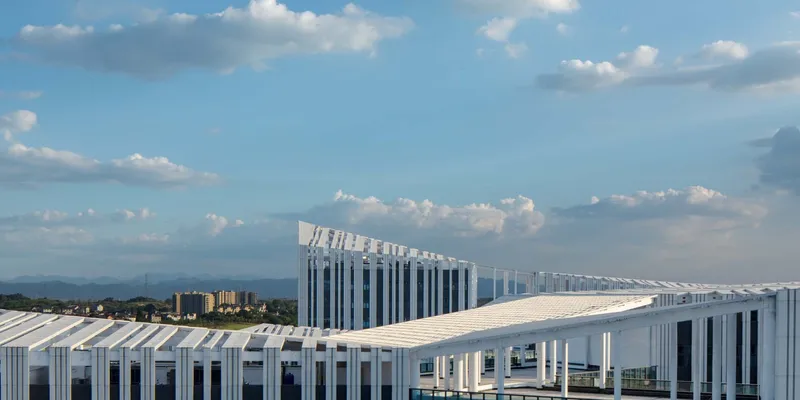
The rooftops also follow fifth façade principles, smartly concealing technical equipment while maintaining visual purity. Horizontal and vertical elements play with rhythm and proportion, ensuring that each building responds contextually to light, views, and function.
Landscape, Identity, and Campus Culture
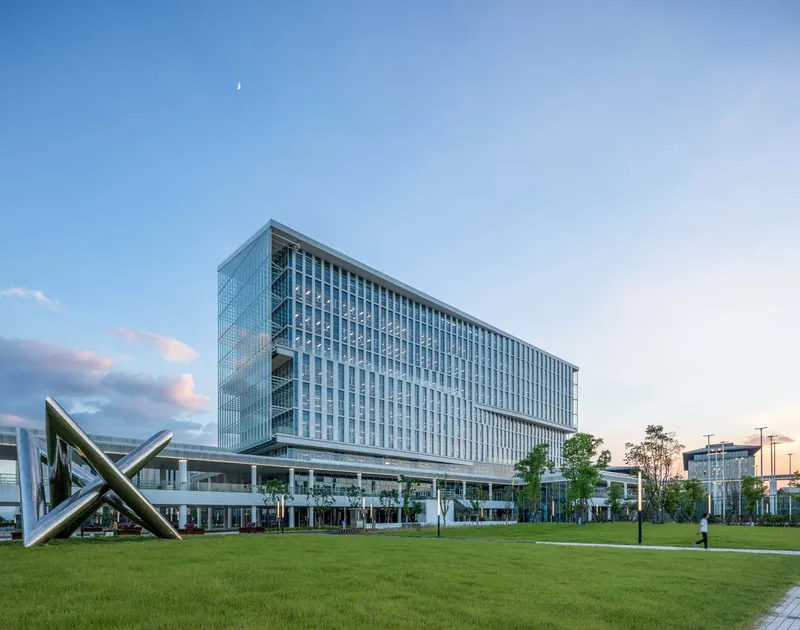
At the heart of the design lies a central urban plaza, acting as a connective tissue between the natural waterfront and academic spaces. The riverfront park doubles as a city-facing green buffer and a signature landscape element that defines the university's image.
In the South Zone, quieter private courtyards contrast with more public areas, encouraging reflection and smaller group interactions. The North Zone boasts sculpted lawns, plazas, and communal green areas that host open-air events and casual meetings—fostering a vibrant academic culture.
This spatial diversity gives rise to a “borderless campus” where architecture, environment, and community interact organically.
Architecturestudio has envisioned a university that blurs the line between nature and structure, offering a framework that adapts as needs evolve. From flexible research spaces to human-centered student housing and eco-integrated landscapes, the Zhejiang University “Two Institutes” campus in Quzhou sets a new standard in sustainable educational design and architectural innovation.
All the photographs are works of


Popular Articles
Popular articles from the community


The Amber Palace Opera: A Geological Fiction Surfaces on Tallinn's Baltic Waterfront
Pierre Brillard reimagines a Baltic legend as a public landscape, opera house, and waterfront promenade rooted in Tallinn's coastal identity.
Opera by the Sea Estonia: Three Shells Dissolving Architecture into Tallinn's Coastline
A winning opera house proposal replaces monumental form with interconnected shells that blur the boundary between building, park and Baltic Sea.

Tsunami Convergenics: Turning Catastrophic Ocean Forces into Underwater Housing Infrastructure
A speculative underwater settlement off the coast of Onagawa, Japan, treats tsunamis and typhoons as energy sources rather than threats.

Singing Woman: An Opera House That Performs Before the Curtain Rises
Ovidiu Cristian Pavel's conceptual opera house translates Estonia's choral identity into a sculpted waterfront landmark facing the Baltic Sea.

Similar Reads
You might also enjoy these articles


Hodi-Mandai Geram
Project Function: Preservation and revitalization of the Intangible heritage and socio-spatial identity of the Hodi by Housing, Cultural Memory Center, Sacred Grove, landscape, local tourism economy


Olio Towers: A Mid-Rise for Performers That Fuses Housing, Rehearsal, and Stage
Located blocks from Houston's Theater District, this modular tower stacks living units around a central performance atrium.

Oasis: Modular Green Housing Carved into Dhaka's Urban Fabric
A shortlisted Plugin Housing entry reclaims unauthorized settlements in Dhaka with stepped concrete volumes, green roofs, and ventilation-driven design.

Black Hole: A Floating Megastructure for the Post-Physical Era
Emiliano Mazzarotto envisions a spherical, self-scaling arena where e-sports, digital hotels, and holographic stadiums replace traditional public space.

Explore Zhejiang University Of Tech Competitions
Discover active competitions in this discipline

Challenge to design public laboratory

Challenge to reimagine the Iron Throne

Photograph architecture without architects

Illustrate the lost glory of Angkor Wat - Render Challenge
Comments (0)
Please login or sign up to add comments
No comments yet. Be the first to comment!