
Food Learning Hub
Design and architecture projects exploring food systems, urban agriculture, culinary spaces, and community food culture.


The Nine Elms Hub: Circular Food Systems Embedded in Warehouse Architecture
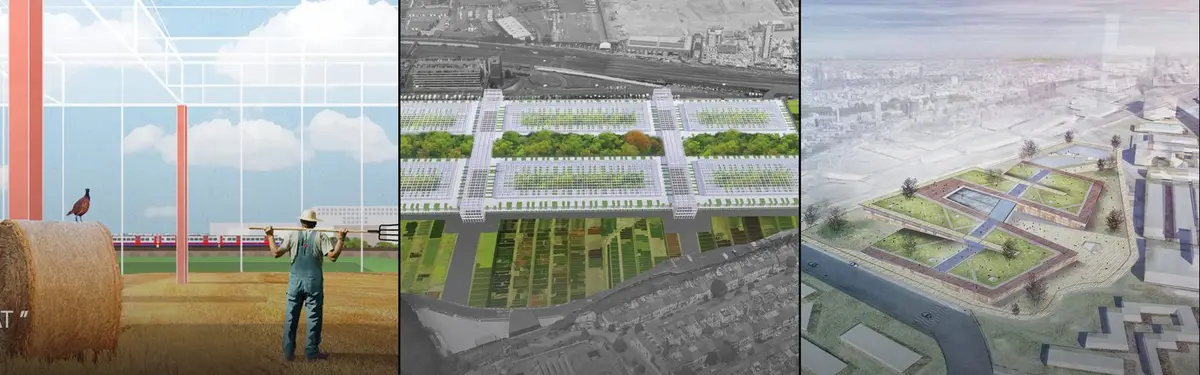
A phased urban farming intervention transforms London warehouse infrastructure into a closed-loop food production and residential ecosystem.




Toolset for a City's Metabolism
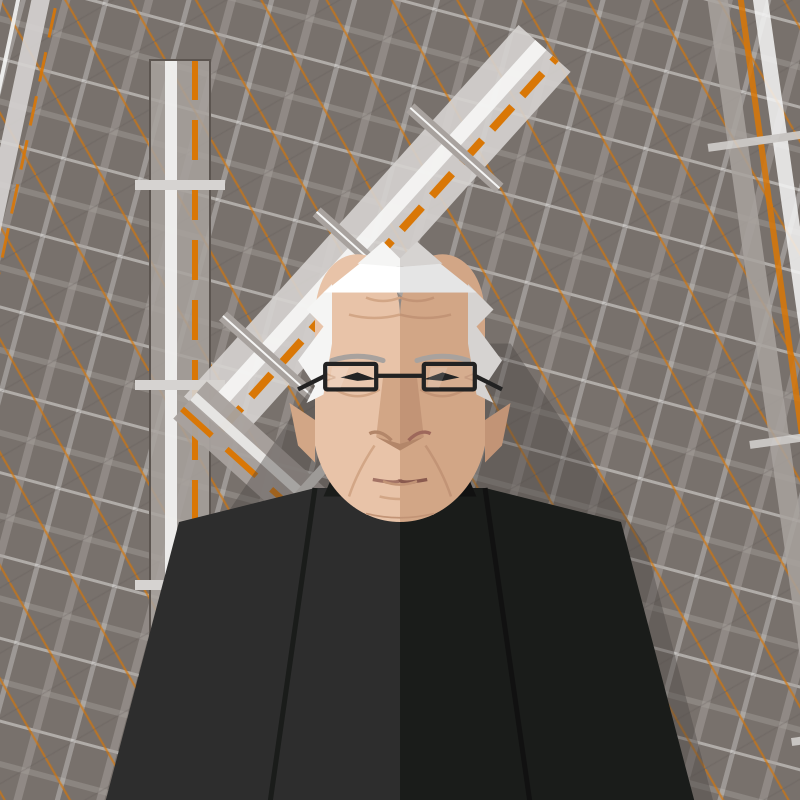
We call for embracing voids within urban tissue, not necessarily meaning these should be neglected in planning but rather open for spontaneity. As a spatial tool we propose a structure that can grow and shrink according to the needs and engagement of its creators - the locals. Constructed out of simple scaffolding elements it is fully reusable.


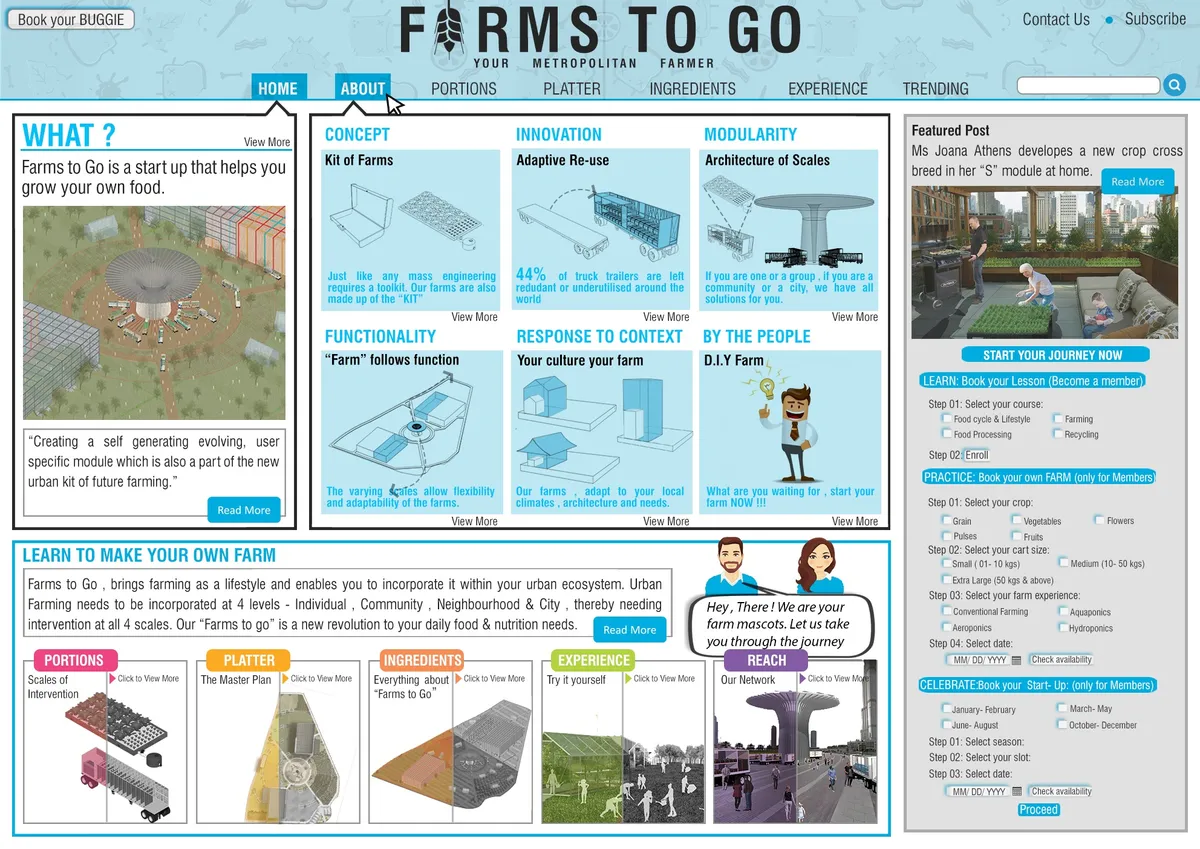
Farms to Go
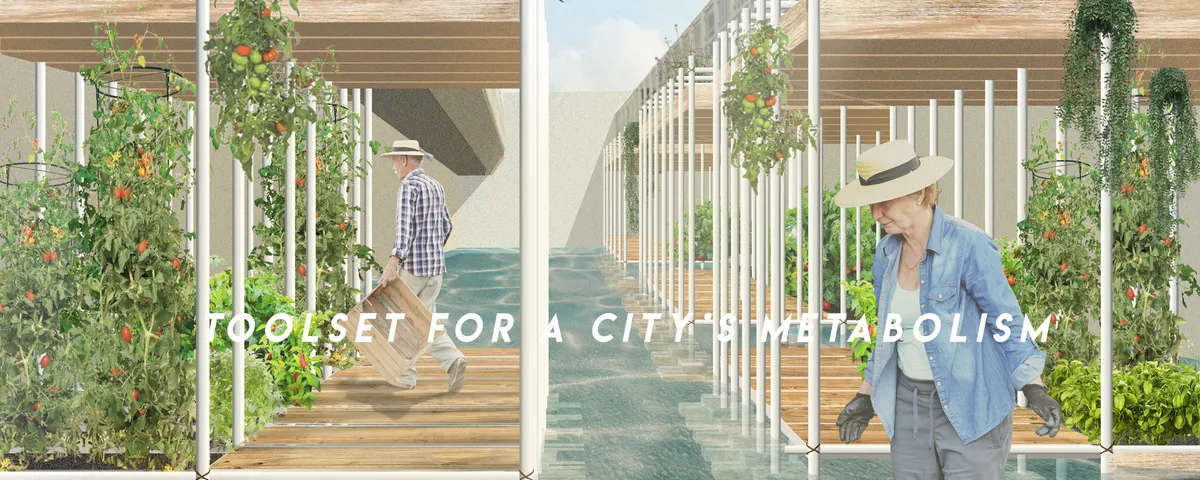
In order to rethink Urban Farming, it is essential that it needs to be a lifestyle choice & an urban intervention network instead of a site-specific design approach.?Farms to Go? is an urban farming kit that enables one to incorporate farming within the urban ecosystem by intervening a generative module at 4 scales ? Individual,Community,Neighborhood & City.

Farming For All
"Farming for All" is a living area that combines different programs focused on harvesting, learning, consumption, entertainment, and housing.


THE FOODPATH
"THE FOODPATH" aims to provide the public an experience the food cycle from cradle to cradle - from public roof farm, to visual education of food chain production, until the food waste treatment process, by an axial footpath, connecting the whole building in different dimension.

Enrique Mora Builds a Culinary Ecosystem on Ecuador's Coast to Rebuild After an Earthquake
A hybrid school, restaurant, and innovation lab rises from the dunes of San Vicente, turning local food culture into a recovery engine.


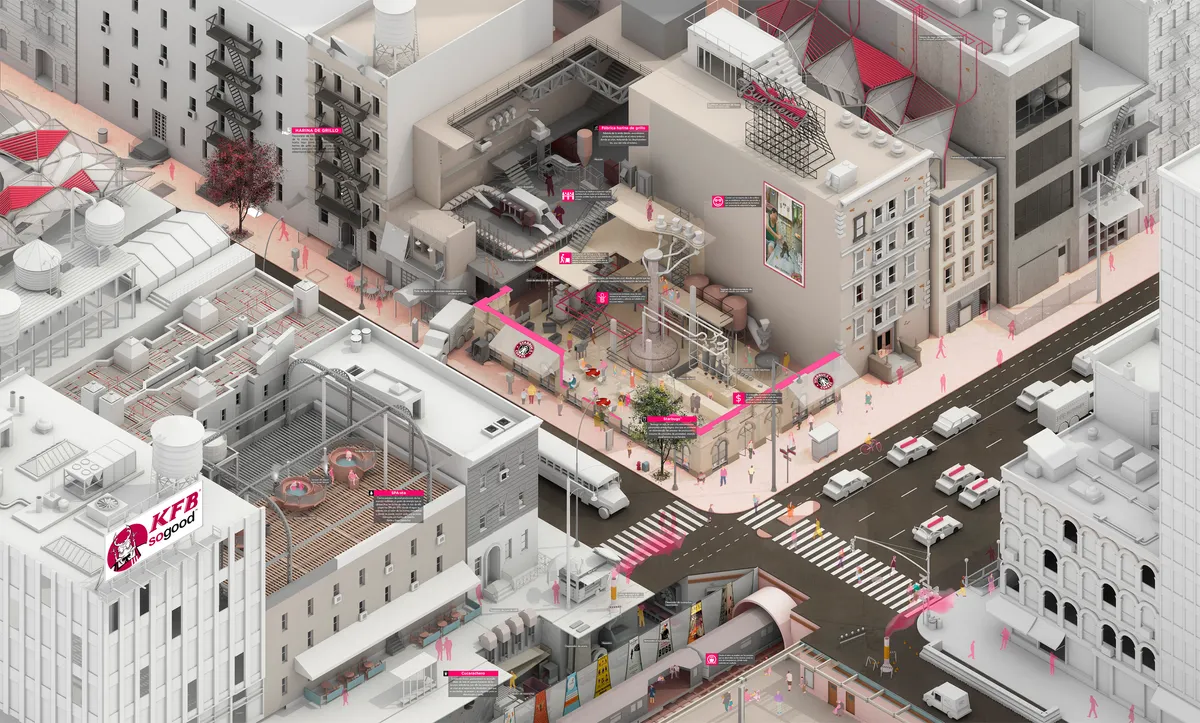
Entomomaniac
Population growth has achieved historical maxiums, mankind needs to adapt their daily diet to new dimensions. How it would be the transformation of a big city if insects would be our main protein source? What if we could design production centers into the city? What if eating insects would become a fashion as it happened with sushi or lobster decades ago?
Jo Nagasaka Turns a Corner of a Yoyogi Office into a 46 m² Farm Shop and Kitchen
In a quiet residential pocket of Shibuya, Schemata Architects builds a community food hub on a carpenter's budget.


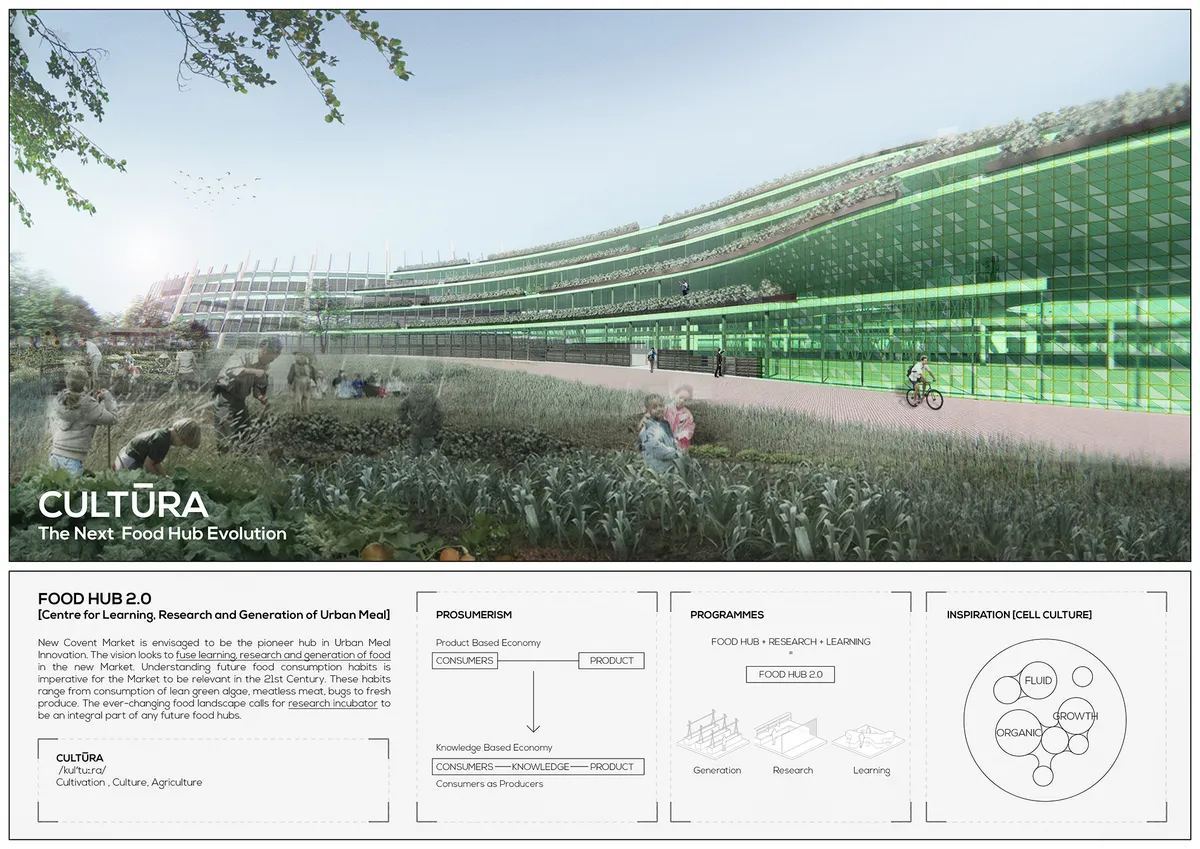
Cultura
[New Covent Market as Food Hub 2.0] The vision looks to fuse learning, research and generation of food in the new Market. Understanding future food consumption habits is imperative for the Market to be relevant in the 21st Century. The ever-changing food landscape calls for research incubator to be an integral part of any future food hubs.


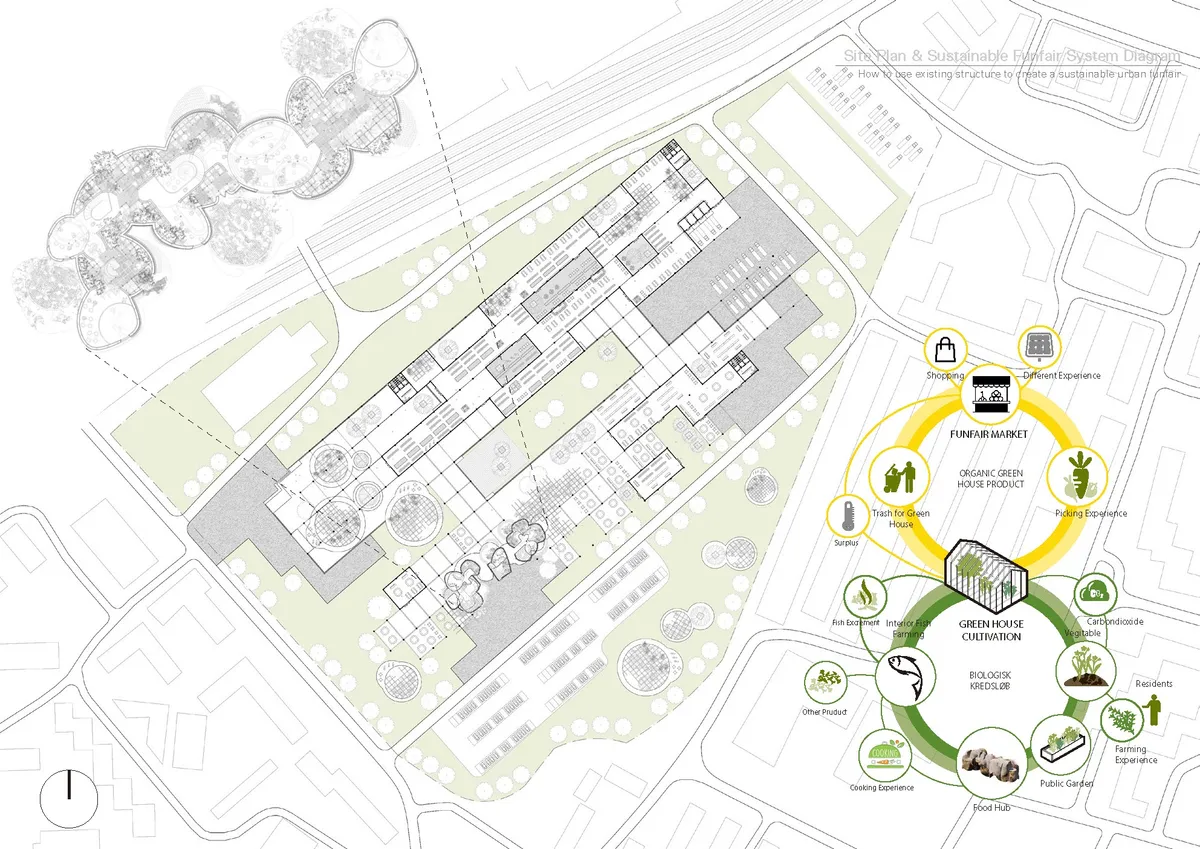
Sustainable Urban Funfair
This complex turns sustainability form a cold scientific term into an urban funfair. Here, people can not only get healthy food but also happy food --- food that they grow, nourish and pick on their own, food that are grow in variety of fun spaces: maze-like space grid and existing structure of the New Convent Market.


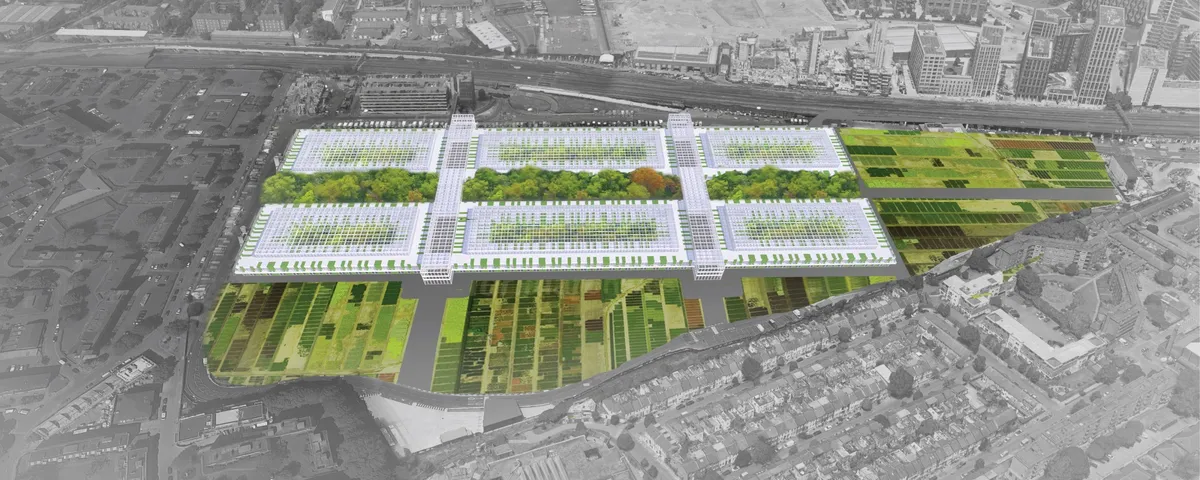
NINE ELMS FOOD PARK
The Nine Elms Food Park showcases a variety of food production strategies, giving visitors and residents the opportunity to learn how food from all over world is grown. The food produced and processed on-site offers a new urban lifestyle that revitalizes essential food production knowledge and skills while also connecting urban populations with nature.
Francisca Sottomayor and Fahrenheit.Works Build a Living Kitchen Where Plants Cook Alongside People
A multispecies dining installation in Porto transforms a communal table into a working ecosystem of herbs, fire, and shared meals.





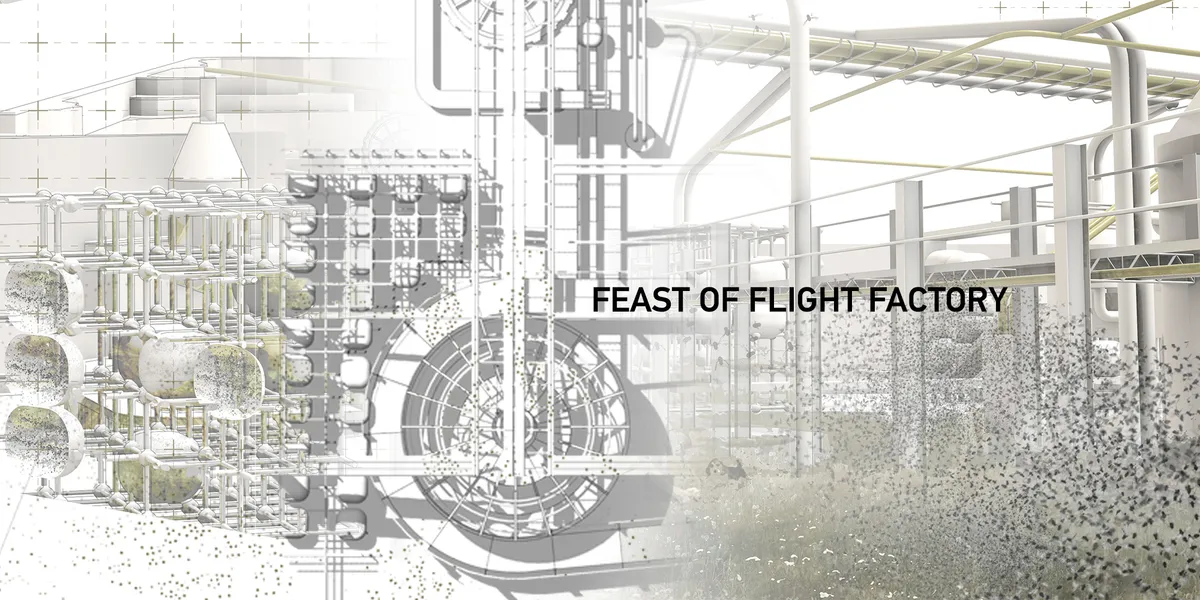

Food Street: A Timber-Canopied Market Street That Leads Diners from Open Kitchens to the Riverfront
Modular restaurant units line a pedestrian street under a glazed timber canopy, then step down to the water at Newton Creek in New York.

The Hungry Caterpillar By Lyth Design
A playful, caterpillar-inspired food street blending sustainable design, 3D-printed kitchens, bamboo structures, and recycled materials into an immersive public dining experience.



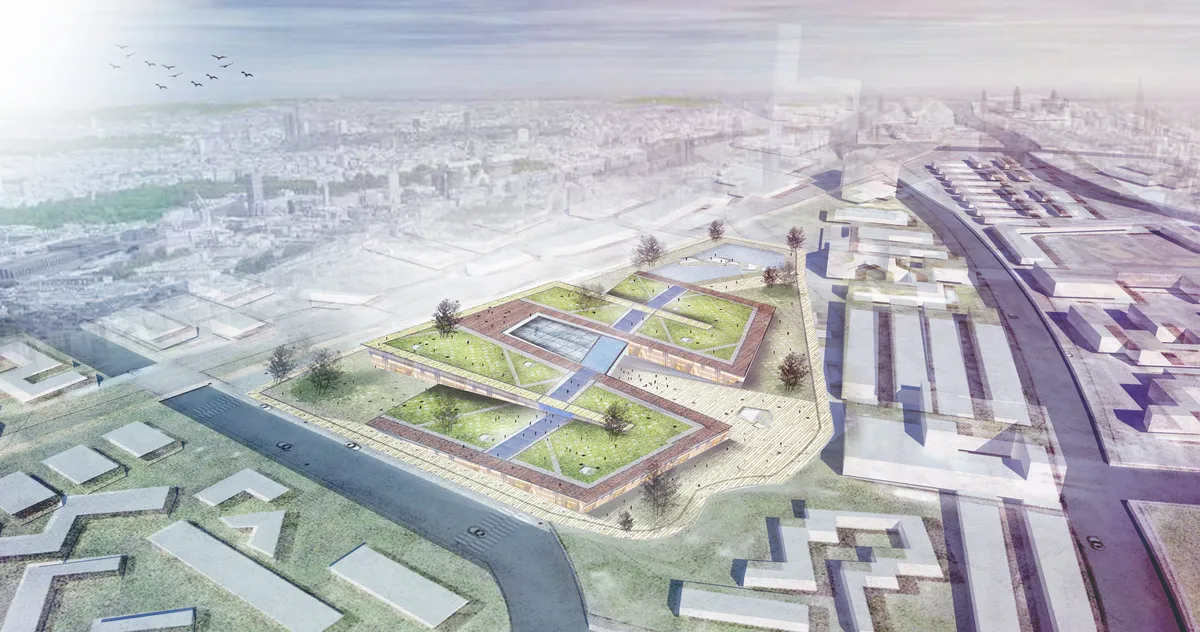
The Nine Elms Hub
The Nine Elms Hub is a model for rethinking the existing chain of food production, consumption, and distribution. The Hub tackles both ends of the chain, transforming the conventional linear production line into a circular one, achieving the ultimate goal of minimizing wastes and self-sustainability with a collective effort of both producers and consumers.
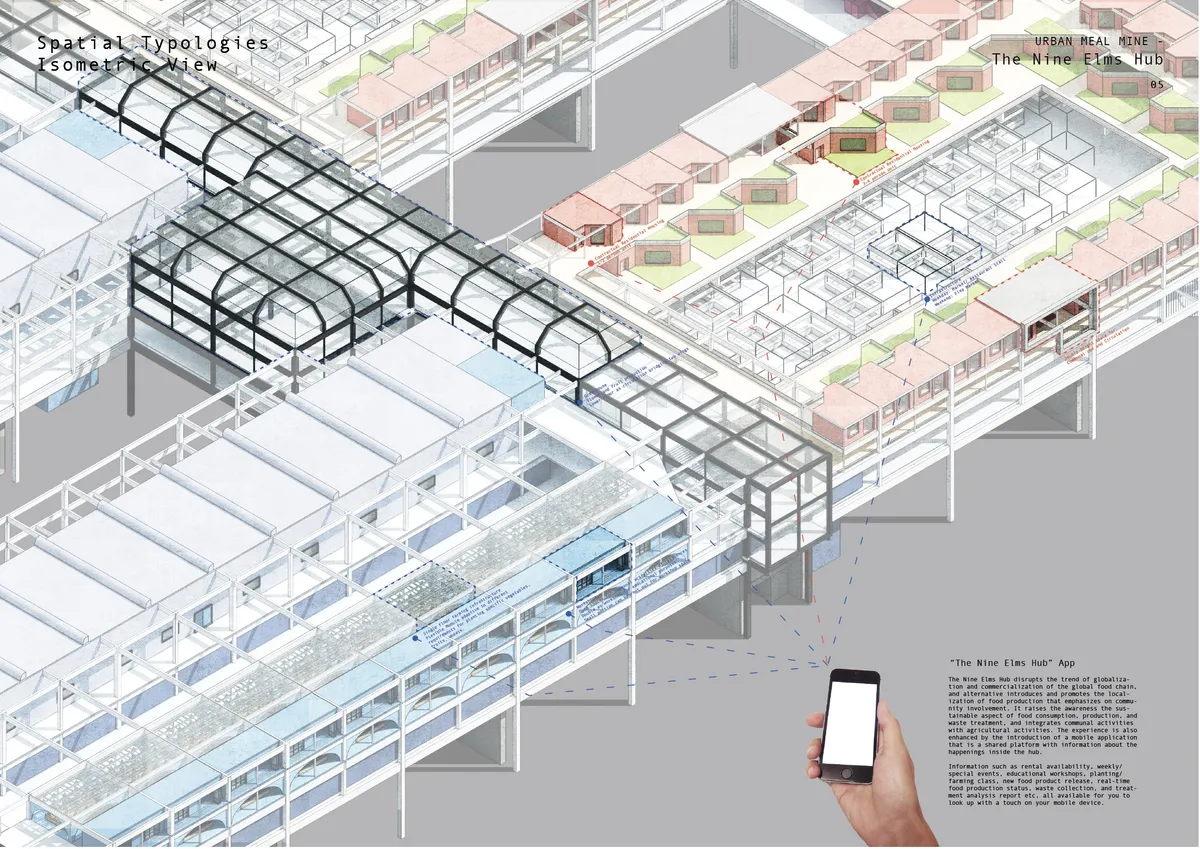


Farm4 resilience
An inspirational touchstone informing a more resilient and sustainable urban existence: bringing food back to a meaningful place in our everyday consciousness and addressing ways to feed the burgeoning urban population, whilst providing an attractive public open space within its dense urban context.
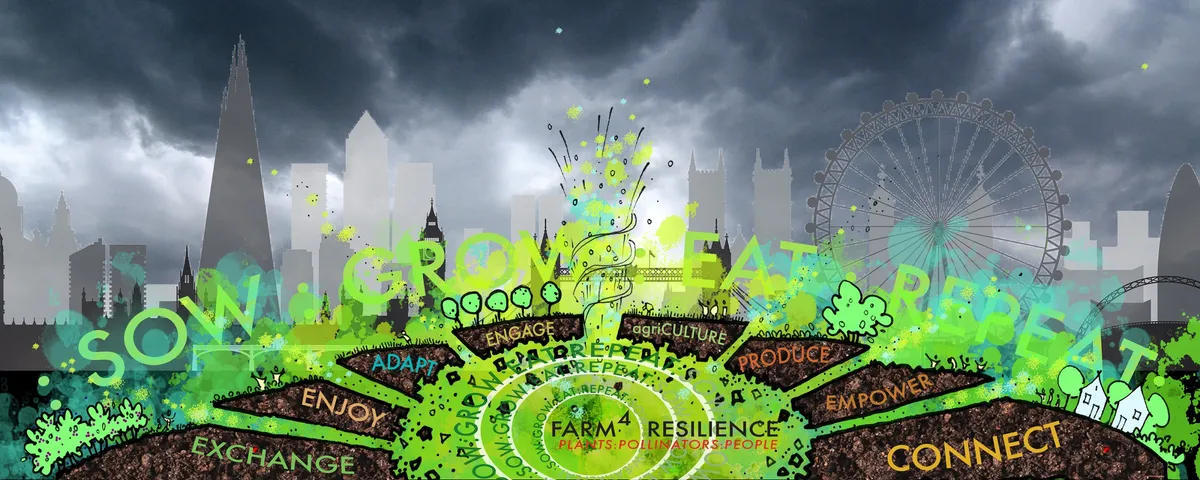

Fresh v2.0
The concept of the project is as changing the meaning of fresh, as the outcome of the system not only meets the food need of people but meets them with the freshly picked food. People involved in production process and they are a witness to growing plants. This system will re-code human behaviour to become aware of basic needs of life.
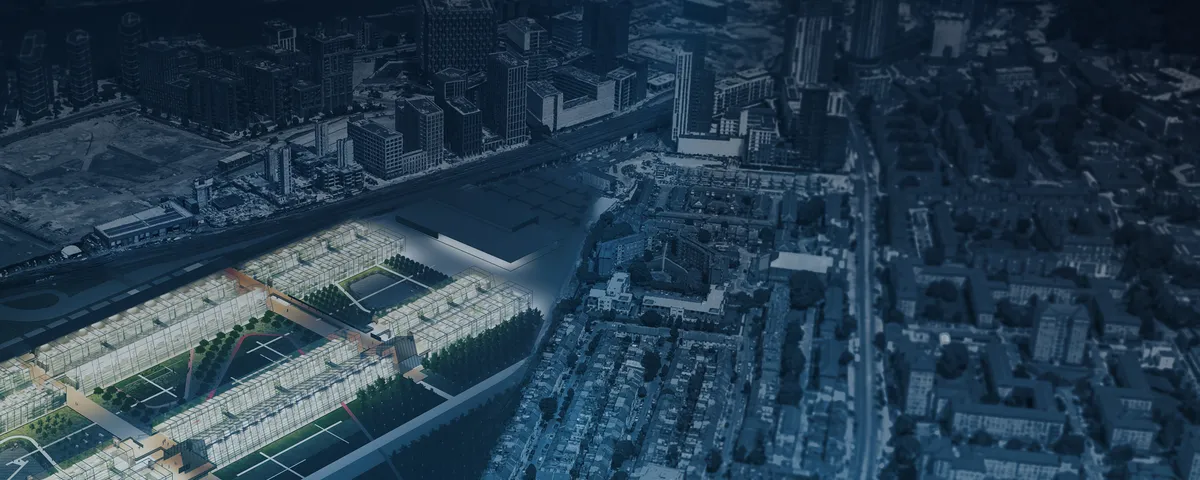

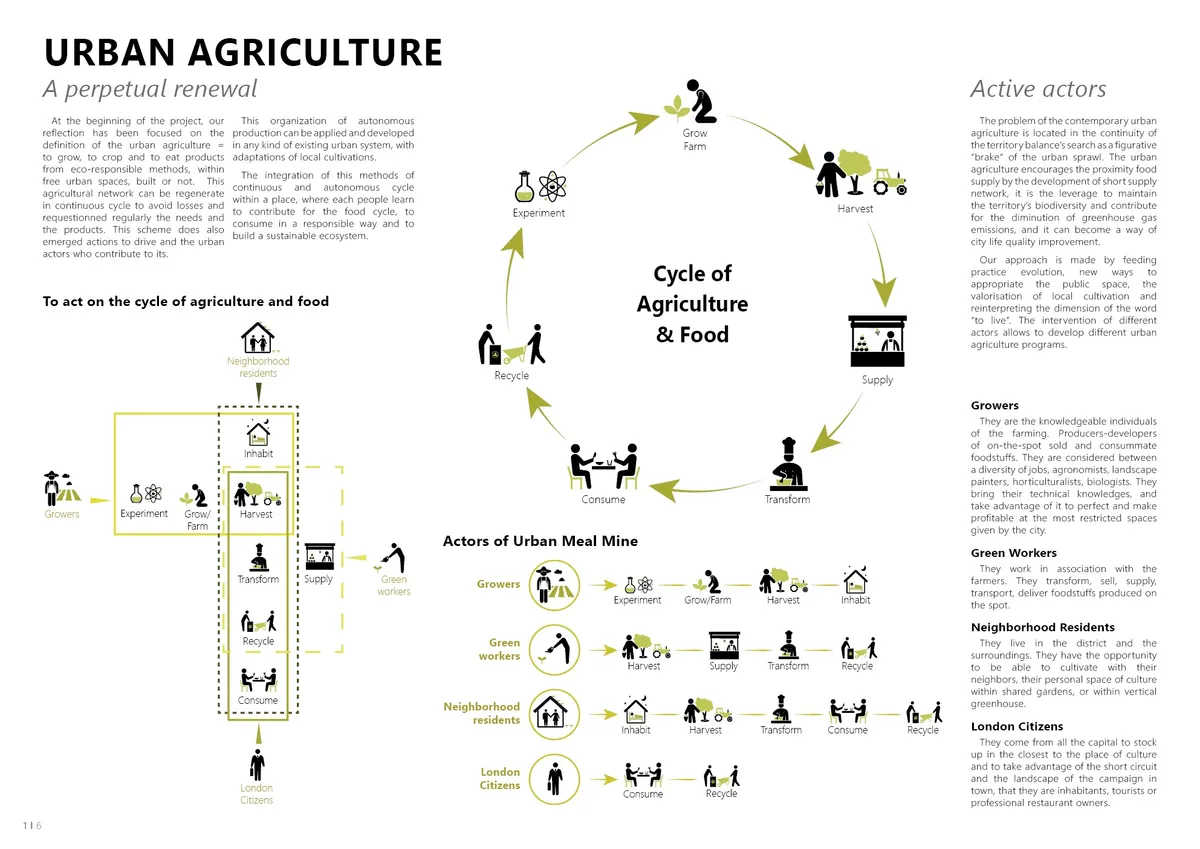
FOODFLOW
Sustainable agriculture can be viewed as a system with many inputs, throughputs or processes, outputs, and feedback. Each part of this process is interdependent upon each other to function and produce efficient outcomes and experiences.
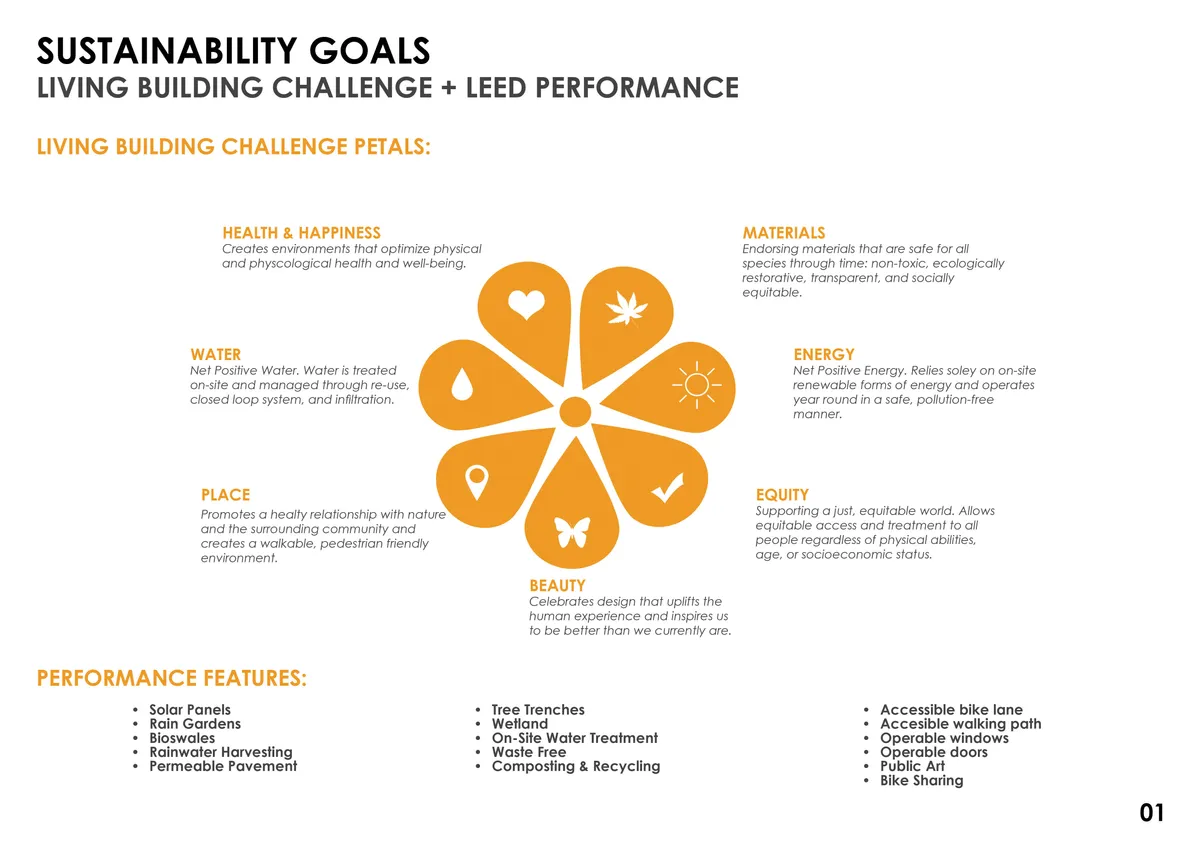
Cultura: Where Algae Facades and Vertical Farms Redefine the Urban Food Market
A shortlisted entry for Urban Meal Mine reimagines New Covent Market as a living food ecosystem with ETFE algae panels and hydroponic systems.


