
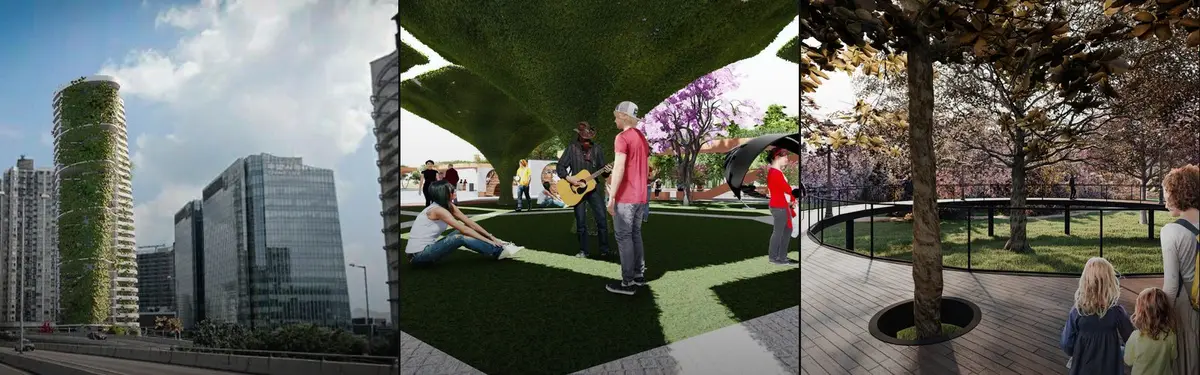


Urban Forest
Integration of trees, vegetation, and natural ecosystems into urban environments and architectural design.
An urban forest is the whole population of trees and woody plants growing in and around a city: street trees, park woodland, garden trees, remnant bush and newly planted groves, managed together as one living system. Urban forestry is the planning and care of that system, and its most visible measure is tree canopy, the share of a city's land shaded by leaves when seen from above.
What is an urban forest?
In its narrow sense an urban forest is a forest or grove that grows inside a city, town or suburb. In the wider sense used by planners, the term covers any woody vegetation growing in and around human settlements, whether publicly or privately owned. A single oak in a back garden, a row of planes along a boulevard and a fenced woodland reserve on the edge of town are all part of it.
That breadth is what separates the urban forest from the urban park. A park is a defined site designed for people, with paths, benches and toilets; an urban forest often has none of these and may not have clear borders at all. It also differs from green infrastructure, which includes engineered systems such as green roofs and bioswales. The urban forest is specifically about trees and the soil, shrubs and wildlife that come with them.
For designers the shift in thinking matters. A tree planted beside a building is not a decoration on one plot. It joins a citywide canopy whose total extent, age, species mix and distribution between neighbourhoods decide how much shade, cooling and habitat a city actually gets. Architects increasingly design for that canopy directly, from biophilic architecture that brings planting into buildings to small dense groves on leftover land.
A short history of urban forests
Cities have planted trees along avenues and in squares for centuries, but they were long managed one tree at a time. The idea of the city's trees as a single forest came from a crisis. In the 1960s Dutch elm disease threatened the elms of the University of Toronto, where, according to the history of urban forestry, Erik Jorgensen coined the term "urban forestry" and in 1965 taught its first official course. The episode showed how exposed a canopy dominated by a single species is, and it moved management from the individual tree to the forest as a whole.
In Japan, the botanist Akira Miyawaki (1928 to 2021) took a different route. Studying the sacred groves that survived around temples and shrines, he concluded that most of Japan's forests had been replanted with timber species, and he developed a method, based on the potential natural vegetation of each site, for restoring native forest from seed on degraded soil. He planted protective forests at more than 1,300 sites in Japan and abroad, including urban, port and industrial areas, and received the Blue Planet Prize in 2006.
Miyawaki's dense planting inspired the pocket forest movement. Groups in Ireland plant groves of just 6 to 50 square metres in urban areas, and Miyawaki forests have been planted in city parks from Los Angeles to Brussels, including one over a former landfill in Cambridge, Massachusetts.

The latest phase is the canopy target. Cities now measure their tree cover from aerial imagery and set goals for it. Seattle, for example, set a goal in 2007 to reach 30 percent canopy cover by 2037, and has tied that number to tree health and to an equitable distribution of trees between neighbourhoods.
Key principles of urban forest design
Canopy is the measure
A city's trees are judged by the shade they cast, not by how many were planted. Canopy grows slowly and is lost quickly, so protecting large mature trees usually does more than planting saplings. The City of Seattle reports that its canopy fell from 28.6 percent in 2016 to 28.1 percent in 2021, and that at neighbourhood scale a 13 percent increase in canopy is associated with a 0.5 degree reduction in temperature.
Benefits come from shade, water and habitat
Trees lower surface and air temperatures through shade and evapotranspiration. The US Environmental Protection Agency cites a review of 308 studies that found urban forests were on average 1.6°C cooler than urban areas without greenery, and notes that urban trees can reduce stormwater runoff by absorbing 15 to 27 percent of annual rainfall. Trees also give food and shelter to pollinating insects, migratory birds and small mammals.

Layers, not lollipops
A natural forest has a canopy, an understorey of smaller trees, a shrub layer and a ground layer. Street plantings often keep only the top, a line of single-stem trees in paving. Designs that rebuild the lower layers hold more moisture, more species and more shade at eye level. Hudson Forest by Bob Borson, an Editor's Choice in the New Dencities competition, takes this structure as its starting point for a mixed-use development.
"The concept was designed to emulate the natural layering of a forest."
Bob Borson, Hudson Forest (New Dencities competition)
Species choice and diversity
The guiding rule of urban forestry is the right tree in the right place: species matched to soil volume, drainage, salt, heat and the space above and below ground. Diversity guards against the next Dutch elm disease. One widely used guideline, Santamour's 10-20-30 rule, allows no more than 10 percent of trees from one species, 20 percent from one genus and 30 percent from one family. Native species support more local wildlife, though street conditions sometimes call for tougher non-natives.

Small, dense and native
Pocket forests follow Miyawaki's logic at the scale of a car park. Typical protocols plant a mix of native saplings close together, with no two of the same species side by side, so that they compete for light and close their canopy quickly. Pocket forests are also criticised: forestry scholars note that popular claims of growth ten times faster than other methods are unsubstantiated, and that the method can be costly where planting needs irrigation.

Urban forests on uni.xyz
Members treat the urban forest as something architecture can make, not only something it sits beside. Fore^t De Poche by Sehr Gupta and Anita Stankova is a People's Choice Award winner in the Elevate 2019 competition. It proposes a natural walkway that works as an "oxygen chamber", creating a micro-climate inside and raising awareness of pollution, and it is designed as a self-sufficient module that produces its own electricity.
Cloudburst Forest ('暴雨森林') by Salman Faris, a winning entry in the Abode competition, is proposed as Hong Kong's first biophilic "plyscraper": a wooden residential skyscraper that brings elements and vegetation of the sub-tropical rainforest, long since cleared, back into the city. Among Editor's Choice entries, SOUL HUG carries biophilic design through every space of its project, and AXIS MUNDI by Relja Petrović, in the Transfarm competition, casts its tower as a "Future Forest Protector".
The journals show the same ambition in built work. In Colombia, the Cali Foothills Integral Corridor by Edward Conde Serna Arquitectos, completed in 2024, set out to start a new urban forest on 57,000 square metres of foothill land between apartment blocks and protected mountains. People move through it on raised walkways so that the ground is left to the trees.

In Mexico City, Michan Architecture and PARABASE, with Taller de Paisaje Entorno, placed three pavilions in Chapultepec Forest. Our journal describes how the buildings curve their roofs to clear branches and lift their floors on slender columns to protect root systems, a useful catalogue of tactics for building near mature trees.

At building scale, VTN Architects wrapped their own Ho Chi Minh City studio in a vertical tropical forest. The journal reports a 190 percent green ratio, roughly 1.1 tons of harvest a year from the planters and LEED Gold certification, set against a city that, as the journal puts it, was once blanketed by tropical forest.

Two student projects take the idea to the street and the city edge. Productive Organism, a thesis by Amod Nargund, sites housing among the mangroves, creeks and wetlands of Marve, Malvani in Mumbai and asks how development could repair the bond between city and ecology. Urban mAtrA by Raymond C, Muzamil and Ginu Shajan is a folding timber module for Doha that supports seating and climbing plants where no tree could survive; our journal opens with a line that sums up why canopy matters.
"The oldest piece of urban furniture is the shadow of a tree."
uni.xyz journal, Urban mAtrA: Modular Street Furniture That Grows Its Own Shade
Challenges and future directions
The hardest problem is equity. Canopy is rarely shared fairly. The EPA cites research finding that the parts of cities with less vegetation are hotter and home to more residents with lower incomes, and Seattle's own study found that neighbourhoods affected by racial and economic injustice started with less canopy and lost more of it. Tools such as American Forests' Tree Equity Score combine canopy, surface temperature, income and health data into a single score from 0 to 100 to show where planting is needed most.
The second problem is maintenance. Young trees need water and protection for years, and mature trees need pruning, inspection and room for roots. Planting campaigns are popular; watering budgets are not. Private land is the third: in Seattle, residential areas hold nearly half the city's canopy, and most trees lost there were likely removed for reasons other than development, one decision at a time.
Climate change adds new tests. Species chosen for today's climate may struggle in hotter, drier summers. Designers are responding with more diverse planting lists, larger soil volumes under paving, and experiments that make trees part of the structure itself.

Fab Tree Hab by Terreform ONE is one such experiment: a 1,000 square foot prototype dwelling that grafts living trees over computationally designed timber scaffolds, inspired by the living root bridges of Meghalaya.
Urban forests for students and designers
Urban forests suit research-led theses. You could map the canopy of your own neighbourhood from aerial images and compare it with income and surface temperature; design a pocket forest network on the leftover land of one district; redesign a street section to give trees enough soil; or study how a building can be planned around existing trees rather than cleared for them. Each benefits from working with an arborist or ecologist early.
Open competitions often reward these ideas. For related reading, see vertical gardens, which bring planting up the face of buildings, and the topic pages on biophilic architecture and urban parks linked above.
Frequently asked questions
What is the difference between an urban forest and a park?
A park is a designated public site designed for recreation. An urban forest is every tree in and around a city, on streets, in gardens and in parks, considered and managed as one system.
What is the Miyawaki method?
A way of restoring native forest developed by the Japanese botanist Akira Miyawaki. It plants many native species close together, chosen from the vegetation the site would naturally support, so the young trees compete for light and form a canopy quickly.
How much do urban trees cool a city?
It depends on climate and canopy size. A review of 308 studies cited by the US EPA found urban forests averaged 1.6°C cooler than nearby areas without greenery.
What is a good tree canopy target for a city?
There is no single figure, because climate and land use vary. Seattle, for example, aims for 30 percent canopy cover by 2037. Many cities pair a canopy target with a goal for fairer distribution between neighbourhoods.
What is tree equity?
The idea that the benefits of tree canopy should reach the people who need them most, especially low-income communities and those most exposed to heat and pollution.
References and further reading
- Urban forest, Wikipedia
- Urban forestry, Wikipedia
- Akira Miyawaki, Wikipedia
- Pocket forest, Wikipedia
- Blue Planet Prize laureates, The Asahi Glass Foundation
- Benefits of Trees and Vegetation, US Environmental Protection Agency
- Seattle's Canopy Cover, City of Seattle
- Tree Equity Score, American Forests


Popular projects
View all 47 projects


Latest journals
View all 51 journals

Edward Conde Serna Arquitectos Threads Elevated Walkways Through Cali's Foothills to Seed a New Urban Forest
A 57,000 m² park on Cali's mountain edge in Colombia uses raised steel boardwalks to reconnect the city with the Farallones and grow an urban forest.

Loizou Architects and Associates Replace the Facade with a Living Green Shell in Limassol
A 360-square-meter mixed-use building in a dense Cypriot neighborhood trades its outer wall for a vertical garden of climbing vines and local plants.
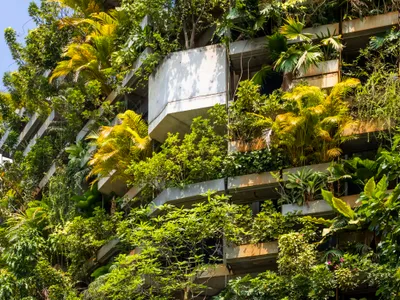
VTN Architects Wraps Their Own Ho Chi Minh City Studio in a Vertical Tropical Forest
A six-story office in Vietnam's Thu Duc district uses modular planters and passive cooling to achieve a 190 percent green ratio.
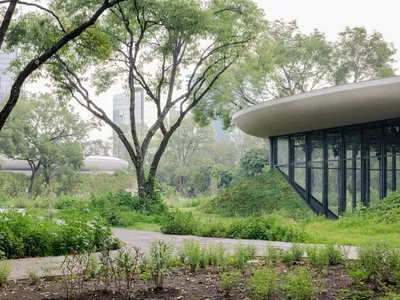
Michan Architecture and PARABASE Scatter Three Pavilions Beneath the Canopy of Chapultepec Forest
An international competition win delivers 70,000 square meters of new parkland architecture woven into Mexico City's most iconic urban forest.


