
Return to Society: Senior Living Architecture That Fights Isolation Through Food
A shortlisted Huddle entry reimagines elderly housing in Munich as a restaurant where seniors cook, teach, and reconnect with city life.


What if the antidote to elderly isolation wasn't another care facility but a restaurant? Return to Society takes that question seriously, proposing a senior living complex in Munich where older residents become active participants in a hospitality program: cooking, consulting, and socializing with tourists and younger generations. Food culture becomes the social adhesive, and the building itself becomes a stage for intergenerational exchange rather than a container for quiet retirement.
Designed by 雨奇 冷 and 爱 张, the project was shortlisted in the Huddle competition. The designers root their concept in an urban analysis of Munich's tourism infrastructure, identifying a gap in elder-inclusive public spaces. Their response is a building that doesn't just shelter its inhabitants but empowers them, blending hospitality architecture with universal design principles to produce something neither a traditional senior home nor a conventional restaurant could achieve alone.
A Rust-Hued Shell of Memory and Resilience
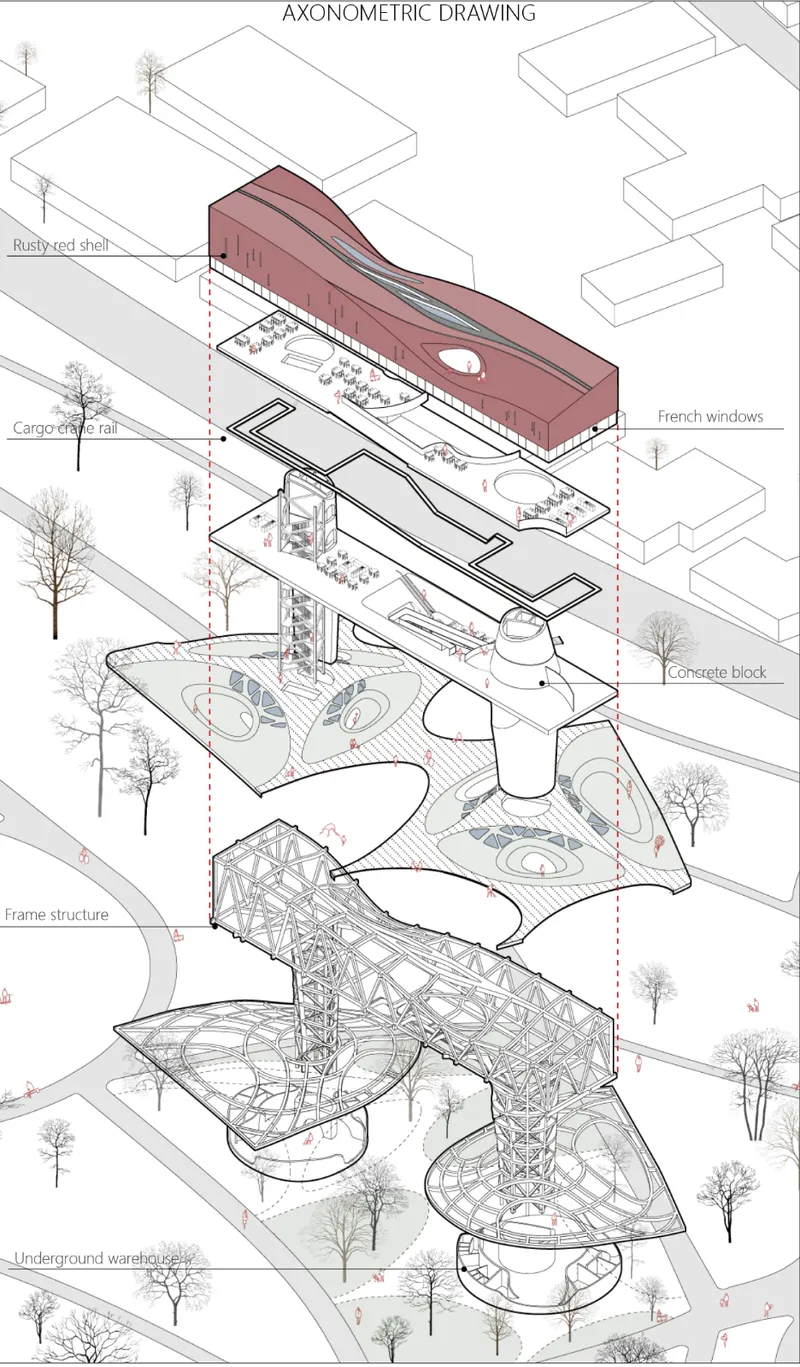
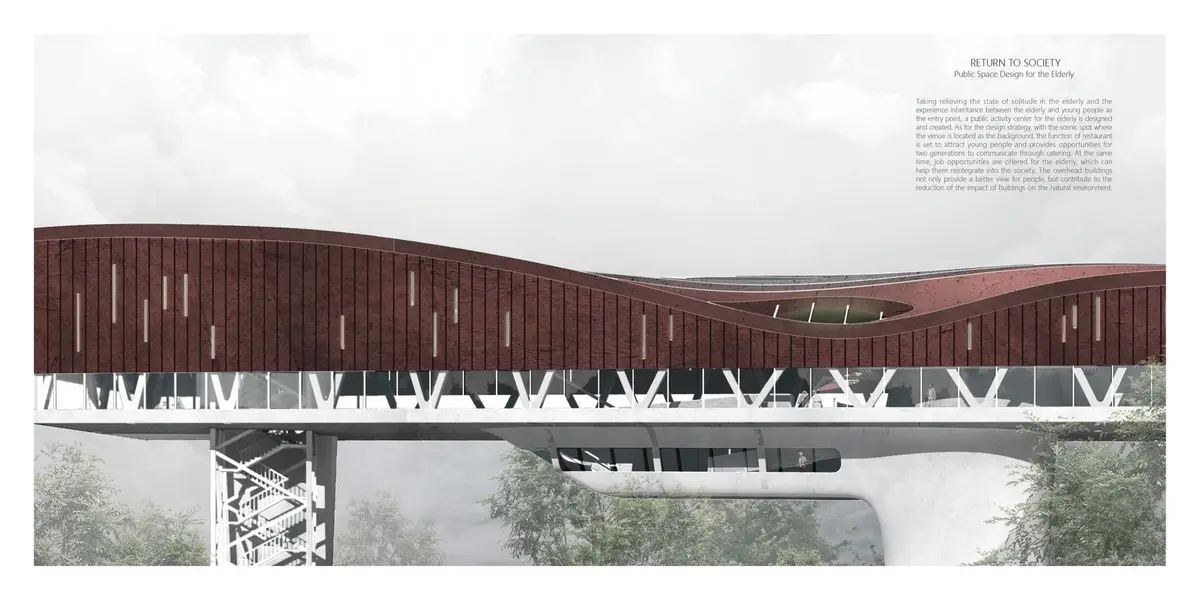
The building's most striking gesture is its curving red roof canopy, a rust-hued shell that reads as both protective cover and symbolic statement. The color palette ties directly into the project's narrative of age, memory, and resilience. Beneath this expressive skin, the axonometric drawing reveals an exploded layering of program: underground walkways at the base, structural supports and circulation cores in the middle, and the sweeping canopy overhead. The overhead structure minimizes the building's environmental footprint at ground level while lifting residents into panoramic views of Munich's urban fabric, a deliberate contribution to their psychological wellness.
Circulation as Care: Elevators, Slopes, and Scenic Routes
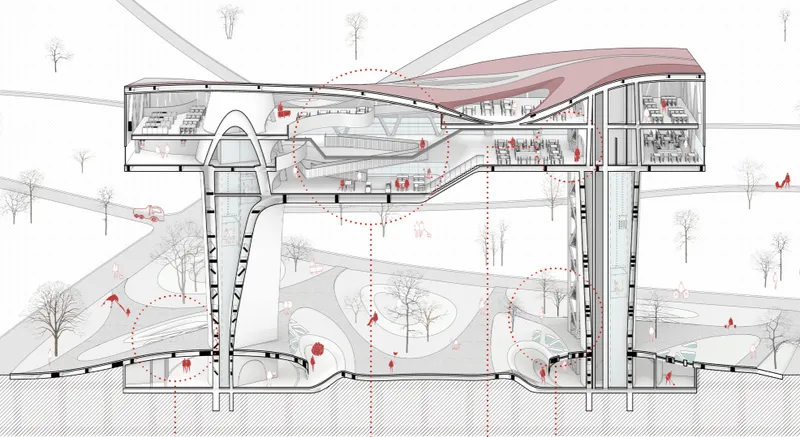
The section drawing cuts through the building's core to expose how movement works inside. A central elevator and circulation spine anchors the plan, flanked by gentle slopes that allow elderly residents to navigate between levels without stairs. This is universal design treated not as a regulatory checkbox but as a generative force: the slopes create promenade-like sequences through multi-functional dining spaces filled with natural light and organic forms. The arched red canopy overhead gives even routine vertical circulation a sense of occasion, turning an accessible ramp into a scenic engagement with the building's interior landscape.
Interactive Platforms Where Seniors Lead
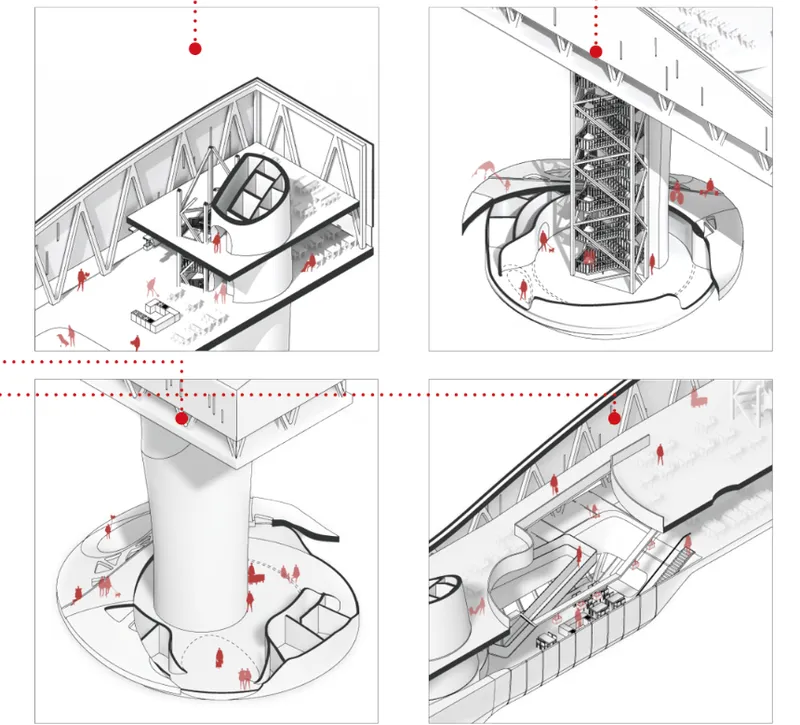
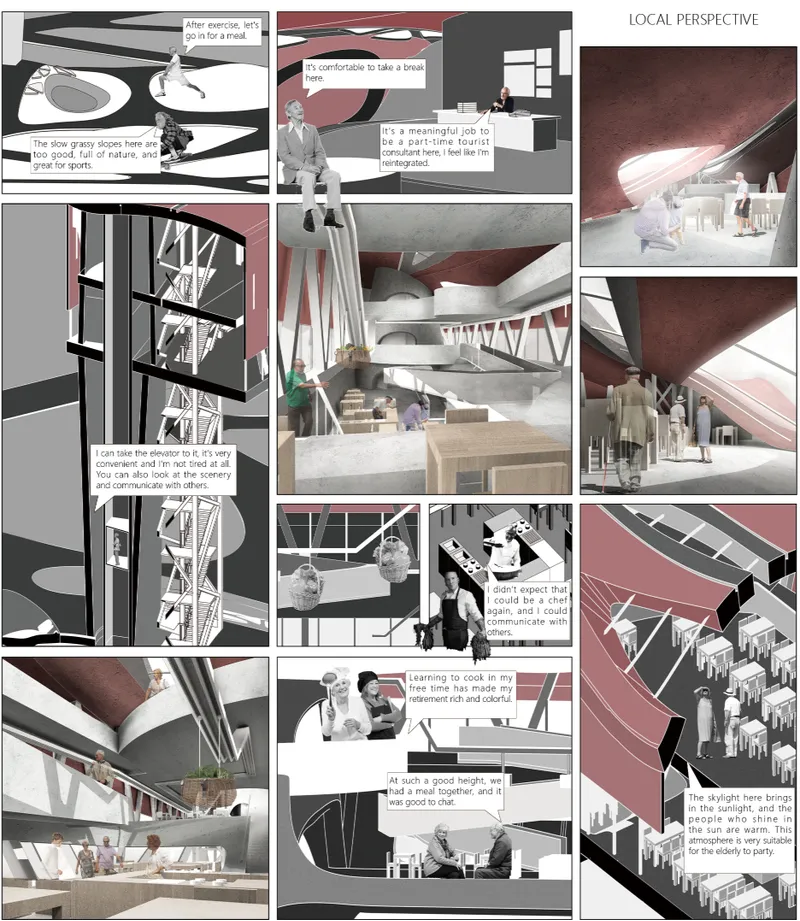
The vignettes here illustrate the programmatic heart of the project: cylindrical and curved interior spaces where elderly residents cook, guide visitors, and socialize. Figures rendered in red populate these scenes, reinforcing the building's identity as an active, inhabited place rather than a passive care environment. The spatial language is deliberately warm and enclosing without being institutional. Curved walls create intimate zones for small group interaction, while open platforms allow for larger gatherings. The architecture positions its senior residents not as recipients of care but as hosts, teachers, and cultural figures within a living social ecosystem.
Urban Strategy: Filling a Gap in Munich's Tourism Fabric
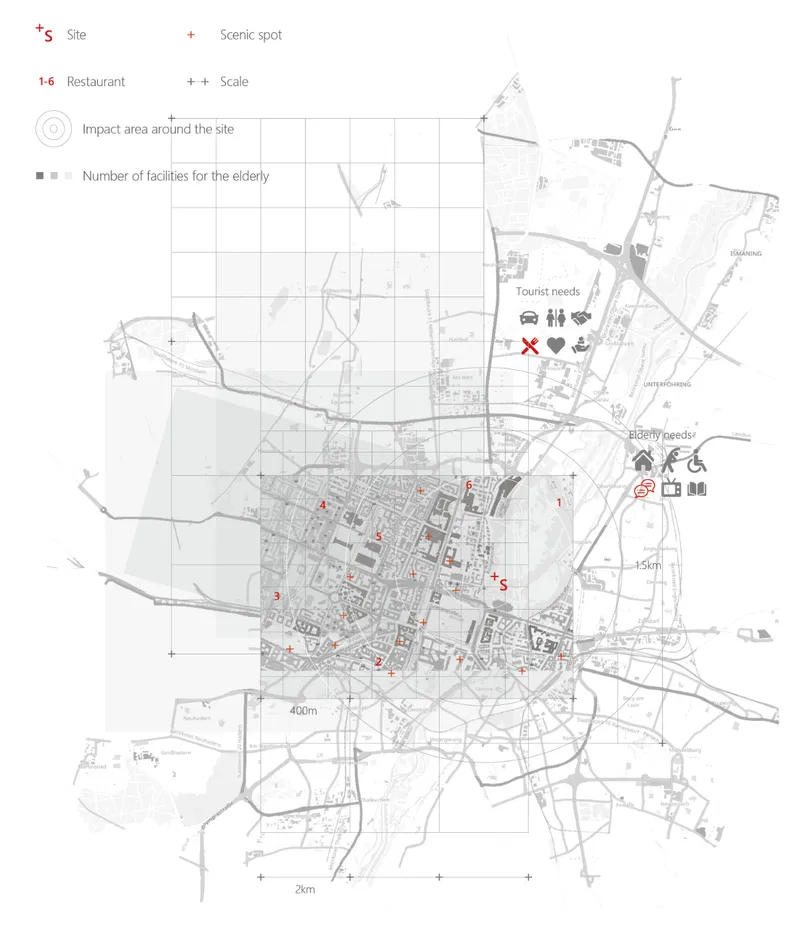
The site plan pulls back to reveal the project's urban ambition. Tourist amenities and facilities for the elderly are mapped across a Munich district, positioning the building within a broader network of public infrastructure. The designers argue that Munich's tourism ecosystem lacks elder-inclusive spaces, and their proposal fills that gap by making the senior living complex a destination in its own right. Tourists visit for the food and the cultural exchange; residents gain purpose, visibility, and daily social contact. It is urban planning as social therapy.
Why This Project Matters
Senior living architecture too often defaults to clinical efficiency or sentimental comfort. Return to Society rejects both modes. By casting elderly residents as active contributors to a hospitality program, the project reframes aging as a resource rather than a problem to manage. The architecture follows suit: its rust-colored shell, gentle slopes, and open dining platforms are shaped around the specific agency of its inhabitants, not around their limitations.
The real provocation here is the building's dual identity. It functions simultaneously as a senior residence and a public restaurant, collapsing the boundary between care and commerce, between the private life of aging and the public life of a city. If the future of elder care lies in reintegration rather than segregation, projects like this one sketch a plausible, spatially rich blueprint for how that could work.
View the Full Project
About the Designers
Enter a Design Competition on uni.xyz
uni.xyz runs architecture and design competitions year-round that reward proposals with spatial conviction and real site intelligence.
Project credits: Return to Society by 雨奇 冷, 爱 张 Huddle (uni.xyz).


Popular Articles
Popular articles from the community


Conexión: Biophilic Design Reimagines High-Rise Living in Hong Kong
Conexión reimagines high-rise living in Hong Kong through biophilic design, green facades, shared spaces, daylight, water and nature within.

Play: Fragments of Their World
Familiar architecture becomes modular playground design, creating safe spaces where displaced children can learn, connect, imagine and play.

Co-life: Sustainable Architecture for Age-Friendly Community Living
Co-life reimagines sustainable architecture for seniors through courtyards, rammed earth, shared gardens, and spaces designed for belonging.

Hill & Cross Opera: Sculptural Opera House Architecture Shaped by Tallinn’s Landscape and Identity
Hill & Cross Opera reimagines opera house architecture in Tallinn through its sculptural hill, civic plaza, glass wave and a luminous cross.

Similar Reads
You might also enjoy these articles

Day and Night Park: A Time-Based Urban Newsstand in Beijing
A temporary urban newsstand in Beijing blending travel, light, and reading through poetic colors, compact form, and community-focused design.

Modernist Patio Renovation in El Masnou, Barcelona by Oliver Segura Arquitectura + Cebrià Arquitectura
Modernist patio renovation blending tradition and innovation with a movable pool, leveled floors, and Catalan materials in El Masnou.
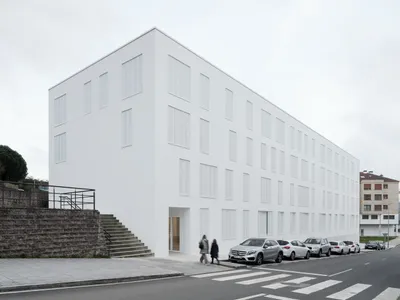
Alto Residencial Coop: Cooperative Housing Development in Santiago de Compostela by Carbajo Barrios Arquitectos
A linear cooperative housing complex blending white volumes and perforated metal façades, enhancing community living, natural light, privacy, and urban integration.
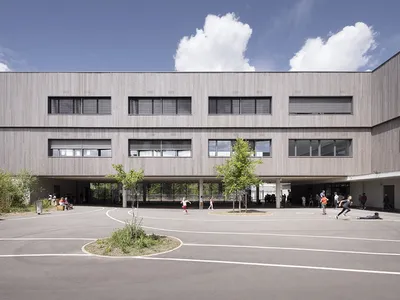
Vil Genis School by BPA ARCHITECTURE – Massy, France
Vil Genis School in Massy, France, features sustainable design, south-facing classrooms, community integration, accessible spaces, and modern educational architecture.


Comments (0)
Please login or sign up to add comments
No comments yet. Be the first to comment!