
Timber housing in Amsterdam: Designers explore wood to unite modern building technologies with sustainability.
Results for ‘Timberate’ - housing design competition


The human movement towards city areas has set off a huge shift of resources pooling in building construction around the world. This propels not only architects but entire humankind to find sustainable ways to re-analyze construction in its life cycle and find means to make it greener through its life.
No matter how much we hide, the construction sector is answerable for half of the world’s CO2 discharge. RCC-based construction generates so much carbon not only while manufacturing, but it is very tough to discard construction waste post its lifecycle.
Can alternative natural origin materials, for example, wood, can help change the course of global warming caused by excessive construction? Can wood be the real game-changer we had been always looking for?
Mass timber construction is fast, cost-efficient, it implicates less construction traffic and offers a high variety of solutions to complex design challenges. While it may not seem the most obvious choice for large-scale building, modern treating methods are opening new gateways to bring this material into the mainstream.
Pre-fabrication and technological advancement are reshaping contemporary building typologies. and new spatial configuration can be developed for the future of the urban context.
The fact that timber is quite strong and weighs less than other construction materials, as well as that showcases sustainable and renewable characteristics, brings great opportunity for innovation.
With its acoustic and insulation properties, timber is an excellent material for energy-efficient passive houses.
Mass timber structural performance and its lighter carbon footprint can be the answer to the future of wood architecture and the environmental impacts of construction.
The proposed challenge was the development of an innovative mass-timber compact urban housing with sustainable carbon-free impact designed to be lightweight, minimal, and compact.
Primary focus on the design of a parametric and prefabricated timber building system for a two-story housing unit where it can be shown the potential for a modular building system for horizontal and vertical expansion.
Utilize digital fabrication technology to achieve high precision fabrication, for easy assembly/disassembly/expandable for upgrading/relocation/end-of-life recycling making it resilient and adaptable to the rapidly changing needs of society. The houses are expected to be machine manufactured and the design hence should be made in resonance to mass-fabrication.
The jury for the competition consisted of esteemed designers, professionals, and academicians from around the world. The Lead Jurors for the competitions were as follows:
David Correa, Assistant Professor, University of Waterloo, Canada
Maciej Grelewicz, Founder, Maciej Grelewicz Architects, Poland
Some of the Best of competition projects are:
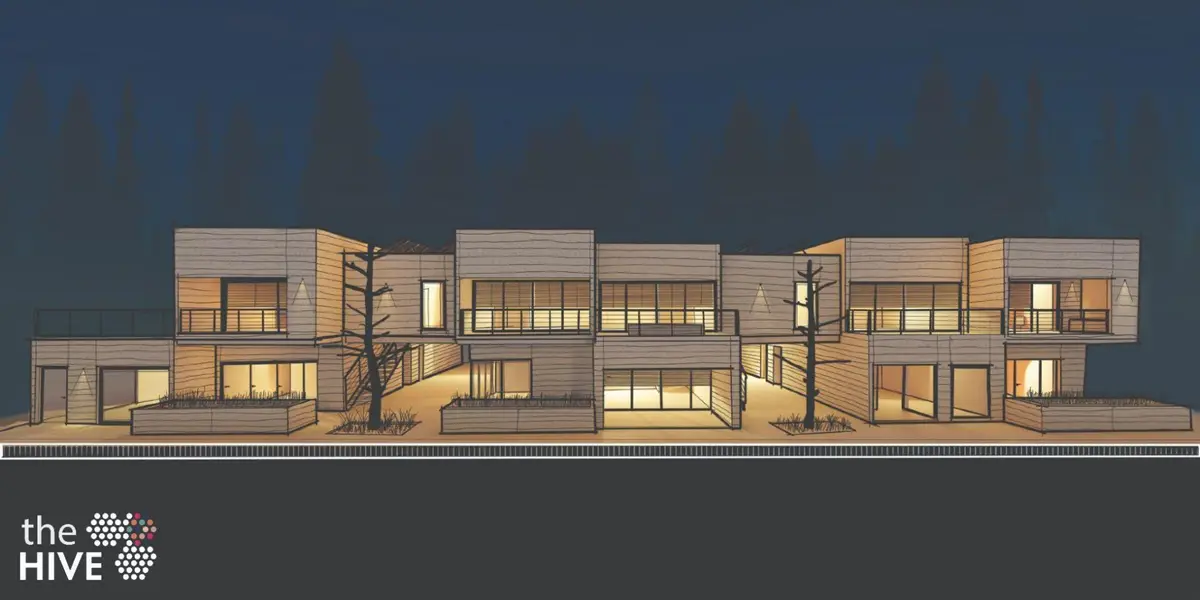
Winning Project: The Hive
By: Ishan Dsa & Abhilash Menon
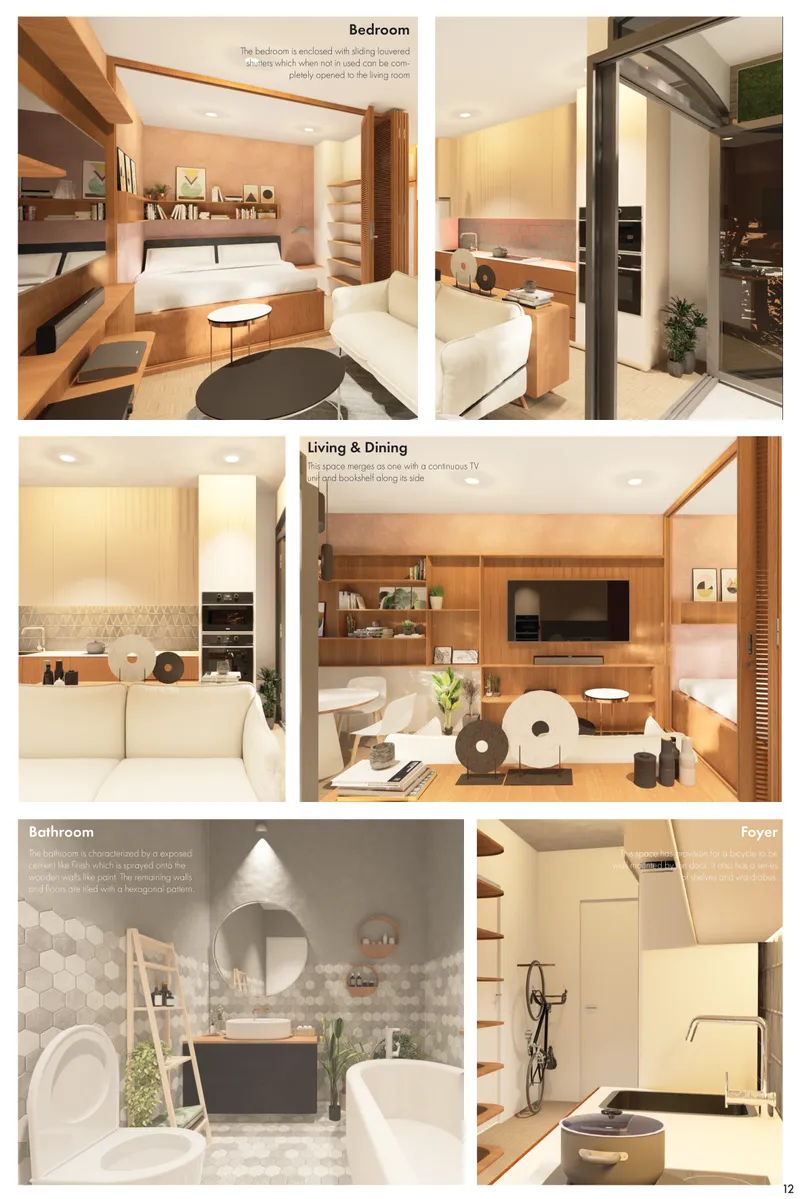
Fig: 1 Interior view
Description: The Hive is a "Social Housing" proposal in the Netherlands that approaches affordable housing with modular timber construction. Our aim is to create beautiful community spaces that include every inhabitant. The building modules are designed around two community courtyards which help create a variety in space.
--------------------
People’s Choice: Canal+ Housing Development
By: Kartik Sharma
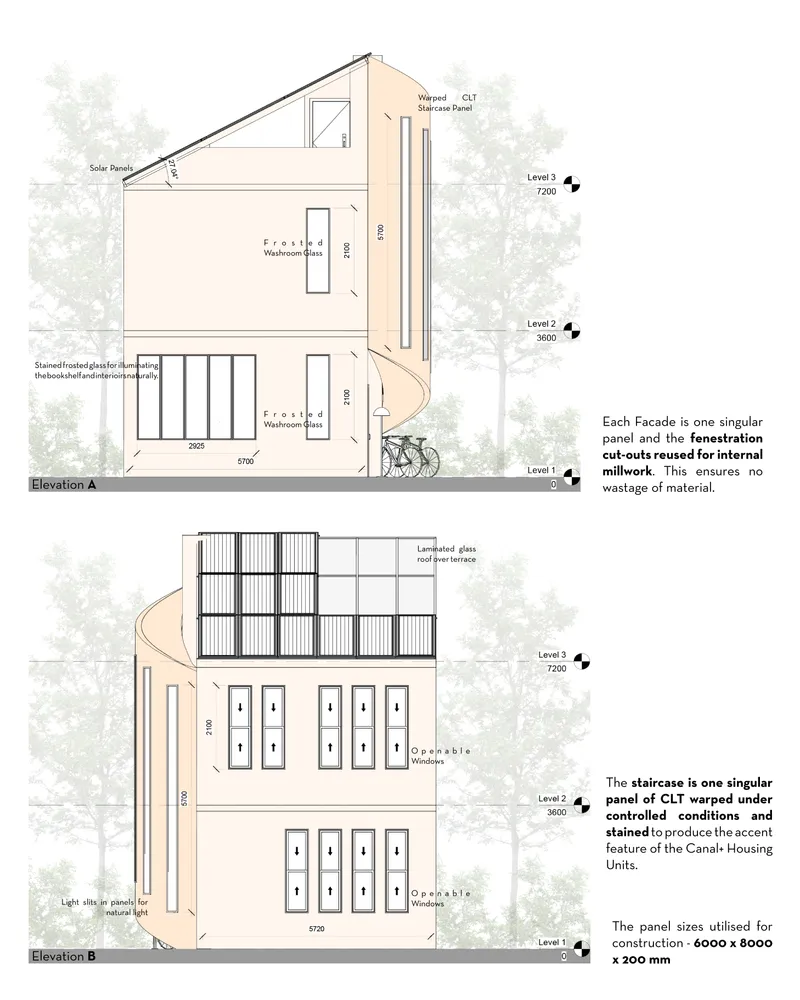
Fig: 2 Elevation plan
Description: Developing a sustainable, unique & grounded neighborhood for the people within Amsterdam.
--------------------
Editor’s Choice: Forest Housing
By: Genc Blakaj
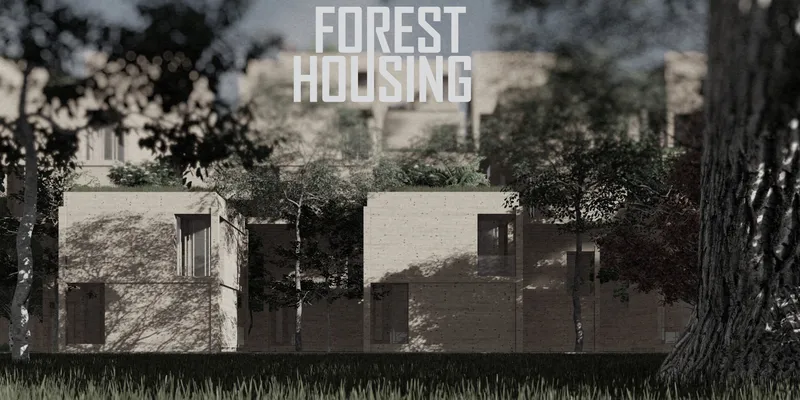
Fig: 3 Cover image
Description: In addition to the use of sustainable materials, the goal is to make new buildings more adaptable on site. Through the use of greenery, the building aims to coexist in harmony with nature.
--------------------
Editor’s Choice: Trapez
By: Khuyen Nguyen
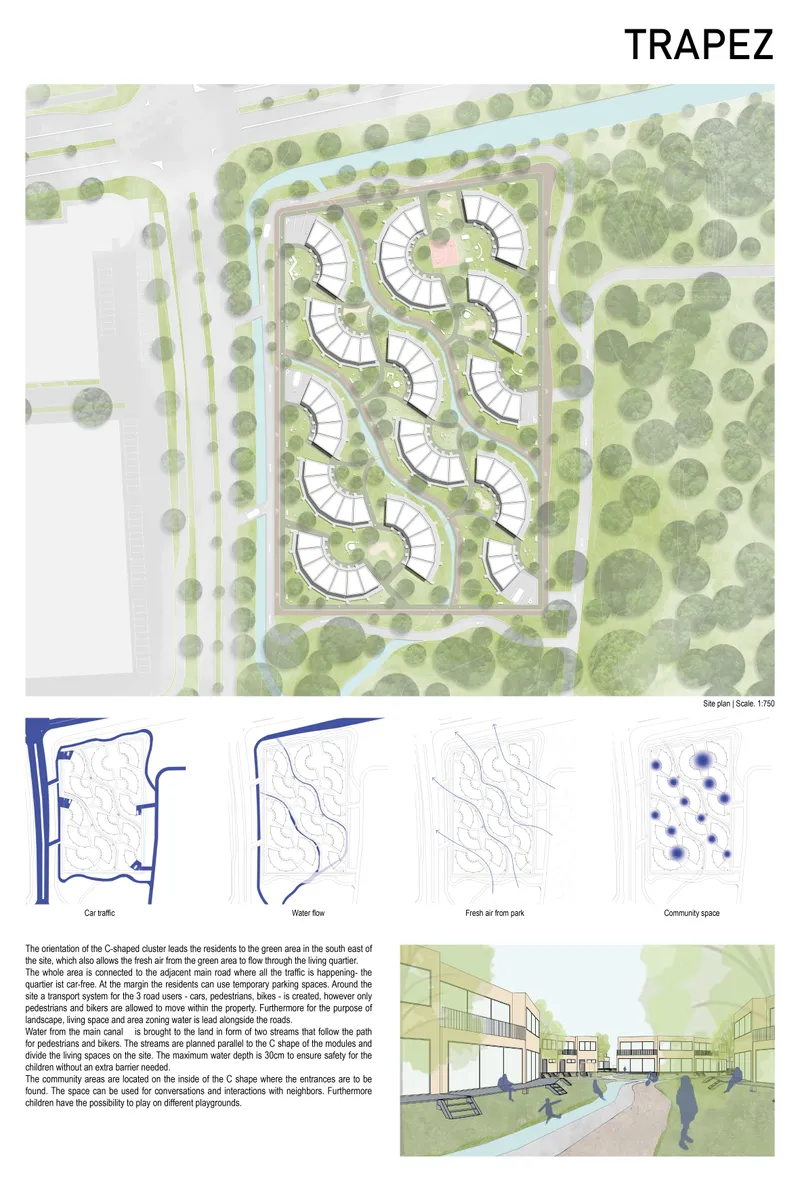
Fig: 4 Site plan
Description: On a green area of 17.000 m2 modular timber houses are placed with a land-use of 50%, where 100 wooden houses are designed. The remaining 50% are for the green areas, the transportation system, and common areas for residents. The aim is to create a prefabricated modular house with minimal space requirements and maximum living comfort.
--------------------
Editor’s Choice: A COMMON GROUND FOR MASS TIMBER HOUSE
By: Matheus Lourençoni Pereira, José Eduardo Baravelli, Leticia de Oliveira Zampereti & Iara Carneiro
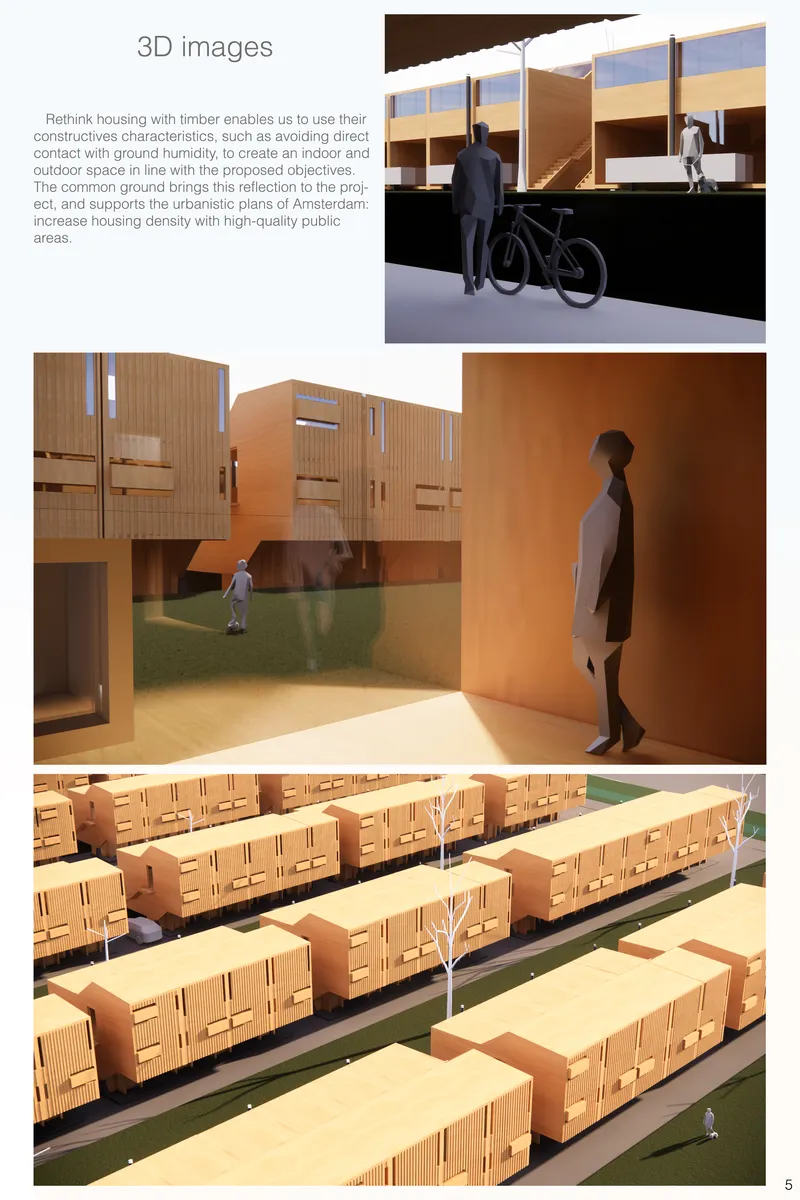
Fig: 5 3D images
Description: Thinking spaces with engineered wood. By using mass timber, a spatial solution for a housing style was thought of. The common ground is part of the project as a whole.
--------------------
Editor’s Choice: Weave
By: Mathieu De Pompa
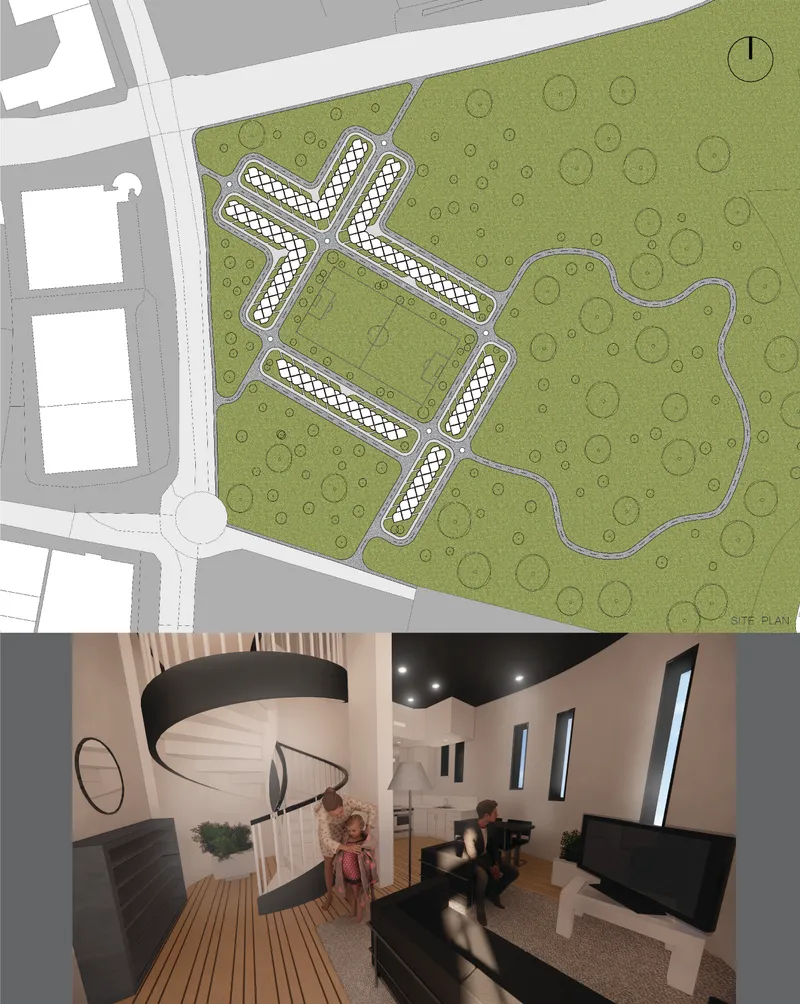
Fig: 6 Site plan and interior view
Description: A playful interaction of units, creating spaces that connect to both nature and the community.
--------------------
Editor’s Choice: TIMBERATE - AMSTERDAM
By: Michael Zeile
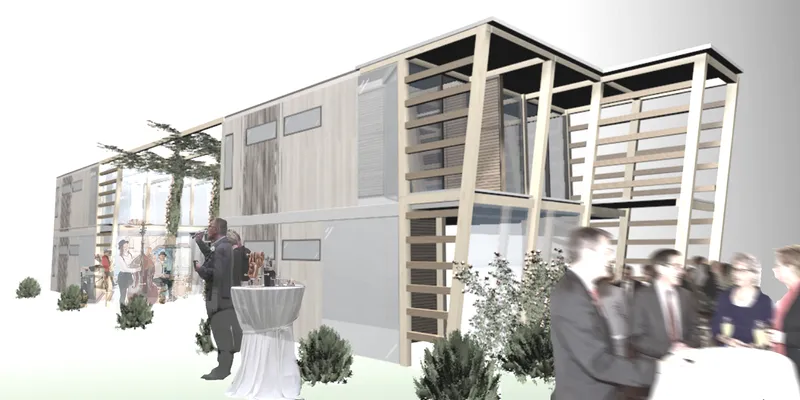
Fig: 7 Cover image
Description: Considering the floor-planning and the composition of units, two main ideas are relevant for the concept:
A big variety of living spaces is becoming more and more important concerning completely different ways of living and work.
This bandwidth of and barrier-free construction are standards for decades, but reality still id far away.

Follow us on social media: Facebook | Instagram | LinkedIn | Twitter | Youtube
References (3)


Popular Articles
Popular articles from the community


Play: Fragments of Their World
Familiar architecture becomes modular playground design, creating safe spaces where displaced children can learn, connect, imagine and play.

Conexión: Biophilic Design Reimagines High-Rise Living in Hong Kong
Conexión reimagines high-rise living in Hong Kong through biophilic design, green facades, shared spaces, daylight, water and nature within.
BAMBOO BLOCK: Sustainable Architecture for a Creative Refugee Children’s Playground
BAMBOO BLOCK uses sustainable architecture, modular play spaces and local materials to create a flexible refuge for children to learn and play.

Lunar Spiral: Space Architecture Shaped by the Mathematics of the Universe
Lunar Spiral reimagines space architecture through Fibonacci geometry, lunar regolith, levitating habitats, and self-sustaining Moon living.

Similar Reads
You might also enjoy these articles
SCENTLAND: An Animal Shelter Designed Through the Nose of a Dog
Winner of Strays 2020, this proposal uses scent mapping to generate circulation, form, and program for a sensory-driven shelter.
Urban Retrofit: Turning Mass Housing Facades into Fields of Individual Expression
A modular balcony framework grafted onto Venezuelan public housing lets residents reshape their own domestic edge, unit by unit.
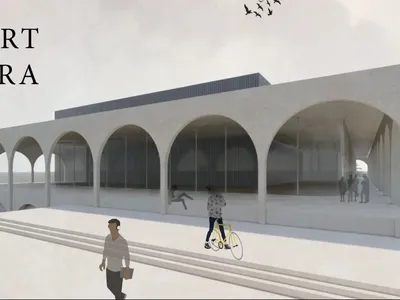
PÄRT OPERA: A Monumental Stone Platform That Turns an Opera House into Public Infrastructure
Raised above the waterfront on stepped terraces and rhythmic colonnades, this opera house invites the city in before the curtain rises.
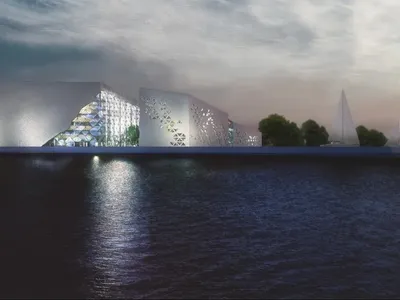
Music Connects Everything: A Fractured Stone Opera House on Tallinn's Baltic Waterfront
Tomasz Abram's shortlisted opera house splits a monumental mass apart to reveal a crystalline glass seam that symbolizes music's connective power.

Comments (0)
Please login or sign up to add comments
No comments yet. Be the first to comment!