

A Journey Beneath the Surface: An Oceanarium Complex, Sonadia Island
Location: Sonadia Island, Moheshkhali, Cox’s Bazar, Bangladesh

Beneath the surface of the ocean is a world full of life — mysterious, beautiful, and deeply alive about which we are quite unaware and careless. Plastic, oil, and overfishing speak quietly of our carelessness. .
Sonadia Island is a small (spans approximately 9 sqkms) picturesque island located off the coast of Cox's Bazar in Bangladesh. Sonadia serves as a critical habitat for several endangered species, including migratory birds, marine turtles, making it a significant ecological site in the region. Despite its ecological significance, the island remains largely underdeveloped. Bangladesh Economic Zones Authority (BEZA) has identified Sonadia as a strategic location for promoting eco-tourism and marine conservation.
This diverse ecosystem is getting endangered due to the illegal acts like overfishing and illegal hunt of red crab, turtles, migratory birds by local people. Absence of controlled tourism and lack of public awareness and research facility, the problem remains as it is. This puts Sonadia under the list of ECA (Environmentally Challenged Area).
The main objective of the project was providing people an experience of underwater journey, raising awareness about marine ecosystems, extending the scope of marine life research and conservation that might help in preserving the endangered ocean biodiversity. The aim of the design was to keep the footprint minimum to avoid interruption of local biodiversity, while giving people a chance to explore the beauty of Sonadia Island.
The concept centers on the conservation of marine life through a cyclical and sustainable process. Selected marine species are collected from the ocean and nurtured within breeding pools and research laboratories, allowing their populations to grow under controlled conditions. A portion of these species is showcased in the oceanarium for public exhibition and awareness, while others are carefully released back into their natural habitat to restore and strengthen marine ecosystems.
In addition, diseased or injured marine species are rescued from the ocean and rehabilitated in specialized quarantine tanks before being reintroduced to the sea. Specimens that cannot be revived are preserved as skeletons and displayed within the exhibition areas, serving as educational resources for visitors. This closed-loop system ensures that the facility not only contributes to marine biodiversity conservation but also promotes research, education, and public engagement in a sustainable manner.
The site faces regular inundation events. According to the inundation event, the site and its surroundings can be classified into three distinct zones based on the inundation event: the wet zone (faces regular inundation event), the semi-dry zone (faces seasonal inundation), and the dry zone (almost never faces the inundation event). The dry zone, or the peak of the site (19’-23’ from sea level) was chosen as site for construction as the site is cyclone and inundation prone. Cut-and-fill process has been introduced, keeping in mind that the site is of loose soil and cyclone prone. GFRC cladding has been used as saline resistant material.
The main programs of the project are- freshwater species exhibition, saltwater species exhibition, a conservation zone, a dolphinarium and a research center. The conservation zone contains quarantine tanks which is seasonally prohibited for the visitors might play a vital role in habitat restoration.
The building massing was guided by the natural contour lines and the slopes of the terrain. The wooden trail was introduced for limiting visitors’ movement. Bird observatory was introduced for observing the local and migratory birds. Local trees were planted as storm buffers and for inviting birds.
This project doesn’t promote tourism; rather it’s a medium for raising awareness of the threatened biodiversity both above and below the water. It conveys the message of being humble while in nature-the world is not for humans only; it’s for each and every organism of the mother nature.


Popular Articles
Popular articles from the community


Singing Woman: An Opera House That Performs Before the Curtain Rises
Ovidiu Cristian Pavel's conceptual opera house translates Estonia's choral identity into a sculpted waterfront landmark facing the Baltic Sea.

The Amber Palace Opera: A Geological Fiction Surfaces on Tallinn's Baltic Waterfront
Pierre Brillard reimagines a Baltic legend as a public landscape, opera house, and waterfront promenade rooted in Tallinn's coastal identity.

Temporary Home for Dogs: A Reversed Zoo Rethinks Animal Shelter Architecture
In Bucharest, a sinuous corridor and freed landscape flip the logic of containment, designing a shelter that works to make itself unnecessary.

Cloaked Colonization: A Mobile Underwater Habitat That Moves Like a Fish
Micah Abaya's shortlisted EHC Pacific entry reimagines ocean settlement as a dispersed network of self-sustaining architectural organisms.

Similar Reads
You might also enjoy these articles
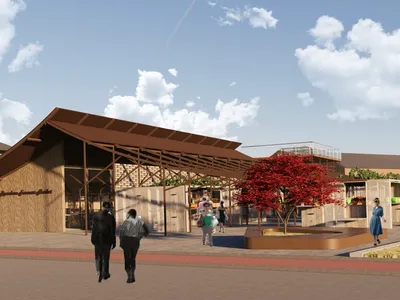
The Rhythm of Seasons
A Farmers' Market Connecting Nature and the City
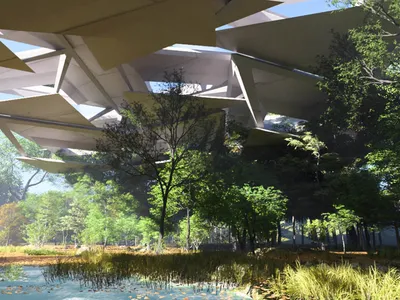

More Than a Building-Designing a Living System
More Than a Building-Designing a Living System
Base Beyond
DESERT COMPOUND ARID: TOURISM OF ABSENCE AND ABUNDANCE

Explore Ocean Architecture Competitions
Discover active competitions in this discipline


Challenge to reimagine the Iron Throne

Photograph architecture without architects

Illustrate the lost glory of Angkor Wat - Render Challenge

Design challenge to reuse E-waste
Comments (0)
Please login or sign up to add comments
No comments yet. Be the first to comment!