
AL Villa: A Tropical Modern Holiday Home Designed for Natural Airflow in Bali
Tropical modern villa in Bali featuring square form, open-plan living, wooden screens, and passive airflow-driven design for climate comfort enhanced.


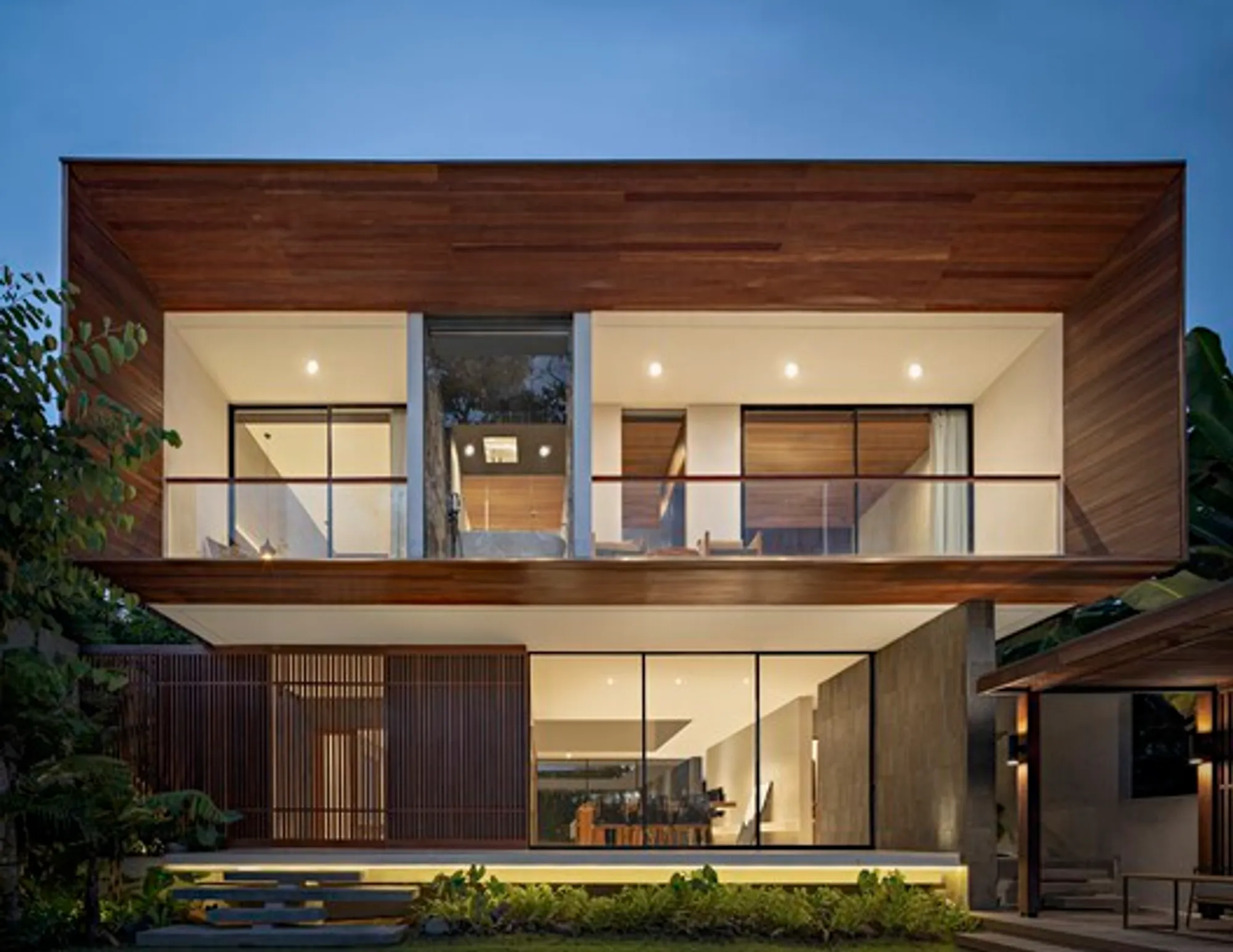
Located in Mengwi, Indonesia, AL Villa is a compact yet refined holiday residence designed by Arkana Architects. Conceived as a tropical modern villa, the project responds directly to Bali’s warm climate through passive design strategies that prioritize natural ventilation, spatial efficiency, and a strong connection to greenery. Completed in 2024, the 240-square-meter house demonstrates how simplicity in form can coexist with climatic intelligence and architectural character.


From the outset, the client envisioned a square floor plan with minimal spatial requirements, requesting only essential living functions: a bedroom, a workspace, and a communal living area. This clear and restrained brief allowed the architects to focus on airflow, comfort, and spatial clarity. As a result, AL Villa is shaped by openness rather than enclosure, creating an environment where air, light, and landscape become integral architectural elements.

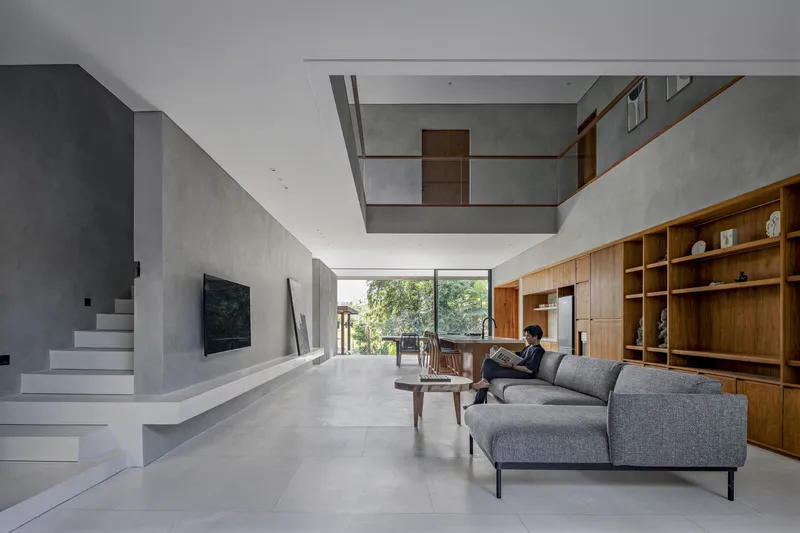
The ground floor functions as the social heart of the villa, accommodating the workspace, kitchen, dining area, and family room within a single open-plan layout. The absence of partition walls allows air to flow freely across the interior, reinforcing cross-ventilation and enhancing thermal comfort throughout the day. Open sides at both ends of the building directly face planted areas, ensuring that fresh air continuously circulates while softening the transition between indoor and outdoor space. This seamless relationship with the surrounding greenery reinforces the villa’s tropical identity and creates a relaxed holiday atmosphere.

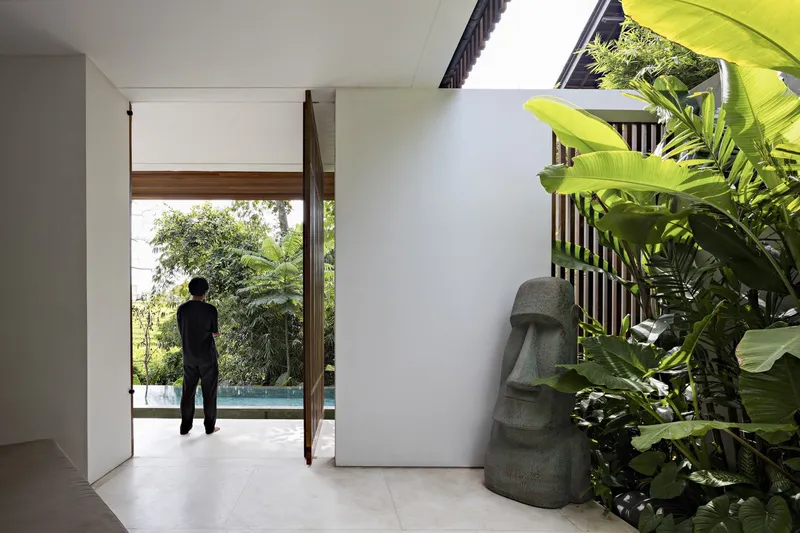
A defining spatial feature of the house is the large vertical void that connects the ground floor to the upper level. This void plays a critical environmental role, encouraging hot air to rise and escape while drawing cooler air upward. As a result, the second floor remains naturally ventilated without relying heavily on mechanical cooling systems. The bedroom is positioned on this upper level to provide privacy and a quieter retreat, separated from the more active communal spaces below. Carefully placed openings frame views toward the surrounding landscape, allowing residents to remain visually connected to nature even in private areas.

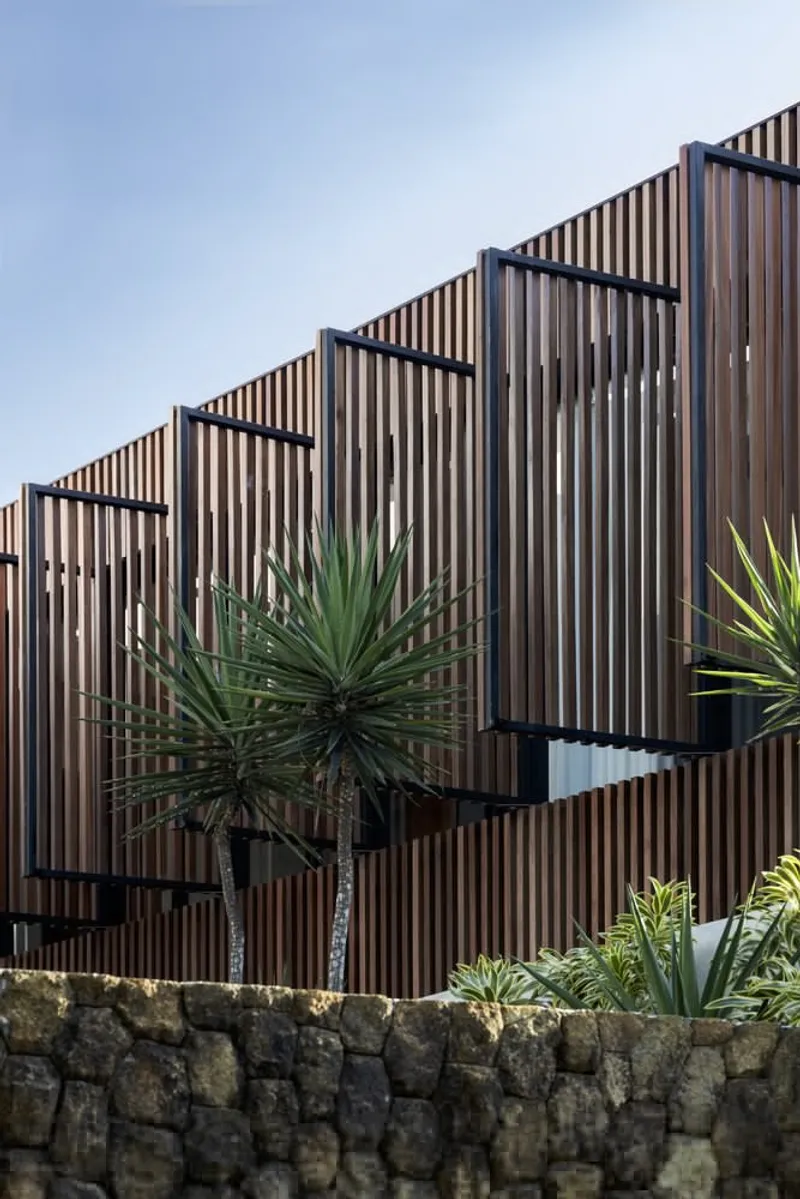
Architecturally, AL Villa embraces a pure square geometry with no additional projections or subtractions. Rather than altering the mass, the architects introduced depth and texture through material articulation. A continuous wooden screen wraps the building envelope, softening the rigid geometry and integrating the villa into its tropical context. This screen adds warmth and visual richness while serving as a climatic buffer, particularly on the west façade where it reduces direct solar exposure and mitigates heat gain.


On the upper floor, a generous wooden overhang extends outward, framing the volume like a picture frame and creating a strong architectural identity. This overhang not only distinguishes the villa from typical box-shaped houses but also performs an essential environmental function by shading the spaces below. By limiting direct sunlight penetration, the overhang contributes to cooler interior temperatures and reduces dependence on artificial cooling, reinforcing the villa’s sustainable design approach.
AL Villa stands as a thoughtful example of tropical modern residential architecture in Bali, where form, climate, and materiality work together seamlessly. Through its emphasis on airflow, minimal spatial organization, and passive shading strategies, the project offers a contemporary yet contextually grounded living environment that balances comfort, aesthetics, and environmental responsiveness.


All photographs are works of
Indra Wiras



Popular Articles
Popular articles from the community


Hill & Cross Opera: Sculptural Opera House Architecture Shaped by Tallinn’s Landscape and Identity
Hill & Cross Opera reimagines opera house architecture in Tallinn through its sculptural hill, civic plaza, glass wave and a luminous cross.

Conexión: Biophilic Design Reimagines High-Rise Living in Hong Kong
Conexión reimagines high-rise living in Hong Kong through biophilic design, green facades, shared spaces, daylight, water and nature within.

The Musturak Paradise: Senior Living Architecture for a Connected Future in Temara, Morocco
The Musturak Paradise reimagines senior living architecture in Temara via private homes, social spaces, culture, community, and shared care.

Riyadh For All: Intergenerational Urban Design for Active Aging in Rabat
Riyadh For All reimagines urban design in Rabat with intergenerational co-living, adaptive courtyards, and Moroccan cultural exchange today.


Similar Reads
You might also enjoy these articles

FAMM Arquitectura Organizes Ten Villas Around Courtyards and Jungle in Nosara, Costa Rica
El Molino pairs two elongated volumes with deep overhangs and timber louvers to build a compact coastal community five minutes from the beach.
Oscar Niemeyer's Ibirapuera Park Pavilions Define São Paulo's Cultural Identity in Concrete and Curve
A constellation of modernist volumes set within São Paulo's most important urban park, conceived for the city's 400th anniversary in 1954.
How Henri Picq's 1889 Paris Pavilion Traveled 11,000 Kilometers to Become Santiago's Artequín Museum
A prefabricated iron and glass pavilion built for the Paris Universal Exposition found a second life as a children's art museum in Chile.
Sanjay Puri Architects Wraps a Jaipur Office Tower in Capsule-Shaped Green Buffers
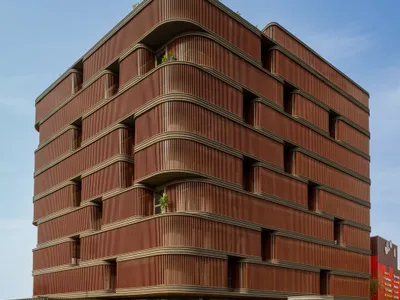
A nine-level climate-responsive workplace near Jaipur Airport uses stacked planter terraces and aluminium screens to fight 40°C heat.


Explore Architecture Competitions
Discover active competitions in this discipline



Challenge to reimagine the Iron Throne


Photograph architecture without architects


Illustrate the lost glory of Angkor Wat - Render Challenge


Design challenge to reuse E-waste
Comments (0)
Please login or sign up to add comments
No comments yet. Be the first to comment!