

AMS - LINK COMMUNITY CENTER
Explores AMS - LINK Community Center in Amsterdam, fostering international student-local interactions through innovative design.


Linking Communities: The AMS - LINK COMMUNITY CENTER created by Jeongsook Kimaims, DASOM PARK, Shortlisted entry of Overseas Oasis to connect diverse communities in Amsterdam by leveraging the city’s iconic canal and bridge infrastructure. The project proposes a new canal and link bridge to encourage interactions among locals, international students, and various nationalities, fostering a sense of community and cultural exchange.
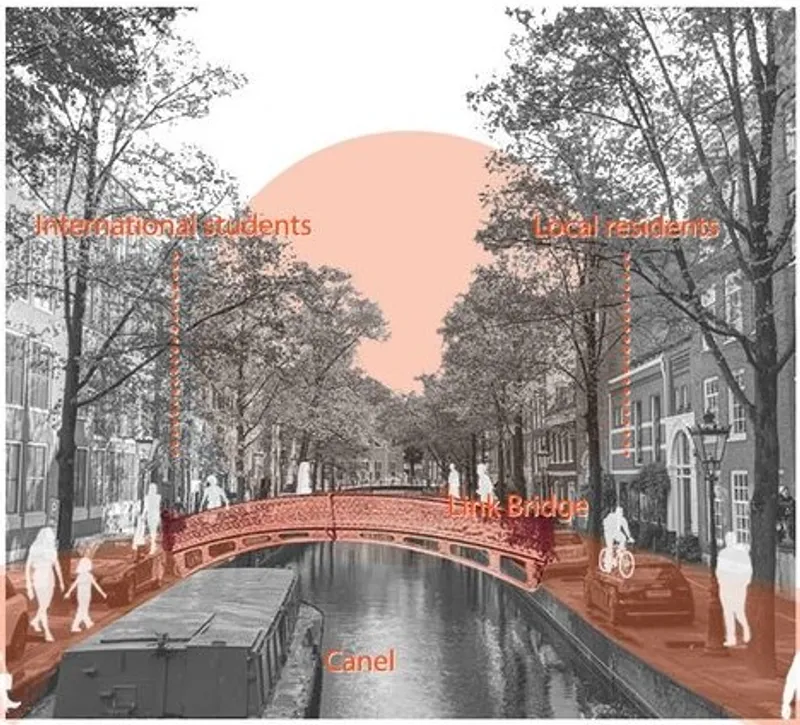
Urban Context
Amsterdam's Unique Urbanity: Amsterdam is characterized by its extensive canal system, historic architecture, and multicultural population. The city faces challenges with housing due to a high population density and a significant number of international students. The AMS - LINK COMMUNITY CENTER addresses these issues by providing accommodation and communal spaces that encourage social interaction.
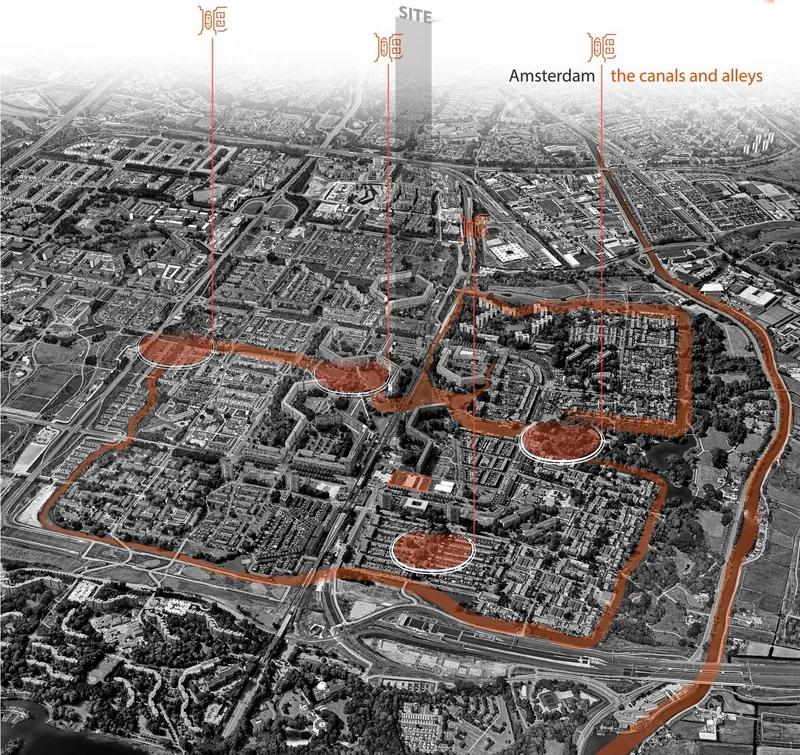
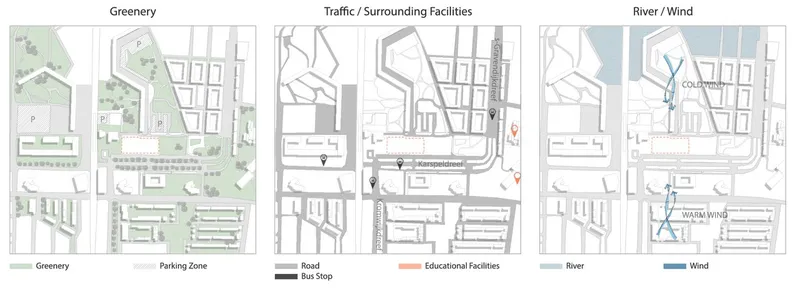
Site Plan
Work/Learning Spaces: Includes large and small business and learning facilities for international students.
Dynamic Spaces: Active program spaces for both international students and locals to enjoy together.
Common Spaces: Resting places and facilities for both students and locals, including bicycle storage.
Greenery: Integrated green spaces to enhance the urban environment.
Traffic and Surrounding Facilities: Incorporates a free bridge connecting divided buildings, facilitating movement and interaction.

Architectural Features
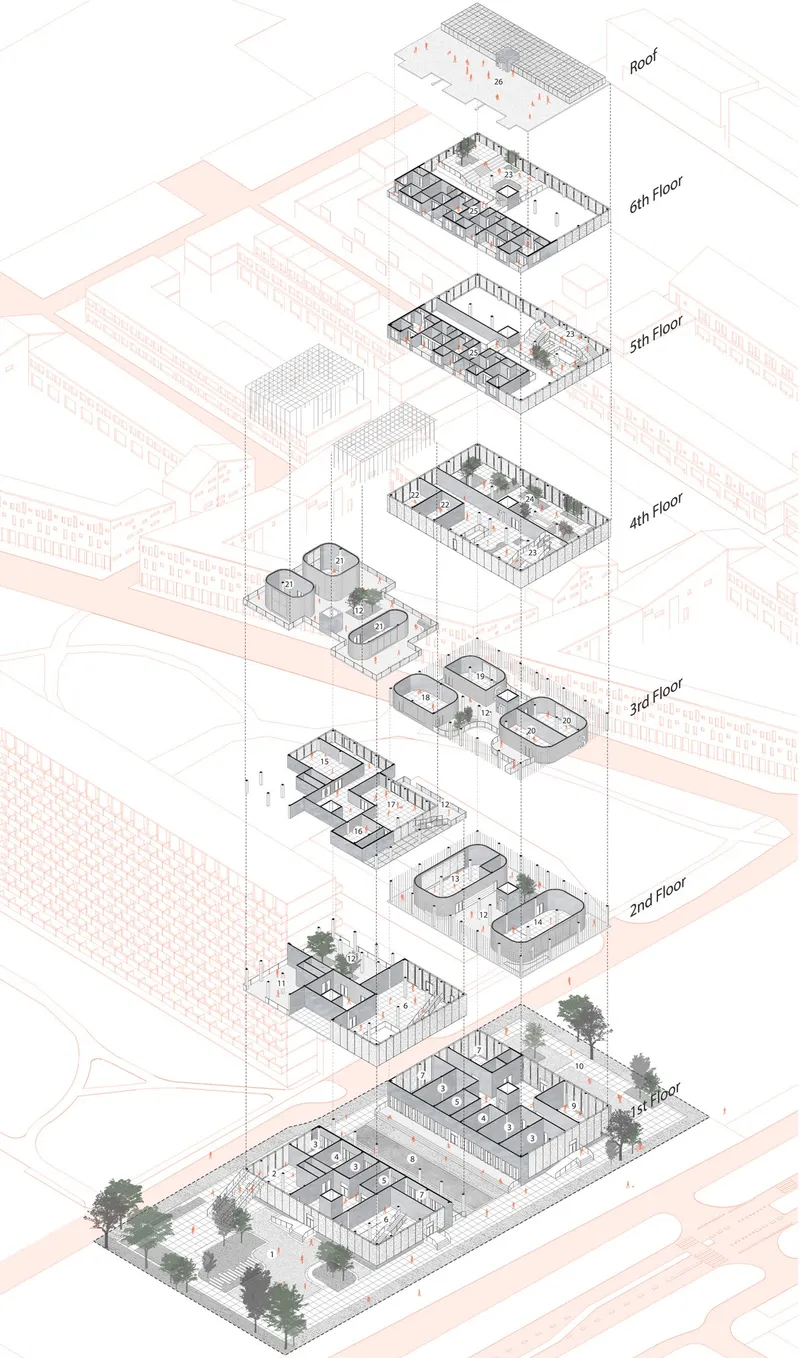
Vertical and Horizontal Connectivity: The design integrates vertical and horizontal movement within the buildings, enhancing the spatial experience and promoting fluid interactions. The two buildings are connected by a bridge, symbolizing the connection between different cultures and communities.
Dynamic Spaces: Features such as climbing walls and net farms are included to provide active and engaging environments for users.
Cultural and Common Spaces: The center includes museums, galleries, cafes, restaurants, and shops that reflect both local and international cultures. These spaces are designed to promote cultural exchange and community building.
Design Philosophy
Integration with Local Culture: The design reflects Amsterdam’s cultural and urban characteristics, such as its canal system and alley culture. Open terraces and water spaces create an inviting atmosphere for both locals and international students.
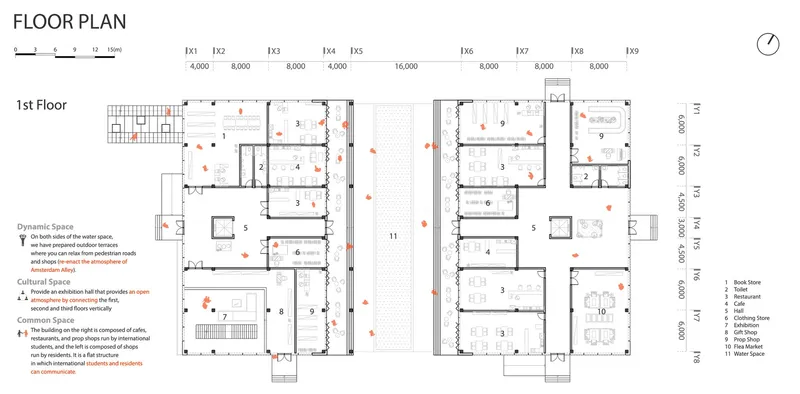
Community Building: By providing spaces where international students can work part-time, the center supports their financial needs while integrating them into the local economy. The design includes commercial facilities like cafes, restaurants, bookstores, and flea markets.
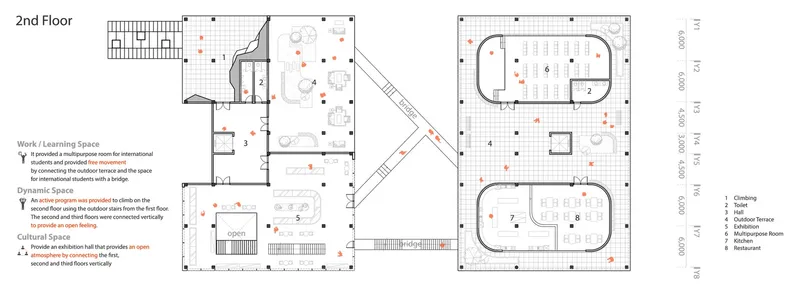
Inclusivity: The design creates an inclusive environment where people from various nationalities can interact, learn, and share experiences. The open spaces and fluid connections between buildings foster a welcoming and dynamic community atmosphere.
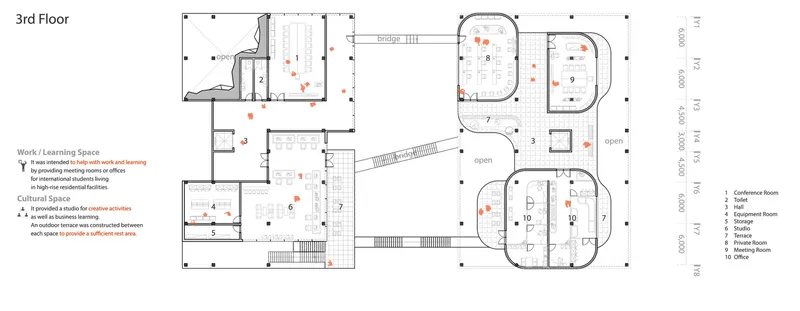
Programmatic Features
Work/Learning Spaces: Meeting rooms, offices, coworking spaces, study rooms, and private rooms.
Dynamic Spaces: Climbing areas, net farms, and atriums for active engagement.
Common Spaces: Plazas, bookstores, restaurants, cafes, clothing stores, prop shops, and flea markets.
Cultural Spaces: Museums, gift shops, studios, and exhibition halls.
Residential Spaces: Temporary living facilities for international students with options for one or two-person accommodations.
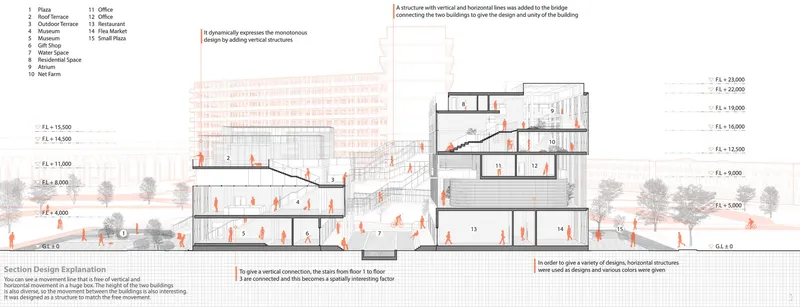
Section Design
Vertical Movement: The design features free vertical and horizontal movement, with diverse building heights creating an interesting spatial dynamic. Stairs connect different floors, adding to the architectural complexity.
Bridge Design: The bridge connecting the two buildings incorporates both vertical and horizontal lines, enhancing the aesthetic and functional unity of the structure.
The AMS - LINK COMMUNITY CENTER is a visionary project that addresses the needs of international students in Amsterdam while promoting cultural exchange and community interaction. By integrating the city’s unique urban elements and providing a variety of dynamic, cultural, and common spaces, the project creates a vibrant and inclusive environment for all users.


Popular Articles
Popular articles from the community


U.GA Architects Wraps an Oval Rooftop Pool in Curved Board-Formed Concrete on Busan's Jeollidan-gil
In Busan's Jeonpo-dong, a 454 m² mixed-use block stacks a neighborhood facility, guest rooms and an oval rooftop pool inside spiraling concrete walls.

Juan García Correa, John González and Claudia Rueda Sink a Circular Amphitheater into a Manizales Engineering Building
On the La Nubia campus in Manizales, Colombia, the S1 Building folds labs and offices into a hillside of ramped lawns that double as a campus route.

Architekt Andreas Gruber Scatters 23 Dark Timber Chalets Across a South Tyrolean Forest Edge
In Molini di Tures, Amonti Chalets breaks a resort into a hamlet of gabled timber houses, with parking, storage and services pushed into the slope.

David Macias Steps a Doorless Stone and Plaster House Down a Tropical Colombian Hillside
In the humid hills of Colombia, Threshold House replaces the front door with an open void and terraces its 850 m² down the slope instead of fighting it.

Similar Reads
You might also enjoy these articles


Vereda Arquitetos Renovates a 40-Square-Meter Apartment Inside Niemeyer's Copan Building
A compact unit in São Paulo's most iconic residential tower gets a material overhaul that pairs exposed concrete with bold blue Formica.

Shakur's House: Exposed Brick as an Interior Organiser in a 168 m² Mashhad Residence
Brick moves indoors in this Mashhad residence, where masonry walls, glass partitions and teal planes sequence a compact home without closing it off.

Day and Night Park: A Time-Based Urban Newsstand in Beijing
A temporary urban newsstand in Beijing blending travel, light, and reading through poetic colors, compact form, and community-focused design.

Modernist Patio Renovation in El Masnou, Barcelona by Oliver Segura Arquitectura + Cebrià Arquitectura
Modernist patio renovation blending tradition and innovation with a movable pool, leveled floors, and Catalan materials in El Masnou.

Explore Amsterdam Competitions
Discover active competitions in this discipline

Challenge to design locus for the upliftment of human rights

Challenge to reimagine the Iron Throne

Photograph architecture without architects

Illustrate the lost glory of Angkor Wat - Render Challenge
Comments (0)
Please login or sign up to add comments
No comments yet. Be the first to comment!