
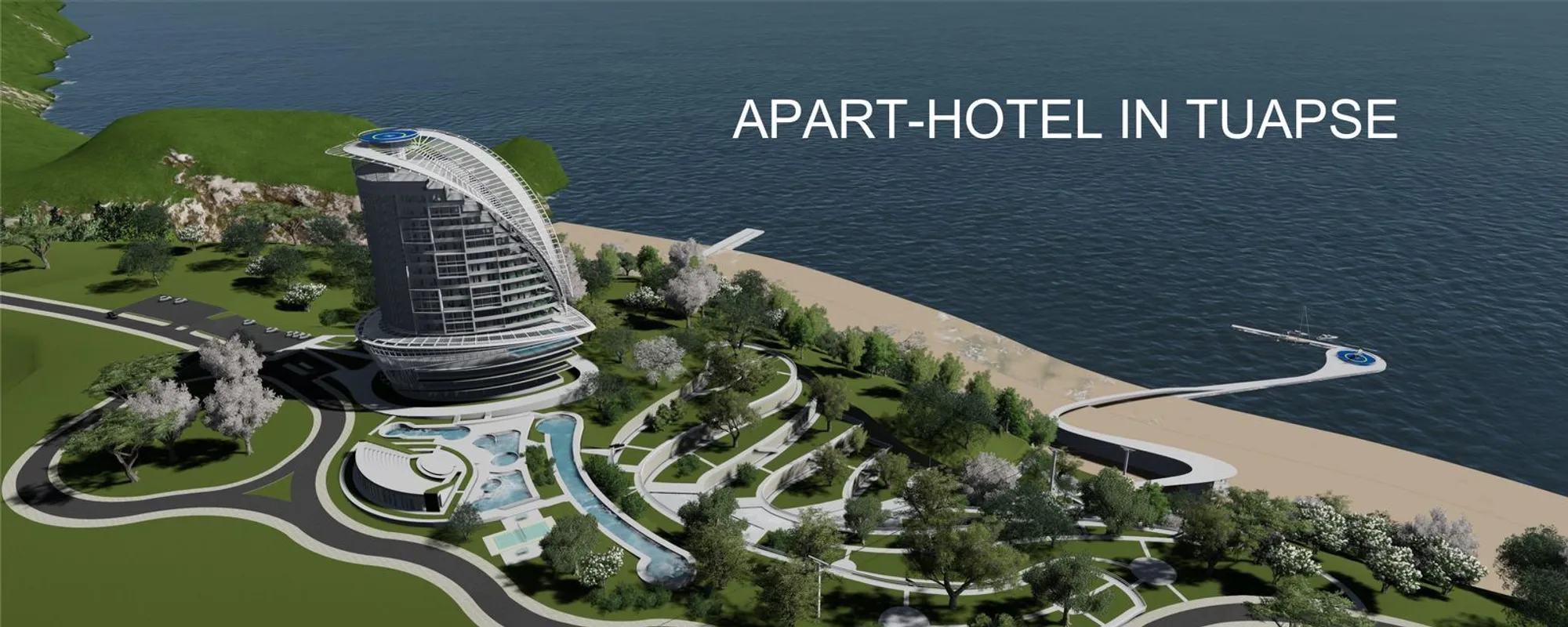
Apart-Hotel in Tuapse: A Model of Sustainable Coastal Architecture
A BREEAM-inspired apart-hotel where climate-responsive design, landscape, and hospitality architecture meet the Black Sea coast.


The Apart-Hotel in Tuapse is envisioned as a contemporary example of sustainable coastal architecture, responding carefully to topography, climate, and tourism-driven urban growth along the Black Sea. Designed as a multifunctional hospitality complex, the project integrates an apart-hotel tower with public landscapes, leisure infrastructure, and environmentally responsible systems, positioning itself as a future-ready model for resort architecture in sensitive coastal contexts.
Located on a sloping terrain between the city fabric and the sea, the project negotiates natural relief, prevailing winds, and solar exposure to create an architecture that is both iconic and ecologically grounded. The design aligns with the BREEAM green energy efficiency standard, reinforcing its commitment to sustainability, energy performance, and user comfort.
Site Strategy and Master Planning
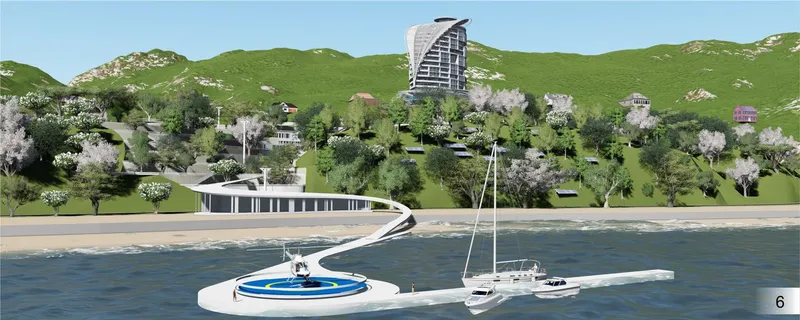
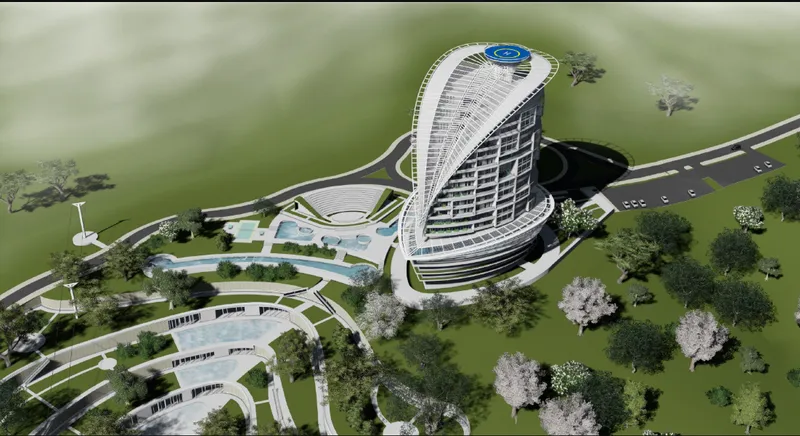
The master plan reveals a layered spatial organization that follows the contours of the site. Rather than imposing a rigid grid, the architecture flows with the landscape, allowing built and open spaces to coexist in a continuous ecological system.
Key elements of the master plan include:
- A centrally positioned apart-hotel building acting as the visual and functional anchor
- Bungalows dispersed within landscaped zones for low-rise accommodation
- A sequence of parks, swimming pools, and recreational areas cascading toward the sea
- An amphitheater integrated into the slope, enhancing public life and cultural programming
- Direct pedestrian connections to the seafront, beach, and pier, reinforcing accessibility
Transportation and pedestrian movement schemes clearly separate vehicular access from walkable leisure paths, ensuring safety and comfort while preserving uninterrupted views toward the coastline.
Climate-Responsive Design Approach
Climate analysis plays a central role in shaping the building form and orientation. Detailed sun-path and wind studies inform façade articulation, terrace placement, and energy strategies.
- Solar orientation optimizes daylight while minimizing overheating during summer months
- Prevailing wind directions are harnessed for natural ventilation during hot periods
- Terraced volumes and curved geometries reduce wind pressure and improve microclimatic comfort
- Roof and façade-integrated solar panels contribute to renewable energy generation
These strategies collectively reinforce the project’s ambition to move beyond aesthetic sustainability toward measurable environmental performance.
Architectural Form and Spatial Organization
The apart-hotel tower is conceived as a sculptural vertical landmark that rises organically from the hillside. Its curved profile echoes the natural topography and coastal wind flows, creating a dynamic silhouette when viewed from both the city and the sea.
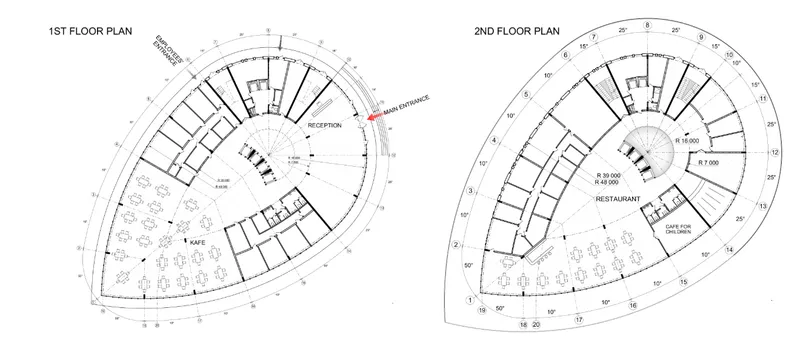
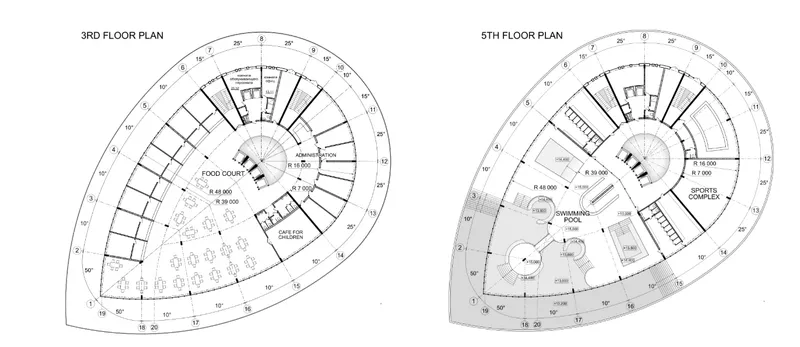
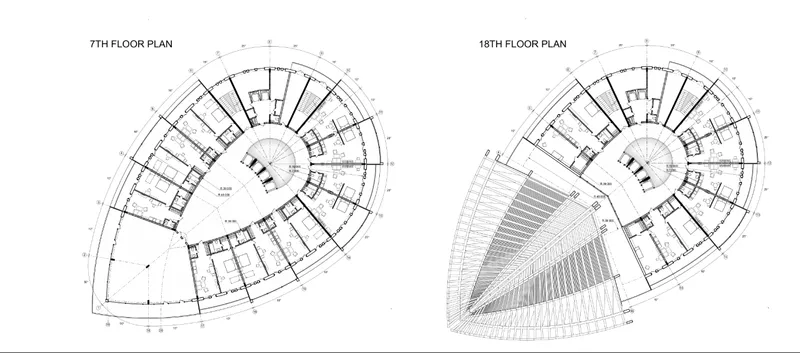
Internally, the building accommodates 102 rooms, including apartments and studio units, arranged to maximize sea views and natural light. The spatial logic prioritizes:
- Clear vertical circulation cores
- Efficient apartment layouts with generous balconies
- Gradual transitions from public to private zones
Lower levels house shared amenities, while upper floors focus on residential comfort and panoramic views, reinforcing the hierarchy typical of high-end hospitality architecture.
Hospitality Program and Amenities
As a 5-star apart-hotel, the project offers a comprehensive hospitality ecosystem rather than a standalone accommodation block. Programmatic elements include:
- A restaurant and food court with sea-facing terraces
- Spa and wellness zones integrated into quieter landscape areas
- Multiple swimming pools distributed across different elevation levels
- Sports and recreation facilities designed for year-round use
- Family-friendly amenities, including cafés and leisure spaces
This mix allows the complex to operate as both a tourist destination and a semi-public urban node, extending its relevance beyond seasonal tourism.
Landscape and Public Realm
Landscape architecture is treated as an extension of the building rather than a decorative afterthought. Green spaces weave between structures, reinforcing ecological continuity and enhancing user experience.
The project incorporates:
- Native and climate-resilient vegetation
- Shaded pedestrian paths connecting all program zones
- Terraced green platforms that stabilize the slope and prevent erosion
- Visual corridors that maintain constant contact with the sea
The amphitheater and park areas further support social interaction, positioning the development as a civic asset rather than an isolated resort enclave.
Structural and Technical Logic
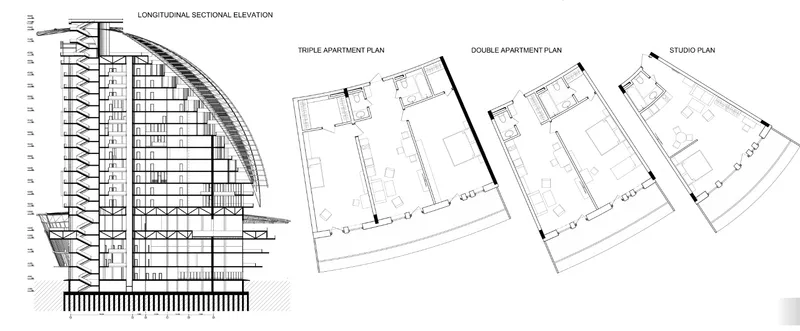
The sectional drawings reveal a rational structural system adapted to the complex geometry of the tower. Vertical circulation cores and load-bearing elements ensure stability while allowing flexible interior planning.
Apartment typologies: including studio, double, and triple units, are designed for adaptability, responding to diverse user needs ranging from short-term tourists to long-stay residents.
The Apart-Hotel in Tuapse exemplifies how sustainable coastal architecture can merge environmental intelligence, hospitality functionality, and expressive form. By integrating climate-responsive design, landscape-driven planning, and a robust public program, the project sets a benchmark for future seaside developments.
Designed by Alina Novikova, the project demonstrates a thoughtful architectural response to coastal conditions, offering a resilient and forward-looking model for contemporary resort and apart-hotel design.




Popular Articles
Popular articles from the community


Riyadh For All: Intergenerational Urban Design for Active Aging in Rabat
Riyadh For All reimagines urban design in Rabat with intergenerational co-living, adaptive courtyards, and Moroccan cultural exchange today.

The Earth Pod: 3D Printed Homes for Resilient Refugee Communities
The Earth Pod reimagines refugee housing through 3D printed homes made from clay, combining resilience, self-sufficiency, and rapid shelter.

The Ocean Hive: Sustainable Architecture for a Self-Sufficient Civilization at Sea
The Ocean Hive imagines sustainable architecture at sea, where modular habitats, algae, wave power and ocean waste sustain a growing colony.

Conexión: Biophilic Design Reimagines High-Rise Living in Hong Kong
Conexión reimagines high-rise living in Hong Kong through biophilic design, green facades, shared spaces, daylight, water and nature within.


Similar Reads
You might also enjoy these articles

Eco Chapel: A Green Architecture Pavilion Designed in Symbiosis with the Forest
Eco Chapel uses green architecture to weave prayer, learning and reuse into a forest pavilion shaped by modular hexagonal canopies for life.
Kaffeebühnen: Coffee Shop Architecture Designed as a Civic Stage Between Vienna’s City and Park
Kaffeebühnen turns coffee shop architecture into a civic stage, linking Vienna’s park edge, urban life, warm timber yards, and coffee craft.
Healing Façade: Sustainable Architecture for Reforestation, Community, and Sacred Ecology in Ethiopia
Healing Façade reimagines sustainable architecture as a living wall that restores soil, catches water and renews Ethiopia's forest churches.


Urban Forest: A Vertical Ecosystem for 5,000 Workers in Singapore's Changi Business Park
Radially stacked pods and layered green decks turn a 7-acre plot into 47 acres of ecological workspace projected for 2040.

Explore Hospitality Building Competitions
Discover active competitions in this discipline



Challenge to reimagine the Iron Throne


Photograph architecture without architects


Illustrate the lost glory of Angkor Wat - Render Challenge


Design challenge to reuse E-waste
Comments (0)
Please login or sign up to add comments
No comments yet. Be the first to comment!