
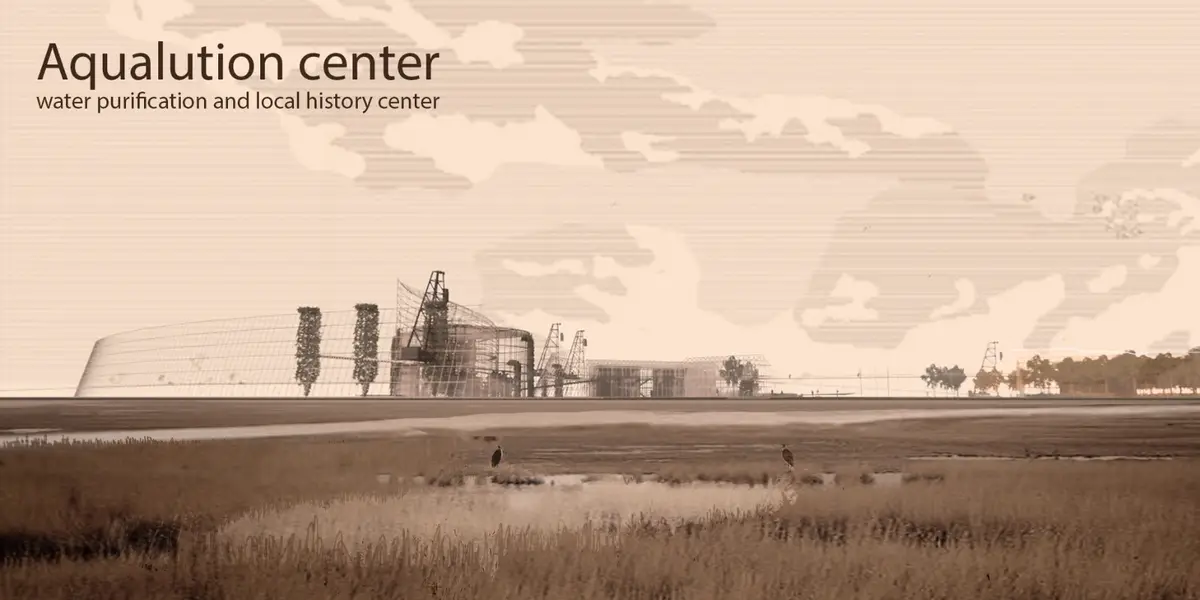
AQUALUTION CENTER
/Water purification and local history center

-Birmingham as a city has been very important in the historical progress that has happened to us and has contributed much to what we live today. The Industrial Revolution that shaped it changed the world and the city itself technologically for the better, but unfortunately it destroyed the city ecologically and made it increasingly unfavorable to live in.
-When first approaching the theme and the site of the competition, the clear inspiration was precisely this event - the Industrial Revolution. Throughout its history, the terrain of the marsh along the Tame River was destroyed by industrial activities and was an unattractive place for people to live. The river was completely polluted by a series of industrial buildings that were located along the river for centuries, polluting the water, while the marsh was destroyed by the way coal was exploited. This place inspired me in two directions: On the one hand, I wanted to return the place to its ecological state before the pollution. On the other hand, and no less important, I wanted to preserve the historical significance of this place and the city, and the revolution that took place there. So the goal is to create an ecologically conscious project that uses all the potential of the marsh to purify the water.
-Starting from the urban complex, the goal was to feel the dynamics of life and movement in the time of the industrial city. The liveliness of the city and the well-trodden paths of movement and exploitation should be preserved. These scars in the terrain that were created could be felt as one moved through the complex via the movement platforms that rose above the marsh. Talking about volume and design, you can clearly see the inspiration from the visual identity of the former industrial buildings on the banks of the Tame River. When studying the shape of the factories, the materials used and the type of construction, several key elements crystallized. The motifs of chimneys and coolers are most specific to a factory in their form. Chimneys stand out for their height and slenderness, while refrigerators stand out for their hyperbolic shape. Both represent a characteristic element of the factory complex, so the new building would also contain elements of a deconstructed cooler as a scale for the whole complex, while the balance would be created by the surrounding buildings of the classic form of the factory, i.e. the classic shed.
-However, only the silhouette of the former factories and this complex would be in common. The goal is to introduce clean water purification technology into this traditional form that would only contribute to the health of the entire city and not harm it in any way. These objects would be light, stripped, skeletal steel structures made of hollow tubular sections. They would resemble the factory shape and remain there as its skeleton. Further materialization and construction would follow the purpose of the spaces and their function, as well as the need for different atmospheres and lighting. The seclusion of the spaces and its greater privacy would be created by an additional layer on the facade made out of polycarbonate.
-After correlating the shape of the object, its function and finally its materialization, the following solution was found:
-The propulsion and scientific parts are located in buildings in the form of sheds, of which there are three. One facility is intended for water filtration, another for filling, and the third for laboratory analysis, with workshop space.
-The main object, a deconstructed cooler with a hyperbolic shape, represents the scale of the complex in every respect. With its size, it attracts attention and forms the focal point of the complex. At the same time, it represents the main part of the visitor center and the main point of attraction for visitors. It houses a museum about the history of the region, a movie screening room and a viewpoint at the very top.
-The last element of the complex is an object with cylindrical construction, in which there is a greenhouse. This form represents a warehouse in original industrial buildings.
-All buildings for the primary facade have a curtain wall that fills the spaces between the fully visible steel structure. Later, depending on the purposes mentioned, a double facade of polycarbonate is used to create atmospheres that favor them. This layer of materialization was created intuitively in accordance with the purpose of the space, forming open and closed spaces that now contribute to the visual identity of the object.
-Thus, the entire greenhouse is covered with a double facade, as it has controlled lighting. The building that houses the purified water bottling plant is partially closed, while the other part reveals its purpose. It is related to the surroundings, as it is also the closest to the road that passes by the complex, and therefore wants to open up to visitors and attract their attention.
-The visitor center, with its contents, requires a complete roofing to allow the projections in the hall and to preserve all the artifacts in the museum area that can be damaged by sunlight.
-In all buildings, the double facade is above the roof areas so that these areas can be used without being exposed to the weather.
-All this would work on the principles of clean technologies and using the potential of the marsh and plant life in the process of water purification. The nature of the marsh is quite sandy, and sand as such is very suitable for use in water filtration technology, so it would be used in a filtration plant. In addition, work would be done to revegetate the complex, which would also help remove pollutants from the water flowing through the sump to the filtration plant. Birch was selected as the characteristic species because it is very common in the area. The remaining plants would also be native, mostly low and brushy, and typical of wetlands.
-Such a project should provide several important benefits to both the site and the local community. Collection of ecology and tourism history. It should pay homage to the technological achievements and history of the site, repay the debt to nature that has been depleted at the site, and be a place where visitors will come and perceive both the historical significance and the driving and scientific part with its visitor character.

Popular Articles
Popular articles from the community


ALGAL REALM: A Bio-Integrated Lunar Habitat Design for Life Beyond Earth
ALGAL REALM reimagines lunar habitat design with algae-powered life support, 3D-printed regolith, and vertical living for a lunar future.

The Musturak Paradise: Senior Living Architecture for a Connected Future in Temara, Morocco
The Musturak Paradise reimagines senior living architecture in Temara via private homes, social spaces, culture, community, and shared care.

Co-life: Sustainable Architecture for Age-Friendly Community Living
Co-life reimagines sustainable architecture for seniors through courtyards, rammed earth, shared gardens, and spaces designed for belonging.

Co-Life: Senior Housing Design That Reconnects Older Adults With the City
Co-Life reimagines senior housing design through healing gardens, shared streets, workshops, and a sustainable community across generations.

Similar Reads
You might also enjoy these articles

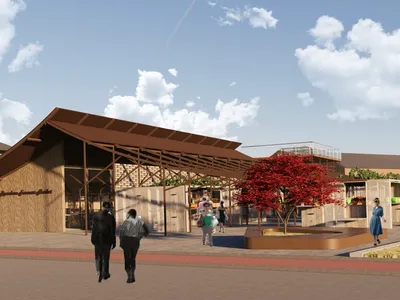
The Rhythm of Seasons
A Farmers' Market Connecting Nature and the City

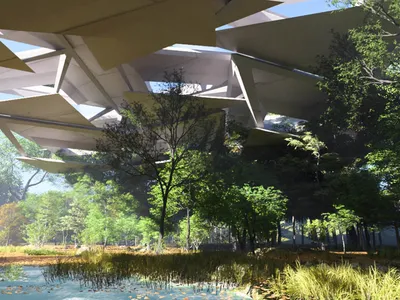

More Than a Building-Designing a Living System
More Than a Building-Designing a Living System
Base Beyond
DESERT COMPOUND ARID: TOURISM OF ABSENCE AND ABUNDANCE

Explore Aqua Center Competitions
Discover active competitions in this discipline


Challenge to reimagine the Iron Throne

Photograph architecture without architects

Illustrate the lost glory of Angkor Wat - Render Challenge

Design challenge to reuse E-waste
Comments (0)
Please login or sign up to add comments
No comments yet. Be the first to comment!