
Aquasis: A Sensory Architecture Oasis of Water, Perception, and Renewal
A sensory architecture oasis where water orchestrates space, guiding users through immersive rituals of renewal, perception, and inner balance.


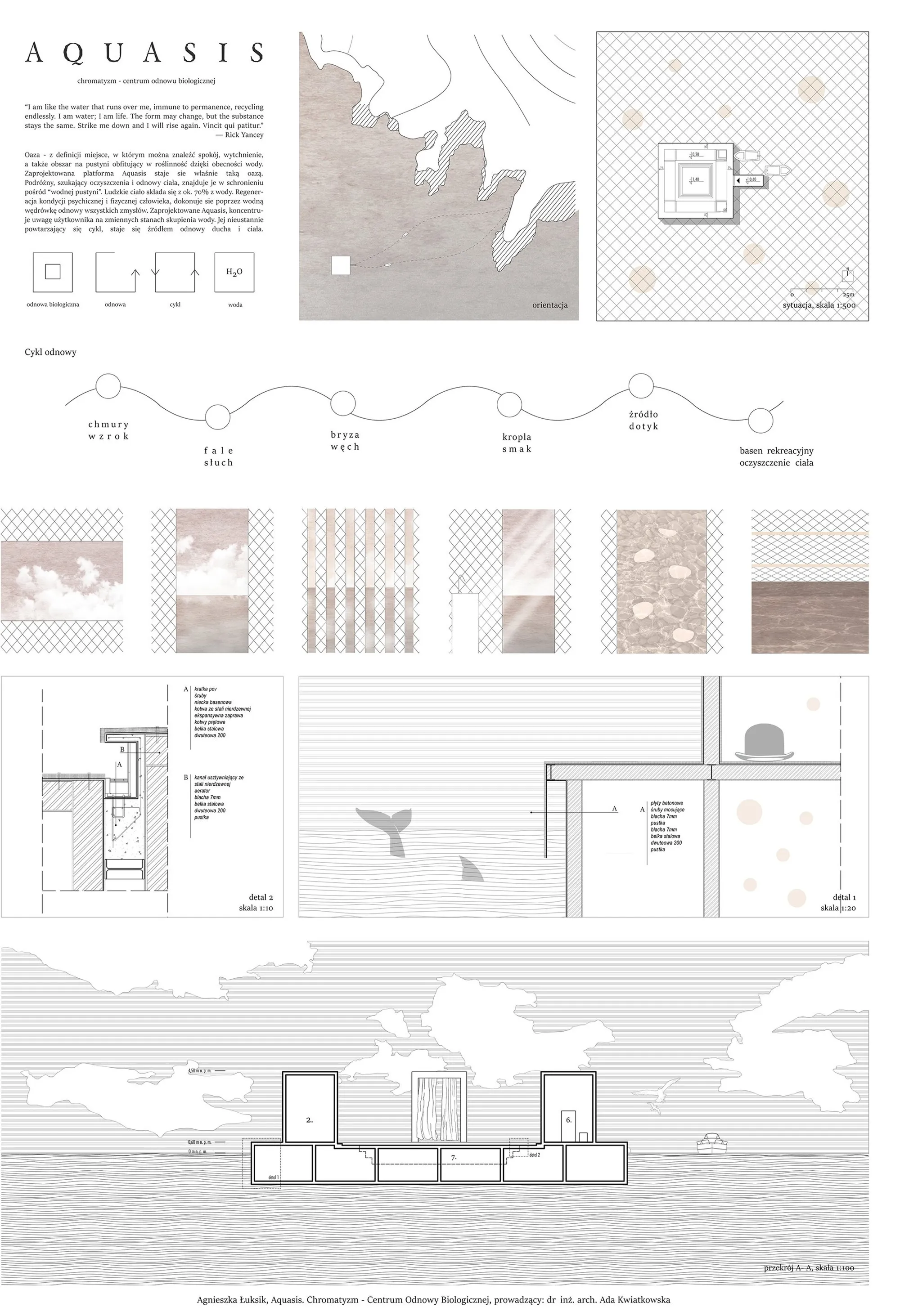
Aquasis, a shortlisted entry of Public Architecture ‘20 by Agnieszka Łuksik, redefines the relationship between architecture, the human body, and natural elements through the lens of sensory architecture. Positioned as a contemplative refuge within a metaphorical “water desert,” the project transforms a minimal architectural intervention into an immersive spatial journey centered on water as both medium and experience.
At its core, Aquasis is not conceived as a static building, but as a choreographed sequence of spatial and sensory transitions. The platform becomes an oasis, a place of retreat where the traveler engages in a ritual of purification and renewal. Through this framework, the project aligns with emerging discourses in sensory architecture, where spatial design extends beyond visual aesthetics to actively engage touch, sound, movement, and psychological perception.


Architecture as a Journey of the Senses
The project is structured around a carefully composed procession. A singular entry axis extends across water, creating a threshold that separates the external world from the internal experience. This transitional gesture establishes a psychological shift, preparing the visitor for immersion.
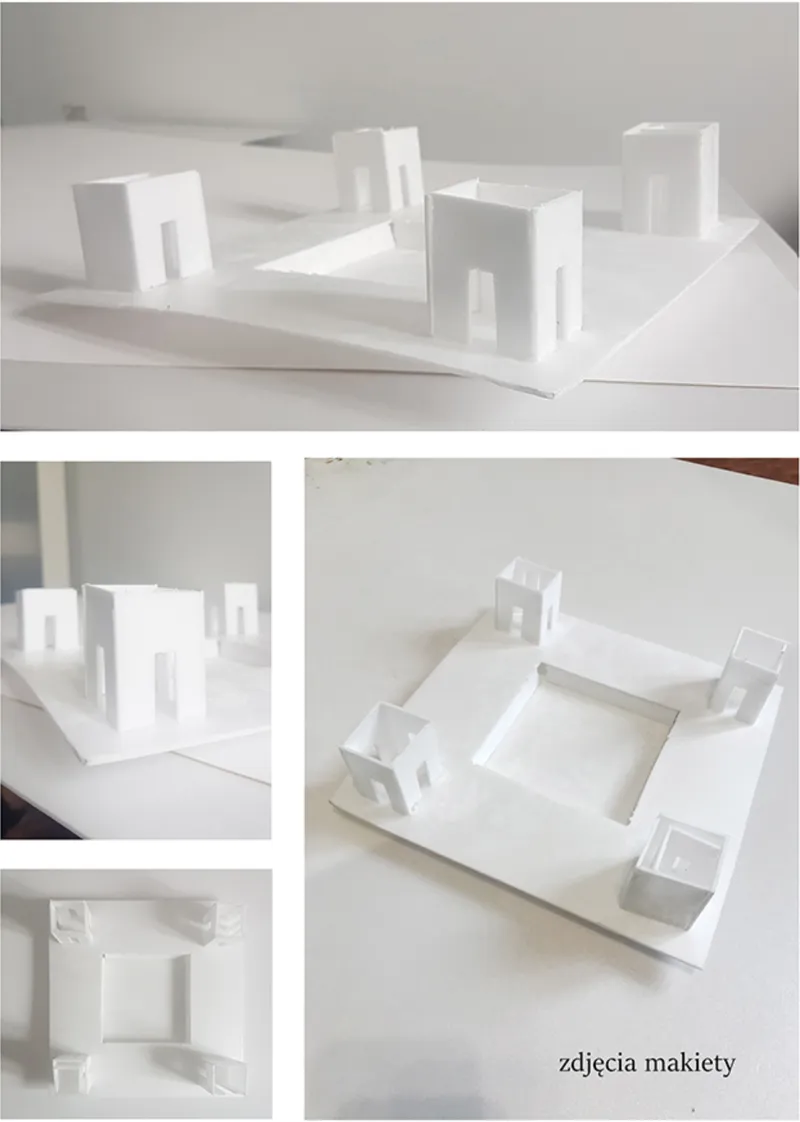
At the center lies a recessed water basin, acting as both spatial anchor and experiential core. Surrounding it, a series of compact architectural volumes, referred to as sensory capsules, are positioned with deliberate symmetry. These capsules are not merely rooms; they function as controlled environments that isolate and amplify specific sensory stimuli.
Each capsule engages a different aspect of human perception. One emphasizes sound, another light, another tactile interaction, while others focus on introspection and spatial compression. This fragmentation of experience reflects a broader sensory architecture strategy: breaking down perception into distinct layers and reassembling them through movement.
Water as Medium and Mechanism
Water operates as the primary architectural agent in Aquasis. It is not limited to a visual or symbolic role but becomes an active generator of spatial conditions. The project explores water in multiple states—still, reflective, tactile, and auditory—each contributing to the overall narrative of regeneration.
The central basin acts as a mirror, dissolving the boundary between architecture and sky. Peripheral water paths guide movement, reinforcing directionality while maintaining a constant sensory presence. Subtle level differences introduce variations in sound and interaction, allowing users to experience water through both contact and observation.
This approach situates Aquasis within a lineage of sensory architecture that prioritizes environmental phenomena as design drivers rather than decorative elements.

Spatial Minimalism and Emotional Density
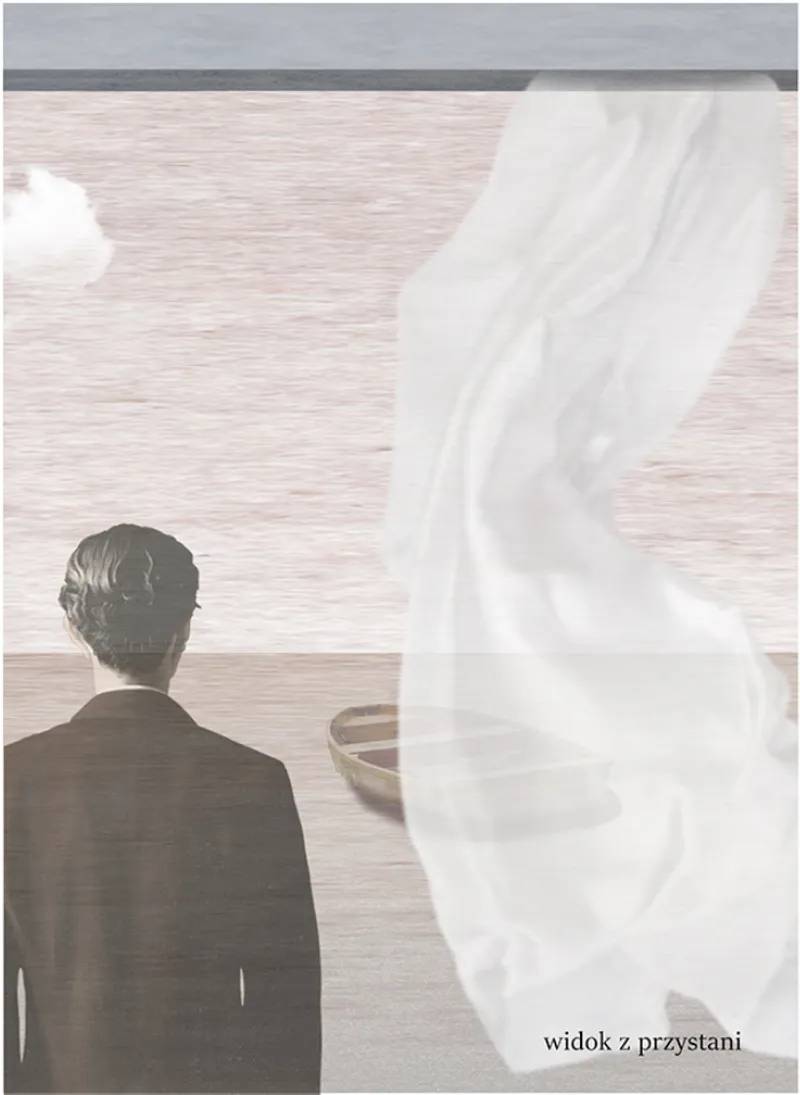
Formally, the project adopts a restrained architectural language. Monolithic volumes with precise openings define the built components, emphasizing proportion, light control, and material continuity. This minimalism is intentional; it removes visual noise, allowing sensory engagement to take precedence.
The absence of excessive detailing heightens the user’s awareness of subtle environmental changes. Light shifts, echoes, reflections, and textures become the primary architectural vocabulary. In this sense, Aquasis demonstrates how sensory architecture can achieve emotional intensity through reduction rather than addition.
The Ritual of Renewal
The experience of Aquasis unfolds as a ritual rather than a visit. Movement is linear yet introspective, guiding the user through stages of isolation, confrontation, and release. The sequence culminates at the central water void, where the accumulation of sensory inputs converges into a moment of stillness.
This ritualistic framework reinforces the project’s conceptual foundation: the regeneration of both mental and physical states. By engaging the body directly through environmental conditions, Aquasis positions architecture as an active participant in human well-being.
Sensory Architecture in Contemporary Discourse
Aquasis contributes to a growing body of work that challenges conventional architectural priorities. In contrast to image-driven design, it foregrounds experience, perception, and temporal engagement. The project demonstrates how sensory architecture can operate at the intersection of art, psychology, and environmental design.
By focusing on water as a unifying element, the proposal also addresses broader ecological and cultural narratives. Water becomes a symbol of life, transformation, and continuity, reinforcing the project’s relevance within both environmental and human-centered design conversations.
Aquasis is a precise and thoughtful exploration of sensory architecture. Through its controlled spatial composition, strategic use of water, and emphasis on human perception, the project transforms a simple architectural platform into a profound experiential landscape.
Rather than offering spectacle, it offers introspection. Rather than relying on form, it relies on experience. In doing so, Aquasis establishes a compelling model for how architecture can engage the senses, restore balance, and redefine the boundaries of spatial design.




Popular Articles
Popular articles from the community


The Musturak Paradise: Senior Living Architecture for a Connected Future in Temara, Morocco
The Musturak Paradise reimagines senior living architecture in Temara via private homes, social spaces, culture, community, and shared care.

The Earth Pod: 3D Printed Homes for Resilient Refugee Communities
The Earth Pod reimagines refugee housing through 3D printed homes made from clay, combining resilience, self-sufficiency, and rapid shelter.

Hill & Cross Opera: Sculptural Opera House Architecture Shaped by Tallinn’s Landscape and Identity
Hill & Cross Opera reimagines opera house architecture in Tallinn through its sculptural hill, civic plaza, glass wave and a luminous cross.

AL-JANNAH: Sustainable Architecture and Permaculture for Afghan Widows
AL-JANNAH uses sustainable architecture and permaculture to create resilient oasis of housing, learning, work and renewal for Afghan widows.


Similar Reads
You might also enjoy these articles

Eco Chapel: A Green Architecture Pavilion Designed in Symbiosis with the Forest
Eco Chapel uses green architecture to weave prayer, learning and reuse into a forest pavilion shaped by modular hexagonal canopies for life.
Kaffeebühnen: Coffee Shop Architecture Designed as a Civic Stage Between Vienna’s City and Park
Kaffeebühnen turns coffee shop architecture into a civic stage, linking Vienna’s park edge, urban life, warm timber yards, and coffee craft.
Healing Façade: Sustainable Architecture for Reforestation, Community, and Sacred Ecology in Ethiopia
Healing Façade reimagines sustainable architecture as a living wall that restores soil, catches water and renews Ethiopia's forest churches.


Urban Forest: A Vertical Ecosystem for 5,000 Workers in Singapore's Changi Business Park
Radially stacked pods and layered green decks turn a 7-acre plot into 47 acres of ecological workspace projected for 2040.


Explore Public Architecture Competitions
Discover active competitions in this discipline



Challenge to design public laboratory


Challenge to reimagine the Iron Throne


Photograph architecture without architects


Illustrate the lost glory of Angkor Wat - Render Challenge
Comments (0)
Please login or sign up to add comments
No comments yet. Be the first to comment!