
Blue House Pavilion by Wei Chieh Kung and Lydia Ya Chu Chang
Temporary blue timber pavilion in Taipei explores bodily movement, light, improvisation, and fragmented space through immersive experiential architecture design installation.

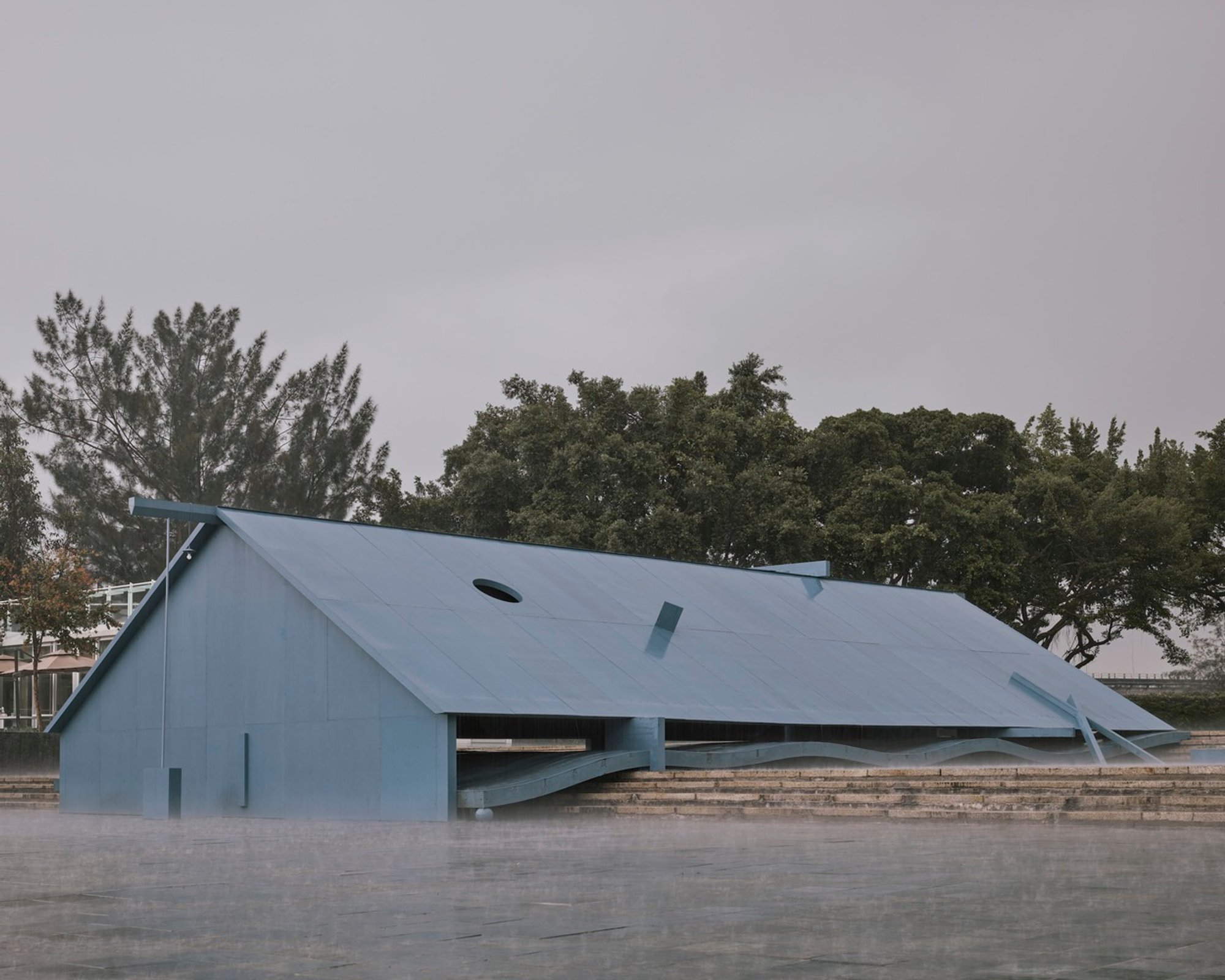
Blue House is a temporary architectural pavilion installed on the outdoor plaza of the Taipei Fine Arts Museum during the summer of 2022. Designed by Wei Chieh Kung and Lydia Ya Chu Chang, the project explores architecture as an experiential framework: one that dissolves boundaries between structure, body, and improvisation. Conceived as both object and environment, Blue House invites visitors to inhabit a constantly shifting spatial narrative shaped by movement, light, and perception.
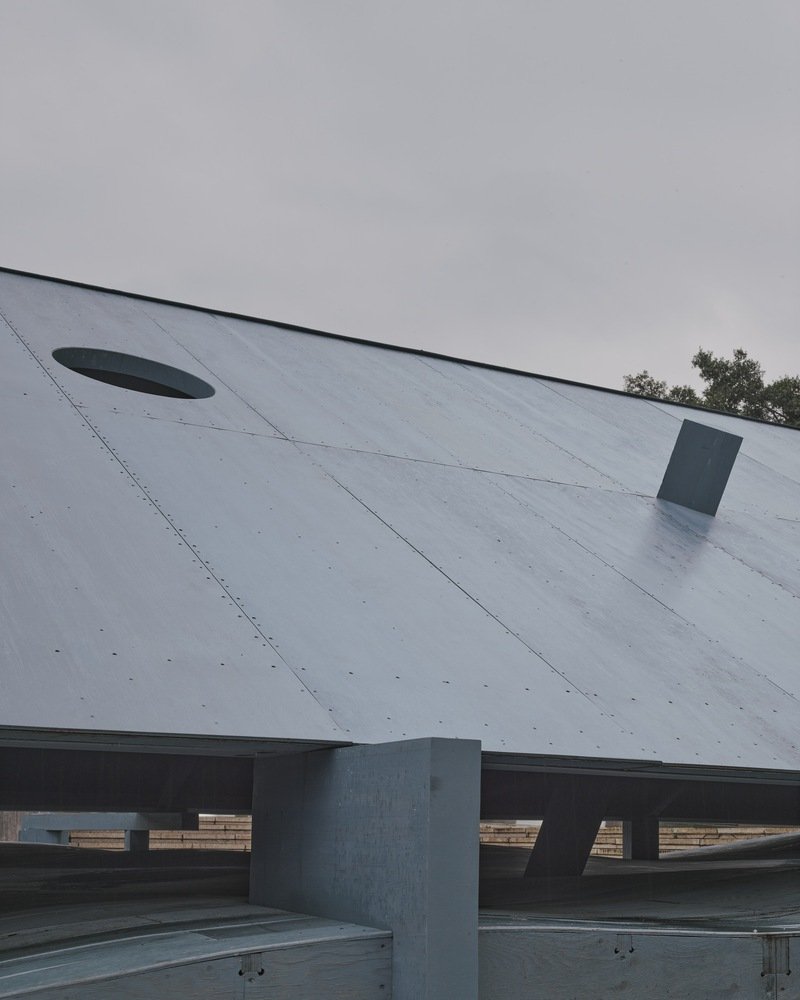
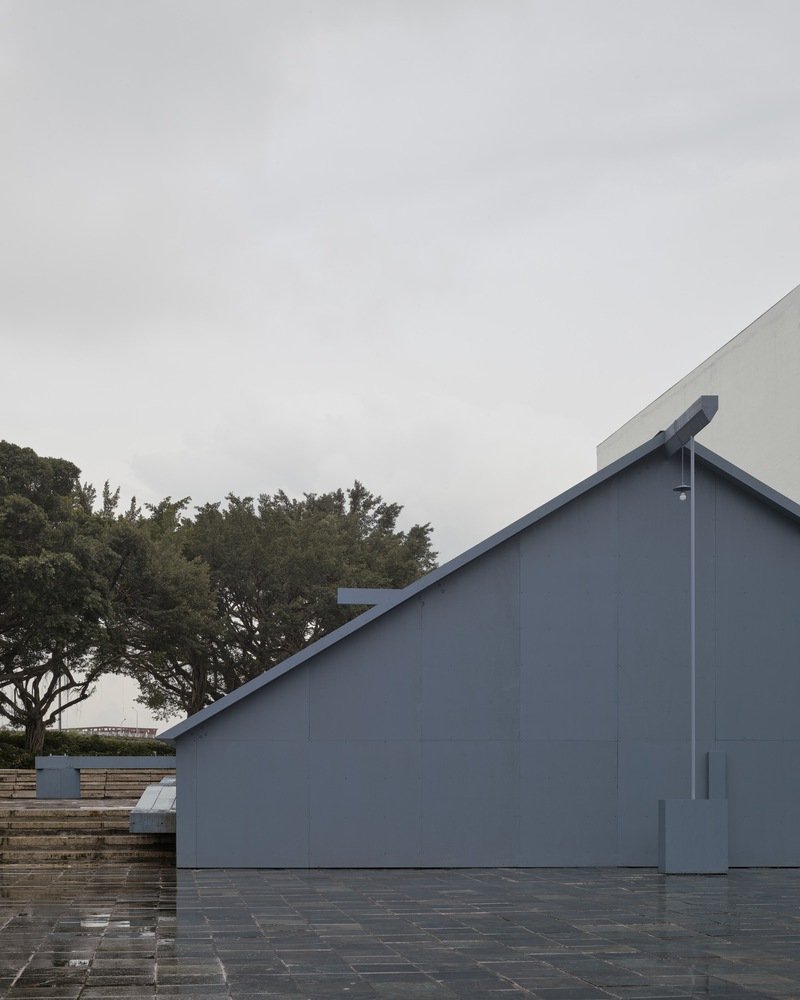
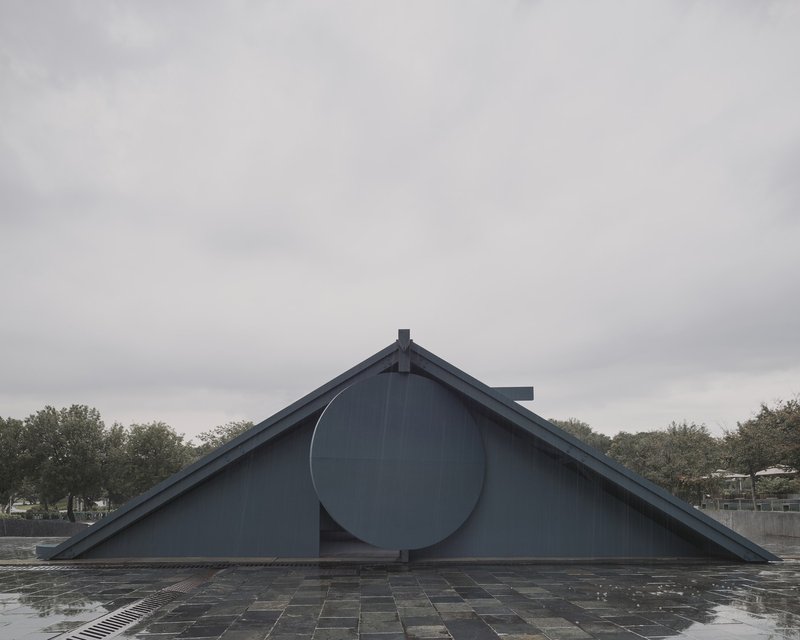
With a floor plan measuring 18 meters by 11 meters, the pavilion is deliberately rotated five degrees off the museum’s primary axis. This subtle deviation destabilizes conventional alignment and immediately situates the building as an autonomous presence within the plaza. Constructed from timber and steel and entirely painted in blue, the pavilion spans across two existing staircases, bridging circulation paths while redefining them. Its dual geometries, pentagonal on one side and triangular on the other, reinforce a sense of fragmentation and asymmetry that is central to the project’s architectural language.
The height of Blue House varies from 4.4 meters to 3.1 meters, while its low eaves hover no more than 1.3 meters above ground. Between the undulating floor plane and the eaves, a continuous gap emerges: an intentional “accident” that allows light, air, and glimpses of the surroundings to seep into the interior. This interstitial void blurs inside and outside, producing a spatial condition that is at once open and enclosed. Scattered throughout the pavilion, structural components appear as sculptural objects, read simultaneously as independent elements and as fragments of a larger whole.
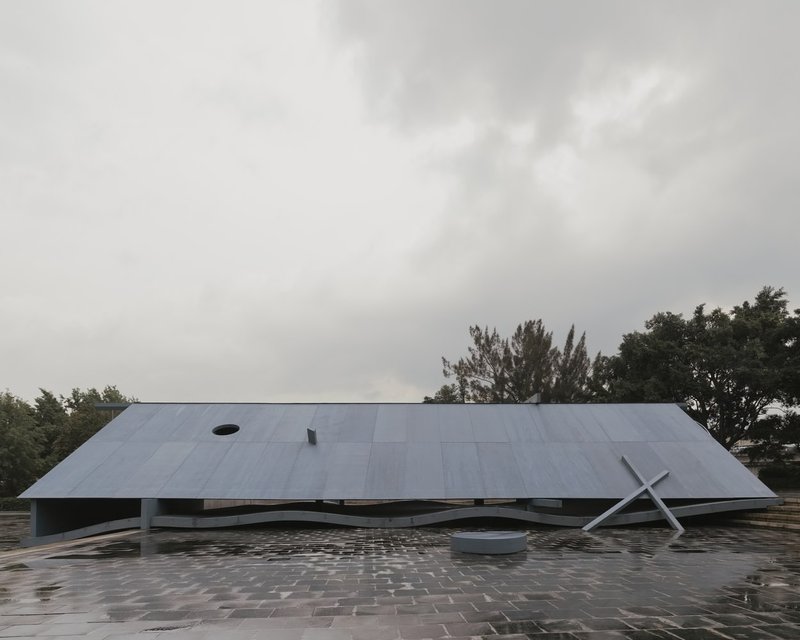
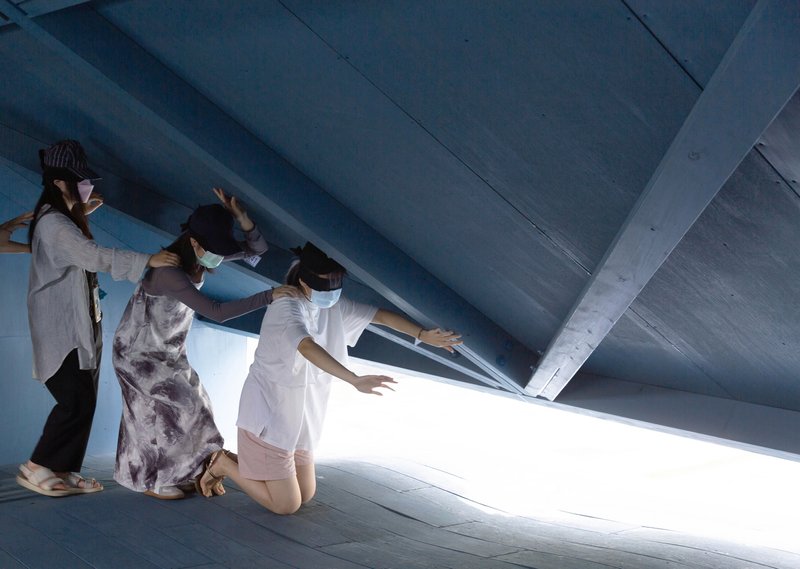
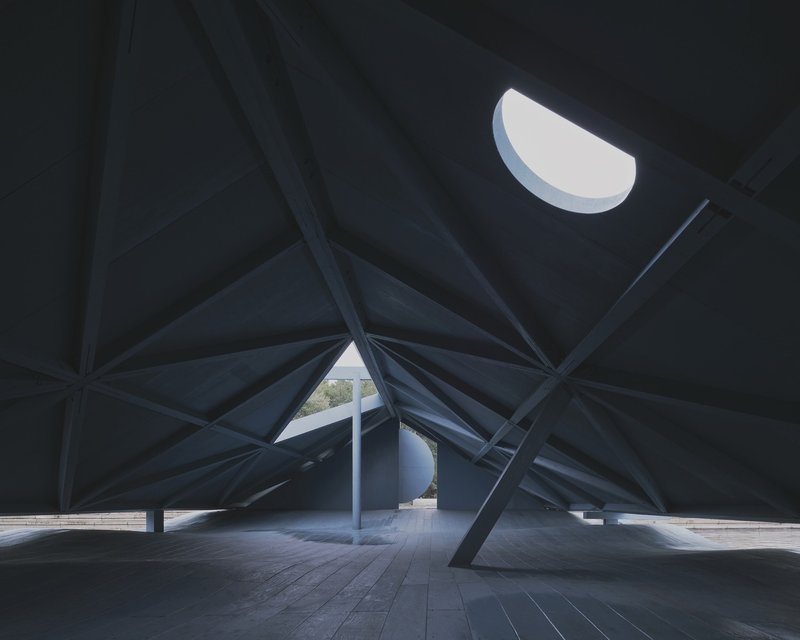
Entry to the pavilion is concealed at the rear, hidden behind an oval wall that heightens the sense of discovery. Once inside, visitors encounter a generous interior volume fully covered by an exposed timber roof. Skylights and the eave gaps are the only connectors to the exterior, creating a carefully calibrated relationship between enclosure and openness. The interior space is continuous yet constantly reshaped by floor undulations, light conditions, and the placement of architectural “objects.” At times it accommodates groups, at others a single body. It oscillates between domestic familiarity and abstract imagination: evoking associations as diverse as caves, raindrops, bones, or fragments of text.
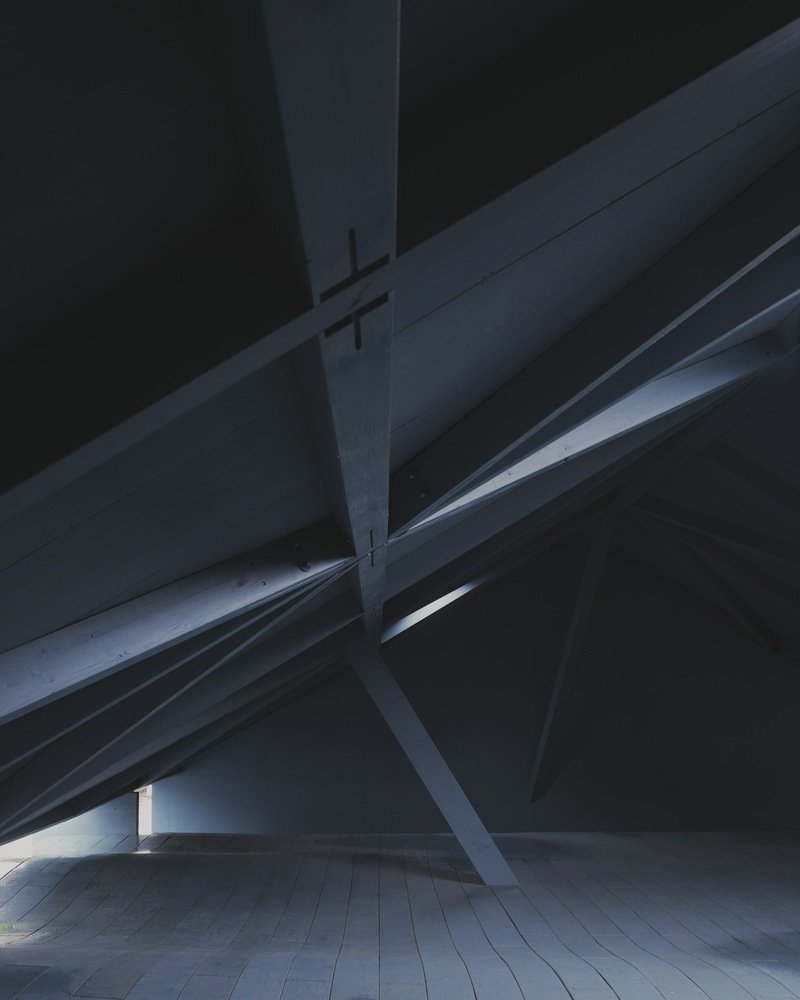
Extending beyond the physical pavilion, Blue House Study represents the conceptual and performative dimension of the project. Defined not by walls or materials but by the human body itself, this “study” unfolds through events, gatherings, and improvised actions. There is no fixed program, no rehearsal, and no predetermined conclusion. Instead, it resists established systems, expanding architecture into an intangible realm shaped by belief, movement, and participation. Here, architecture becomes a living process, an exploration of perpetual change and the freedom found within indeterminacy.
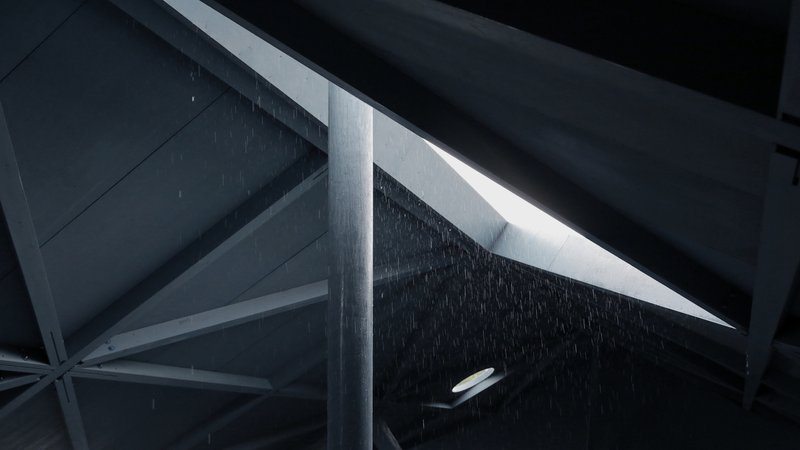
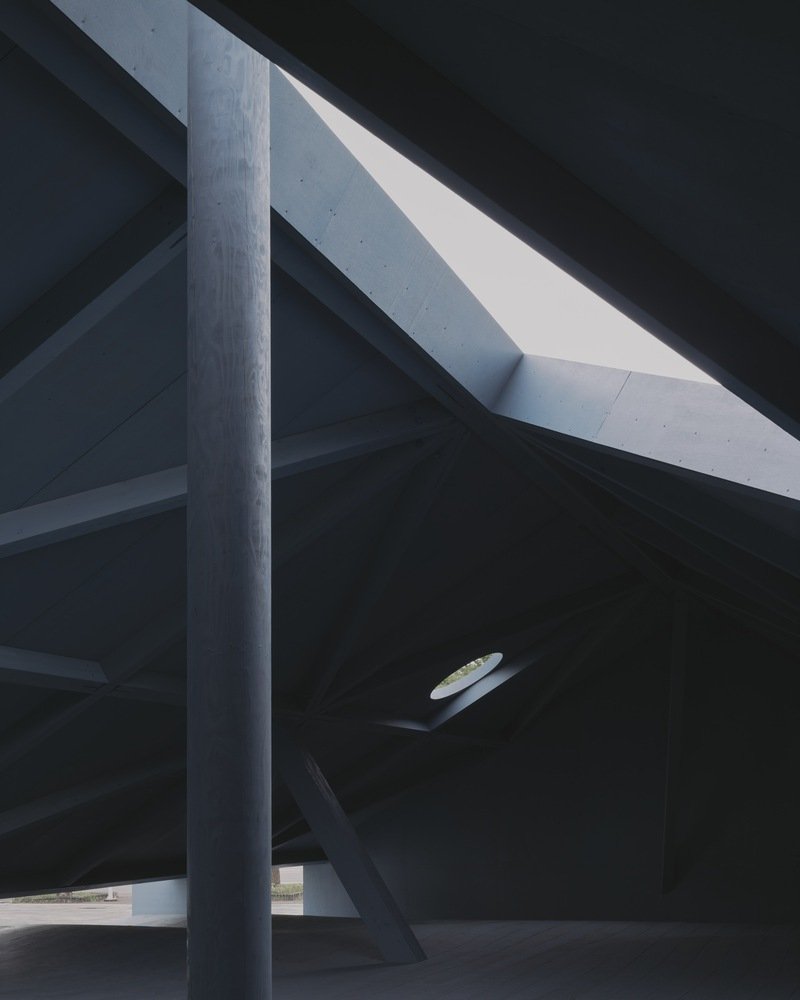
Through a series of immersive events, visitors engage with Blue House through their bodily senses. Participation occurs simply by being present: by moving, pausing, and inhabiting the space. Experiences do not end at the pavilion’s boundaries; they continue within memory and perception, suggesting new spatial possibilities beyond the site itself. Together, Blue House and Blue House Study form a reciprocal relationship between emptiness and substance, architecture and body, permanence and ephemerality. As a temporary pavilion, Blue House ultimately demonstrates how architecture can transcend form, becoming an ever-evolving encounter between space, time, and human presence.
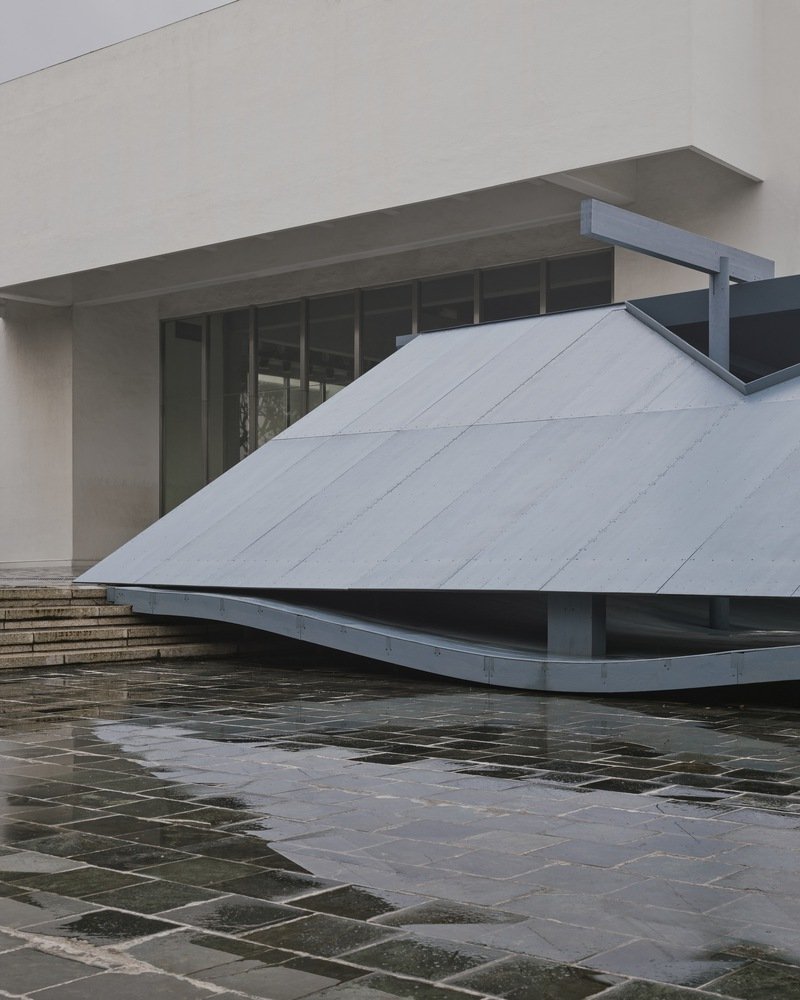
Project Information Location: Taipei, Taiwan Typology: Temporary Pavilion / Installation Architecture Area: 198 m² Year: 2022 Structure: Timber and steel Photographs: Studio Millspace, Annette An Jen Liu, Lydia Ya Chu Chang, and collaborators
All photographs are works of
Studio Millspace, Annette An Jen Liu, Lydia Ya Chu Chang, Zih Sin Jian, Pinti Zheng, Henry Wu, Jia Ying Chiu, Wei Chieh Kung, Jiazhen Song




Popular Articles
Popular articles from the community

Rojkind Arquitectos and Think Parametric Build a Glueless Pavilion from 67 Interlocking Panels
A serpentine fiber-cement installation in Chapultepec Park celebrates a decade of architectural media in Mexico City.
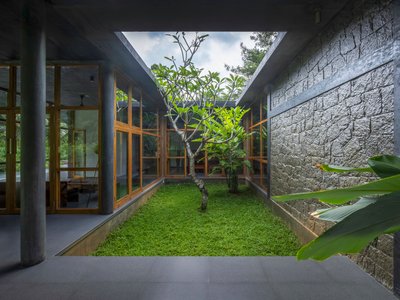
3dor Concepts Wraps a Kerala Home in Mirrored Concrete Arcs Around a Courtyard Tree
In the Western Ghats foothills of Thamarassery, a 270 m² single-story house uses two curved volumes to frame nature as its center.
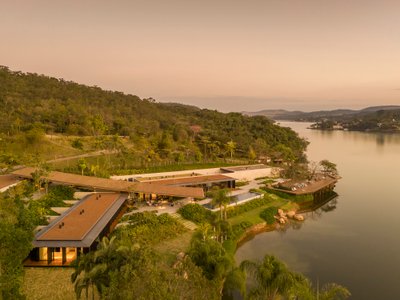
Bernardes Arquitetura Stretches a Timber Roof Along a Reservoir's Edge in Minas Gerais
Dam House in Itaúna lets a sweeping wooden canopy dissolve the boundary between hillside terrain and open water.
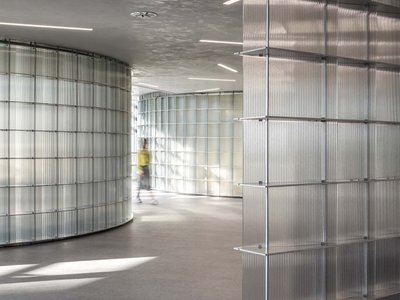
HCCH Studio Wraps a Shanghai High-Rise Office in Curved Walls of Translucent Glass
A 1,000 square meter fit-out in Lujiazui replaces the typical tech-office palette with layered glass, micro-cement, and quiet rigor.


Similar Reads
You might also enjoy these articles

Kokaistudios Wraps a Shanghai Retail Podium in Horizontal Louvers That Echo Its Foster + Partners Neighbor
A four-storey glass-roofed gateway links an underground commercial valley to the revitalized north bank of Shanghai's Suzhou River.
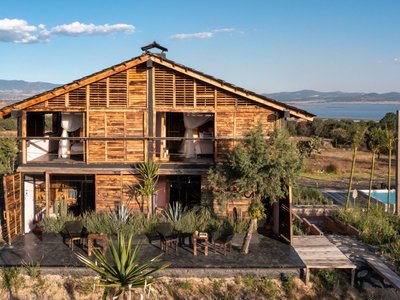
Fausto Terán and Toro Fuse Japanese Craft with Mexican Tradition in a Lakeside Retreat
Nakamura House pairs Shou-Sugi-Ban charred pine with handmade clay tile at the foot of Atlangatepec Lagoon in Mexico.
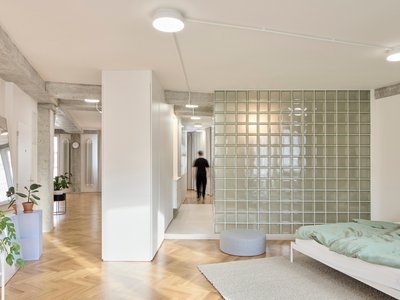
RDTH architekti Rips Out Nearly Every Wall in a Prague Apartment and Replaces Them with Furniture
A 101-square-meter post-war flat in Prague trades rigid partitions for a single rotated furniture block, curtains, and glass concrete.

SWA Group Spirals a Landscape Memorial into the Woods of Sandy Hook
A 1.8-acre clearing in Newtown, Connecticut, honors 26 lives lost with water, stone, and a single sycamore tree.

Explore Architecture Competitions
Discover active competitions in this discipline




The International Standard for Design Portfolios


The Global Benchmark for Architecture Dissertation Awards


The Global Benchmark for Graduation Excellence

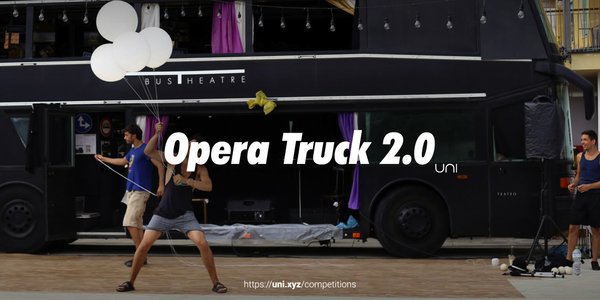
Challenge to design a portable theatre
Comments (0)
Please login or sign up to add comments
No comments yet. Be the first to comment!