
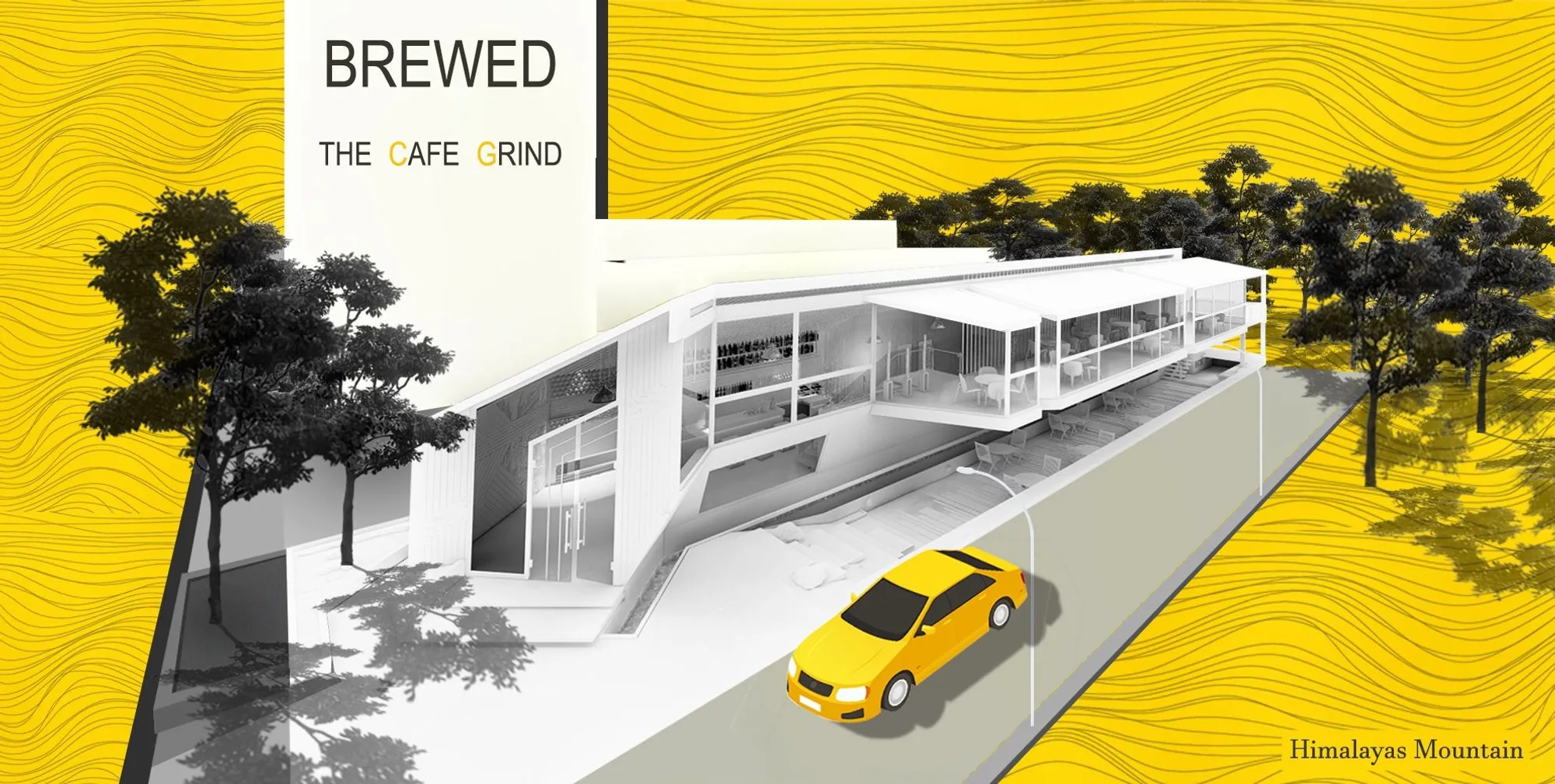
BREWED – The Cafe Grind: A Sustainable Café Architecture Inspired by Vienna's Landscape and Culture
A sustainable café architecture inspired by the Danube and Vienna's heritage, blending nature, culture, wellness, and community.


Project by Armin Farshad, Hanna Hassani, and Samin Ghasemzadeh
Honorable Mention | Brewed 2020
Reimagining the Coffee House Through Sustainable Café Architecture
Coffee houses have long served as social catalysts where ideas, conversations, and communities emerge. In BREWED – The Cafe Grind, the designers reinterpret this tradition through a contemporary architectural language that merges environmental responsiveness, cultural identity, and social wellbeing. Recognized with an Honorable Mention in the Brewed 2020 competition, the project presents a thoughtful vision of sustainable café architecture shaped by Vienna's landscape, heritage, and the realities of a rapidly changing world.
Developed during the Covid-19 pandemic, the project became more than a café design exercise. It evolved into an exploration of how architecture can create healthier, greener, and more resilient social environments while preserving the cultural significance of communal gathering spaces.
Drawing Inspiration from the Danube and the Alps
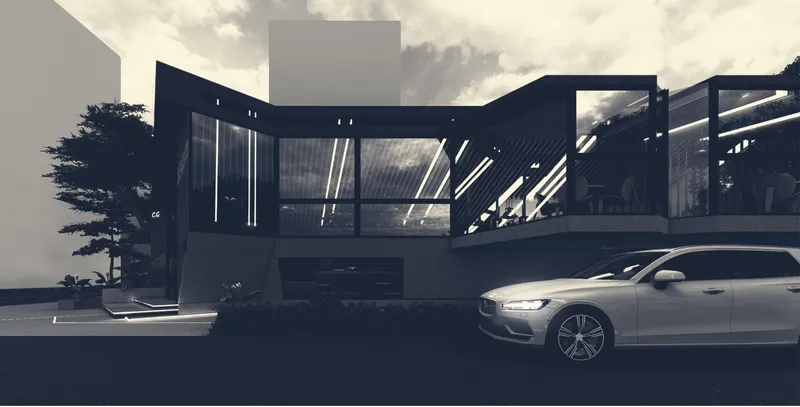
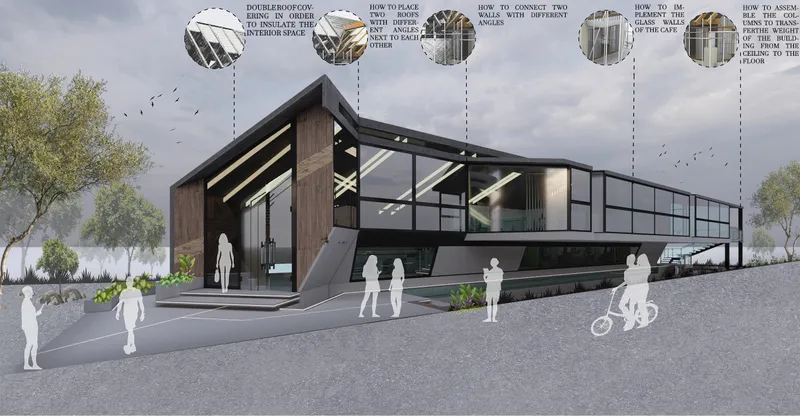
The architectural concept originates from two defining geographical elements of Vienna: the Alpine mountain ranges visible from the city and the Danube River that flows through its urban fabric.
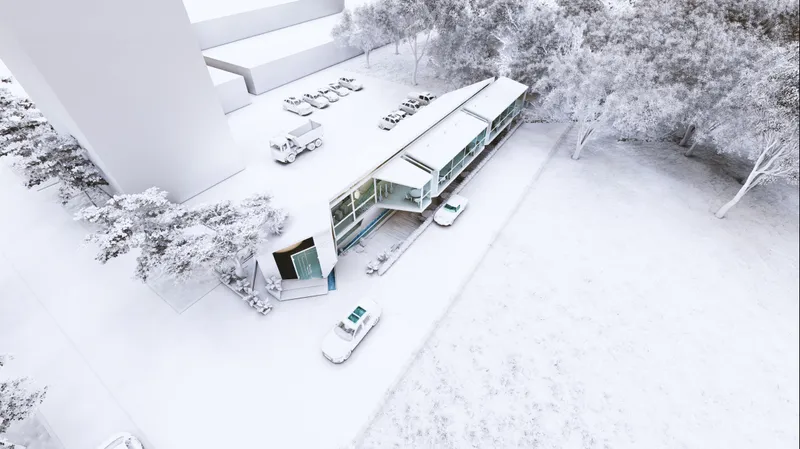
Rather than treating these references as decorative motifs, the design translates them into the building's physical form. The angular rooflines echo the silhouette of mountain peaks, while a linear water pathway running between the primary volumes symbolizes the flow of the Danube. This gesture creates both a visual and experiential connection throughout the project.
The resulting composition establishes a strong identity rooted in place. Visitors experience the metaphorical journey of the river as they move through the building, transforming circulation into an architectural narrative.
Architecture Shaped by Crisis and Adaptation
One of the most compelling aspects of the project is its direct response to the Covid-19 crisis. The design process unfolded during a period when social distancing, public health, and spatial separation became central concerns.
The architects addressed these challenges by dividing the café into two primary volumes positioned at different elevations. This separation reflects the social realities of the pandemic while simultaneously creating unique spatial experiences.
Instead of perceiving separation as a limitation, the project transforms it into an opportunity for architectural innovation. Distinct levels, visual connections, and open circulation routes allow visitors to remain connected while occupying different zones of the building.
This approach demonstrates how sustainable café architecture can adapt to changing social conditions without sacrificing community engagement.
Site Planning and Environmental Performance
The site strategy carefully responds to local climatic conditions and urban context. The elongated plot naturally suggested a linear organization, allowing the building to maximize daylight, views, and natural airflow.
Environmental analysis informed several passive design strategies:
- Roof overhangs provide seasonal shading.
- Air ducts assist in reducing indoor temperatures and humidity.
- Building orientation supports natural ventilation.
- Openings respond to prevailing wind directions.
- Daylighting reduces dependence on artificial lighting.
Psychrometric studies and wind wheel analysis guided the environmental decisions, ensuring that comfort could be achieved with reduced energy consumption.
These passive systems form a critical component of the project's sustainability agenda, demonstrating how architectural form can actively contribute to environmental performance.
Three Layers of Experience
The project organizes activities across three distinct levels, each offering a unique relationship between users and space.
Underground Community Zone
The lowest level functions as an alternative social environment. Here visitors can read, relax, watch films, or engage in informal gatherings. The partially enclosed atmosphere creates intimacy while remaining visually connected to surrounding spaces.
Ground-Level Arrival Space
The central level serves as the primary entrance and circulation hub. This threshold connects visitors to the different programmatic zones while framing views toward the water feature and landscape elements.
Elevated Café Experience
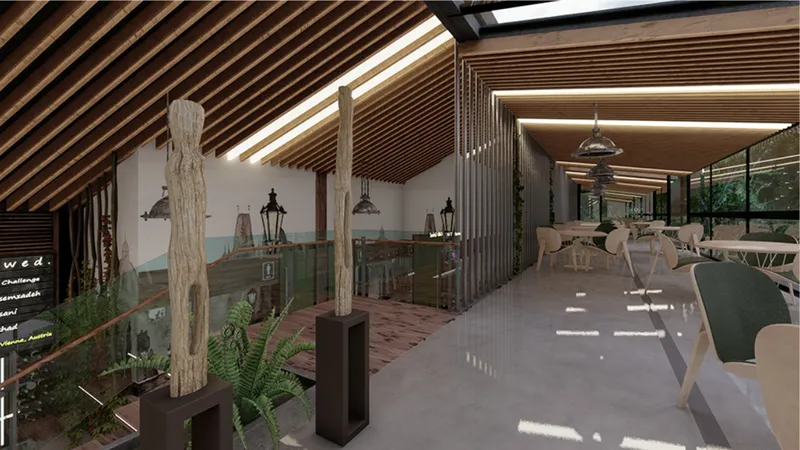
The upper level houses the primary café seating areas. Elevated above the ground plane, this zone offers panoramic views, abundant daylight, and opportunities for social interaction.
Together, these layers create a diverse range of experiences that encourage exploration and accommodate different modes of occupancy.
Interior Design Rooted in Viennese Heritage
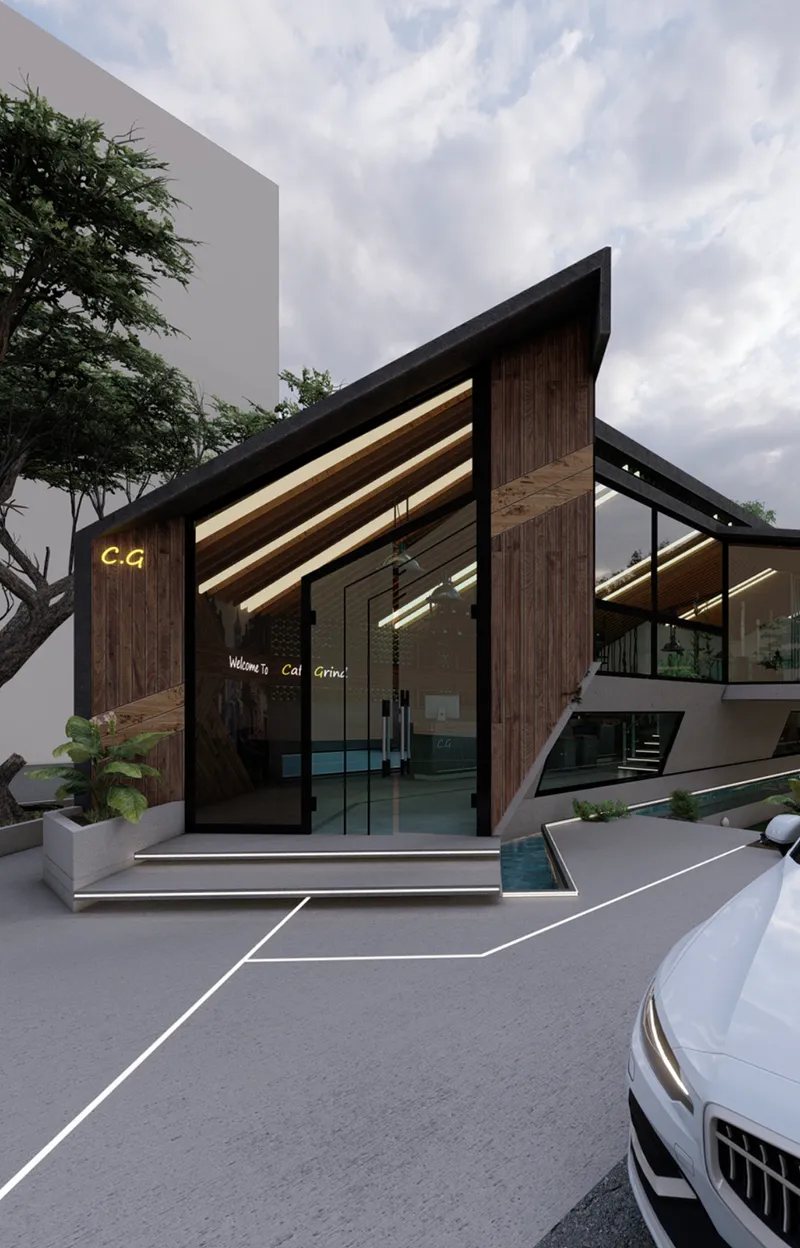
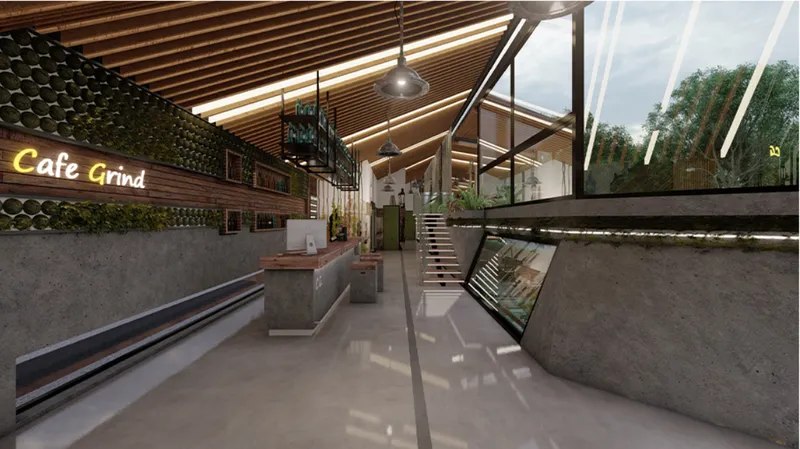
The interior architecture balances contemporary aesthetics with references to Vienna's historic café culture.
Wood surfaces introduce warmth and familiarity, while exposed concrete and black metal elements establish a modern industrial character. This combination generates a visual dialogue between tradition and innovation.
The designers incorporated:
- Wood ceiling slats inspired by traditional craftsmanship.
- Concrete feature walls reflecting contemporary minimalism.
- Black metal structural details.
- Warm lighting that reinforces intimacy.
- Artwork referencing historic Viennese culture.
The result is an environment that feels both modern and culturally grounded.
Creating Human-Centered Social Spaces
Beyond serving coffee, the project seeks to strengthen social connections. Every design decision contributes to creating environments that encourage communication, collaboration, and community building.
The spatial organization supports various social interactions, from casual encounters to extended gatherings. Multiple seating typologies allow visitors to choose between privacy and openness, while visual connections across levels foster a sense of shared occupancy.
A particularly notable feature is the outdoor cinema-inspired communal space beneath the elevated structure. This area becomes a symbolic setting where people can gather around shared experiences while maintaining individual perspectives.
Such interventions reinforce the project's belief that architecture should create opportunities for meaningful human interaction.
Symbolism and Social Commentary
The project also addresses broader societal issues through architectural storytelling.
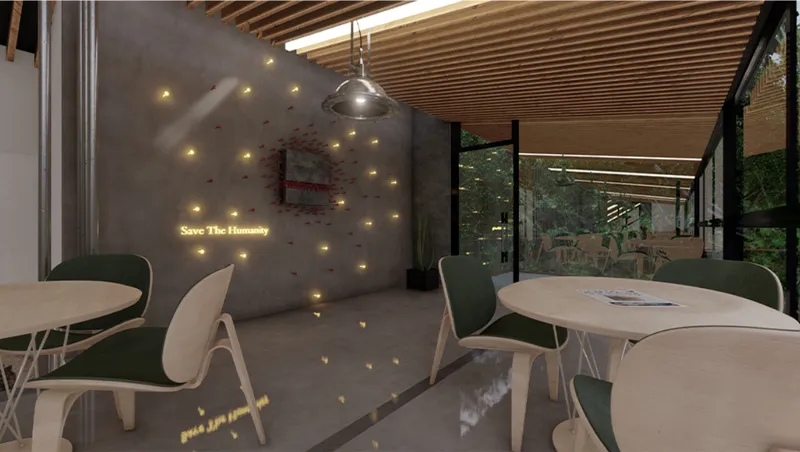
One interior installation titled "Save The Humanity" references the global pandemic through a composition of concrete forms, lighting elements, and spatial symbolism. The installation reflects themes of isolation, resilience, and collective responsibility.
Rather than functioning purely as decoration, these elements encourage reflection and deepen the project's conceptual narrative.
This integration of social commentary demonstrates how architecture can engage with contemporary challenges while enriching everyday experiences.
Flexibility, Functionality, and Future Resilience
Flexibility remains a key design principle throughout the project. Spaces can adapt to changing social needs, different occupancy levels, and evolving user expectations.
The circulation system, layered floor organization, and open planning strategy ensure that the café can continue functioning effectively under varying conditions.
This adaptability reflects a broader understanding of sustainability, one that extends beyond environmental performance to include social and operational resilience.
A Contemporary Interpretation of the Coffee House
BREWED – The Cafe Grind successfully reinterprets the historic coffee house as a dynamic architectural environment. Inspired by Vienna's geography, informed by environmental analysis, and shaped by the challenges of a global pandemic, the project demonstrates the transformative potential of sustainable café architecture.
By integrating culture, climate responsiveness, social interaction, and spatial storytelling, the design creates a rich and memorable experience that extends far beyond coffee consumption.
The project stands as a compelling example of how architecture can respond to local identity while addressing global challenges, offering a model for future hospitality spaces that prioritize both people and place.



Popular Articles
Popular articles from the community


The Musturak Paradise: Senior Living Architecture for a Connected Future in Temara, Morocco
The Musturak Paradise reimagines senior living architecture in Temara via private homes, social spaces, culture, community, and shared care.

Riyadh For All: Intergenerational Urban Design for Active Aging in Rabat
Riyadh For All reimagines urban design in Rabat with intergenerational co-living, adaptive courtyards, and Moroccan cultural exchange today.

Co-Life: Senior Housing Design That Reconnects Older Adults With the City
Co-Life reimagines senior housing design through healing gardens, shared streets, workshops, and a sustainable community across generations.

Play: Fragments of Their World
Familiar architecture becomes modular playground design, creating safe spaces where displaced children can learn, connect, imagine and play.
Similar Reads
You might also enjoy these articles

Eco Chapel: A Green Architecture Pavilion Designed in Symbiosis with the Forest
Eco Chapel uses green architecture to weave prayer, learning and reuse into a forest pavilion shaped by modular hexagonal canopies for life.
Kaffeebühnen: Coffee Shop Architecture Designed as a Civic Stage Between Vienna’s City and Park
Kaffeebühnen turns coffee shop architecture into a civic stage, linking Vienna’s park edge, urban life, warm timber yards, and coffee craft.
Healing Façade: Sustainable Architecture for Reforestation, Community, and Sacred Ecology in Ethiopia
Healing Façade reimagines sustainable architecture as a living wall that restores soil, catches water and renews Ethiopia's forest churches.


Urban Forest: A Vertical Ecosystem for 5,000 Workers in Singapore's Changi Business Park
Radially stacked pods and layered green decks turn a 7-acre plot into 47 acres of ecological workspace projected for 2040.

Comments (0)
Please login or sign up to add comments
No comments yet. Be the first to comment!