
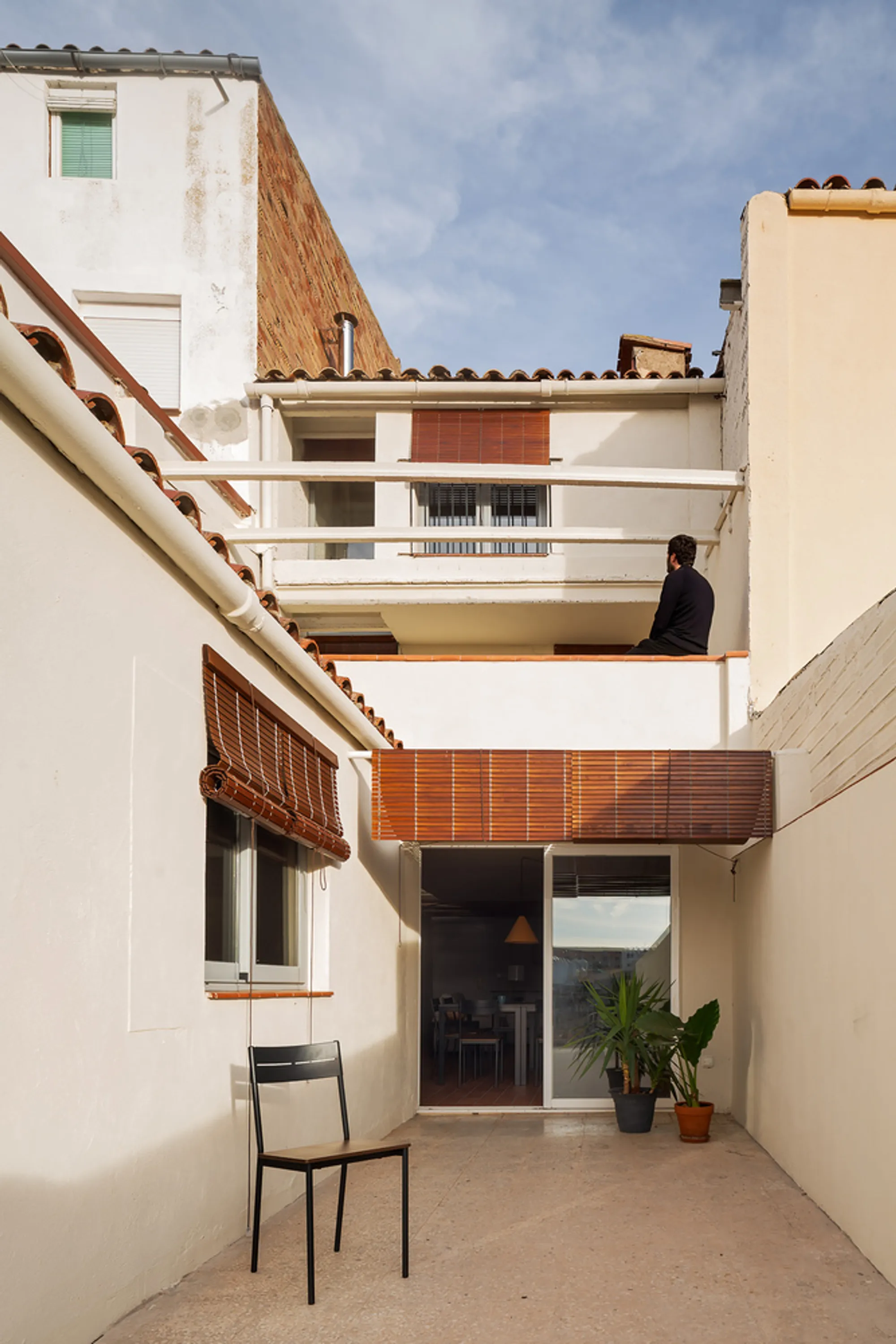
Ca la Francesa House Renovation by Hiha Studio: A Rural Revival Rooted in Local Tradition
Rural house renovation in Catalonia blending vernacular materials, passive design, and triple-height void to create sustainable, light-filled interiors.


Location: Juncosa, Las Garrigues, Spain Architects: Hiha Studio Lead Architect: Bernat Ardèvol Photography: Pol Viladoms Area: 195 m² Year of Completion: 2022 Construction Budget: €490/m²
Nestled in the arid, olive-rich landscape of Las Garrigues, Catalonia, the Ca la Francesa House Renovation by Hiha Studio breathes new life into a 1914 rural dwelling. Melding vernacular architecture with minimalist, cost-efficient strategies, the project transforms a formerly dilapidated building into a sustainable rural tourism residence—all within a strikingly modest budget.
Preserving Local Typologies with Contemporary Intent
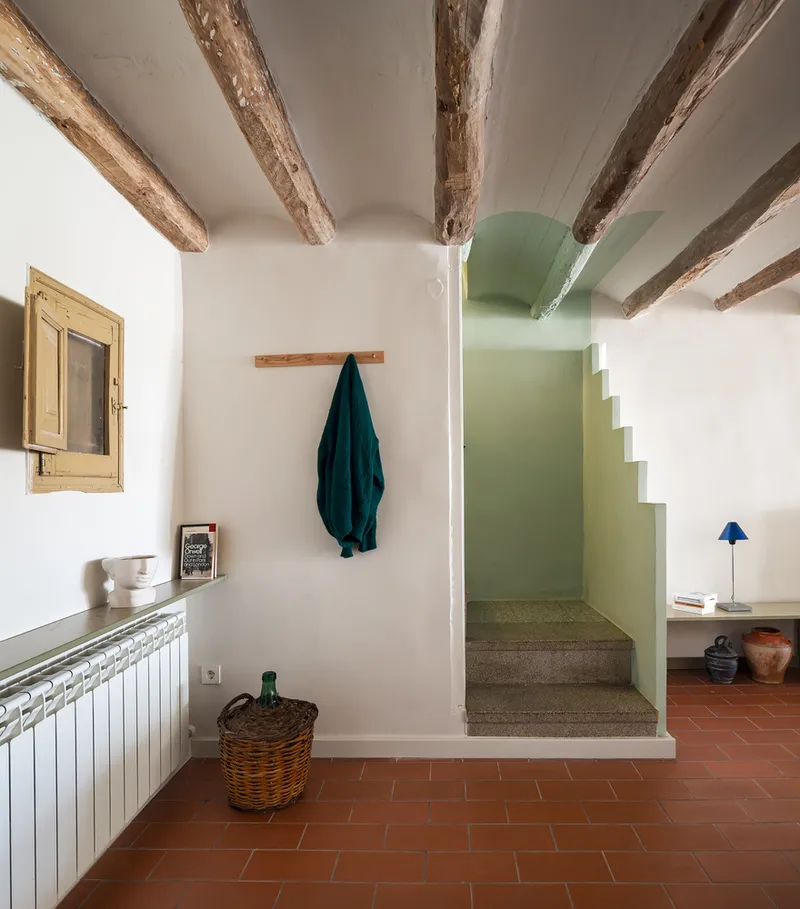
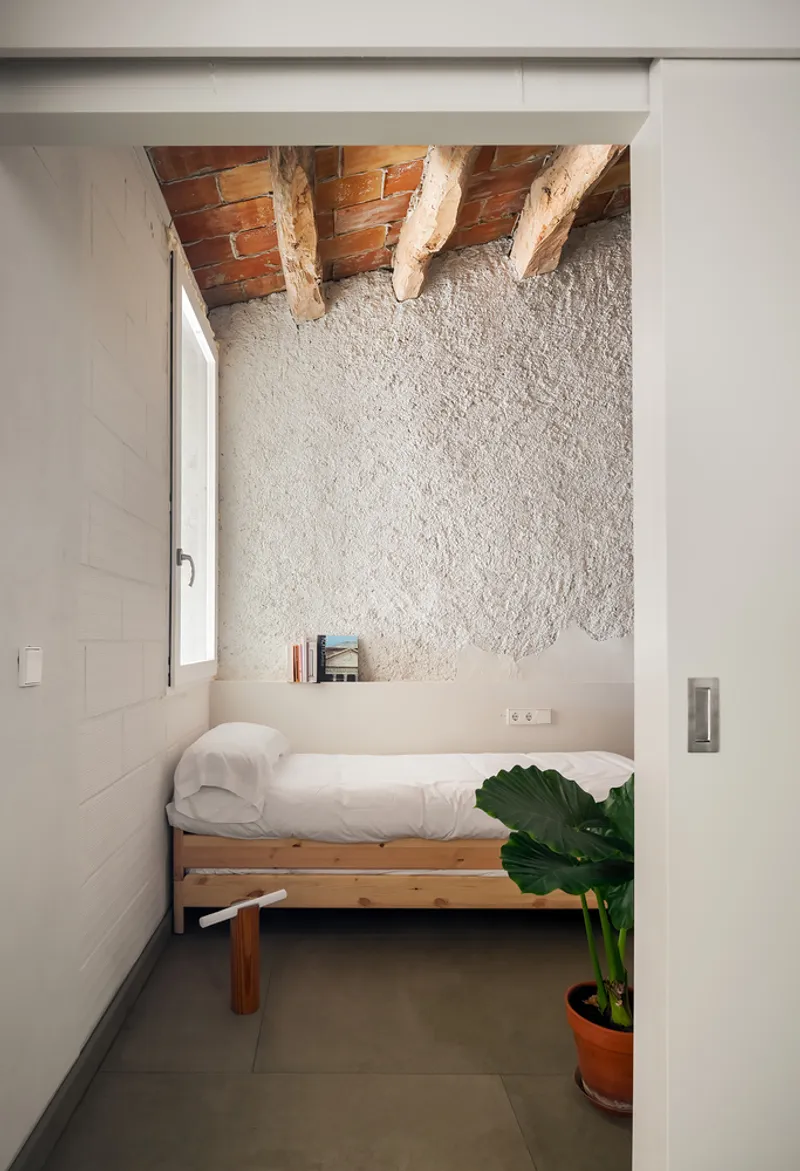
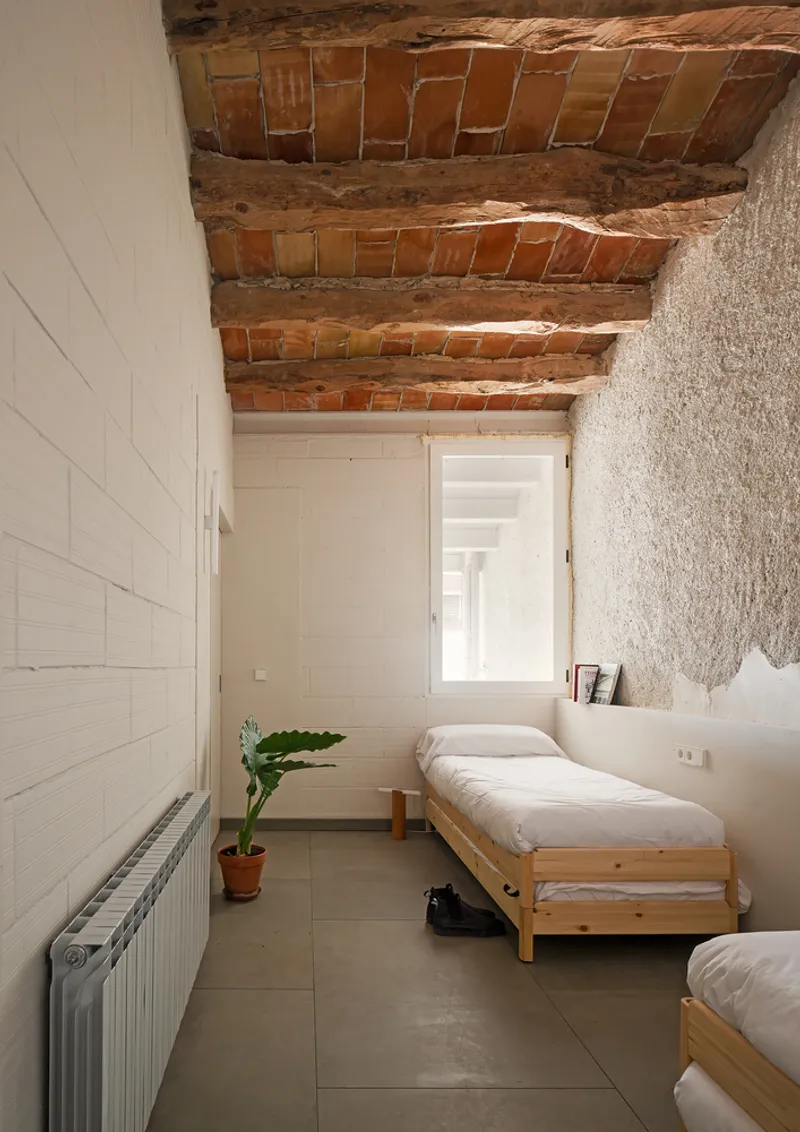
The original structure followed the traditional typology of the Garrigues region—a narrow façade of 5 meters, a 15-meter depth, and a palette of rammed earth, dry stone, wooden beams, and gypsum vaults. In the 1970s, structural additions introduced precast concrete beam floors and perforated brick walls, diverging from the building’s original materials and character.
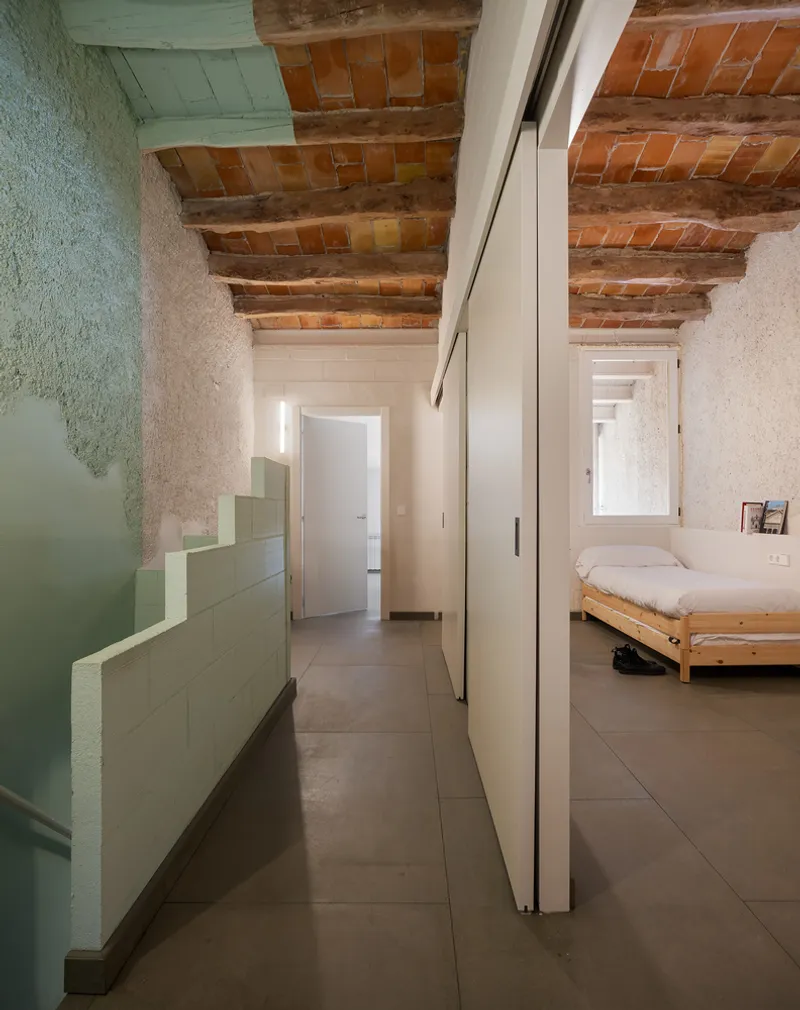
Hiha Studio’s renovation respects and highlights this layered history by integrating heritage materials with contemporary spatial and environmental solutions. The design’s main gesture—a triple-height void carved laterally into the building—introduces natural light deep into the interior while articulating vertical connectivity across all levels.
Spatial Strategy: Light, Air, and Dialogue with Nature
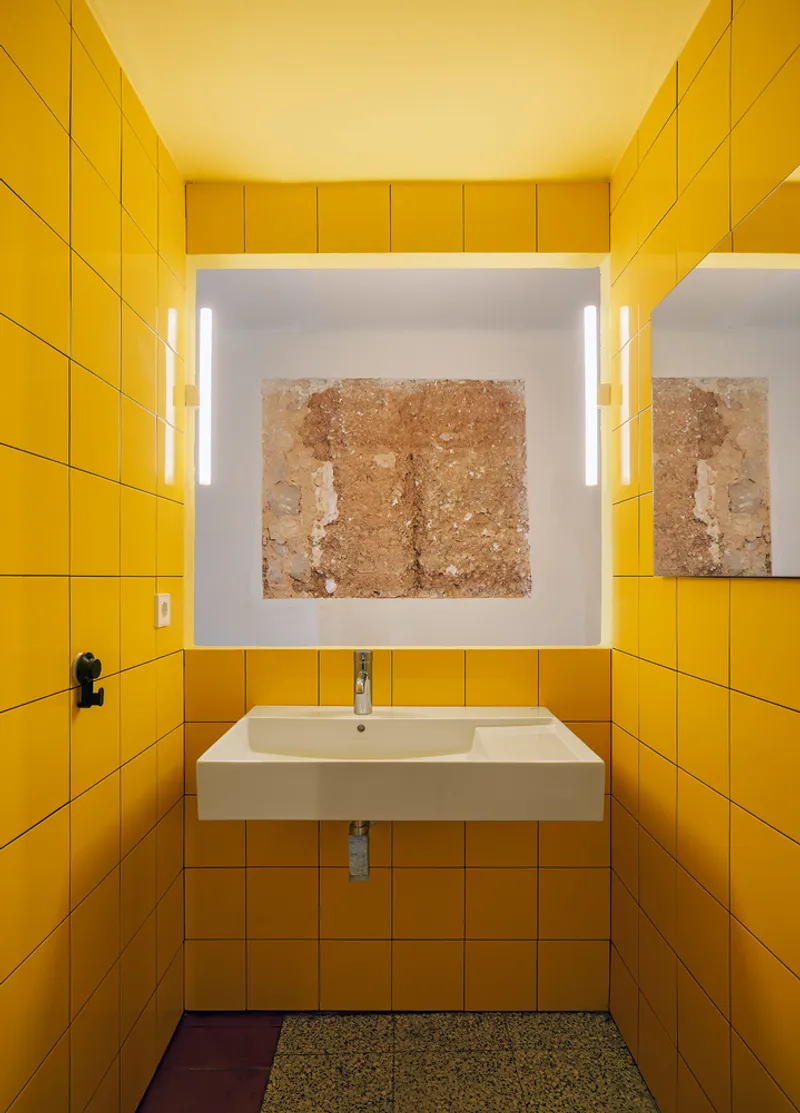
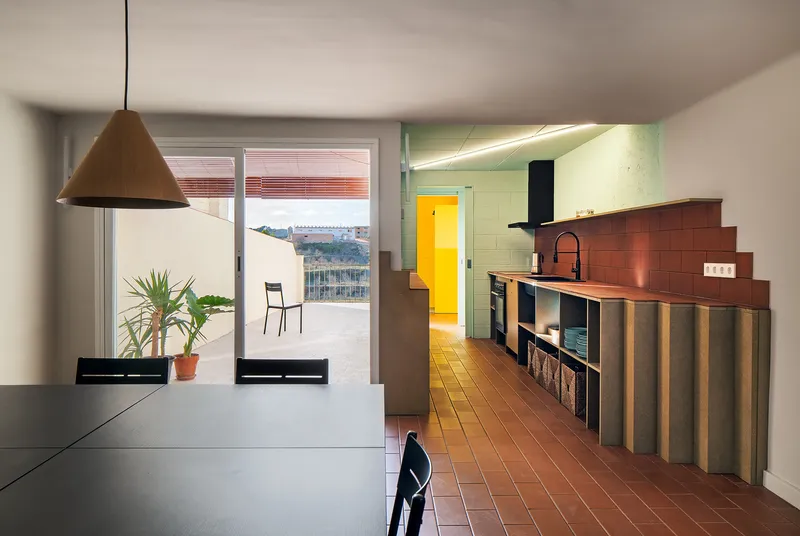
The central triple-height void is more than an aesthetic move—it’s a passive environmental device. It allows sunlight to reach the heart of the home, illuminating the living-dining room, a bathroom on the first floor, and a formerly closed-off interior room on the second floor. During winter, the southwest-facing void captures solar gain, while roller blinds shield the interior from excessive summer radiation—creating a passive thermal strategy that reduces energy use and enhances comfort year-round.
By opening the house to its surroundings, the architects draw in the earthy textures and tones of the arid olive landscape, extending the rural identity indoors without decorative mimicry.
Material Consciousness: Low-Tech, High-Impact
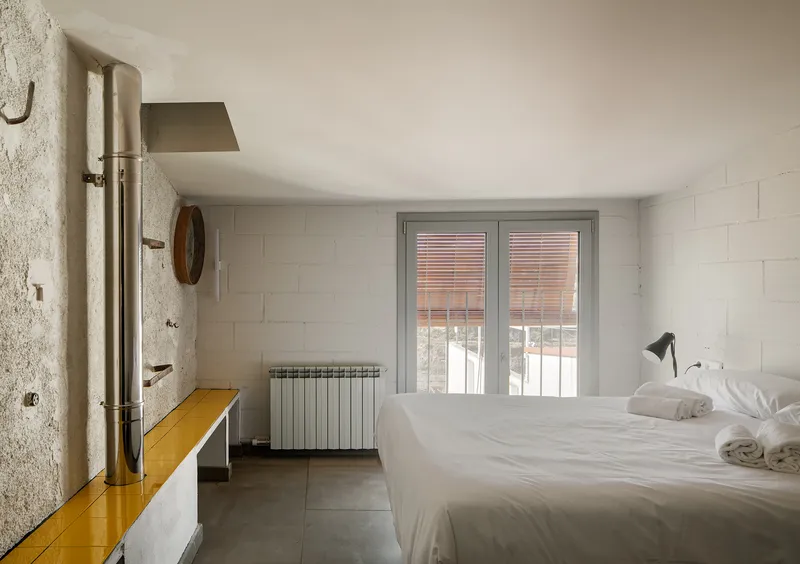
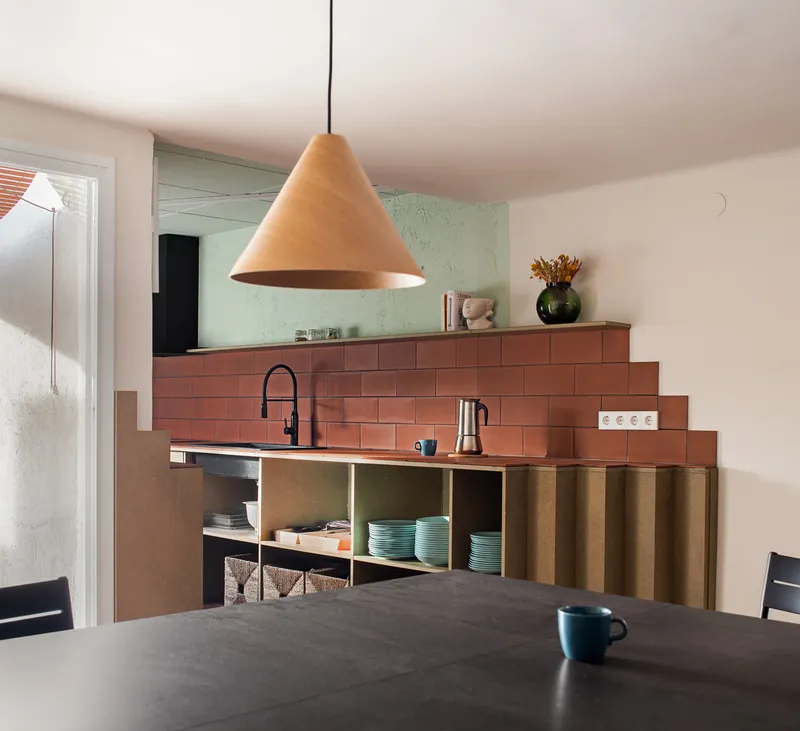
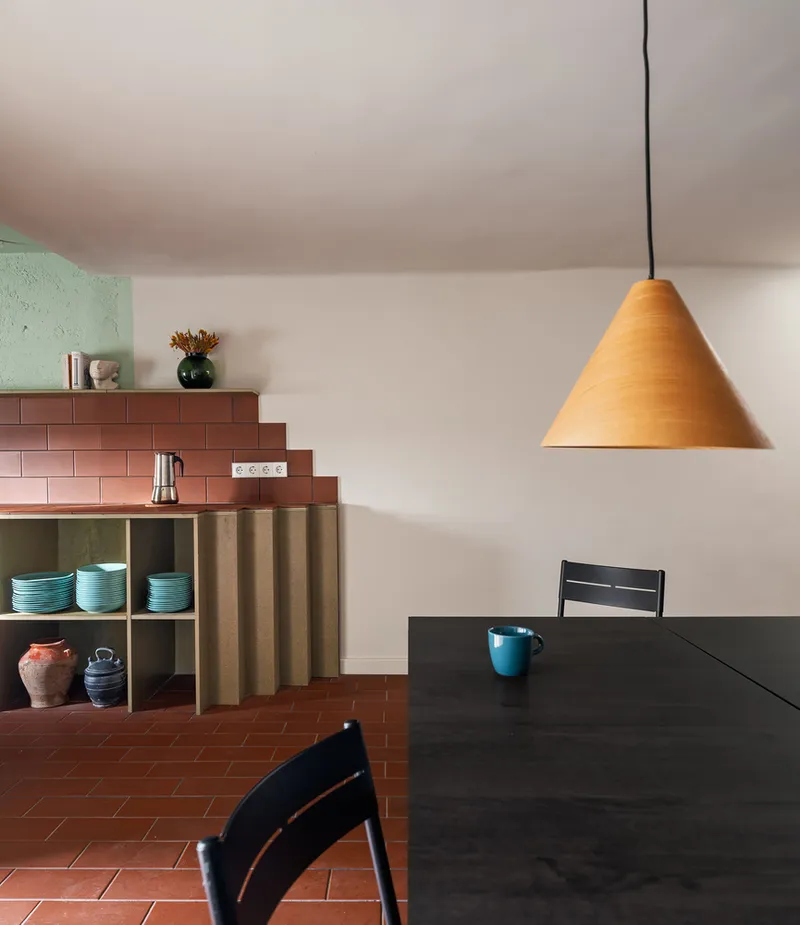
With a cost ceiling of €490/m², material and construction choices were crucial. The design leaves new ceramic partition walls exposed, concealing only the areas with mechanical systems. Flooring is deliberately affordable and durable: traditional clay tiles ("rasilla") on the ground floor, and water-resistant DM wood panels on the upper floor—both offering easy installation and acoustic/thermal efficiency.
Old elements like wooden beams and stone walls are preserved and celebrated. New materials are selected for their raw authenticity, avoiding unnecessary finishes. This results in a tactile, honest interior language that resonates with the material heritage of the site.
Energy & Heating: Local Resources, Minimal Intervention
Rather than overhaul the existing heating infrastructure, the project adds a high-efficiency wood-burning stove—a nod to local agricultural rhythms, where pruned olive and almond branches provide an abundant wood source. Coupled with improved natural ventilation, this system ensures a warm, comfortable interior through colder months with minimal energy dependence.
Authentic Rural Regeneration Through Architecture
The Ca la Francesa renovation exemplifies how thoughtful, context-aware architecture can reinterpret the past for modern living without excess. Hiha Studio’s approach honors the local construction vernacular, embraces sustainability through low-tech means, and creates a soulful space that blends heritage with hospitality.
With smart spatial planning, material restraint, and a deep respect for site and climate, this rural house becomes more than just a tourism residence—it becomes a living archive of Las Garrigues’ cultural and architectural legacy.
.




Popular Articles
Popular articles from the community


Co-life: Sustainable Architecture for Age-Friendly Community Living
Co-life reimagines sustainable architecture for seniors through courtyards, rammed earth, shared gardens, and spaces designed for belonging.

Play: Fragments of Their World
Familiar architecture becomes modular playground design, creating safe spaces where displaced children can learn, connect, imagine and play.

Conexión: Biophilic Design Reimagines High-Rise Living in Hong Kong
Conexión reimagines high-rise living in Hong Kong through biophilic design, green facades, shared spaces, daylight, water and nature within.

The Musturak Paradise: Senior Living Architecture for a Connected Future in Temara, Morocco
The Musturak Paradise reimagines senior living architecture in Temara via private homes, social spaces, culture, community, and shared care.


Similar Reads
You might also enjoy these articles


Hodi-Mandai Geram
Project Function: Preservation and revitalization of the Intangible heritage and socio-spatial identity of the Hodi by Housing, Cultural Memory Center, Sacred Grove, landscape, local tourism economy


Olio Towers: A Mid-Rise for Performers That Fuses Housing, Rehearsal, and Stage
Located blocks from Houston's Theater District, this modular tower stacks living units around a central performance atrium.

Oasis: Modular Green Housing Carved into Dhaka's Urban Fabric
A shortlisted Plugin Housing entry reclaims unauthorized settlements in Dhaka with stepped concrete volumes, green roofs, and ventilation-driven design.

Black Hole: A Floating Megastructure for the Post-Physical Era
Emiliano Mazzarotto envisions a spherical, self-scaling arena where e-sports, digital hotels, and holographic stadiums replace traditional public space.


Explore Architecture Competitions
Discover active competitions in this discipline



Challenge to reimagine the Iron Throne


Photograph architecture without architects


Illustrate the lost glory of Angkor Wat - Render Challenge


Design challenge to reuse E-waste
Comments (0)
Please login or sign up to add comments
No comments yet. Be the first to comment!