
Casavera: An Accessible Mediterranean Home Rooted in El Cabanyal
An accessible Mediterranean home in El Cabanyal, transforming a former shop into a light-filled, barrier-free house organized around a climate-regulating patio.


Located in the historic fishermen’s neighborhood of El Cabanyal in Valencia, Casavera is a sensitive residential renovation that transforms a former sports shop into a bright, barrier-free Mediterranean home. Designed by gon architects, the 135-square-meter dwelling rethinks domestic space through accessibility, environmental performance, and deep social awareness.
From Commercial Space to Inclusive Home
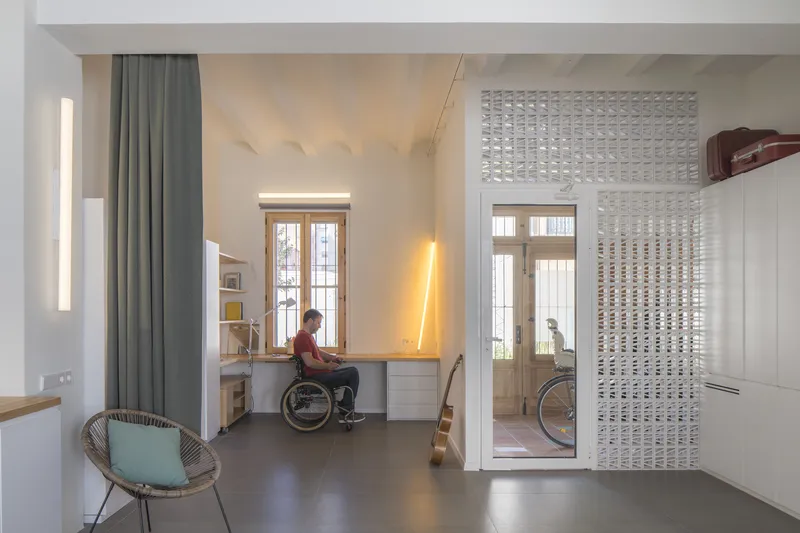
The project occupies a narrow plot between party walls, measuring 25 meters long and 6 meters wide. Originally a dark and humid ground-floor commercial space, the building has been carefully rehabilitated and extended to accommodate a multigenerational household with diverse rhythms of life. The change of use was guided by strict accessibility regulations, responding to the daily needs of Elies, one of the homeowners and a wheelchair user since the age of 18.
Rather than treating accessibility as a constraint, the architects integrated it as a generative design principle. The result is a fluid, generous, and obstacle-free domestic environment where spatial comfort, autonomy, and dignity define everyday living.
A House for Shared Life and Individual Rhythms
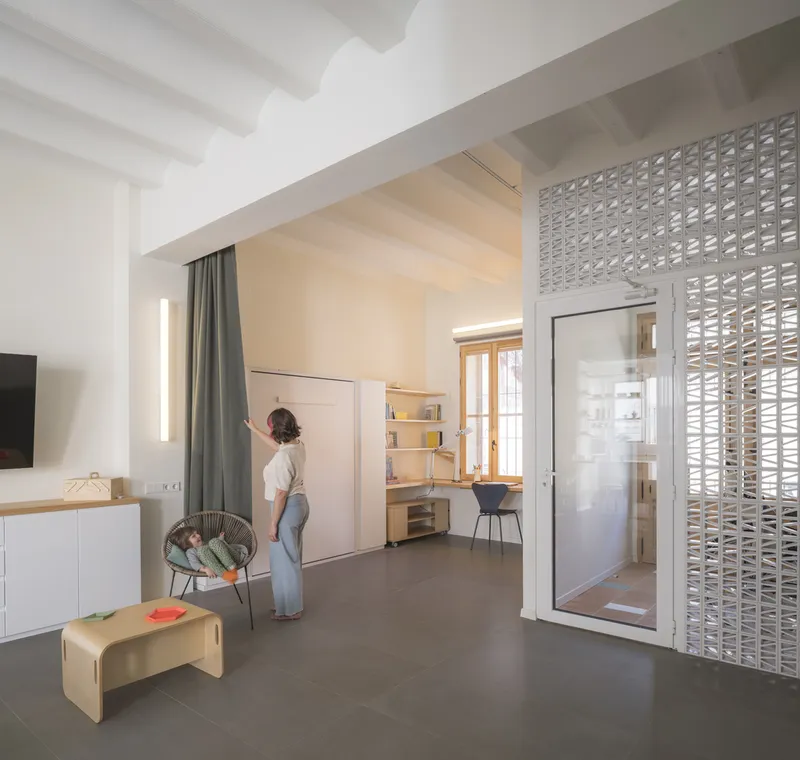
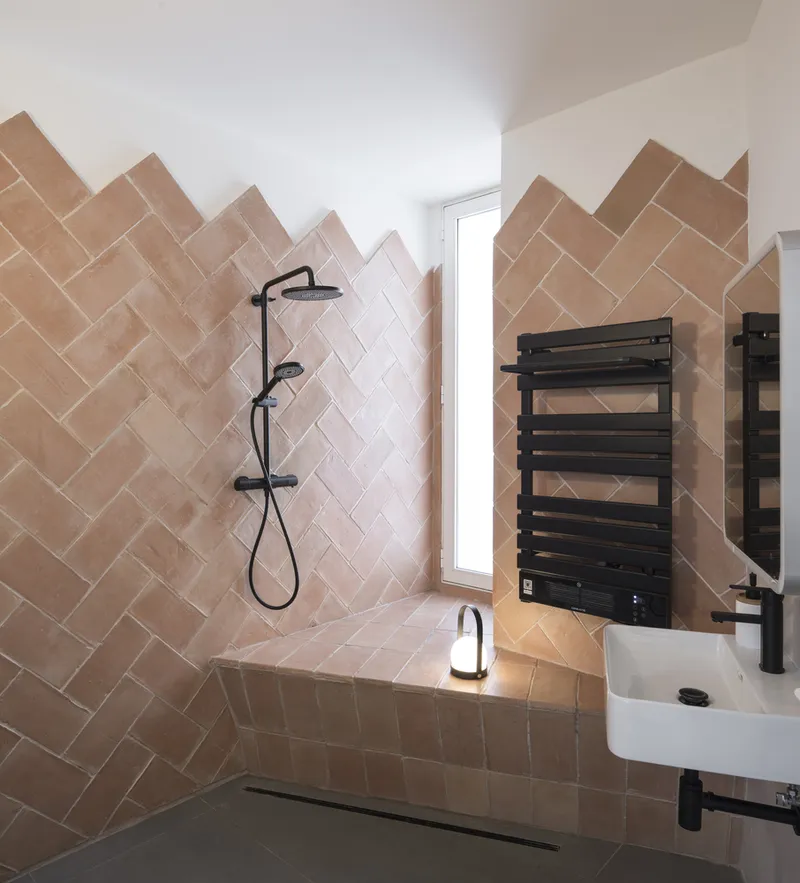
Casavera is home to Elies; Aurora, a dancer and multimedia designer; their daughter Vera; and their four cats. This diverse domestic ecosystem shaped the architectural approach: the house is conceived as a space of coordination, mutual care, and coexistence, accommodating different temporalities, speeds, and forms of occupation.
Echoing the social fabric of El Cabanyal, where the street functions as an extension of the home, the project reinforces continuity between private and public life. The neighborhood’s slow-paced rhythm, colorful facades, and material resilience to sea air inform both the spatial organization and the material palette.
Old and New Connected by Light and Air
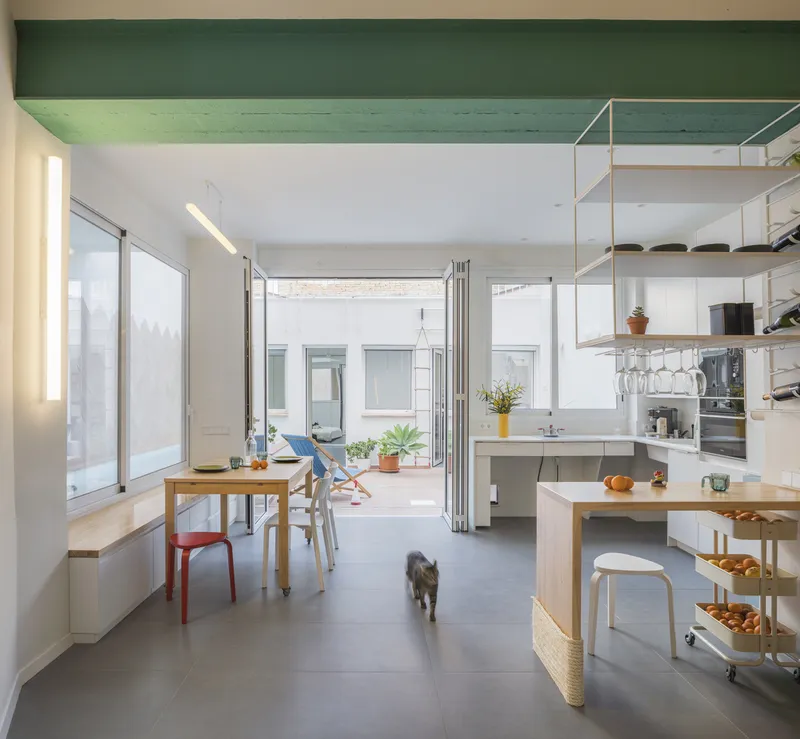
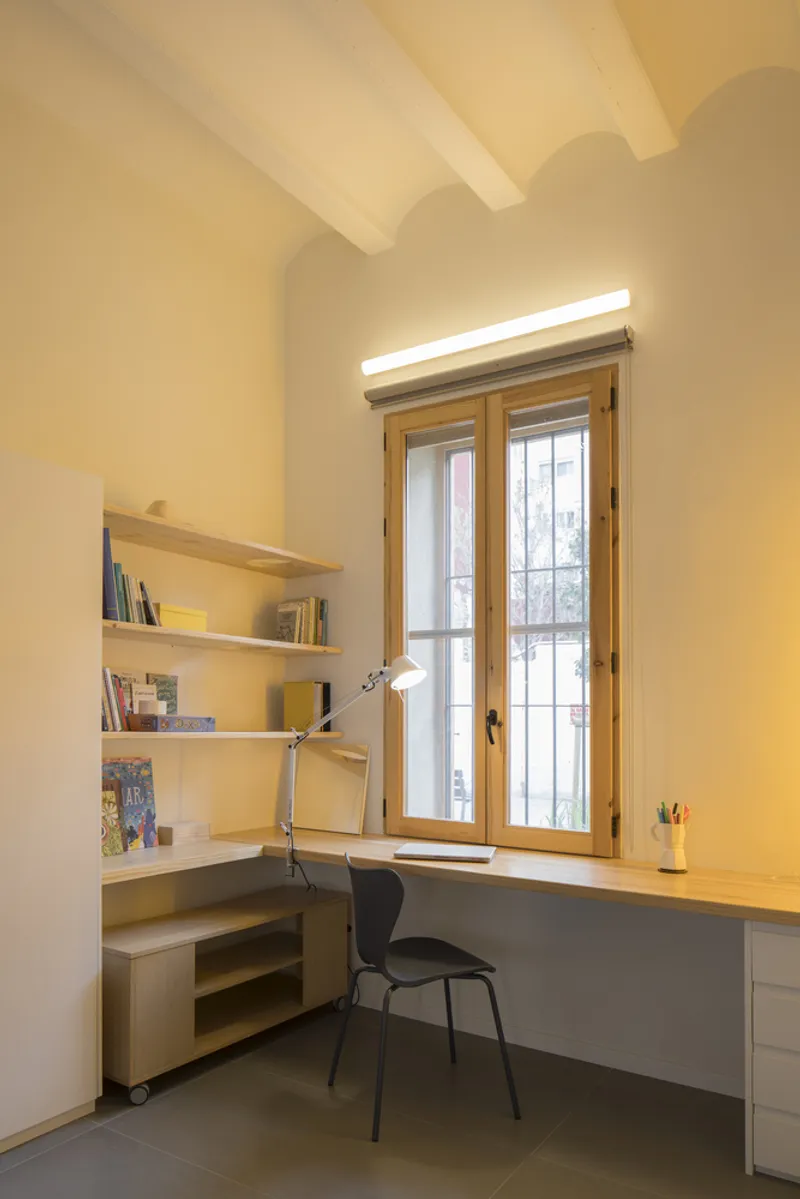
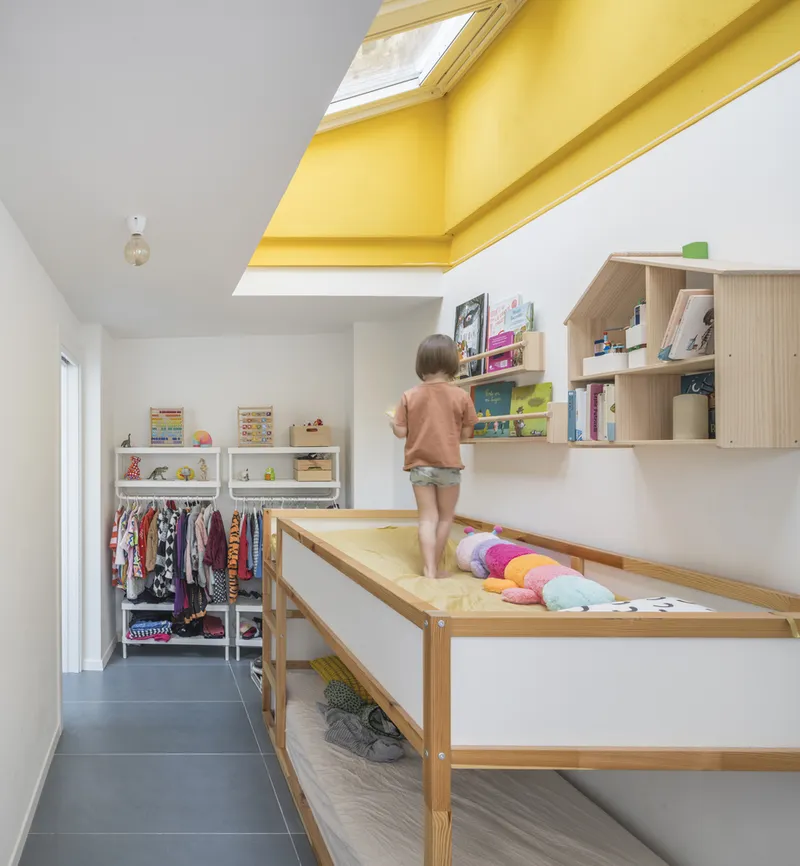
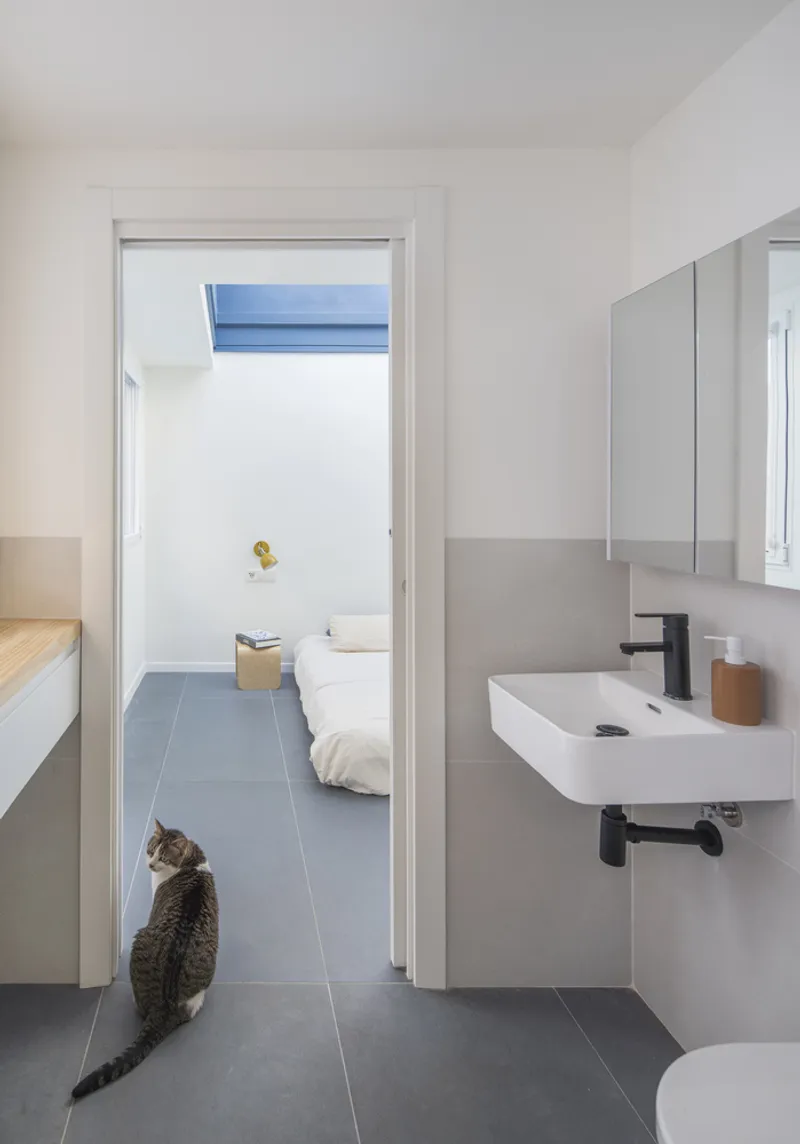
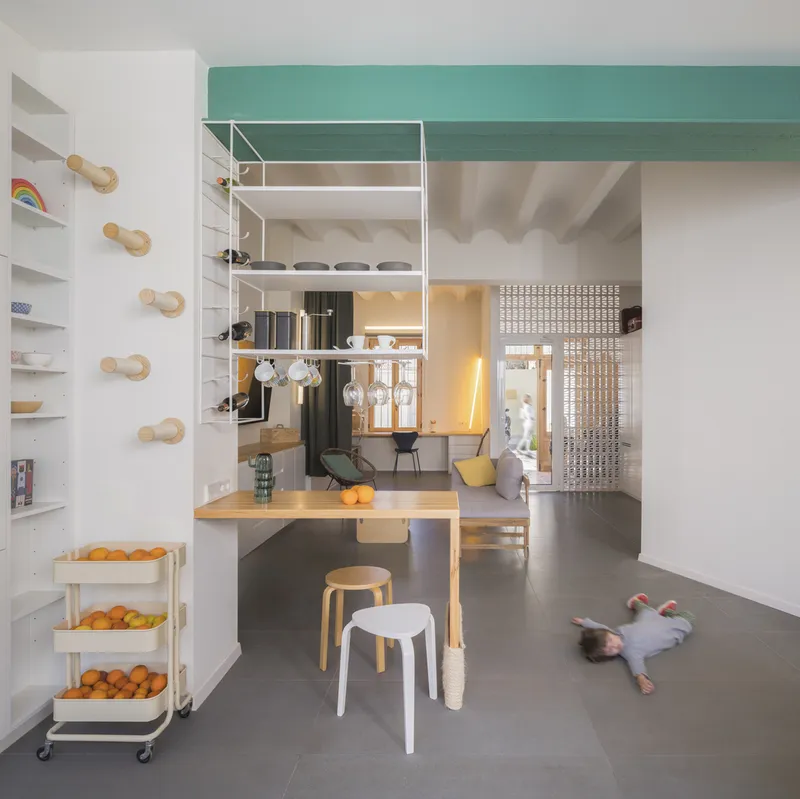
The architectural intervention is divided into two distinct volumes. The restored front section, built with traditional Valencian vaults, hosts the shared and public functions: entrance, multipurpose room, bathroom, living area, and kitchen-dining space. At the rear of the plot, a newly constructed pavilion with a metal structure and brick enclosure contains the most private areas, including bedrooms illuminated by inclined skylight-windows and compact service spaces.
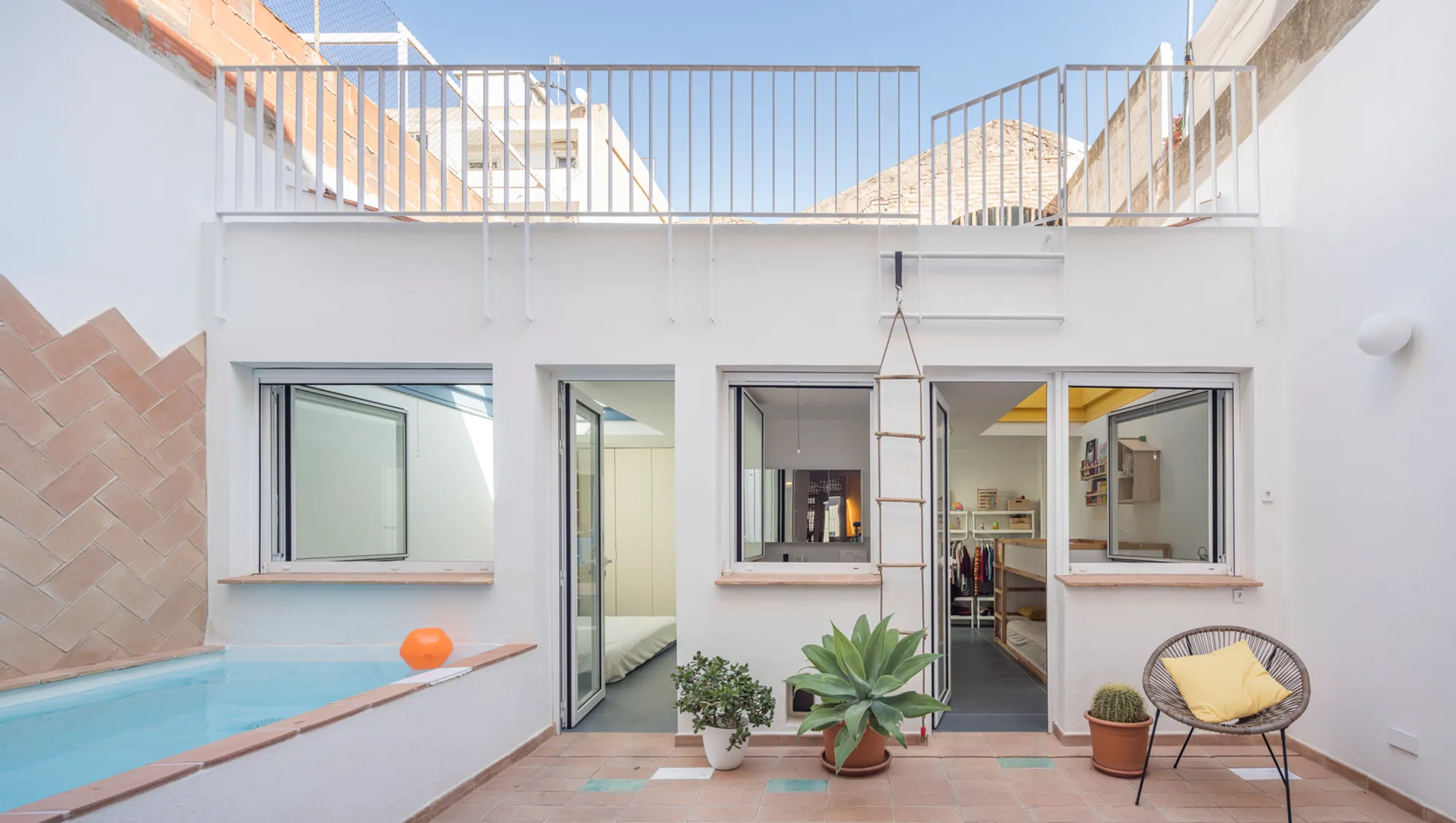
Between these two volumes lies the heart of the house: a 26-square-meter patio. More than an outdoor room, this intermediate space acts as a climatic regulator, enabling cross-ventilation and thermal comfort throughout the year. Flooded with Mediterranean light reminiscent of Sorolla’s paintings, the patio visually and environmentally binds the old and new architectures into a single living organism.
Water, Care, and the Mediterranean Way of Living
The most distinctive feature of the patio is a linear swimming pool measuring 5.80 by 1.70 meters. Designed with both indoor and outdoor sections, the pool plays a dual role: a recreational element and a therapeutic device. For Elies, it is an essential space for physical maintenance and health care, seamlessly integrated into daily domestic life rather than isolated as a technical facility.
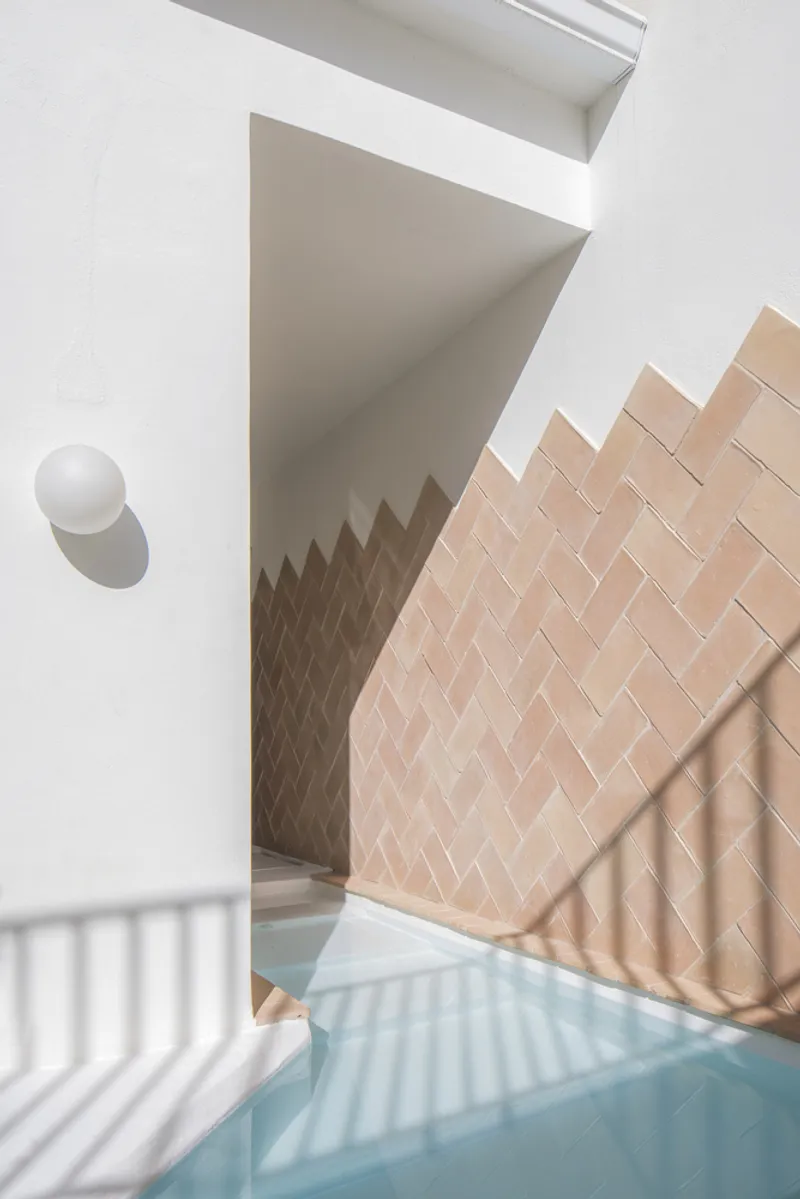
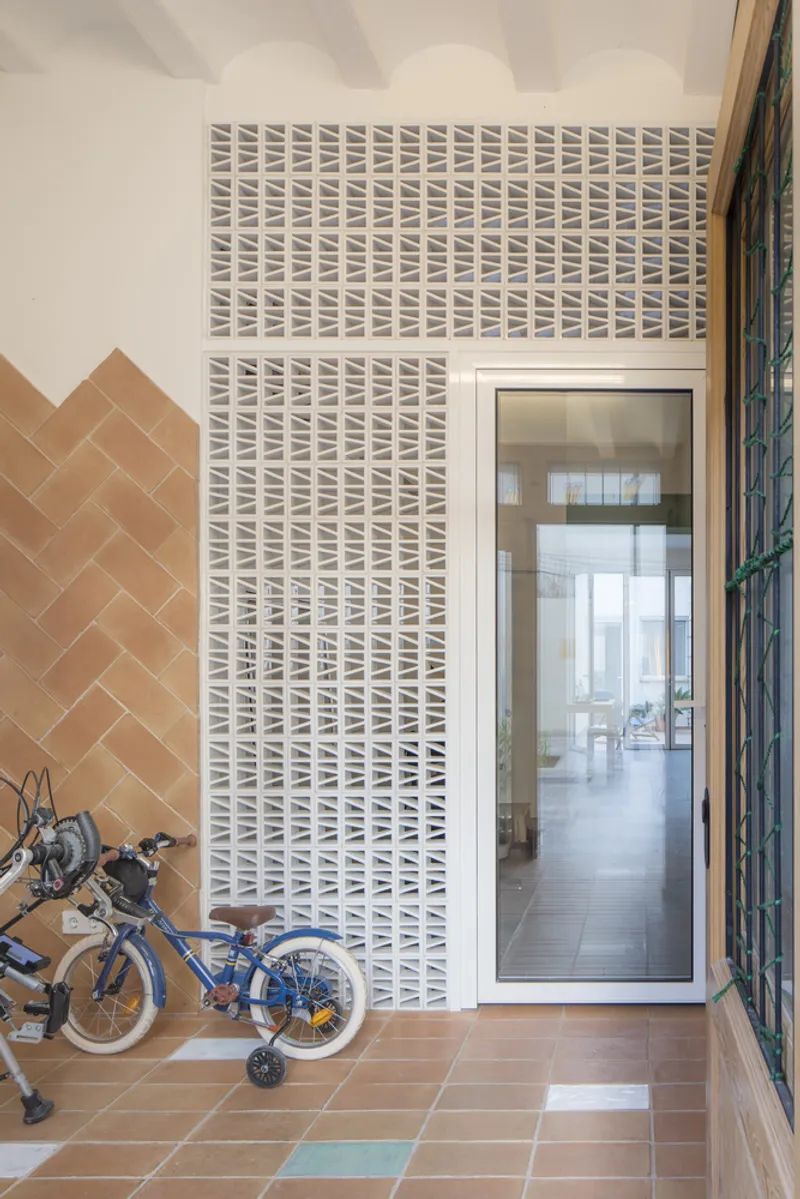
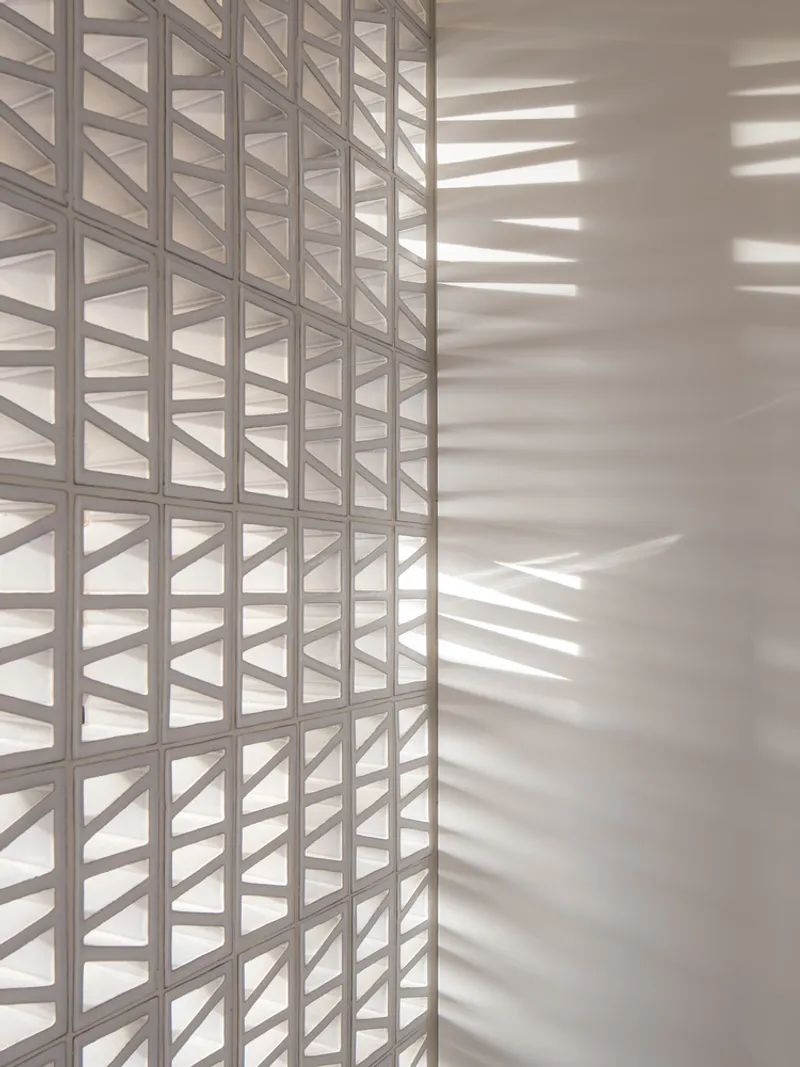
Materials such as clay, wood, and ceramic, sourced locally and associated with Mediterranean construction traditions, reinforce the project’s tactile warmth and contextual continuity. These elements, combined with precise spatial proportions and natural light, create an atmosphere that is both intimate and expansive.
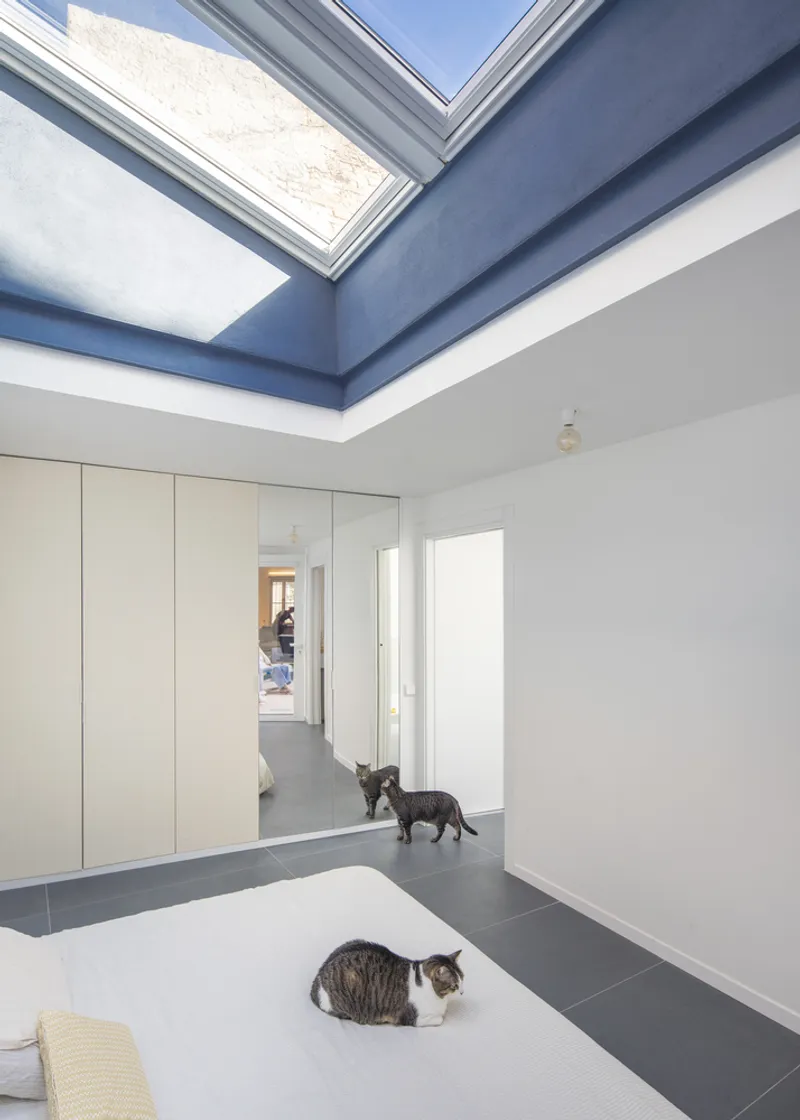
Architecture as Empowerment
Casavera demonstrates that inclusive and accessible design can be spatially rich, emotionally resonant, and architecturally ambitious. Its unconventional dimensions and layouts challenge standardized housing models, proving that adaptability and beauty are not mutually exclusive.
Ultimately, the house is conceived as a refuge of free movement and personal autonomy: a place where everyday scenes unfold naturally: swimming, working, resting, playing, and caring. Rooted in its neighborhood and attuned to its inhabitants, Casavera stands as a compelling example of contemporary Mediterranean residential architecture shaped by empathy, sustainability, and lived experience.
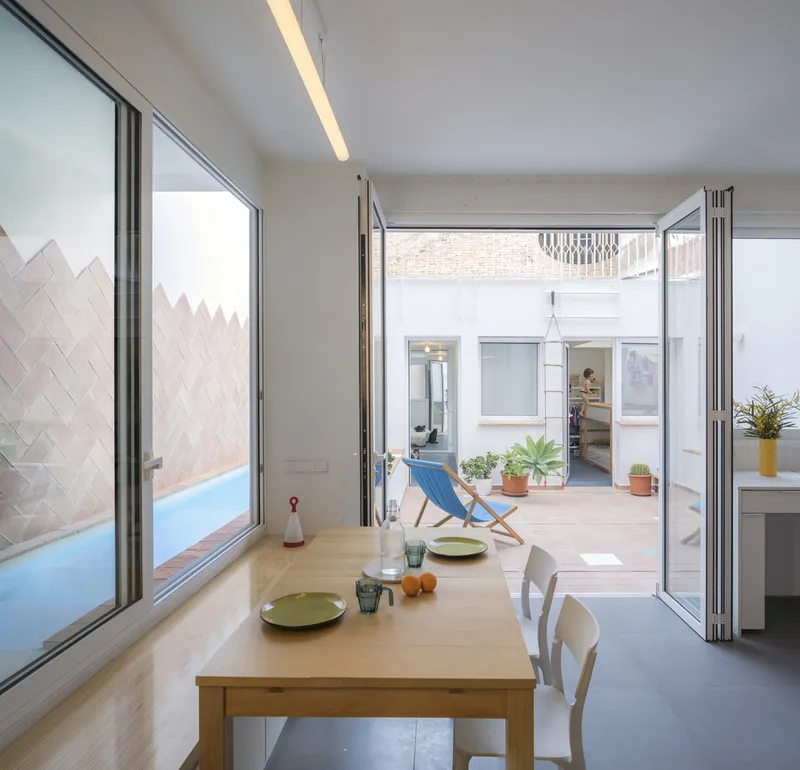
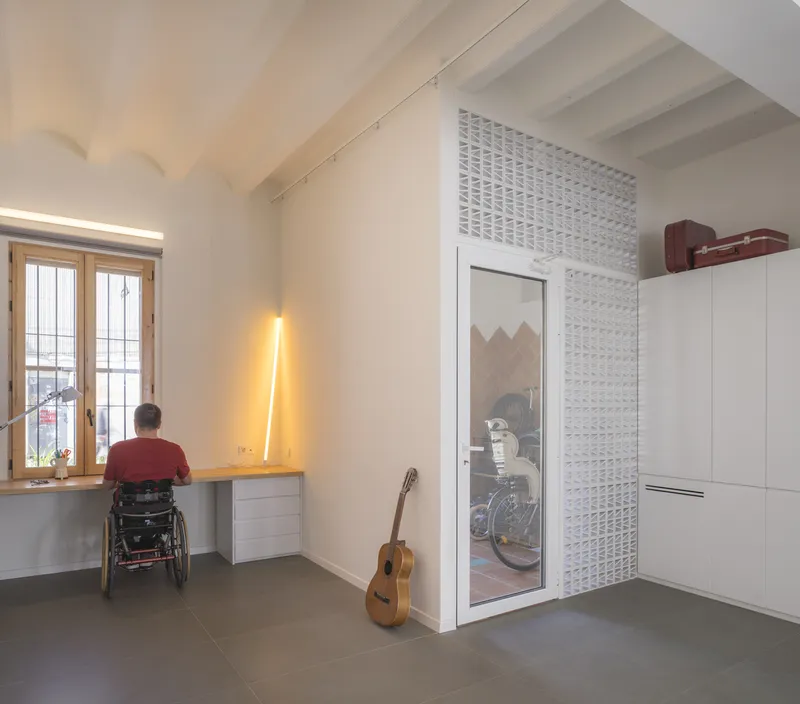
All photographs are works of
Imagen Subliminal (Miguel de Guzmán + Rocío Romero)




Popular Articles
Popular articles from the community


Co-Life: Senior Housing Design That Reconnects Older Adults With the City
Co-Life reimagines senior housing design through healing gardens, shared streets, workshops, and a sustainable community across generations.

Play: Fragments of Their World
Familiar architecture becomes modular playground design, creating safe spaces where displaced children can learn, connect, imagine and play.

The Earth Pod: 3D Printed Homes for Resilient Refugee Communities
The Earth Pod reimagines refugee housing through 3D printed homes made from clay, combining resilience, self-sufficiency, and rapid shelter.

Hill & Cross Opera: Sculptural Opera House Architecture Shaped by Tallinn’s Landscape and Identity
Hill & Cross Opera reimagines opera house architecture in Tallinn through its sculptural hill, civic plaza, glass wave and a luminous cross.


Similar Reads
You might also enjoy these articles

FAMM Arquitectura Organizes Ten Villas Around Courtyards and Jungle in Nosara, Costa Rica
El Molino pairs two elongated volumes with deep overhangs and timber louvers to build a compact coastal community five minutes from the beach.
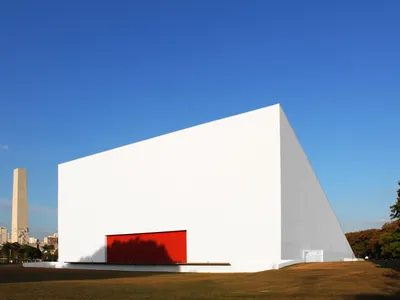
Oscar Niemeyer's Ibirapuera Park Pavilions Define São Paulo's Cultural Identity in Concrete and Curve
A constellation of modernist volumes set within São Paulo's most important urban park, conceived for the city's 400th anniversary in 1954.
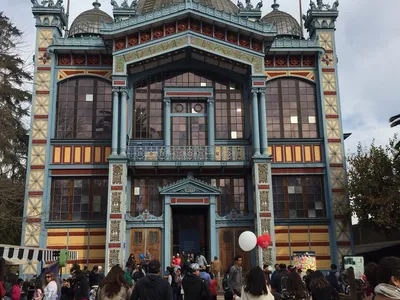
How Henri Picq's 1889 Paris Pavilion Traveled 11,000 Kilometers to Become Santiago's Artequín Museum
A prefabricated iron and glass pavilion built for the Paris Universal Exposition found a second life as a children's art museum in Chile.
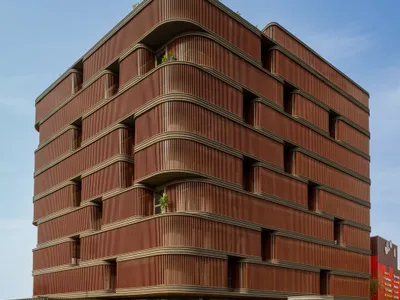
Sanjay Puri Architects Wraps a Jaipur Office Tower in Capsule-Shaped Green Buffers
A nine-level climate-responsive workplace near Jaipur Airport uses stacked planter terraces and aluminium screens to fight 40°C heat.

Explore Housing Competitions
Discover active competitions in this discipline



Challenge to reimagine the Iron Throne


Photograph architecture without architects


Illustrate the lost glory of Angkor Wat - Render Challenge


Design challenge to reuse E-waste
Comments (0)
Please login or sign up to add comments
No comments yet. Be the first to comment!