
Coffee Machine Bakery: Copper Ribbons and a White-to-Red Sequence in a Narrow Flagship Café
A deep, narrow flagship café in a historic city centre uses copper, terrazzo and a red rear zone to turn a linear plan into a sequence of moods.


A long, narrow room is usually something a café puts up with. Coffee Machine Bakery uses its depth instead. The plan runs far back into the building, and the design turns that length into a journey: a bright, quick front gives way to a darker, slower interior. Copper carries the eye from one end to the other, and a change in colour and light tells you when you have arrived somewhere new.
Designed by Сергей Питерский and entered in Interiors '20, where it received a People's Choice Award, the project is the brand's first major street retail space. It is a flagship in the historic centre of the city, and it marks the brand's move away from conventional formats toward a more spatially expressive interior. The brief came with real constraints. The footprint is tight, and the entrance has to share space with a staircase that serves institutions on the upper floors.
An Entrance That Has to Serve Two Masters
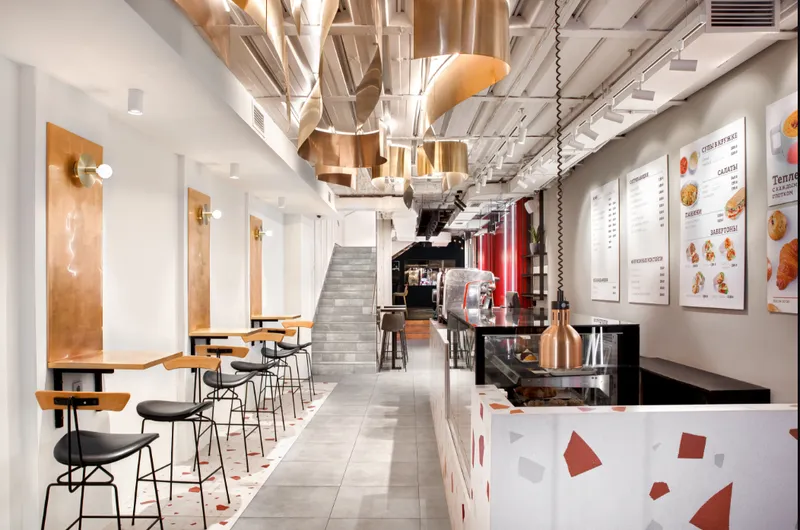
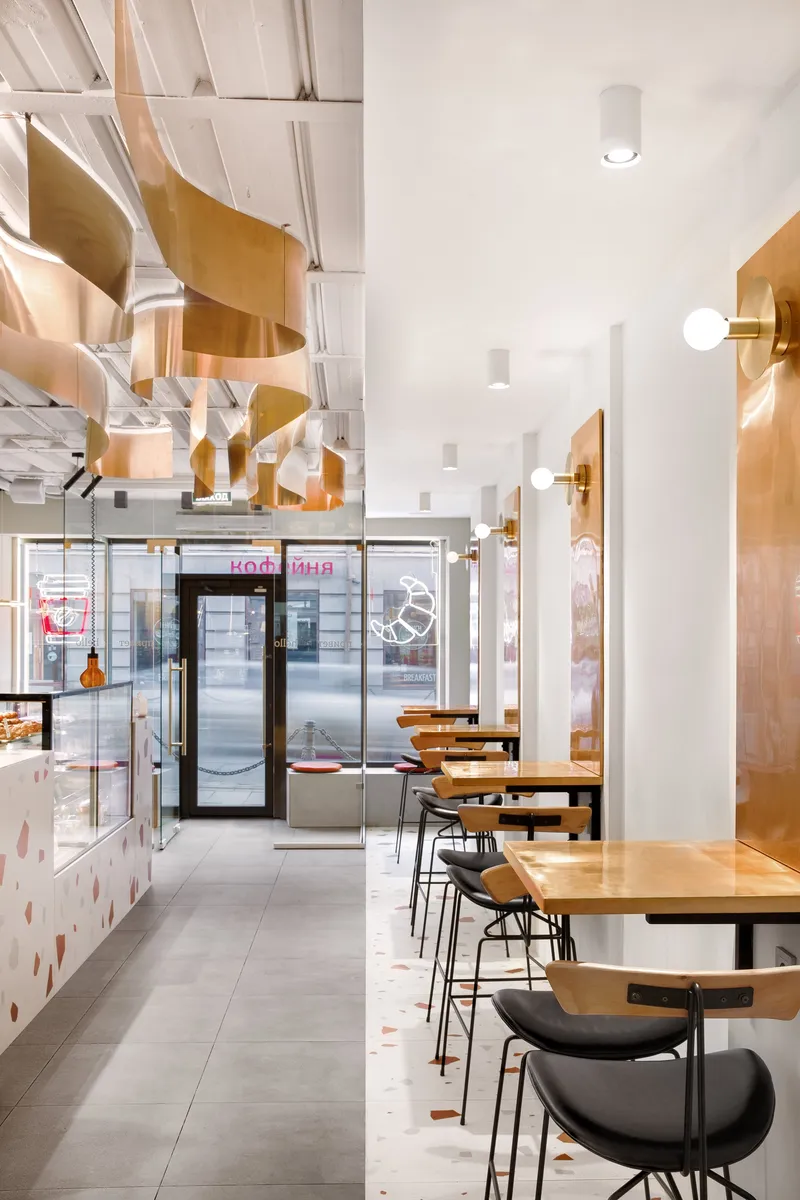
The first views show the project's toughest problem. The entry zone is not only the café's threshold. It is also a route for people heading upstairs, and the concrete staircase sits right beside the terrazzo-clad counter. Питерский keeps a clear central axis for movement and pushes seating and service to the edges. Timber standing tables are fixed to the walls, and high stools line the glazing. Customers who stop and people who pass through can share the room without crossing paths.
Overhead, the copper ribbon fixtures do two jobs. In a volume this narrow, their reflective surfaces bounce light around and stop the room from feeling squeezed. Their flowing forms also break up the straight run of the ceiling and pull the eye deeper into the plan. Seen from the back toward the glazed entrance, the front zone reads as it should for a quick-service area: open to the street, full of daylight, and built for short stays and high turnover.
Copper-Edged Steps and the First Hint of Red
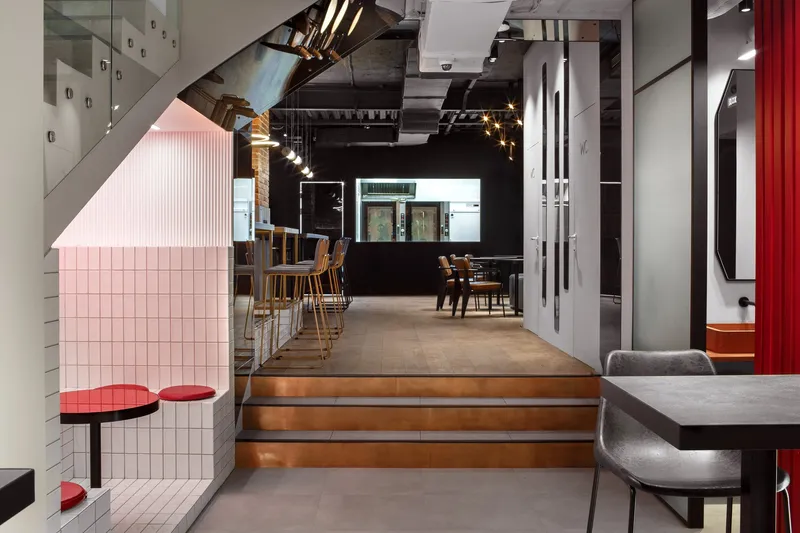
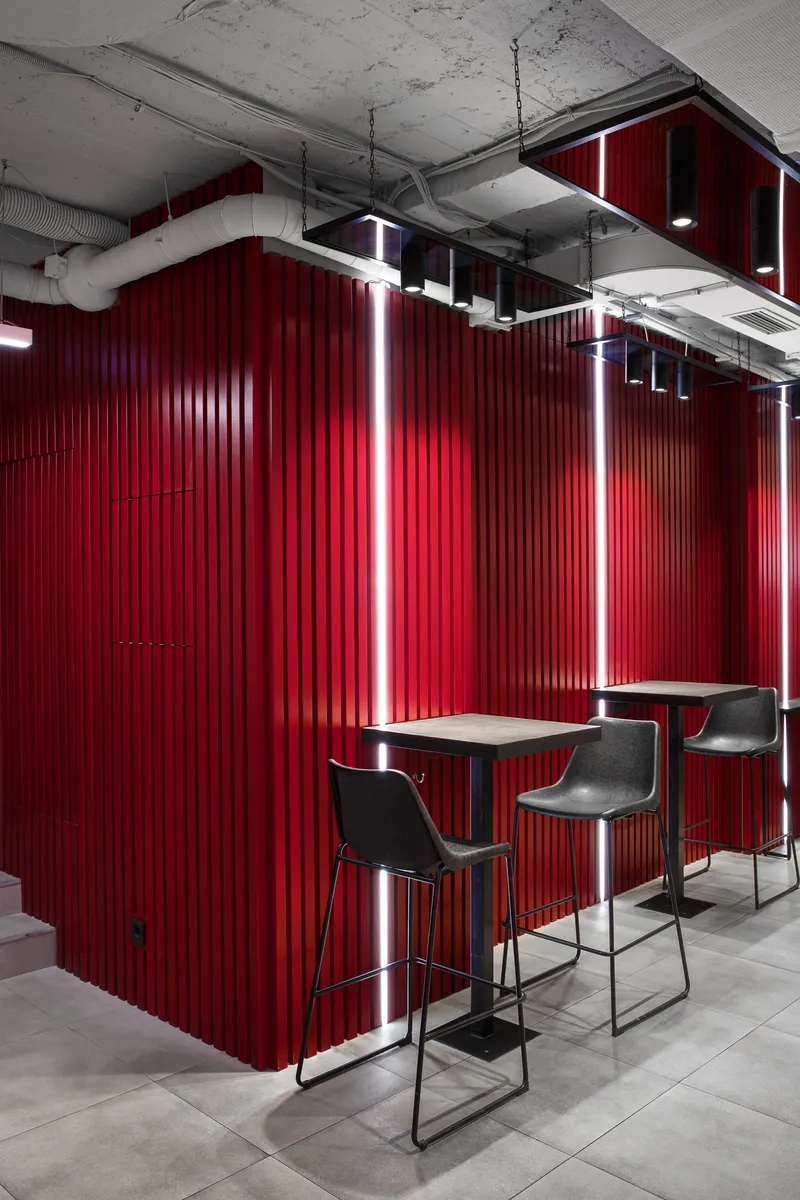
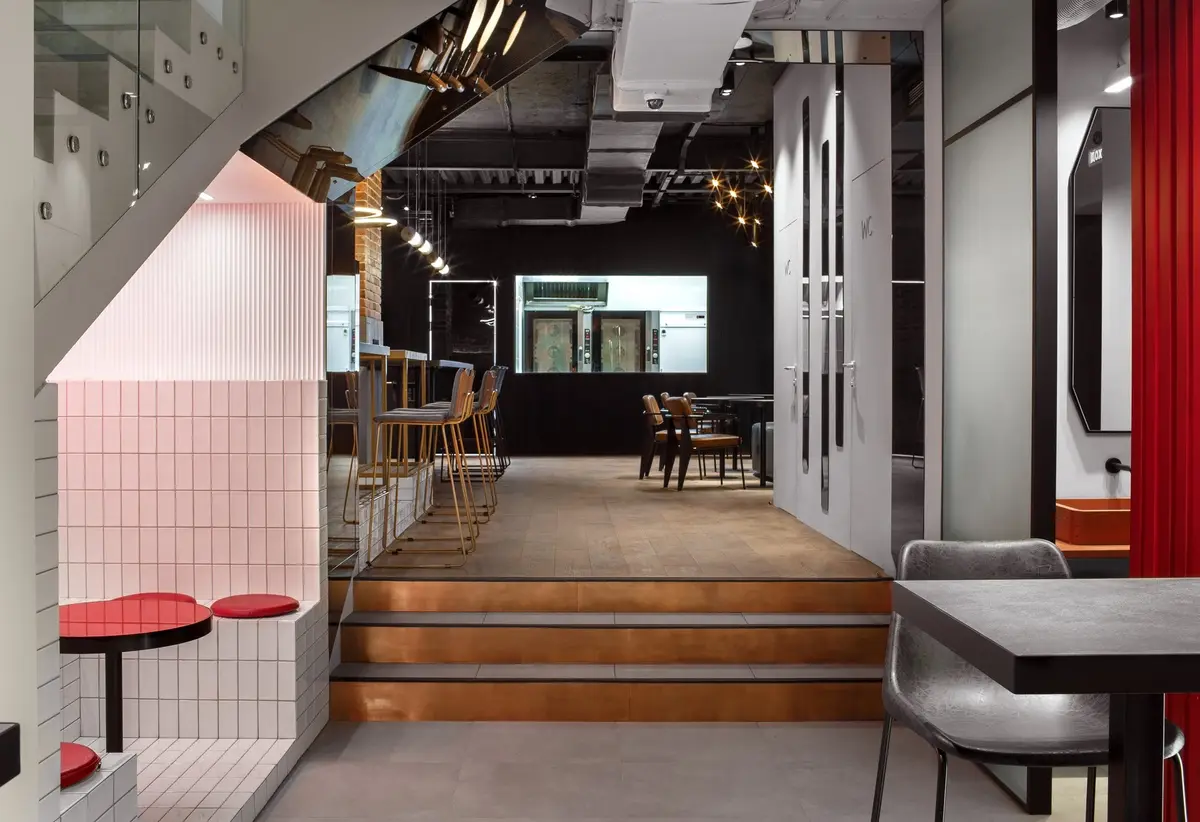
The move from front to back is marked in the floor and walls, not by doors. Steps edged in copper rise to a raised seating area. The metal used on the ceiling now traces the change in level, so the material language stays consistent even as the mood shifts. Beside the steps, a white tiled booth sits against a red corrugated panel. It is the first clear sign that the white backdrop of the front room is about to give way.
The red fluted wall makes the change explicit. Vertical light strips are set into the panel, and black pendants hang above high tables and grey stools. Here the lighting is part of the architecture rather than an add-on. The strips emphasise the vertical rhythm of the fluting, and the pendants pick out each table. The source text describes the black furniture as adding structural sharpness, and that holds true. Against the red, the slim dark frames read as crisp lines, not clutter.
A Neon Pocket Tucked Beneath the Stair
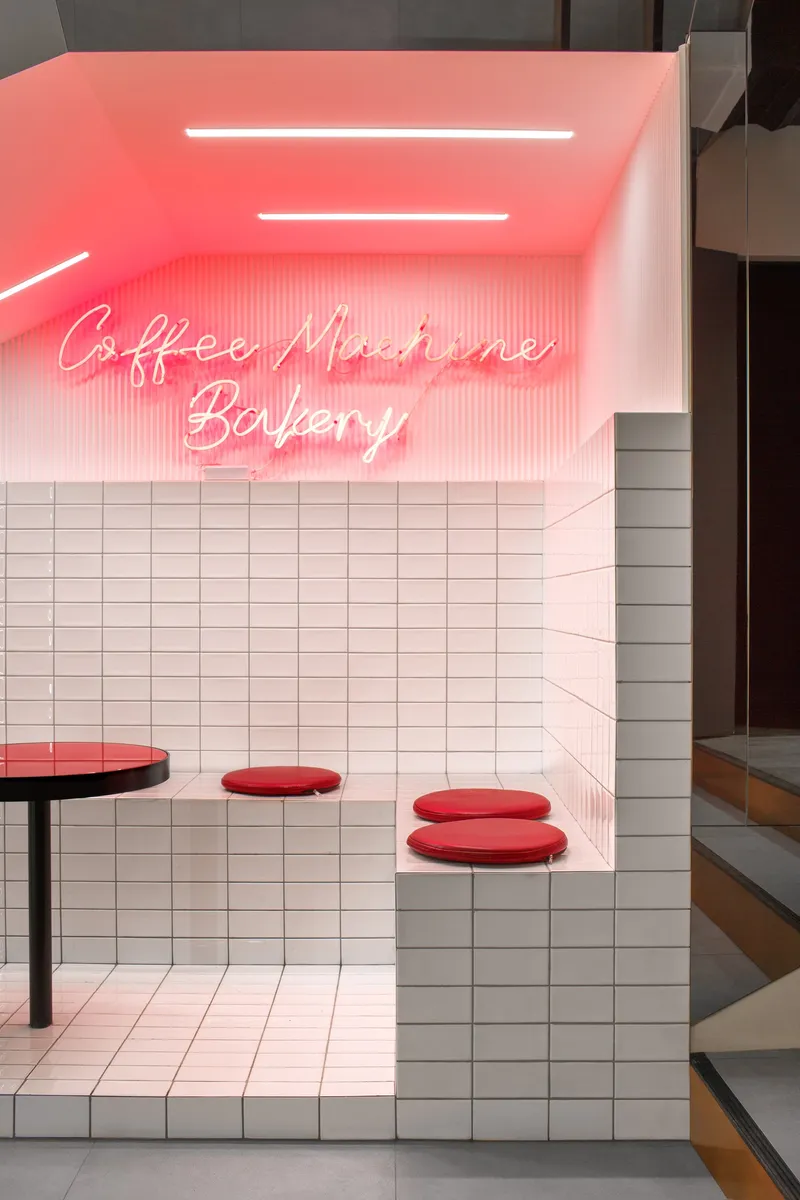
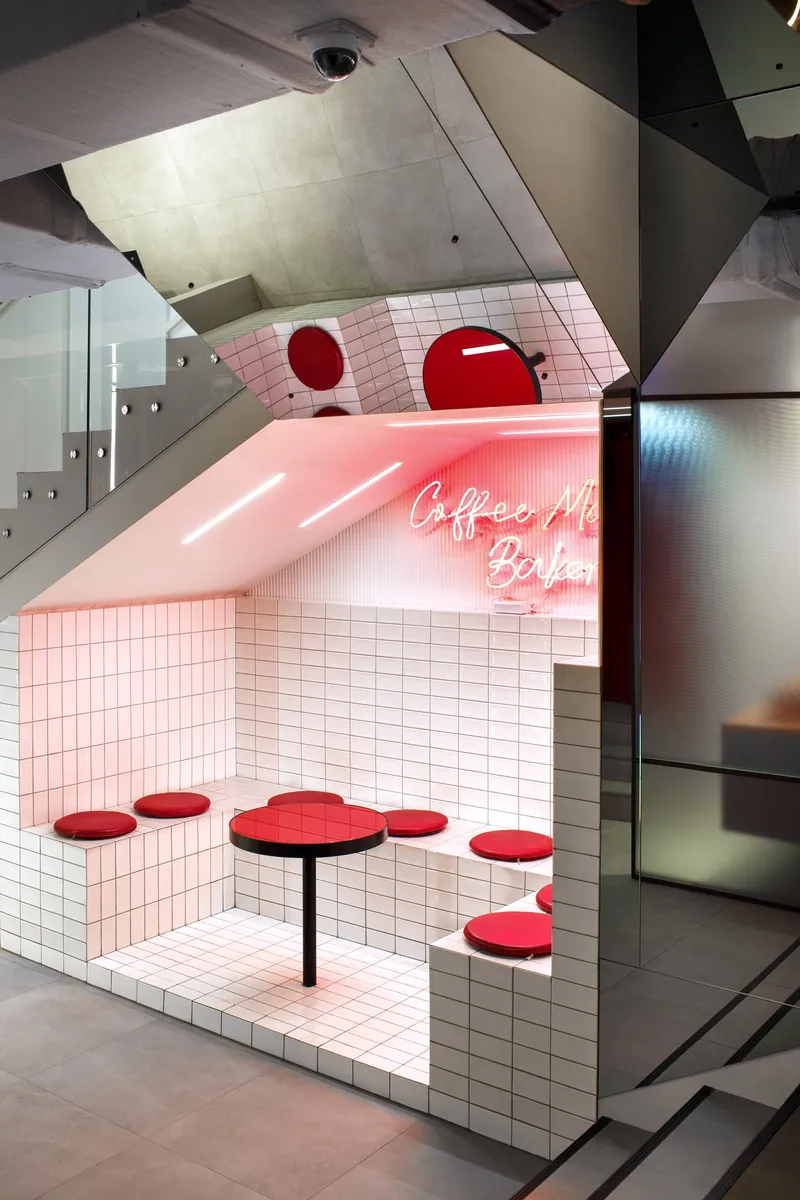
This is where the interior becomes more theatrical. A white tiled booth with round red cushions and a red-topped table faces a pink neon sign on the back wall. The tile keeps the corner graphic and clean, while the neon brings in a warmer, more nocturnal glow. It is a small space, but it feels complete. This is the kind of corner people choose on purpose.
The alcove under the glass-balustrade staircase is the project's sharpest response to its constraints. The space below a stair is usually wasted. Here it becomes a lit niche, tinted pink by the neon and reflected in faceted mirrored steel. The mirrored surface does in miniature what the copper does across the whole café. It multiplies light and blurs the edges of a tight volume, so the alcove feels larger than its dimensions.
The Slow End of the Room
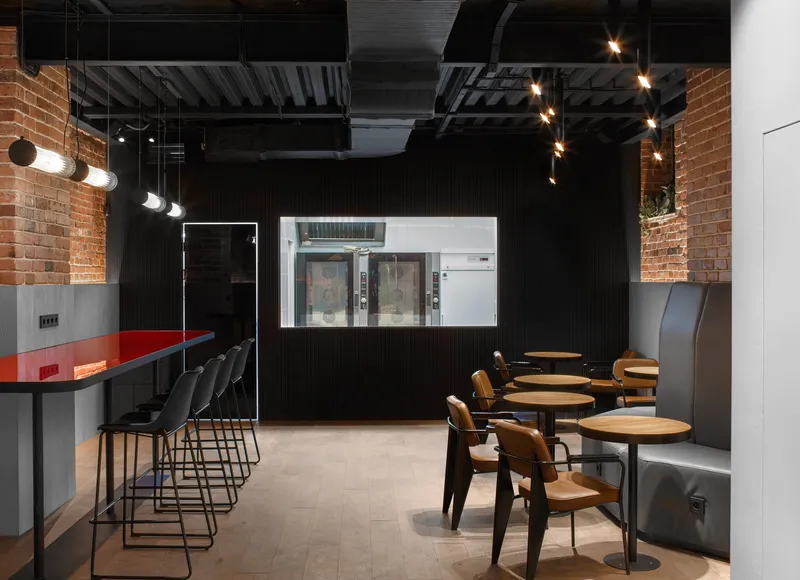
Deep in the plan, the bakery and dining zone settles into longer stays. Round wooden tables and tan leather chairs replace the high stools, and a red-topped counter faces a glazed kitchen window. Pendant spotlights cast pools of light rather than an even wash. The light is more directional, the enclosure is stronger, and the room is designed for people who plan to stay a while. The kitchen window keeps the bakery's work on view, a fitting move for a brand that wants its flagship to be an experience as well as a counter.
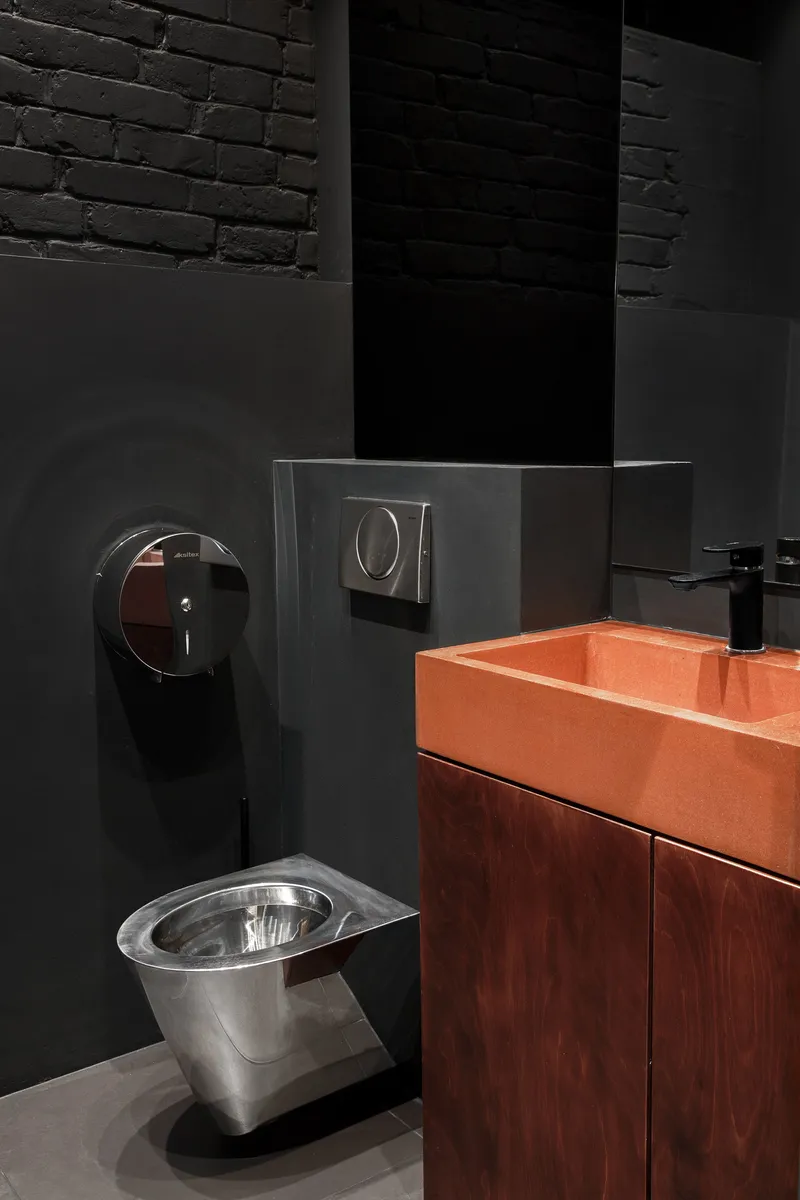
Even the washroom follows the same palette. A wall-hung stainless steel toilet, a terracotta-coloured basin, dark painted brick and a stained wood vanity echo the café's mix of metal, warm earth tones and dark finishes. It is a modest space, but it shows a designer who thought about the whole sequence, not just the parts that appear in photographs.
Why This Project Matters
Coffee Machine Bakery shows that a linear plan does not have to feel like a corridor. By setting a clear circulation spine and then changing material, colour and light as the room deepens, Питерский creates several distinct experiences in one continuous volume. White walls, terrazzo and copper set up the front. Red, neon and darker finishes take over at the back. Each zone has its own pace, and the transitions are handled through steps, panels and lighting rather than walls.
The project also offers a useful lesson in how to translate a brand into space. Copper is not applied as a logo colour. It reflects light, guides the eye and marks changes in level. The leftover space under the stair becomes one of the best seats in the house. For a first street retail flagship on a tight historic site, that combination of discipline and atmosphere explains why the entry earned its People's Choice recognition.
View the Full Project
About the Designers
Designer: Сергей Питерский
Enter a Design Competition on uni.xyz
uni.xyz runs architecture and design competitions year-round that reward proposals with spatial conviction and real site intelligence.
Project credits: Coffee Machine Bakery by Сергей Питерский Interiors '20 (uni.xyz).


Popular Articles
Popular articles from the community


Aquadapt: An Underwater Habitat That Rewrites Its Rooms by the Hour
Curved modules ring the seabed while one shell shifts from breakfast room to cinema, farm and football pitch as residents' needs change.

Manzana Morphosis: Stretching Barcelona's Grid into a Living Landscape for 2050
A radical reworking of the Eixample manzana turns density into a tool for generous public space, vertical ecology, and environmental performance.

The Amber Palace Opera: A Geological Fiction Surfaces on Tallinn's Baltic Waterfront
Pierre Brillard reimagines a Baltic legend as a public landscape, opera house, and waterfront promenade rooted in Tallinn's coastal identity.

Singing Woman: An Opera House That Performs Before the Curtain Rises
Ovidiu Cristian Pavel's conceptual opera house translates Estonia's choral identity into a sculpted waterfront landmark facing the Baltic Sea.

Similar Reads
You might also enjoy these articles

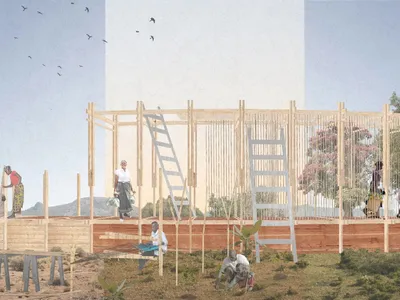
Healing Façade: A Modular Chapel System That Restores Ethiopia's Sacred Forests
Winner of the Eco-Chapel competition, this circular timber façade collects water from air to rebuild soil and reforest degraded Ethiopian landscapes.
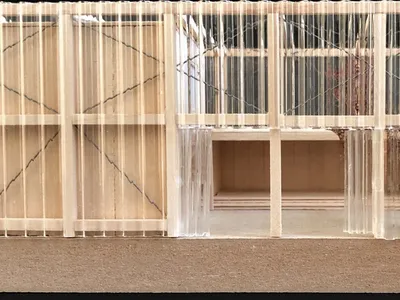
Kaffeebühnen: Where Coffee Shop Architecture Becomes a Civic Stage in Vienna
A linear sequence of timber boxes, transparent shells, and open yards turns the Viennese café tradition into a public performance space.
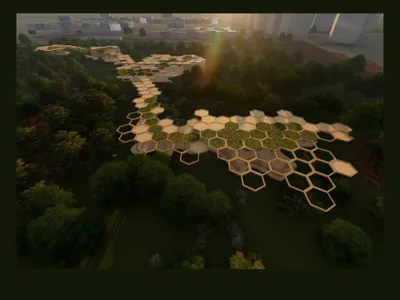
Eco Chapel: A Modular Forest Pavilion That Grows Like the Landscape It Protects
Hexagonal timber modules weave through existing trees, turning a chapel into a living system for prayer, education, and reforestation.


Urban Forest: A Vertical Ecosystem for 5,000 Workers in Singapore's Changi Business Park
Radially stacked pods and layered green decks turn a 7-acre plot into 47 acres of ecological workspace projected for 2040.

Explore Cafe and Restaurant Design Competitions
Discover active competitions in this discipline

Design a brochure to showcase the effects of the technosphere

Challenge to illustrate ‘A tale of Two Cities’

Deconstructivism - Illustration Design Challenge

Challenge to design luxury tourism on rails
Comments (0)
Please login or sign up to add comments
No comments yet. Be the first to comment!