

Connecting the dots
Dhaka university “Tsc” in a changing landscape

The Teacher-Student Center (TSC) of Dhaka University holds a special place in the nation’s memory, carrying the historical glory of countless cultural festivals, intellectual movements, and political struggles. For many years, it has served as the campus’s social and cultural hub. Founded in 1961 under Ayub Khan’s reforms, the TSC was designed by renowned architect Constantinos Doxiadis with the intention of serving as a hub for extracurricular and community activities. Over the years, it expanded well beyond this role.
Since its establishment in 1921, Dhaka University has undergone significant change. What began as a small academic community in a lush, green campus has expanded horizontally to accommodate a growing student body and faculties. This expansion, accelerated by urbanization, divided the campus into disjointed areas. Motorways and a lack of pedestrian connectivity now make it feel more like an “archipelago” of islands than a cohesive whole.
The primary project goals addresses two key issues: restoring the campus into a unified, pedestrian-friendly space and conserving and expanding the historic TSC for modern needs. The vision rests on two principles: bridging the archipelago and preserving TSC.
Bridging the Archipelago connects the university’s zones through a pedestrian-first network, resolving fragmentation. Clustering public and event spaces fosters smooth movement and community interaction. A network of plazas, walkways, and landscaped edges unifies disparate parts of the campus into a vibrant whole.
Preserving TSC highlights the modernist landmark in Doxiadis’s architecture and culture, as well as its historical importance. The plan rethinks the TSC’s role for future generations without erasing the past. Within the larger 100-year-old campus, often called a living museum of Bengal’s colonial, Mughal, and modern layers, TSC remains the hub where tradition and modern student life collide.
The design unfolds across three zones:
Zone A addresses how city roads disrupt pedestrian connectivity. A food court and visitor center honoring Mughal, British, and Greek heritage are integrated into an underground passage. A new student hub beneath the square houses the DUCSU office, rehearsal spaces, and seminar halls, freeing the original TSC building for exhibitions and gatherings.
Zone B eliminates elevation barriers and reimagines the area between the Central Library and Modhur Canteen. Stronger pedestrian links enhance its identity as a bustling academic-social corridor.
Zone C introduces a 1,500-seat auditorium and multipurpose hall. Sports facilities expand with an elevated indoor block offering terraces and views of the open field. The DPDC power station is moved underground and converted into a 700-seat gallery. The field edge becomes a park, opening the campus to the city and encouraging public involvement.


Popular Articles
Popular articles from the community


Manzana Morphosis: Stretching Barcelona's Grid into a Living Landscape for 2050
A radical reworking of the Eixample manzana turns density into a tool for generous public space, vertical ecology, and environmental performance.

The Amber Palace Opera: A Geological Fiction Surfaces on Tallinn's Baltic Waterfront
Pierre Brillard reimagines a Baltic legend as a public landscape, opera house, and waterfront promenade rooted in Tallinn's coastal identity.

Singing Woman: Contemporary Architecture Inspired by Estonia’s Voice and the Sea
Singing Woman turns Estonia’s song culture into flowing opera house architecture, blending public life, landscape, sea, and national memory.
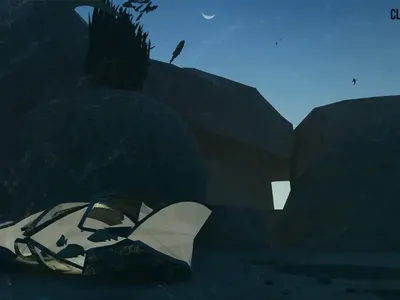
Cloaked Colonization: A Mobile Underwater Habitat That Moves Like a Fish
Micah Abaya's shortlisted EHC Pacific entry reimagines ocean settlement as a dispersed network of self-sustaining architectural organisms.

Similar Reads
You might also enjoy these articles
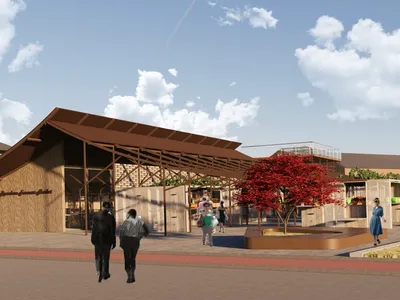
The Rhythm of Seasons
A Farmers' Market Connecting Nature and the City

More Than a Building-Designing a Living System
More Than a Building-Designing a Living System
Base Beyond
DESERT COMPOUND ARID: TOURISM OF ABSENCE AND ABUNDANCE


Comments (0)
Please login or sign up to add comments
No comments yet. Be the first to comment!