
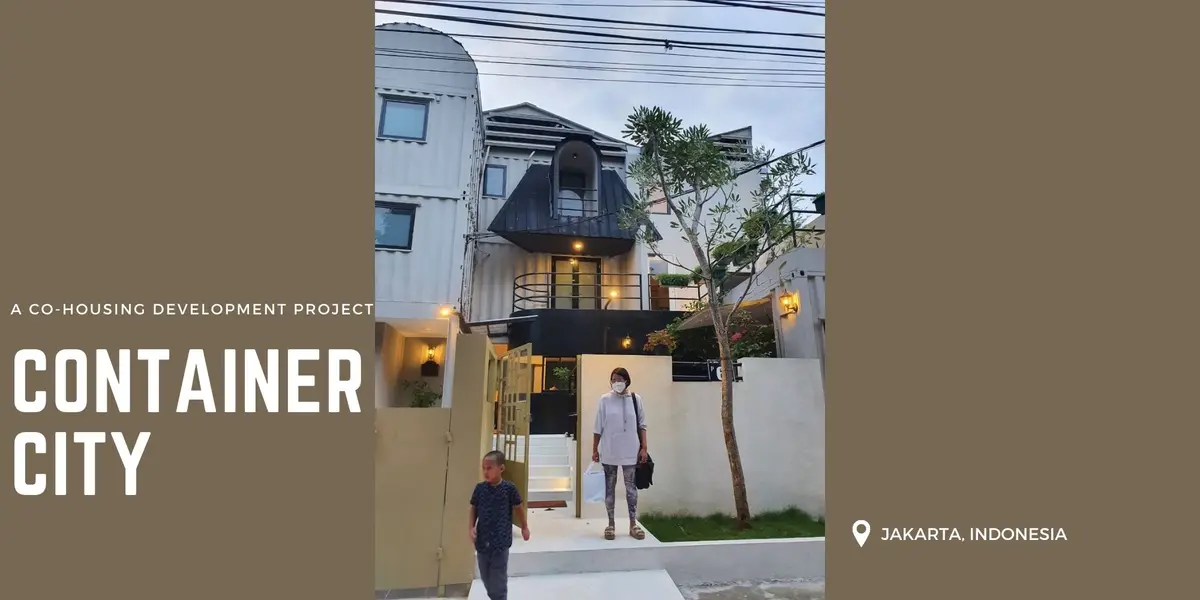
Container City
Jack's House: A co-housing development

Background of the Site
Built as a three-story housing project, covering a land of 350 m2. The structure consists of 31 shipping containers, transformed into a 26 rooms student co-housing. The project construction started in March 2020 and was completed at end of 2020.
Situated at a residential area in the Southern part of Jakarta, Indonesia. “ Melawai “ is an old-money elite residential area in Jakarta. This particular area has always been a favorite for Jakartans. Lush with greenery, tall big trees, public parks, and big houses.
The site, in particular, is on the outer edge of the Melawai residential area. Melawai is exemplary of the single detached family residential area set in an urban environment, bordering with a vast commercial area.
The bordering commercial area, called “ Blok M “ consists of retail shops, offices, department stores, bus terminals, MRT stations, etc. It is a busy area, with moderate density.
“ Blok M “ is an old vast commercial area in conjunction with the transportation hub. Adjacent to residential areas, it was built in the late 1950s, Blok M was planned as TOD ( Transit Oriented Development ) center in South Jakarta. It still is. The transportation hub links buses and connecting South to North and East to West. Further to Jakarta vicinity areas.
In the past twenty years, the nearby areas of Blok M are also converted to commercial areas, to fulfill the increasingly high demand for business activities. More hotels, apartment buildings, office buildings, shopping malls, shop houses appear. This becomes heightened even more by the opening of the MRT line and station in Blok M.
As the opening of the MRT line in 2017 in Blok M, now the Melawai area is directly connected to governmental and business districts in Central Jakarta even closer. Subsequently, it brings high market demand for occupancies in the area. Including the demand for residentials. However, residential rentals ( houses, apartments ) and hotels are not affordable for students or mid-level employees.
Market demand for co-housing
In recent years, since the opening of the MRT station, 2017, more and more start-up and tech companies are looking to reside their office in Blok M and its surrounding areas. The majority of tech companies' employees are millennials generation, which mostly are student interns. As a direct impact of this developing situation, Melawai becomes, once again, the favorite area to live for this millennial generation. However, rental fees are high.
Yet, many houses in the nearby areas are big old houses with elderly residents, some are even empty and unused. Property tax is high. Seeing the opportunity, many house owners in the area converted or rebuilt their old houses to low-rise housing ( a three-story structure ) or simply rent their rooms to the incoming student interns. Make use of their house again.
Building a student's cohousing is the perfect match to answer the developing needs in this part of South Jakarta. However, regarding the site, there are some challenges to resolve.
Challenge of the Site
Fitting students co-housing within the context of the private residential area. Communal and private being adjacent to each other. The communal house is adjacent to private single-family houses. How a communal house could fit in and interpolate as an integral part of the existing fabric of a private residential environment.
Students Co-Housing
Students' co-housing is widely perceived as a box-like shaped building with rows of modular rectangular windows covering the entire building facade. Inside are usually double-loaded corridors, flanked by room doors, stacked on top of each other. Uniformity and regularity are endless. Everything feels mundane and confined.
Furthermore, students' cohousing has a different approach. The architecture recognizes the importance of having social interactions among the residents within the building. Commonality becomes the primary subject throughout the building’s design and facilities. There are more common areas, common facilities, and open areas welcoming the student residents, to be more interactive and engaged with one another. This is a very positive shift in the mindset of design. Yet, the design and planning issues of cohousing can still be taken further to the next level.
Forming the community
Students' cohousing is about the forming of a community by the student residents living in the building. This creation of community is made possible by the interactions and engagements of its residents as individuals. Engaging in social interactions is about making connections among individuals.
However, social interactions can not be forced, yet can be encouraged, triggered, and promoted through spatial elements and experiences. Deliberately designed spaces that are engaging. Physically, visually, psychologically, socially, and aesthetically.
Furthermore, emphasizing “individuality “ as the main design factor for the creation of community is one way to expand the understanding of what cohousing is.
Concept
“ Strengthening the Presence of Individuality “
Individuality forms community
Individuality brings life to the community
Personalizing spatial experience is the major factor in bringing the presence of individuality into the architecture of cohousing. To realize such an experience, the architecture needs to acknowledge the presence of the residents as individuals who inhabit the building. The spatial environment and its visuality must deliberately put the emphasize the aspect of personal space.
Personal space that guides as a person walks through the building. Personal space that subtly opens and closes simultaneously. Personal space that merges with other personal spaces then morphing into a collective space. Series of collective spaces lead to becoming common spaces.
Common space applies to any spatial condition shared by individuals. It can be as simple as a corner part of a corridor lit by the light. Also as it is a balcony protruding outward at the back end of the building. Sharing a view through a narrow void looking across the floor. All these lead to a variety of spatial characters. Where the seemingly small or unimportant parts in the building play a big role as much as the prominent ones.
Spatial characters need to be well narrated, also curated. This is where hierarchy comes into play. As one experiences the building, one sees a variety of spatial elements put at different levels of intensity. Variety, hierarchy, and intensity provide options to the perception of the perceiver. In other words, these three components; personal space, common space, and spatial character form the establishment of options to the individual as a perceiver.
Options play an integral part in personalized spatial experience. As the users, the feeling of having options on how to experience the building is perceived as an acknowledgment of their individuality ( In contrast to the feeling of being just another user confined in a mundane concrete box ). The presence of individuality is felt, perceived, and conceived by the users.
Subsequently, the feeling of being acknowledged and appreciated as an individual will create a sense of belonging to the residents. Eventually, the now individuals start to see and feel like part of a community.
Design thinking
These so-called options are interpreted into various design aspects. Physically, visually, psychologically, socially, and aesthetically. All of the design elements must be well thought out in conjunction with one another. Design elements such as facade, massing, ceiling shapes, color, lighting, voids, accommodation spaces, corridors, and its formation, balconies, common areas, interior components, etc. Such elements should be perceived by the user as options on how to experience the building.
The necessity for the Urban House model
Melawai is planned as a residential area for single detached family houses. As the neighboring commercial area ( Blok M ) increasingly grows as part of the urban renewal development, the houses in Melawai remain intact as suburban houses. The houses now seem too big. The average residential lot is 350 m2 to 400 m2. Contains 2 floors with 4 bedrooms and a 2 car garage.
Undeniably, this area has become part of the growing urban environment. The suburban house model needs to adapt to the urban setting environment. An urban house model with flexibility, catering to the needs of today’s society. On the other hand, there has not been any exemplary for an acceptable urban house model in this part of the city. For there are only low-rise apartment buildings.
The interpolation of the Row House model
By looking into how other major cities in foreign countries deal with such issues ( unaffordable land price, land restraints, high property tax ), the “ Row House “ model came to mind. Many row houses are built in urban areas for the right reasons. Among the few are its flexibility, efficiency, and practicality.
Rowhouse has high adaptability. It can occupy a narrow lot ( 4 meters wide and varied in length ) with a multi-stories structure ( up to 4 stories). Provided with a small lot, the whole structure can accommodate multi-families or owners. Each story or two can be occupied by a different family/owner. Other than a mechanical and electrical system, the floor plan layout can be adjusted to serve the different needs of the user. When row houses sit adjacently, the facades can be varied, stressing their individuality and breaking the potential uniformity of a mass housing facade. The row house model is chosen due to the site’s context issue, concept, and program requirements.
Strategy
The design strategy involves six major driving components. That includes massing, facade, grid pattern, corridors configuration, voids, spatial transitions.
The massing of the building relates to the immediate surroundings. Achieved by maintaining an appropriate scale to the residences in the neighborhood. The massing is broken up into several groups as read on the facade, which is necessary to avoid a bulky shape with repetition of modular fenestrations.
The facade, as a result, generated by the massing, is composed of a group of four separate - three-story individual row houses. This serves the purpose of creating a familiar scale to the neighboring houses. At the same time preserving the presence of individuality. Furthermore, the entire floor is linked together on the inside.
Grid pattern has successfully been carried out throughout the entire project. Outside and inside. It successfully established the relationship between the intangible and the tangible ones. The relationship of a contextual issue and the project. The relationship of the Row House model and the concept of individuality. The relationship of the facade and the floor plan. Both The floor plans and the facade are laid out in a grid pattern and linked together as a whole. The grid pattern is projected both on the outside and on the inside, vertically and horizontally.
Corridor configuration tells the story of how the inhabitants use the building. They suggest a lot about movements. How one moves from one point to another. The corridors are not merely placed as components to serve the circulation purpose. Built with generous space, they are used for collective spaces, where the students can interact with one another. Spacious corridors are designed to encourage slow phase movements instead of rapid movements. In which, slow phase movements can initiate more interactions.
The corridors are not being placed by cutting through the massing. Instead, the massing is carefully placed around the corridors. As one can see, the corridors diverted into different directions going around the building floors, interconnecting at several points. Such configuration makes the corridors act as a connecting element, instead of separating. The sense of continuity appears as one passes different viewpoints, different spaces illuminated by the different intensity of lights, with different colors projected on the walls. These suggest options to several paths before one reaches the intended destination. Options to absorb several different experiences. One example is to interact or not to interact with one another.
Voids. There are three voids placed symmetrically within the building. Two of them are square shapes on the two sides at the back. One is a narrow elongated slot put right at the center. Covered by translucent roofs, they provide air circulation as well as bringing in natural light. The natural light intensity brought in by the voids varied depends on the time of the day. The voids work in conjunction with the corridors. Collaboratively, the voids and the corridors support one another bringing continuity into place. Especially the voids, they strongly create the perception of sequences in movements. Moving from one side to another, right to left and front to back. The sequence of movements is made to avoid uniformity on the floor plan.
Spatial transition in the project is not simply a sequence from public space to private space. Since the nature of the project is about the interpolation of cohousing to an existing private residential area, it offers one of the most challenging tasks. Keeping the privacy and security of the residents as much as the neighboring houses. It is much like multi-tasking. Yet, at the same time maintaining an inviting gesture toward the observer.
While high wall fences of the neighboring houses are the norms in the area, for the reasons of security and privacy, cohousing takes a different approach.
The sequence of spatial transition
The most critical spatial transition in the building is at the front part. Private atmosphere facing the public. Creating a welcoming atmosphere from the street to the lobby, at the same time setting a boundary. There are three sequences, drawn in vertical and horizontal manners.
Pedestrian entry platform, the first sequence. The street edge meets the property line at a 30 cm raised pedestrian entry platform. Just enough height to give a demarcation line of the property. The entry gate and the wall fence are set back to 150 cm from the platform edge. The pedestrian platform functions to soften the potential friction when the property line meets the street edge. It is acting as the first sequence, also as a non - physical link between the public and the private. Planted by a tree and partly covered with grass, the platforms emulates the impression of a sidewalk ( as it is lacking in the street ). The platform blends the street space into the property land, as a gesture of openness and invitation. In a sense, the platform becomes part of the public space while providing private entry into the cohousing.
Entry gate and wall fence act as the background for the pedestrian platform. They are set at 180 cm high. Efficient for privacy and security purpose. Moreover, one can still see the building facade without any obstruction. The carport fence is set even lower at 150 cm high, enough to cover the parking cars from public sighting ( also for security reasons). Differences in shape, color, and materials of the entry gate, wall fence, carport fence are to suggest as they are part of the street elements.
Pathway with steps is placed at the center of the outdoor cafe, carport, reception booth, and entry gate. This clearly marks its importance as the physical link between the street as a public space and the building structure as a private space. As one opens the private entry gate, the pathway is leading to the steps. The steps land on a 70 cm raised platform, greeted by the reception booth. To the right is an outdoor cafe. Forward is the terrace leads to the lobby entrance.
Outdoor cafe, the second sequence. The cafe is an outdoor open space, 4m x 3m. Raised on the platform, 1 m high from the street level. Partly hidden by the fence wall to keep some privacy, the sitting area can accommodate 4 small round tables with 10 occupancies. Next to the sitting area in the kitchen. Considered as a semi-public space, the cafe also functions as a non - physical link, an active open space between the street and the building. Unlike the pedestrian platform, it is an occupied space, designed to embrace daily street life as part of the inviting gesture.
Terrace, the third sequence of semi-public space. Flanked by a curved shape reception booth covered with black metal sheets and a projecting cantilever of the container structure above, the terrace leads one straight to the lobby entrance door. The terrace is seemingly formed as a niche inwardly centered in between large masses. On the other hand, its presence is prominently stated without being too blunt. Remembering it as part of the four-row houses.
The lobby marks the first arrival in the so-called, semi-private space. At the same time marks the last sequence of spatial transition from the street to the inside of the building. Functionally, the lobby is the most public area within the building. There are still some privacy issues to be concerned about before the student residents reach more closed private areas. At this point, the separation between semi-private areas and private areas has to be physically seen and constructed. On the other hand, visual continuity can still be established. A three-story void is centered at the lobby, penetrates through to the back and upper parts of the building. Giving a sense of continuity to the perceiver, for what is waiting beyond.
Programs
26 student bedrooms
1 common study room
1 students lounge
3 pantries ( one on each floor
Common areas: roof garden, outdoor cafe with kitchen, lobby.
Supporting facilities :
Reception desk area
Office space
Staffroom
Storage
Parking space ( 2 cars, 4 motorcycles )
Construction materials
Structure :
shipping container
steel columns and beams supporting corridors
underlayer steel floor plates
thin concrete floor slabs
concrete columns and beams for plastered brick walls
steel frame stairwell
light steel roof truss system
Finishing :
floors with ceramic tiles
gypsum board dry walls with Rockwool insulation ( inside containers )
gypsum board ceilings
aluminum window frames
plywood doors
metal roofing air conditionings ( only for bedrooms )

Popular Articles
Popular articles from the community


Co-life: Sustainable Architecture for Age-Friendly Community Living
Co-life reimagines sustainable architecture for seniors through courtyards, rammed earth, shared gardens, and spaces designed for belonging.

ALGAL REALM: A Bio-Integrated Lunar Habitat Design for Life Beyond Earth
ALGAL REALM reimagines lunar habitat design with algae-powered life support, 3D-printed regolith, and vertical living for a lunar future.

Lunar Spiral: Space Architecture Shaped by the Mathematics of the Universe
Lunar Spiral reimagines space architecture through Fibonacci geometry, lunar regolith, levitating habitats, and self-sustaining Moon living.

Hill & Cross Opera: Sculptural Opera House Architecture Shaped by Tallinn’s Landscape and Identity
Hill & Cross Opera reimagines opera house architecture in Tallinn through its sculptural hill, civic plaza, glass wave and a luminous cross.

Similar Reads
You might also enjoy these articles

The Rhythm of Seasons
A Farmers' Market Connecting Nature and the City

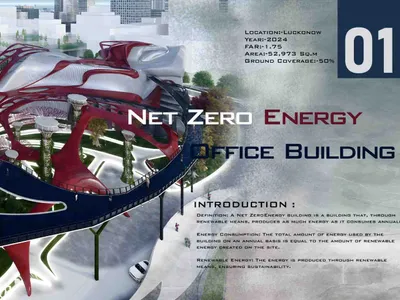
More Than a Building-Designing a Living System
More Than a Building-Designing a Living System
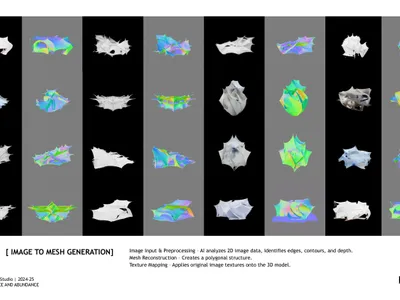
Base Beyond
DESERT COMPOUND ARID: TOURISM OF ABSENCE AND ABUNDANCE

Explore Container House Competitions
Discover active competitions in this discipline


Challenge to design mud housing for contemporary communities

Challenge to reimagine the Iron Throne

Photograph architecture without architects

Illustrate the lost glory of Angkor Wat - Render Challenge
Comments (0)
Please login or sign up to add comments
No comments yet. Be the first to comment!