
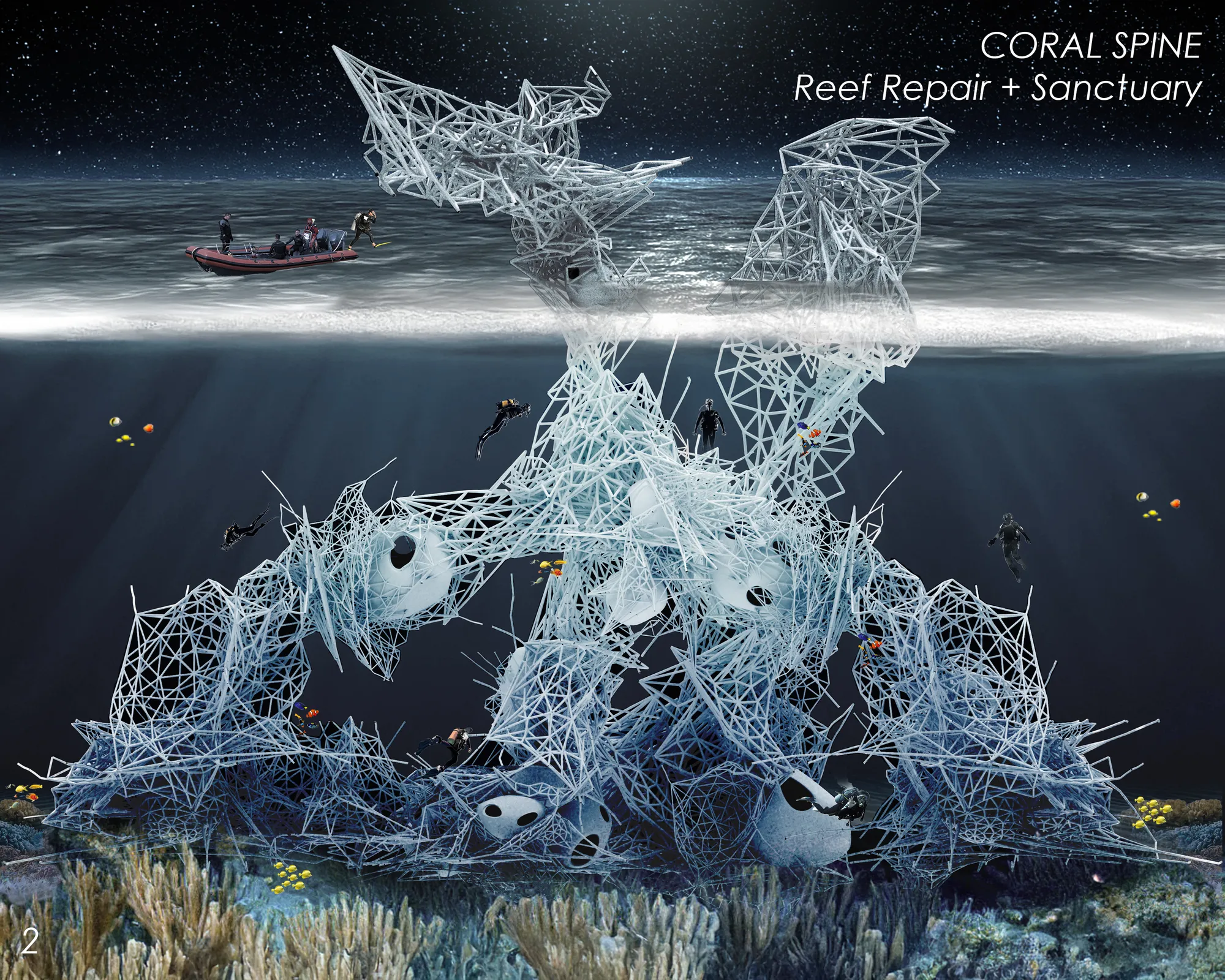
Coral Spine: Reef Repair and Sanctuary
The Conceptual and Schematic Design

Coral Spine is an underwater structure that redefines the boundaries of sustainable architecture and ecological restoration. Serving multiple purposes, it functions as an immersive gallery, a sanctuary for marine life, a fish rehabilitation center, and a coral restoration system.
At the heart of Coral Spine’s innovative design lies the application of electrolysis, a process that not only accelerates coral reef growth but also enhances the durability of the structure’s materials. This integration of scientific principles with sustainable architecture allows for Coral Spine to be capable of supporting marine life while withstanding harsh underwater conditions.
Electrolysis uses a low-voltage electric current applied to a submerged structure. These currents split water molecules into hydrogen and oxygen ions, which kickstart a process that pulls calcium carbonate from the seawater and deposits it onto the structure. Calcium carbonate is the same material that makes up coral skeletons, so it creates a perfect base for corals to grow on.
Interestingly, algae can also play a role in this process by generating small electrical currents as part of their photosynthesis process. When incorporated into the structure, these electrified algae help enhance the deposition of minerals like calcium carbonate, creating a stronger foundation for coral growth while supporting the overall ecosystem.
By providing a large supply of calcium carbonate, electrolysis allows coral to allocate more energy to biological functions such as reproduction, immune response, and nutrient absorption, rather than expending resources on building its skeletal framework. This accelerates coral growth rates and enhances resilience, ultimately creating a more stable and thriving ecosystem. As algae grow outside of the tubular structures as well, they gather nutrients and provide an additional layer of support for coral colonization, reinforcing the symbiotic relationship between the algae and the coral reef.
The design of Coral Spine is deeply inspired by the web of the Diving Bell Spider. This spider, unique in its ability to live underwater, traps air bubbles within its silk to create its submerged habitat. Emulating this phenomenon, Coral Spine features a network of connected tubular structures that stretch and compress to form bubbles or "pods." These pods mimic the spider’s air pockets, serving as functional spaces for various ecological and cultural activities.
The pods within the Coral Spine are classified into three primary typologies—large, medium, and small—each tailored to specific functions. The large pods act as interactive underwater galleries, where both humans and marine life can explore vibrant coral formations. These spaces offer a unique opportunity to observe coral reefs growing on the seabed and within the pods themselves, fostering an appreciation for marine ecosystems. The medium pods serve as rehabilitation centers for fish, providing safe havens with dense coral formations and nutrient-rich conditions. These pods offer displaced marine species an environment conducive to recovery and reintegration into the ecosystem. The small pods, located at the dense core of the structure, function as nurseries for fish. These secluded, dark, and protected spaces shield eggs and juvenile fish from predators, ensuring the survival of future aquatic generations.
The Coral Spine’s design was brought to life with Grasshopper and Rhinoceros. Using Grasshopper, I created a series of spiderweb-like geometries that explored patterns of connectivity and voids. These iterations were then refined in Rhinoceros, as well as the employment of SubD tools to sculpt the pods into organic, bubble-like forms. This iterative process ensured that the pods seamlessly integrated into the web-like network, reflecting the Diving Bell Spider’s natural adaptations. The resulting structure is both functional and visually striking, creating visual interest and engaging with the curiosities of the surrounding marine environment.



Popular Articles
Popular articles from the community


Riyadh For All: Intergenerational Urban Design for Active Aging in Rabat
Riyadh For All reimagines urban design in Rabat with intergenerational co-living, adaptive courtyards, and Moroccan cultural exchange today.

Hill & Cross Opera: Sculptural Opera House Architecture Shaped by Tallinn’s Landscape and Identity
Hill & Cross Opera reimagines opera house architecture in Tallinn through its sculptural hill, civic plaza, glass wave and a luminous cross.

Co-Life: Senior Housing Design That Reconnects Older Adults With the City
Co-Life reimagines senior housing design through healing gardens, shared streets, workshops, and a sustainable community across generations.

The Ocean Hive: Sustainable Architecture for a Self-Sufficient Civilization at Sea
The Ocean Hive imagines sustainable architecture at sea, where modular habitats, algae, wave power and ocean waste sustain a growing colony.

Similar Reads
You might also enjoy these articles
The Rhythm of Seasons
A Farmers' Market Connecting Nature and the City

More Than a Building-Designing a Living System
More Than a Building-Designing a Living System
Base Beyond
DESERT COMPOUND ARID: TOURISM OF ABSENCE AND ABUNDANCE
Explore Sustainable Design Competitions
Discover active competitions in this discipline




Challenge to reimagine the Iron Throne


Photograph architecture without architects


Illustrate the lost glory of Angkor Wat - Render Challenge


Design challenge to reuse E-waste
Comments (0)
Please login or sign up to add comments
No comments yet. Be the first to comment!