
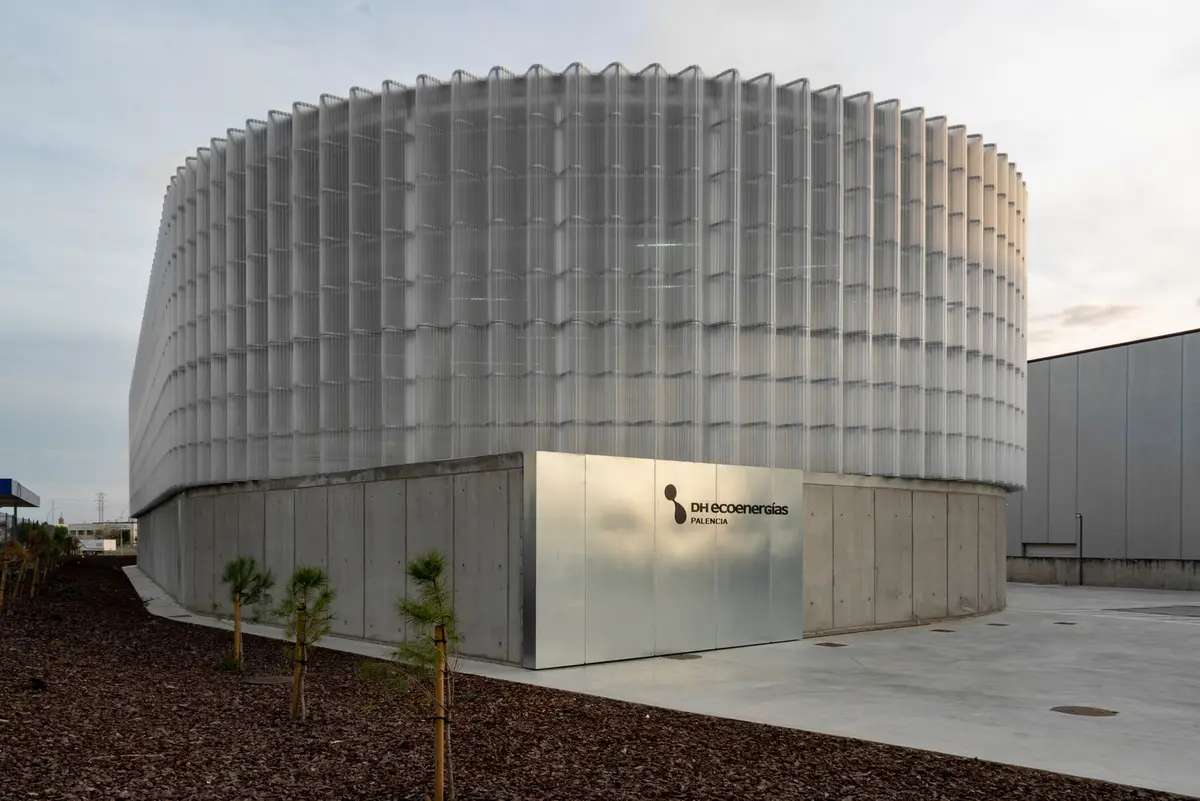
DH Palencia: A Landmark in Renewable Energy Architecture
DH Palencia Energy Plant in Spain combines renewable forest biomass, transparent industrial architecture, and educational design to pioneer sustainable urban district heating.


Located in Palencia, Spain, the DH Palencia Energy Plant by FRPO Rodriguez & Oriol is a pioneering project that combines renewable energy innovation with striking architectural design. Completed in 2023, this 1,960 m² facility serves as the visible face of a transformative District Heating network that runs beneath the streets of Palencia, delivering sustainable energy solutions to urban buildings.DH Palencia Energy Plant in Spain combines renewable forest biomass, transparent industrial architecture, and educational design to pioneer sustainable urban district heating.
Driving Spain’s Energy Transformation
The plant is the operational heart of a larger urban energy network promoted by DH Ecoenergías, a forward-thinking company leading the decarbonization of Spanish cities. By replacing traditional fossil fuel heaters, such as diesel and gas, with renewable energy sources, primarily forest biomass, the project significantly reduces environmental impact while supporting sustainable urban infrastructure.
According to Teo López, founder of DH Ecoenergías, “This project must be an icon and reference for energy and environmental transformation. Its architecture symbolizes renewable energy, a paradigm shift, and the improvement of public health in cities.”
Architecture with a Pedagogical Purpose
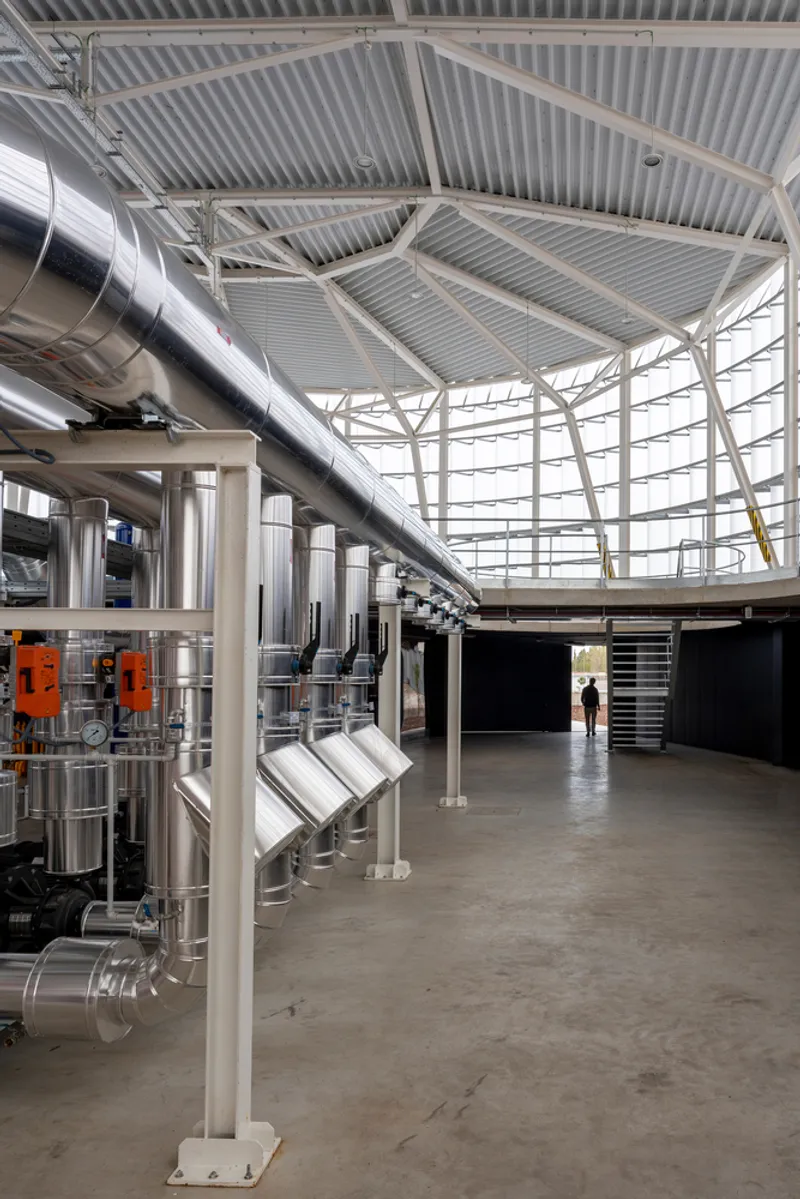
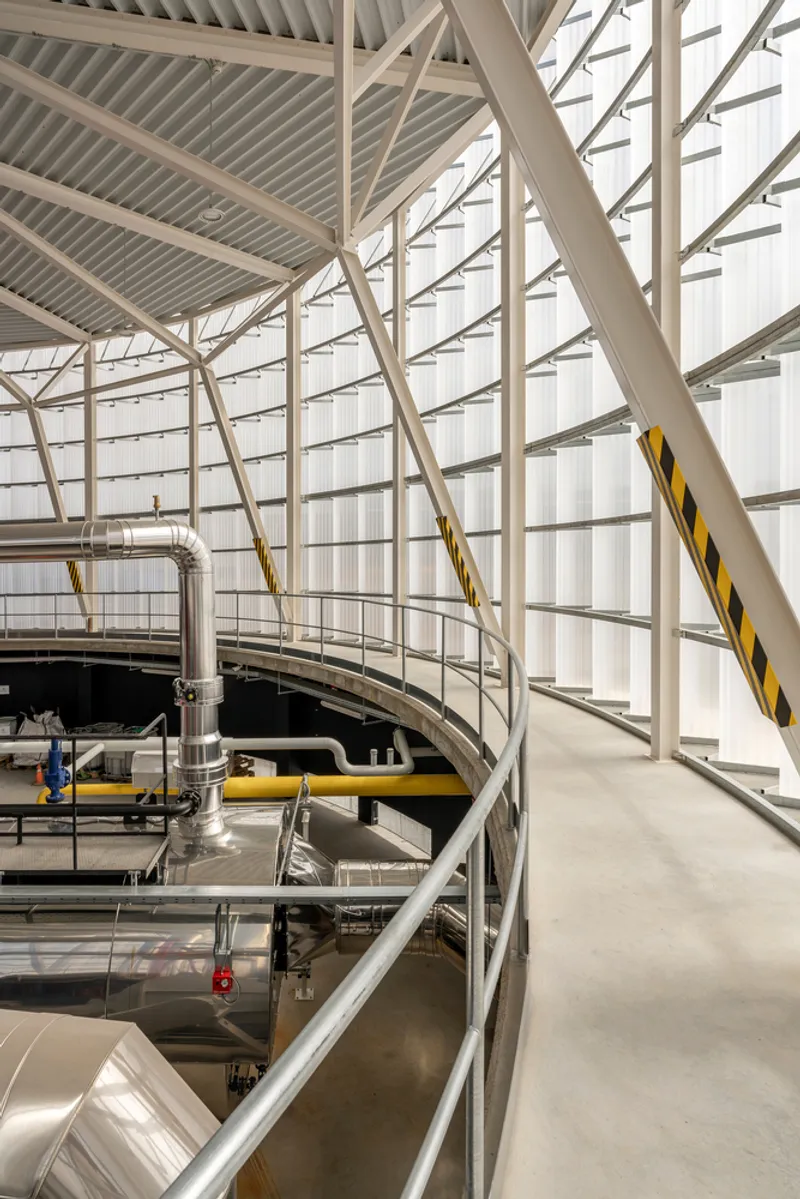
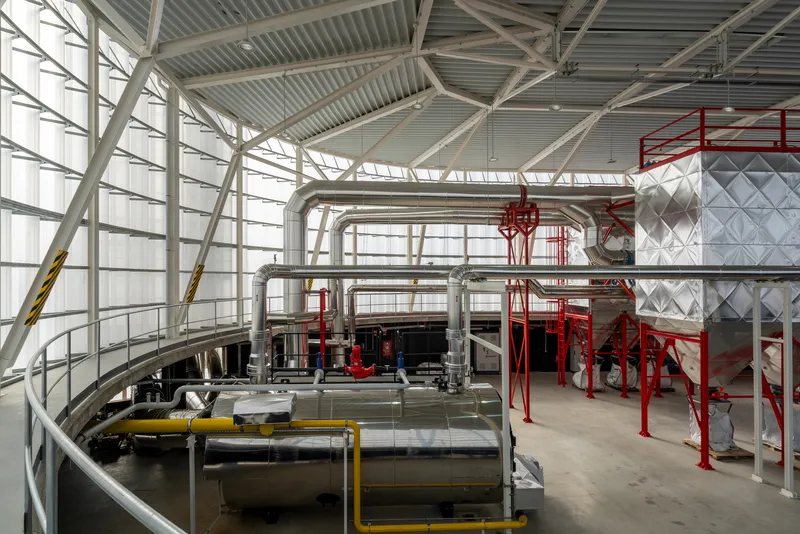
Unlike typical industrial facilities, DH Palencia combines technical function with educational transparency. The plant’s design allows visitors to understand the energy production process, making renewable energy tangible to the public. This pedagogical approach aligns with the client’s vision to make sustainability visible and accessible, turning the energy plant into a community landmark.
The architecture embraces a dual role: functional efficiency and symbolic presence. The building consists of two primary elements:
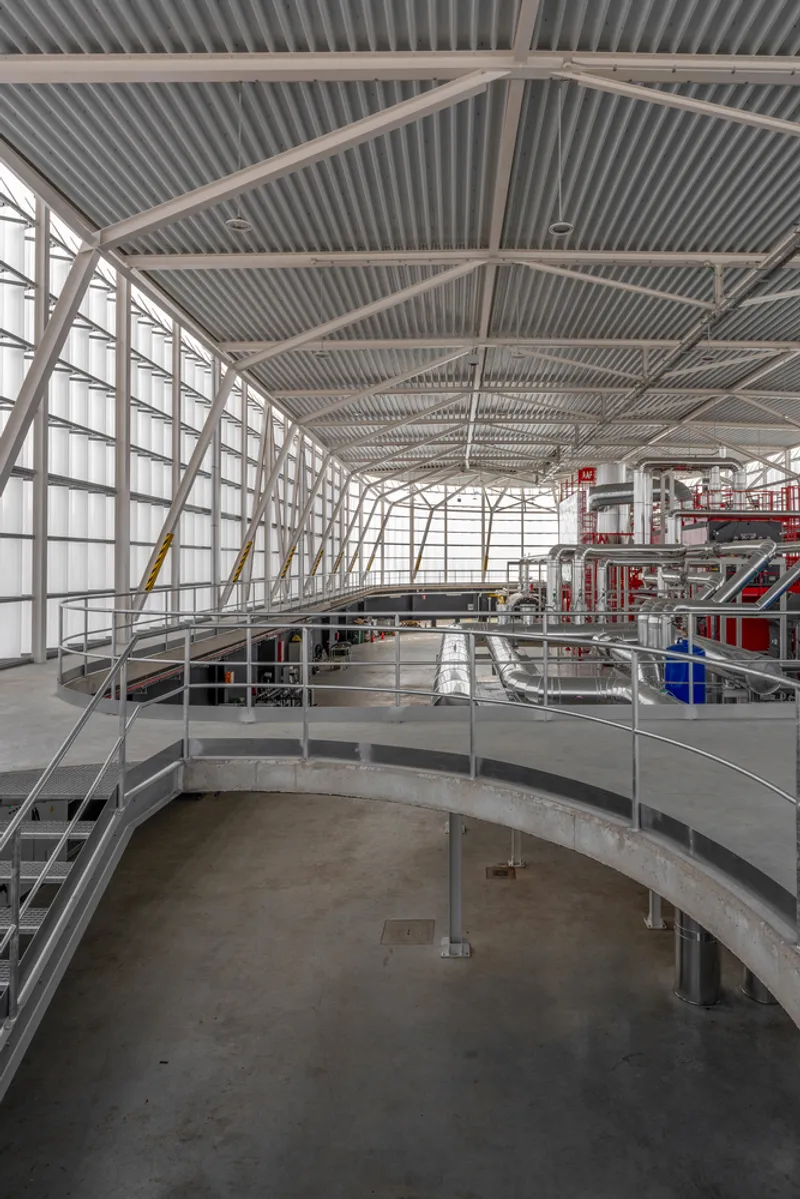
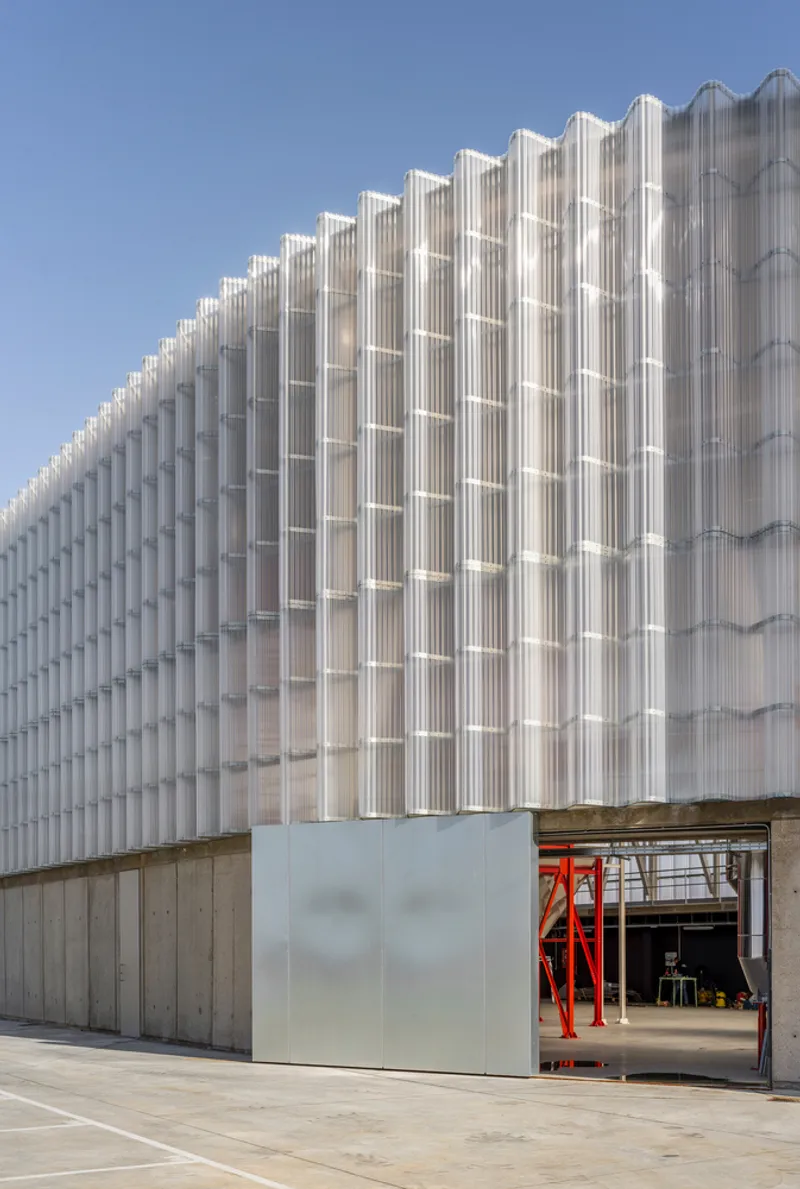
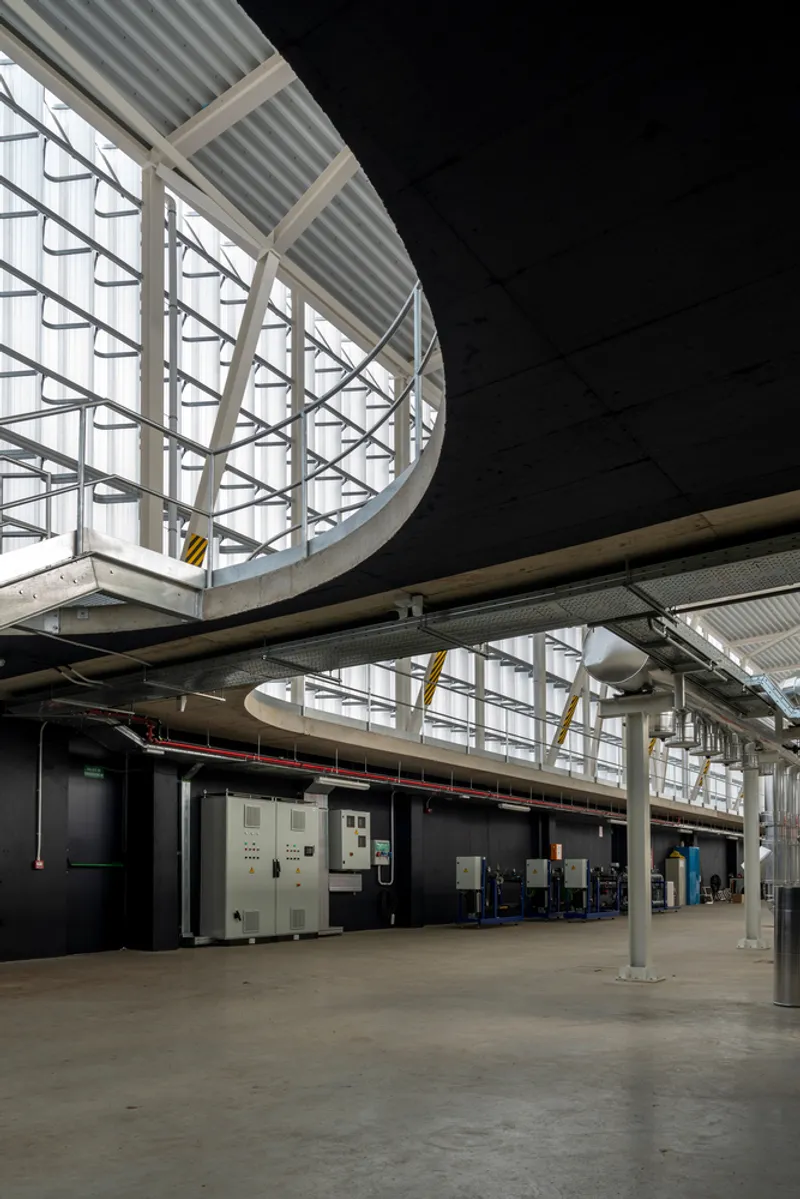
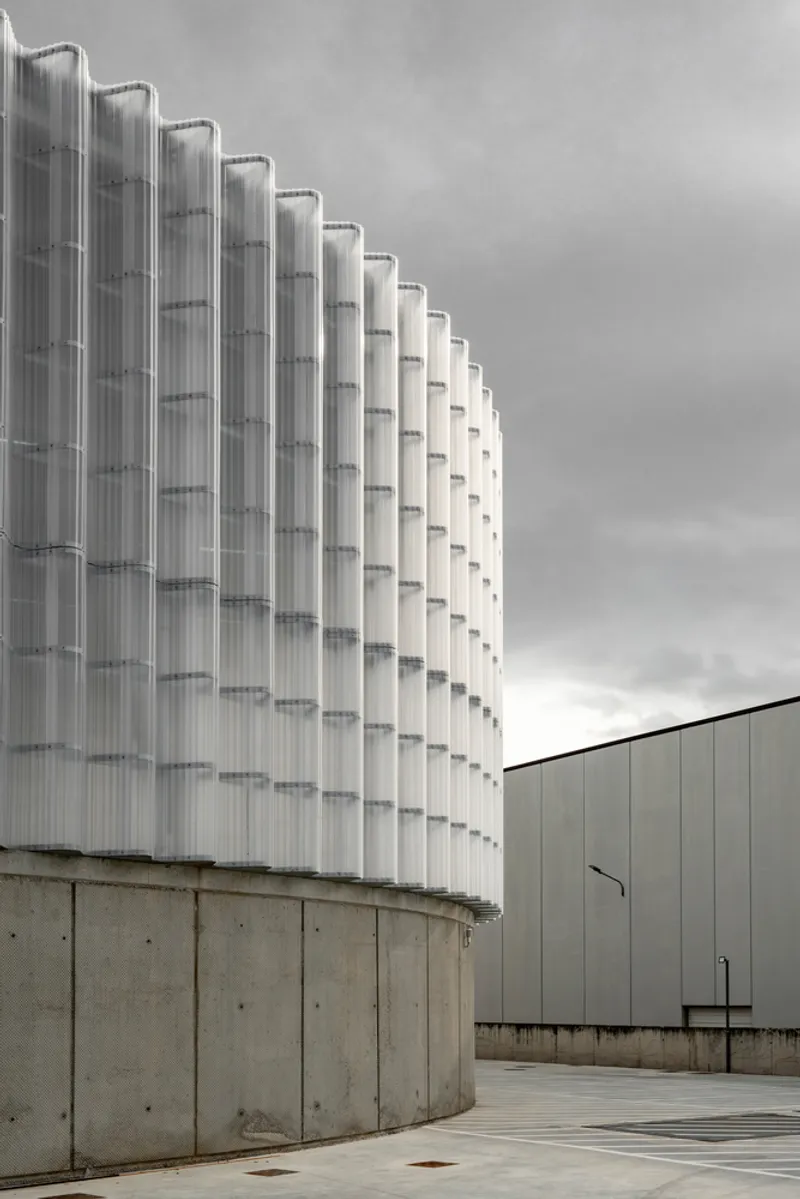
- Concrete Base: A heavy, durable structure that houses machinery and connects to the underground biomass silo. Its perimeter walkway enables visitor circulation around the plant’s operations.
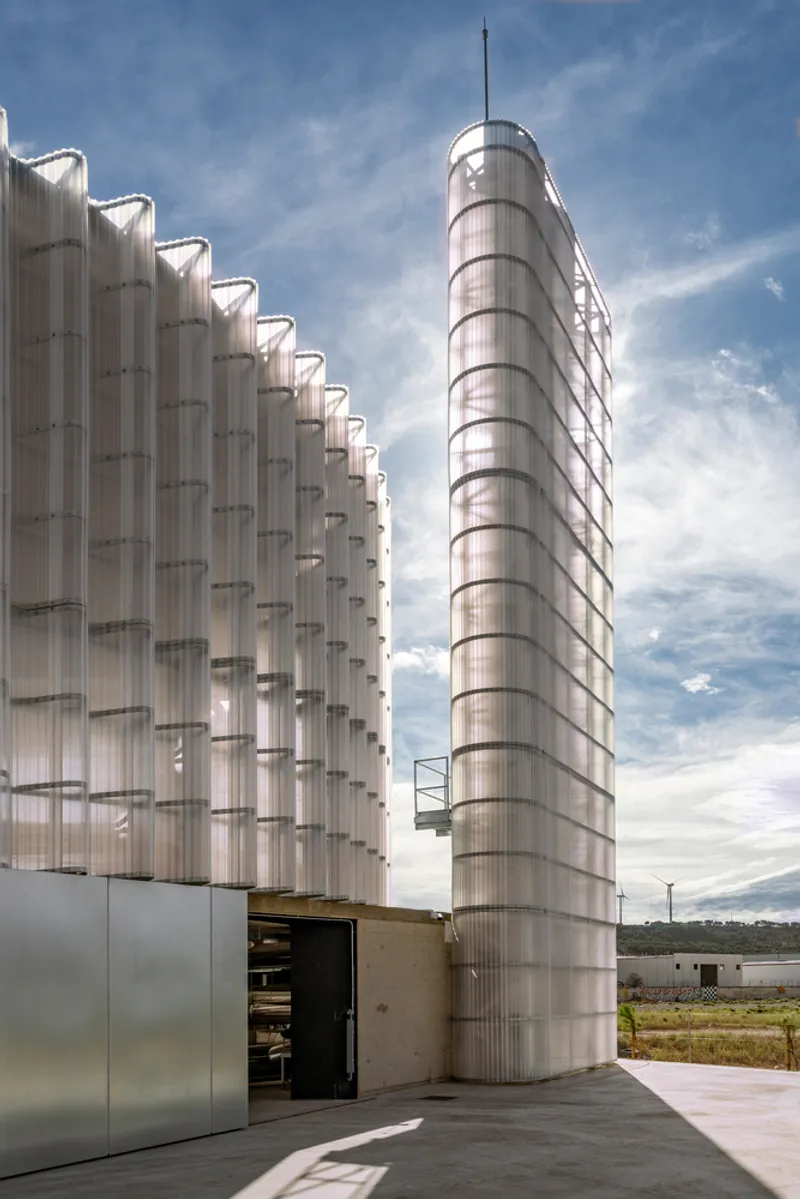
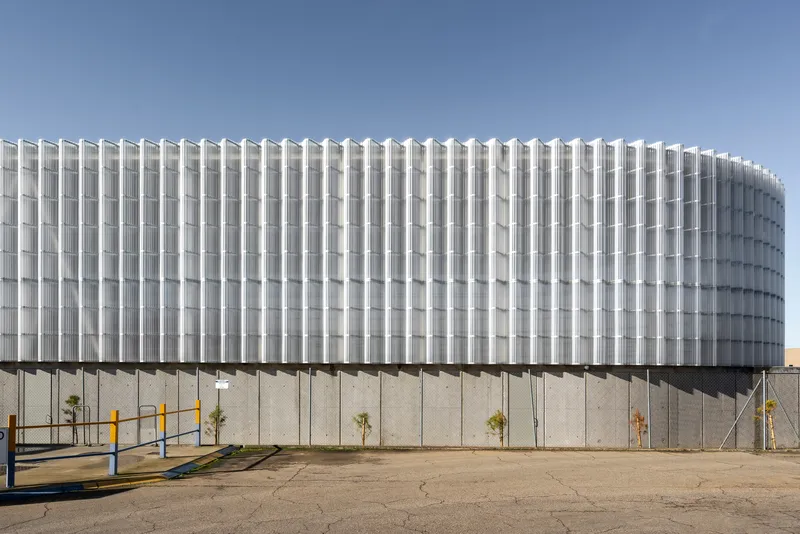
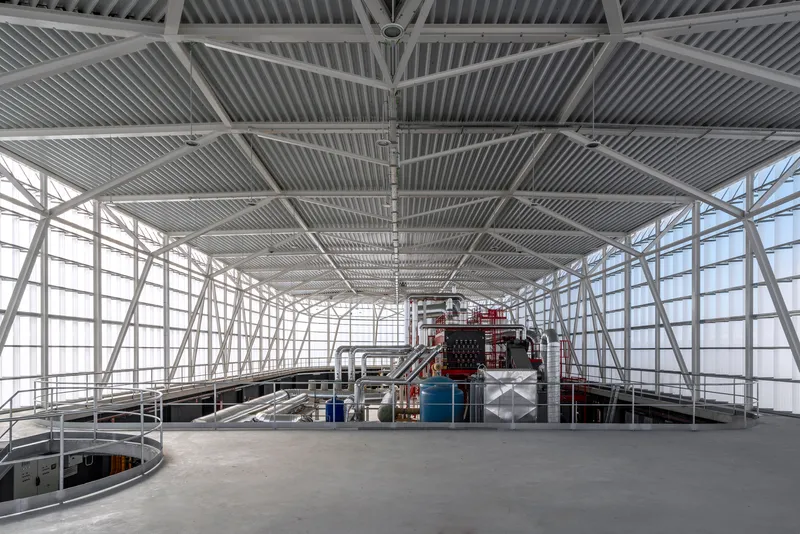
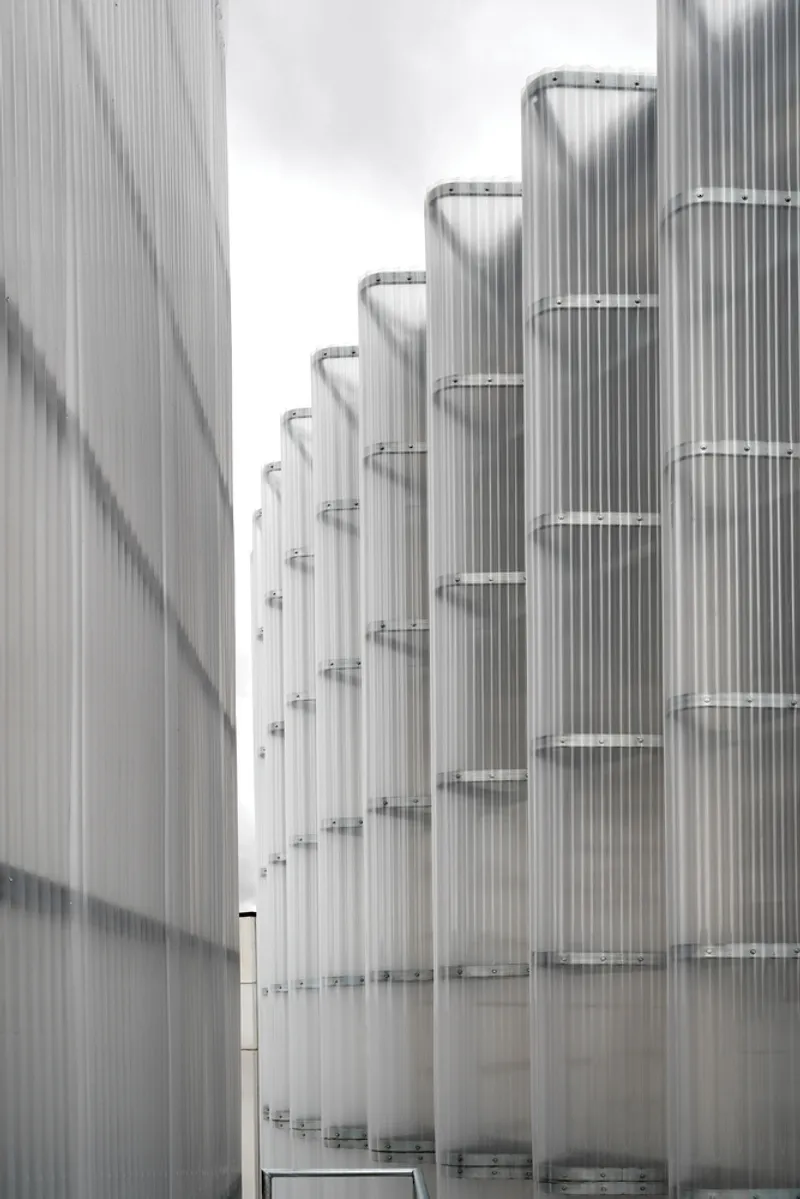
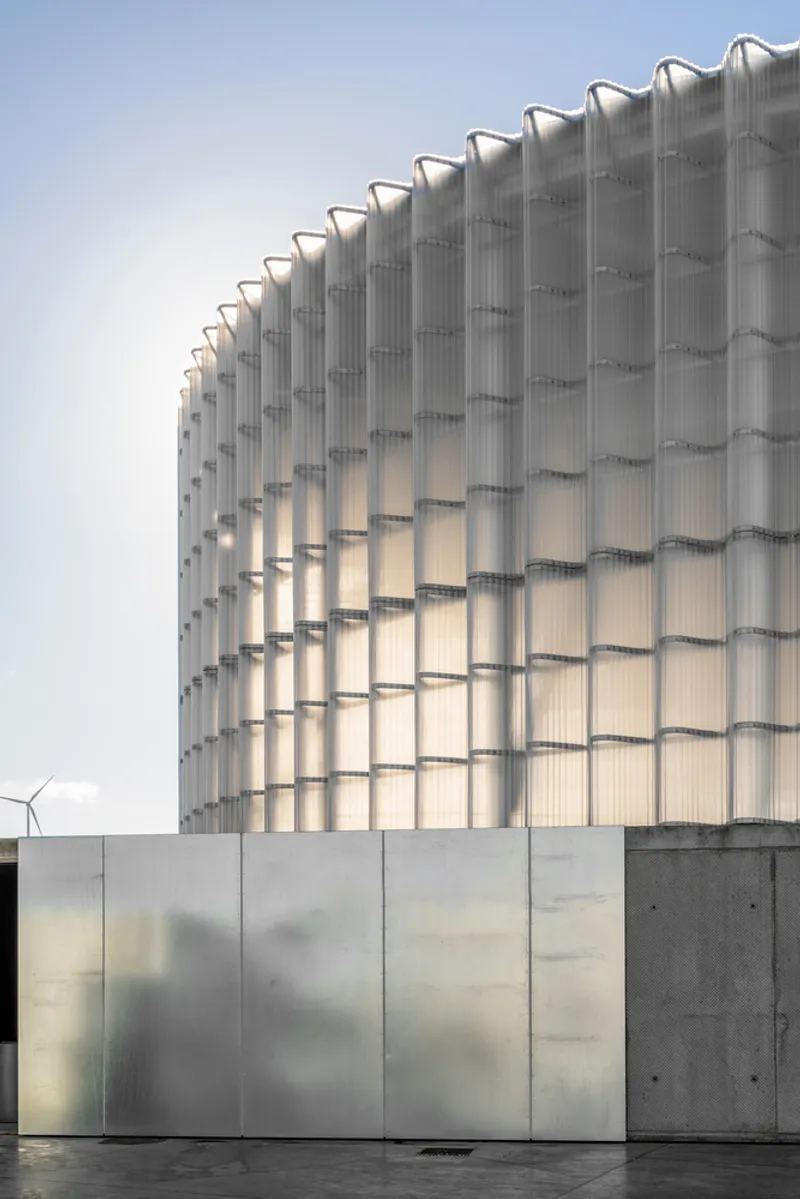
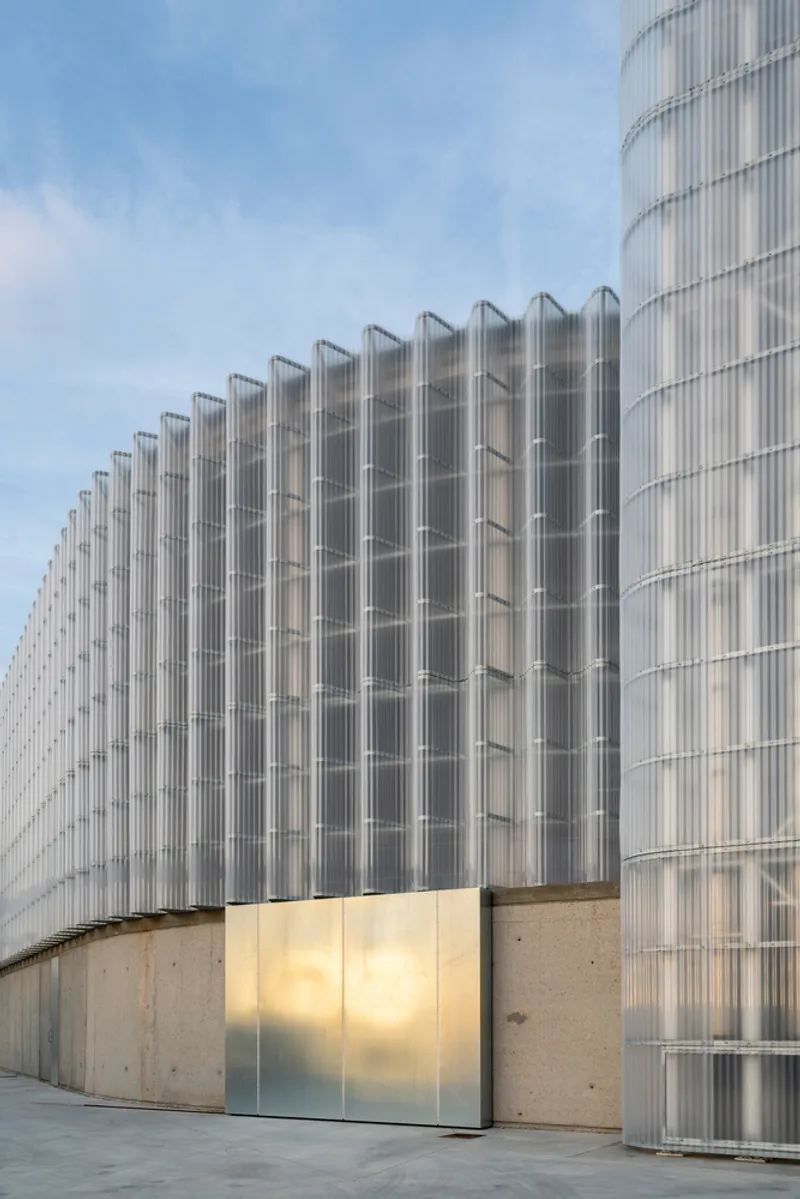
- Steel and Plastic Lantern: A lightweight, recyclable volume that crowns the base, enhancing natural light and transparency. Its ribbed polycarbonate facade acts as a soft, white veil, subtly connecting the industrial process to the urban environment.
The floor plan’s pill-shaped layout ensures optimal circulation for visitors and staff alike. A translucent tower serves as a visual cue, releasing filtered white steam and symbolizing clean energy at work.
Circularity and Material Expression
The materiality of DH Palencia reflects its environmental ethos. Heavy concrete signifies stability and support, while recyclable steel and plastic highlight sustainability and transparency. The combination of robust base and ethereal lantern creates a harmonious dialogue between industrial function and architectural symbolism, positioning the plant as a small cathedral of energy.
This integration of architecture and renewable energy infrastructure demonstrates how industrial facilities can contribute not only to environmental goals but also to urban identity, public awareness, and educational impact. DH Palencia is a model for future energy projects, proving that functionality and design excellence can coexist to inspire both residents and the global architecture community.
Project Details
- Location: Palencia, Spain
- Architects: FRPO Rodriguez & Oriol
- Lead Architects: Pablo Oriol, Fernando Rodríguez
- Area: 1,960 m²
- Year: 2023
- Photographs: Luis Asín
- Manufacturers: American Air Filter, BMI Cobert, Creavi, Polimertecnic, Uniconfort
- MEP Services: DH Ecoenergías
- Structural Engineering: Ingeniería
All photographs are works of
Luis Asín


Popular Articles
Popular articles from the community


LT2A and OPEN Architectes Thread a Brick and Glass High School Through a Wooded Belgian Campus
In Braine-l'Alleud, a 3,000 m² wing for Collège Cardinal Mercier pairs pale brick with a glazed colonnade, deferring to a small chapel and a dense wood.

GROUP A Strips a 1969 Rotterdam Harbor Headquarters to Its Frame and Wraps It in Timber Louvers
In Rotterdam's M4H harbor district, Ferro Offices reuses a 1969 frame, adds one timber storey and reaches BREEAM-NL Outstanding.

David Ortega Stacks a Two-Story Mexico City Penthouse Around a Steel Stair and a Pergola-Shaded Roof Terrace
In Colonia Roma, a 300 m² penthouse uses oak joinery, a planted steel stair and a slatted roof pergola to make a new-build apartment feel like a house.

Architekt Andreas Gruber Scatters 23 Dark Timber Chalets Across a South Tyrolean Forest Edge
In Molini di Tures, Amonti Chalets breaks a resort into a hamlet of gabled timber houses, with parking, storage and services pushed into the slope.

Similar Reads
You might also enjoy these articles

Gil Mello Arquitetura Tilts a Single Roof Toward the Waterfalls on a Plateau Above Aiuruoca, Brazil
In Aiuruoca, Minas Gerais, a 200 m² house of local labor and reclaimed poles pairs a low valley veranda with a tall mountain one.

U.GA Architects Wraps an Oval Rooftop Pool in Curved Board-Formed Concrete on Busan's Jeollidan-gil
In Busan's Jeonpo-dong, a 454 m² mixed-use block stacks a neighborhood facility, guest rooms and an oval rooftop pool inside spiraling concrete walls.

Felipe Hess Arquitetos Turns a Blind Stone Wall to the Street and Opens a Brazilian House onto a Courtyard and Canal
A canal-front house in Brazil hides behind painted stone and planting, then opens to an olive-tree courtyard, a reed-ceilinged porch and a curving pool.

David Macias Steps a Doorless Stone and Plaster House Down a Tropical Colombian Hillside
In the humid hills of Colombia, Threshold House replaces the front door with an open void and terraces its 850 m² down the slope instead of fighting it.

Explore Sustainable Design Competitions
Discover active competitions in this discipline

Challenge to reimagine the Iron Throne

Photograph architecture without architects

Illustrate the lost glory of Angkor Wat - Render Challenge

Design challenge to reuse E-waste
Comments (0)
Please login or sign up to add comments
No comments yet. Be the first to comment!