
Diffusion Boxes: Adaptive Reuse Architecture Transforming Paris’ Urban Void into a Participatory Public Landscape
Adaptive reuse architecture reimagines Paris’ Petite Ceinture into a modular, participatory public space blending ecology, culture, and community

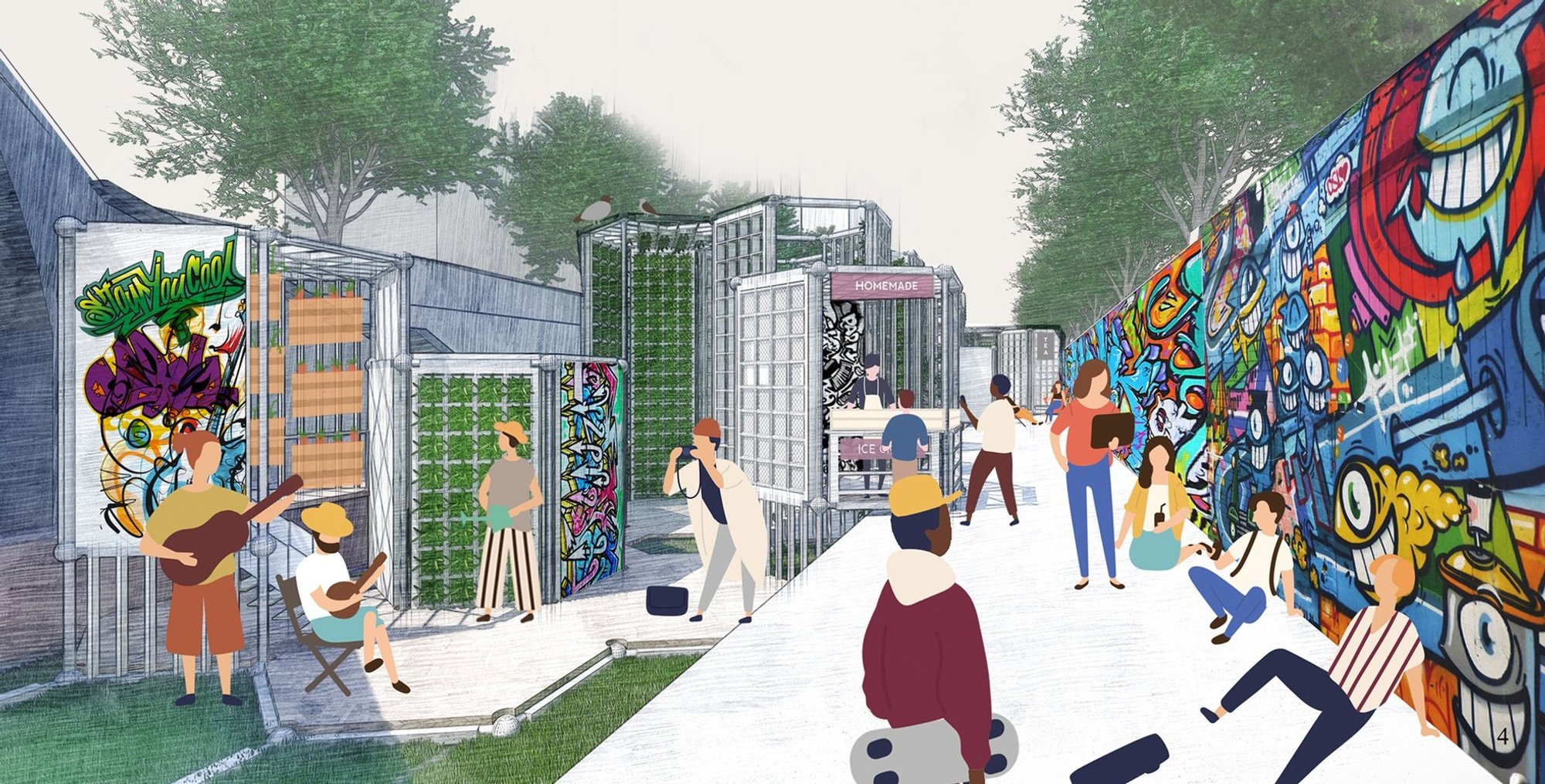
In the evolving discourse of adaptive reuse architecture, projects that reinterpret obsolete infrastructure into vibrant public realms are increasingly significant. Diffusion Boxes, a shortlisted entry of the Salut Paris competition by Kristin Wayne, proposes a transformative strategy for the abandoned railway of the Petite Ceinture. Rather than imposing a fixed architectural object, the project introduces a flexible, modular system that grows organically with its users.
This proposal positions architecture not as a finished artifact, but as an evolving framework shaped by participation, time, and context.
Site Strategy: Reclaiming the Linear Infrastructure
The Petite Ceinture, once a critical railway loop encircling Paris, now exists as an underutilized linear void embedded within dense urban fabric. The project acknowledges both its historical significance and spatial limitation.
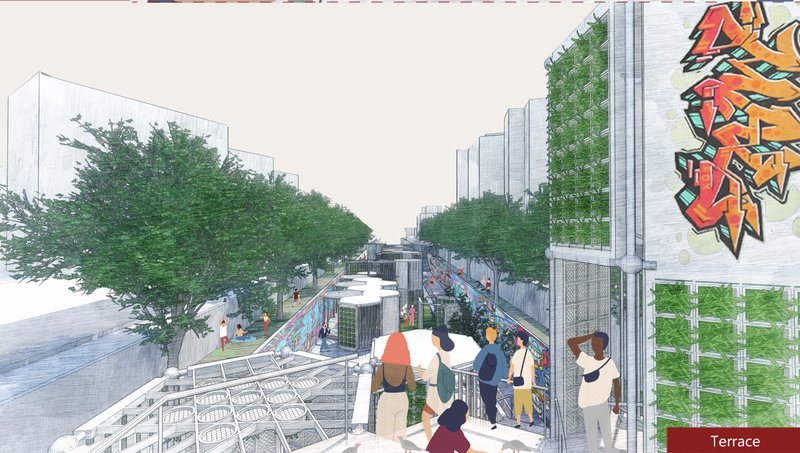
Instead of resisting the inherent linearity of the site, Diffusion Boxes amplifies it. The design uses the width of the railway track as a generative module, translating a rigid infrastructural geometry into a dynamic spatial system. By elevating the perceived experience of the site closer to urban street level, the intervention reconnects the sunken railway to the surrounding city.
This approach aligns with contemporary adaptive reuse architecture practices, where infrastructure becomes a scaffold for new urban life.
Concept: Organic Growth Through Modular Systems
At the core of the project lies a simple yet powerful idea: architecture should grow organically.
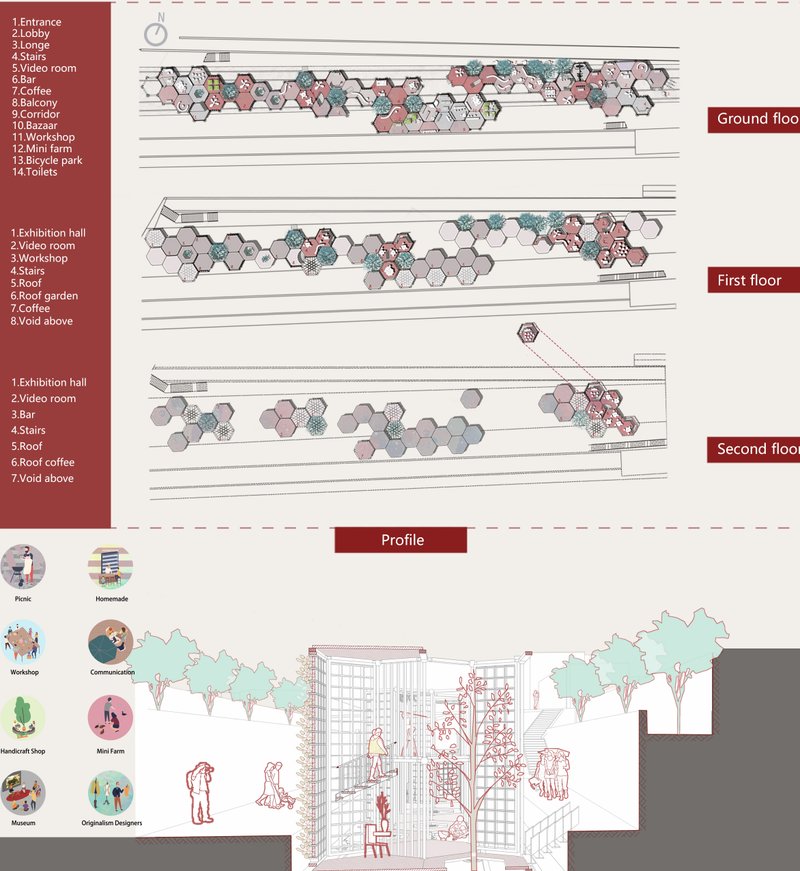
Inspired by the hexagonal formations of natural basalt columns such as those found in Giant’s Causeway and Guizi Mountain, the design adopts a hexagonal module as its fundamental unit. These units are not static; they are distributed, aggregated, and recombined across the site through a process of diffusion.
The project establishes five initial anchor points derived from key historical moments of the Petite Ceinture. From these nodes, the modules expand spatially, forming clusters of varying densities and functions.
This system introduces:
- Spatial flexibility n- Incremental growth
- User-driven configuration
Such a framework redefines adaptive reuse architecture as a participatory and temporal process rather than a singular design act.
Programmatic Diversity and Spatial Blurring
Diffusion Boxes deliberately dissolves traditional zoning boundaries. Instead of segregating functions, the project creates overlapping layers of activity.
The modular units accommodate a wide range of programs, including:
- Markets and informal retail
- Workshops and creative studios
- Urban farming and vertical gardens
- Community gathering spaces
- Cafés and leisure zones
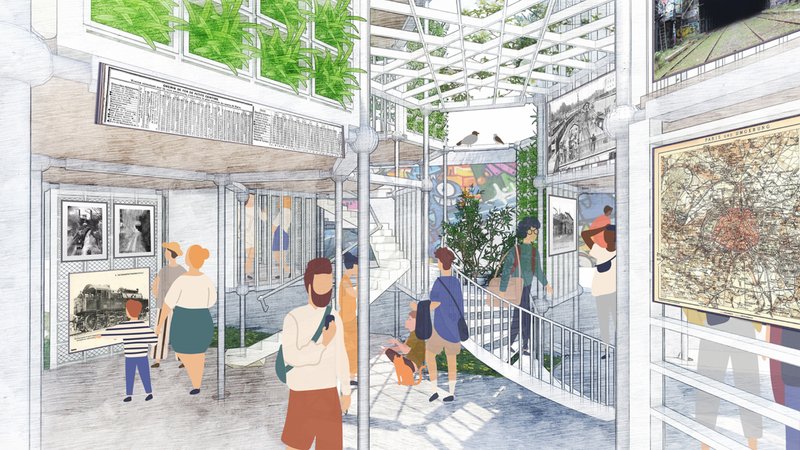
- Exhibition and museum functions
This hybridization produces a porous public environment where social, cultural, and economic interactions coexist. The result is a spatial condition where public space and urban space are no longer distinct, but continuously interwoven.
Multi-Level Engagement: Addressing Users and Accessibility
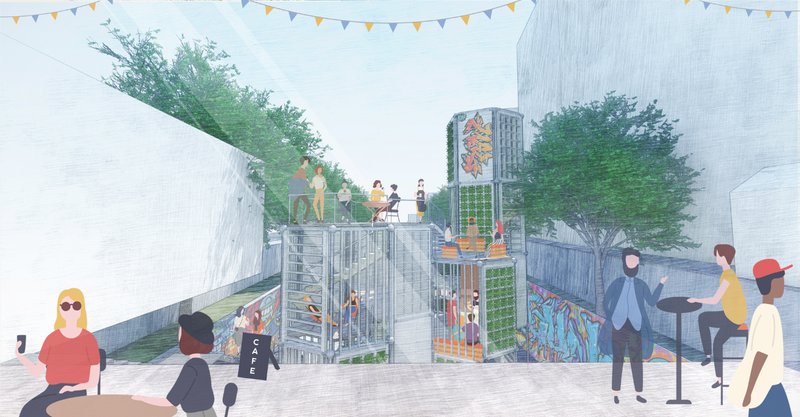
A critical challenge of the site is its vertical separation from the surrounding city. The project resolves this through a layered spatial strategy.
The lower level becomes a communal ground for residents, enabling everyday activities such as picnics, gatherings, and local markets. Elevated platforms align with the urban street level, creating accessible entry points for visitors and tourists.
This vertical differentiation ensures inclusivity by addressing multiple user groups simultaneously:
- Local residents seeking daily social space
- Tourists exploring Parisian cultural narratives
- Entrepreneurs and artists engaging in production and exchange
The integration of these layers reinforces the project’s ambition to function as a socially cohesive urban platform.
Material Strategy: Recycling as Architecture
The project extends the concept of adaptive reuse beyond the site to the scale of materials and construction.
The primary structural system is based on a reusable stainless steel modular frame. Within this framework, users are encouraged to incorporate recycled and found materials. Elements such as crates, containers, and discarded objects are repurposed into planters, partitions, and enclosures.
This approach introduces:
- Low environmental impact
- User customization
- Continuous transformation over time
By embedding recycling into the architectural logic, the project aligns with circular economy principles while empowering users as co-creators.
Urban Connectivity and Cultural Integration
Diffusion Boxes does not operate in isolation. It establishes strong connections with existing cultural nodes such as La Recyclerie, integrating them into a broader urban narrative.
Visitors can engage with the history of the railway through curated experiences, then transition into active participation within markets, workshops, and public programs. This continuity between memory and activity enhances the experiential depth of the space.
The project transforms the site into a living archive of Paris, where history is not preserved statically but reinterpreted through everyday use.
Rethinking Public Space Through Participation
At its core, Diffusion Boxes challenges conventional notions of authorship in architecture.
Rather than delivering a completed design, it provides a framework that evolves through collective input. Users determine the placement, function, and transformation of modular units, resulting in a constantly shifting spatial condition.
This participatory model:
- Encourages community ownership
- Facilitates social interaction
- Enables adaptability to future needs
In doing so, the project redefines public space as a collaborative and emergent system.
Diffusion Boxes exemplifies the potential of adaptive reuse architecture to regenerate urban voids through flexibility, participation, and ecological awareness. By transforming the Petite Ceinture into a modular and evolving landscape, the project moves beyond static design toward a living, user-driven urban system.
It is not merely a proposal for a public space, but a framework for continuous urban storytelling: where architecture grows, adapts, and belongs to the people who inhabit it.



Popular Articles
Popular articles from the community

LIQE arquitectura Wraps a Vigo Old Town Housing Reform in Folding Pine Screens
Perched between castle walls and the historic center, a timber-clad renovation filters estuary light through autoclave-treated slats.
Story Architecture Wraps a Multigenerational Villa Around a Pool in Vietnam
An L-shaped house near Ho Chi Minh City balances privacy and togetherness through voids, skylights, and planted terraces.
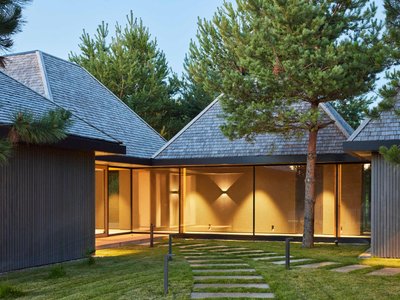
HEIMA Architects Scatters Four Oak-Shingled Pavilions Among the Pines of Northern Lithuania
A 150-square-meter guest house on a Lithuanian hilltop splits into four volumes to preserve every tree on the site.
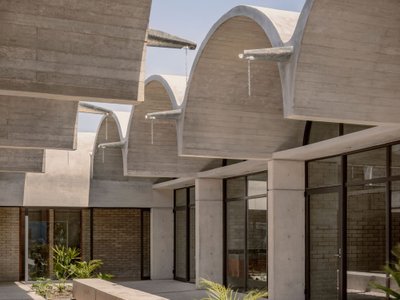
Kiltro Polaris and JC Arquitectura Line Up Six Barrel Vaults for a Health Center in Rural Mexico
A raw concrete clinic in Escárcega, Campeche, uses courtyards between structural bays to ventilate, light, and cool every room naturally.

Similar Reads
You might also enjoy these articles


Urban Forest: A Vertical Ecosystem for 5,000 Workers in Singapore's Changi Business Park
Radially stacked pods and layered green decks turn a 7-acre plot into 47 acres of ecological workspace projected for 2040.
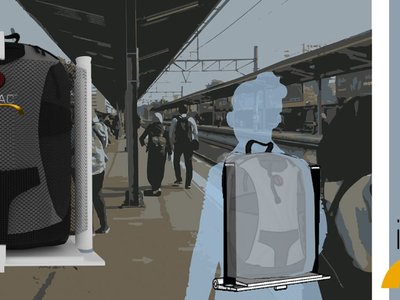
interACT: A Wearable Transit Object That Turns Commuting Into Social Infrastructure
A backpack-mounted foldable device transforms walking, waiting, and riding into moments of shared comfort across Jakarta's transit network.
Lean On Barrier System: Where Traffic Safety Meets Chai Culture in Ahmedabad
A modular steel barrier doubles as informal seating and lean-on furniture at one of Ahmedabad's busiest intersections, keeping vendors in place.

The Black Bagh: A Living Monument Built from Water, Light, and Memory
On the banks of the Yamuna, two designers replace the myth of a marble mausoleum with a regenerative landscape of reflection and ritual.

Explore Conceptual Architecture Competitions
Discover active competitions in this discipline




The International Standard for Design Portfolios


The Global Benchmark for Architecture Dissertation Awards


The Global Benchmark for Graduation Excellence


Challenge to reimagine the Iron Throne
Comments (0)
Please login or sign up to add comments
No comments yet. Be the first to comment!