

Djef Anten House by BOT architektuurcollectief – Sustainable Renovation Meets Contemporary Belgian Living
Sustainable renovation of a 1950s Hasselt row house, featuring timber structure, recycled bricks, central patio, and adaptable future-ready living design.


Located in the heart of Hasselt, Belgium, the Djef Anten House by BOT architektuurcollectief transforms a modest 1950s row house into a modern, sustainable, and light-filled residence. This 175 m² project redefines urban living through a combination of adaptive reuse, energy-conscious design, and a deep connection to outdoor spaces.
A New Chapter for a 1950s Row House
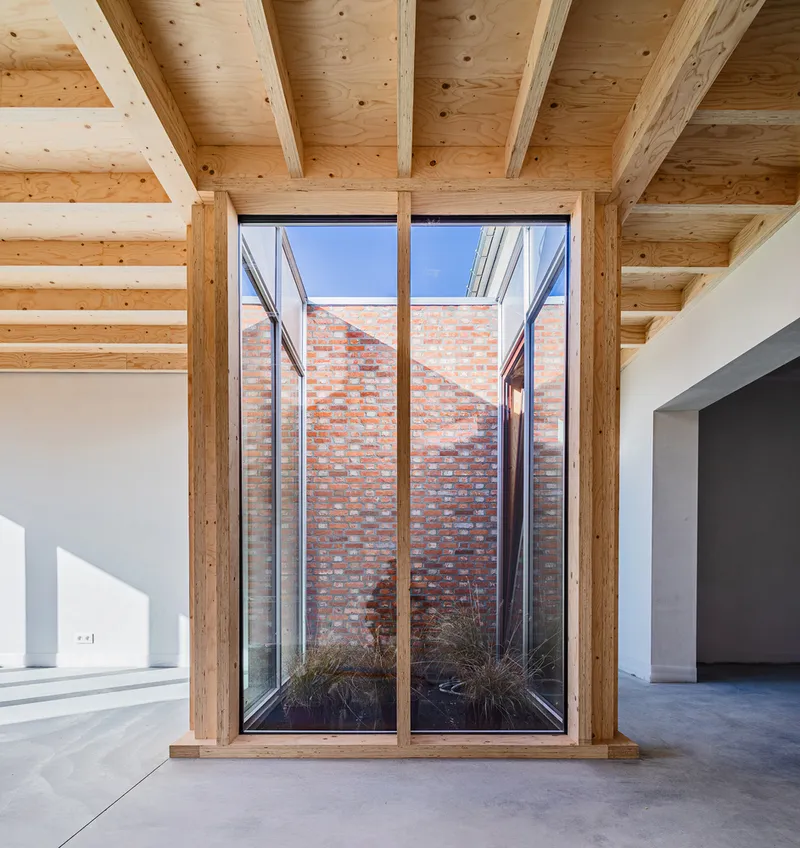
Originally flanked by potteries, the existing house stood in need of renewal. The old potteries were carefully demolished, making way for a thoughtfully designed extension that opens the home to its deep backyard. The main volume was entirely stripped back, allowing natural light and garden views to flood the interiors—creating a renewed relationship between the built form and nature.
Design Concept – Between Patio and Covered Terrace
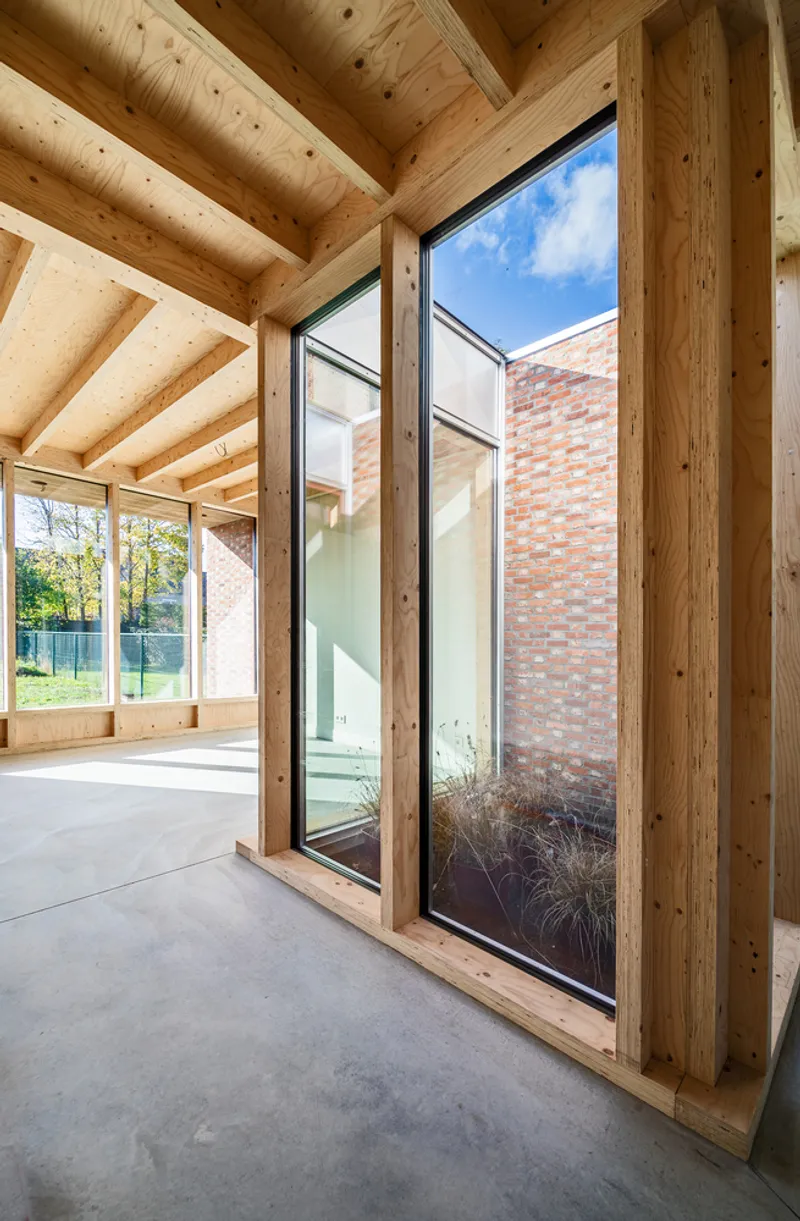
The new addition is strategically placed between a covered terrace and an intimate patio. This spatial arrangement preserves the traditional enfilade of connected rooms, while the patio acts as the green heart of the home—bringing light, air, and vegetation into the interior.
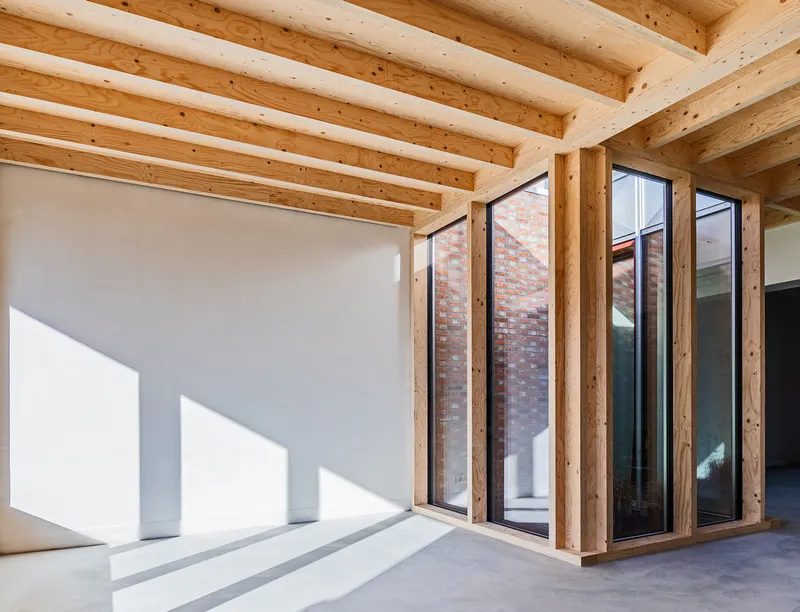
The architects employed a prefabricated plywood timber structure (Kerto), leaving it fully exposed to highlight its craftsmanship. This structure doubles as the curtain wall framework, merging form and function.
Structural Strategy & Material Reuse
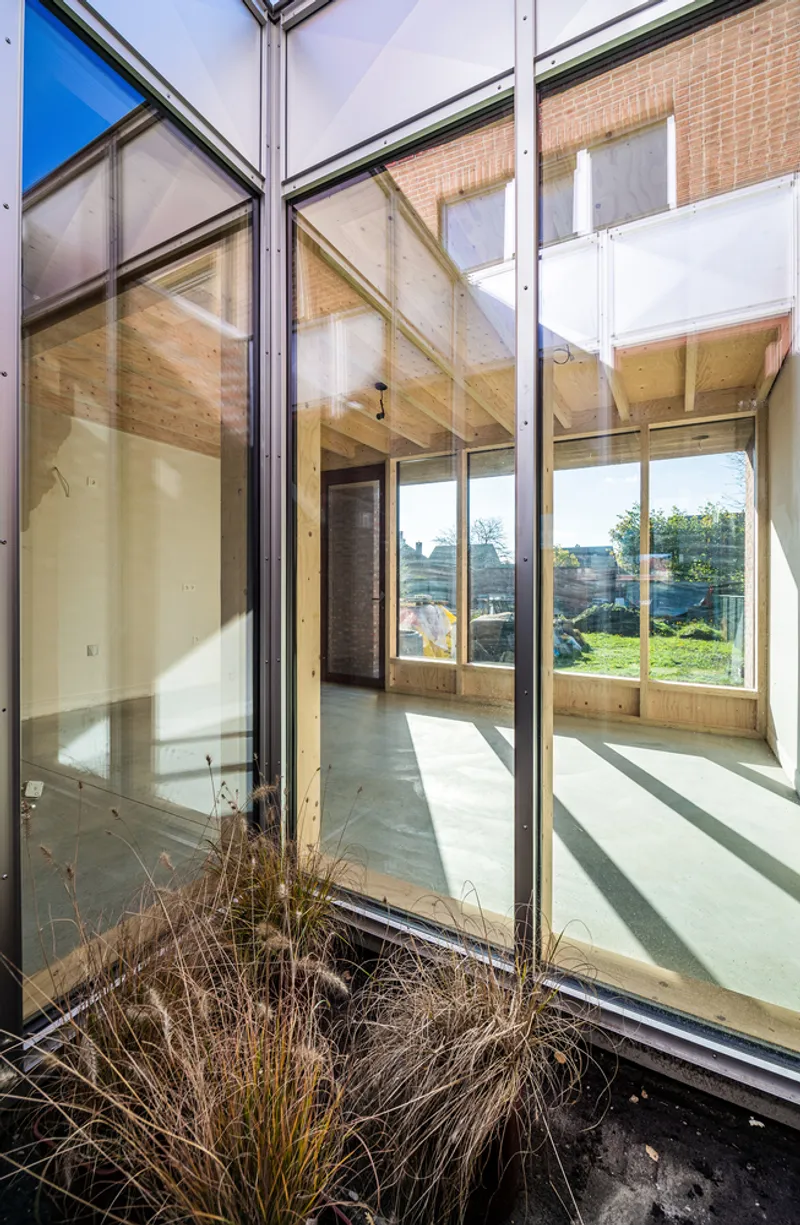
The load-bearing beams are oriented to follow the shortest span, resulting in three braced structural compartments. The covered terrace, intentionally separated from the wooden extension both thermally and structurally, was built with brick and concrete.
A defining feature is the reuse of 9,000 bricks salvaged from the demolished potteries—painstakingly cleaned by the client themselves. This commitment to material recycling not only preserved history but also reduced environmental impact.
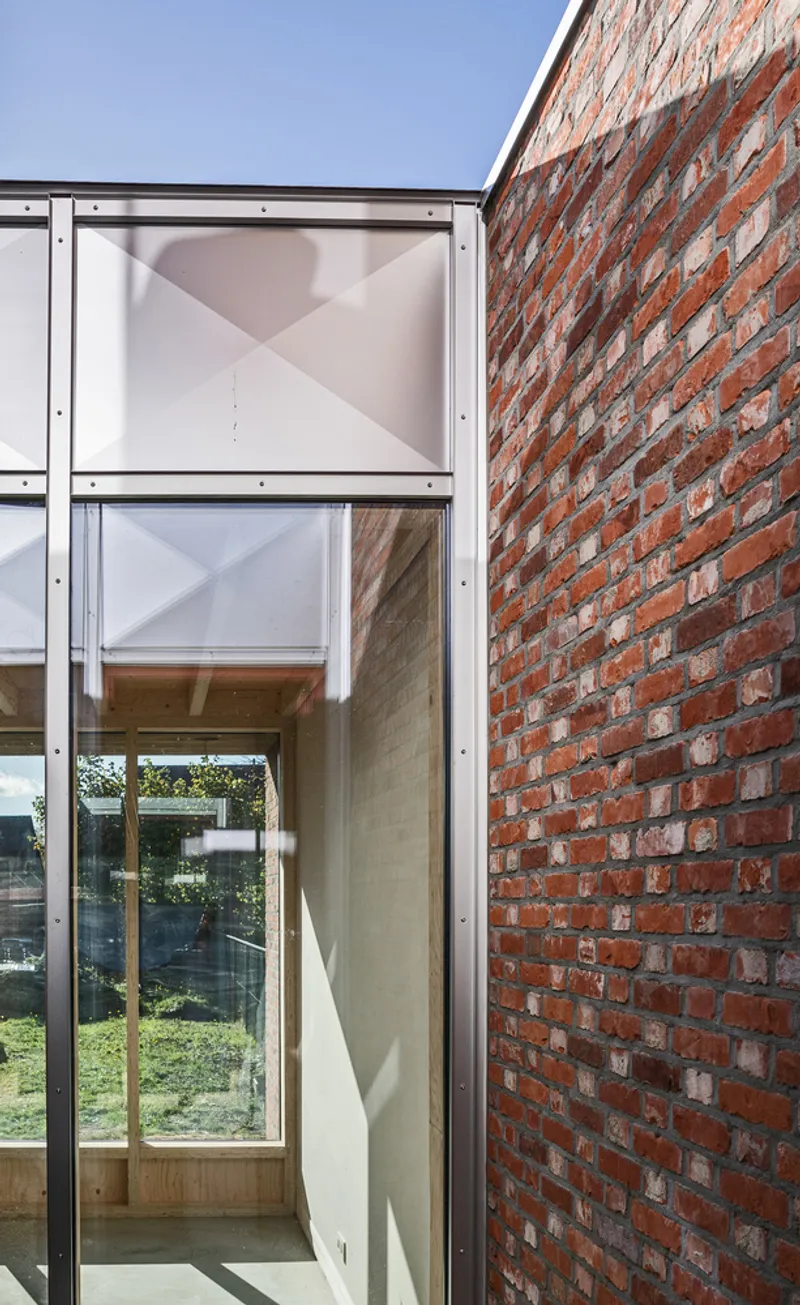
Concrete Canopy – Multi-functional Design
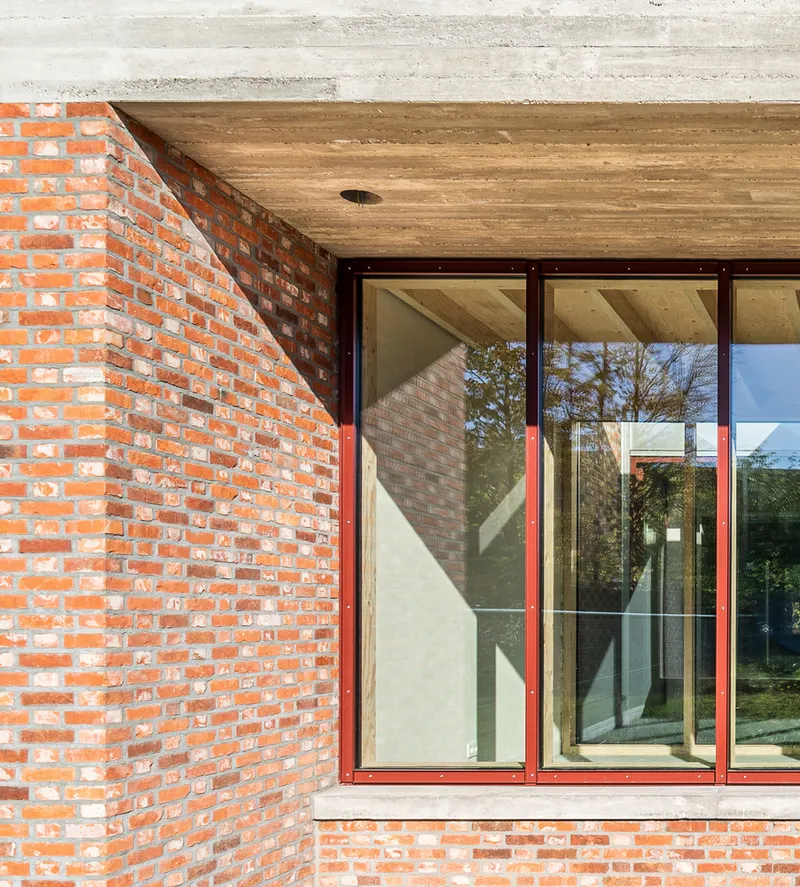
The terrace canopy is constructed from exposed concrete using recovered plank formwork. Designed with efficiency in mind, the canopy serves simultaneously as:
- Structural support
- Exterior finish
- Solar shading
- Water barrier
Rainwater is collected in an above-ground cistern, with overflow directed to a wadi in the garden, aiding natural water infiltration.
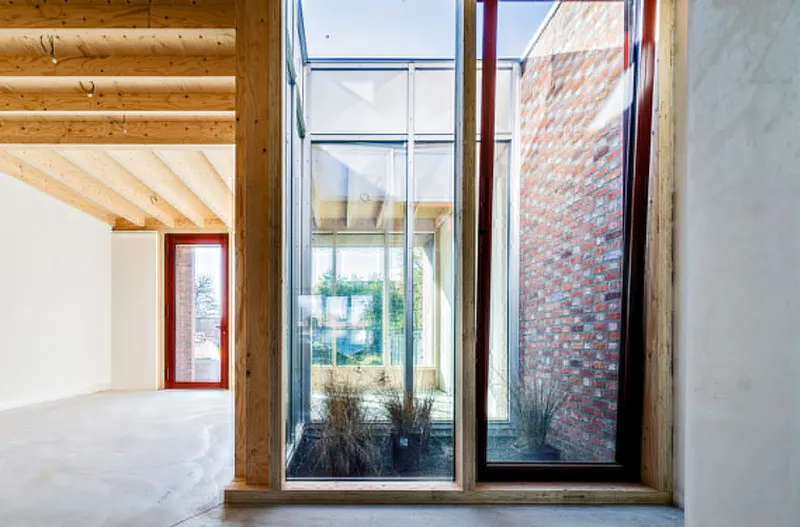
Prepared for Future Living
Flexibility was key to the project’s longevity. The house is designed to adapt to different life stages—it can easily be converted into a care home or a kangaroo home (multi-generational living arrangement). This adaptability ensures the building remains functional and relevant for decades to come.
Sustainability Highlights
- Material recycling: Bricks salvaged and reused
- Prefabricated timber: Reduced waste and faster assembly
- Natural ventilation: Through central patio
- Rainwater harvesting: Integrated garden-friendly water management
- Passive shading: Concrete canopy design for thermal comfort
Project Details
- Architects: BOT architektuurcollectief
- Lead Architect: Joris De Belie
- Location: Hasselt, Belgium
- Area: 175 m²
- Year: 2021
- Structural Engineer: Dubimax
- Photography: Jan Willem Meugens
- Manufacturers: Reynaers Aluminium, Beerse steen, Gebroeders Caelen, Metsawood
All photographs are works of
Jan Willem Meugens


Popular Articles
Popular articles from the community


ETEH Reworks the Shared Spaces of São Domingos School in Brazil Around Timber, Color and Hanging Plants
At São Domingos School in Brazil, 436 m² of hall, refectory and library are recast with timber joinery, a yellow and blue code and trailing greenery.

Cube Design Draws an Ecological Corridor Between Two Shenzhen Hills with the Nankai Building
Beside Shenzhen's container docks, the Nankai Building pairs stacked balconies with a climbing green screen to connect two hillsides across its height.


Aquadapt: An Underwater Habitat That Rewrites Its Rooms by the Hour
Curved modules ring the seabed while one shell shifts from breakfast room to cinema, farm and football pitch as residents' needs change.

Manzana Morphosis: Stretching Barcelona's Grid into a Living Landscape for 2050
A radical reworking of the Eixample manzana turns density into a tool for generous public space, vertical ecology, and environmental performance.

Similar Reads
You might also enjoy these articles


Hodi-Mandai Geram
Project Function: Preservation and revitalization of the Intangible heritage and socio-spatial identity of the Hodi by Housing, Cultural Memory Center, Sacred Grove, landscape, local tourism economy


Olio Towers: A Mid-Rise for Performers That Fuses Housing, Rehearsal, and Stage
Located blocks from Houston's Theater District, this modular tower stacks living units around a central performance atrium.

Oasis: Modular Green Housing Carved into Dhaka's Urban Fabric
A shortlisted Plugin Housing entry reclaims unauthorized settlements in Dhaka with stepped concrete volumes, green roofs, and ventilation-driven design.

Black Hole: A Floating Megastructure for the Post-Physical Era
Emiliano Mazzarotto envisions a spherical, self-scaling arena where e-sports, digital hotels, and holographic stadiums replace traditional public space.

Explore Residential Building Competitions
Discover active competitions in this discipline

Challenge to design mud housing for contemporary communities

Challenge to reimagine the Iron Throne

Photograph architecture without architects

Illustrate the lost glory of Angkor Wat - Render Challenge
Comments (0)
Please login or sign up to add comments
No comments yet. Be the first to comment!