

Dongliang Xuan: A Landmark of Timber Architecture in Jiangnan by Wonder Architects
A timber longhouse bridging architecture and ecology, redefining public space in Jiangnan's Yangtze River Forest Farm through lightweight design.


A Longhouse Bridging Nature and Culture in Suzhou's Yangtze River Forest Farm
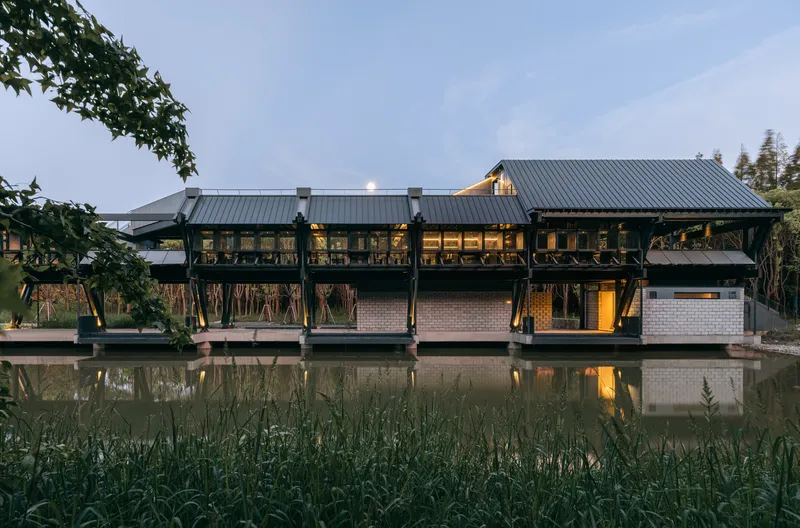
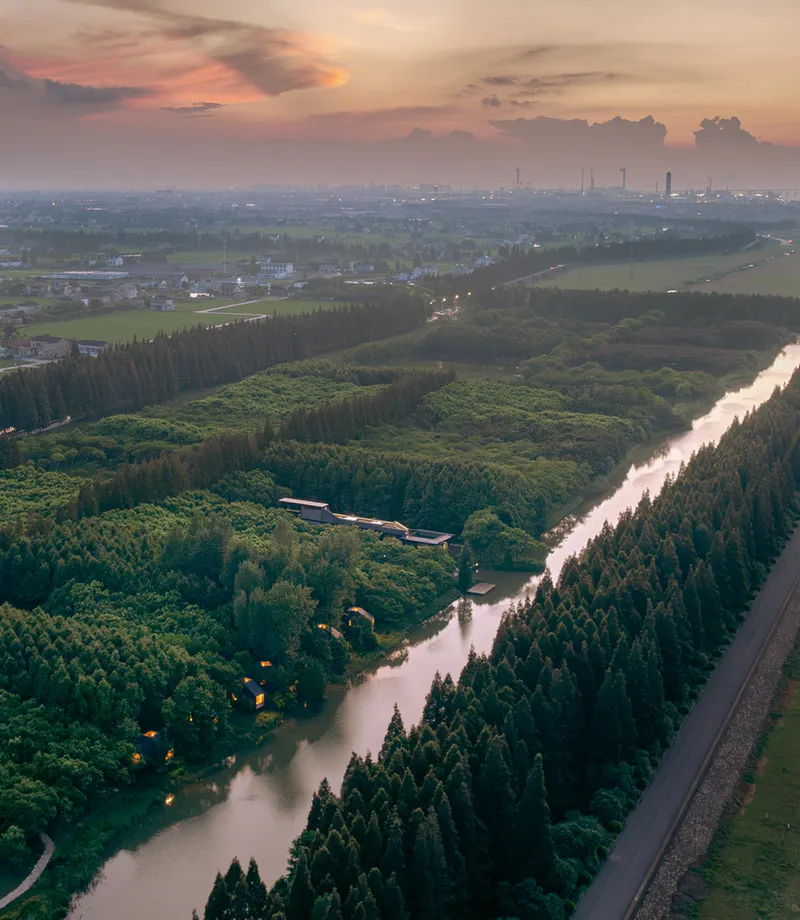
Located within the ecological expanse of the Yangtze River Forest Farm in Taicang, Suzhou, Dongliang Xuan by Wonder Architects represents a sensitive and forward-looking model of timber architecture in Jiangnan. With an area of 400 m², this longhouse-style public facility serves as a dock, restaurant, multipurpose hall, and public amenity—seamlessly blending structure with scenery.

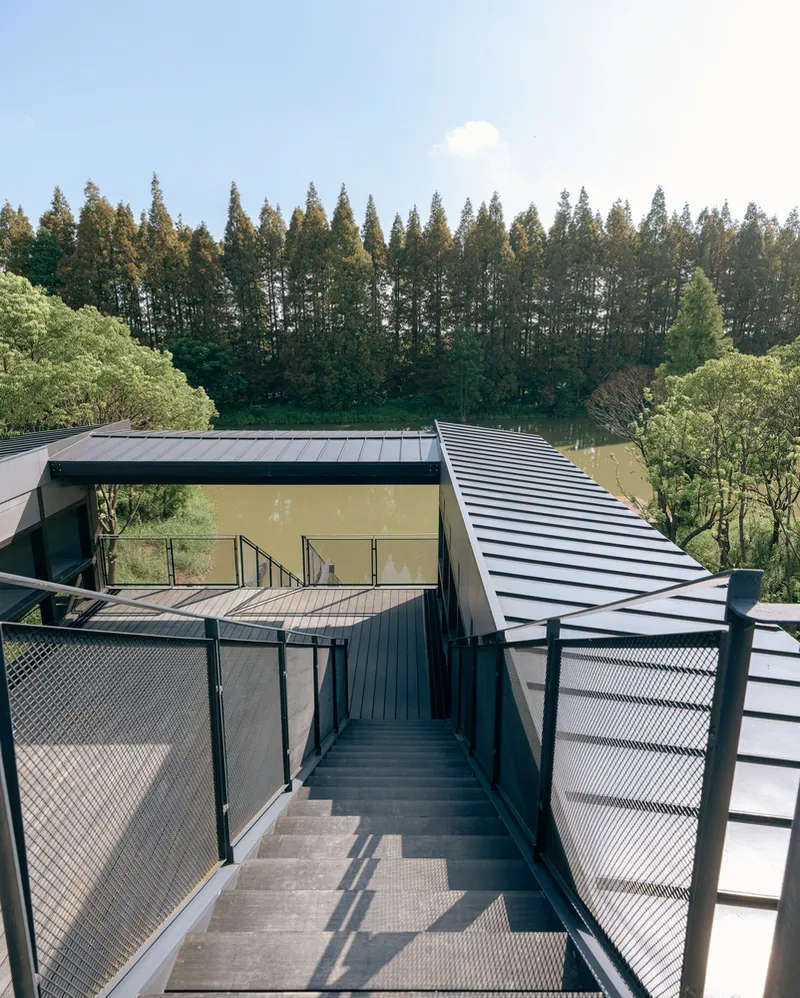
A Reclaimed Landscape with Layers of Meaning
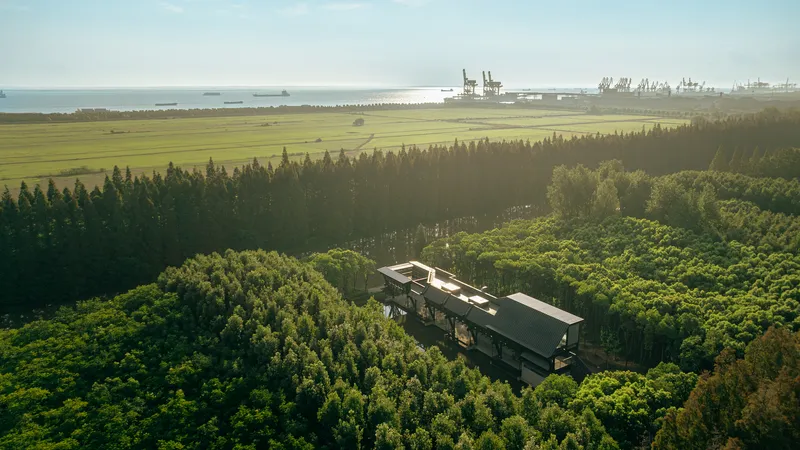
The Yangtze River Forest Farm has a layered history. Established in 1974 on reclaimed riparian wetlands, it has matured over five decades into a lush artificial forest. Though initially human-planted, it now functions as a genuine ecological habitat—sheltering migratory birds and small wildlife along the lower reaches of the Yangtze. Wonder Architects approached this site not as a blank slate, but as a vibrant backdrop where architecture can act as a filter, a lens, and a frame.

Framing the Landscape through Architecture
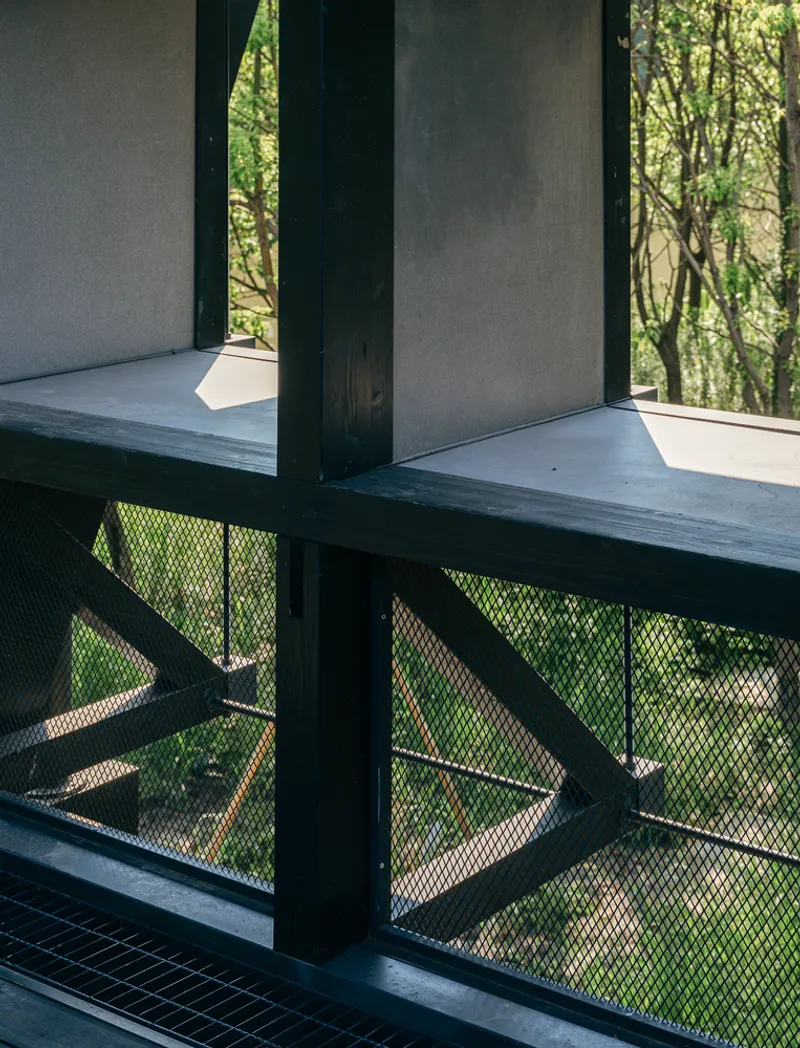
Dongliang Xuan is designed as a stilted linear structure composed of seven distinct bays. It stretches laterally along a shallow rectangular reflecting pool, visually anchoring it to the flat horizon of the forest. Using glulam (glued-laminated timber) beams and columns as the primary structure, the building is elevated above the ground, allowing for minimal disruption to the ecology and unobstructed flow of both people and air.
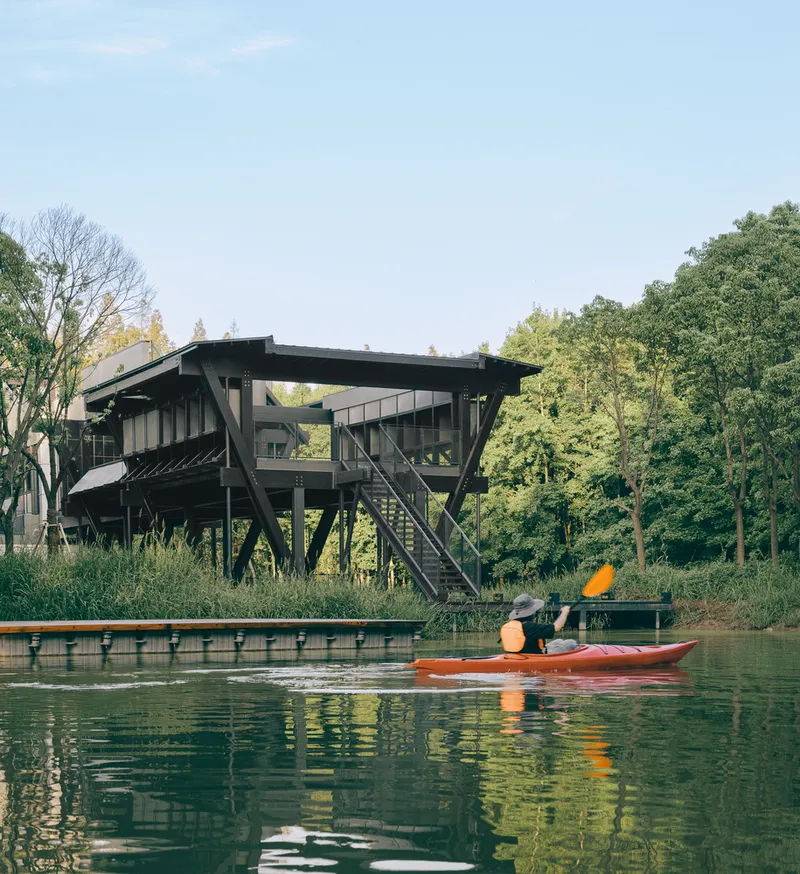
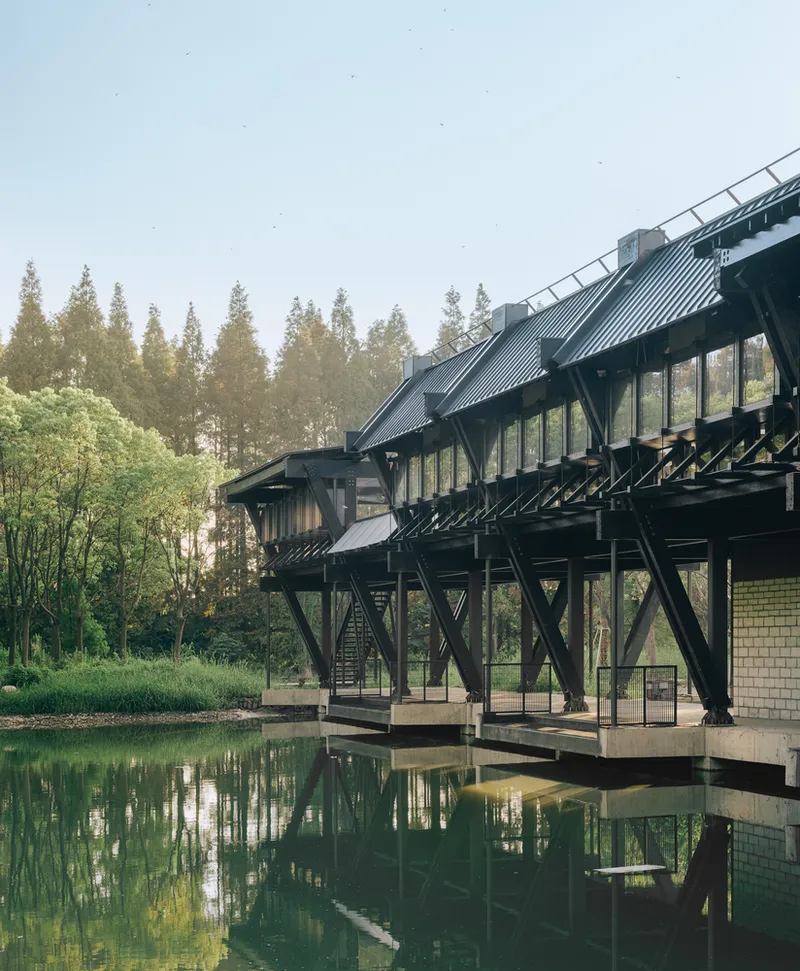
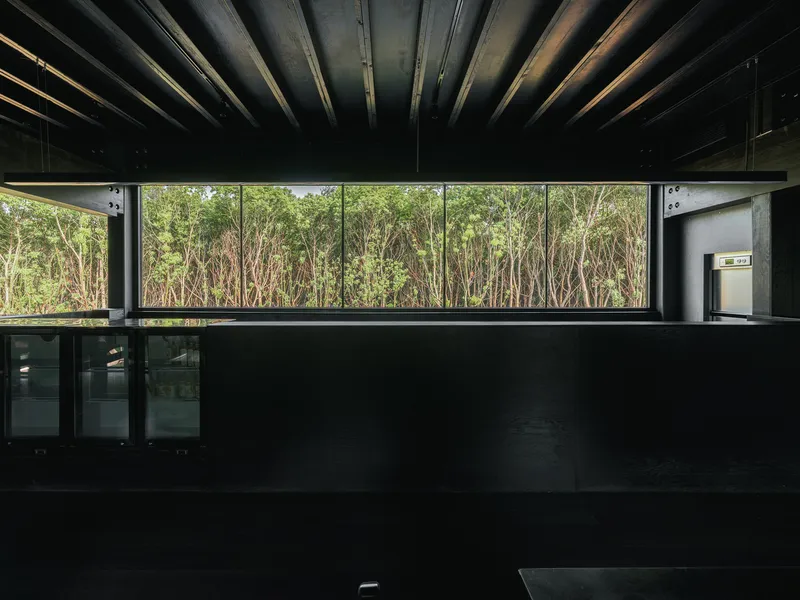
This architecture does more than sit in the landscape—it curates it. A range of carefully positioned windows and openings slice through the longhouse, transforming the repetitive scenery of the forest into a dynamic, fragmented viewing experience. The corridor becomes a cinematic sequence, revealing curated glimpses of trees, water, and sky.
A Corridor Bridge of Spatial Experiences
More than just a building, Dongliang Xuan acts as a corridor bridge—a passageway that fuses functionality with ceremonial transition. Visitors don’t simply enter the forest; they are ushered into it through a rhythm of framed perspectives and light-filtering slats. Every step within the building choreographs a new relationship between observer and nature, creating an ever-changing spatial narrative.
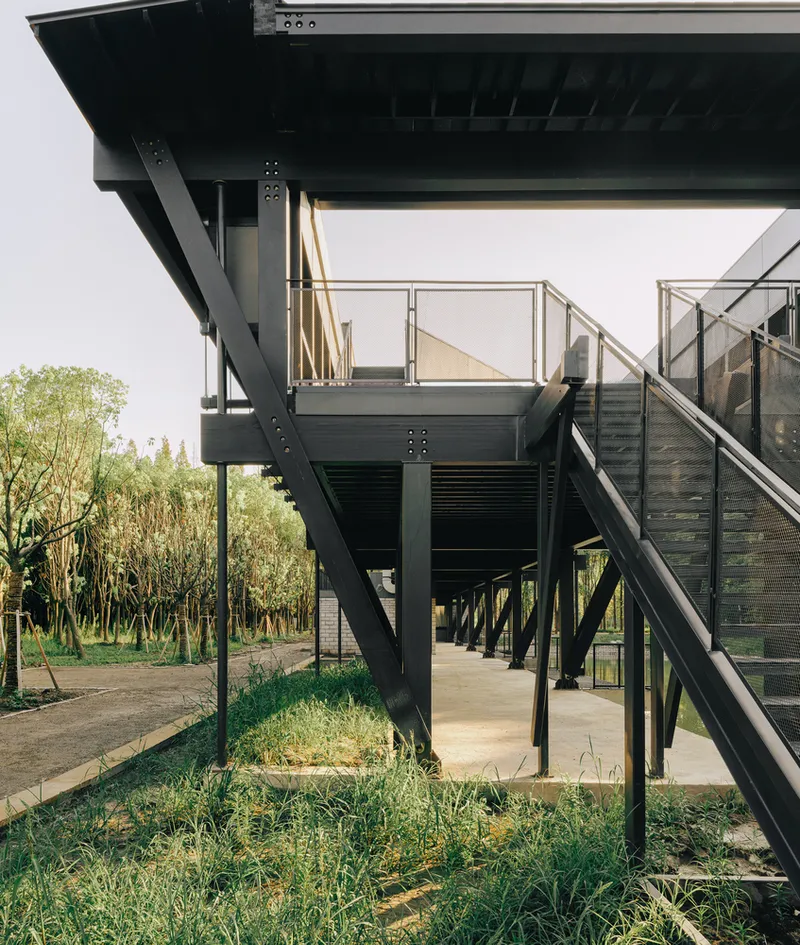
Through the integration of framed views and long axial movement, the architecture creates both intimacy and expanse. It functions like a large-scale periscope or lens, magnifying the landscape while maintaining a sense of reverence for its ecological significance.
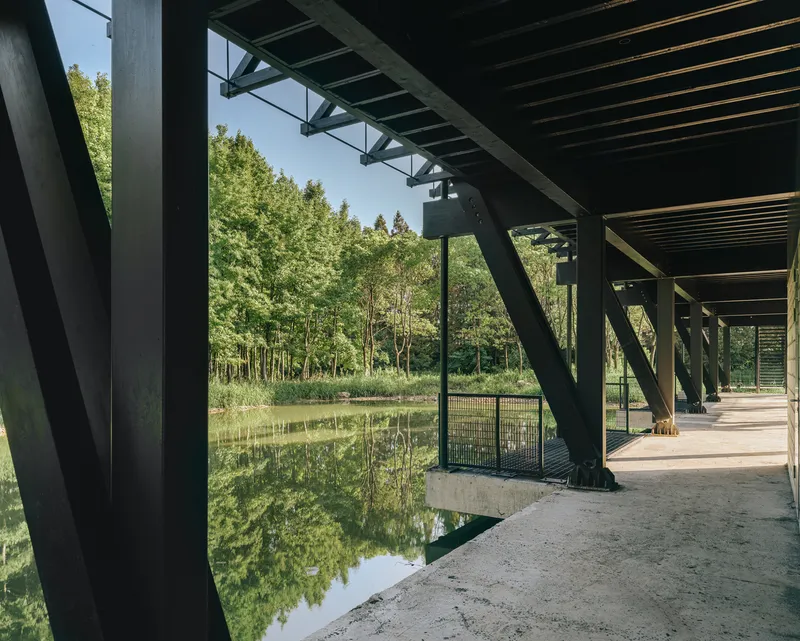

Lightweight Construction Meets Local Wisdom
One of the most notable aspects of Dongliang Xuan is its construction methodology. Composed primarily of prefabricated glulam elements, the project emphasizes lightweight construction—a strategy deeply attuned to both the physical and cultural landscape of Jiangnan. With most components produced locally and assembled using minimal machinery, the project exemplifies low-impact, high-precision timber architecture.


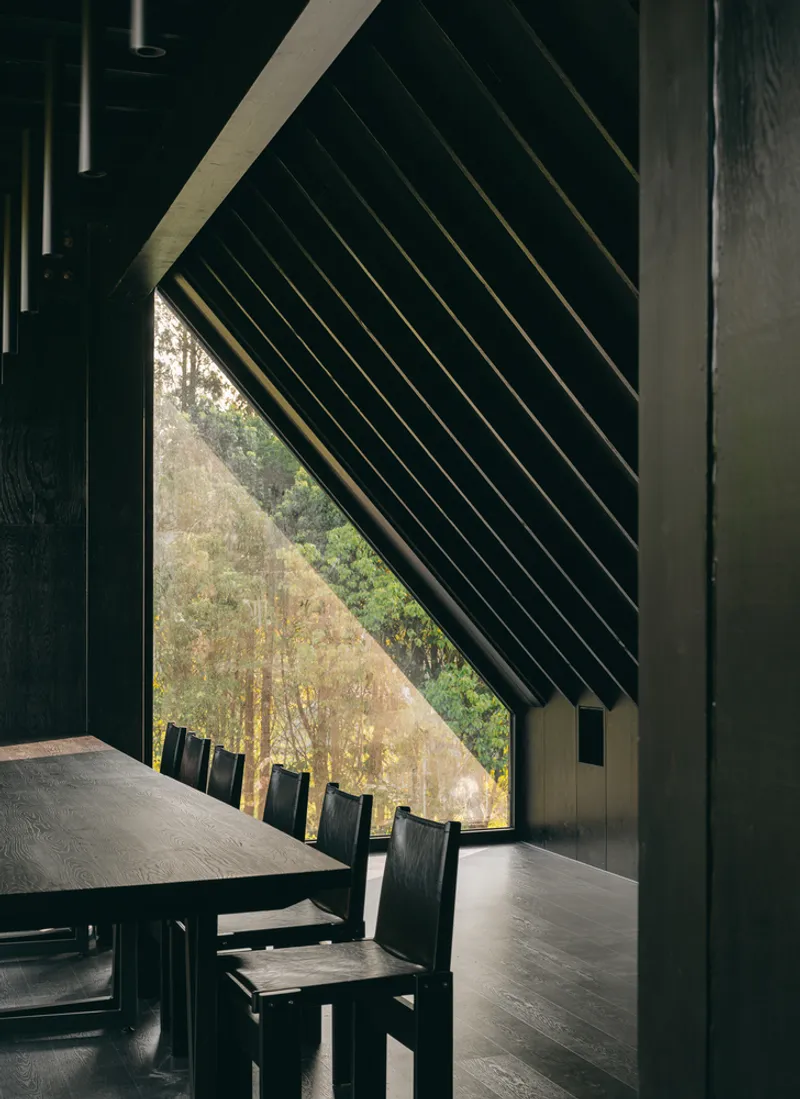
This technique not only reflects the environmental sensitivity of the site but also aligns with vernacular Jiangnan traditions—a region known for its timber craftsmanship, water-based cities, and layered architectural history. Dongliang Xuan reinterprets that legacy through the lens of sustainability and modular construction.

Toward a New Vision for Jiangnan
Dongliang Xuan signals more than a well-executed public building; it marks a cultural and material shift in the Jiangnan architectural narrative. As rural landscapes across China face the pressures of industrialization and urbanization, projects like this offer a quiet resistance—anchoring future growth in local wisdom, ecological awareness, and advanced timber technology.

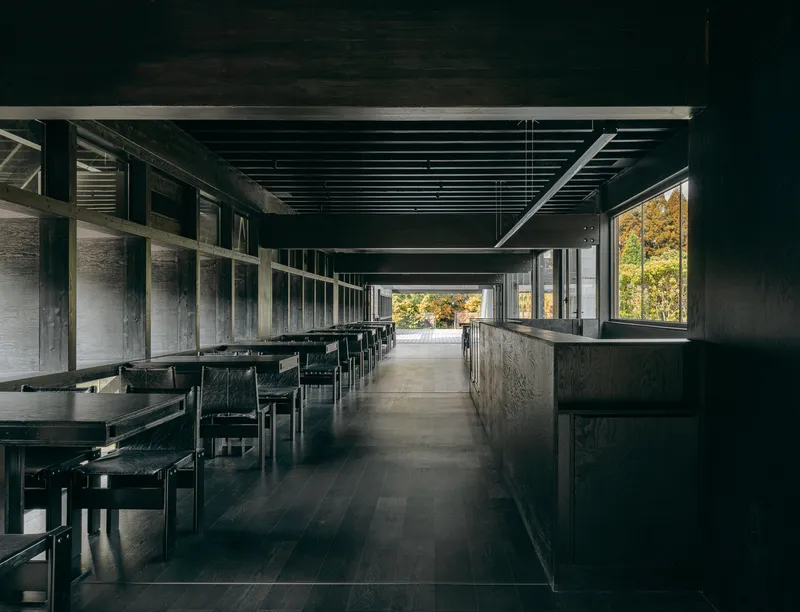
The project redefines what public architecture in sensitive ecological zones can look like. It doesn't dominate its environment but coexists with it—enhancing, interpreting, and gently inhabiting the land. As such, Dongliang Xuan is a compelling prototype for future timber architecture in Jiangnan, where form, function, and forest merge into one continuous experience.

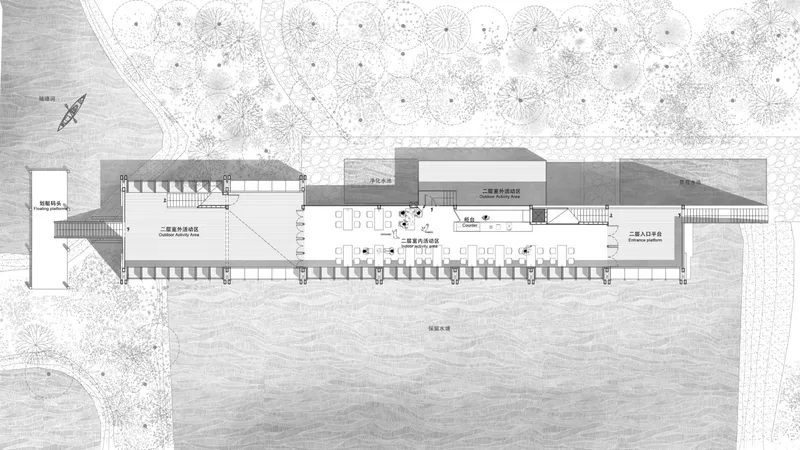

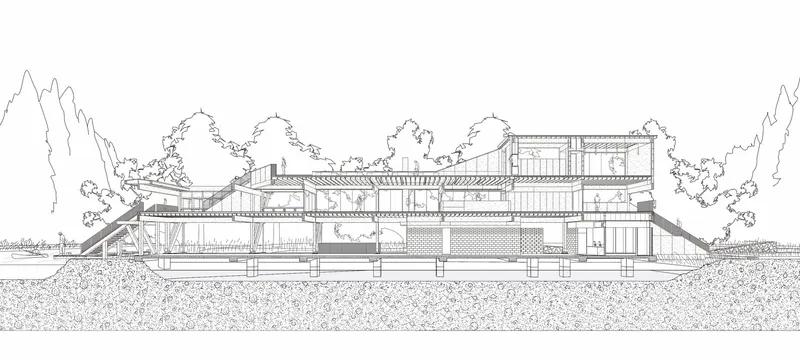

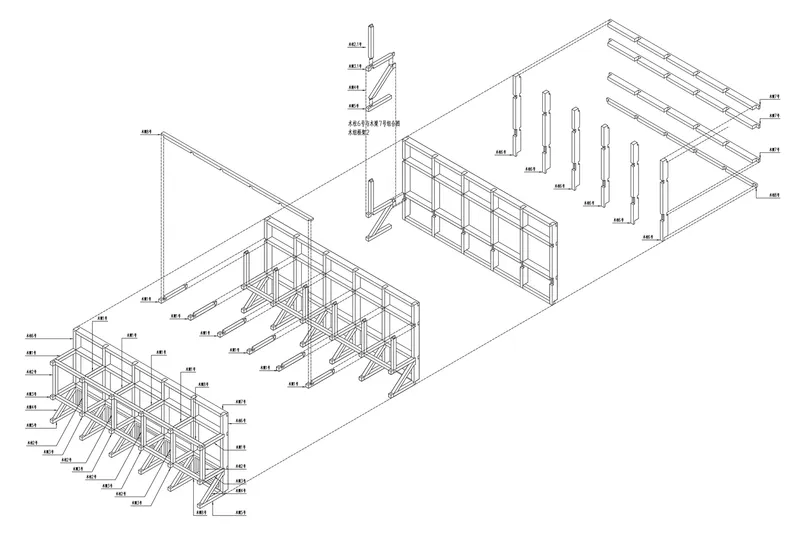
All Photographs are works of Yumeng Zhu



Popular Articles
Popular articles from the community


Co-life: Sustainable Architecture for Age-Friendly Community Living
Co-life reimagines sustainable architecture for seniors through courtyards, rammed earth, shared gardens, and spaces designed for belonging.

The Earth Pod: 3D Printed Homes for Resilient Refugee Communities
The Earth Pod reimagines refugee housing through 3D printed homes made from clay, combining resilience, self-sufficiency, and rapid shelter.
AL-JANNAH: Sustainable Architecture and Permaculture for Afghan Widows
AL-JANNAH uses sustainable architecture and permaculture to create resilient oasis of housing, learning, work and renewal for Afghan widows.

Riyadh For All: Intergenerational Urban Design for Active Aging in Rabat
Riyadh For All reimagines urban design in Rabat with intergenerational co-living, adaptive courtyards, and Moroccan cultural exchange today.


Similar Reads
You might also enjoy these articles

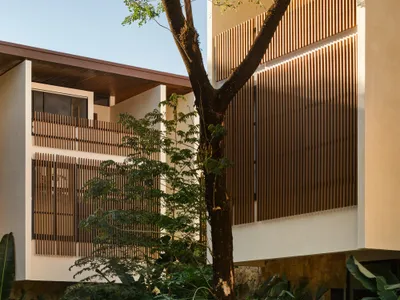
FAMM Arquitectura Organizes Ten Villas Around Courtyards and Jungle in Nosara, Costa Rica
El Molino pairs two elongated volumes with deep overhangs and timber louvers to build a compact coastal community five minutes from the beach.
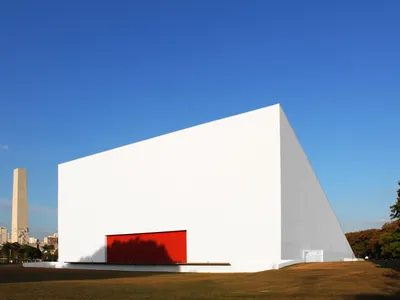
Oscar Niemeyer's Ibirapuera Park Pavilions Define São Paulo's Cultural Identity in Concrete and Curve
A constellation of modernist volumes set within São Paulo's most important urban park, conceived for the city's 400th anniversary in 1954.
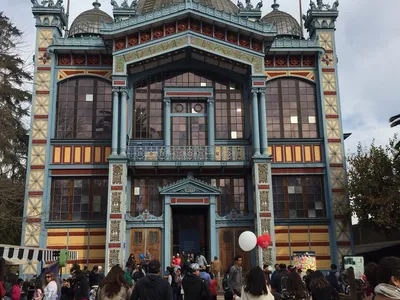
How Henri Picq's 1889 Paris Pavilion Traveled 11,000 Kilometers to Become Santiago's Artequín Museum
A prefabricated iron and glass pavilion built for the Paris Universal Exposition found a second life as a children's art museum in Chile.
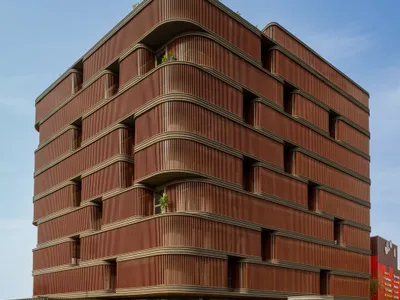
Sanjay Puri Architects Wraps a Jaipur Office Tower in Capsule-Shaped Green Buffers
A nine-level climate-responsive workplace near Jaipur Airport uses stacked planter terraces and aluminium screens to fight 40°C heat.
Explore Architecture Competitions
Discover active competitions in this discipline



Challenge to reimagine the Iron Throne


Photograph architecture without architects


Illustrate the lost glory of Angkor Wat - Render Challenge


Design challenge to reuse E-waste
Comments (0)
Please login or sign up to add comments
No comments yet. Be the first to comment!