

Dopendar House by Sinze Studio: Redefining Tradition and Modernity in Yazd Residential Architecture
Dopendar House by Sinze Studio blends traditional Yazd courtyards with modern design, featuring dual courtyards, wicker screens, and spatial flexibility.


Completed in 2023, Dopendar House by Sinze Studio is a 320 m² contemporary residence in Yazd, Iran that masterfully bridges the gap between traditional Iranian architecture and modern living. The project, photographed by Khatereh Eshqi, responds to the unique cultural and social context of Yazd while addressing the distinct preferences of its clients, Hamed and Motahareh.
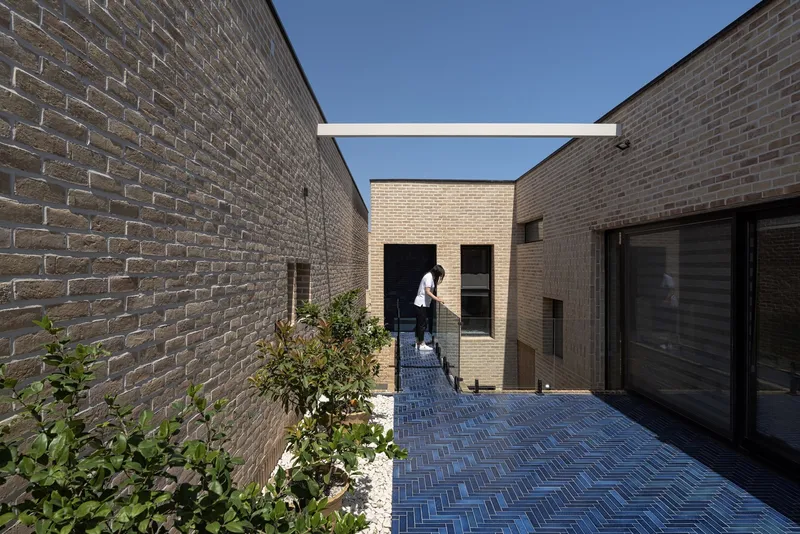
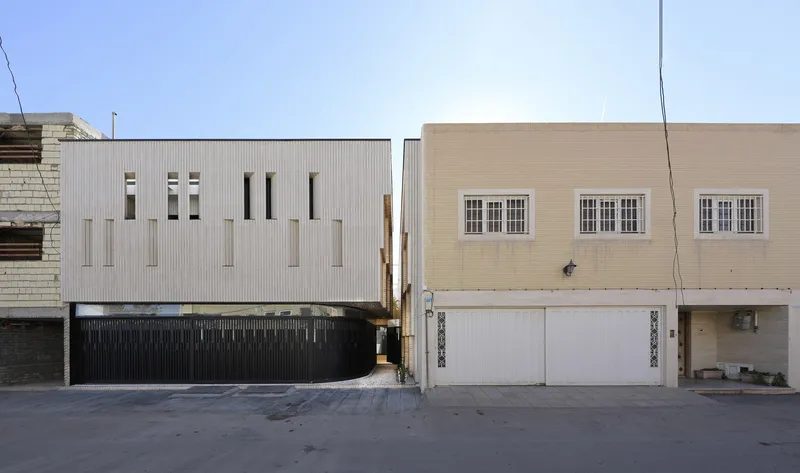
The design process confronted two primary challenges: interpreting the rich architectural heritage of Yazd in a modern framework and harmonizing the differing visions of the clients. One perspective favored a modernist house with expansive openings, green roof spaces, and openness to the exterior. In contrast, the other leaned towards the introverted characteristics of traditional Yazd homes, featuring enclosed windows and limited outward views. Sinze Studio navigated these opposing desires by adopting a dual-concept strategy, creating a home that reconciles tradition with modern spatial aspirations.
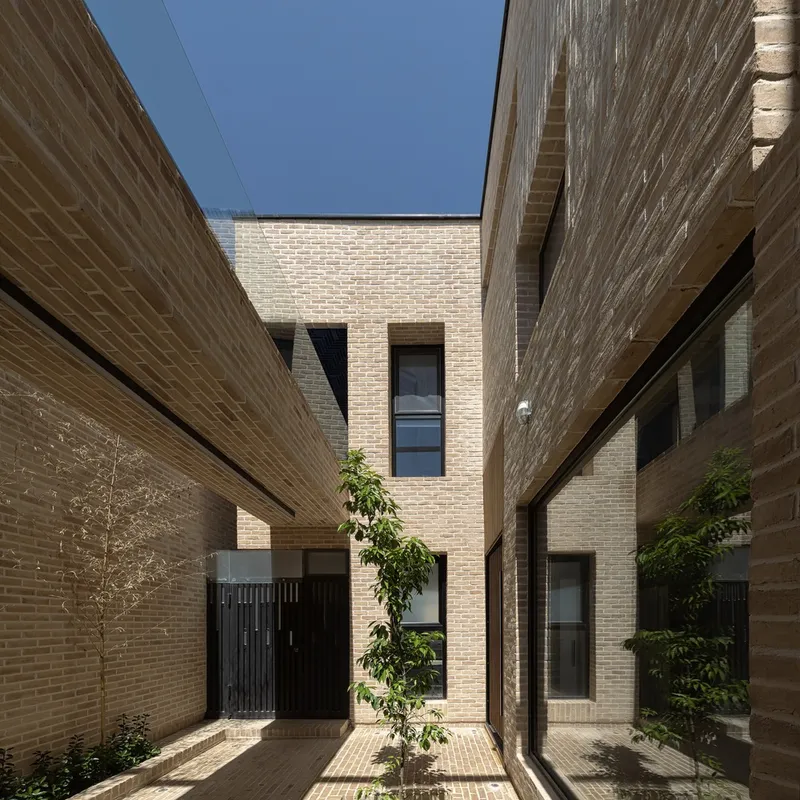
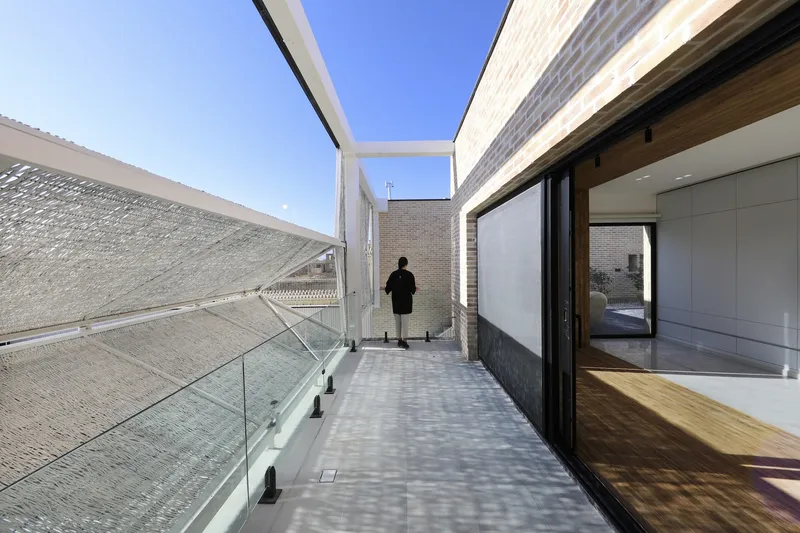
The house is structured as a duplex along the boundary of two contrasting diagrams—introverted and Dom-Ino layouts. The northern façade incorporates a corbel-like entrance, reimagining the traditional Yazd corridor and doorway, while the southern façade features a versatile wicker envelope. This envelope functions as a privacy screen and sunshade, creating flexible indoor-outdoor connections. When open, it offers shade and integration with the ground floor courtyard; when closed, it provides seclusion for the first-floor private areas.
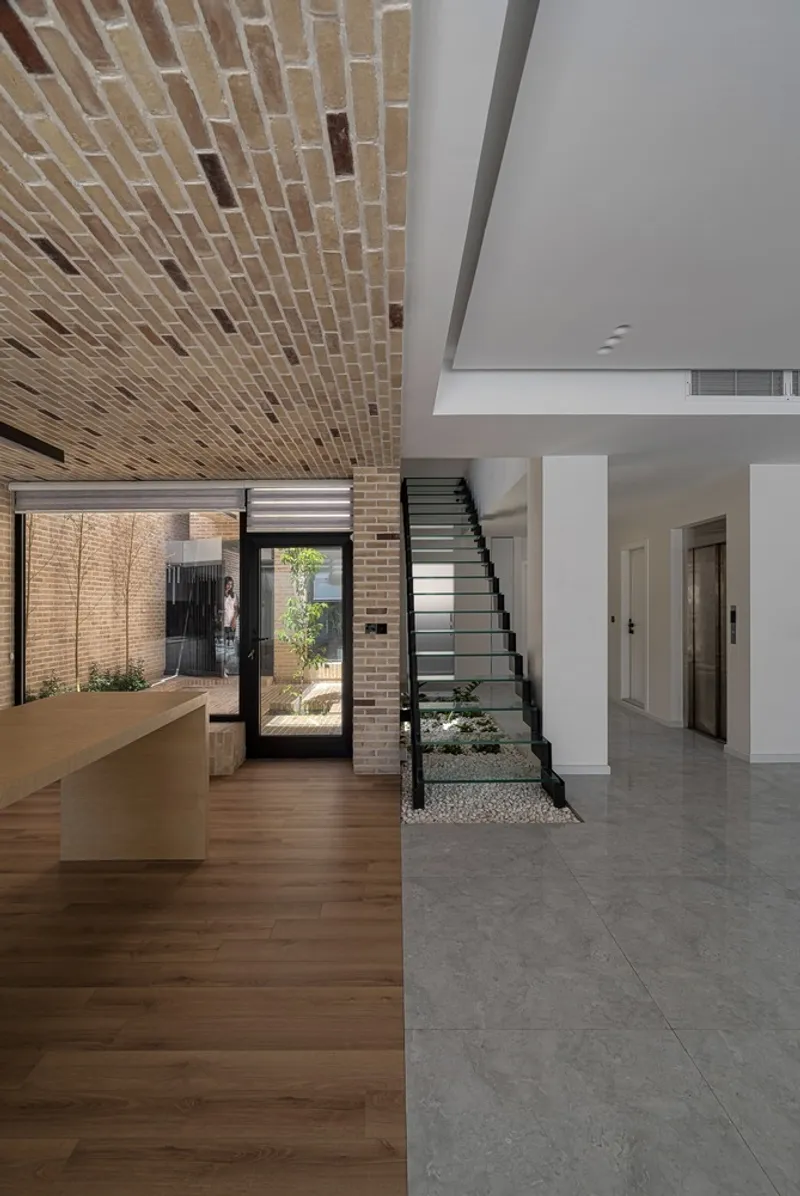
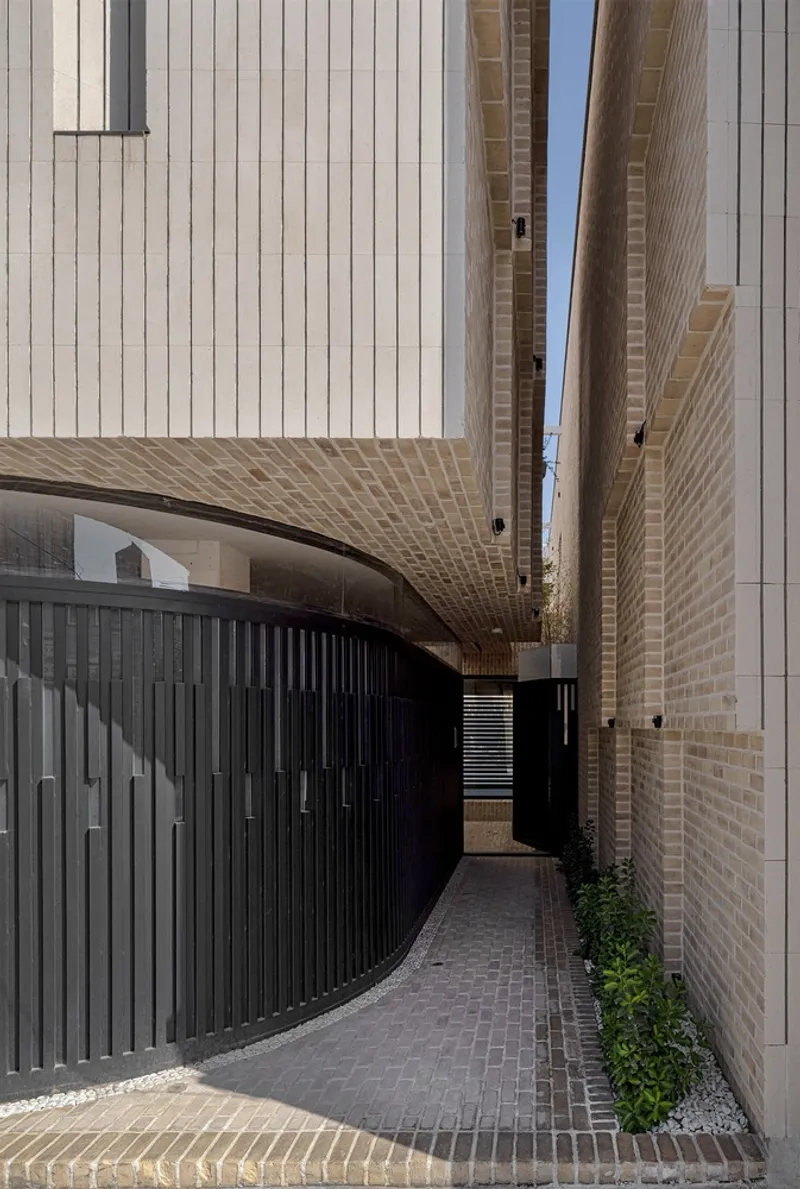
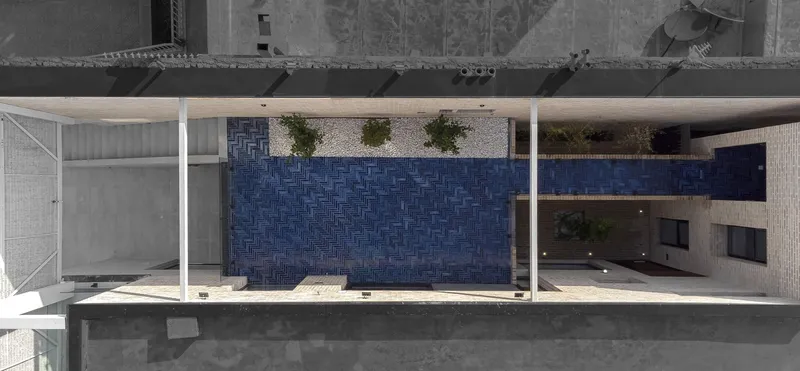
Central to the design are two courtyards that mediate between public and private life. The ground floor “orange courtyard” acts as a semi-public reception area, reflecting the outer courtyards of traditional Yazd houses. The first-floor “blue courtyard” functions as a private space for the family, elevated to create vertical openness while maintaining a visual connection to the lower courtyard through a suspended passageway. This layered courtyard strategy allows the home to transition fluidly between openness and privacy, creating a dynamic interplay of spaces and experiences.
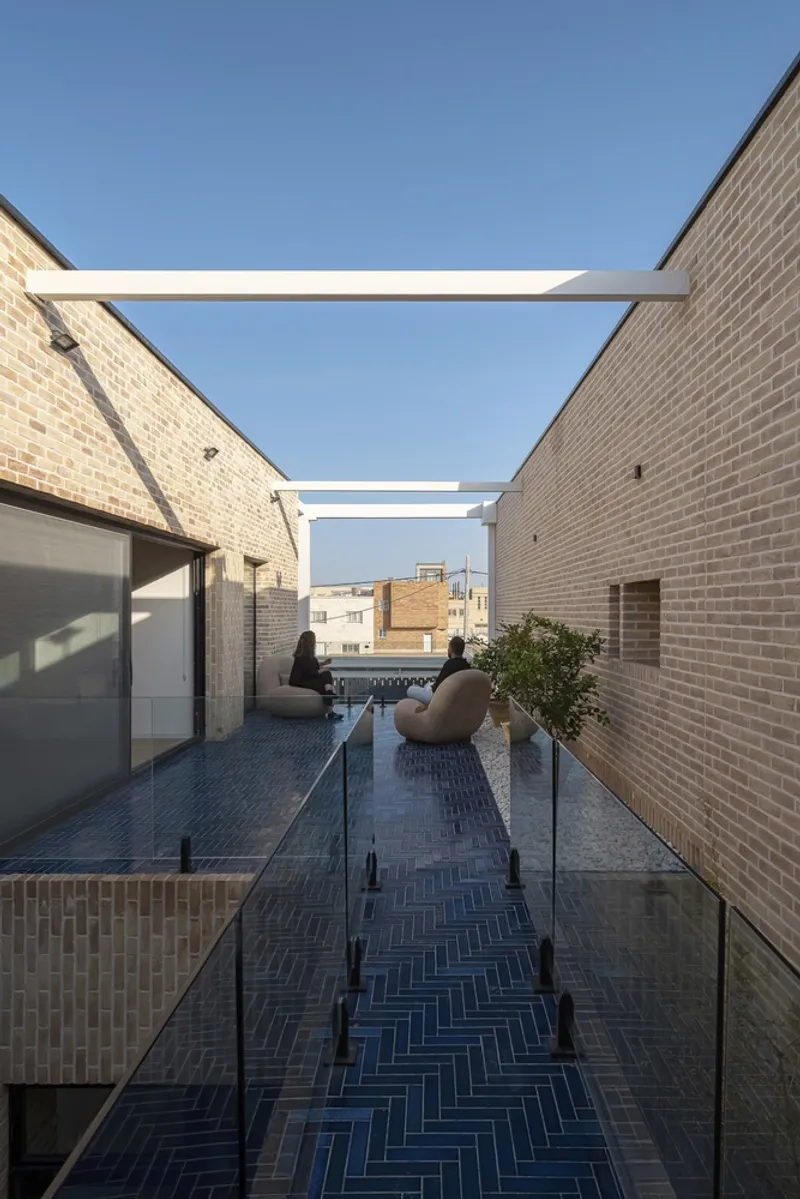
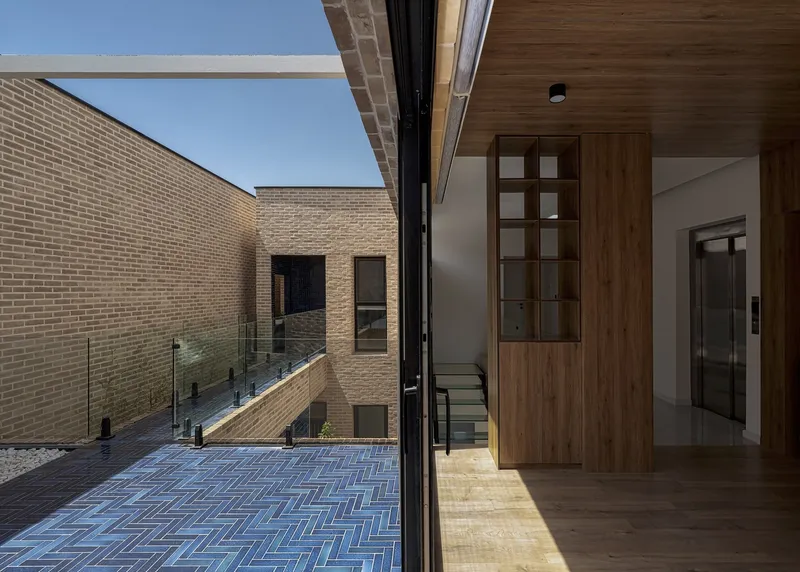
By reinterpreting the two-courtyard typology of Yazd with a contemporary lens, Dopendar House achieves a dialogue between historical architectural patterns and modern lifestyle needs. The house demonstrates how Iranian residential design can embrace cultural identity while incorporating innovative spatial solutions, offering a nuanced response to both the physical context and the social aspirations of its inhabitants.
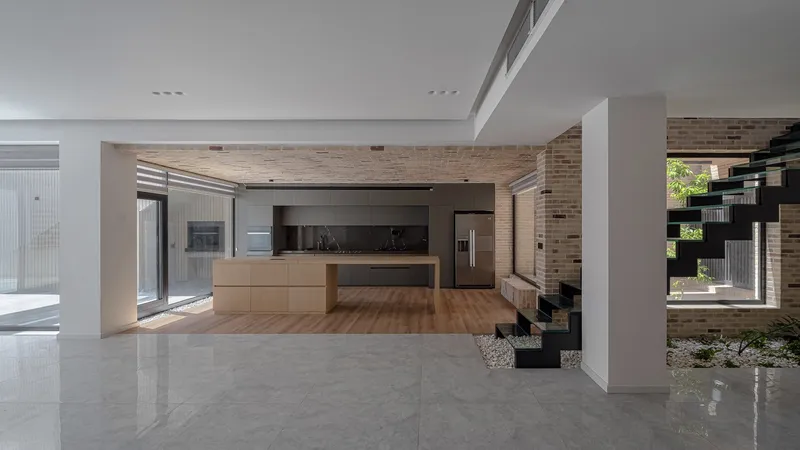
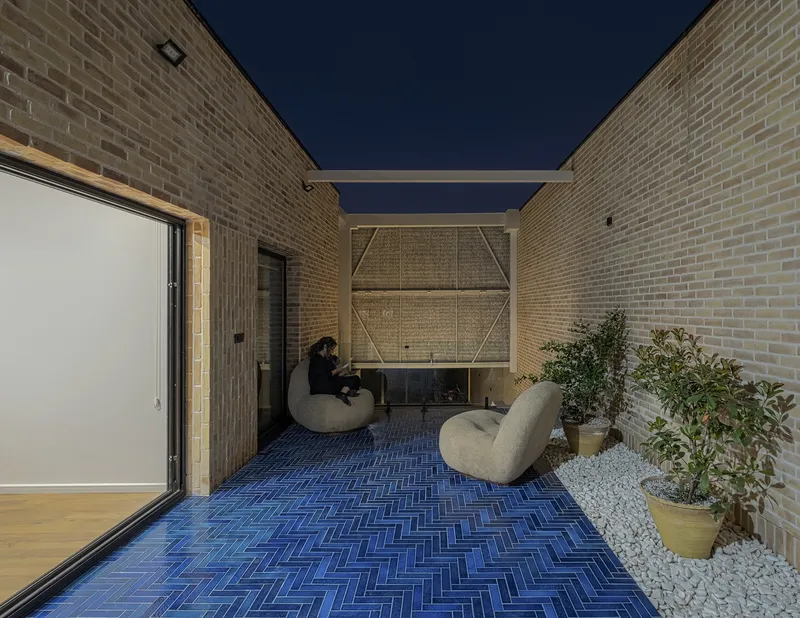
All photographs are works of Khatereh Eshqi


Popular Articles
Popular articles from the community


Singing Woman: An Opera House That Performs Before the Curtain Rises
Ovidiu Cristian Pavel's conceptual opera house translates Estonia's choral identity into a sculpted waterfront landmark facing the Baltic Sea.
Faces of the Soviet Avant-Garde: Turning Moscow's Street Names into an Open-Air Museum
A network of sculptural installations across a Moscow residential district transforms forgotten architect names into spatial encounters with cultural memor

Cloaked Colonization: A Mobile Underwater Habitat That Moves Like a Fish
Micah Abaya's shortlisted EHC Pacific entry reimagines ocean settlement as a dispersed network of self-sustaining architectural organisms.
Temporary Home for Dogs: A Reversed Zoo Rethinks Animal Shelter Architecture
In Bucharest, a sinuous corridor and freed landscape flip the logic of containment, designing a shelter that works to make itself unnecessary.

Similar Reads
You might also enjoy these articles


Hodi-Mandai Geram
Project Function: Preservation and revitalization of the Intangible heritage and socio-spatial identity of the Hodi by Housing, Cultural Memory Center, Sacred Grove, landscape, local tourism economy


Olio Towers: A Mid-Rise for Performers That Fuses Housing, Rehearsal, and Stage
Located blocks from Houston's Theater District, this modular tower stacks living units around a central performance atrium.

Oasis: Modular Green Housing Carved into Dhaka's Urban Fabric
A shortlisted Plugin Housing entry reclaims unauthorized settlements in Dhaka with stepped concrete volumes, green roofs, and ventilation-driven design.

Black Hole: A Floating Megastructure for the Post-Physical Era
Emiliano Mazzarotto envisions a spherical, self-scaling arena where e-sports, digital hotels, and holographic stadiums replace traditional public space.

Explore Persian Architecture Competitions
Discover active competitions in this discipline

Challenge to reimagine the Iron Throne

Photograph architecture without architects

Illustrate the lost glory of Angkor Wat - Render Challenge

Design challenge to reuse E-waste
Comments (0)
Please login or sign up to add comments
No comments yet. Be the first to comment!