
DUTS Design Rewrites a 60-Year-Old Nanjing University Campus as a Science Park Without Erasing Its Memory
At the foot of Zijin Mountain, a micro-renewal strategy transforms 110,000 square meters of institutional heritage into a new knowledge quarter.


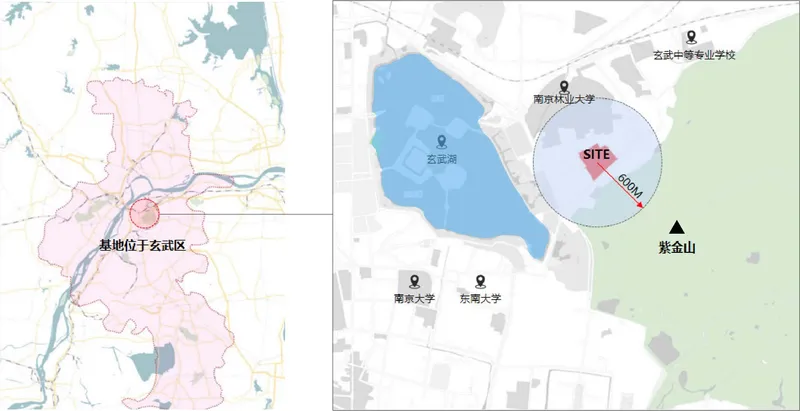
No. 78 Bancang Street is one of those addresses that carries more weight than its postal code suggests. For over six decades, it marked the Zijin Campus of Nanjing Normal University, a compound nestled between the slopes of Zijin Mountain and the shores of Xuanwu Lake. When the university vacated the campus in July 2019, the question was not whether the site would be redeveloped but how. Demolition would have been the easy answer. DUTS design, led by architect Ling Zhong, chose the harder one: an organic renewal of the entire 110,000-square-meter campus that reshapes without replacing.
What makes the Xuanwu Science Park genuinely interesting is its refusal to treat renovation as a single gesture. Instead, DUTS design developed a campus-wide methodology: facade reorganization, traffic restructuring, and interior spatial reshaping applied building by building, each intervention calibrated to the age and condition of the existing structure. The oldest teaching building on campus, Building No. 1, got its dilapidated wooden roof replaced for structural safety but kept its steeple silhouette and formal outline. Newer blocks received wrapping treatments in steel, glass, and terracotta. The result is a campus that reads as one coherent place across multiple architectural generations.
A Campus Between Mountain and Lake
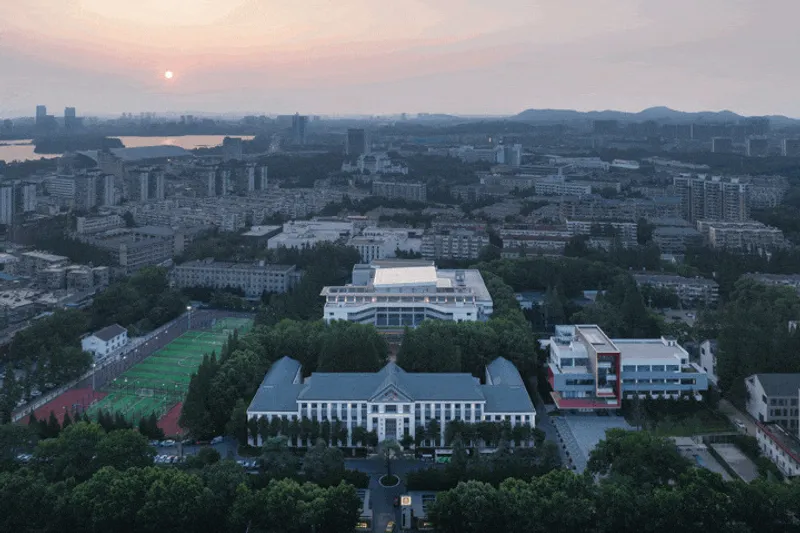
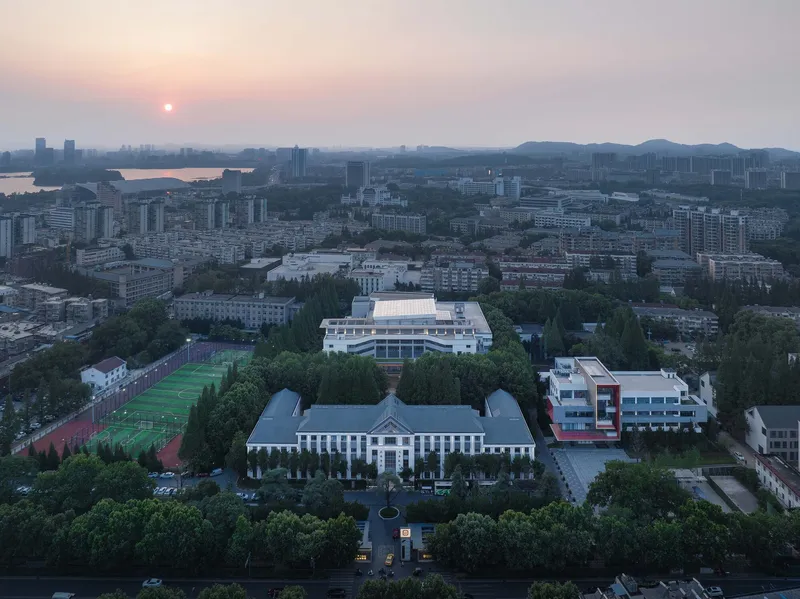
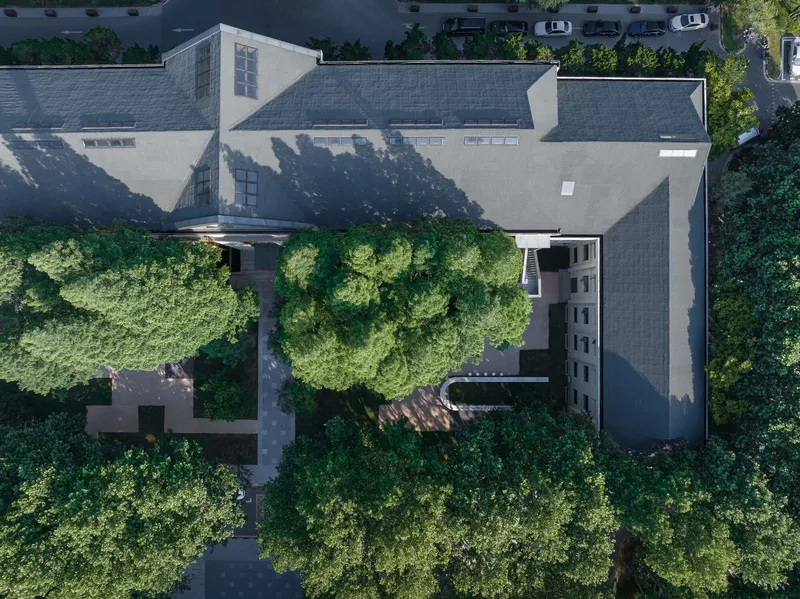
The site's geography does half the work. From the air, the campus sits inside a band of dense tree cover that slopes gently down from Zijin Mountain toward Xuanwu Lake, a setting most new science parks would envy and never achieve. DUTS design leaned into this advantage, retaining the existing landscape and ecological environment as a structural asset rather than ornament. Mature tree rows define pedestrian axes; green canopies frame every major facade.
At sunset, the tiered library volume and the original symmetrical teaching building read as two chapters of the same story, the older form rooted and axial, the newer one stepping outward to claim its own silhouette against the hills. The decision to work within the existing planning logic of the former campus, rather than impose a fresh masterplan, preserves these long-cultivated landscape relationships.
The Old Guard: Building No. 1 and Its Second Life
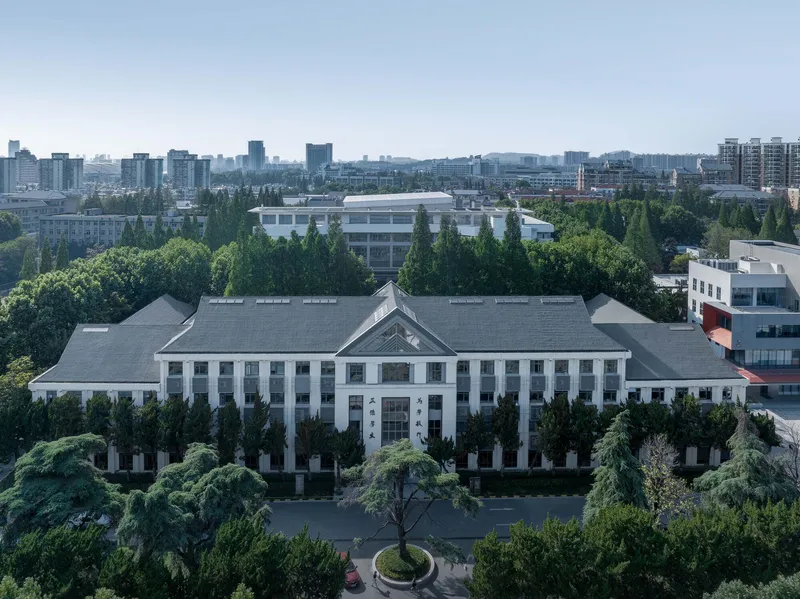
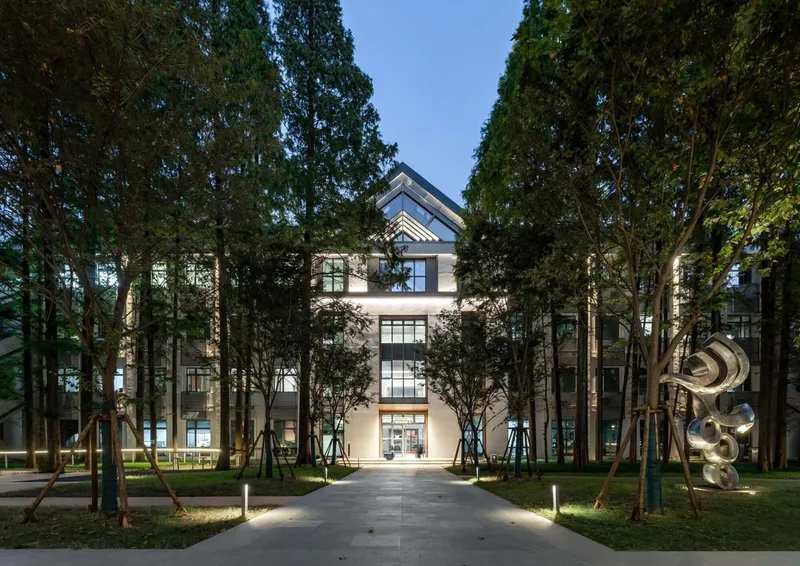
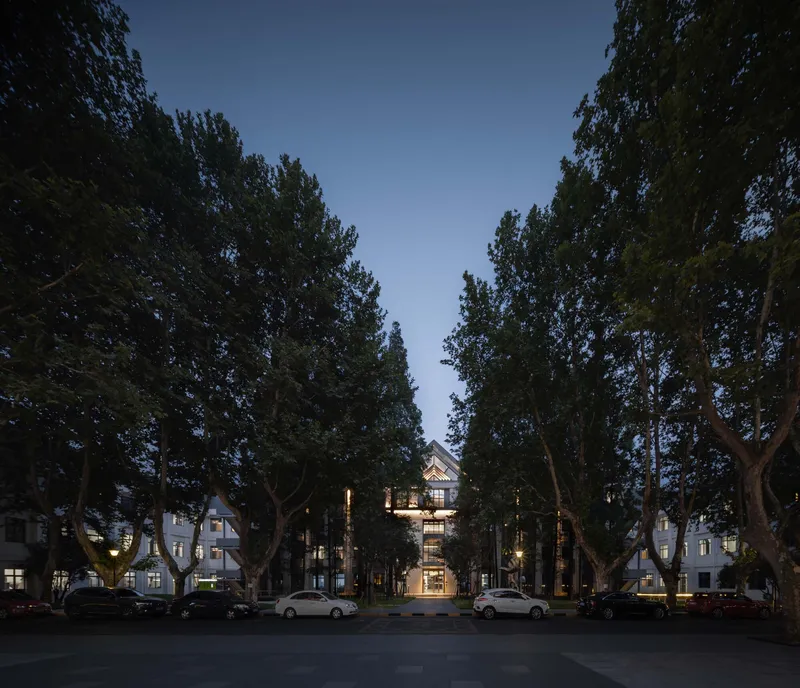
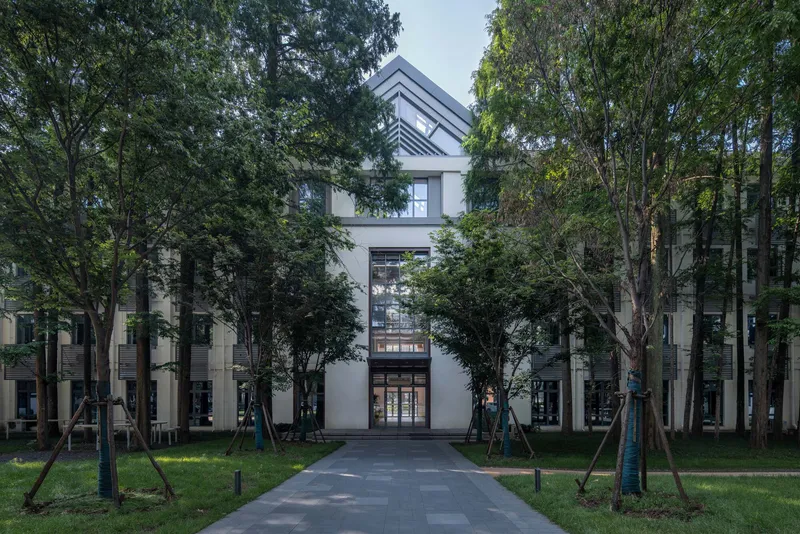
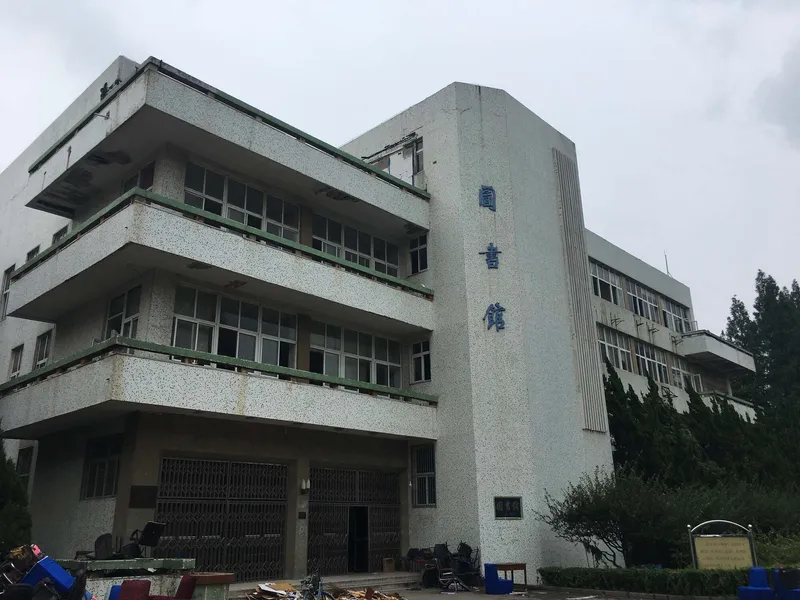
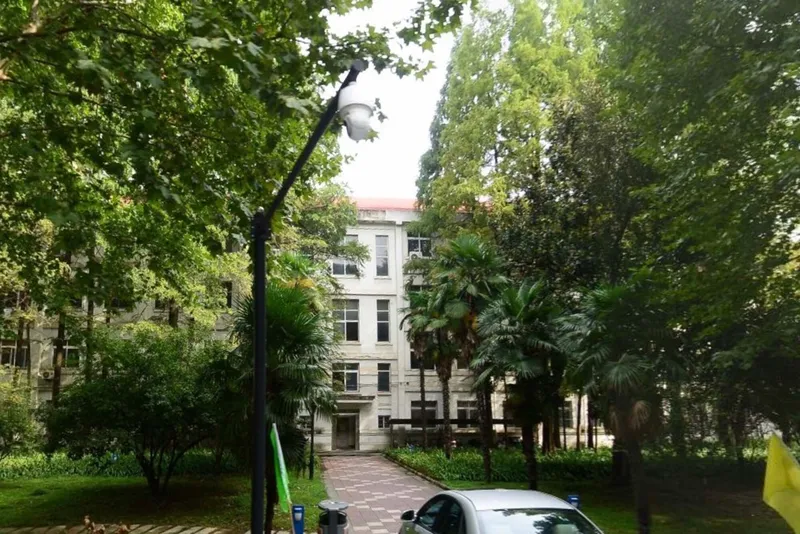
Building No. 1 is the emotional center of the project. As the oldest teaching building on the university campus, its symmetrical white facade and central pediment are embedded in institutional memory. The design team retained the steeple shape and building outline, but the original wooden roof structure, badly deteriorated, had to go. New materials now wrap and strengthen the entire building, a structural intervention masked behind formal continuity. At dusk, illuminated through the rows of tall trees, the building looks almost unchanged from its mid-century incarnation. Almost.
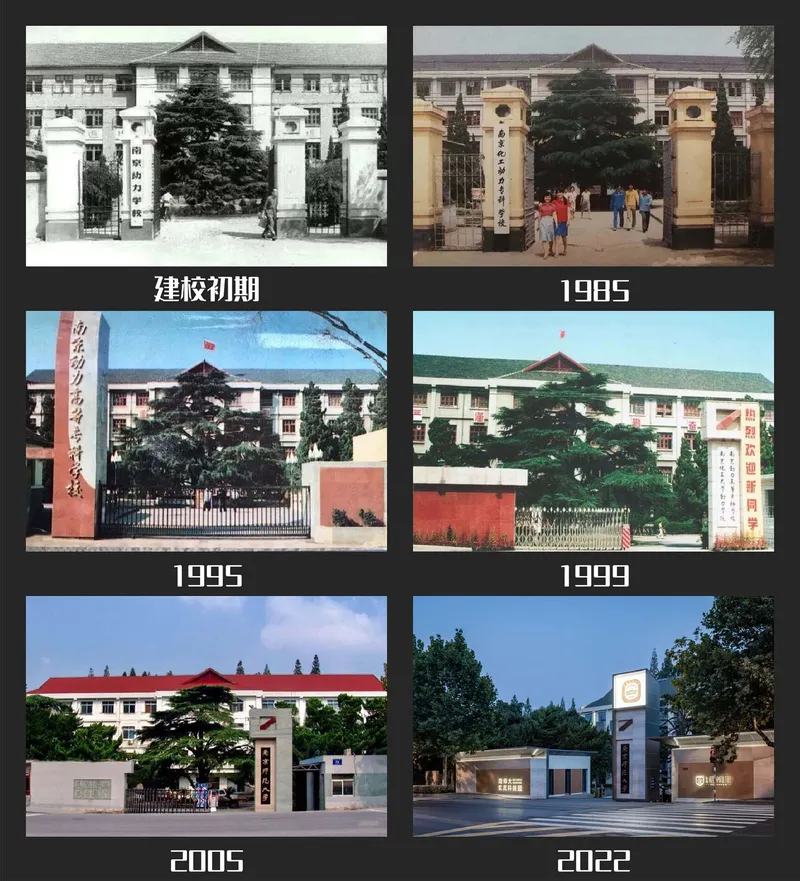
The archival photographs included in DUTS design's documentation trace the entrance gates and facade across decades. Placing those images alongside the finished renovation makes the strategy legible: the architects are not preserving a museum piece. They are keeping a recognizable silhouette while upgrading everything behind and beneath it for contemporary use.
Wrapping the Ordinary: Facade Strategies for Secondary Buildings
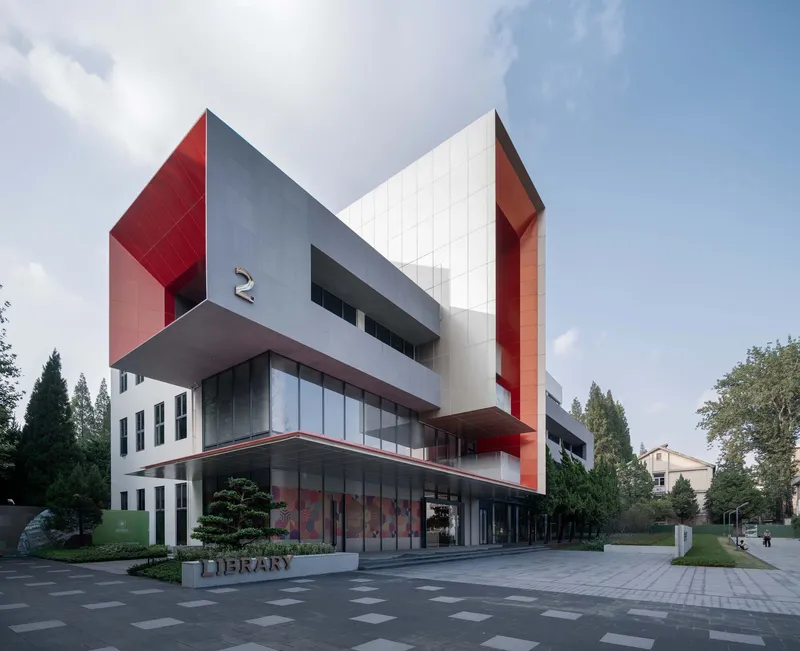
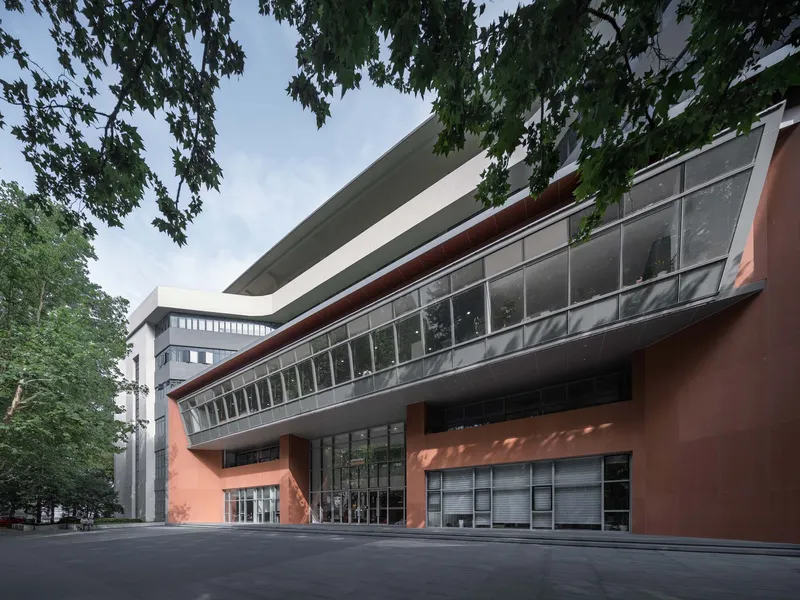
Not every building on a 60-year-old campus deserves a conservation approach. Some of the secondary structures were simply dull: concrete blocks with air-conditioning units and ribbon windows, the kind of utilitarian fabric that every Chinese university accumulated across decades of expansion. Here, DUTS design applied a more assertive hand. Steel plates, terracotta panels, and horizontal glazing bands wrap existing facades, giving these buildings a coherent identity they never had.
The cantilevered volume clad in red and grey panels above a glazed ground floor is the sharpest example. It reads as a new building, yet beneath the cladding the original structural frame remains. This is micro-renewal at its most pragmatic: spend the budget on the public face, stabilize the bones, and let the interior do the rest.
Light Courts and Skylit Atriums
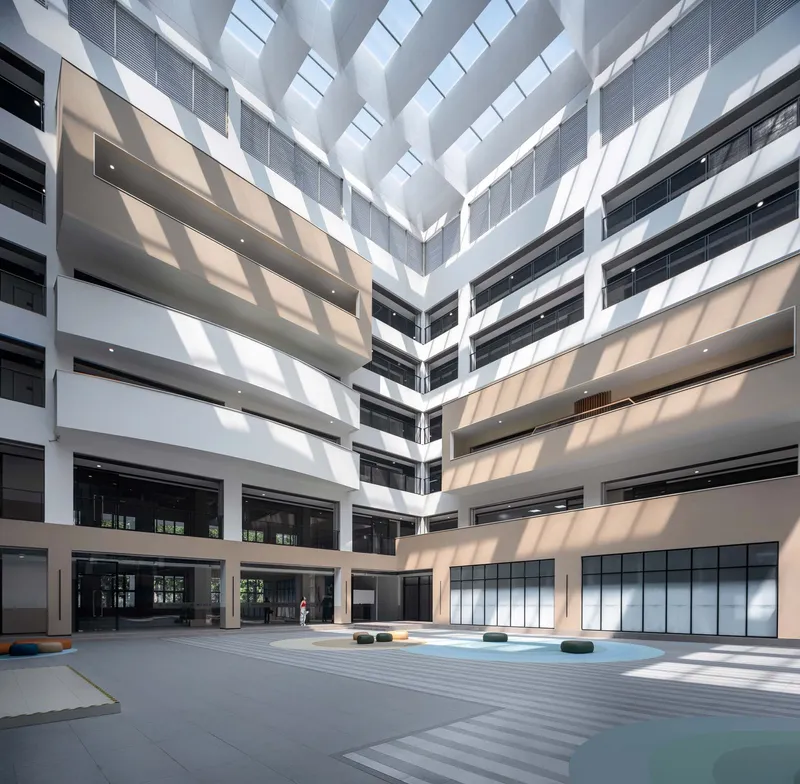
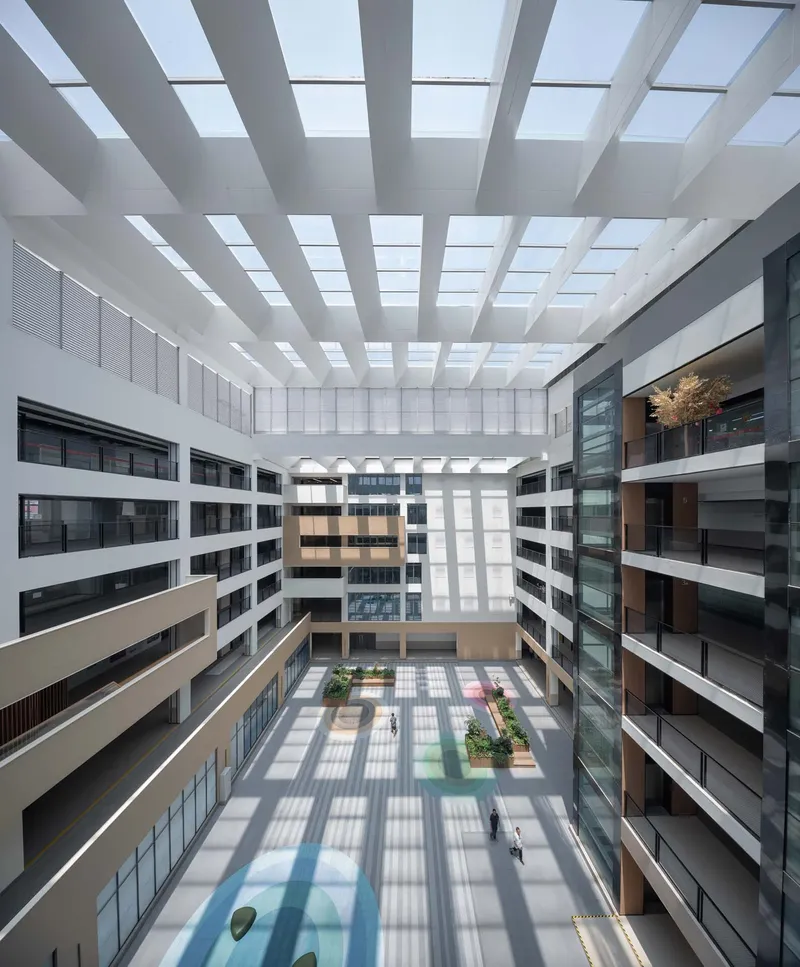
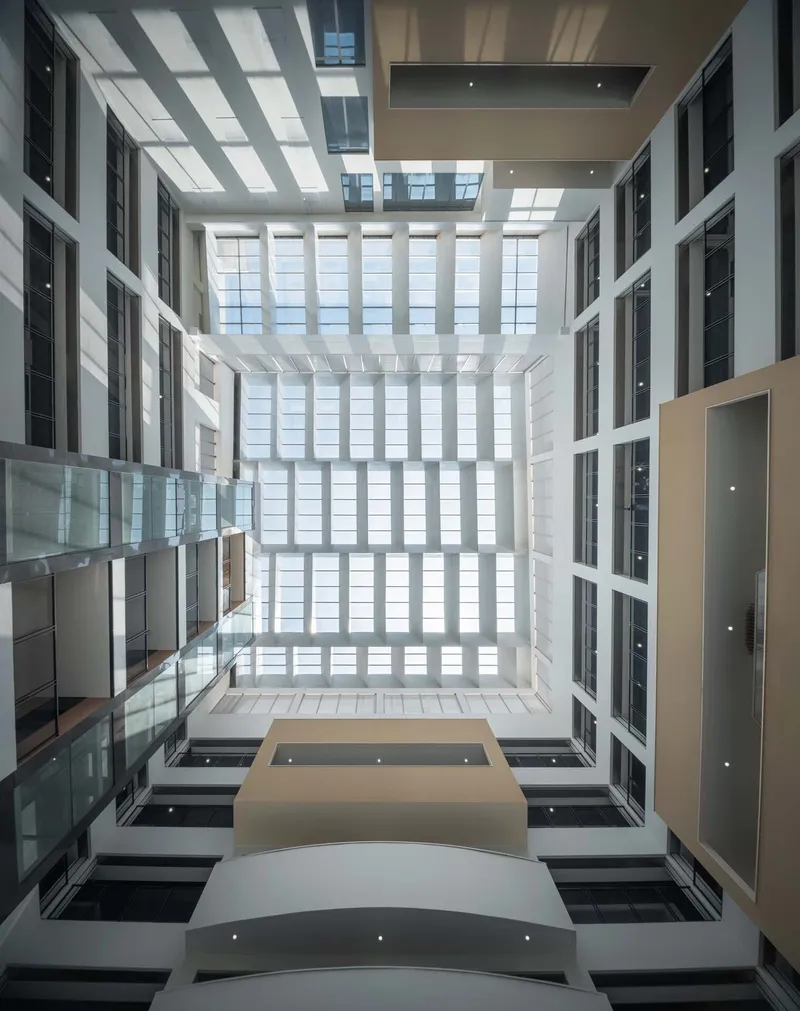
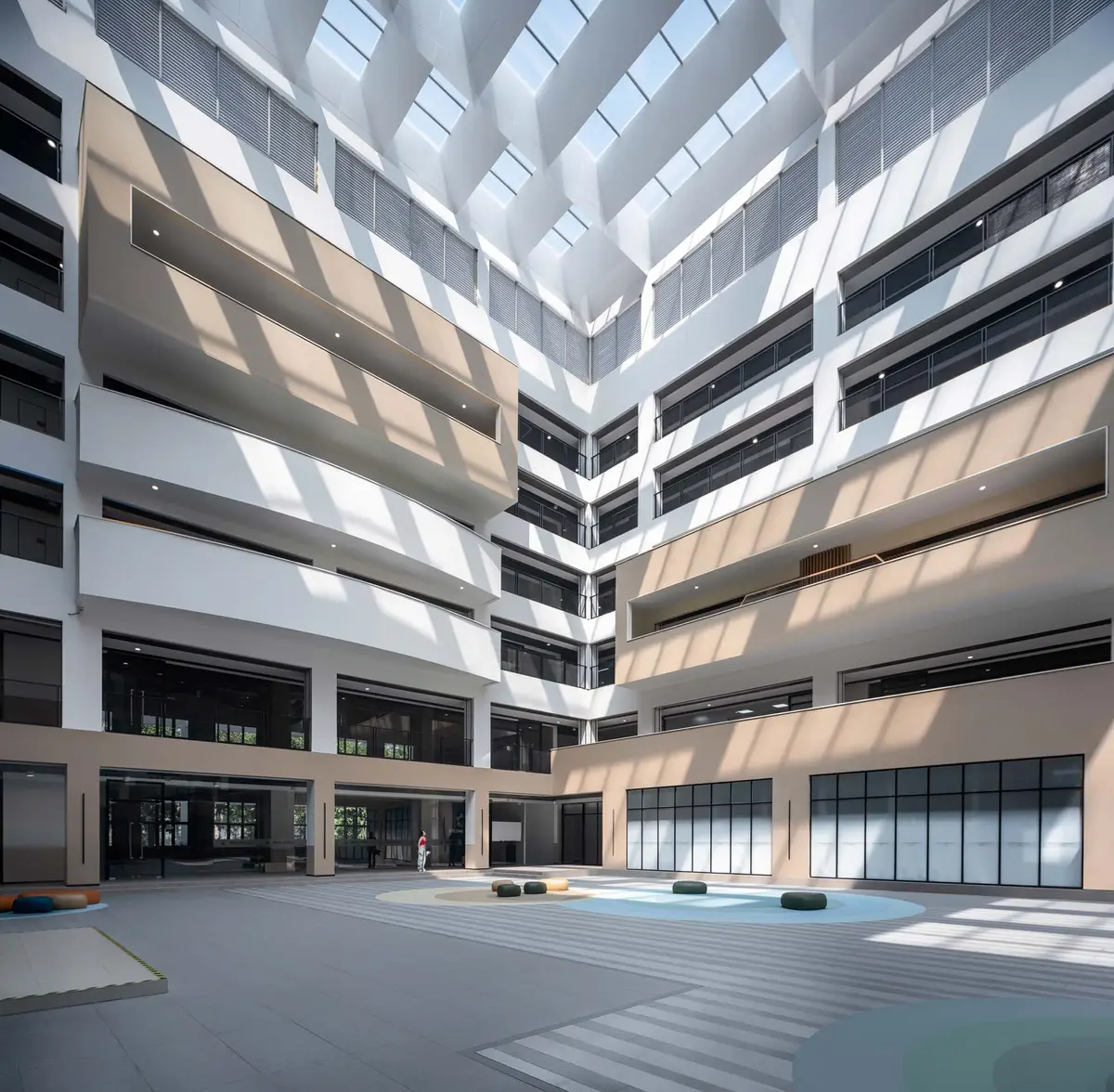
The most dramatic spatial moves happen where DUTS design carved atriums into the existing building mass. Interior courtyards now rise through multiple levels, roofed with slatted skylights that cast gridded shadows across white walls and floor plates. These are not token light wells; they fundamentally restructure how the buildings breathe, circulate, and orient their occupants.
The diagonal skylight patterns shift through the day, animating surfaces that would otherwise be institutional corridors. Looking upward through the atrium layers, you can read the horizontal louvers and floor edges stacked above like geological strata. It is a convincing argument for why renovation, when done with this level of spatial ambition, can produce interiors that new construction rarely bothers to attempt.
Vaulted Ceilings and the Library Interior
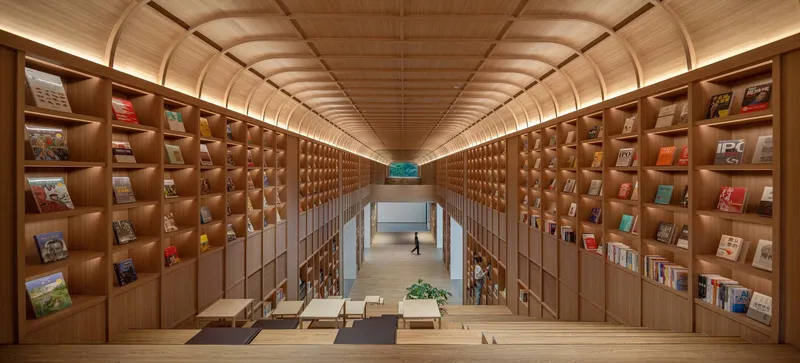
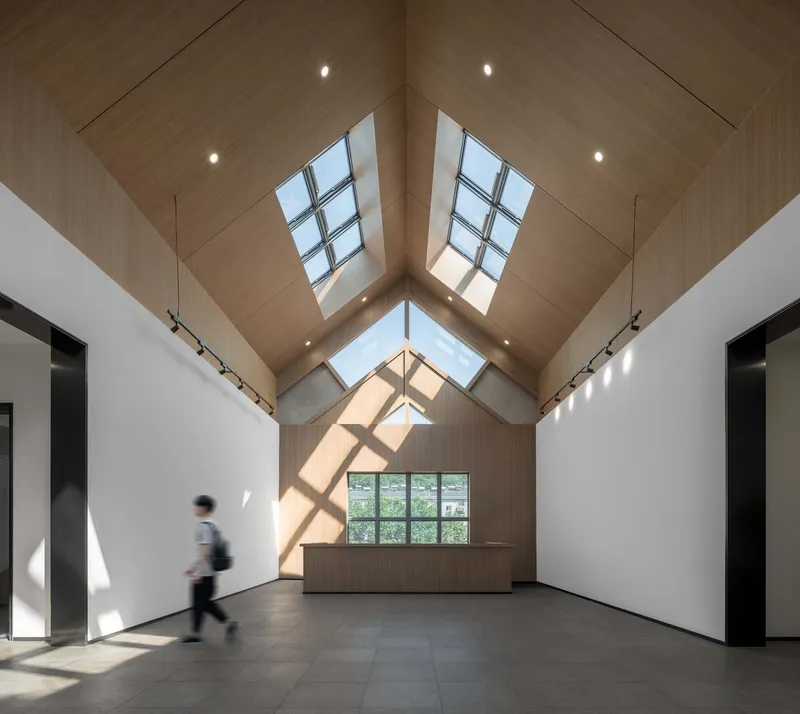
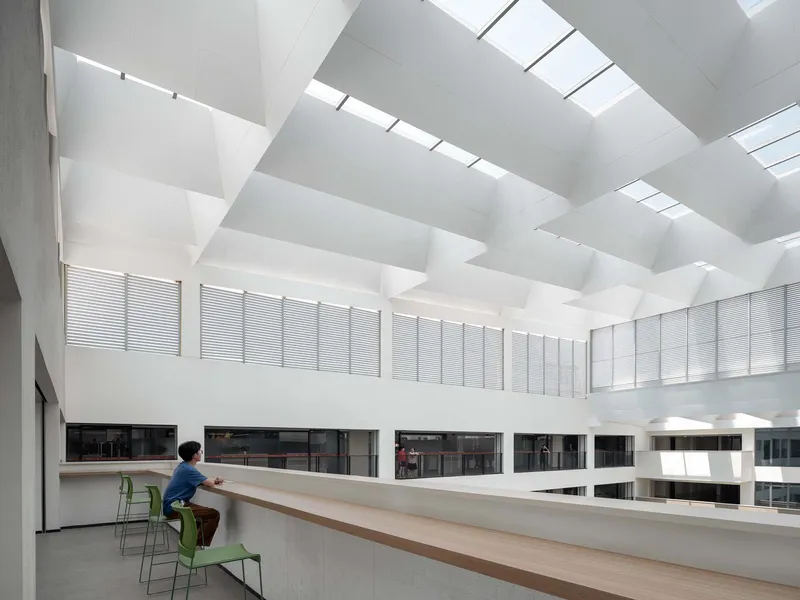
The library interior is the project's signature room. A two-story volume with a vaulted timber ceiling rises above illuminated bookshelves lining the walls, creating a warm enclosure that feels closer to a civic reading room than a university stack. The coffered ceiling skylights in the adjacent atrium space bring diffused light down to timber counter ledges where individuals can work alone or simply sit. The materiality here, predominantly wood and warm-toned finishes, deliberately contrasts with the white plaster and steel of the building exteriors.
The vaulted gallery space, with its skylight ridge drawing a line of direct sunlight along the floor, functions as both passage and pause. People walk through it; they also stop in it. That dual reading, corridor and room simultaneously, is one of the more nuanced spatial ideas in the renovation.
Thresholds and Public Edges
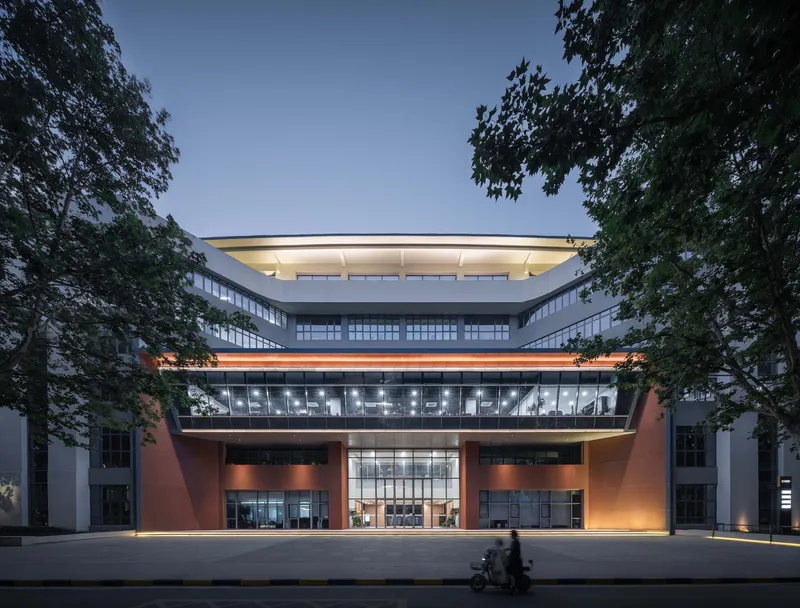
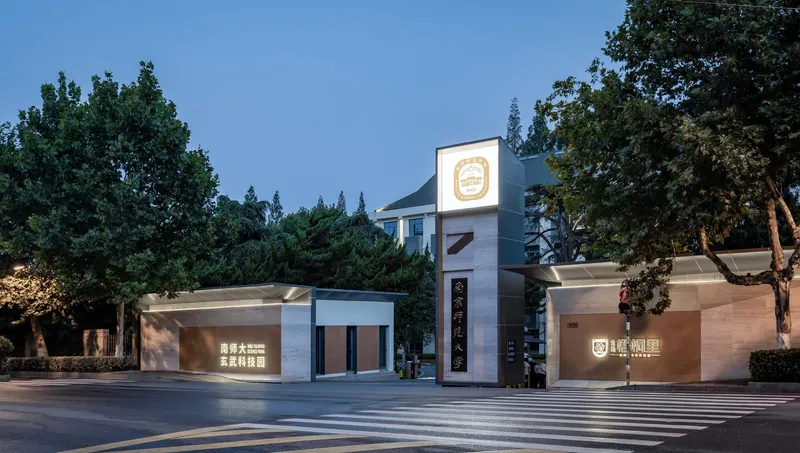
A science park needs a different relationship with the street than a university campus. Where the old campus turned inward behind gates and pylons, DUTS design opened several edges with glazed entrance volumes and canopy structures that signal public accessibility. The entrance pavilion with its vertical signage tower announces the new identity at twilight, while the red angled columns flanking the glazed lobby give the primary threshold a civic scale.
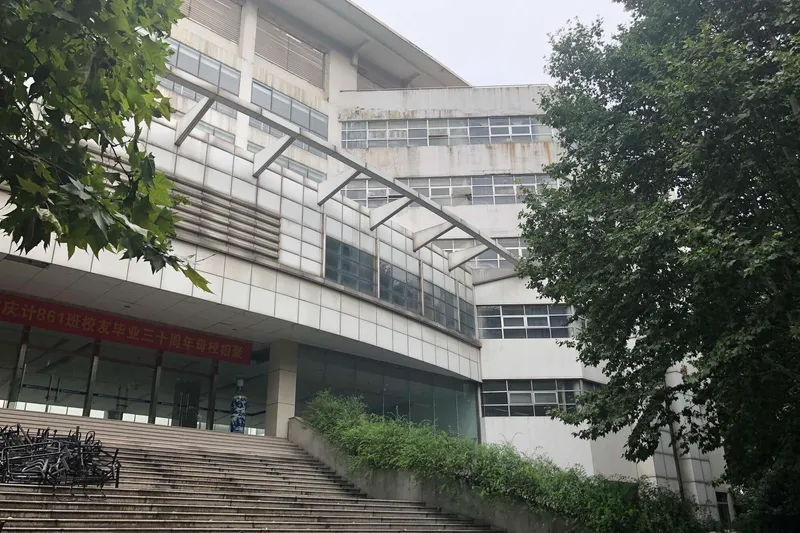
The diagonal steel sunshade canopy over another entrance plays a similar role: it defines arrival without walling anything off. These are small architectural moves, but on a campus whose previous boundaries were literal fences and gated pylons, they represent a genuine shift in how the site addresses its neighborhood.
Campus Ground: Courtyards, Paths, and Play
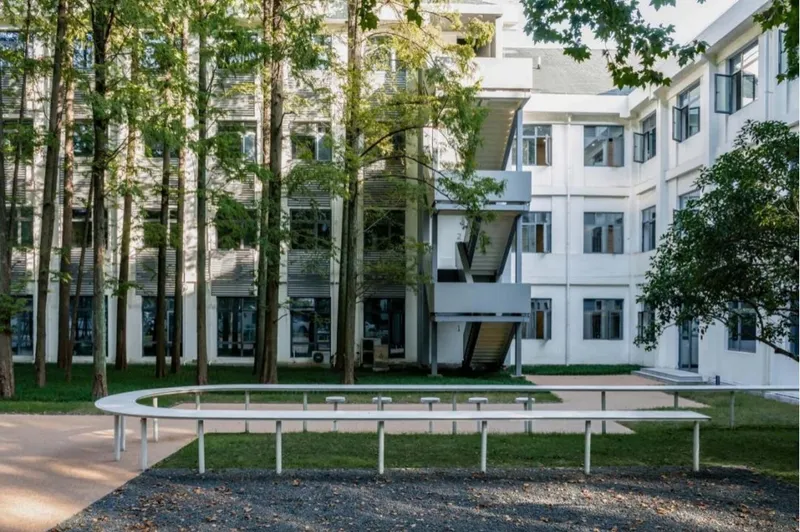
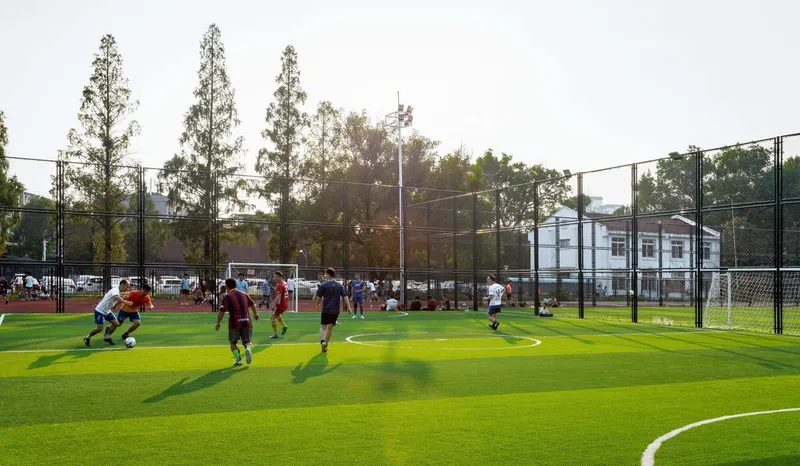
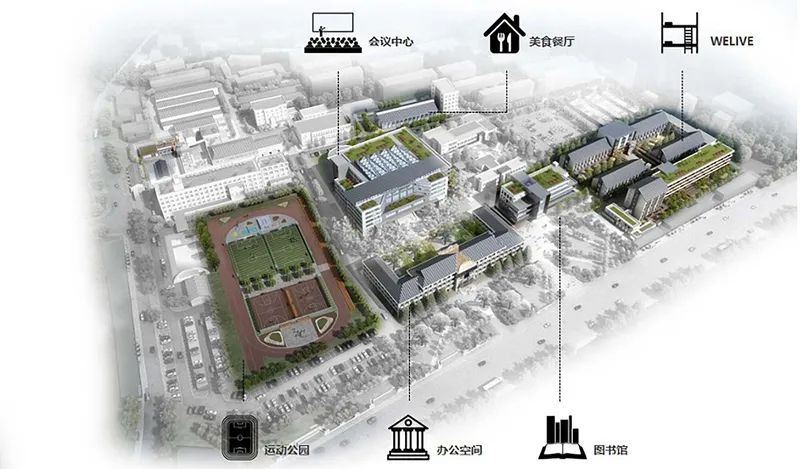
Between the buildings, the ground plane carries much of the campus's character. Circular white benches wrap existing trees in courtyards bordered by the renovated facades. Tree-lined pedestrian paths connect pavilions through dense foliage, maintaining the feeling of walking through a garden rather than a commercial park. The sports fields, retained from the university era, serve the science park's tenants and reinforce the idea that a knowledge campus is a place people inhabit, not just occupy.
Plans and Drawings
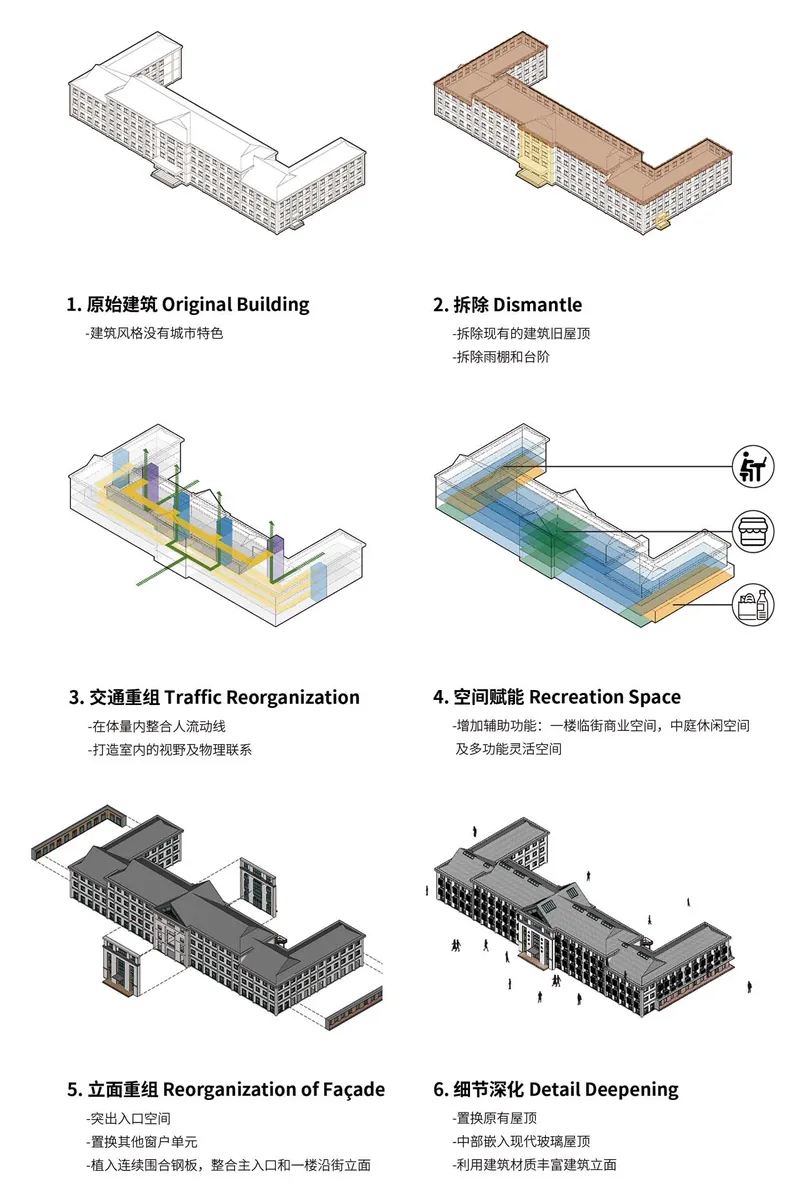
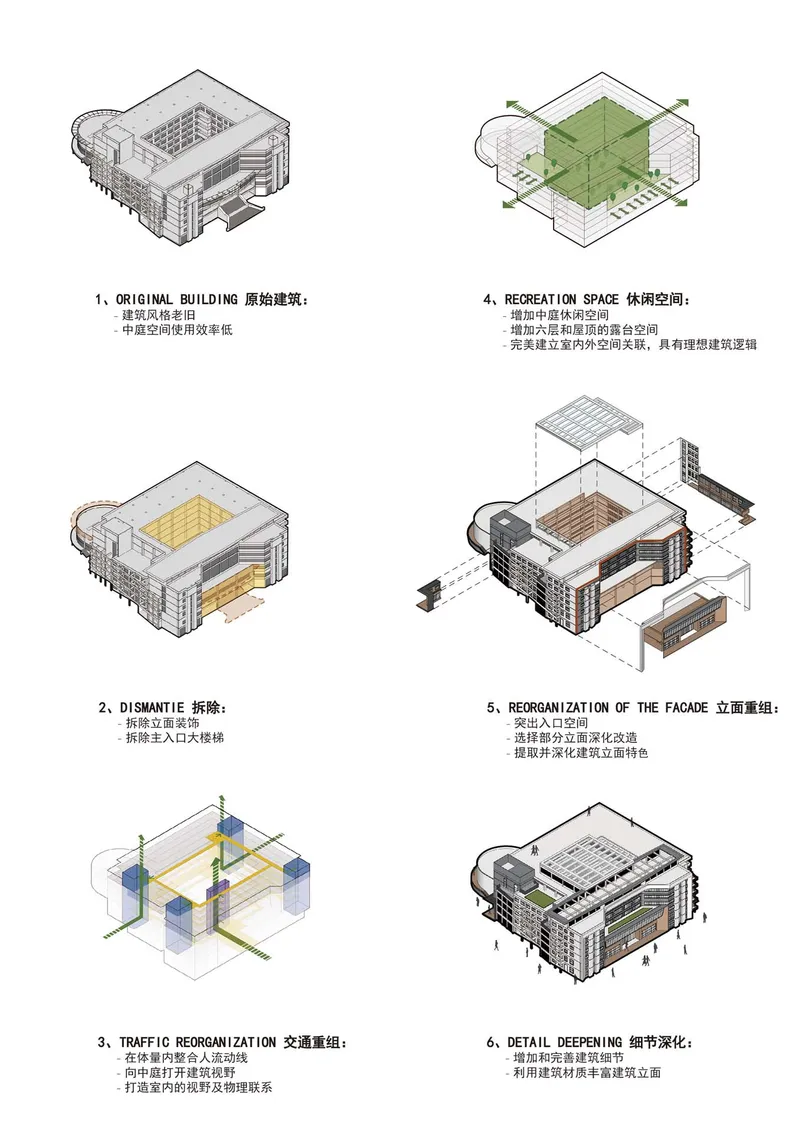
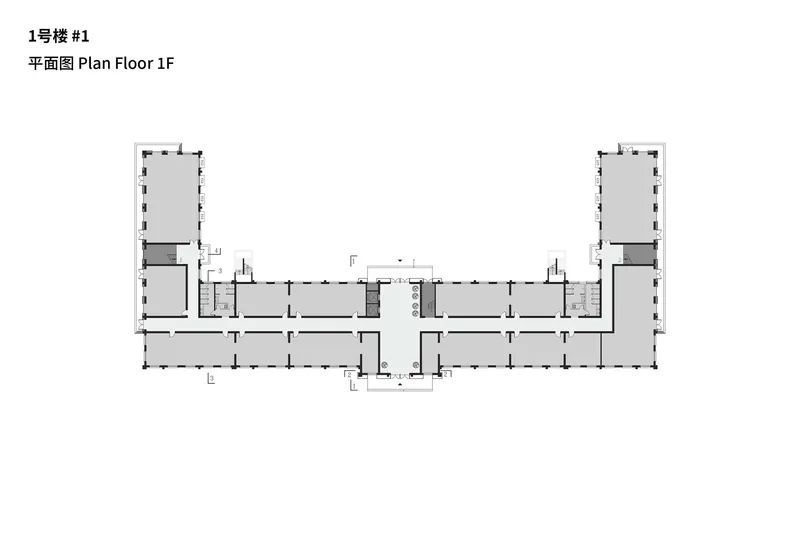
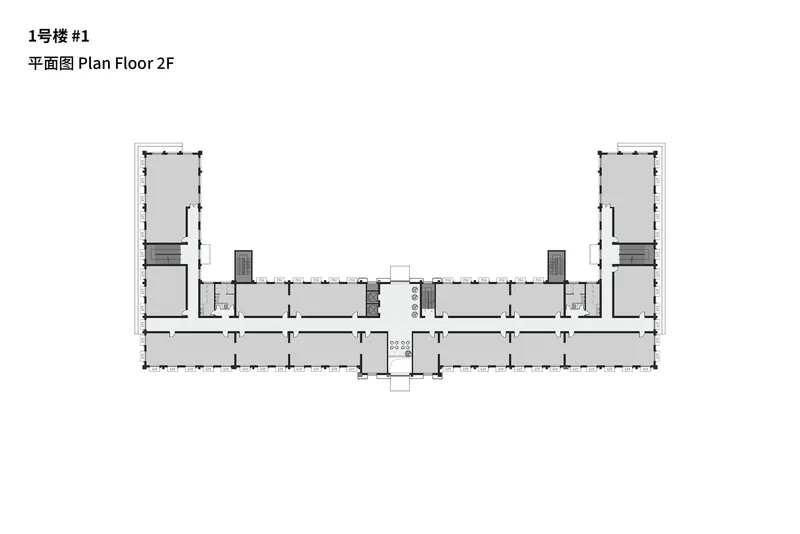
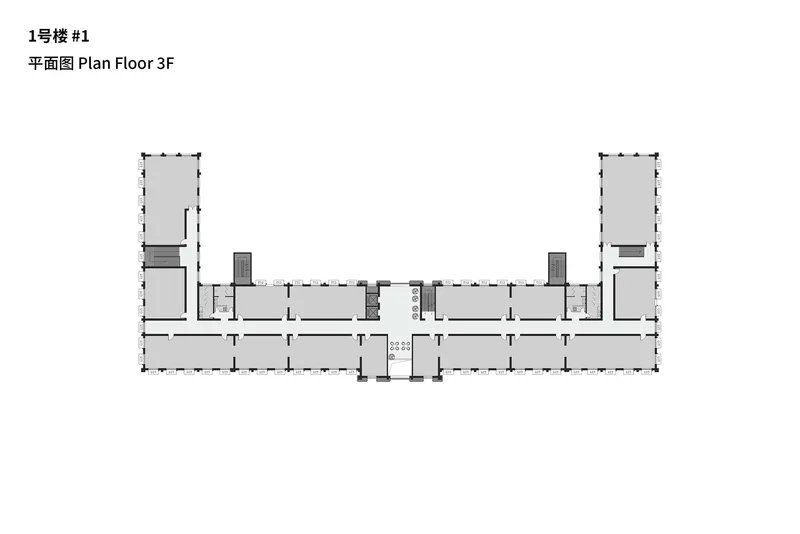
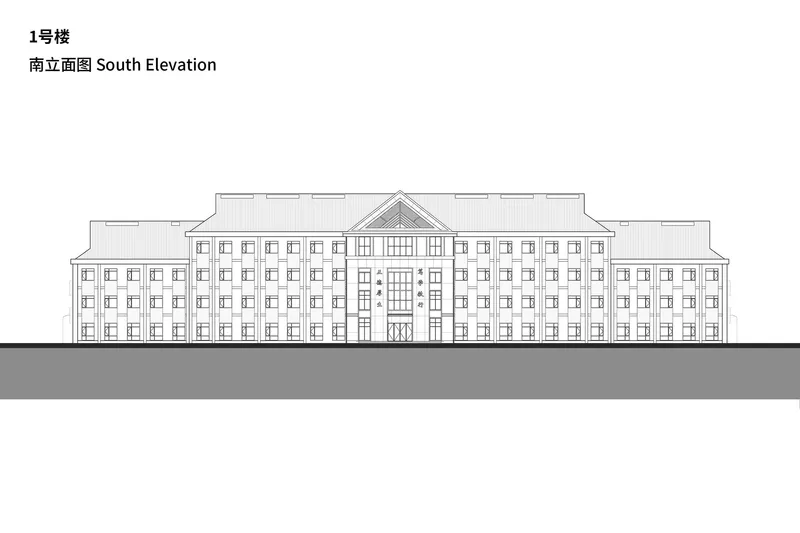
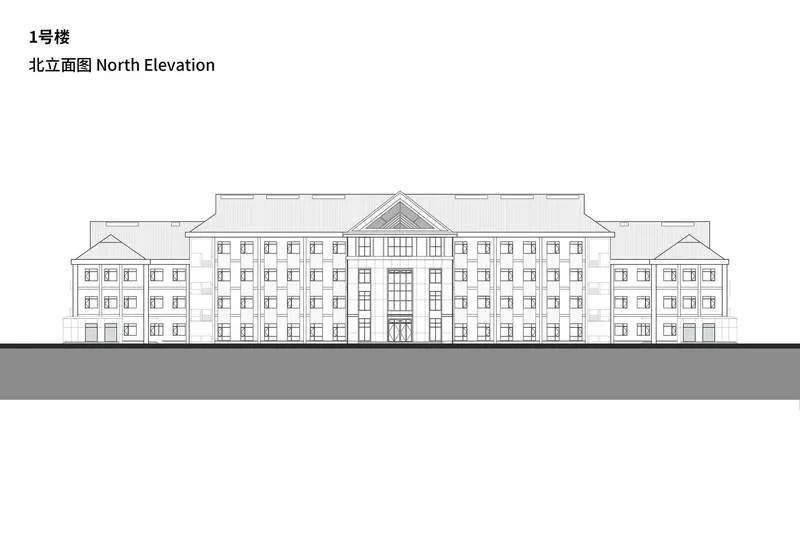
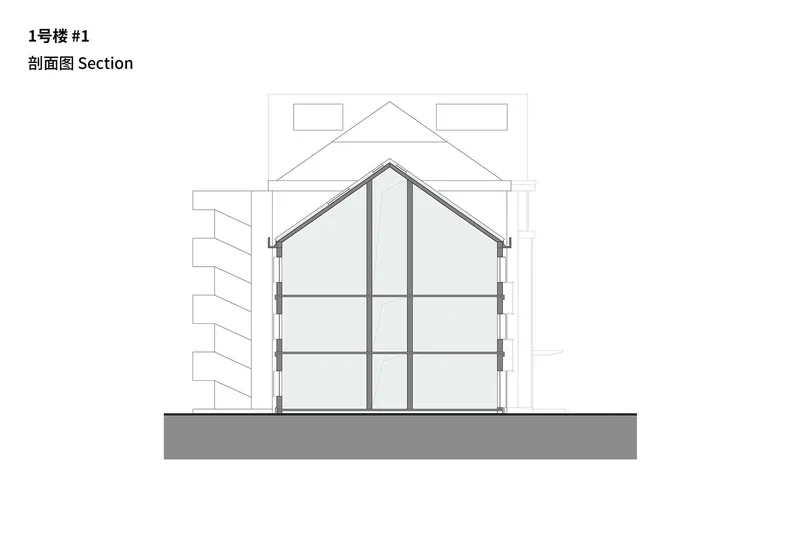
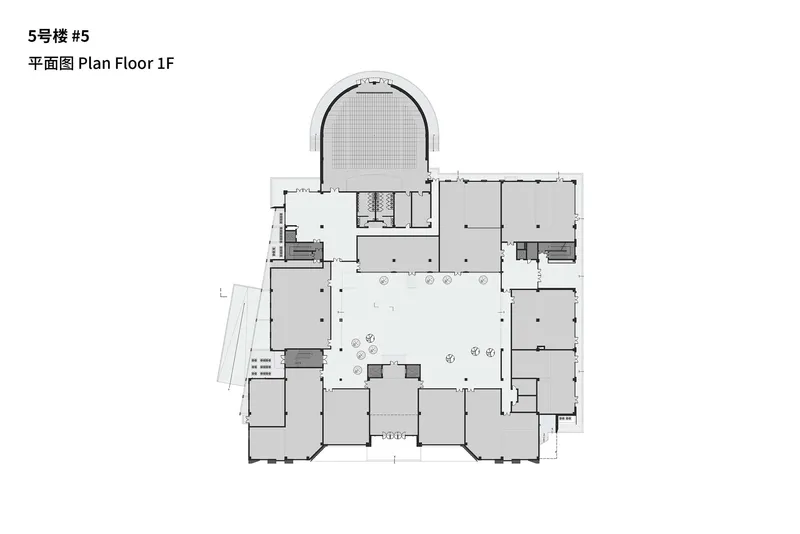
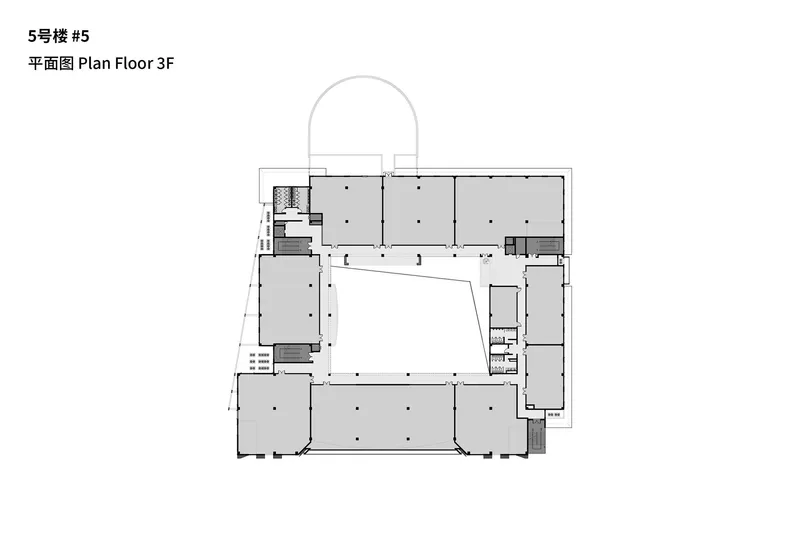
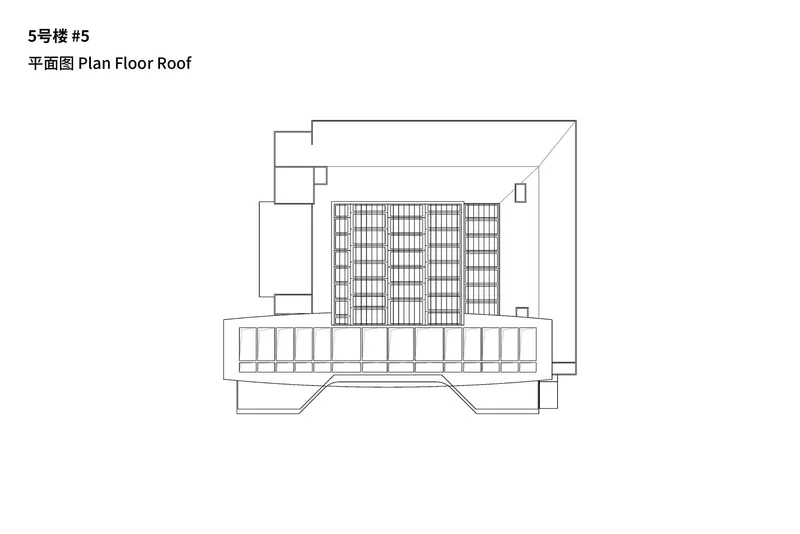
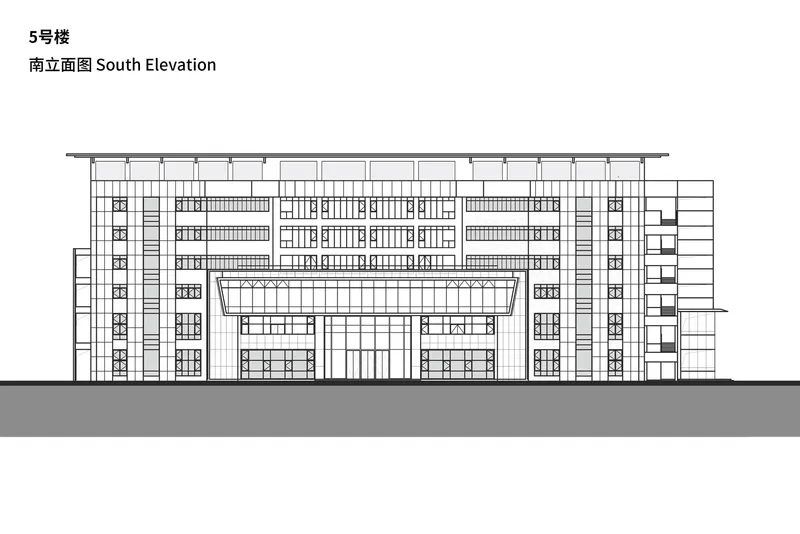
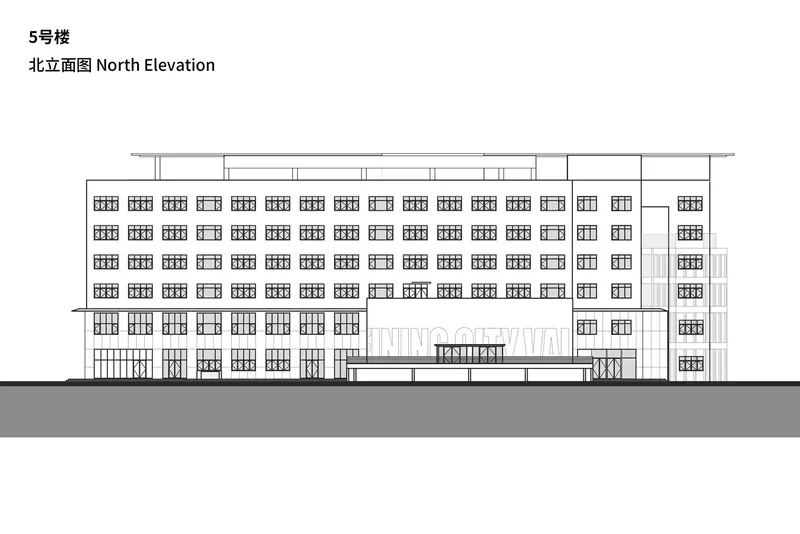
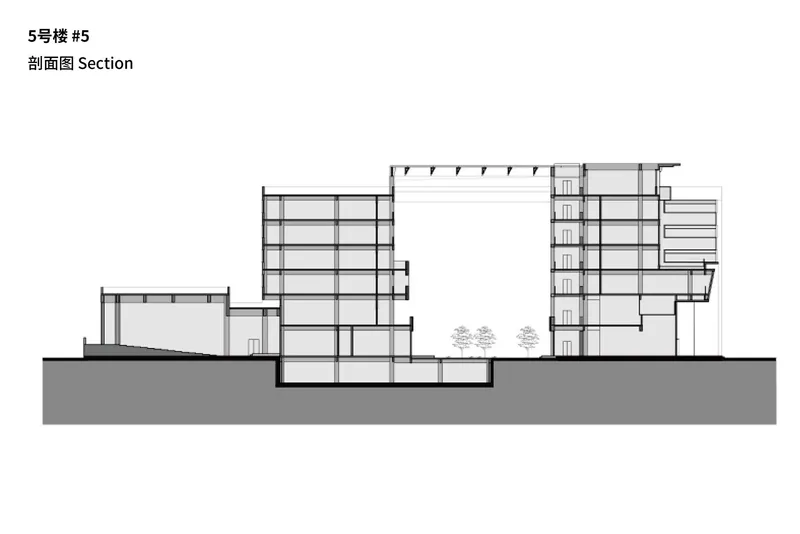
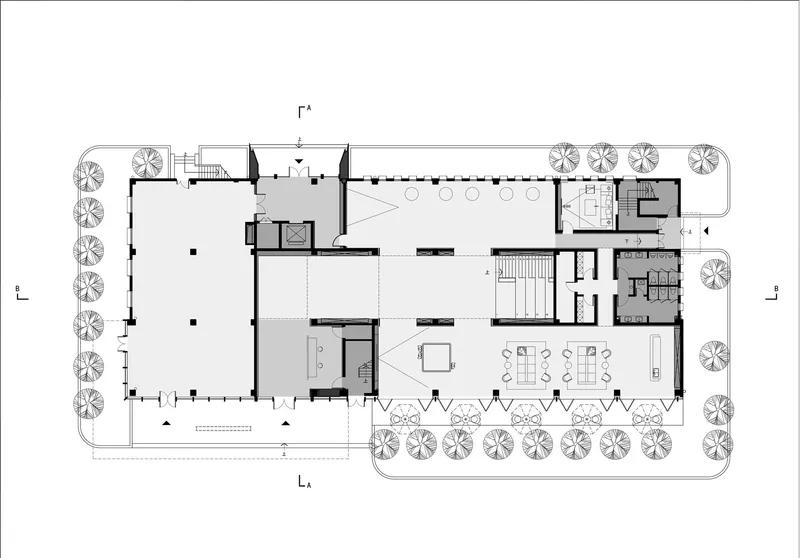
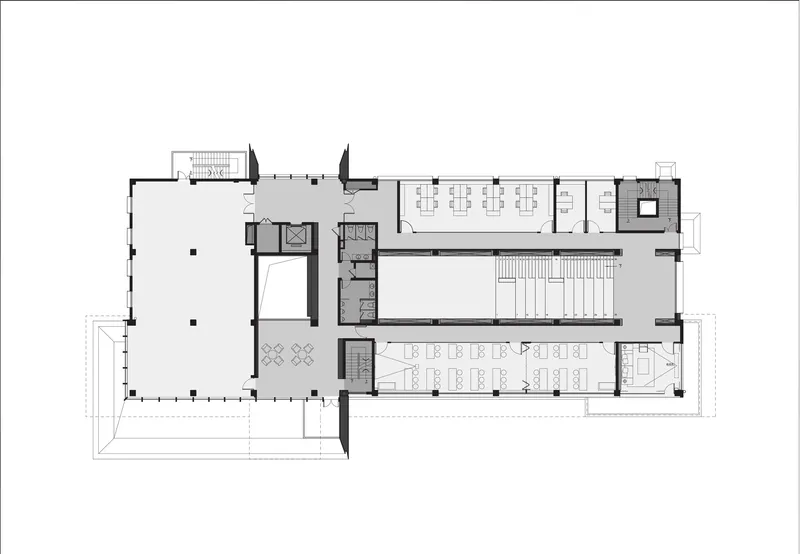
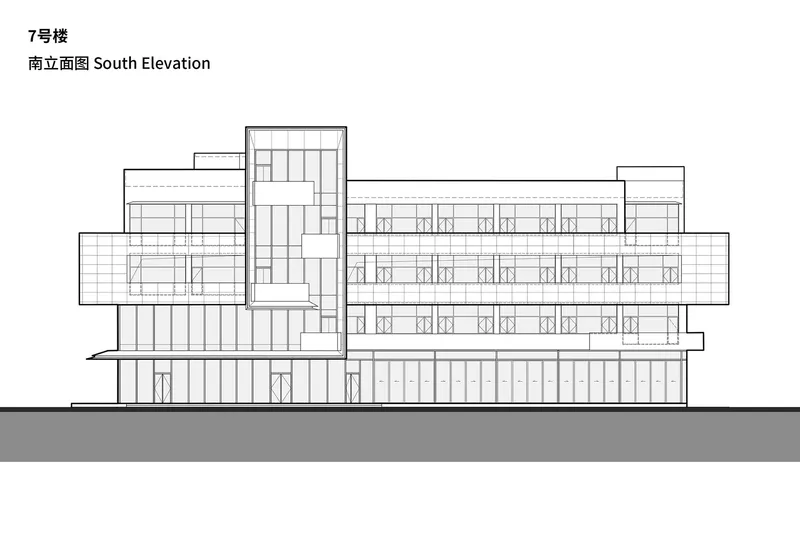
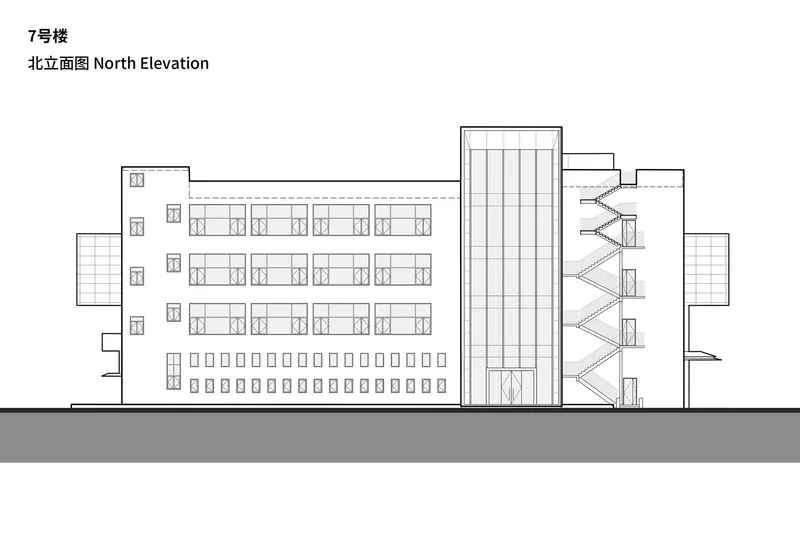
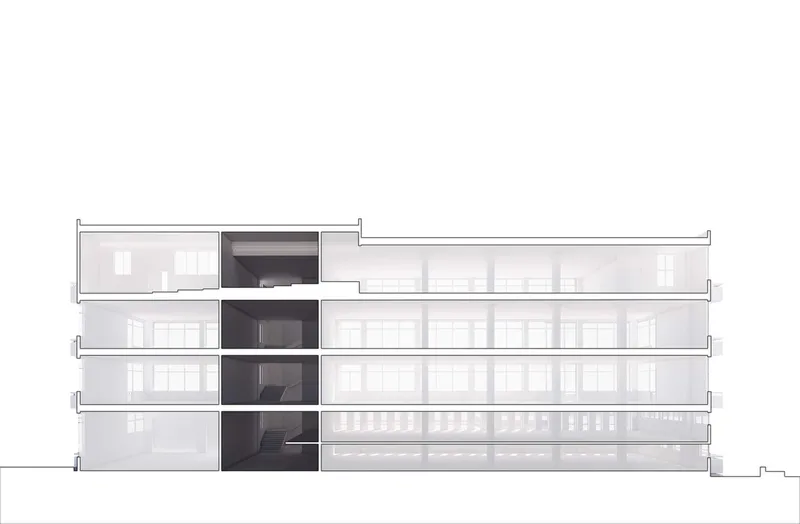
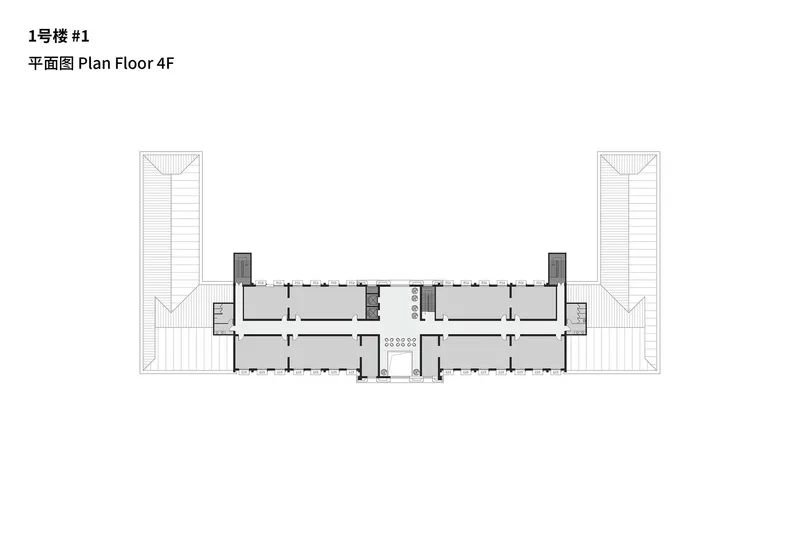
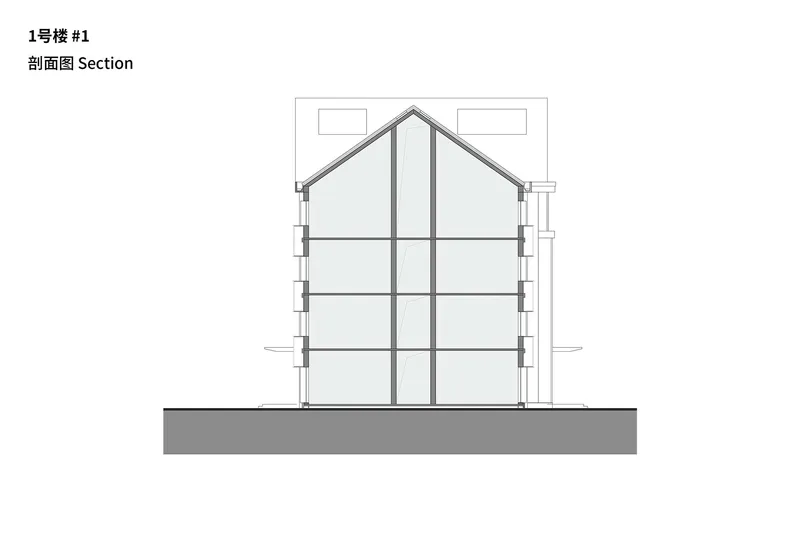
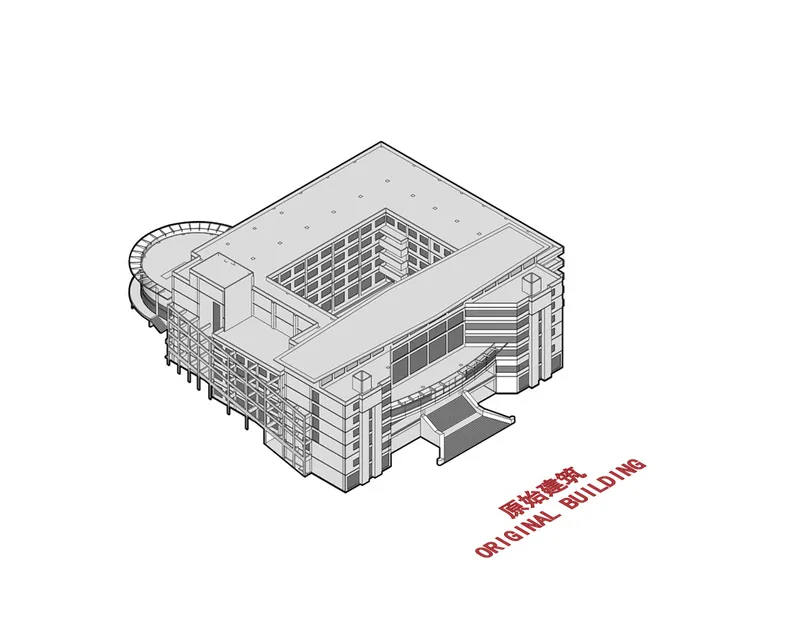
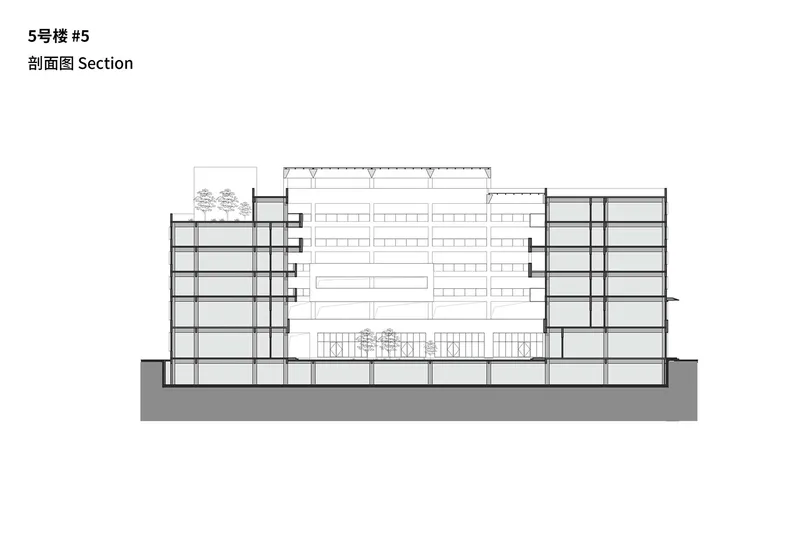
The axonometric diagram sequences are arguably the most revealing documents in the set. They break the renovation into six phases, from the original building condition through facade reorganization and spatial intervention to the final configuration. Read together, they make clear that DUTS design treated each building as a distinct case within a shared methodology. The floor plans show how the U-shaped layouts and central courtyards of the teaching buildings were preserved in plan while being opened vertically through new atriums and skylights. The section through the pitched roof structure, revealing four horizontal floor plates inside, captures the tension between the inherited envelope and the rebuilt interior in a single drawing.
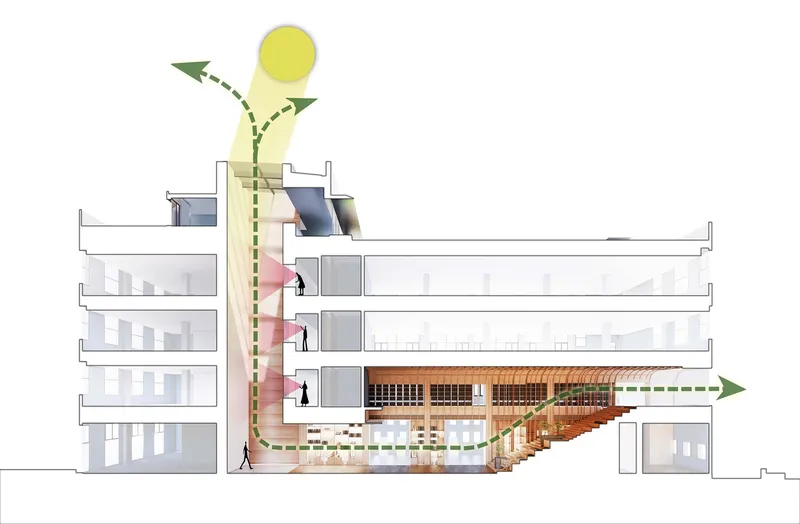
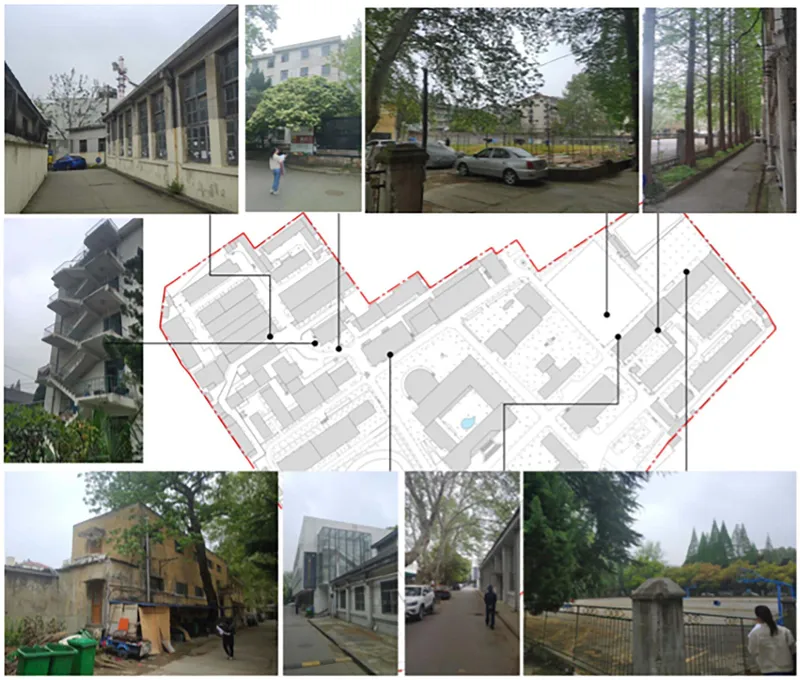
The roof plan with its gridded photovoltaic array, and the section illustrating solar orientation and natural ventilation flows, point to a sustainability ambition that operates quietly behind the more visible facade work. The site plan, ringed by photographs of existing conditions, records the campus as found: parking lots, weathered facades, cluttered pedestrian paths. Comparing those photographs with the finished project gives the drawings their full meaning.
Why This Project Matters
China's urban campuses are reaching a crossroads. As universities consolidate onto larger suburban sites, their old city-center compounds face either demolition or speculative redevelopment. The Xuanwu Science Park offers a third path: a calibrated renovation that preserves the landscape, retains recognizable architectural forms, and rewires interior spaces for contemporary programs. At 110,000 square meters, it is large enough to test whether micro-renewal can operate at institutional scale, not just on individual buildings. The answer, based on what DUTS design delivered here, is a qualified yes.
The qualification matters. Not every old campus building warrants the care given to Building No. 1, and the project is honest about that, wrapping lesser structures in new skins without pretending they were ever distinguished. That pragmatic gradient, from preservation to transformation, is what makes the project useful as a model. It does not romanticize the existing. It reads each building for what it is and intervenes accordingly. For a profession that too often treats renovation as either heritage restoration or total demolition, this kind of building-by-building judgment is worth paying attention to.
Nanjing Normal University Xuanwu Science Park by DUTS design, lead architect Ling Zhong. Nanjing, China. 110,000 m². Completed 2022. Photography by Qingshan Wu and RIF Studio.
About the Studio
DUTS design
Official website of DUTS design, one of the studios behind this project.
en.dutsdesign.comShare Your Own Work on uni.xyz
If projects like this are the kind of work you want to make, uni.xyz is a place to publish your own, find collaborators, and enter design competitions.


Popular Articles
Popular articles from the community


Extended Shell: Retrofitting Kolkata's Balconies as Living Urban Thresholds
A modular retrofit system recovers the social and environmental intelligence of Kolkata's historic verandas for contemporary Park Street residents.

Opera on the Sea: Driftwood Logic Shapes a Timber Opera House on Estonia's Coast
Trevor Orgill's opera house translates the entangled drift of floating timber into a civic building where wood, water, and music converge.

Cloaked Colonization: A Mobile Underwater Habitat That Moves Like a Fish
Micah Abaya's shortlisted EHC Pacific entry reimagines ocean settlement as a dispersed network of self-sustaining architectural organisms.

The Amber Palace Opera: A Geological Fiction Surfaces on Tallinn's Baltic Waterfront
Pierre Brillard reimagines a Baltic legend as a public landscape, opera house, and waterfront promenade rooted in Tallinn's coastal identity.

Similar Reads
You might also enjoy these articles

Pixel Gardens: One Repeated Module Stacked Into a Terraced Social Housing Tower for Famagusta
Salem Bader's shortlisted housing tower builds a vertical neighbourhood from one repeated module, offsetting units to carve terraces, light and air.

Bao Huynh Watercolor Atelier: A Serene Art Retreat in Hội An
Bao Huynh Watercolor Atelier in Hội An blends multifunctional art spaces, sustainable design, local materials, and family-friendly living in a serene environment.

Atelier Macri Concept Store Interior Design by CASE-REAL
Atelier Macri store features a "ko" counter, walnut wood details, cork displays, blending retail, gallery, and seamless customer experiences.

Manuel Vargas Izquierdo Stadium and High-Performance Sports Center: Architectural Excellence in Jalpa de Méndez
The Manuel Vargas Izquierdo Stadium blends sustainable design, inclusive sports facilities, and cultural-inspired architecture, revitalizing Jalpa de Méndez’s public spaces.


Comments (0)
Please login or sign up to add comments
No comments yet. Be the first to comment!