
Echo Heart: A Sustainable Architecture Proposal That Combats Deforestation Through Community, Faith, and Ecology
A sustainable architecture vision for Ethiopia where faith, education, and ecology unite to restore forests and empower communities.

As environmental degradation continues to threaten ecosystems across the globe, architects are increasingly challenged to create solutions that address ecological concerns while improving social and cultural conditions. Echo Heart, a shortlisted entry in the Eco-Chapel competition by Yanting Deng, presents a compelling example of sustainable architecture that operates as both a spiritual sanctuary and a catalyst for environmental restoration.
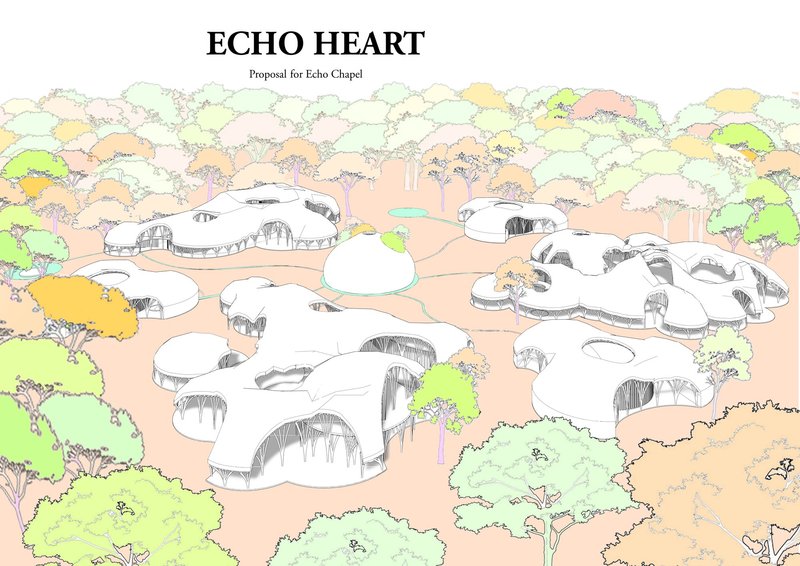
Inspired by the metaphor of the human heart, the project envisions architecture as an active system that circulates resources, opportunities, and ecological awareness throughout a community. Located within the Ethiopian landscape, the proposal responds directly to the challenges of deforestation by creating an interconnected network of religious, educational, commercial, and communal spaces that support both people and nature.
Rather than treating architecture as a standalone object, Echo Heart proposes a living framework where buildings, forests, communities, and cultural traditions become inseparable components of a regenerative ecosystem.
Sustainable Architecture Inspired by the Forest
The conceptual foundation of Echo Heart emerges from the relationship between architecture and woodland environments. The project seeks to strengthen people's emotional and psychological connection with forests by embedding architecture directly within nature rather than separating the two.
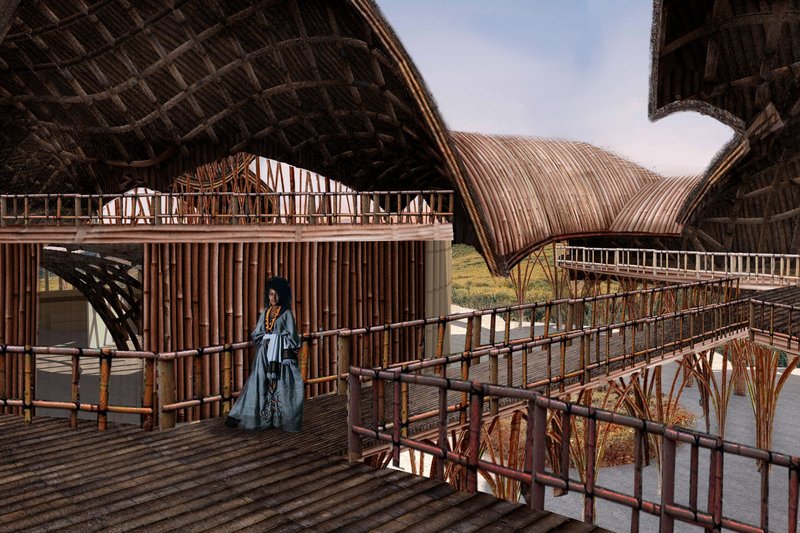
The architectural forms resemble organic clearings within a forest canopy. Circular spaces are connected through pathways that extend outward from a central chapel, creating a network that mirrors the circulation system of a living organism. This arrangement reinforces the idea that environmental protection is not achieved through isolated interventions but through interconnected systems that support social and ecological wellbeing simultaneously.
The architecture appears to emerge naturally from the landscape, allowing existing vegetation to remain untouched wherever possible. Open courtyards, planted voids, and forest pockets become essential components of the spatial experience.
The Chapel as the Heart of a Regenerative Community
At the center of the masterplan stands the chapel, envisioned as the symbolic and functional heart of the development. Unlike traditional religious structures that focus solely on worship, the chapel acts as a gathering place that promotes reflection, coexistence, and environmental stewardship.
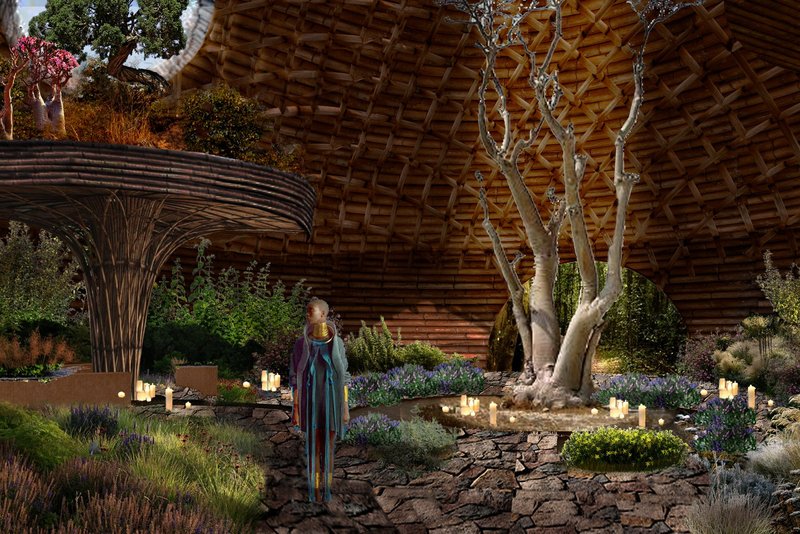
The central prayer space is surrounded by gardens and natural landscapes that encourage contemplation and connection with nature. Water elements and vegetation become part of the spiritual experience, reinforcing the project's belief that respect for nature can become a shared value across cultural and religious boundaries.
Radiating from this central structure are pathways that connect every major function within the site, emphasizing the role of the chapel as a source of social and ecological energy.
A Community Model Designed to Reduce Deforestation
One of the most innovative aspects of Echo Heart is its understanding of the root causes of deforestation. Rather than addressing environmental degradation through conservation alone, the project recognizes that economic insecurity often drives communities to clear forests for agriculture and survival.
To respond to this challenge, the proposal integrates a variety of social and economic programs, including:
- Technical education facilities
- Community schools
- Public libraries
- Job training centers
- Market spaces
- Community gathering areas
- Healthcare facilities
- Religious institutions
These programs work together to create alternative opportunities for local residents, reducing dependence on activities that contribute to forest loss. Education and vocational training become tools for long-term environmental protection, while markets and job centers provide pathways toward economic resilience.
This holistic strategy transforms sustainable architecture into a mechanism for social development and environmental regeneration.
Bamboo Construction and Local Material Innovation
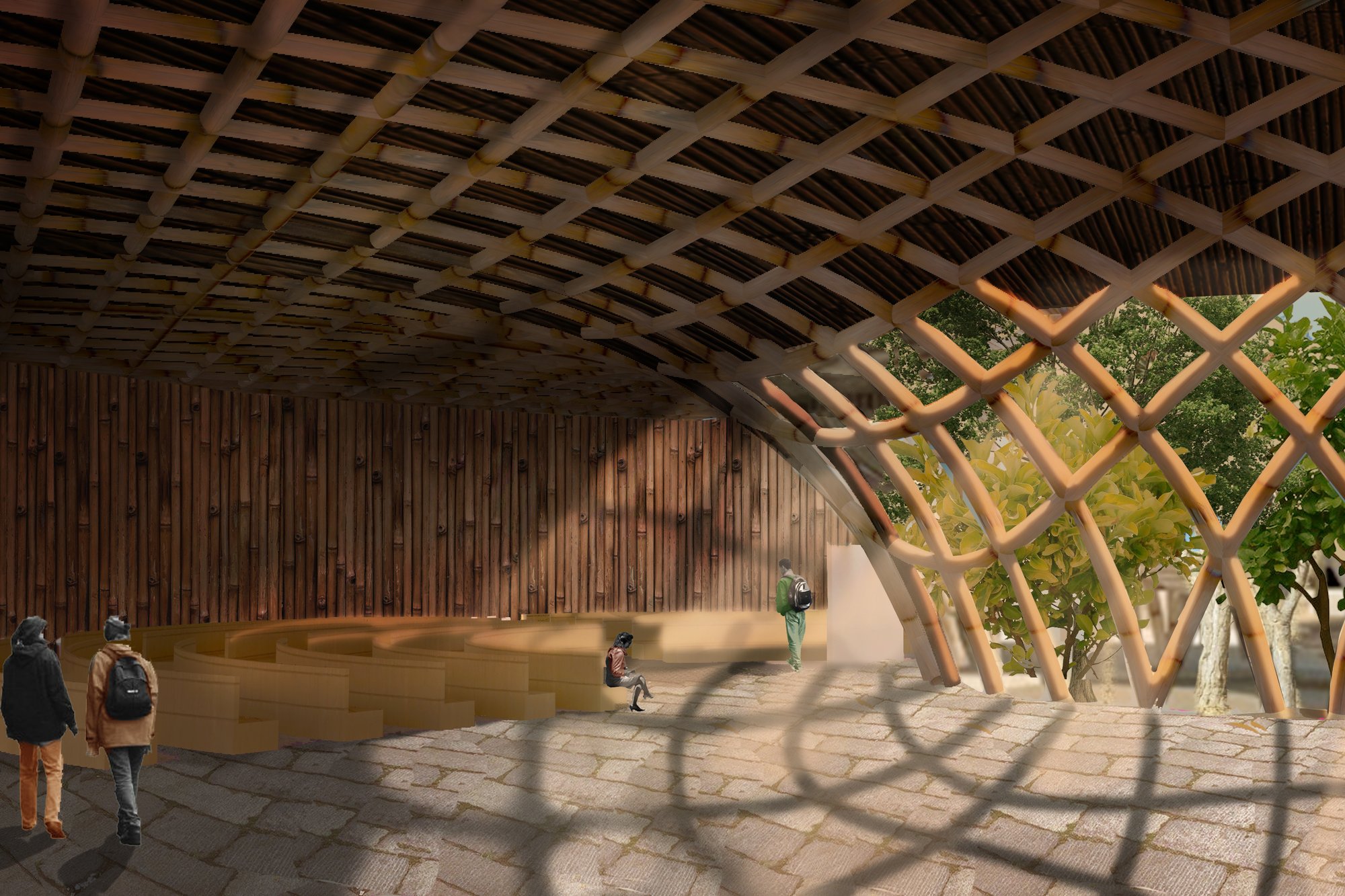
Material selection plays a critical role in the project's environmental strategy. Echo Heart utilizes bamboo as its primary construction material, taking advantage of its abundance, renewability, and cultural relevance within the region.
The expressive roof structures demonstrate the architectural potential of bamboo beyond conventional construction methods. Curved geometries, woven structural systems, and organic forms create spaces that feel both contemporary and deeply connected to local traditions.
The use of bamboo also contributes to local economic development by creating employment opportunities related to cultivation, harvesting, processing, and construction. This reinforces the project's commitment to sustainability at environmental, social, and economic levels.
Ground surfaces utilize environmentally conscious materials that minimize ecological impact while maintaining a strong connection to the surrounding landscape.
Climate-Responsive Architecture for Ethiopia
Echo Heart responds carefully to Ethiopia's mild climate through a series of passive design strategies. The buildings are conceived as largely open-air structures that maximize natural ventilation, daylight, and visual connectivity with the surrounding environment.
Large openings, internal courtyards, and shaded circulation routes allow air to flow naturally through the development, reducing dependence on mechanical systems. The architecture embraces outdoor living and communal interaction while providing shelter and comfort through carefully designed roof forms.
By minimizing enclosed conditioned spaces, the project demonstrates how sustainable architecture can work in harmony with regional climate conditions rather than relying on energy-intensive technological solutions.
Interfaith Design and Social Harmony
The proposal acknowledges Ethiopia's diverse religious landscape by incorporating separate spaces for multiple faith traditions, including Orthodox Christianity, Evangelical Christianity, and Islam.
These worship spaces are positioned respectfully throughout the site while remaining connected through shared public infrastructure and landscape systems. This arrangement allows each community to maintain its traditions while participating in a broader vision of coexistence and mutual respect.
At the heart of the development, nature becomes a common language. Forest restoration, water stewardship, and environmental responsibility serve as shared values capable of bridging cultural and religious differences.
The architecture therefore functions not only as environmental infrastructure but also as a platform for social cohesion.
Landscape as Living Infrastructure
The landscape strategy draws inspiration from Ethiopia's diverse ecological regions. Plant species are distributed across the site according to vegetation patterns found throughout the country, effectively transforming the development into a miniature ecological representation of Ethiopia.
Rather than creating decorative landscaping, the project establishes living infrastructure that contributes to biodiversity, environmental education, and habitat creation.
The integration of vegetation within courtyards, pathways, gathering spaces, and building interiors blurs the distinction between architecture and landscape. Forests become active participants in daily life, constantly reminding visitors of the importance of ecological preservation.
Architectural Expression Rooted in Nature
The visual identity of Echo Heart reflects its environmental mission. Soft, flowing forms mimic the natural growth patterns of forests, roots, and organic systems. Circular geometries create a sense of continuity and unity, while the layered bamboo structures evoke the complexity of natural ecosystems.
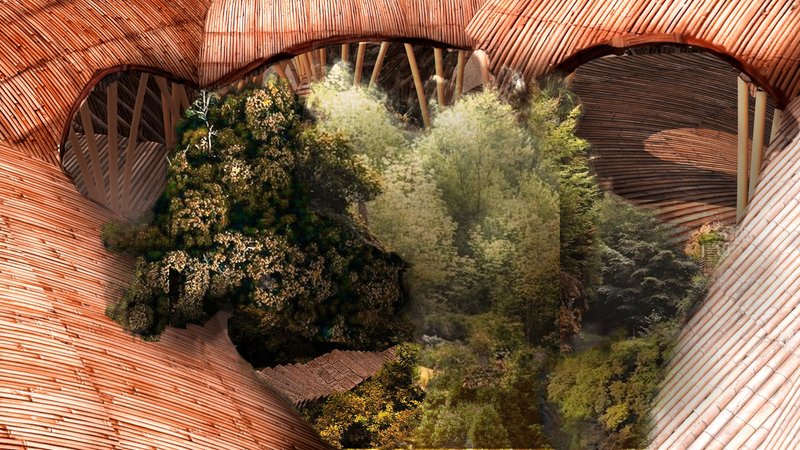
Openings carved into roofs allow light, air, and vegetation to penetrate deep into the architecture, producing dynamic spatial experiences that change throughout the day.
The resulting environment feels less like a collection of buildings and more like an inhabited landscape shaped by ecological principles.
Echo Heart demonstrates how sustainable architecture can move beyond energy efficiency and become an active force for environmental restoration and community empowerment. Through its integration of faith, education, economic opportunity, and ecological stewardship, the project addresses the complex social conditions that contribute to deforestation while creating meaningful spaces for human connection.
Designed by Yanting Deng and recognized as a Shortlisted Entry in the Eco-Chapel competition, Echo Heart proposes a future in which architecture functions as a living heart, continuously nurturing both people and the natural world. Its vision offers a powerful reminder that the most resilient architectural solutions are often those that recognize humanity and nature as inseparable partners in shaping a sustainable future.




Popular Articles
Popular articles from the community

Stanton Architects Sculpts a Curving Family Home into Sydney's Inner West Fabric
Five Dock House uses cantilevers, curved concrete, and layered courtyards to carve out privacy on a tight suburban lot in Sydney.

IKC de Geluksvogel: Sustainable School Architecture Designed for Free Movement and Digital Learning
IKC de Geluksvogel turns sustainable school architecture into a flexible Maastricht campus for digital learning, nature, and free movement.
PLATAFORMArq Folds a Concrete Roof Over the Portuguese Mountains in House #474
A 220-square-meter residence in Teixoso, Portugal, wraps board-formed concrete into an angular canopy that frames the Serra da Estrela foothills.
Milan Crossover: Sustainable Architecture for a New Fashion Culture in Milan
Milan Crossover transforms fashion culture through sustainable architecture, linking material libraries, remake studios, and public runways.


Similar Reads
You might also enjoy these articles
Eco Chapel: A Green Architecture Pavilion Designed in Symbiosis with the Forest
Eco Chapel uses green architecture to weave prayer, learning and reuse into a forest pavilion shaped by modular hexagonal canopies for life.
Kaffeebühnen: Coffee Shop Architecture Designed as a Civic Stage Between Vienna’s City and Park
Kaffeebühnen turns coffee shop architecture into a civic stage, linking Vienna’s park edge, urban life, warm timber yards, and coffee craft.
Healing Façade: Sustainable Architecture for Reforestation, Community, and Sacred Ecology in Ethiopia
Healing Façade reimagines sustainable architecture as a living wall that restores soil, catches water and renews Ethiopia's forest churches.


Urban Forest: A Vertical Ecosystem for 5,000 Workers in Singapore's Changi Business Park
Radially stacked pods and layered green decks turn a 7-acre plot into 47 acres of ecological workspace projected for 2040.


Explore Sustainable Design Competitions
Discover active competitions in this discipline




The International Standard for Design Portfolios


The Global Benchmark for Architecture Dissertation Awards


The Global Benchmark for Graduation Excellence


Challenge to reimagine the Iron Throne
Comments (0)
Please login or sign up to add comments
No comments yet. Be the first to comment!