
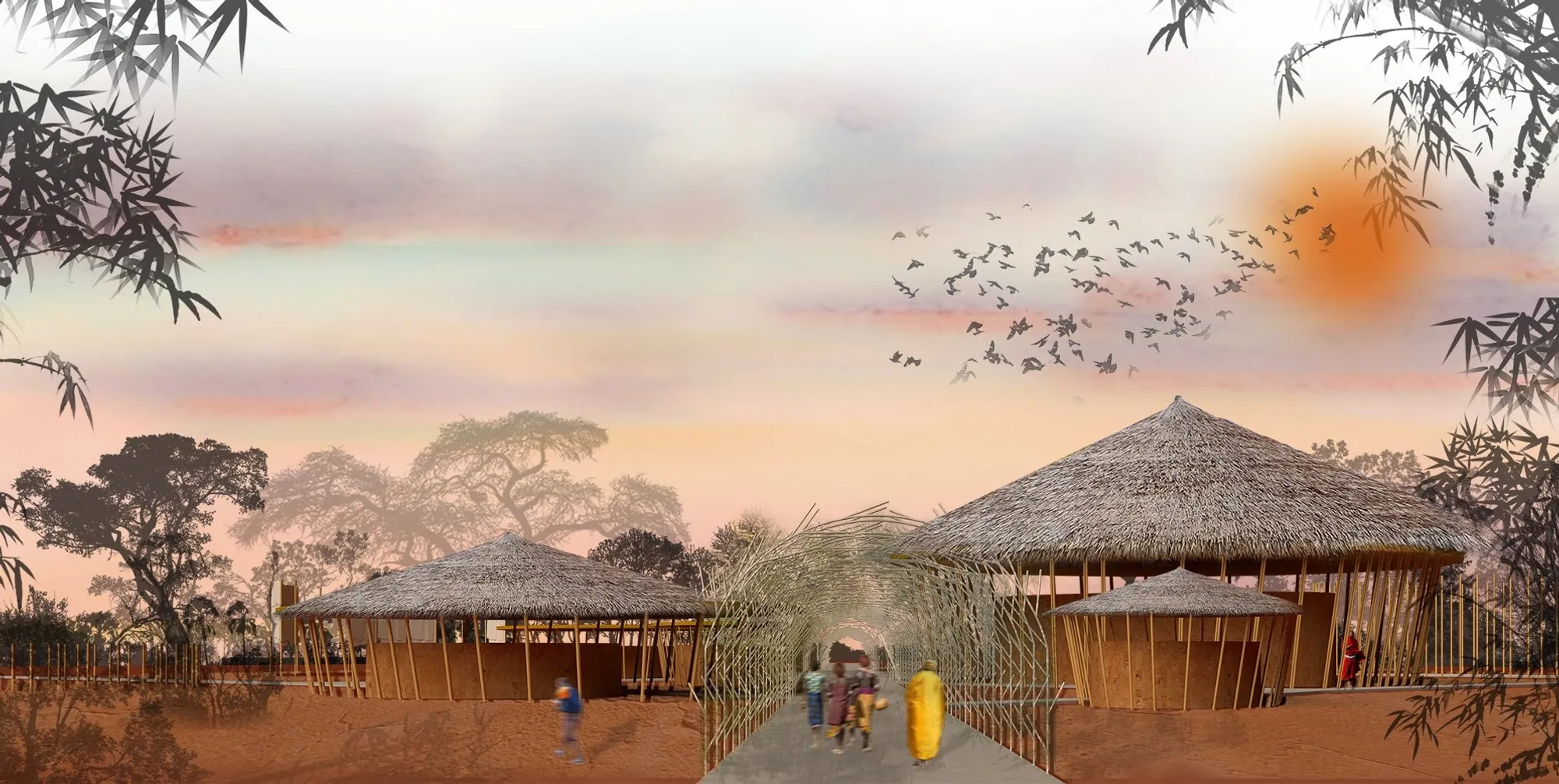
Eco Chapel – Leaf: A Sustainable Architecture Vision Rooted in Nature and Community
Sustainable bamboo architecture and rammed earth design merge spirituality, ecology, and community in Ethiopia’s urban landscape.


Eco Chapel – Leaf: A Sustainable Architecture Vision Rooted in Nature and Community
The relationship between spirituality, ecology, and architecture has become increasingly significant in contemporary design discourse. “Eco Chapel – Leaf” explores this intersection through a sensitive proposal that reimagines sacred space as part of a living ecosystem. Designed by Maria Lucilla Flamini, Amath Luca Diatta, Ilaria Cannatà, and Veronica Gai, the project was recognized as a shortlisted entry in the Eco-Chapel competition. The proposal introduces a sustainable architecture concept where religious, communal, and environmental programs coexist within a regenerative landscape inspired by the geometry of a fallen leaf.
Located within an urbanized territory in Ethiopia, the project seeks to reconnect people with nature through architecture that is both ecological and deeply symbolic. Rather than imposing rigid boundaries between built and natural environments, the design creates a continuous dialogue between landscape, circulation, vegetation, and communal life. The chapel becomes more than a place of worship. It transforms into an environmental and social catalyst that encourages contemplation, interaction, education, and ecological restoration.
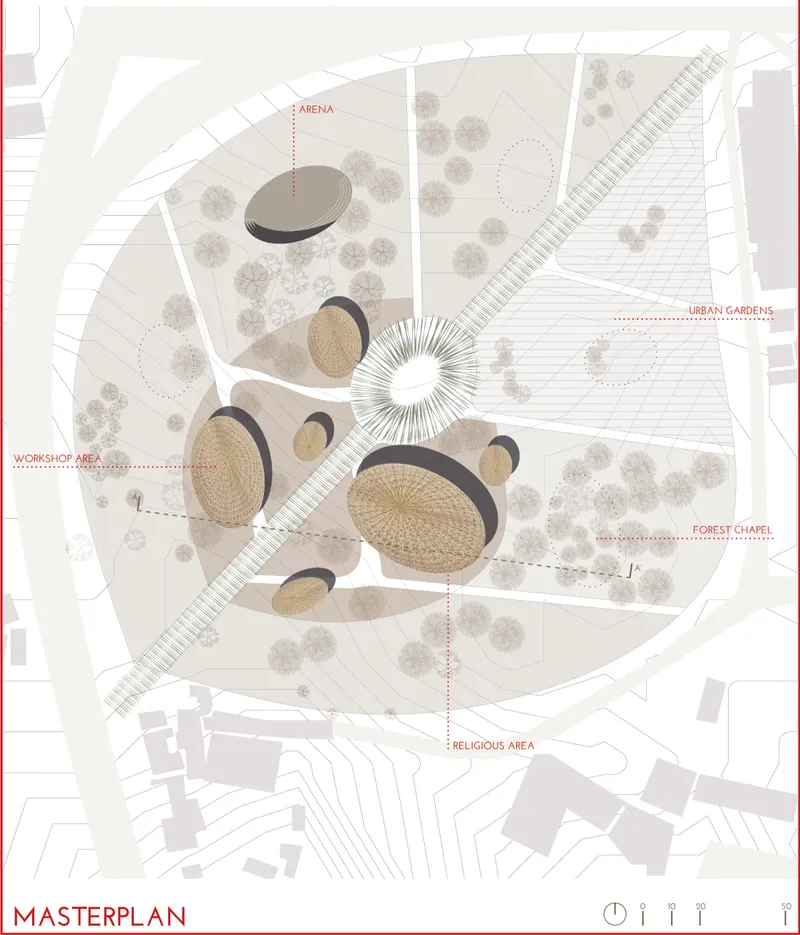
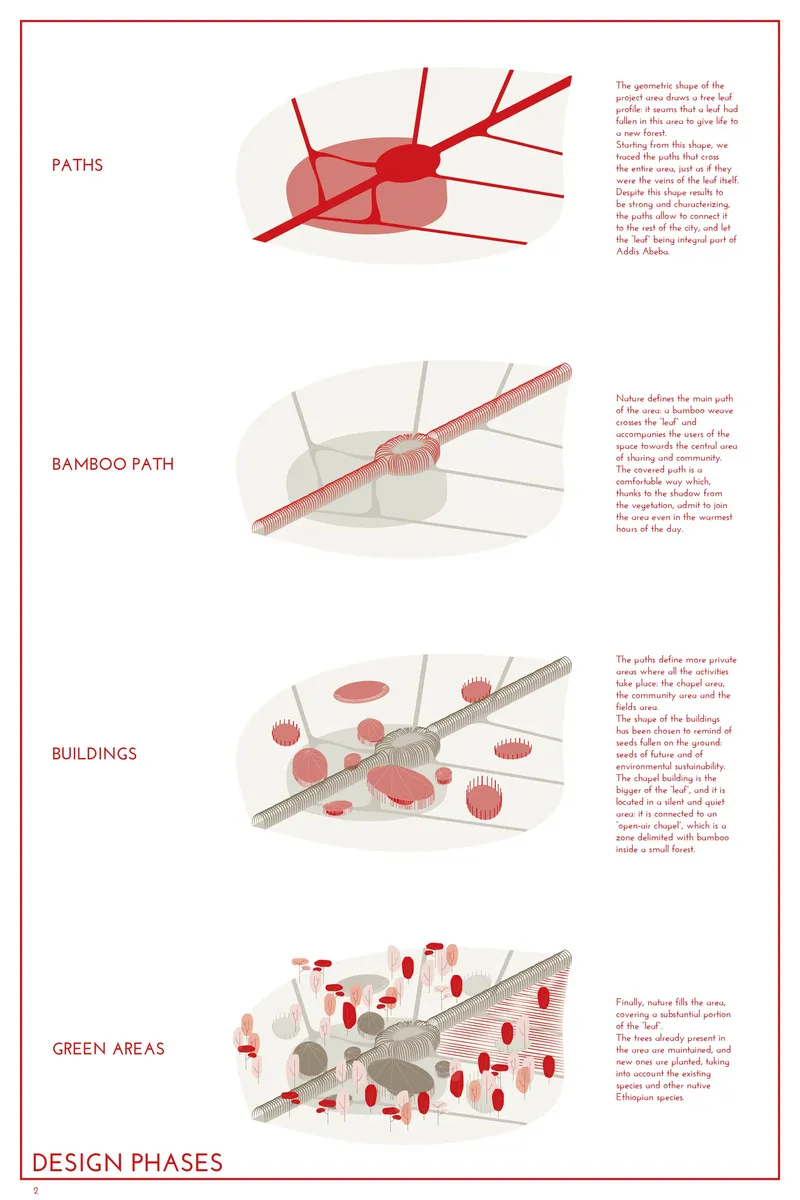
At the core of the project lies the metaphor of a fallen leaf giving life to a new forest. This conceptual narrative shapes every aspect of the masterplan. Pathways extend across the site like the veins of a leaf, generating movement patterns that organically connect the city to the forested interior. These routes establish zones of varying privacy and activity, guiding visitors through spaces dedicated to prayer, workshops, gathering, recreation, agriculture, and environmental restoration.
The project masterplan demonstrates a careful balance between architecture and landscape urbanism. Nearly seventy-five percent of the site is preserved as environmental space, reinforcing the project’s commitment to biodiversity and ecological regeneration. Existing trees are maintained while new native Ethiopian species are introduced to strengthen the local microclimate and improve urban permeability. Instead of overwhelming the landscape with construction, the proposal allows nature to remain the dominant spatial element.
A defining feature of the project is the bamboo avenue that traverses the site. Acting as the primary circulation spine, the bamboo path creates a shaded and immersive pedestrian experience. The dense vertical rhythm of bamboo poles forms a “green cathedral nave,” establishing a powerful sensory connection between movement, spirituality, and the environment. This architectural gesture transforms circulation into ritual, allowing users to transition gradually from the urban edge toward spaces of reflection and gathering.
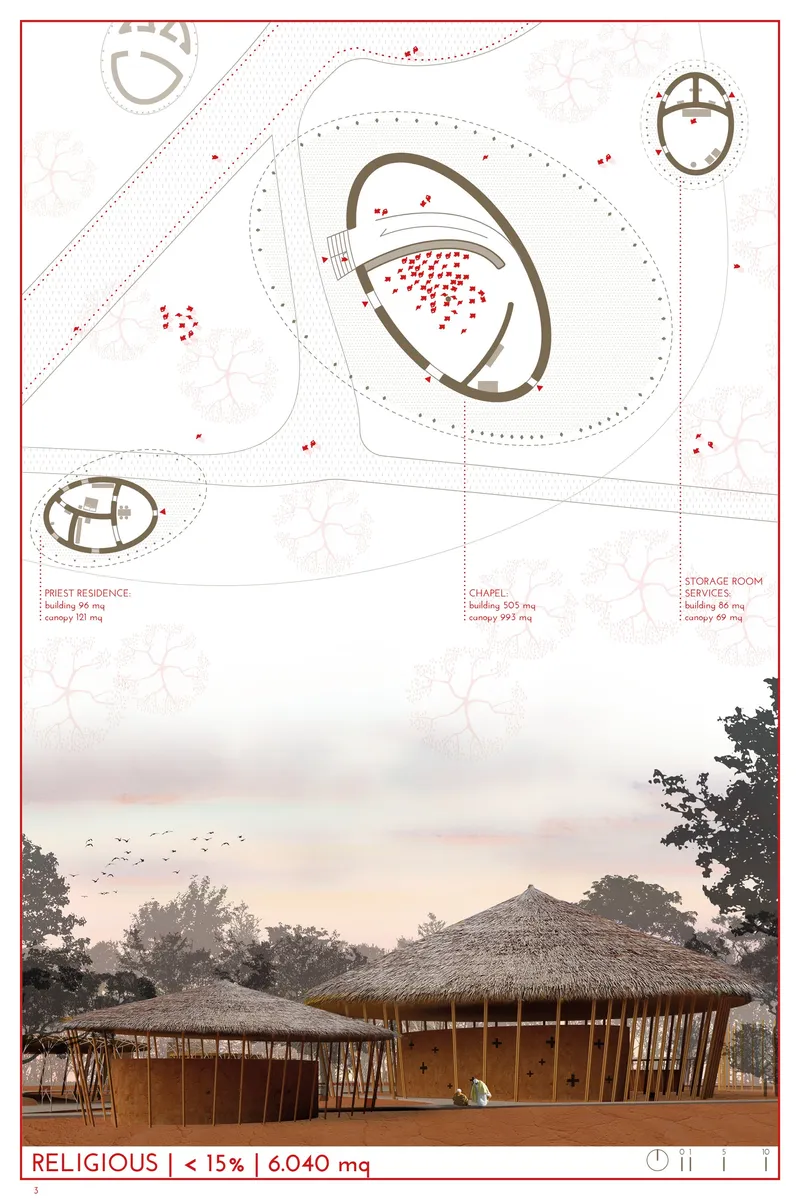
The forms of the buildings themselves evoke seeds scattered across the ground, symbolizing future growth and sustainability. These organic geometries reinforce the ecological narrative while creating a visual harmony between architecture and landscape. The chapel, the largest structure within the site, occupies a quieter portion of the masterplan and connects directly to an open-air forest chapel surrounded by vegetation. This relationship between enclosed and open sacred spaces creates a layered spiritual experience grounded in nature.
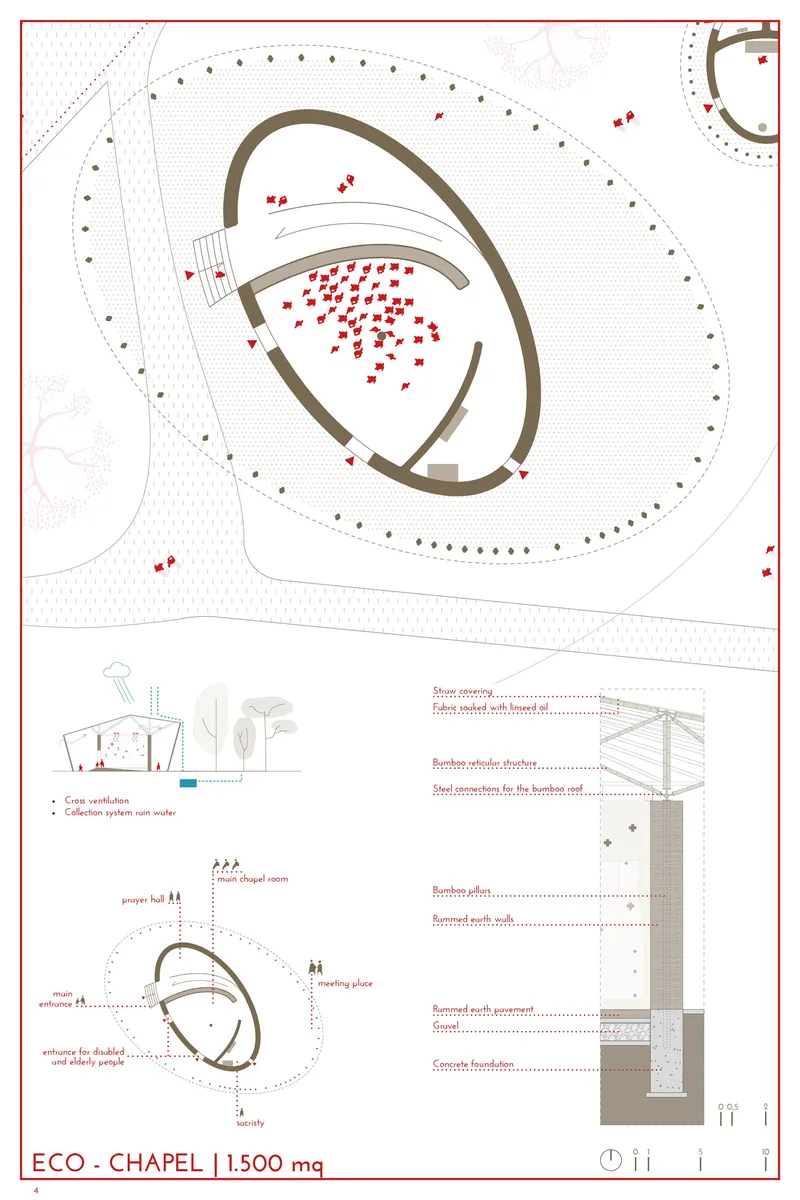
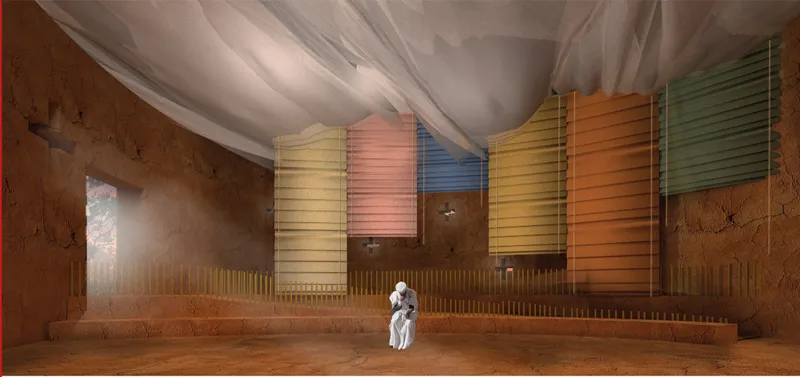
The chapel architecture draws inspiration from Ethiopia’s historic monolithic churches, particularly those of Lalibela. Similar to those sacred precedents, the design emphasizes descent and spatial transition as part of the spiritual journey. Visitors gradually move downward through a gently sloping ramp before entering the prayer hall, creating a contemplative sequence that heightens the emotional and symbolic experience of arrival.
Materiality plays a crucial role in reinforcing the project’s sustainable architecture agenda. The proposal utilizes traditional adobe construction techniques based on rammed earth and raw soil. These materials are locally available, environmentally responsible, and thermally efficient. Their low embodied energy and recyclability significantly reduce the ecological footprint of construction while supporting regional building traditions and craftsmanship.
The structural system combines bamboo frameworks with reversible steel joints, allowing flexibility, ease of assembly, and reduced material waste. The roof system incorporates straw coverings treated with linseed oil to improve waterproofing and durability. Elevated roof structures detached from the main walls enable cross ventilation and passive cooling, minimizing overheating in Ethiopia’s warm climate.
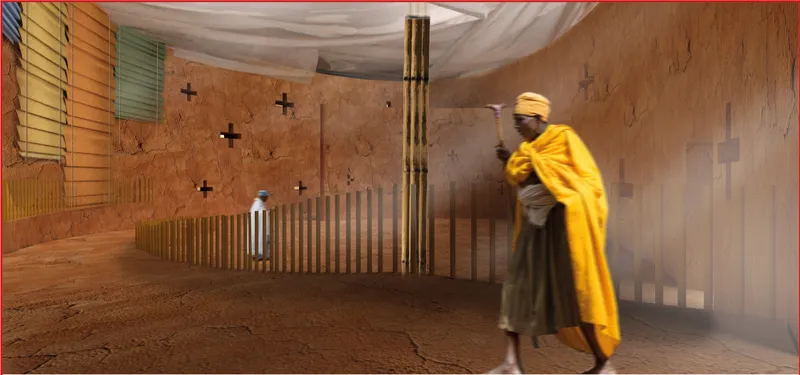
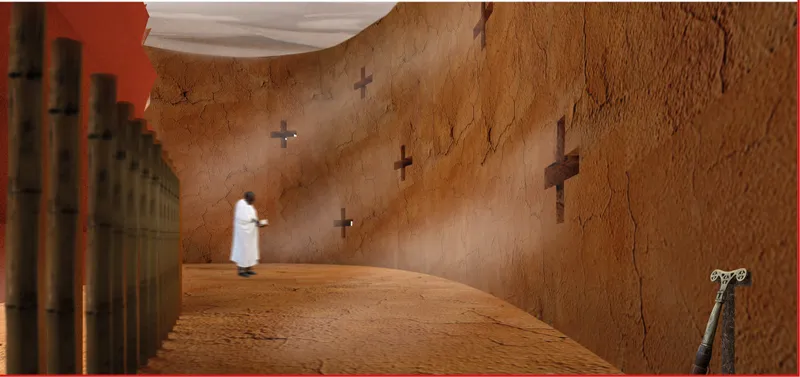
Interior spaces are designed to remain naturally ventilated and softly illuminated. Fabric ceiling layers filter light while acting as protective barriers against insects and environmental elements. Openings carved into the earthen walls create patterns of light and shadow that enrich the spiritual atmosphere of the prayer hall. The result is an architecture that relies not on technological excess but on climate-responsive design intelligence rooted in local knowledge.
Water management strategies further strengthen the environmental performance of the project. Rainwater is collected through integrated channels located at the perimeter of the roof systems and redirected for reuse throughout the site. The permeable landscape and extensive vegetation help reduce soil sealing while supporting groundwater recharge and biodiversity.
Beyond its religious functions, Eco Chapel – Leaf introduces a broader community-oriented program. The site includes gathering spaces, workshops, cafeterias, nurseries, marketplaces, playgrounds, and an arena for cultural events. These interventions transform the project into a multifunctional social infrastructure that supports education, economic activity, and collective engagement.
The workshop and learning spaces are particularly important within the proposal’s social sustainability framework. Construction techniques employed in the project are intentionally accessible, enabling local participation during building and maintenance processes. The project envisions the site as a living educational environment where residents can learn sustainable construction methods and develop practical skills applicable beyond the project itself.
Landscape design also contributes significantly to climate responsiveness. The integration of shaded and open spaces creates varying thermal experiences while improving comfort for users. Bamboo vegetation provides natural cooling and creates dense ecological corridors across the site. Existing natural growth patterns are respected rather than erased, allowing the environment to evolve organically over time.
The visual language of the proposal remains intentionally restrained and earthy. Rammed earth textures, bamboo structures, and thatched roofs create a warm architectural identity deeply connected to place and material authenticity. The architecture avoids monumentality in favor of humility, blending seamlessly into the surrounding environment while maintaining a strong spatial presence.
Eco Chapel – Leaf ultimately demonstrates how sustainable architecture can transcend technical performance and become an instrument of cultural continuity, environmental healing, and social connection. Through its integration of sacred space, ecological restoration, and community infrastructure, the project proposes a future where architecture does not dominate nature but grows from it.
By combining vernacular materials, passive environmental strategies, and landscape-centered planning, the project establishes a compelling model for climate-responsive spiritual architecture in contemporary Africa. It challenges conventional notions of religious buildings as isolated monuments and instead presents architecture as an evolving ecosystem shaped by people, nature, and collective memory.
As cities continue to expand and environmental pressures intensify, projects such as Eco Chapel – Leaf reveal the importance of designing spaces that nurture both human and ecological well-being. The proposal stands as a thoughtful exploration of how sustainable architecture can foster resilience, spirituality, and coexistence within rapidly changing urban landscapes.




Popular Articles
Popular articles from the community


Riyadh For All: Intergenerational Urban Design for Active Aging in Rabat
Riyadh For All reimagines urban design in Rabat with intergenerational co-living, adaptive courtyards, and Moroccan cultural exchange today.

Lunar Spiral: Space Architecture Shaped by the Mathematics of the Universe
Lunar Spiral reimagines space architecture through Fibonacci geometry, lunar regolith, levitating habitats, and self-sustaining Moon living.

Hill & Cross Opera: Sculptural Opera House Architecture Shaped by Tallinn’s Landscape and Identity
Hill & Cross Opera reimagines opera house architecture in Tallinn through its sculptural hill, civic plaza, glass wave and a luminous cross.

Conexión: Biophilic Design Reimagines High-Rise Living in Hong Kong
Conexión reimagines high-rise living in Hong Kong through biophilic design, green facades, shared spaces, daylight, water and nature within.


Similar Reads
You might also enjoy these articles

Eco Chapel: A Green Architecture Pavilion Designed in Symbiosis with the Forest
Eco Chapel uses green architecture to weave prayer, learning and reuse into a forest pavilion shaped by modular hexagonal canopies for life.
Kaffeebühnen: Coffee Shop Architecture Designed as a Civic Stage Between Vienna’s City and Park
Kaffeebühnen turns coffee shop architecture into a civic stage, linking Vienna’s park edge, urban life, warm timber yards, and coffee craft.
Healing Façade: Sustainable Architecture for Reforestation, Community, and Sacred Ecology in Ethiopia
Healing Façade reimagines sustainable architecture as a living wall that restores soil, catches water and renews Ethiopia's forest churches.


Urban Forest: A Vertical Ecosystem for 5,000 Workers in Singapore's Changi Business Park
Radially stacked pods and layered green decks turn a 7-acre plot into 47 acres of ecological workspace projected for 2040.


Comments (0)
Please login or sign up to add comments
No comments yet. Be the first to comment!