
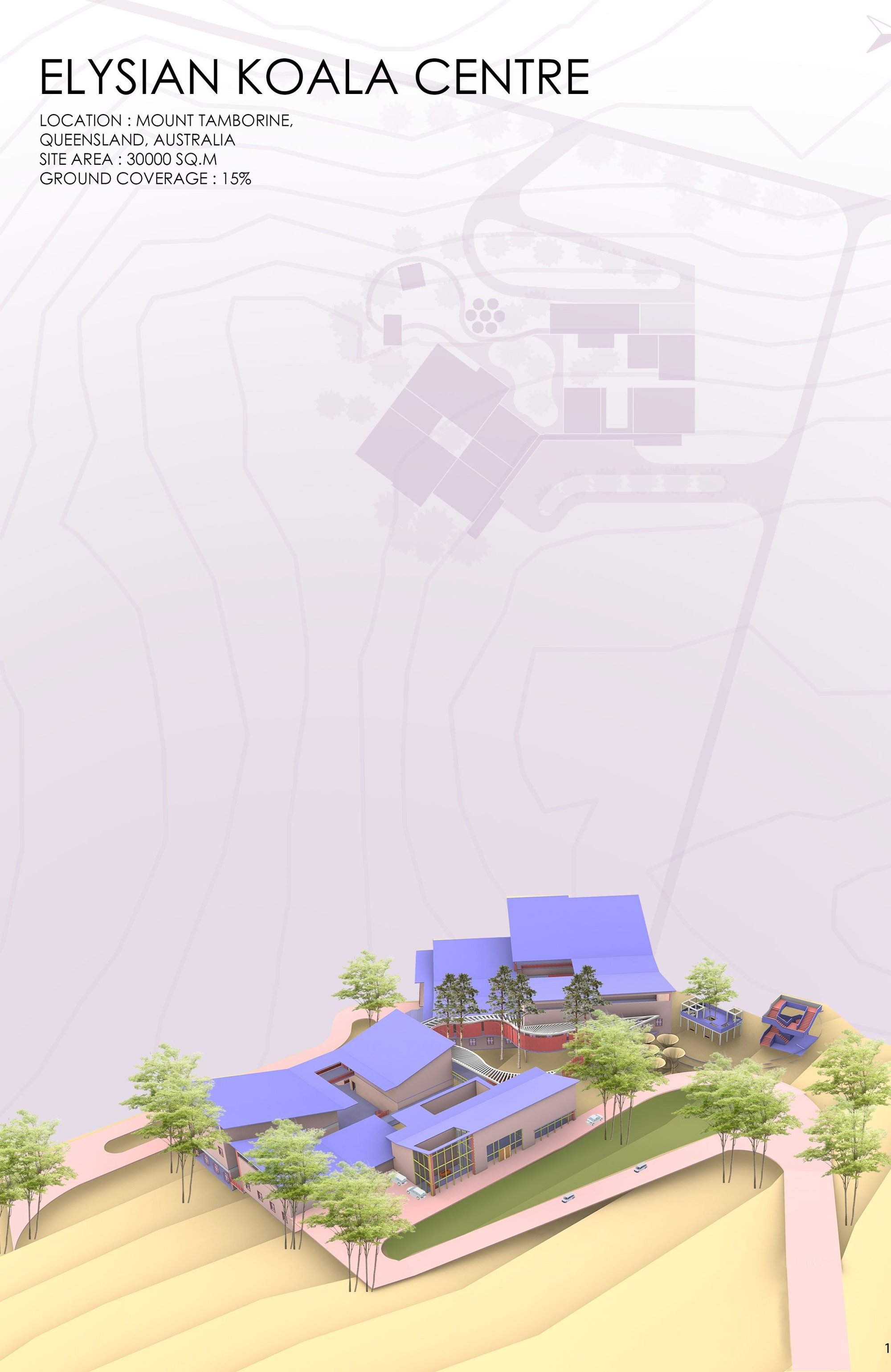
Elysian Koala Centre: A Wildlife Rehabilitation Architecture Project Rooted in Conservation and Learning
A wildlife rehabilitation architecture project where conservation, education, and nature unite to create a safe future for koalas.

As climate change, habitat destruction, and devastating bushfires continue to threaten native wildlife across Australia, architecture is increasingly being called upon to play a role in conservation. The Elysian Koala Centre responds to this challenge through a thoughtful example of Wildlife Rehabilitation Architecture that combines ecological responsibility, education, and animal care within a single environment.
Designed by Ridhima Mahadik, Manasi Thukrul, and Muskan Ranwaka, the project is located in Mt Tamborine, Queensland, Australia. The centre is envisioned as a rehabilitation facility where injured and vulnerable koalas can recover within a carefully designed setting that respects the surrounding landscape while promoting public awareness about conservation.
The project goes beyond the idea of a conventional rehabilitation center. It creates an immersive architectural experience that allows visitors to understand the delicate relationship between wildlife, habitat, and human intervention.
Designing Around the Concept of Voids in Architecture
At the heart of the design lies the concept of "voids in architecture."
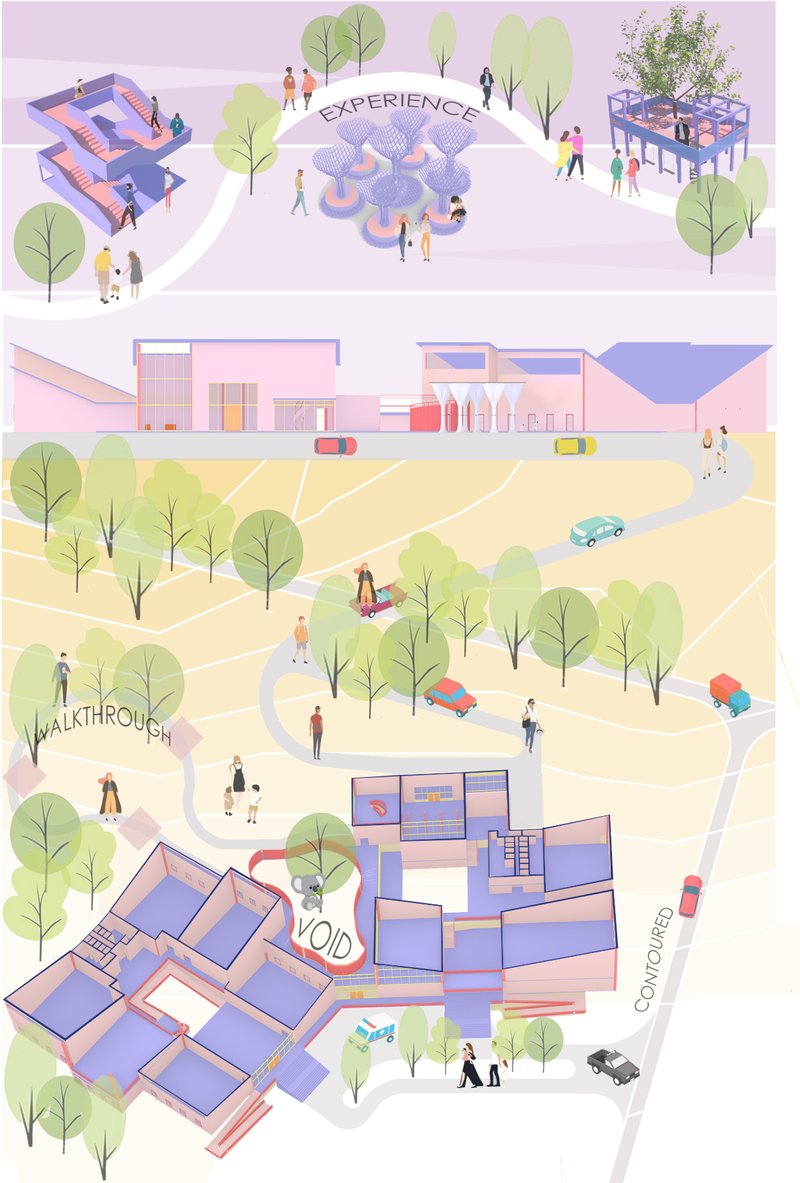
Inspired by philosophical interpretations of built and unbuilt spaces, the project treats voids not as empty areas but as meaningful connectors. These open spaces stitch together different functions, encourage interaction, improve environmental performance, and establish visual connections with nature.
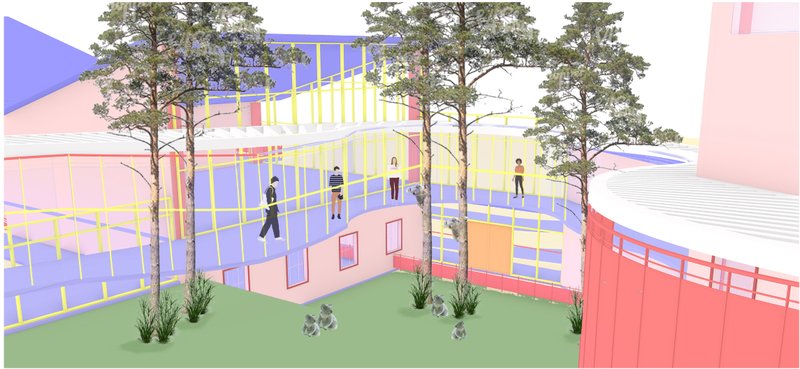
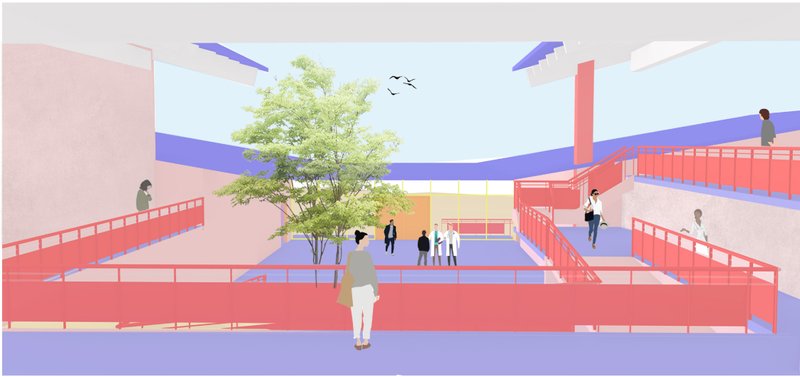
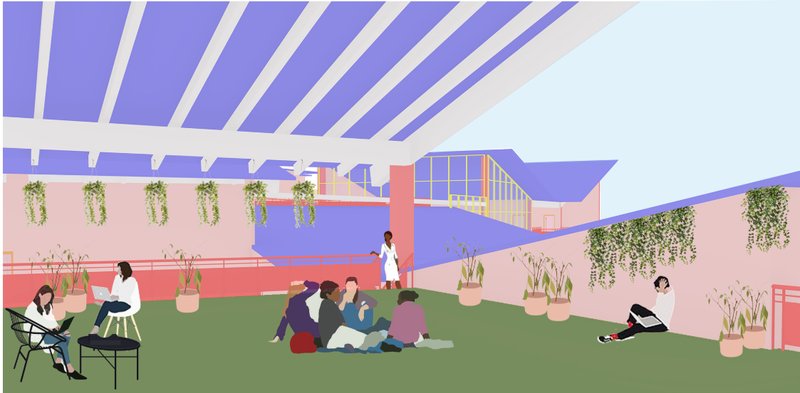
The central void becomes a living landscape where architecture and environment coexist. It functions as a shared ecological space that supports both human activity and wildlife rehabilitation. By allowing natural light, ventilation, and vegetation to penetrate deep into the building, the void strengthens the relationship between the built and unbuilt realms.
This design strategy transforms empty space into an active participant in the architectural experience.
Openness and Transparency as Design Principles
Another key principle guiding the project is openness.
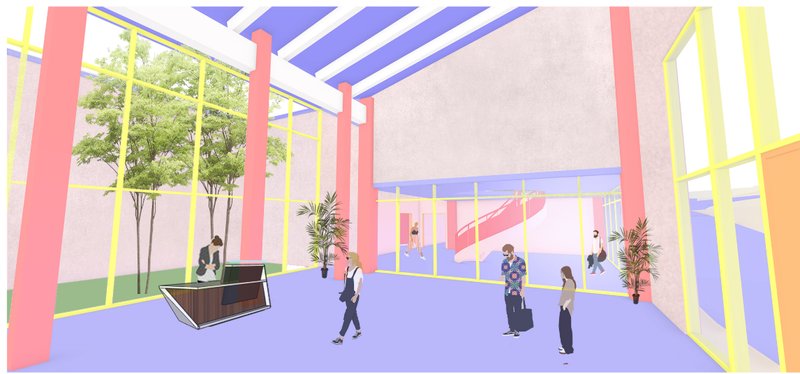
Large glazed surfaces, interconnected circulation paths, visual corridors, and open courtyards create transparency throughout the complex. Visitors are encouraged to experience the rehabilitation process through carefully curated views rather than isolated exhibition displays.
This openness enhances educational engagement while reducing the psychological barriers that often separate people from wildlife conservation efforts.
The architecture becomes an instrument for storytelling, allowing the building itself to communicate the importance of preserving endangered species and natural habitats.
A Non-Violent Architectural Approach
The Elysian Koala Centre adopts a philosophy of non-violence toward the environment.
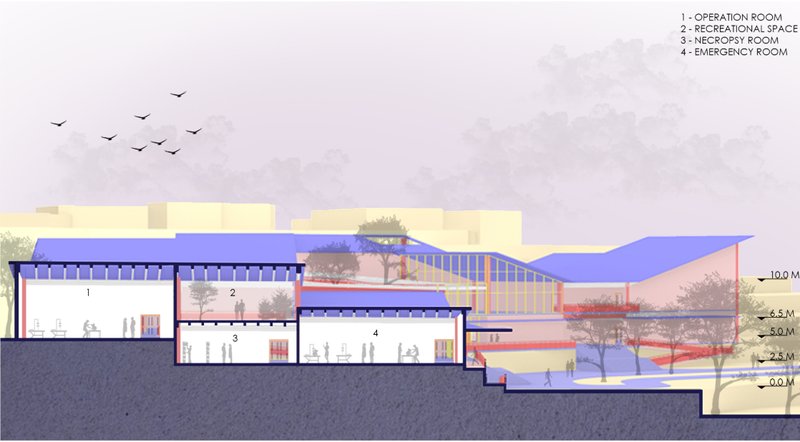
Instead of imposing itself on the landscape, the project carefully responds to existing contours and vegetation. The fragmented building arrangement minimizes excavation and preserves the site's natural topography.
The design follows the terrain rather than altering it. Building volumes are positioned strategically to reduce environmental disruption while maintaining operational efficiency.
This sensitive approach allows the architecture to blend into its surroundings while creating a strong ecological identity. Existing trees are retained wherever possible, and circulation pathways are designed to respect the site's natural character.
Site Planning and Landscape Integration
The centre is organized into three primary functional zones:
Public Zone
The public zone includes the museum, exhibition spaces, visitor amenities, educational facilities, and experiential installations. Positioned at the upper contours of the site, this area offers maximum accessibility and visibility.
Semi-Public Medical Zone
The medical facilities serve as the rehabilitation heart of the project. These spaces include emergency care, laboratories, intensive care rooms, operation rooms, and recreational recovery areas for animals.
Separate circulation systems ensure efficient movement while minimizing stress for recovering wildlife.
Private Administrative Zone
The administration block acts as a buffer between public and medical functions. This arrangement supports operational management while maintaining privacy and security for rehabilitation activities.
Together, these zones create a functional ecosystem where education, conservation, and healthcare work seamlessly together.
Learning Through Experience
One of the most innovative aspects of the Elysian Koala Centre is its emphasis on experiential learning.
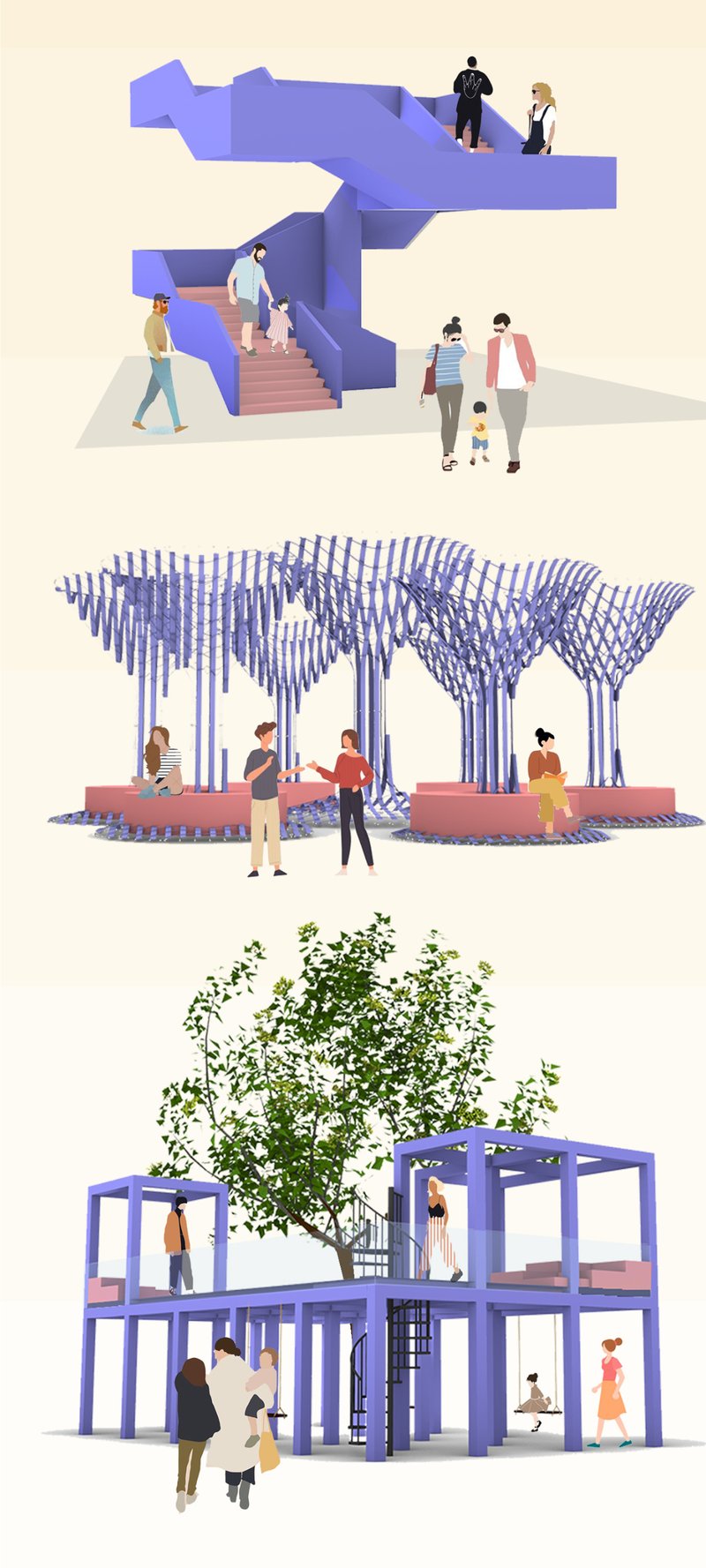
Rather than relying solely on traditional exhibits, the project introduces a series of interactive installations that simulate aspects of koala behavior and habitat.
Visitors are encouraged to engage physically with these structures, gaining a deeper understanding of how koalas interact with their environment.
The installations explore:
- Resting within tree branches
- Seeking shade during warmer periods
- Occupying elevated positions during cooler conditions
- Navigating natural habitats
Through direct participation, visitors develop empathy and awareness, transforming conservation education into a memorable experience.
Sustainable Architecture for Wildlife Conservation
Sustainability is embedded throughout the project.
The architectural form uses strategically placed voids and courtyards to maximize natural ventilation and daylight penetration. This significantly reduces dependence on mechanical systems and lowers energy consumption.
The sloping roof design enhances interior volume while introducing additional daylight into occupied spaces.
Material selection further supports environmental performance:
- Reinforced concrete for durability and thermal stability
- Timber elements that create warmth and reduce environmental impact
- Extensive glazing to improve daylight access
- Locally sourced materials to minimize transportation emissions
- Recyclable and long-lasting construction systems
The project demonstrates how sustainable architecture can simultaneously support ecological conservation, animal welfare, and public education.
Architecture That Encourages Awareness
The Elysian Koala Centre is designed as a journey rather than a destination.
Visitors move through landscaped pathways, educational installations, exhibition spaces, and carefully framed views of rehabilitation environments. Every element contributes to a broader narrative about habitat loss, climate change, and conservation.
The central void becomes both a symbolic and functional space where humans reconnect with nature. It offers opportunities for observation, reflection, and learning while providing a comfortable environment for recovering koalas.
This integration of architecture, landscape, and storytelling transforms the project into a powerful platform for environmental awareness.
A New Model for Wildlife Rehabilitation Architecture
The Elysian Koala Centre demonstrates how architecture can actively participate in conservation efforts. By combining ecological sensitivity, sustainable design principles, rehabilitation facilities, and immersive educational experiences, the project establishes a compelling model for future wildlife conservation centers.
Designed by Ridhima Mahadik, Manasi Thukrul, and Muskan Ranwaka, the proposal highlights the potential of Wildlife Rehabilitation Architecture to address urgent environmental challenges while fostering stronger connections between people and nature.
In an era when endangered species face unprecedented threats, projects such as the Elysian Koala Centre remind us that architecture can be more than shelter. It can become a tool for protection, education, and ecological healing.



Popular Articles
Popular articles from the community

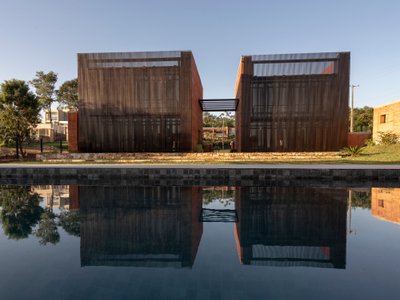
BAUEN Builds Two Rammed Earth Volumes in Paraguay Inspired by the Ovenbird's Nest
In San Bernardino, a house of compacted earth channels the instinct of a constructive bird to shelter life from the Paraguayan summer.
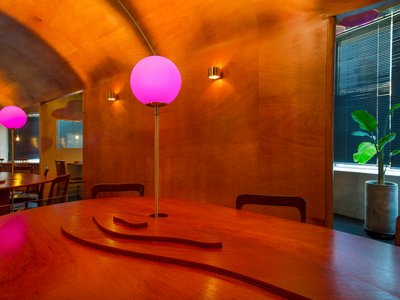
Indiesalon Carves a Plywood Cave into a Seoul Bistro's Second Floor
Munhwa Bistro's second Seongsu branch wraps diners in a laminated timber vault laced with colored light and mirror illusions.
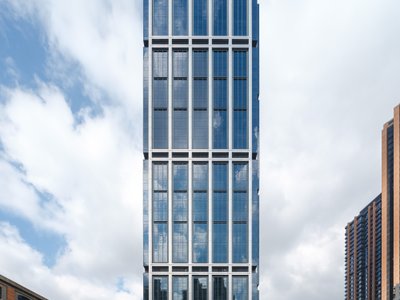
Foster + Partners Wraps a 200-Meter Shanghai Tower in Stainless Steel and Industrial Memory
The Suhe Centre Office Tower anchors a regenerated waterfront district in Shanghai with an all-steel structure that nods to local warehouse heritage.
Johnston Architects Reimagines the Methow Valley Hay Barn as a Small-Town Library in Winthrop
A 7,300-square-foot timber library channels the region's agrarian vernacular to serve a rural Washington community of 400 year-round residents.


Similar Reads
You might also enjoy these articles


Urban Forest: A Vertical Ecosystem for 5,000 Workers in Singapore's Changi Business Park
Radially stacked pods and layered green decks turn a 7-acre plot into 47 acres of ecological workspace projected for 2040.
interACT: A Wearable Transit Object That Turns Commuting Into Social Infrastructure
A backpack-mounted foldable device transforms walking, waiting, and riding into moments of shared comfort across Jakarta's transit network.
Lean On Barrier System: Where Traffic Safety Meets Chai Culture in Ahmedabad
A modular steel barrier doubles as informal seating and lean-on furniture at one of Ahmedabad's busiest intersections, keeping vendors in place.

The Black Bagh: A Living Monument Built from Water, Light, and Memory
On the banks of the Yamuna, two designers replace the myth of a marble mausoleum with a regenerative landscape of reflection and ritual.

Explore Conceptual Architecture Competitions
Discover active competitions in this discipline




The Global Benchmark for Architecture Dissertation Awards

Challenge to design a portable theatre


Challenge to design a portable music platform

Challenge to design an open learning module for the elderly
Comments (0)
Please login or sign up to add comments
No comments yet. Be the first to comment!