

Fasanen 36 Apartment Block in Berlin by CAMA A
Six-storey Berlin apartment block by CAMA A adds dense urban housing with concrete interiors, green façade, balconies, and rooftop penthouse.


Located in the prestigious district of Charlottenburg in Berlin, the Fasanen 36 Apartment Block byCAMA A represents a refined model of urban densification and contemporary residential architecture. Completed in 2023, the six-storey residential building introduces approximately 1,100 square meters of new living space on a compact 240-square-meter garden plot, addressing Berlin’s ongoing housing shortage through strategic inner-city development.
With a total built area of 1,750 square meters, the project demonstrates how infill housing in Berlin’s traditional block structure can be reimagined while respecting historical context and urban morphology.
Re-Densification of the Berlin Block Structure
Fasanenstraße stretches nearly two kilometers through Charlottenburg-Wilmersdorf, historically characterized by villas and townhouses that contrast with Berlin’s dense perimeter block typology. Over time, war destruction and postmodern reconstruction reshaped parts of the urban fabric, leaving certain interior garden plots underutilized.
In alignment with Berlin’s current planning agenda promoting sustainable urban densification, CAMA A proposed a new multi-storey residential building within the block interior. The project reactivates a previously underdeveloped site above a former underground car park, reinforcing the perimeter block while preserving green qualities.
This intervention is not merely architectural but urban, strengthening the block edge and creating a coherent ensemble with the renovated existing front building.
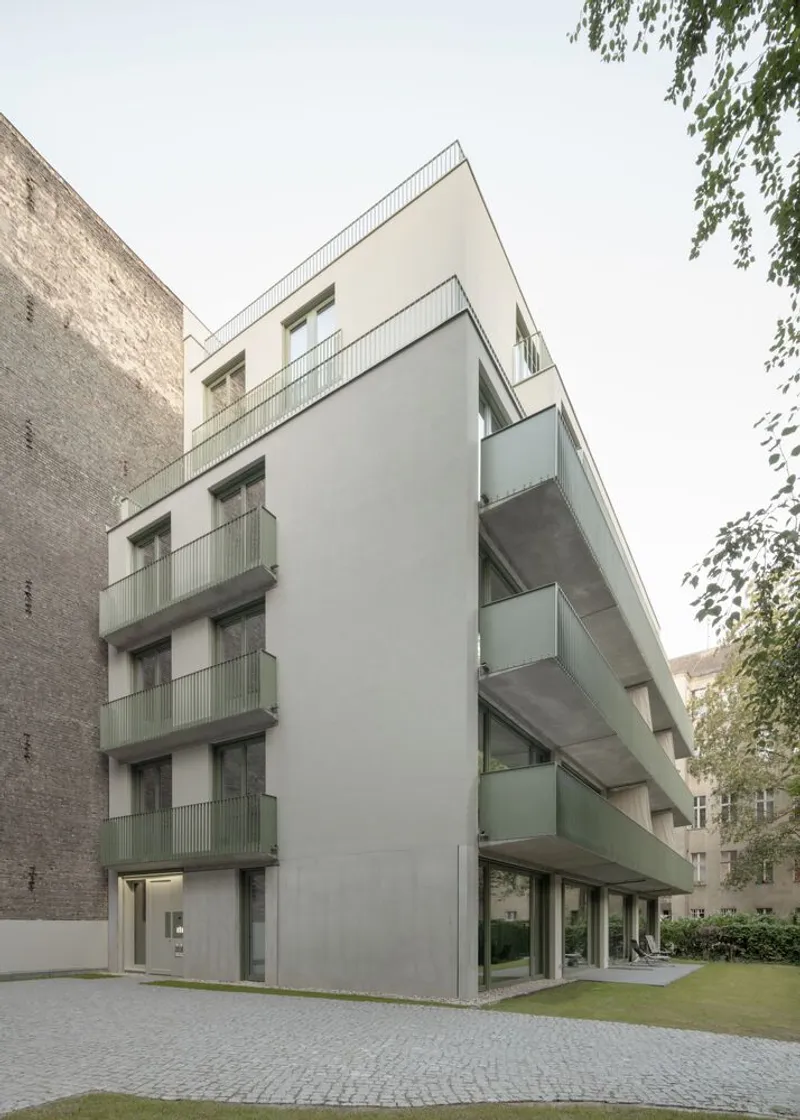
Architectural Concept: Materiality and Light
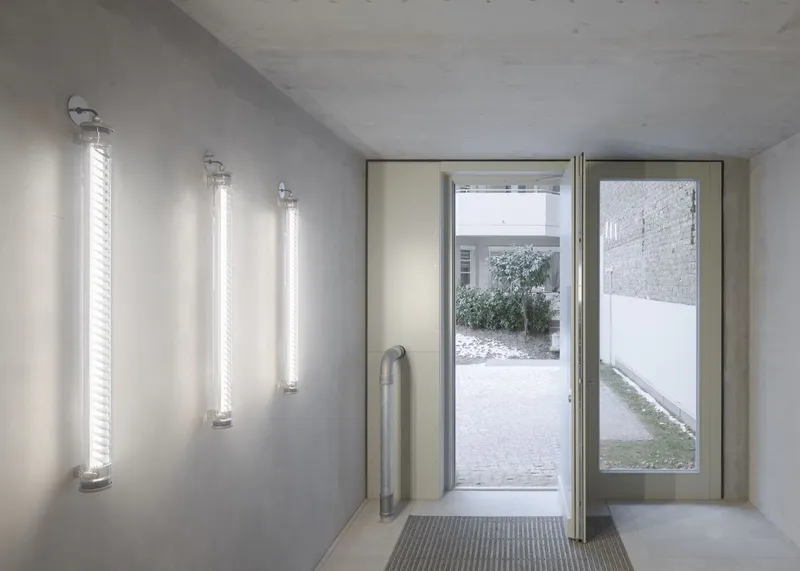
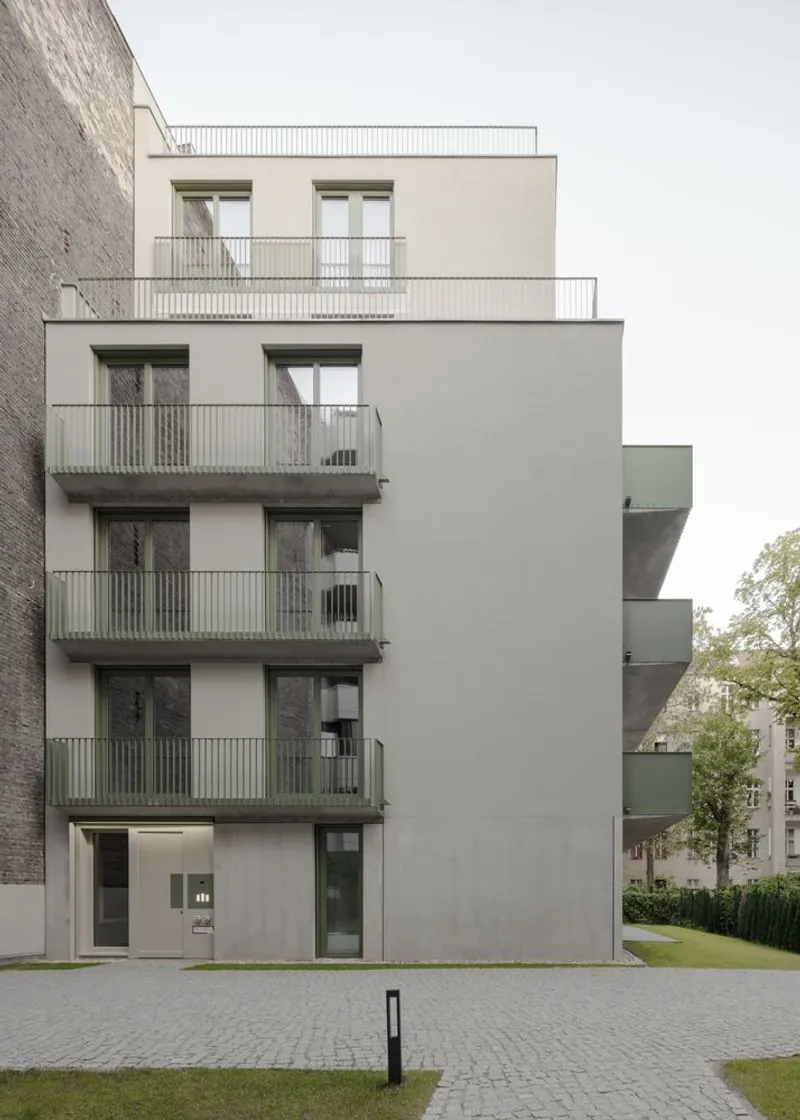
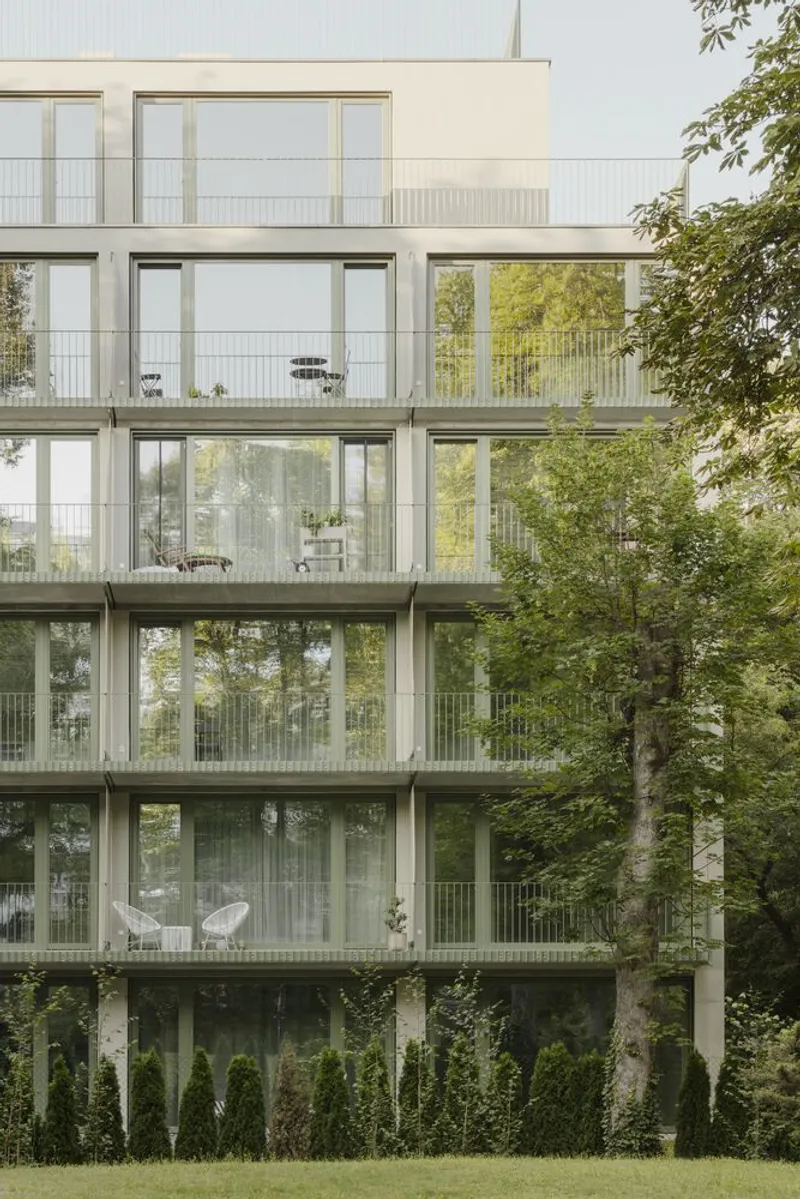
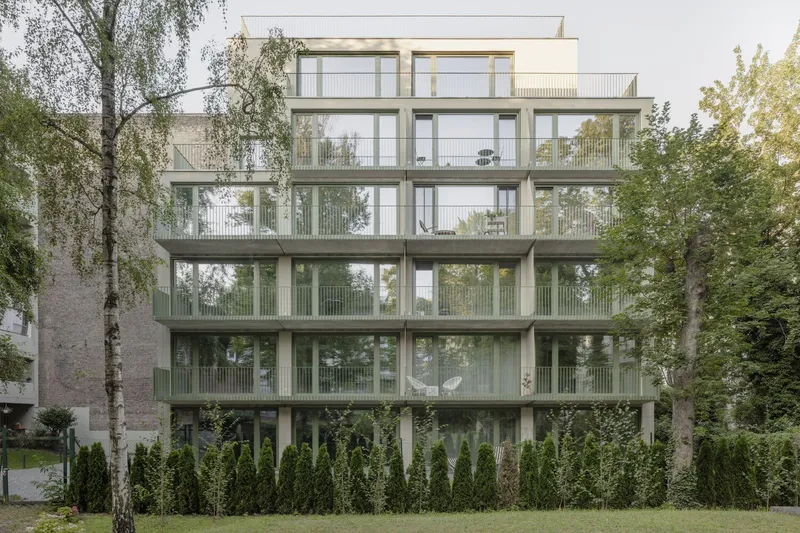
The new structure is anchored to an existing firewall, forming a solid extension within the urban fabric. The façade composition balances restraint and warmth:
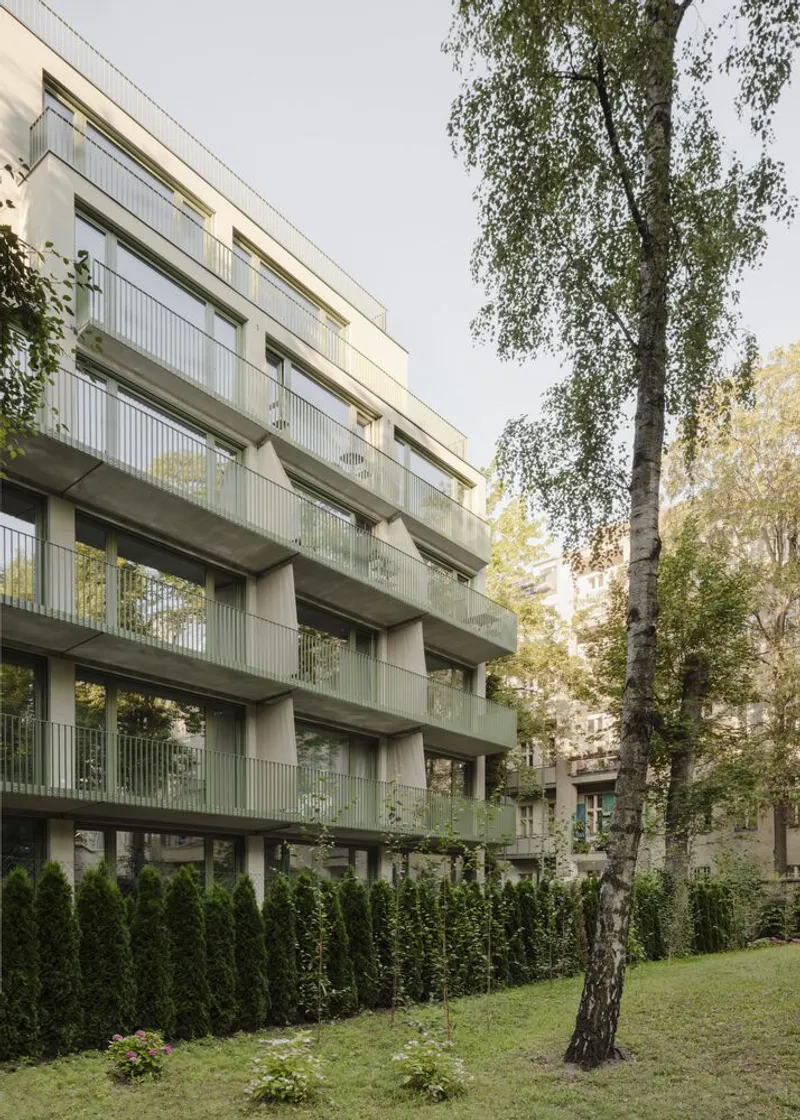
- Light grey-green plaster on upper floors
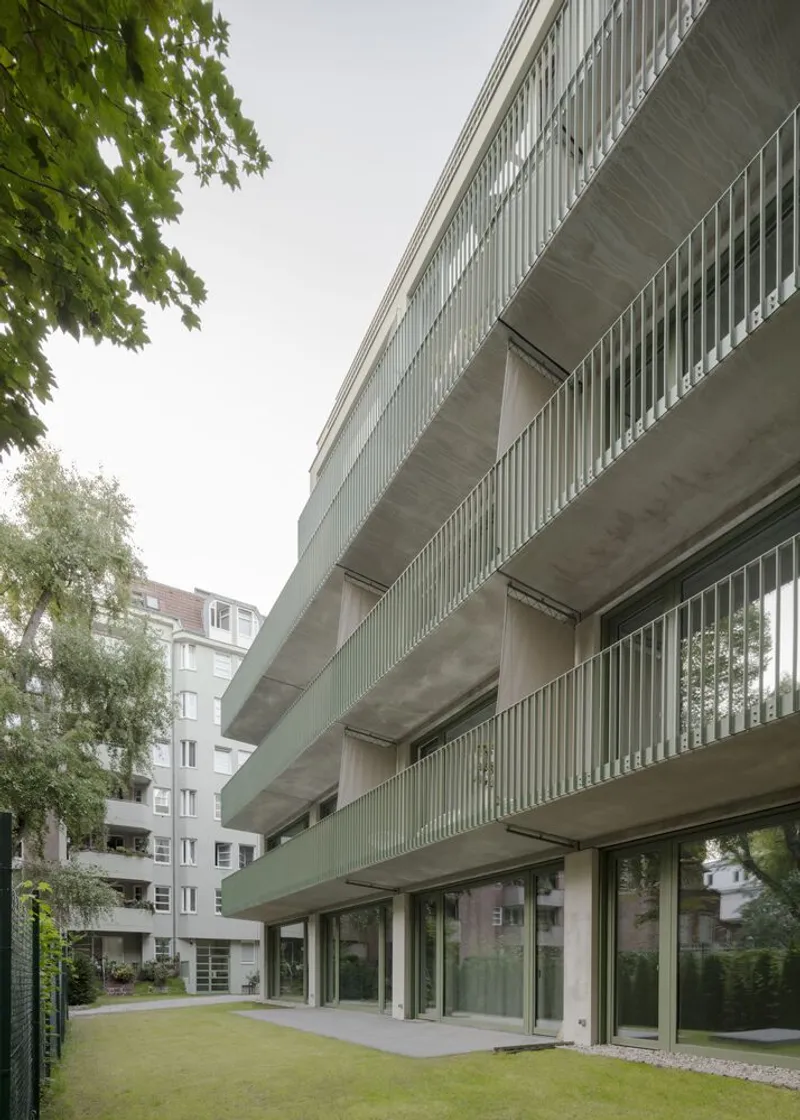
- Iron mica green metal railings and window frames
- Exposed concrete at ground level
- Dialogue with neighboring brick firewall
This carefully calibrated palette responds to the surrounding greenery and historic brick textures, creating a calm yet contemporary residential identity.
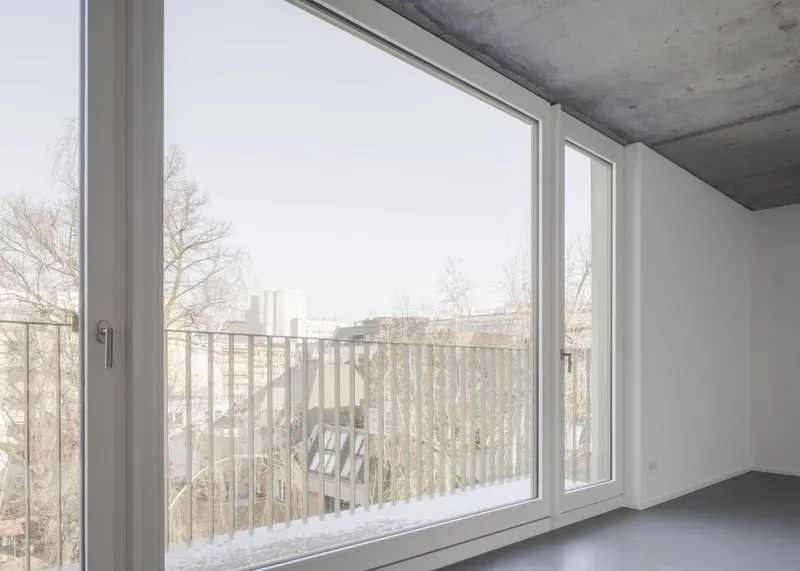
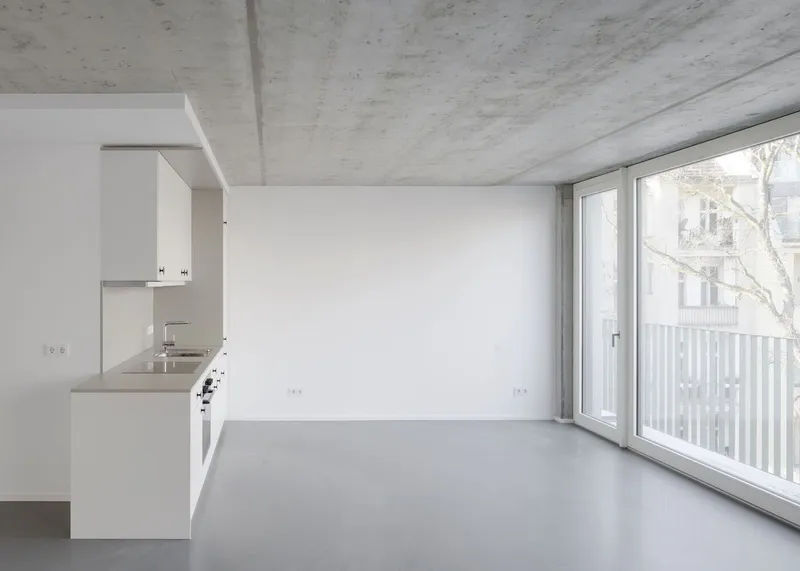
Large-format windows and generous balconies open the apartments toward a park-like garden courtyard, enhancing natural light and ventilation. The result is a bright, welcoming atmosphere that extends from exterior to interior.
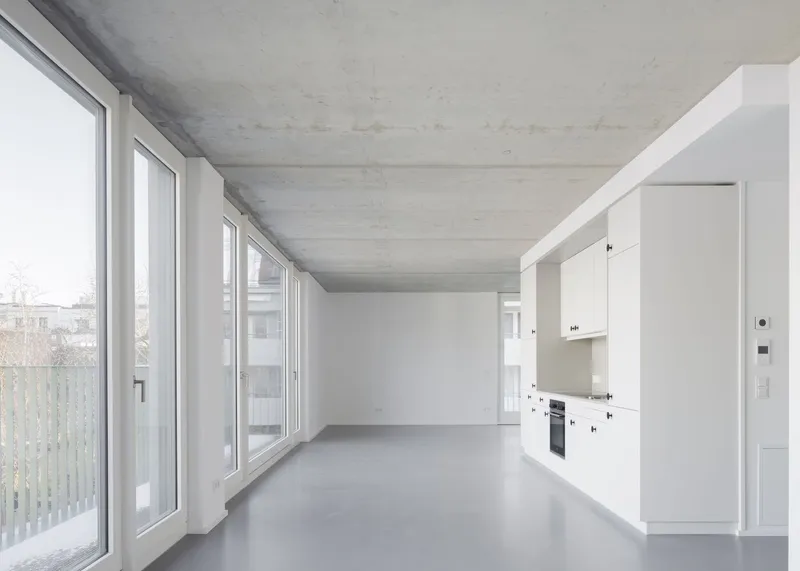
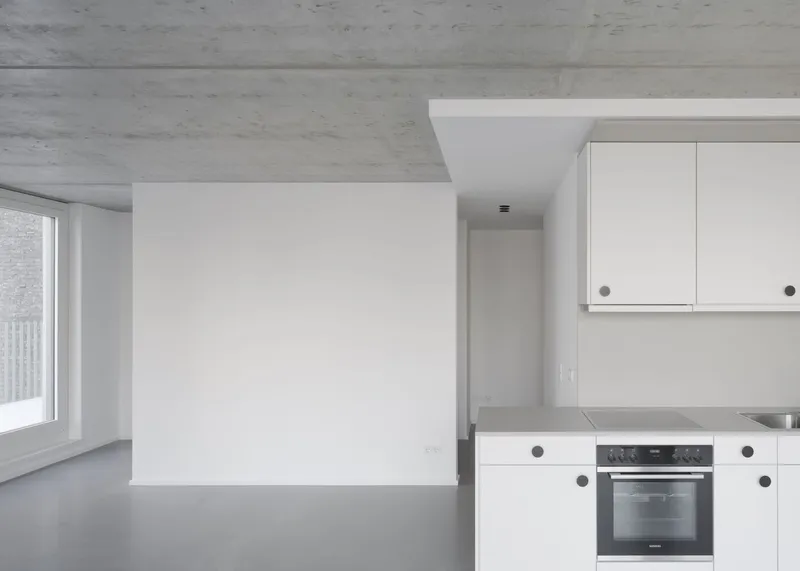
Flexible Residential Layouts and Loft-Like Living
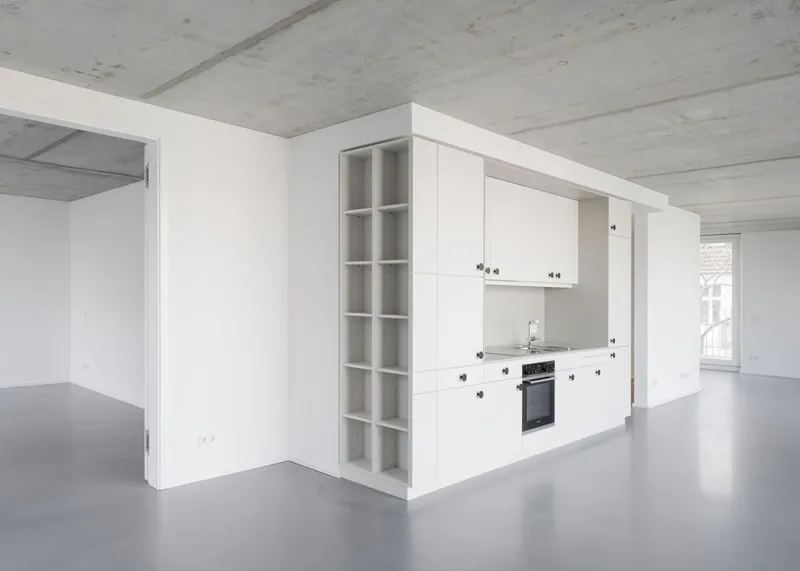
The development includes 15 apartments and one expansive penthouse with rooftop terrace views across Berlin’s skyline. Interior design emphasizes spatial flexibility:
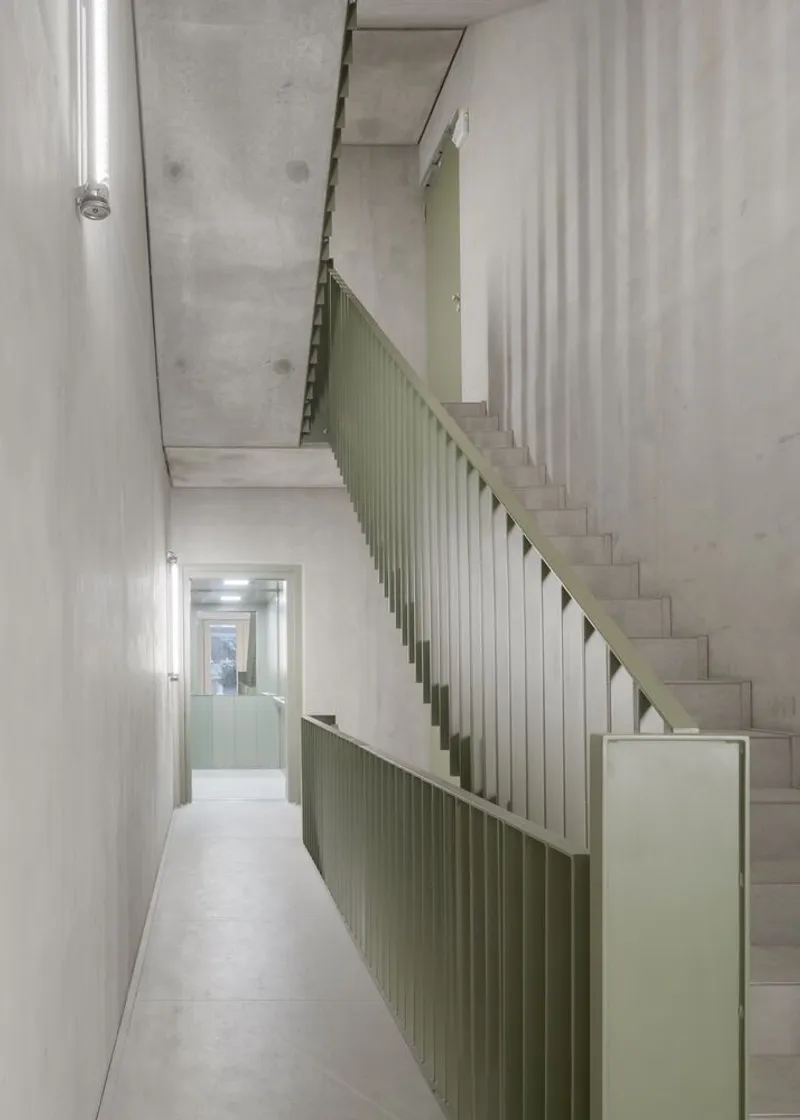
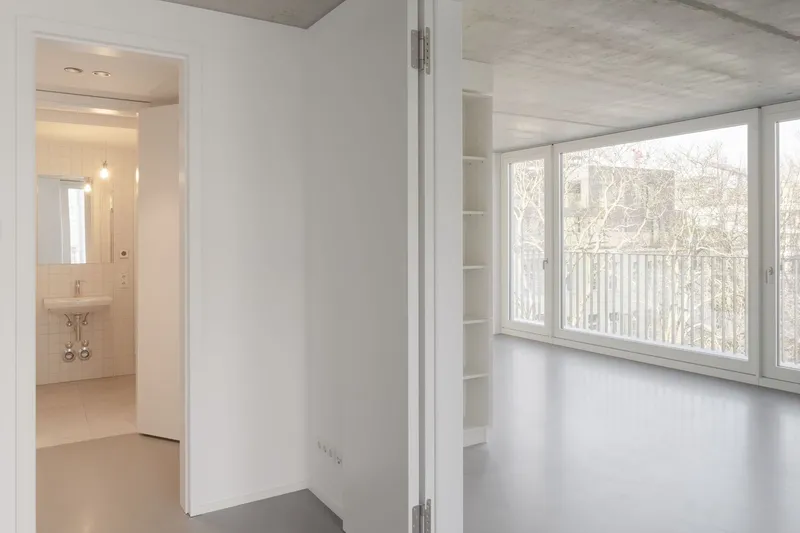
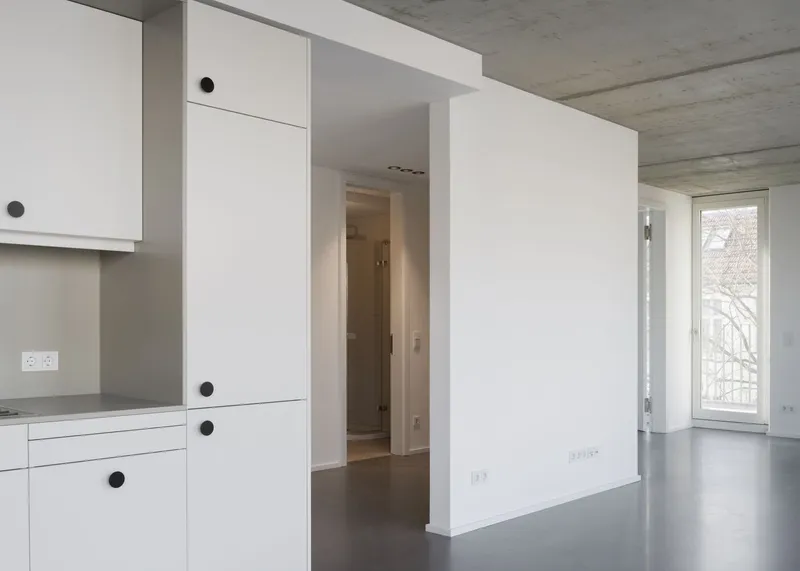
- Load-bearing exposed concrete walls and ceilings
- Finely leveled lightweight partition walls
- Floor-to-ceiling doors
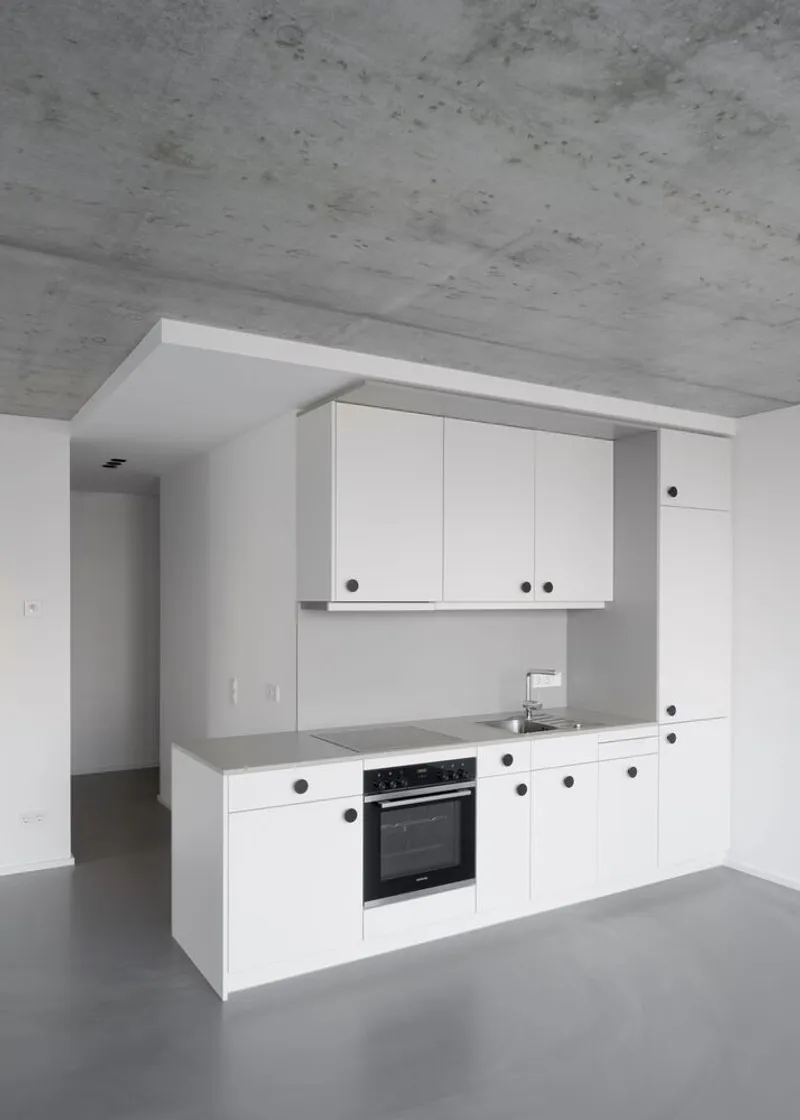
- Integrated fitted kitchens
The contrast between raw structural concrete and refined interior elements creates a loft-inspired aesthetic. Partition walls and built-ins function almost as inserted furniture pieces, allowing residents to adapt layouts to evolving living needs, a key feature in contemporary urban housing design.
Complex Construction Logistics in a Dense Urban Site
One of the project’s greatest challenges was site access. The existing front building had no direct street-level access to the rear garden plot, only underground entry to the car park. This required careful coordination of demolition and construction logistics above and below the existing structure.
The former underground parking facility was removed, and a new underground car park integrated into the development. This process reflects advanced planning strategies necessary for inner-city residential construction in Berlin’s dense neighborhoods.
Urban Ensemble and Architectural Continuity
Beyond the new building itself, the existing front structure was renovated and visually harmonized with the new development. Together, they form a cohesive architectural ensemble connected by the shared firewall, bridging past and present.
The project exemplifies how contemporary apartment architecture in Berlin can integrate sustainability, urban density, and contextual sensitivity without compromising spatial quality.
All photographs are works of
hiepler, brunier,


Popular Articles
Popular articles from the community


U.GA Architects Wraps an Oval Rooftop Pool in Curved Board-Formed Concrete on Busan's Jeollidan-gil
In Busan's Jeonpo-dong, a 454 m² mixed-use block stacks a neighborhood facility, guest rooms and an oval rooftop pool inside spiraling concrete walls.

Architekt Andreas Gruber Scatters 23 Dark Timber Chalets Across a South Tyrolean Forest Edge
In Molini di Tures, Amonti Chalets breaks a resort into a hamlet of gabled timber houses, with parking, storage and services pushed into the slope.

David Macias Steps a Doorless Stone and Plaster House Down a Tropical Colombian Hillside
In the humid hills of Colombia, Threshold House replaces the front door with an open void and terraces its 850 m² down the slope instead of fighting it.

Juan García Correa, John González and Claudia Rueda Sink a Circular Amphitheater into a Manizales Engineering Building
On the La Nubia campus in Manizales, Colombia, the S1 Building folds labs and offices into a hillside of ramped lawns that double as a campus route.

Similar Reads
You might also enjoy these articles

Gil Mello Arquitetura Tilts a Single Roof Toward the Waterfalls on a Plateau Above Aiuruoca, Brazil
In Aiuruoca, Minas Gerais, a 200 m² house of local labor and reclaimed poles pairs a low valley veranda with a tall mountain one.
U.GA Architects Wraps an Oval Rooftop Pool in Curved Board-Formed Concrete on Busan's Jeollidan-gil
In Busan's Jeonpo-dong, a 454 m² mixed-use block stacks a neighborhood facility, guest rooms and an oval rooftop pool inside spiraling concrete walls.

Felipe Hess Arquitetos Turns a Blind Stone Wall to the Street and Opens a Brazilian House onto a Courtyard and Canal
A canal-front house in Brazil hides behind painted stone and planting, then opens to an olive-tree courtyard, a reed-ceilinged porch and a curving pool.
David Macias Steps a Doorless Stone and Plaster House Down a Tropical Colombian Hillside
In the humid hills of Colombia, Threshold House replaces the front door with an open void and terraces its 850 m² down the slope instead of fighting it.

Explore Residential Building Competitions
Discover active competitions in this discipline

Challenge to design mud housing for contemporary communities

Challenge to reimagine the Iron Throne

Photograph architecture without architects

Illustrate the lost glory of Angkor Wat - Render Challenge
Comments (0)
Please login or sign up to add comments
No comments yet. Be the first to comment!