

Feldballe School Extension by Henning Larsen: A Carbon-Negative Model for Sustainable School Architecture
Carbon-negative school extension using straw, timber, and circular design, creating a healthy, energy-efficient, and climate-responsive learning environment for future generations.


Architects: Henning Larsen
Located in Feldballe, the Feldballe School extension represents a groundbreaking step in sustainable school architecture, designed for future generations facing the realities of the climate crisis. This innovative 250 m² educational space demonstrates how carbon-negative construction, bio-based materials, and circular design strategies can reshape the future of learning environments.


Climate-Responsive Architecture for the Next Generation
Designed as a science-focused learning facility, this project by Henning Larsen pushes the boundaries of eco-friendly architecture. The concept goes beyond reducing emissions, it actively sequesters carbon, making it a benchmark in low-carbon and regenerative building design.
The extension reflects a forward-thinking approach where architecture becomes a teaching tool, encouraging students to engage with sustainability through the very space they inhabit.


Bio-Based Materials: Straw, Timber, and Natural Innovation
At the core of the project is a radical material strategy that replaces traditional construction materials like concrete and steel with renewable, non-toxic, and locally sourced alternatives.
The structure utilizes:
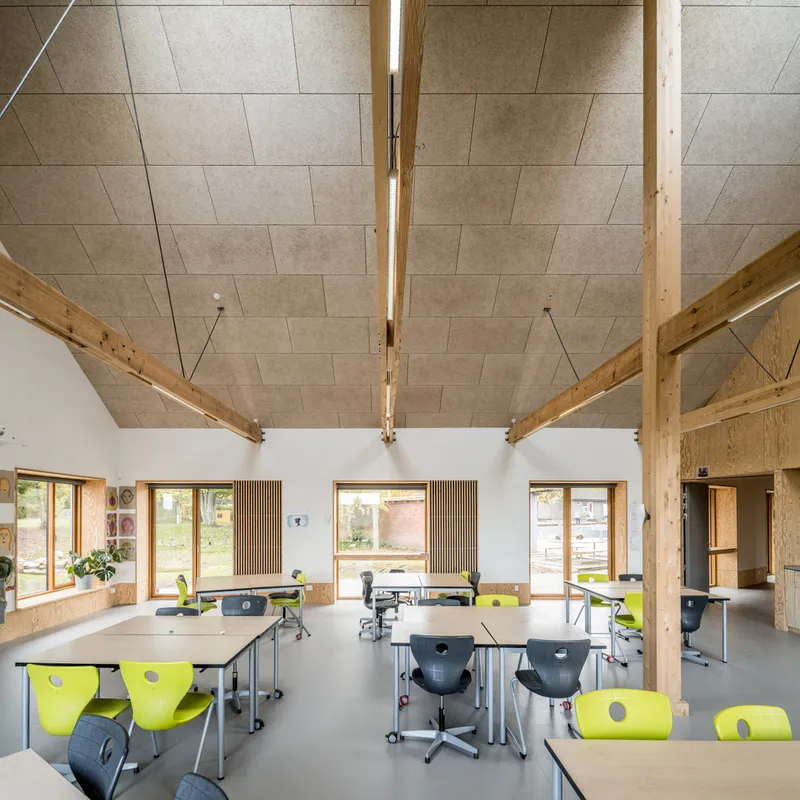
- Compressed straw panel systems for carbon sequestration
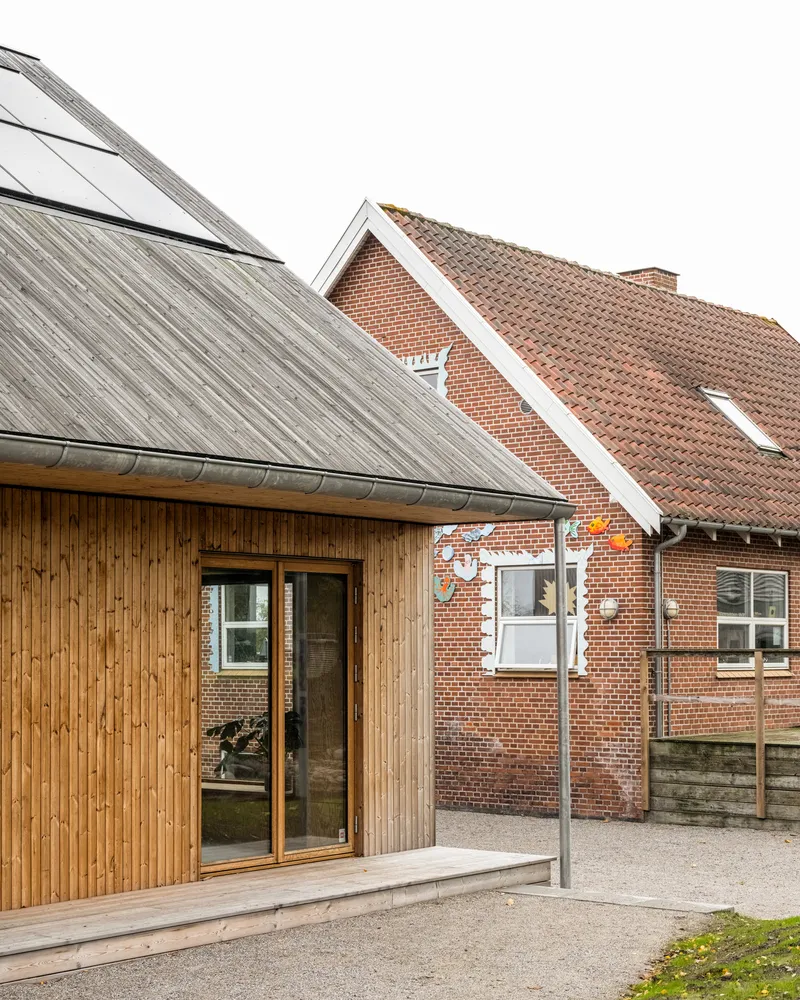
- Locally sourced timber roofing for reduced embodied energy
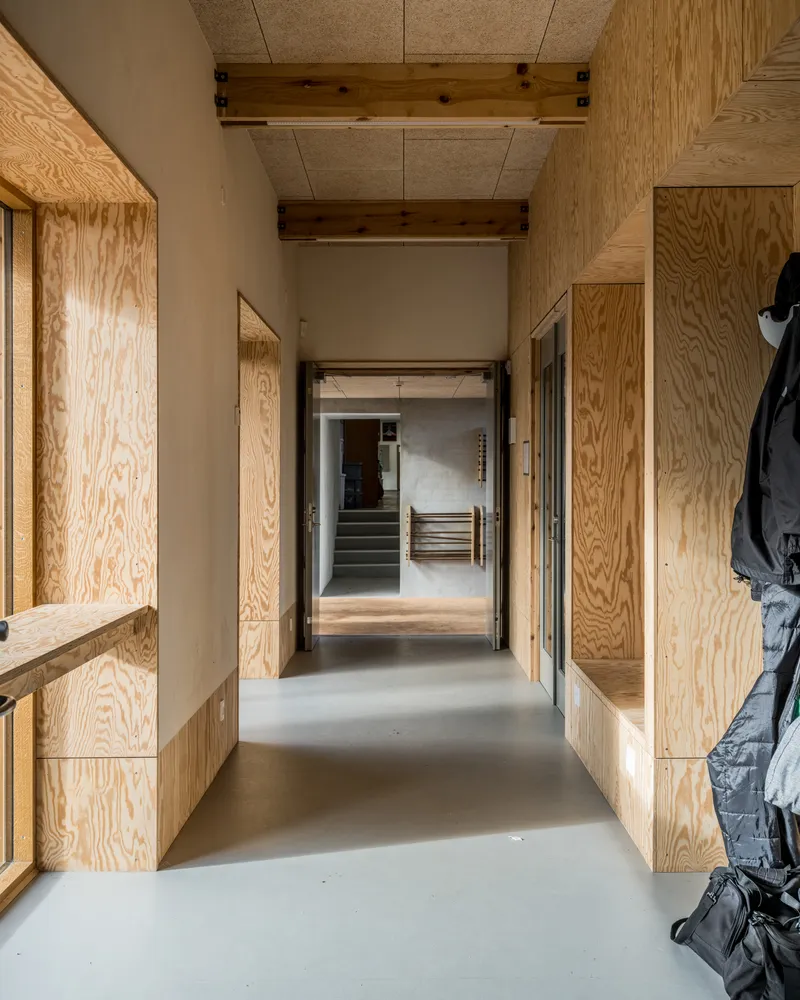
- Clay plaster walls to enhance breathability and indoor comfort
- Natural eelgrass-based ventilation filters for improved air quality
These materials not only reduce environmental impact but also create a warm, tactile, and healthy indoor learning environment, essential for modern educational architecture.

Circular Construction and Scalable Design Solutions
One of the most innovative aspects of the Feldballe School extension is its design for disassembly. Every component is carefully planned to be reused, recycled, or reassembled, aligning with circular economy principles in architecture.
This scalable system, developed in collaboration with EcoCocon, demonstrates how modular bio-based construction can be adapted to various building typologies globally.

Energy Efficiency and Passive Environmental Strategies
The building integrates passive design strategies to minimize operational energy consumption. Natural ventilation, supported by the breathable properties of straw and clay, ensures a consistent indoor climate without mechanical systems.
Additional sustainability features include:
- Solar panels for renewable energy generation
- High ceilings and open interiors for improved airflow
- Smart air-quality monitoring systems
These elements collectively enhance energy-efficient school design, reducing reliance on artificial systems.


Carbon-Negative Performance and Lifecycle Impact
The project sets a new standard in life cycle assessment in architecture, achieving an impressively low carbon footprint of 6 kg CO₂e/m² annually over 50 years. With prolonged use, this can reach carbon-negative levels, making it one of the most environmentally responsible educational buildings today.
This achievement highlights the importance of long-term sustainability strategies, where building longevity directly contributes to environmental performance.


Educational Architecture as a Catalyst for Change
Part of the eco-community Friland, the school extension embodies a larger vision, educating students to become environmentally conscious leaders. The building itself acts as a living laboratory, demonstrating principles of green building design, material innovation, and climate-responsive architecture.


A Blueprint for Future Sustainable Schools
The Feldballe School extension is a powerful example of how sustainable architecture, bio-based construction, and circular design thinking can converge to create meaningful, future-ready educational spaces.
By combining innovation with environmental responsibility, Henning Larsen has delivered a project that not only reduces impact but actively contributes to a regenerative future.

All photographs are works of
Rasmus Hjortshøj - COAST


Popular Articles
Popular articles from the community


David Ortega Stacks a Two-Story Mexico City Penthouse Around a Steel Stair and a Pergola-Shaded Roof Terrace
In Colonia Roma, a 300 m² penthouse uses oak joinery, a planted steel stair and a slatted roof pergola to make a new-build apartment feel like a house.

Manzana Morphosis: Stretching Barcelona's Grid into a Living Landscape for 2050
A radical reworking of the Eixample manzana turns density into a tool for generous public space, vertical ecology, and environmental performance.

Opera on the Sea: Driftwood Logic Shapes a Timber Opera House on Estonia's Coast
Trevor Orgill's opera house translates the entangled drift of floating timber into a civic building where wood, water, and music converge.

Aquadapt: An Underwater Habitat That Rewrites Its Rooms by the Hour
Curved modules ring the seabed while one shell shifts from breakfast room to cinema, farm and football pitch as residents' needs change.

Similar Reads
You might also enjoy these articles

Cube Design Draws an Ecological Corridor Between Two Shenzhen Hills with the Nankai Building
Beside Shenzhen's container docks, the Nankai Building pairs stacked balconies with a climbing green screen to connect two hillsides across its height.

Praksis A and Studio Sted Bend a Red Timber Cabin Across the Granite of Norway's Southern Coast
On the southern Norwegian coast, a 105 m² cabin follows the rock on slender posts, pairing red cladding outside with pine, brick and plywood within.
David Ortega Stacks a Two-Story Mexico City Penthouse Around a Steel Stair and a Pergola-Shaded Roof Terrace
In Colonia Roma, a 300 m² penthouse uses oak joinery, a planted steel stair and a slatted roof pergola to make a new-build apartment feel like a house.

PARALELA and LB2 Thread a Public Walkway Through the Base of a Las Condes Residential Tower
In Las Condes, Santiago, the Hamlet Building gives its fenceless ground floor to a 70-metre wooded passage linking two streets and the metro.

Explore Architecture Competitions
Discover active competitions in this discipline

Challenge to design public laboratory

Challenge to reimagine the Iron Throne

Photograph architecture without architects

Illustrate the lost glory of Angkor Wat - Render Challenge
Comments (0)
Please login or sign up to add comments
No comments yet. Be the first to comment!