
Floating Islands: A Landmark in Sustainable Bridge Design
Floating Islands redefines sustainable bridge design by merging green public space, cycling infrastructure, and kinetic urban architecture.


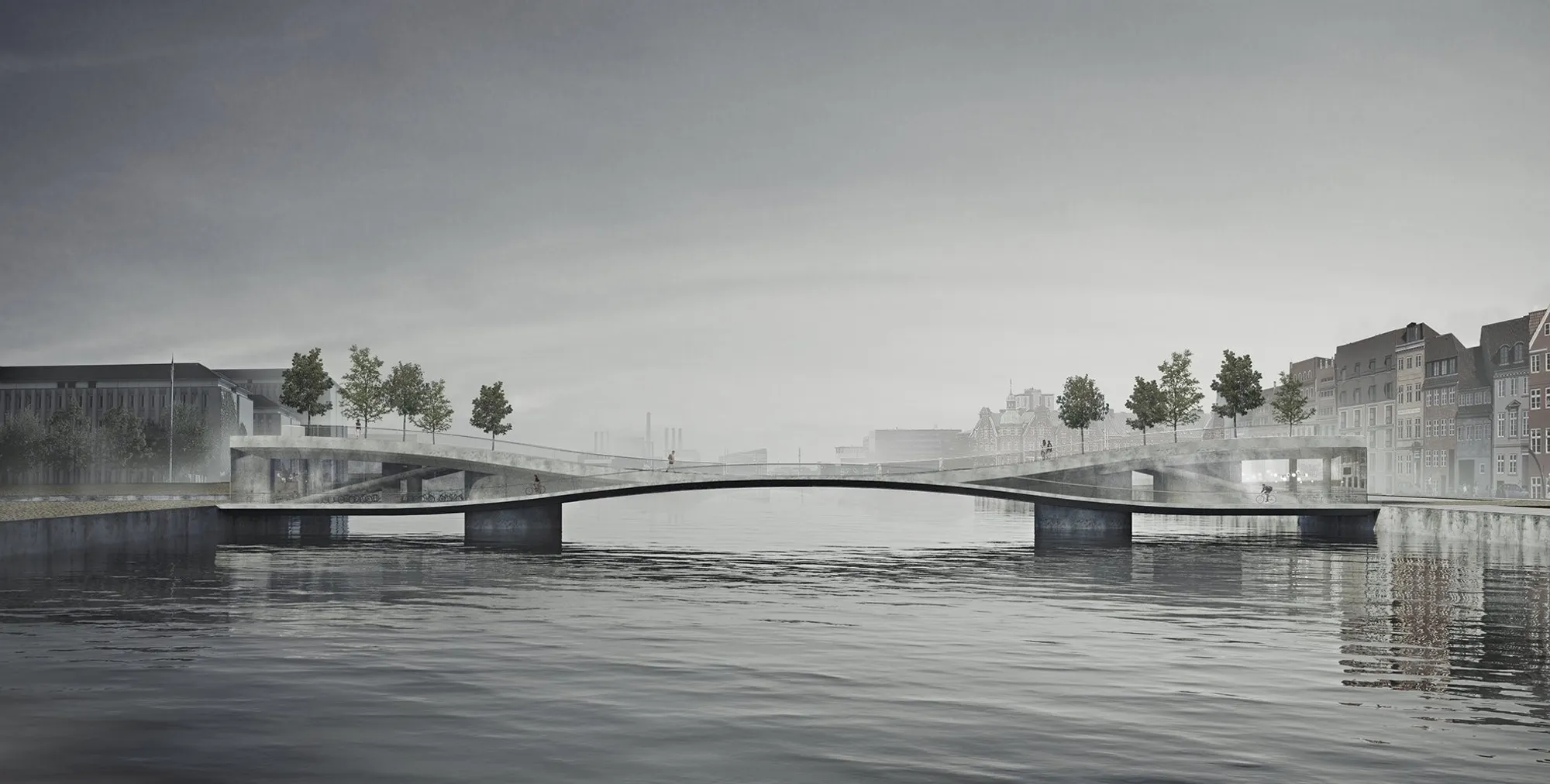
Floating Islands is a visionary proposal that elevates the idea of sustainable bridge design beyond infrastructure. Conceived as a hybrid between landscape, public square, and kinetic structure, the project transforms a simple river crossing into an immersive civic experience. Designed by Marceli Sobański, Bartek Bruzda, and Paweł Danielak, the bridge responds to Copenhagen’s culture of cycling while expanding the definition of what urban infrastructure can become.
In cities where bicycles continue to gain importance as a primary mode of transportation, infrastructure must do more than accommodate movement, it must shape social life. Floating Islands demonstrates how sustainable bridge design can encourage ecological mobility, strengthen public space, and create an iconic architectural identity.


The Idea: Infrastructure as Landscape
At its core, the project recognizes that bicycles remain one of the most efficient, ecological, and democratic modes of transport. Inspired by Copenhagen’s well-developed cycling culture, the bridge integrates separate pedestrian and cycling routes to ensure a safe, collision-free crossing.
Rather than treating the bridge as a flat transitional object, the designers sculpted it into two gently rising symmetrical forms. These green hills conceal the structural mass while creating elevated landscapes above. The result is not just a bridge, but a floating park hovering above the river.
By placing usable public space on the roof, the project maximizes surface area and reclaims infrastructure as civic territory. The hills form a valley-like central plateau comparable in scale to a small urban square, offering panoramic river views while maintaining visual continuity across the water.
Program: Green Space Meets Mobility
The 100-meter-long structure accommodates multiple layers of activity within a compact footprint. The program is divided into two primary zones:
- A café and workshop space integrated within the structural volumes
- Dedicated pedestrian and bicycle circulation paths
Separated routes allow both cyclists and walkers to move efficiently without interference. Meanwhile, the sloping green surfaces create informal seating, relaxation areas, and gathering points.
The gentle hills act as natural amphitheaters, enabling outdoor cinema screenings, small performances, and community events. In this way, the project exemplifies sustainable bridge design by combining mobility, leisure, and culture within one cohesive architectural gesture.

Kinetic Opening: Engineering as Spectacle
A defining feature of Floating Islands is its openable mechanism. The bridge is composed of two symmetrical sections that rotate along their axes to create a 25-meter navigable opening for river traffic.
This kinetic transformation turns a technical requirement into a civic spectacle. During opening, the planted roofs visually separate into two green landforms, appearing as floating islands on the water. The structural movement enhances the user experience, offering new perspectives of the city and reinforcing the bridge’s identity as both engineering achievement and urban landmark.
The opening system remains simple yet expressive, proving that sustainable bridge design can balance durability, functionality, and visual impact.
Urban Integration and Form
The bridge’s streamlined profile ensures it does not dominate the skyline. Instead, its slender silhouette integrates seamlessly into the surrounding urban fabric. The central portion remains relatively flat to preserve uninterrupted views of the river, while the structural mass is concealed beneath landscaped slopes.
Trees planted along the roofline further soften the structure, visually separating visitors from the city and focusing attention toward the water. This strategic blending of architecture and landscape reinforces the idea that infrastructure can become an ecological extension of the urban environment.
Encouraging Sustainable Transportation
Floating Islands demonstrates how thoughtful urban design can actively promote sustainable modes of transportation. By providing safe, comfortable cycling routes and integrating social amenities directly into infrastructure, the project encourages people to choose bicycles over cars.
The design supports year-round cycling culture, emphasizing accessibility, affordability, and environmental responsibility. It transforms the daily commute into a spatial experience: where crossing the river becomes an opportunity to meet, pause, and engage with the city.
A Landmark Through Experience
Bridges often become defining elements of a city’s identity. Floating Islands achieves this not through monumental scale but through experiential richness. The dynamic opening sequence, green rooftops, and multifunctional public spaces ensure the bridge operates as both infrastructure and destination.
By merging kinetic engineering, landscape architecture, and social programming, the project reimagines the typology of the urban bridge. It proves that sustainable bridge design can create civic value beyond mobility: fostering interaction, ecological awareness, and architectural distinction.
Floating Islands is more than a crossing, it is a prototype for the future of sustainable bridge design. By integrating green public space, safe cycling infrastructure, and transformative engineering, the project establishes a new paradigm for urban infrastructure in progressive cities like Copenhagen.
In an era where sustainability, mobility, and community engagement define architectural priorities, Floating Islands stands as a compelling vision of how bridges can evolve into living, breathing parts of the city.



Popular Articles
Popular articles from the community


Co-life: Sustainable Architecture for Age-Friendly Community Living
Co-life reimagines sustainable architecture for seniors through courtyards, rammed earth, shared gardens, and spaces designed for belonging.

Riyadh For All: Intergenerational Urban Design for Active Aging in Rabat
Riyadh For All reimagines urban design in Rabat with intergenerational co-living, adaptive courtyards, and Moroccan cultural exchange today.

EW PARK: Sustainable Architecture Reimagines the Future of Urban Parking
EW PARK reimagines city parking as a modular wooden tower combining automation, solar energy, electric mobility, and adaptable urban design.

Co-Life: Senior Housing Design That Reconnects Older Adults With the City
Co-Life reimagines senior housing design through healing gardens, shared streets, workshops, and a sustainable community across generations.

Similar Reads
You might also enjoy these articles

Eco Chapel: A Green Architecture Pavilion Designed in Symbiosis with the Forest
Eco Chapel uses green architecture to weave prayer, learning and reuse into a forest pavilion shaped by modular hexagonal canopies for life.
Kaffeebühnen: Coffee Shop Architecture Designed as a Civic Stage Between Vienna’s City and Park
Kaffeebühnen turns coffee shop architecture into a civic stage, linking Vienna’s park edge, urban life, warm timber yards, and coffee craft.
Healing Façade: Sustainable Architecture for Reforestation, Community, and Sacred Ecology in Ethiopia
Healing Façade reimagines sustainable architecture as a living wall that restores soil, catches water and renews Ethiopia's forest churches.


Urban Forest: A Vertical Ecosystem for 5,000 Workers in Singapore's Changi Business Park
Radially stacked pods and layered green decks turn a 7-acre plot into 47 acres of ecological workspace projected for 2040.

Explore Architecture Competitions
Discover active competitions in this discipline



Challenge to reimagine the Iron Throne


Photograph architecture without architects


Illustrate the lost glory of Angkor Wat - Render Challenge


Design challenge to reuse E-waste
Comments (0)
Please login or sign up to add comments
No comments yet. Be the first to comment!