
FOAA Packs Twenty Townhouses into a Santiago Block Without Losing the Courtyard
In Providencia, a low-rise brick complex trades high-rise apartment living for private courtyards, rooftop terraces, and communal lanes.

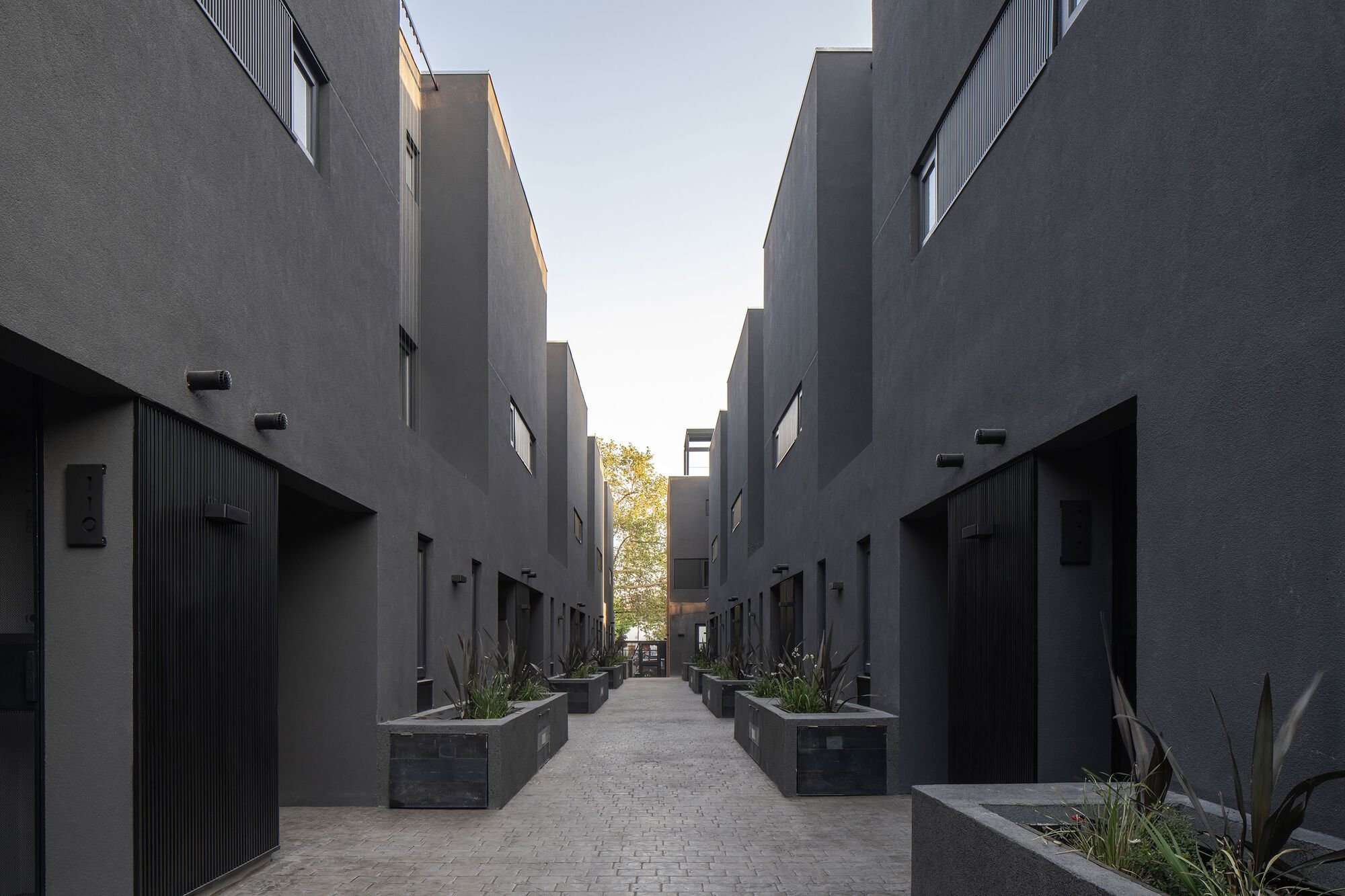
Santiago's Providencia district sits inside the city's central ring, a well-connected zone where density usually means apartment towers. FOAA chose a different format for Casa Italia Townhouse: twenty individual homes packed into a single city block, each with its own courtyard and rooftop terrace. The project, completed in 2022, reads from the street as a continuous brick wall punctuated by steel bracing and recessed balconies. Step inside, though, and you find a network of paved lanes, planted concrete beds, and grey stucco facades that belong more to a Mediterranean village than to a Chilean capital.
What makes the project genuinely interesting is its refusal to choose between urban density and domestic privacy. Underground parking absorbs all the cars. Shared security and common areas hold the perimeter. And every unit gets outdoor space that is not a balcony tacked onto a tower floor plate but a true ground-connected courtyard, plus a sky-connected rooftop. The result is a housing typology that competes directly with the apartment market on location and price per square meter while offering something apartments structurally cannot: interiority.
A Brick Perimeter That Holds the Street
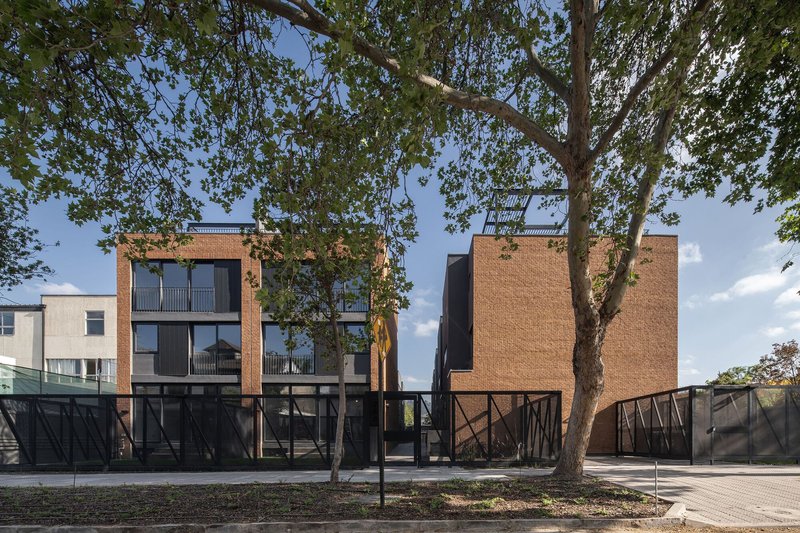
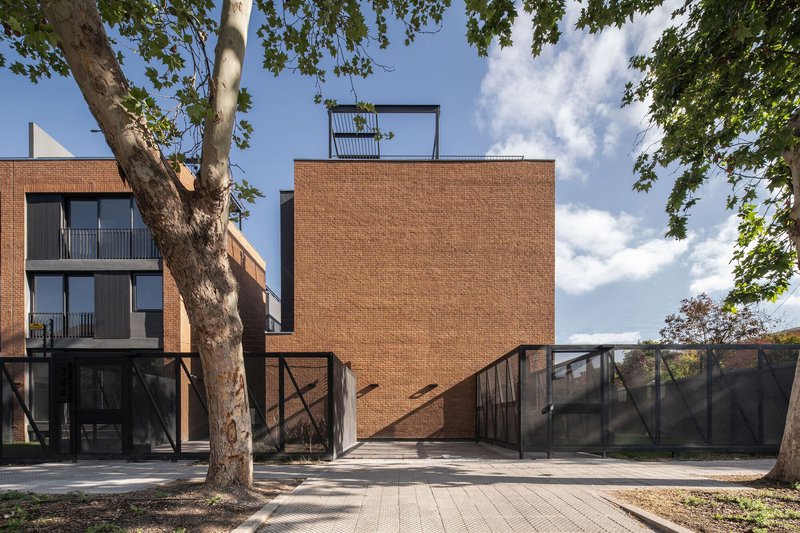
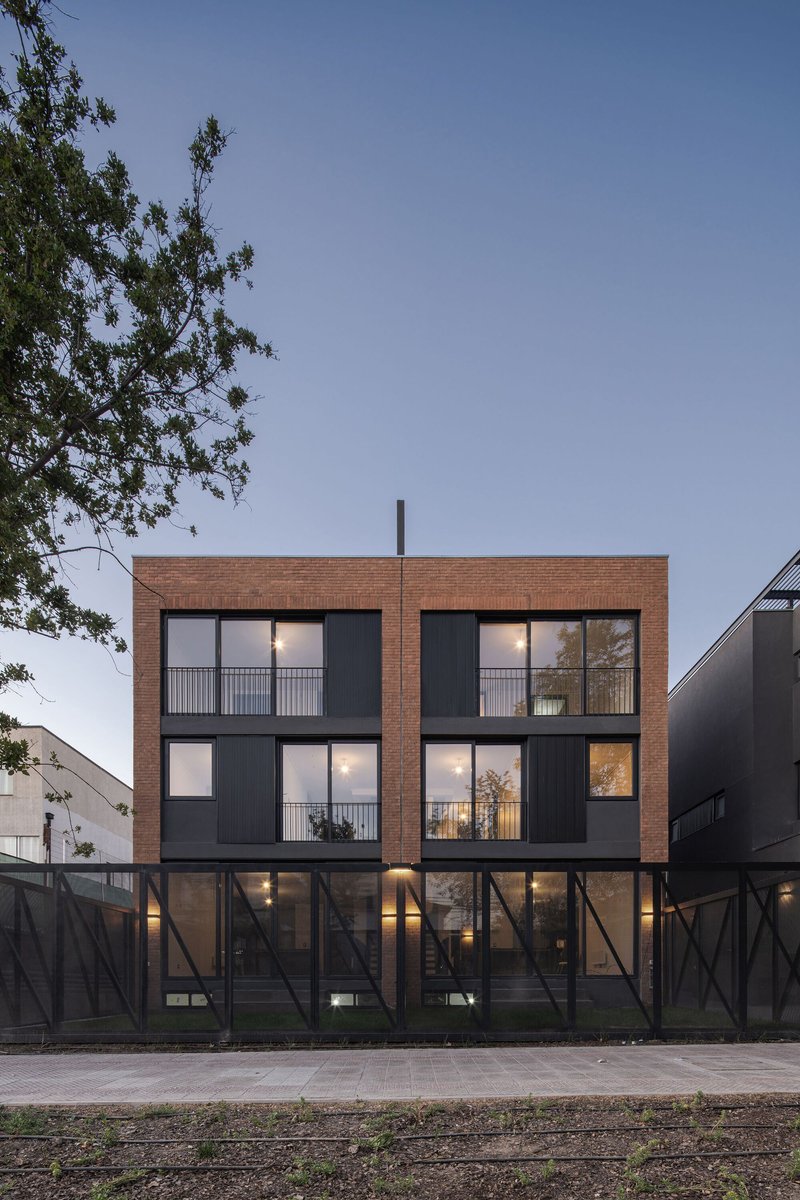
The street-facing facades are built from a consistent brick skin raised above diagonal steel bracing at the ground floor. That bracing does double duty: it opens sightlines beneath the building mass and signals to passersby that this is not a solid wall but a permeable edge. Mature plane trees along the sidewalk soften the scale, and the brick bonds well with the residential grain of Providencia, where masonry has been the default surface for decades.
At dusk the recessed balconies glow like pockets cut into the mass, giving the elevation rhythm without relying on applied ornament. A translucent metal fence at the base negotiates between openness and security, a practical concern that FOAA treats as a design element rather than an afterthought.
Courtyard Lanes as the Social Spine
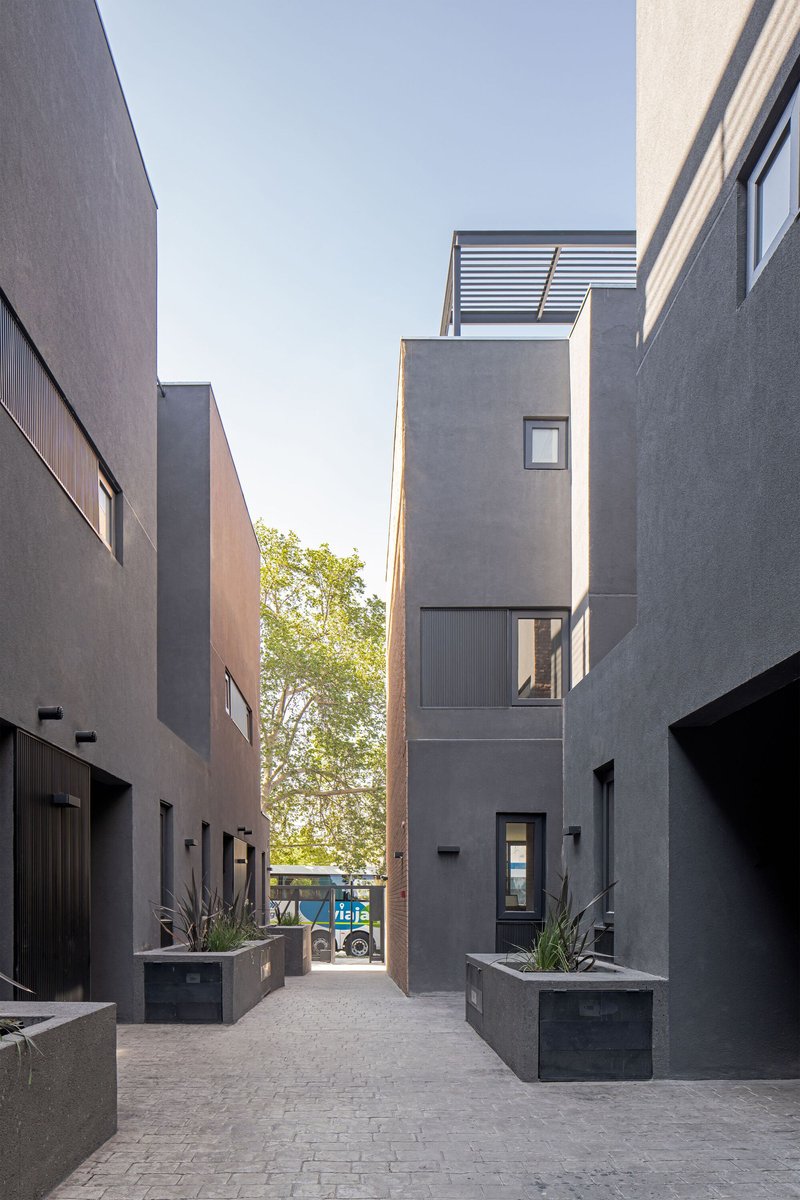
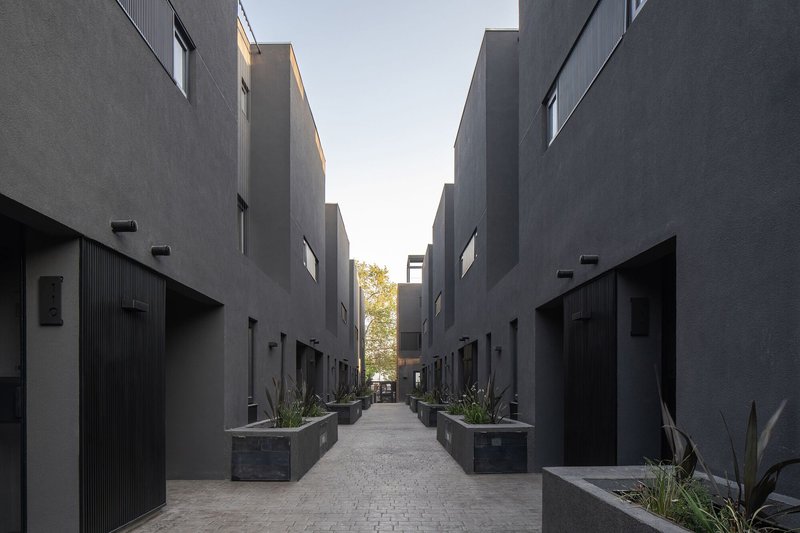
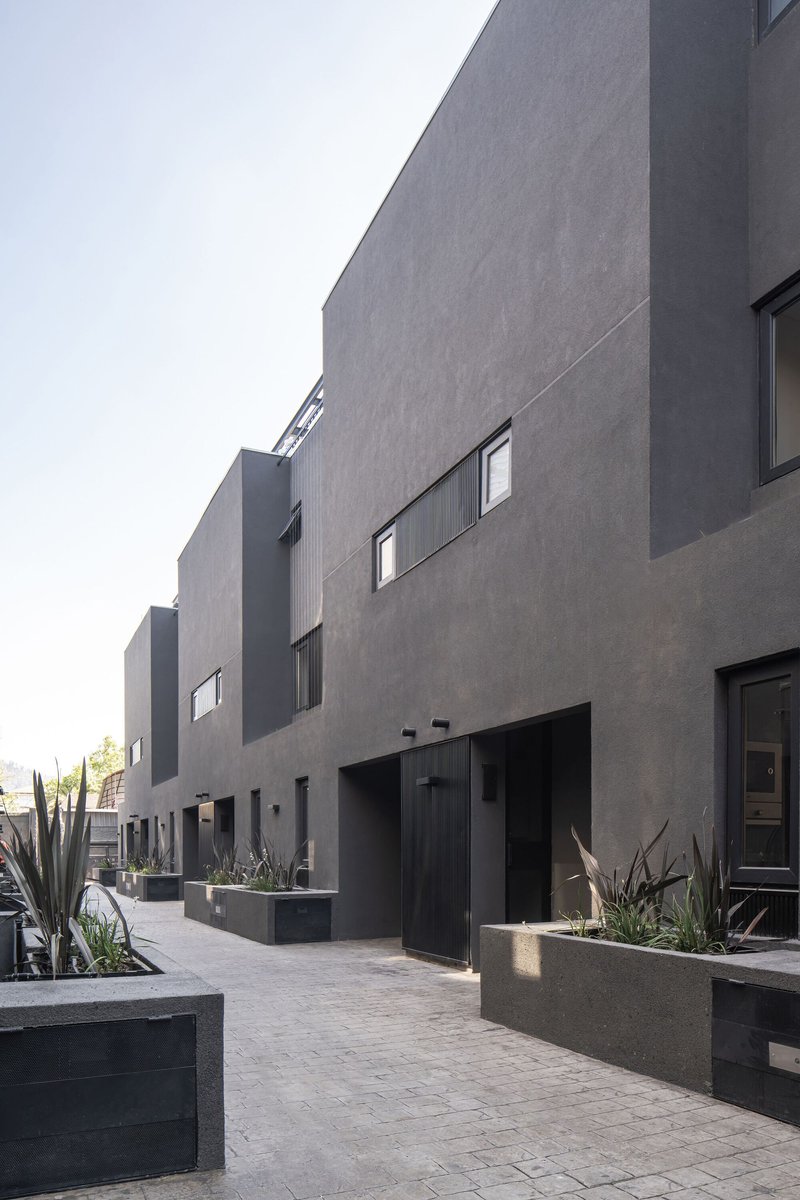
Between the brick perimeter blocks, a central spine of paved lanes organizes the complex. These lanes are narrow enough to feel intimate but wide enough to admit daylight all the way to the ground. Planted concrete boxes line both sides, filled with succulents and ornamental grasses that tolerate Santiago's dry summers. The planting is not decorative; it controls dust, absorbs heat from the paving, and gives each unit a soft foreground.
FOAA switches the interior facades from brick to grey stucco. The material shift is deliberate: the courtyard world is quieter, lighter, and cooler than the street world. Punched window openings sit in precise grids, and corrugated metal panels add texture without competing with the rendered walls. The overall effect recalls the courtyards of Italian housing blocks, which may explain the project's name.
Material Contrasts and Rooftop Pergolas
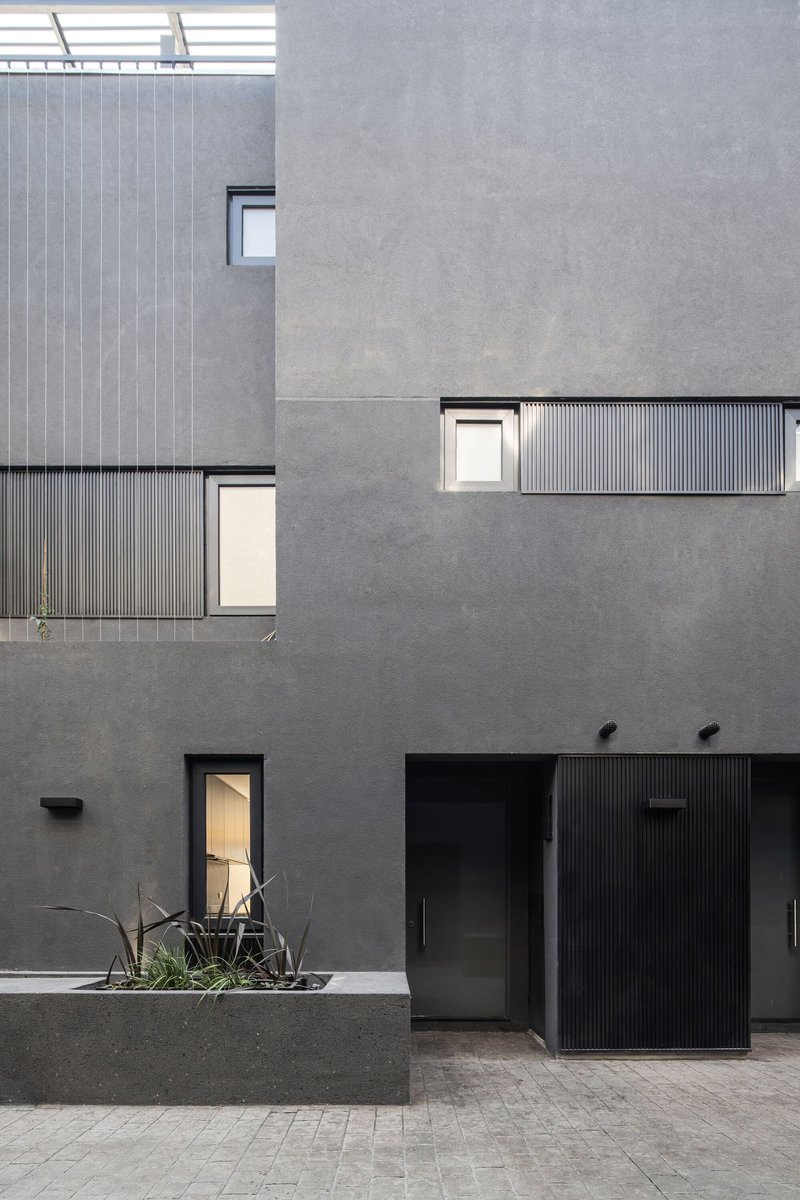
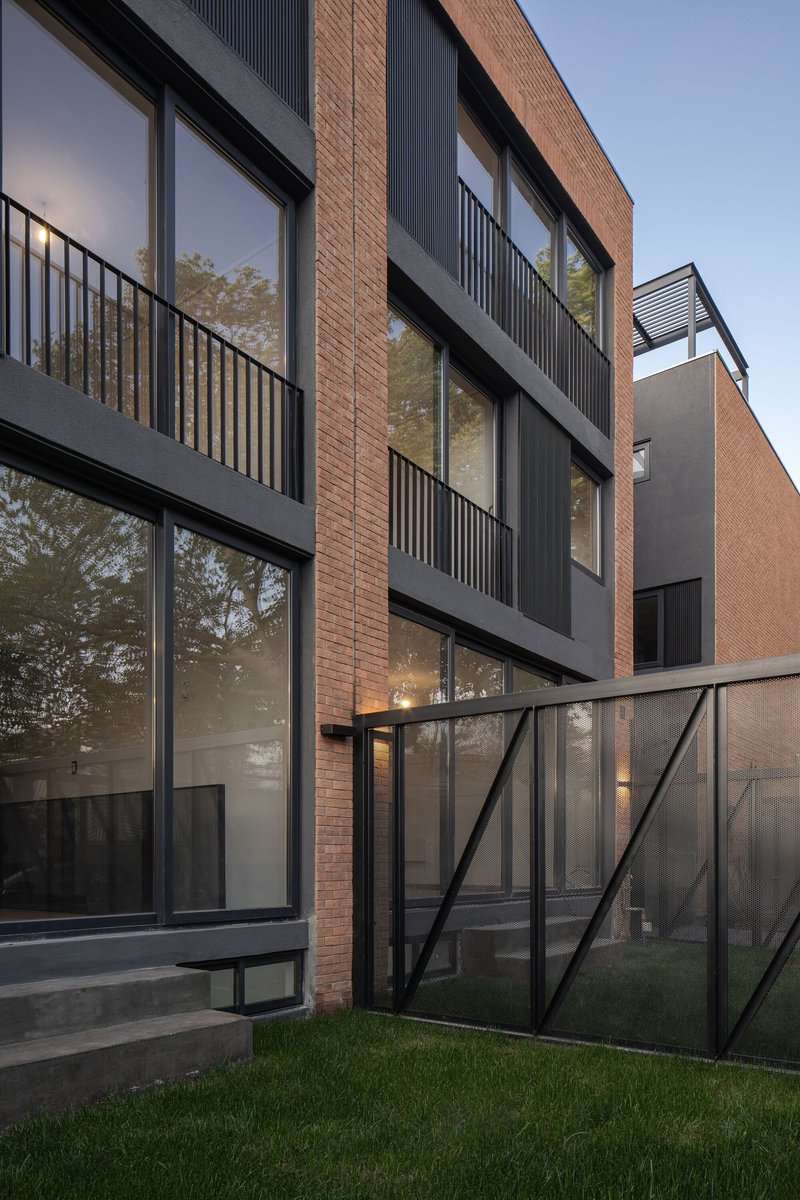
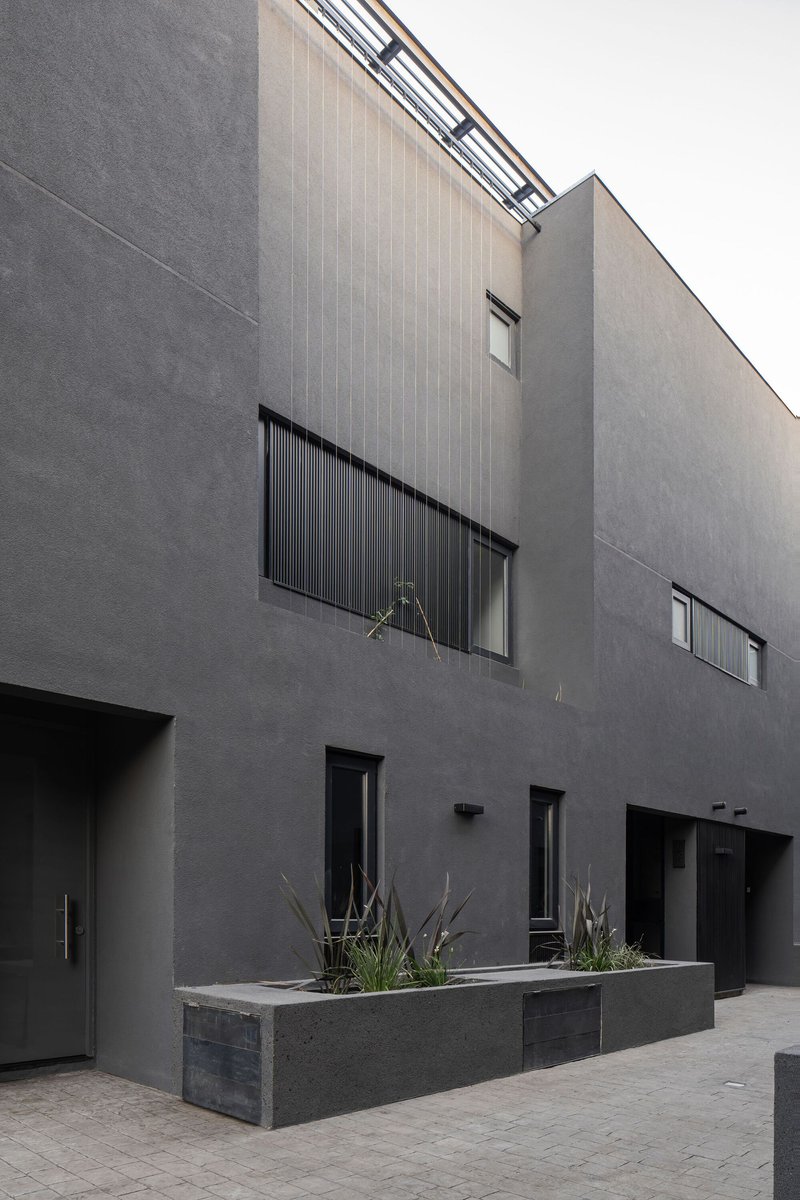
FOAA's palette is tight: brick, grey render, corrugated metal, and steel. Each material maps to a specific condition. Brick wraps the exterior. Grey render lines the courtyards. Corrugated panels appear as accent cladding, typically marking stairwells or service zones. Steel shows up as bracing, fencing, and rooftop pergolas. No material tries to be something it is not, and the restraint gives the complex a coherence that denser material palettes often sacrifice.
The louvered rooftop pergolas are worth noting. Visible from the courtyard lanes, they cap the upper terraces and filter the intense Chilean sun without sealing the rooftops off from the sky. In the aerial views, solar panels appear on several roofs alongside these pergolas, suggesting that the rooftop is treated as productive infrastructure, not leftover space.
Corner Volume and Urban Scale
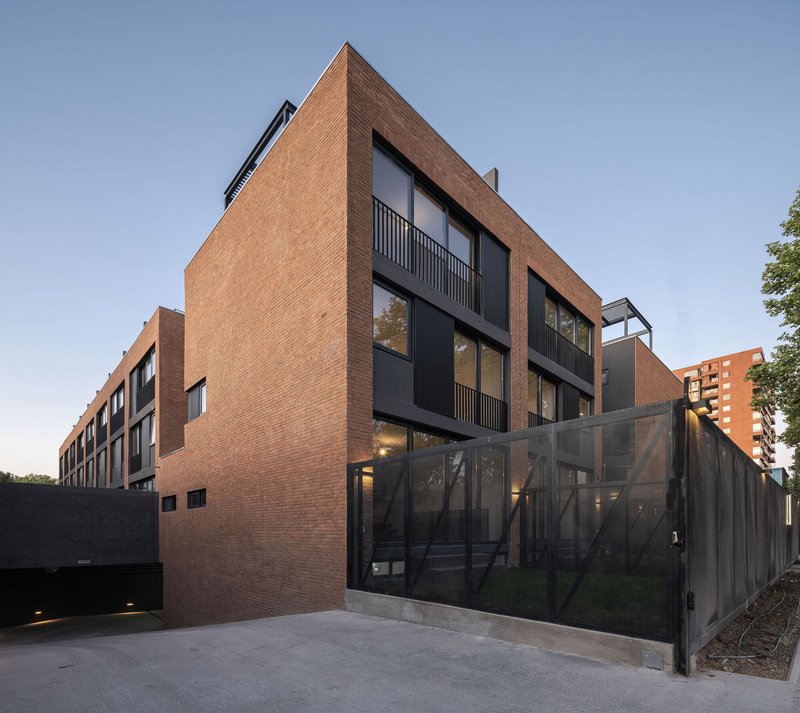
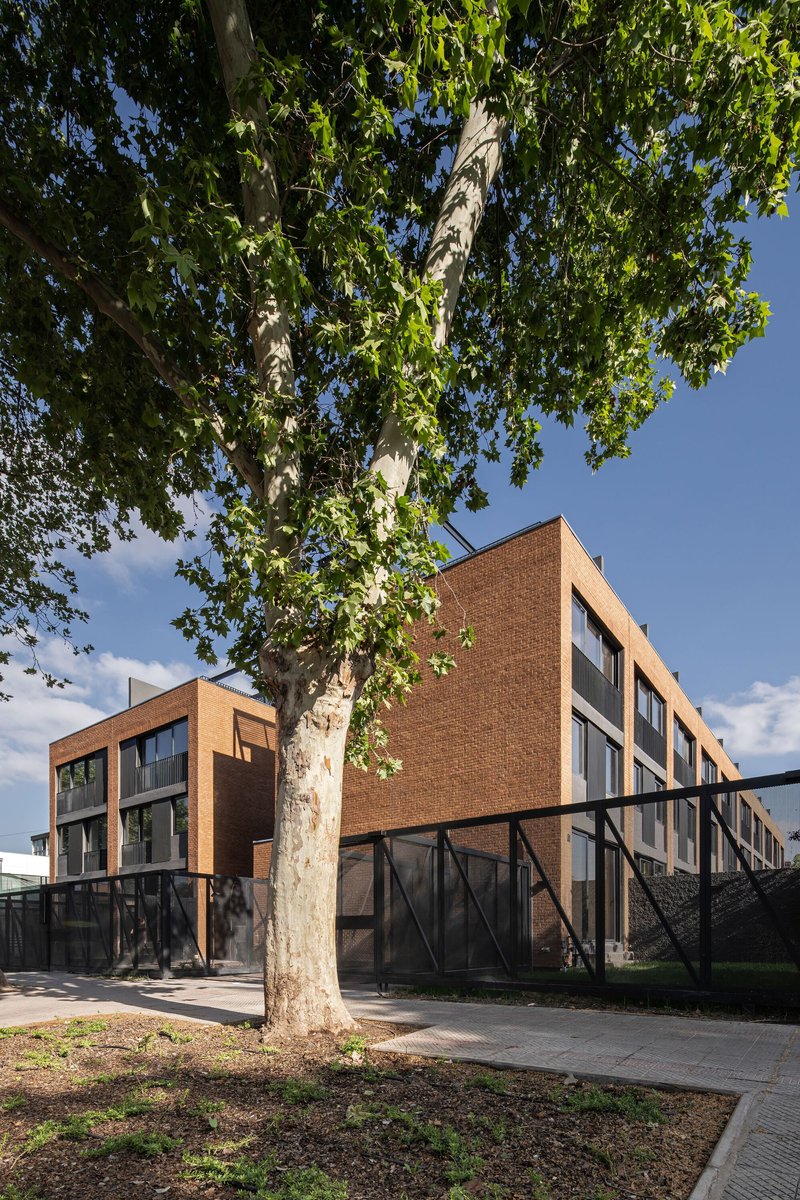
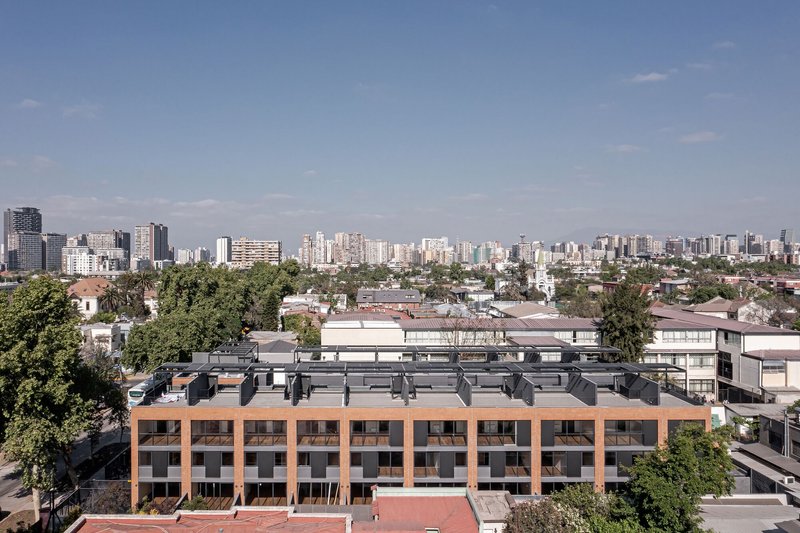
At the corner, the brick volume turns and meets the street with a slightly taller mass that anchors the complex in the block. This corner condition is where Casa Italia most directly engages its urban context. The recessed balconies wrap the turn, and the diagonal metal fence continues unbroken, binding the two street facades into a single gesture. From this vantage point, the project reads as a single building rather than a cluster of houses, which is precisely the illusion medium-density housing needs to pull off in an urban fabric.
The aerial photograph confirms how carefully the complex sits within Providencia's grid. It is lower than almost everything around it, yet its footprint fills the block efficiently. The Andes rise behind the roofline, a reminder that Santiago is a city defined by geography, and that low-rise density keeps those mountain views accessible from ground level.
Thresholds and Passages
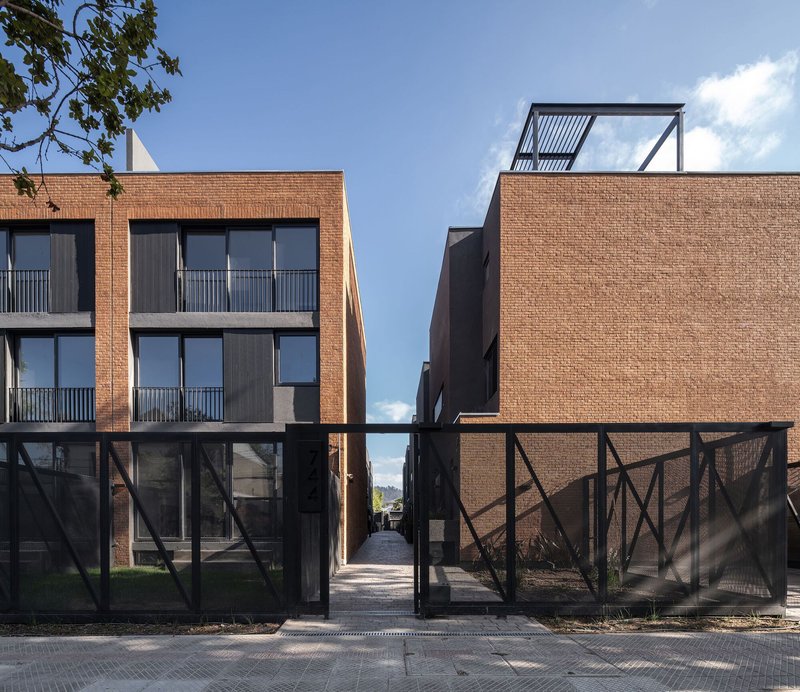
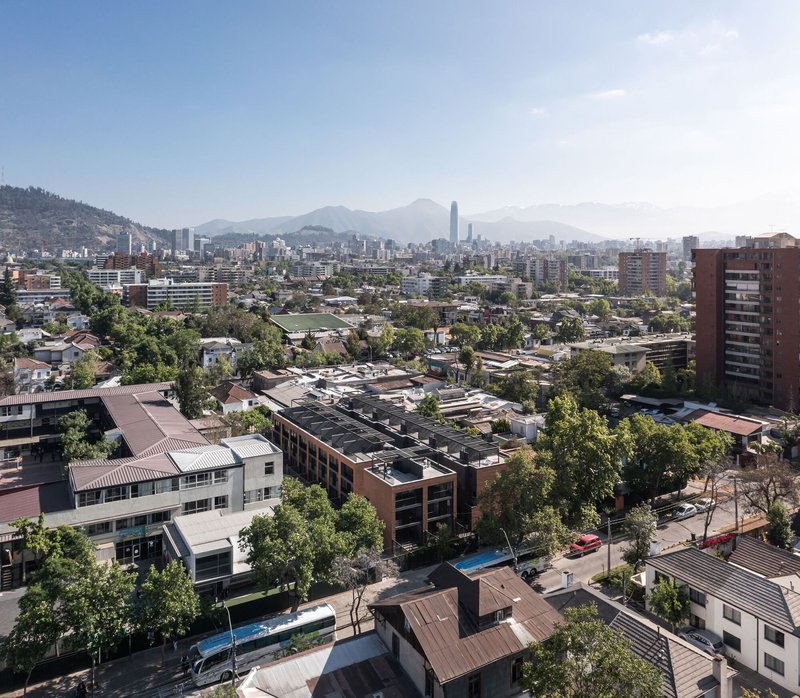
The passageways between the two main brick volumes create compressed thresholds: narrow slots of sky framed by masonry on both sides, with the metal pergola visible overhead. These moments of compression make the courtyards feel larger by contrast, a classic spatial trick that works because FOAA commits to it rather than hedging with wider gaps. The result is a sequence of spatial experiences, from open street to compressed passage to generous courtyard to private terrace, that gives each trip home a sense of arrival.
Plans and Drawings
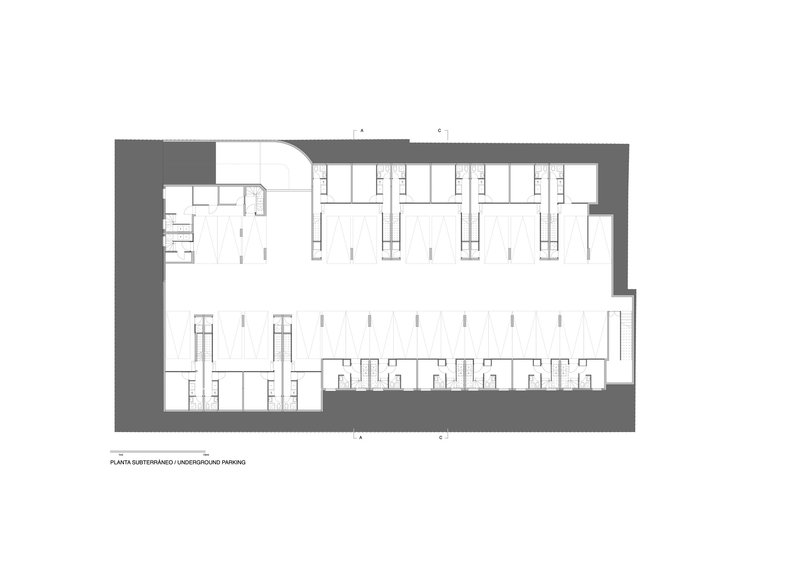
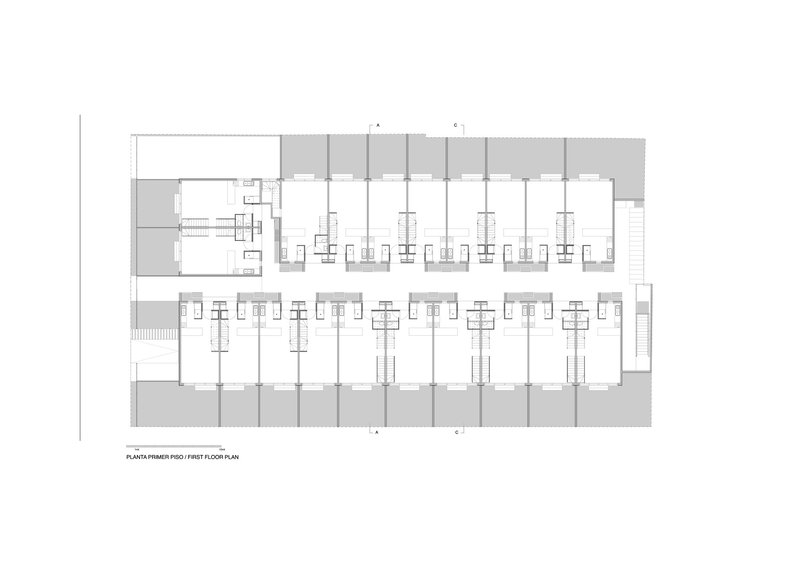
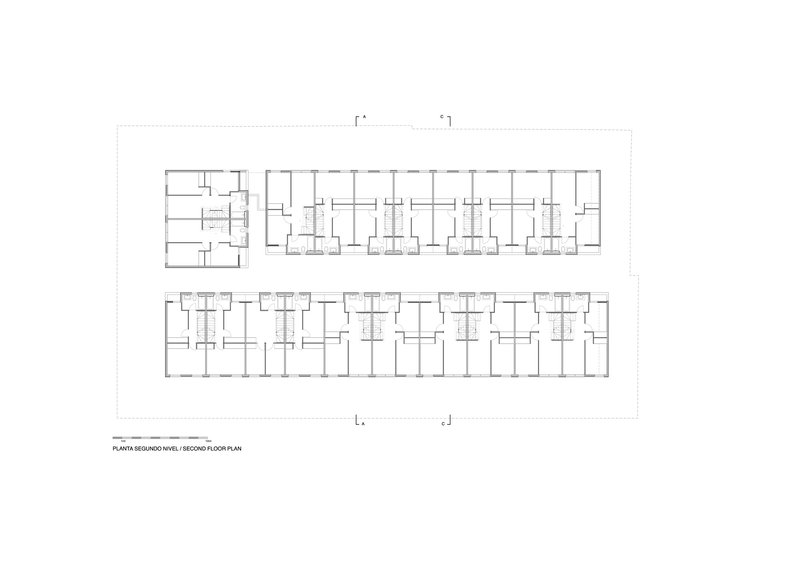
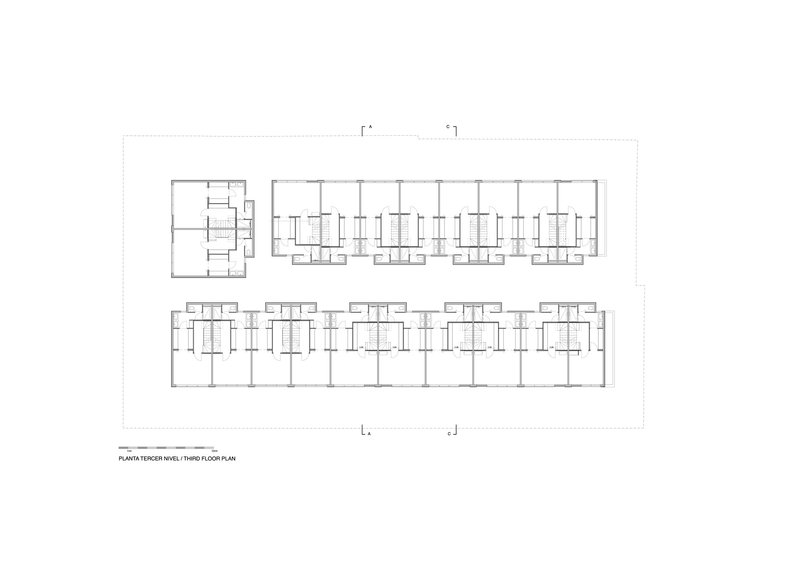
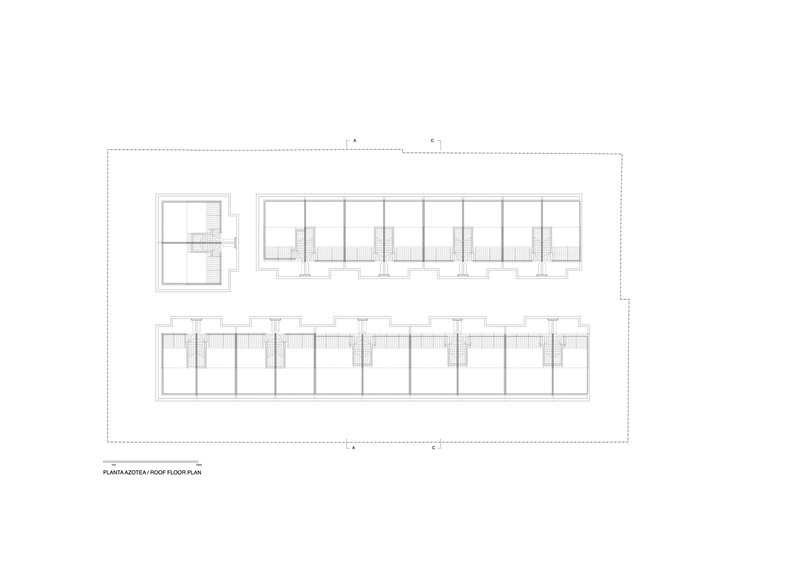
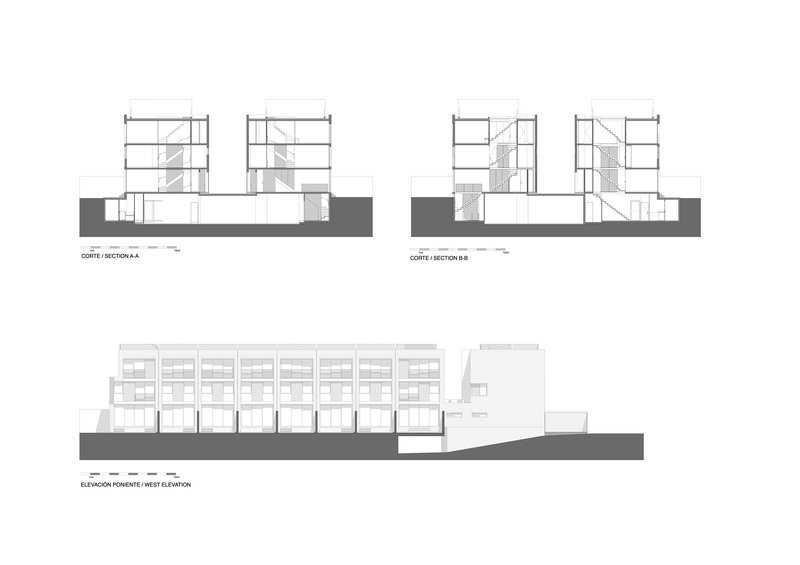
The floor plans reveal a clear organizational logic. The basement is given over entirely to parking, freeing the ground plane from cars. Above, residential units line up along a linear bar with central staircase cores, each unit mirrored across the corridor. The third floor plan shows a corner volume that detaches slightly from the main bar, creating the spatial break visible in the facade. The roof plan confirms the modular repetition of unit types across two wings.
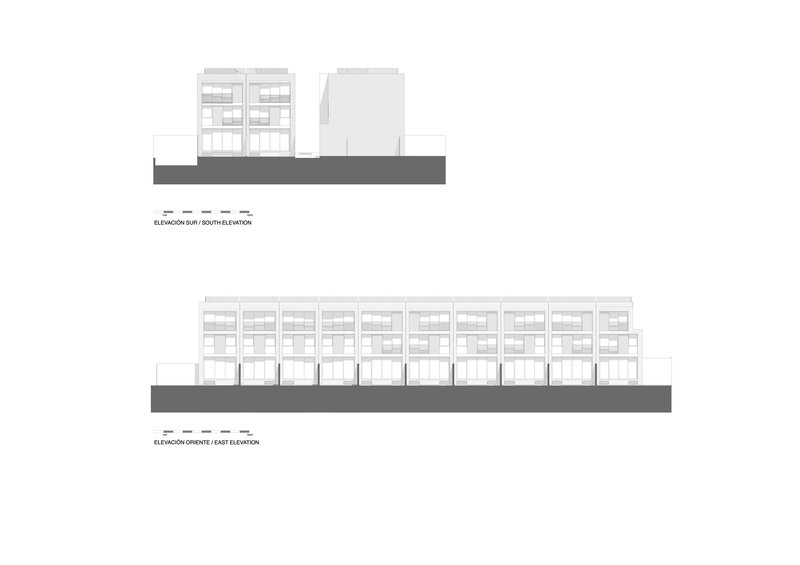
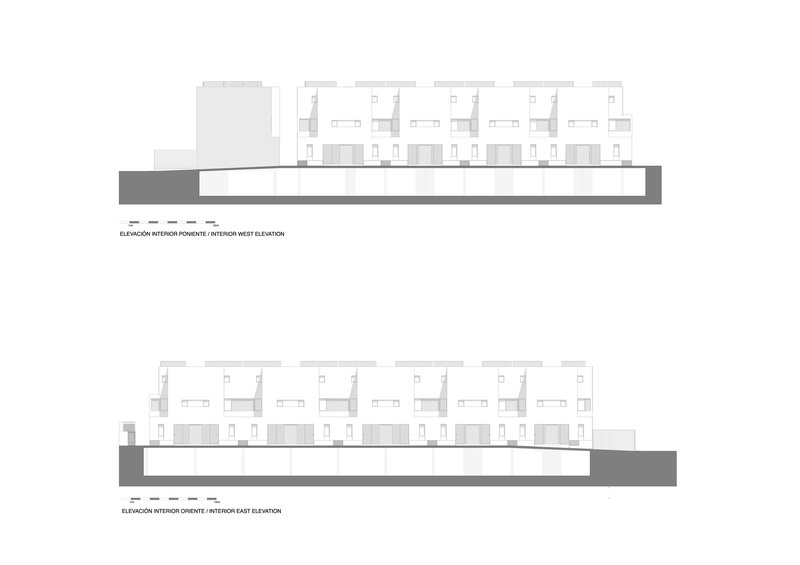
The section drawings are particularly revealing. They show how the interior volumes step and shift across levels, producing double-height moments and terraced upper floors that the exterior barely hints at. The courtyard elevations demonstrate the precise placement of balconies and window openings: every perforation is calibrated to balance privacy between facing units while maximizing cross-ventilation through the narrow courtyard section.
Why This Project Matters
Casa Italia Townhouse is a proof of concept for a housing model that Latin American cities desperately need. Santiago, like Bogotá or Lima, has been defaulting to apartment towers for decades, treating density as a purely vertical problem. FOAA's project demonstrates that twenty homes can occupy a single block at a meaningful density, 3,082 square meters across three stories, while giving every household a courtyard and a rooftop. That combination of ground-level living and urban tightness is the missing middle of South American housing.
The project also makes a quiet argument about materials and longevity. Brick, stucco, and steel do not age into obsolescence; they age into character. In a market saturated with glass-clad towers that look dated within a decade, Casa Italia's material sobriety is not a limitation but a strategy. If the townhouse typology is going to compete with the apartment tower, it needs to outlast it. FOAA seems to understand that.
Casa Italia Townhouse, designed by FOAA, Santiago, Chile. 3,082 m². Completed in 2022. Photography by Nico Saieh.
About the Studio
Share Your Own Work on uni.xyz
If projects like this are the kind of work you want to make, uni.xyz is a place to publish your own, find collaborators, and enter design competitions.




Popular Articles
Popular articles from the community

Indiesalon Carves a Plywood Cave into a Seoul Bistro's Second Floor
Munhwa Bistro's second Seongsu branch wraps diners in a laminated timber vault laced with colored light and mirror illusions.
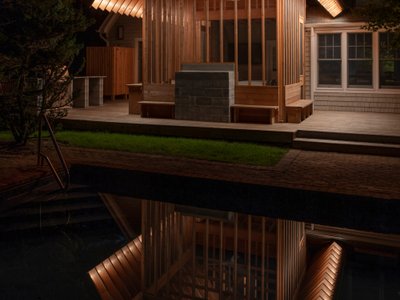
BLDUS Turns a 250-Square-Foot Screened Porch into a Pine Forest Temple in East Hampton
A gabled cedar pavilion mimics the rhythm of surrounding pines, anchoring a 1990s wooded home to its hollow in Long Island.
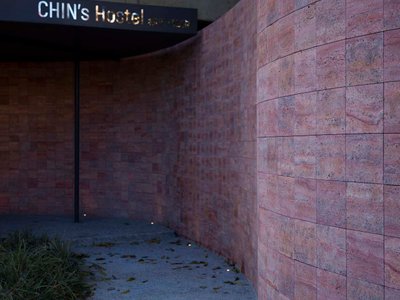
VEIVE Architects Builds a Mountain Hostel That Disappears into a Hangzhou Hillside
On the Huihang Ancient Trail in Xiangjian Village, a shelter of wood, steel, and rammed earth roots itself in the rural landscape.

Johnston Architects Reimagines the Methow Valley Hay Barn as a Small-Town Library in Winthrop
A 7,300-square-foot timber library channels the region's agrarian vernacular to serve a rural Washington community of 400 year-round residents.


Similar Reads
You might also enjoy these articles

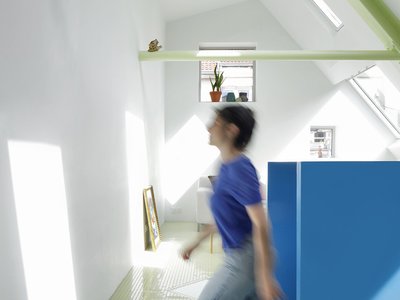
127af Flips a Tiny Bagnolet Rowhouse Upside Down with a Handcrafted Roof Extension
A 55-square-meter terraced house on the edge of Paris gains a luminous upper living floor through lightweight timber and steel.
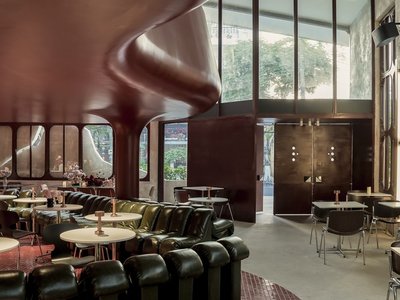
1.61 Design Workshop Wraps a 600-Square-Meter Café in Vietnam in Sculptural Burgundy Drama
Reden Café & Bistro pairs a helical staircase, mosaic floors, and deep red interiors to rethink Vietnamese hospitality space.

The Unbound Brain: A School Shaped by Cognitive Architecture
Cylindrical learning pods radiate like neurons from a central cortex, turning the floor plan into a spatial model of human thought.
Revival Vernacular Architecture: Rammed Earth Settlements for the Sahara
A modular desert community in Mauritania that fuses passive cooling techniques with earthen construction and local craftsmanship.


Explore Landscape Design Competitions
Discover active competitions in this discipline




The International Standard for Design Portfolios


The Global Benchmark for Architecture Dissertation Awards


The Global Benchmark for Graduation Excellence


Challenge to reimagine the Iron Throne
Comments (0)
Please login or sign up to add comments
No comments yet. Be the first to comment!