
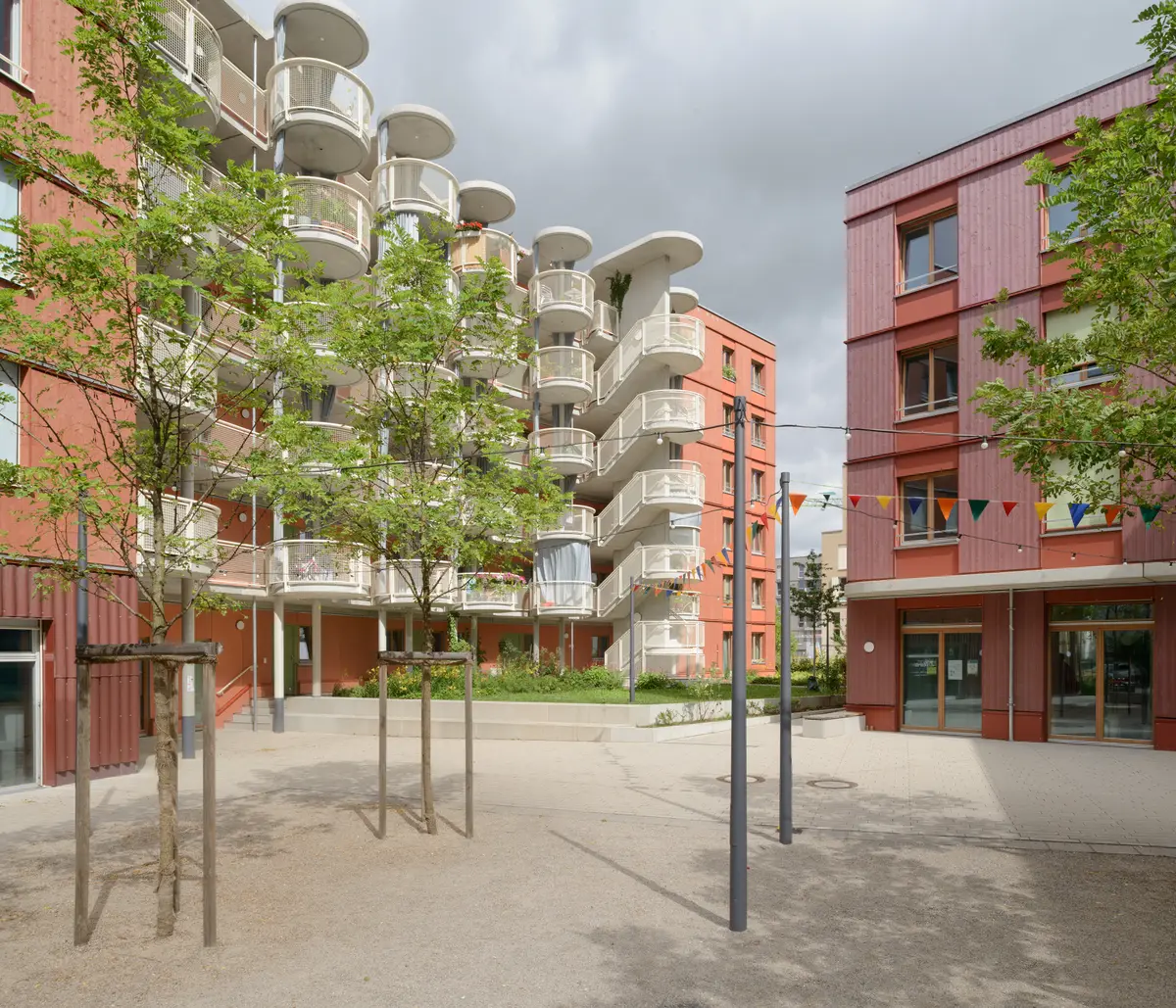
Four Offices Design a Timber-Hybrid Housing Cooperative on Munich's Largest Expansion Site
In Freiham, WOGENO München and four architecture studios prove that large-scale cooperative housing can be materially inventive and socially generous.


Freiham is Europe's largest new development area: 350 hectares on Munich's western edge that will eventually house 25,000 people. The ambition is enormous, but ambition alone does not make a neighborhood. What matters is who builds, how they build, and for whom. On Ute-Strittmatter-Straße, housing cooperative WOGENO München assembled four architecture offices, 03 Arch, ENEFF Architekten, Illiz Architektur, and Westner Schührer Zöhrer, and asked them to work not sequentially but in parallel, through workshops, sharing a structural system and a palette of materials while independently designing six distinct building sections. The result is 82 units of cooperative rental housing completed in 2023 and occupied in early 2024.
The project is interesting for reasons that go beyond its collaborative authorship. It pairs a timber-hybrid construction system with prefabricated concrete arcades and balconies, creating a material identity that is warm, tactile, and structurally legible. Three quarters of the units are subsidized or income-oriented. Five are shared apartments managed by a social service provider for people with mental health needs. There is a neighborhood café, a communal room with raised garden beds, and a sequence of courtyards that move from public square to semi-private garden. The BDA Prize Bavaria 2025 and a KlimaKulturKompetenz plaque at Architektouren 2025 confirm what the building already demonstrates: cooperative housing at this scale can be architecturally rigorous.
Courtyards as Social Infrastructure
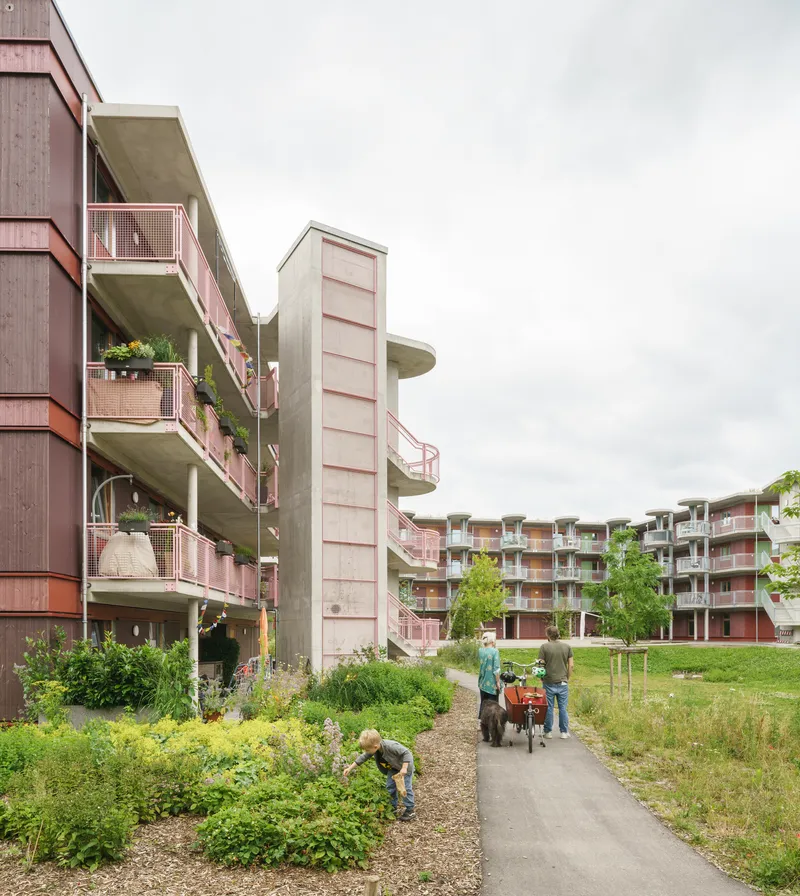

The buildings frame a deliberate sequence of outdoor spaces, from a south-facing forecourt shaded by a grove of trees to elevated gardens with pergolas, raised beds, and gravel paths for communal gardening. The courtyards are not decorative leftovers between footprints; they are the project's primary social mechanism. Residents tend plants, children ride tricycles, and neighbors gather in the late afternoon in spaces that feel neither over-designed nor abandoned.
Landscape planning by Uniola was embedded in the process from the outset, which explains why the planting reads as integral to the architecture rather than applied after the fact. Wildflower beds soften the ground plane, young trees will eventually canopy the paths, and the water-bound surfaces let the courtyards absorb rain rather than shed it. The result is a residential landscape that earns daily use.
Timber Hybrid, Concrete Arcade
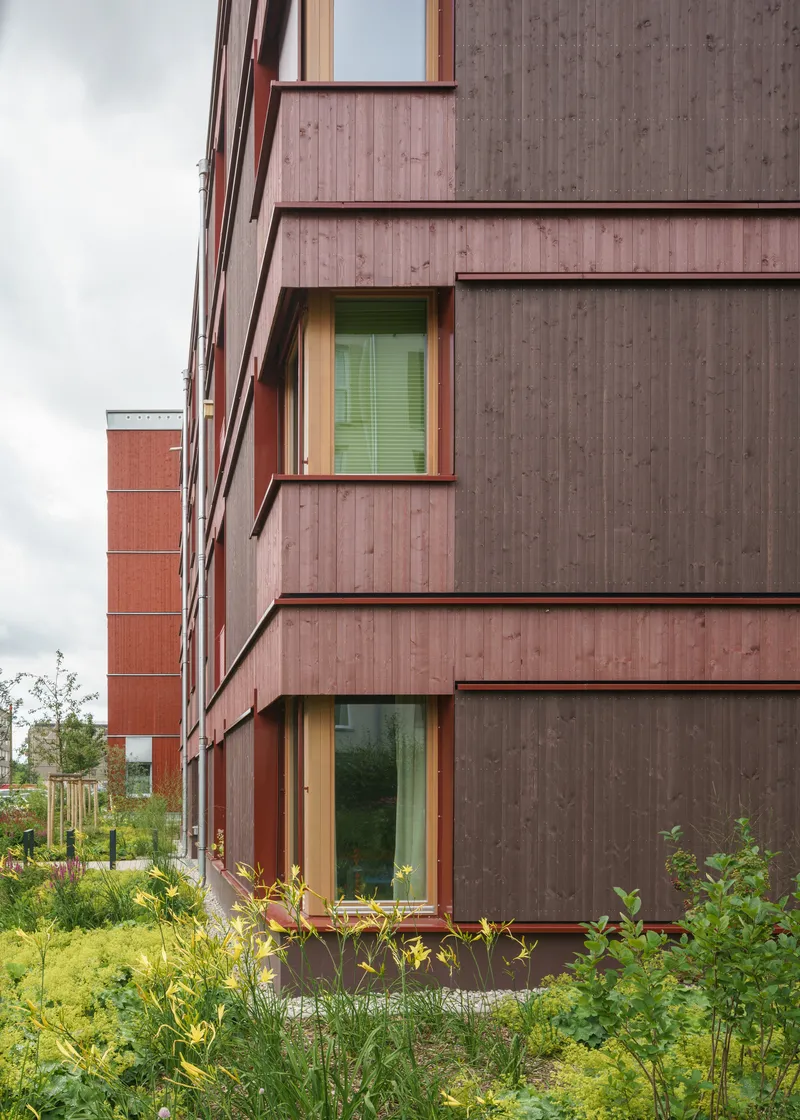
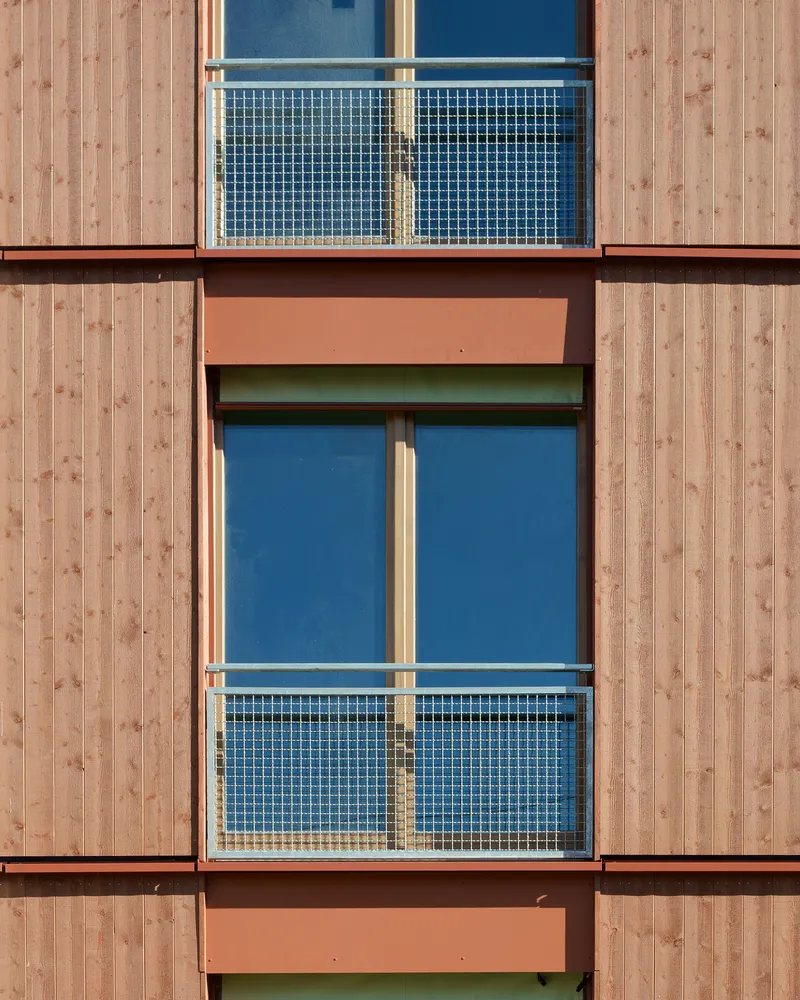
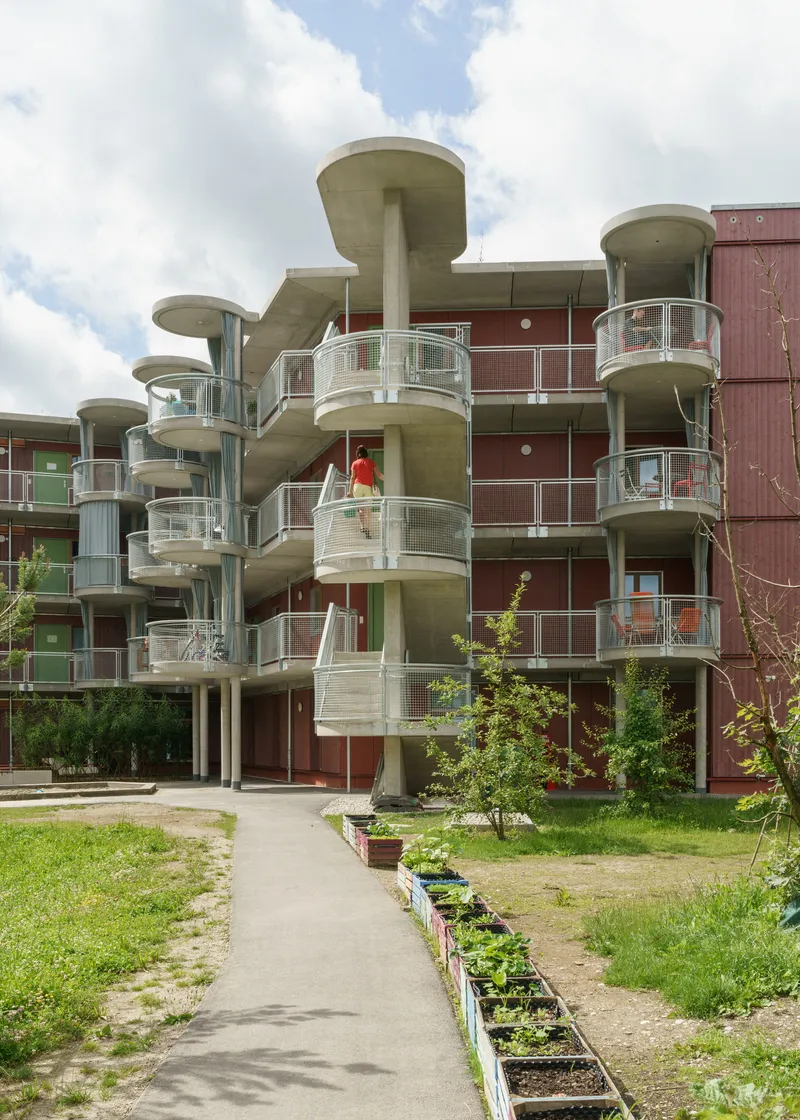
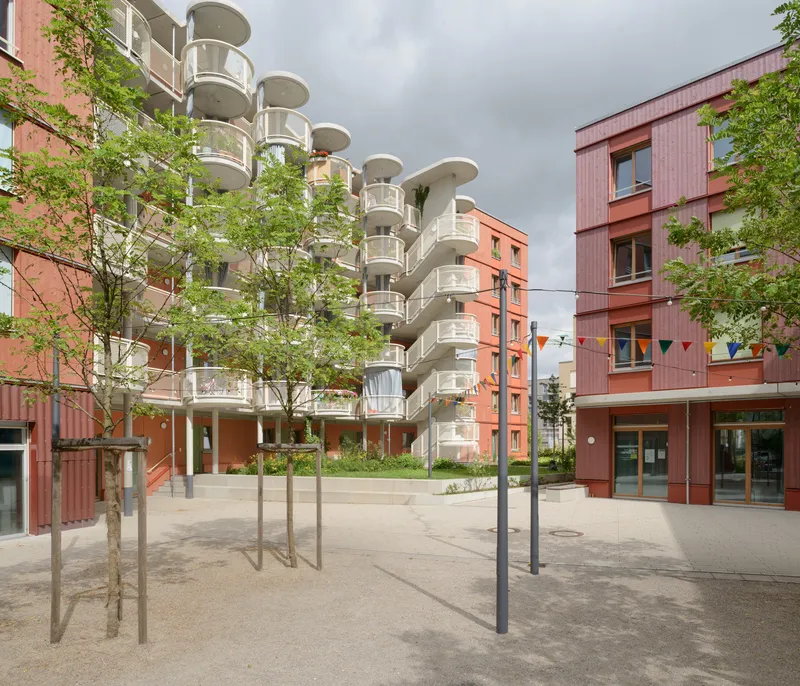
The structural logic is legible from the street. Timber-hybrid construction forms the primary building mass, clad in vertical timber panels that weather differently across each section, giving each wing a slightly distinct character without breaking the ensemble. In front of the timber walls, a row of prefabricated concrete columns marches along the facades, supporting deep access balconies and circular projecting elements that read almost like turrets.
The concrete columns flare into mushroom capitals at each floor, a detail that anchors the balcony slabs and gives the arcades a rhythmic, almost civic presence. It is an unusual pairing: the warmth of wood behind the structural assertiveness of concrete. The four offices clearly agreed on this move during their workshops, and it holds the six independently designed sections together far more effectively than a uniform facade treatment ever could.
The Round Balcony and the Private Threshold

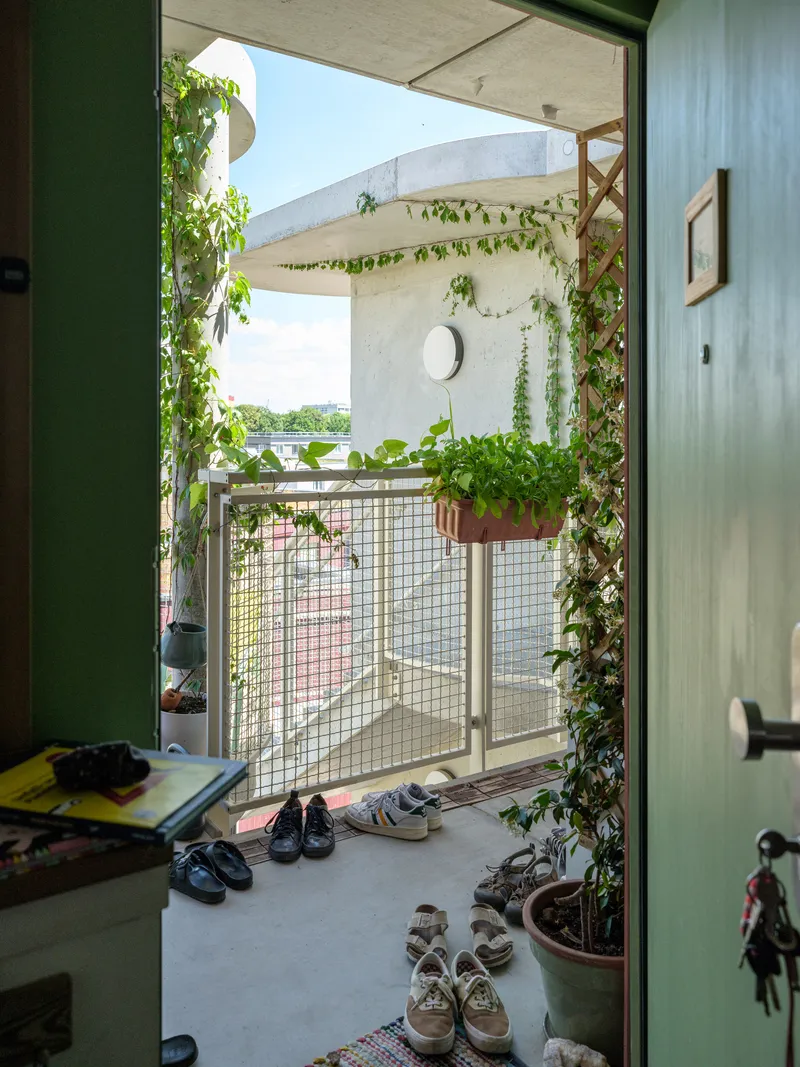
The circular balconies are the project's signature element, and they earn the attention. Each round slab is assigned to a specific apartment via the arcade, meaning the balcony is not merely a cantilever but a destination reached through a shared outdoor corridor. Mesh railings keep the enclosure transparent while allowing climbing plants to take hold over time. Curtains can be drawn for privacy, an acknowledgment that outdoor space in dense housing needs modulation, not just provision.
A close look at the threshold reveals the care embedded in the design: shoes lined up on bare concrete, vines threading through mesh, a railing height that invites leaning rather than retreating. These balconies are genuinely inhabited, and the evidence of daily life on them suggests the architects got the proportions right.
Four Voices, One Framework
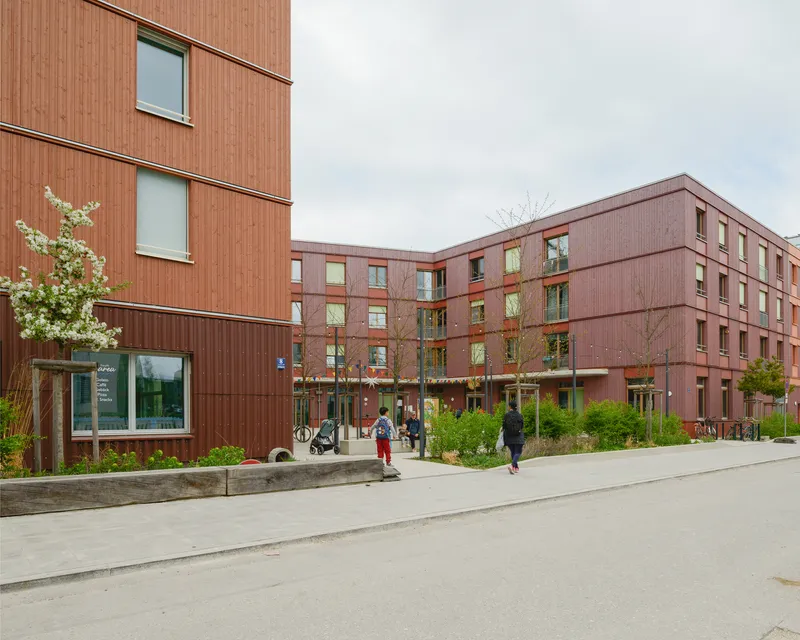


Multi-office projects often produce either forced uniformity or chaotic fragmentation. The Ute-Strittmatter-Straße complex avoids both by fixing what needed to be consistent (structural system, column rhythm, material palette, green photovoltaic roofs) and releasing what could diverge (facade composition, unit layout, ground floor program). The red corrugated metal of one section sits next to the tile and timber of another without clashing, because the underlying arcade system and courtyard geometry provide continuity.
At ground level, the neighborhood café with its playful oversized ice cream sculpture signals that this is a project with personality, not a bureaucratic exercise. Commercial units and a communal meeting space open directly onto the street-side square, ensuring that the cooperative's social mission extends beyond the residents to the wider Freiham neighborhood. The land itself remains city property, granted under hereditary building rights, a model that keeps speculative pressure at bay.
Landscape and Planting Strategy
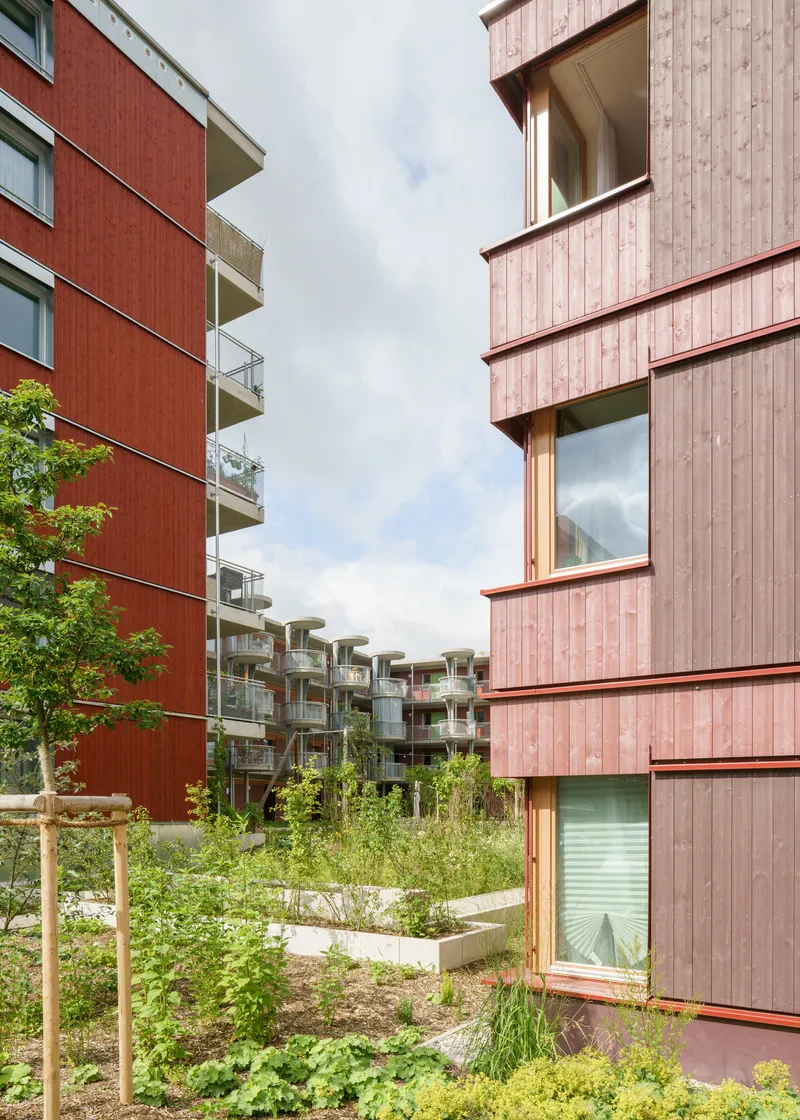
Between the timber-clad wings, the wildflower beds are doing real ecological work. The planting is not decorative meadow; it is a deliberate biodiversity strategy integrated with the stormwater management of the water-bound path surfaces. Young trees will eventually shade the courtyard corridors, and the raised beds in front of the communal room offer residents a direct horticultural connection to their surroundings. For a project of nearly 12,000 square meters, the landscape feels intimate rather than institutional.
Plans and Drawings
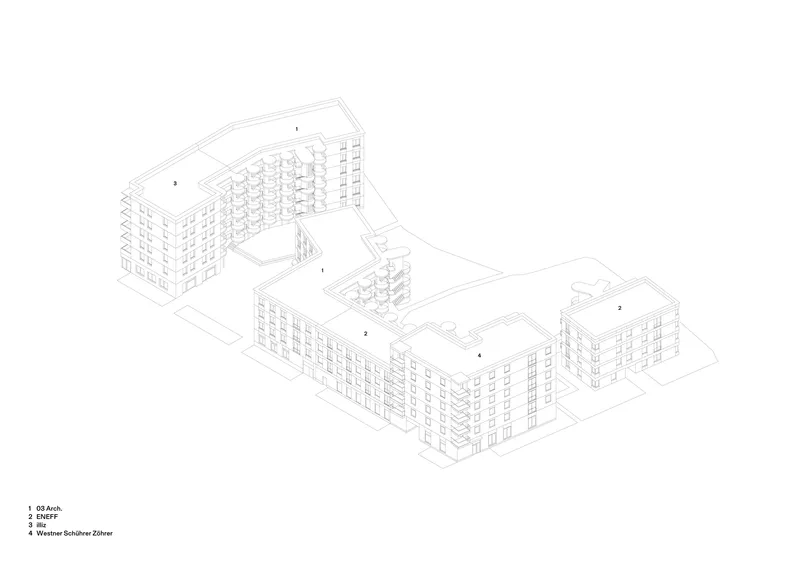

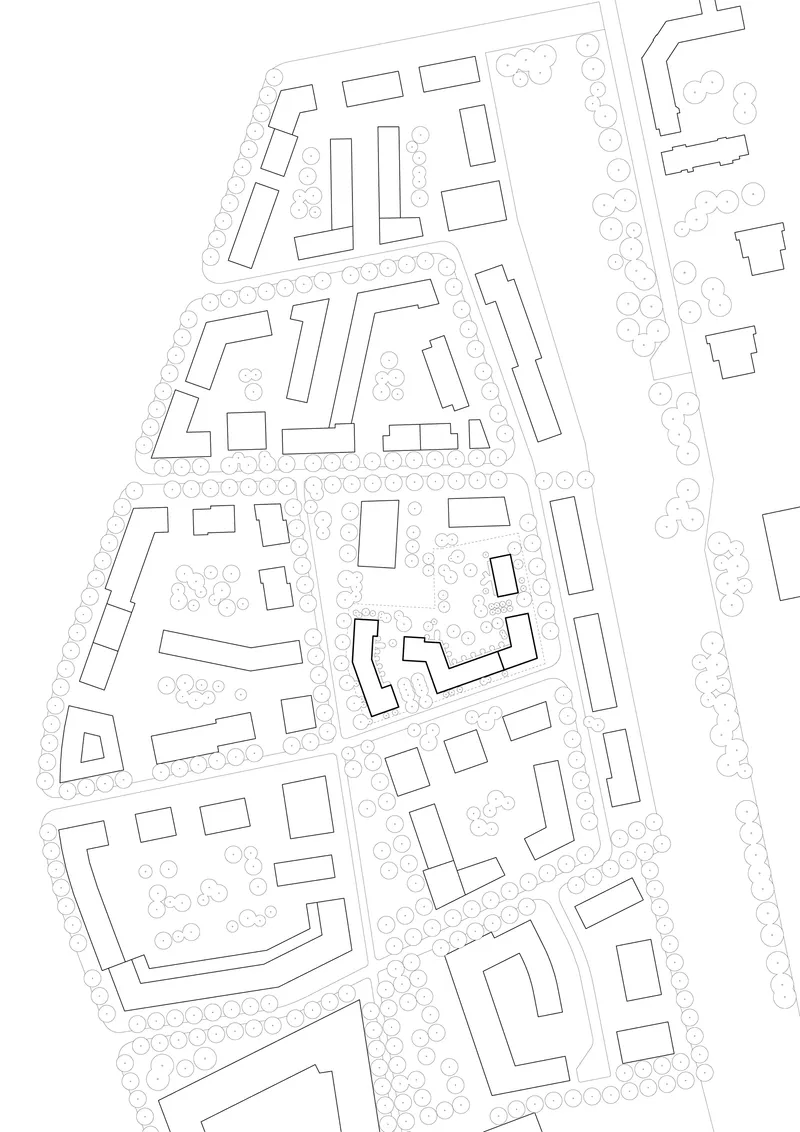
The axonometric reveals how the six sections wrap around internal courtyards, creating a porous urban block that connects to the surrounding Freiham street grid without closing itself off. The site plan in figure-ground shows how the project's footprint relates to the dense residential fabric being assembled across the district, while the landscape site plan makes clear how seriously the tree-lined streets and open spaces were treated as design elements rather than afterthoughts.

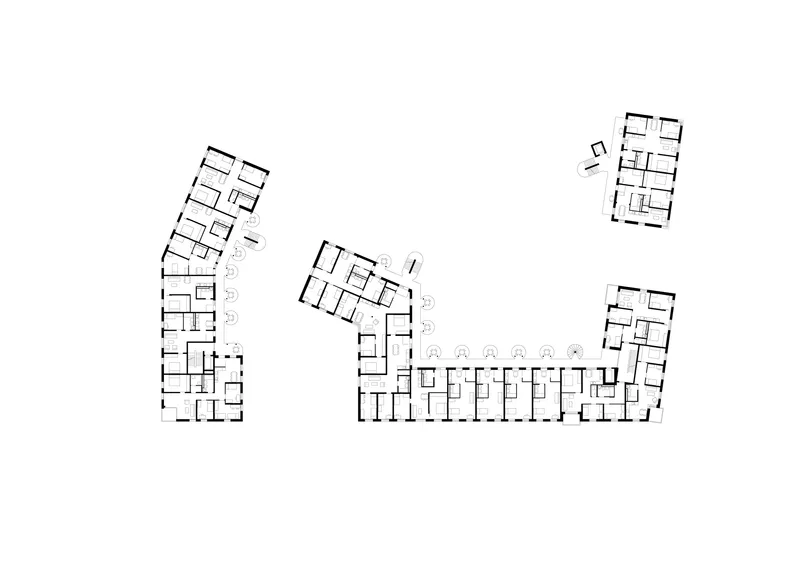
At the floor plan level, the three residential wings show a wide range of unit types: from one-bedroom to five-bedroom apartments, with three shared apartments for a social service provider. The circulation cores are compact, and the corridor layouts suggest the neutral, flexible rooms that WOGENO's design principles call for. These are not rooms locked into a single lifestyle; they accommodate change over time.

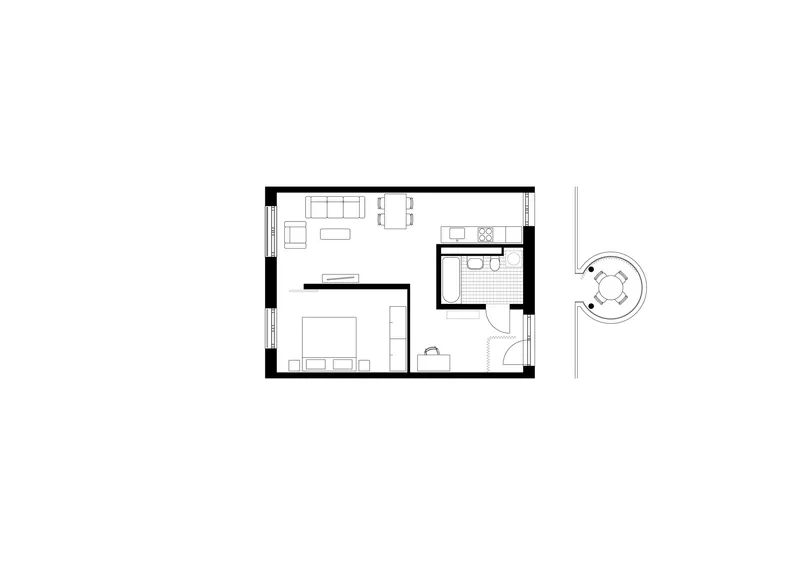
The individual unit plans confirm a commitment to spatial generosity even within compact footprints. Angled room geometries respond to the building's curved edges, and the circular outdoor element visible in the smaller unit plan corresponds directly to those distinctive round balconies. Kitchens, bathrooms, and bedrooms are arranged to give every room access to daylight, an outcome that is easier to draw than to achieve at this density.
Why This Project Matters
Europe's housing crisis generates two common responses: mass production without character, or boutique projects that serve a few dozen privileged households. The Ute-Strittmatter-Straße complex refuses both options. Eighty-two units, three quarters subsidized or income-oriented, built in timber-hybrid construction with photovoltaic roofs, on city-owned land, by a cooperative. The fact that four studios managed to produce a coherent and genuinely appealing building through workshop-based collaboration makes the project operationally significant, not just aesthetically successful.
Freiham is still a construction site in many directions, and the long-term success of this district will depend on whether projects like this one set the standard or remain exceptions. The cooperative model, the hereditary building rights, the mix of subsidized and freely financed units, and the integration of social services for vulnerable residents all point toward a replicable framework. The architecture, with its concrete arcades and round balconies and wildflower courtyards, gives that framework a physical presence worth caring about. That combination of systemic thinking and material pleasure is exactly what large-scale housing needs and rarely gets.
Ute-Strittmatter-Straße Collective Living in Freiham by 03 Arch, ENEFF Architekten, Illiz Architektur, and Westner Schührer Zöhrer. München, Germany. 11,604 m². Completed 2023. Photography by Pk.Odessa, Sebastian Schels, Markus Lanz, and Lennard Zimmermann.
About the Studio
Share Your Own Work on uni.xyz
If projects like this are the kind of work you want to make, uni.xyz is a place to publish your own, find collaborators, and enter design competitions.


Popular Articles
Popular articles from the community


Little Red Riding Hood: Architectural Design as a Journey Through Fear, Light, and Storytelling
Little Red Riding Hood reimagines the fairy tale through architectural design shaped by fear, light, scale, memory, uncertainty, and choice.

The Ocean Hive: Sustainable Architecture for a Self-Sufficient Civilization at Sea
The Ocean Hive imagines sustainable architecture at sea, where modular habitats, algae, wave power and ocean waste sustain a growing colony.

Play: Fragments of Their World
Familiar architecture becomes modular playground design, creating safe spaces where displaced children can learn, connect, imagine and play.

Hill & Cross Opera: Sculptural Opera House Architecture Shaped by Tallinn’s Landscape and Identity
Hill & Cross Opera reimagines opera house architecture in Tallinn through its sculptural hill, civic plaza, glass wave and a luminous cross.

Similar Reads
You might also enjoy these articles

Bao Huynh Watercolor Atelier: A Serene Art Retreat in Hội An
Bao Huynh Watercolor Atelier in Hội An blends multifunctional art spaces, sustainable design, local materials, and family-friendly living in a serene environment.

Atelier Macri Concept Store Interior Design by CASE-REAL
Atelier Macri store features a "ko" counter, walnut wood details, cork displays, blending retail, gallery, and seamless customer experiences.

Manuel Vargas Izquierdo Stadium and High-Performance Sports Center: Architectural Excellence in Jalpa de Méndez
The Manuel Vargas Izquierdo Stadium blends sustainable design, inclusive sports facilities, and cultural-inspired architecture, revitalizing Jalpa de Méndez’s public spaces.

KAKR Buluh Awar Hall: Revitalizing Community and Ecology Through Bamboo Architecture
Community built bamboo hall revitalizes Buluh Awar village, empowering youth, restoring ecology, celebrating vernacular craftsmanship through sustainable architecture and culture.

Explore Shared Living Competitions
Discover active competitions in this discipline

Challenge to reimagine the Iron Throne

Photograph architecture without architects

Illustrate the lost glory of Angkor Wat - Render Challenge

Design challenge to reuse E-waste
Comments (0)
Please login or sign up to add comments
No comments yet. Be the first to comment!