
Franca Apartment – Ana Sawaia Arquitetura
A São Paulo apartment where exposed structure, natural light and refined materiality create a calm, contemporary home rooted in its 1970s modernist origins.


A Dialogue Between 1970s Modernism, Exposed Structure and Contemporary Living in São Paulo
In the heart of Jardins, one of São Paulo’s most traditional residential neighborhoods, lies an apartment whose renovation narrates the relationship between past and present through material authenticity, spatial openness, and design restraint. The Franca Apartment, renovated in 2025 by Ana Sawaia Arquitetura, embraces both the history that shaped its original architectural expression and the needs and lifestyles of its new occupants. Rather than erasing traces of time, the project uncovers them, honors them, and integrates them into a renewed domestic setting that values transparency, lightness, and comfort.
The apartment sits on the first floor of a 1973 building designed by modernist architect Sérgio Ambrogini. Buildings from this era, especially in São Paulo, often carry a structural honesty and generous spatial proportions that lend themselves naturally to reinterpretation. Yet they also require sensitivity—a renovation that approaches such heritage carelessly risks visual fatigue, or worse, erasure of a unique architectural identity. Here, the intervention by Ana Sawaia Arquitetura is neither nostalgic nor disruptive. It is surgical, calibrated, and attuned to the material language of the original structure.
This is not a renovation of transformation; it is a renovation of revelation.
A Structure Quietly Waiting to Be Rediscovered
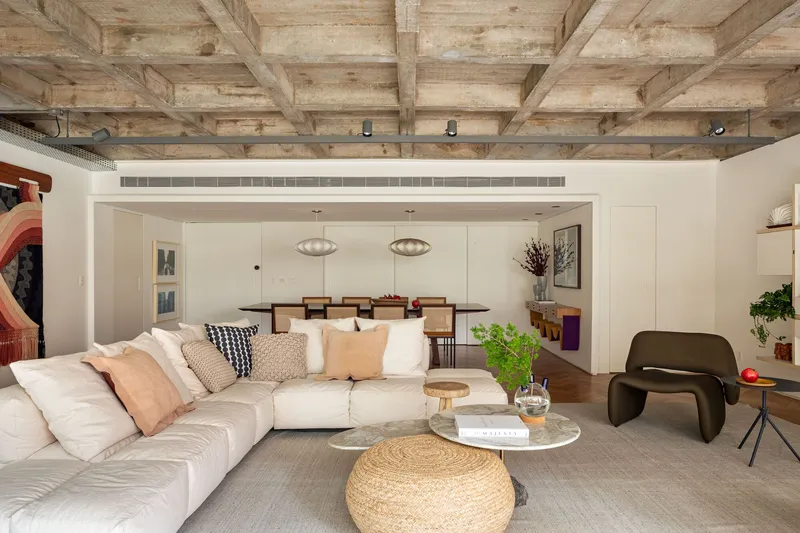
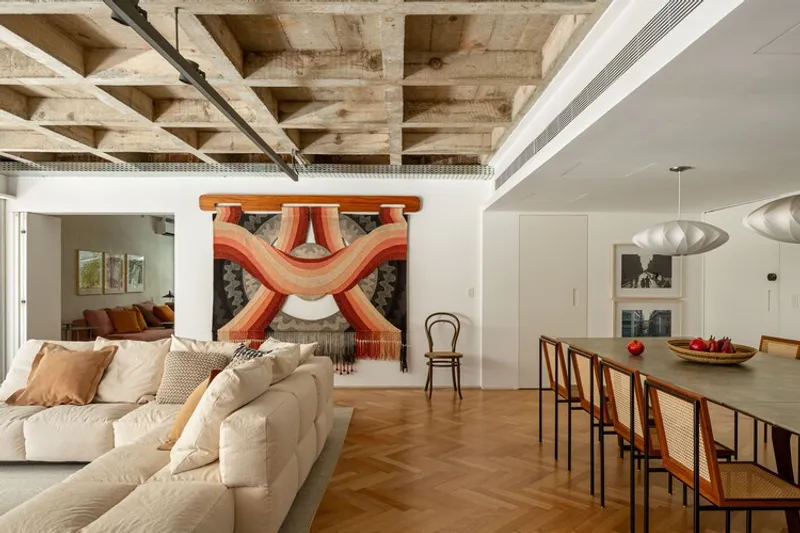
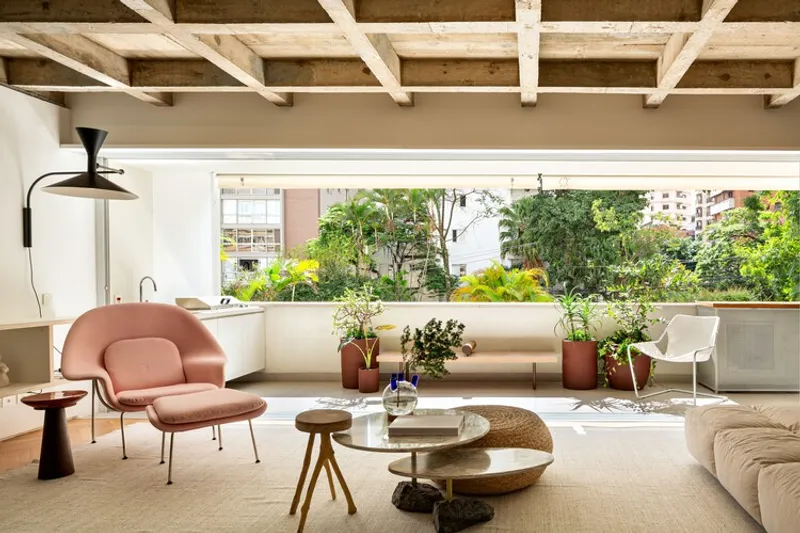
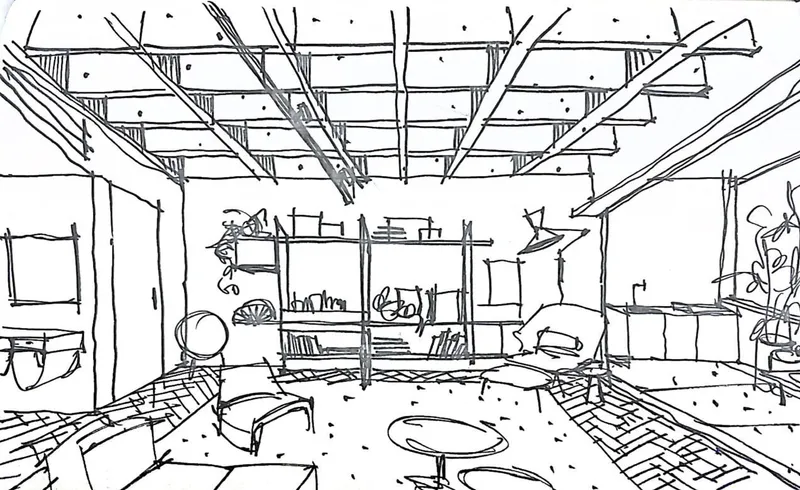
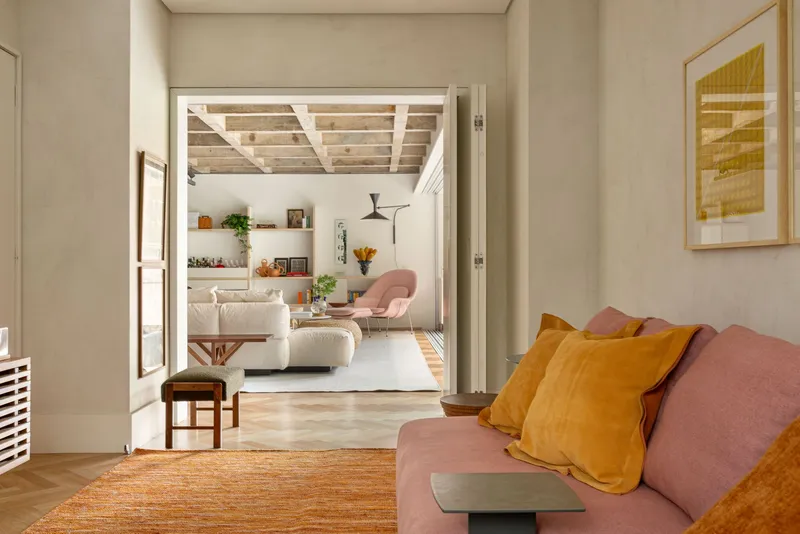
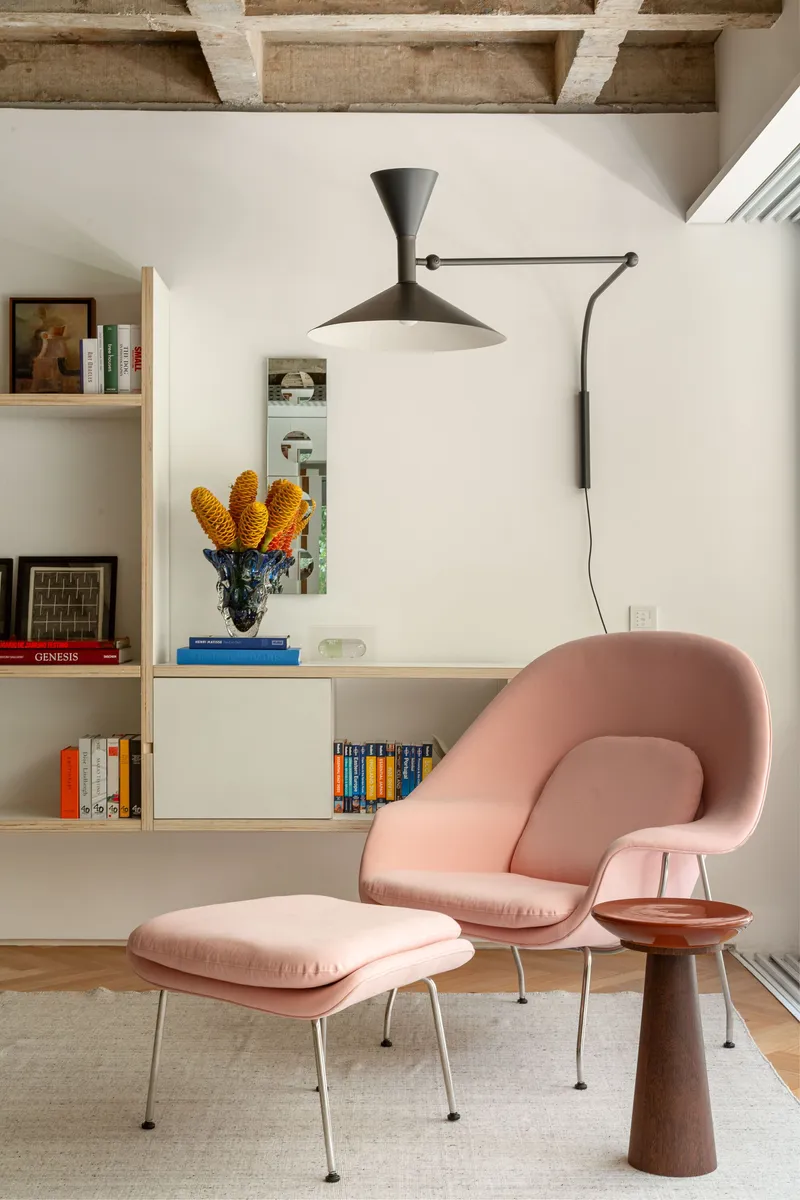
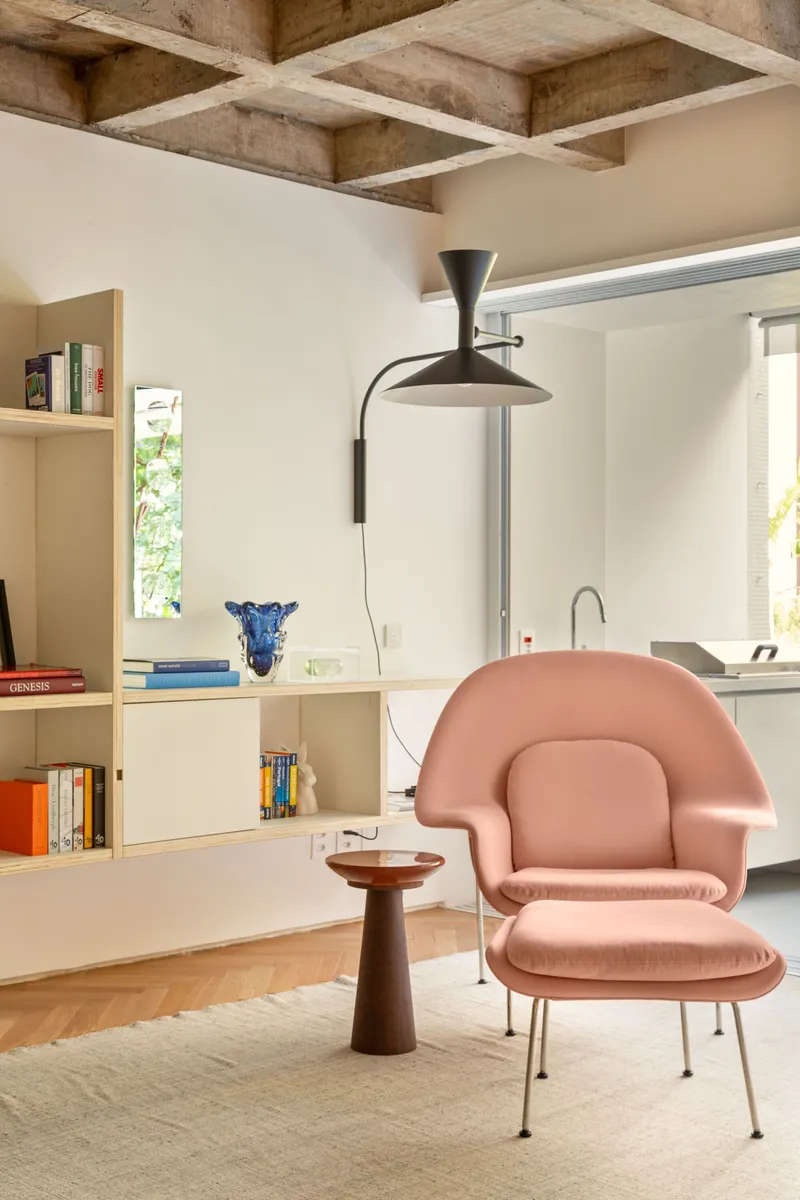
The heart of the project lies in the living room—a space measuring 7.5 meters across without central support. Even before uncovering the ceiling, the architects suspected the presence of a ribbed slab, a structural system common in modernist residential buildings but rarely left exposed in interior redesigns. Its eventual discovery confirmed an opportunity: rather than hiding the slab behind plaster, the team chose to reveal the concrete in its raw state, exposing the texture, rhythm, and imprint of the original wooden formwork. The ceiling retains history, memory, and manual craft.
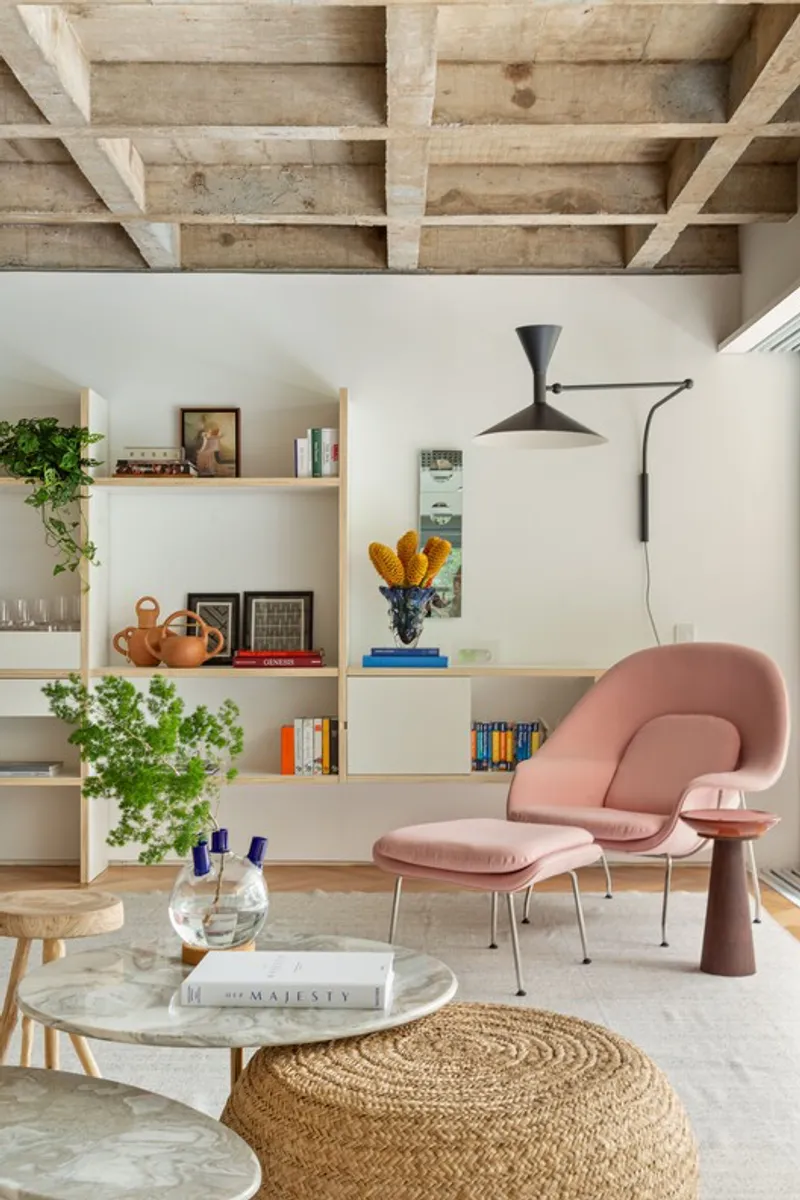
To complement this rerevealed skeleton, the lighting strategy was designed with restraint. A continuous line of indirect lighting and subtle spots runs across the ceiling edge, grazing the exposed slab and producing soft shadows between its ribs. A white shelf integrated with an LED profile traces the window line along the balcony façade, offering ambient reflection that enhances natural luminosity during the day and provides gentle warmth at night.
With this approach, the ceiling is not simply exposed—it becomes an architectural protagonist.
Living Space as Landscape Frame
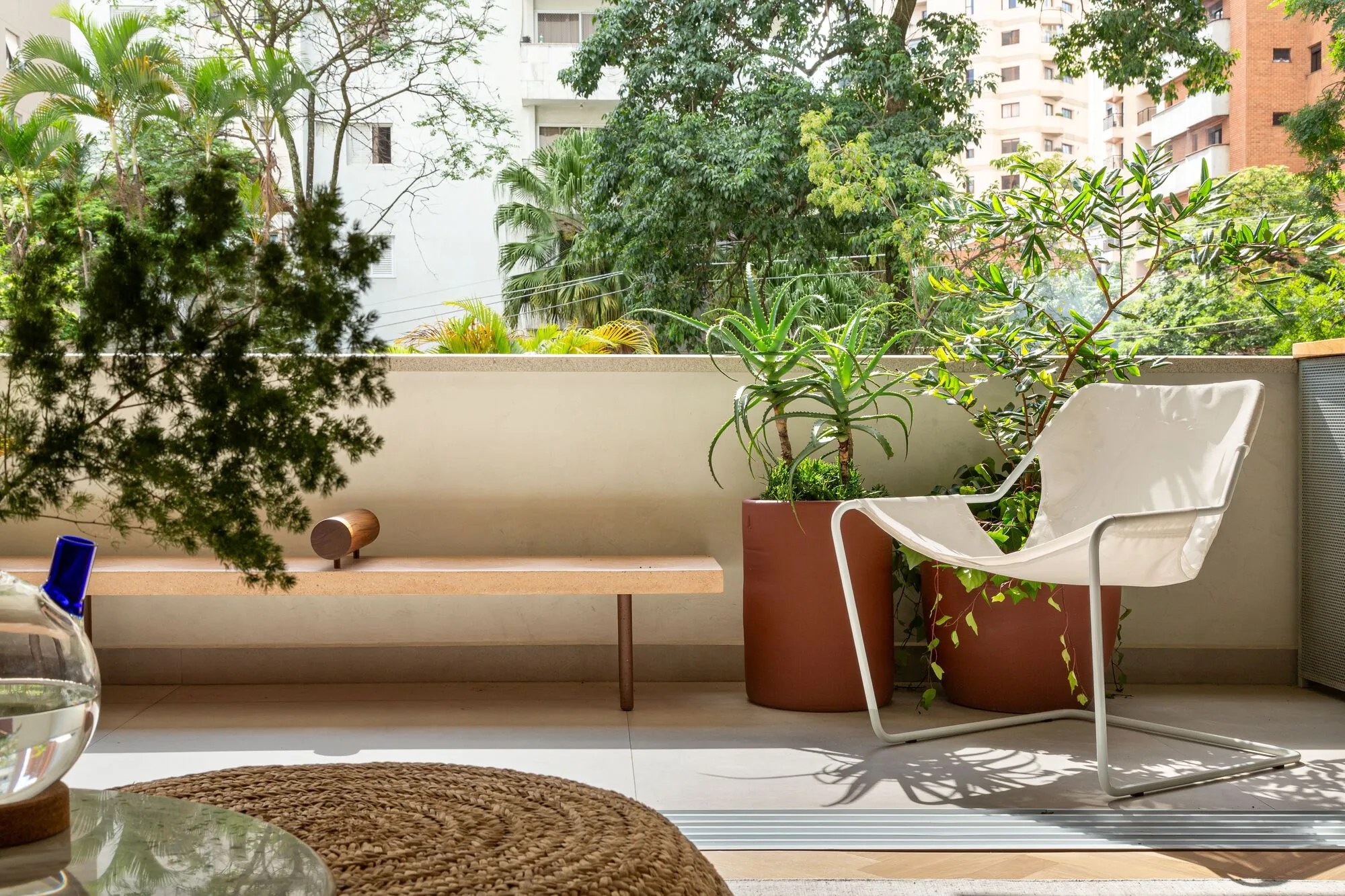
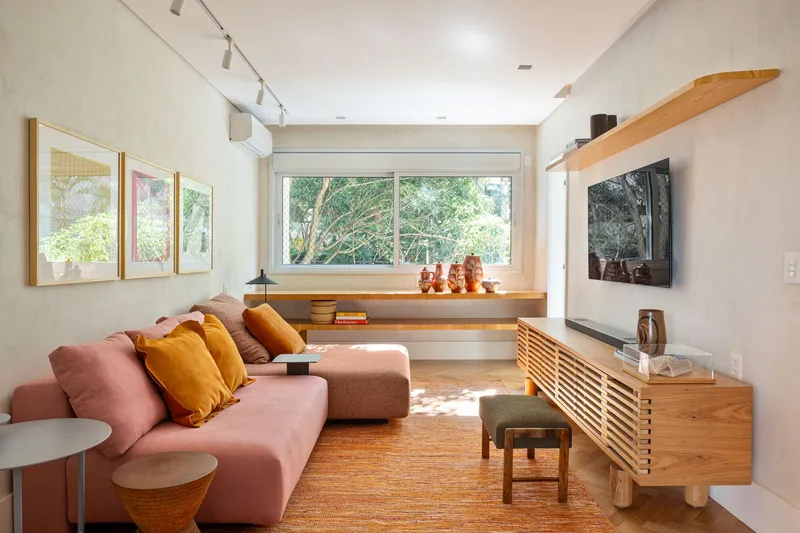
The apartment’s position—slightly withdrawn from street level and oriented toward the leafy garden canopy—creates a unique spatial experience for city living. Though located within a dense urban grid, the residence feels enveloped by nature. Large windows allow uninterrupted views of treetops, filtering sunlight into the living area throughout the day. The threshold between interior and exterior dissolves, as the balcony can be fully opened, creating a near-continuous spatial flow.
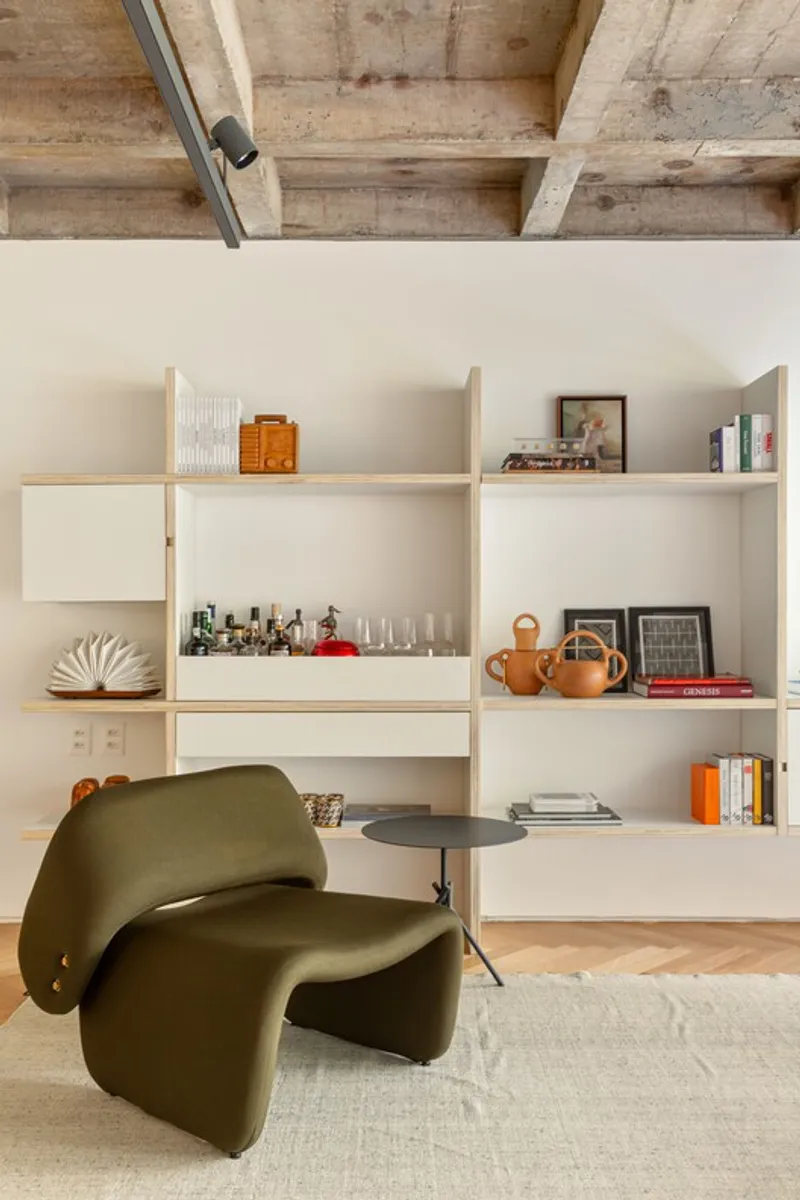
Furniture selections reinforce this sense of openness. Wood appears recurrently—not as decorative excess, but as tactile warmth. Sofas and seating pieces are arranged to encourage conversation and contemplation rather than rigid formality. This is a social space that expands outward, visually and emotionally.
The apartment does not impose itself on nature; it frames and receives nature.
A Dining Room of Contrast and Modesty
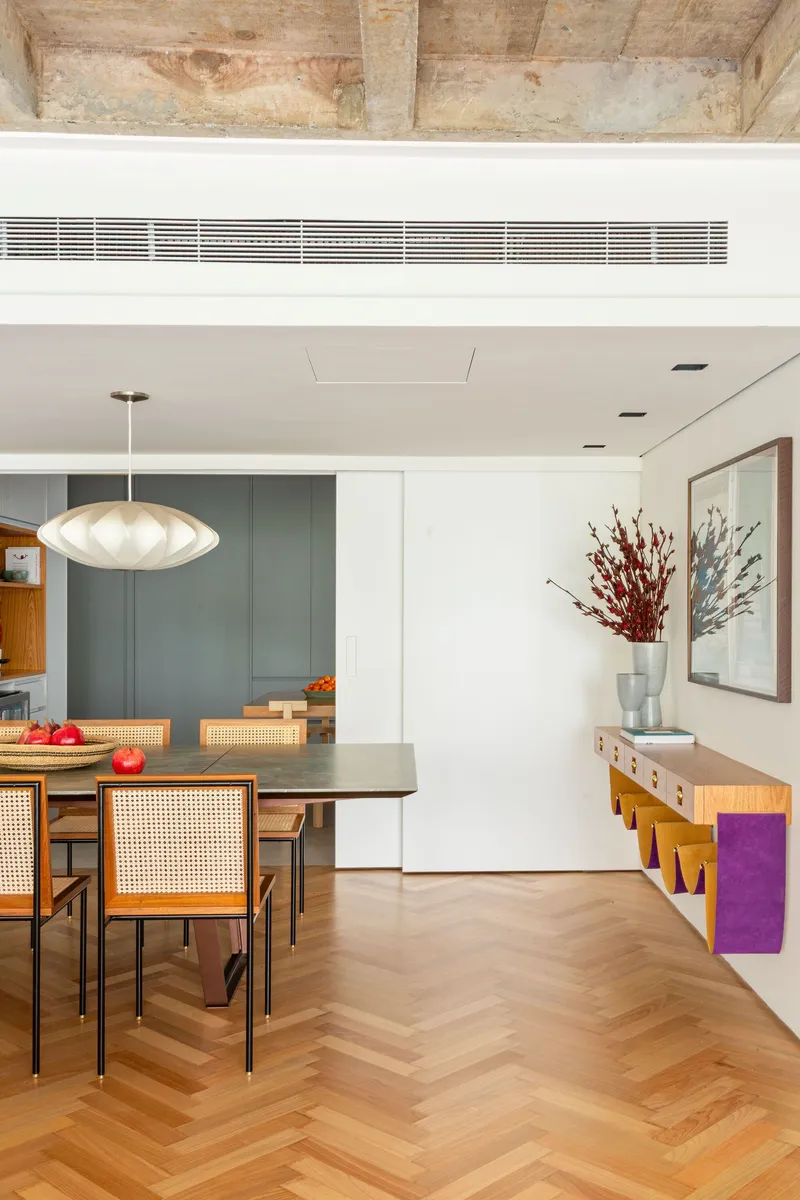
Adjacent to the living area, the dining room occupies a zone with a lower ceiling—an intentional decision shaped by technical requirements associated with the air-conditioning system. Rather than attempting to disguise this compression, the architects embraced contrast. The exposed concrete slab in the living room meets a smooth white ceiling in the dining area, establishing a deliberate shift in spatial weight.
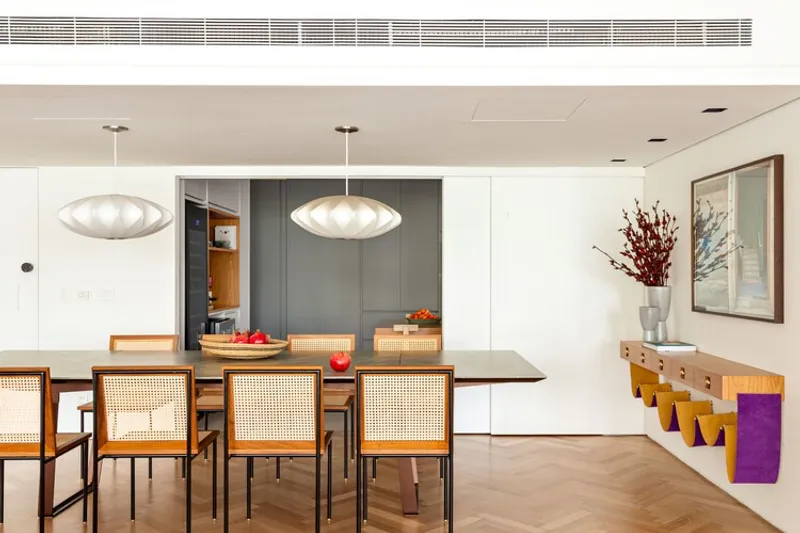
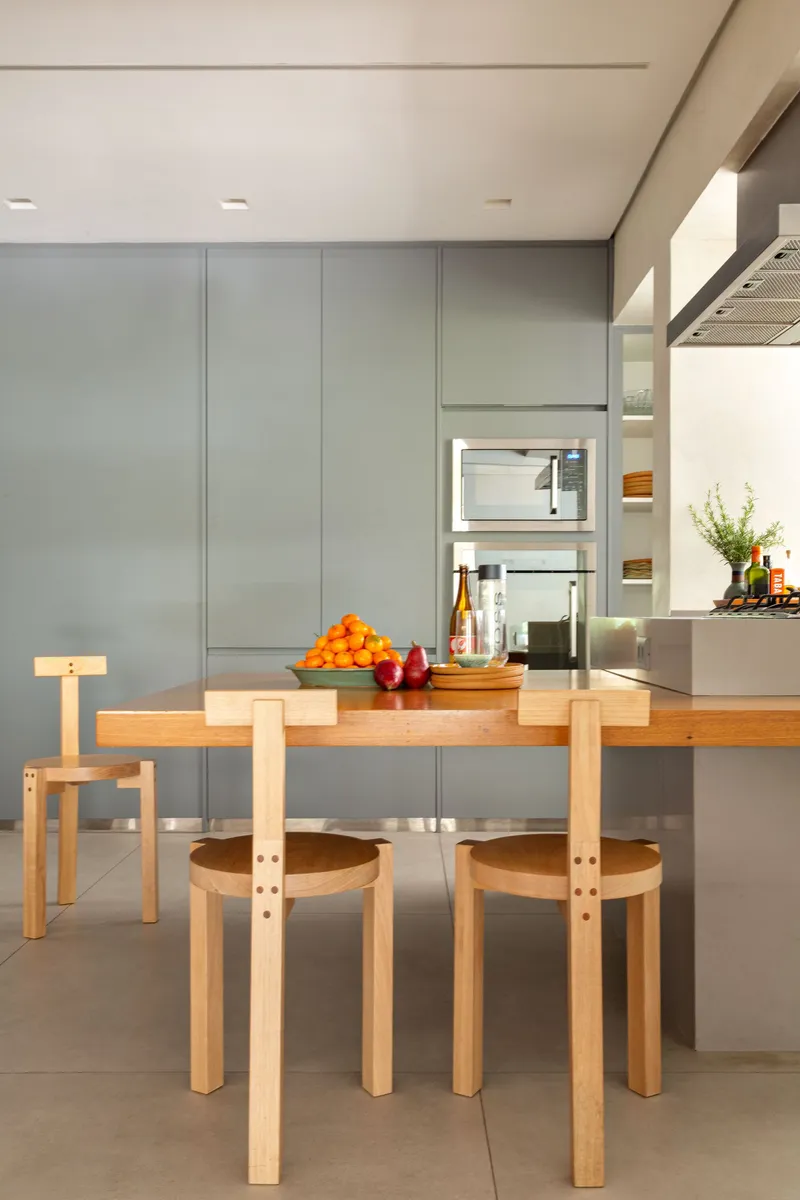
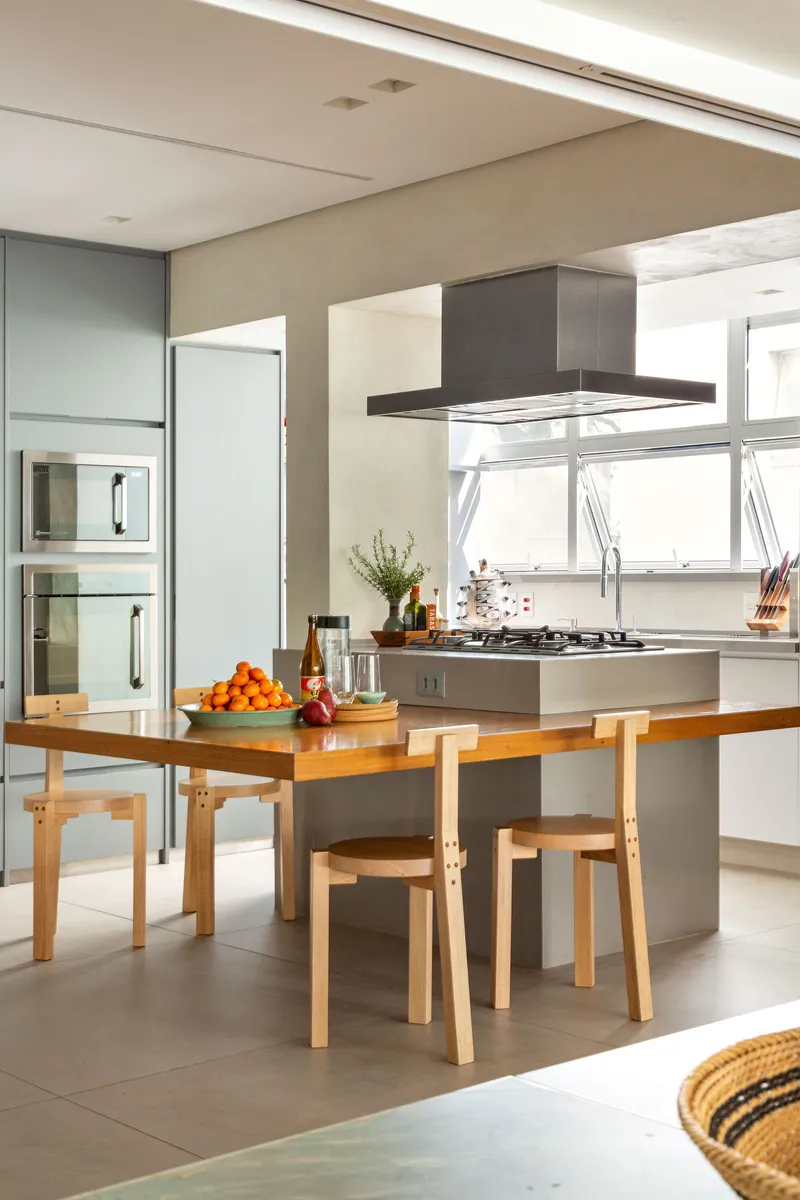
White acts not only as a reflective surface but as a volume-lightening element that balances the density of concrete. The space opens toward the balcony, receiving abundant daylight. The dining table, a piece of sober yet refined materiality, sits as the focal gathering point where meals extend into moments of companionship, family rituals, and informal dialogue.
Contrast becomes continuity.
A Kitchen Reinvented with Lightness and Rationality
The kitchen renovation required both aesthetic refinement and functional modernization. The previous petrol-blue cabinetry—which once offered strong visual identity—was replaced with grey vinyl finishes. The resulting environment feels calmer, allowing material textures and spatial clarity to define atmosphere rather than color dominance. Vinyl surfaces are durable, easy to clean, and visually neutral—qualities aligned with contemporary domestic performance.
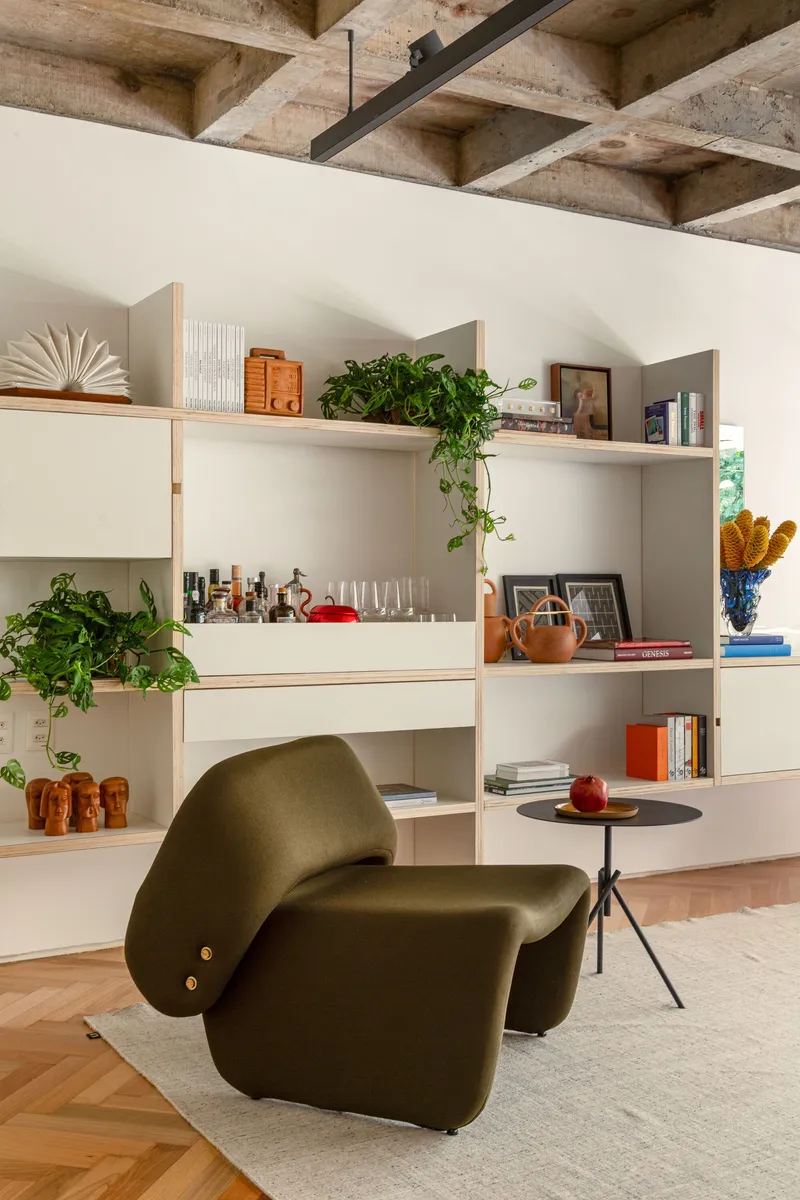
The highlight of the kitchen, however, is a shelving system designed by furniture designer Paulo Alves. Anchored to the wall at only three points, the structure demonstrates engineering elegance through apparent simplicity. Plywood boxes serve as anchor nodes from which the shelves extend, hovering two centimeters away from the wall. The gap allows for cable routing, ventilation, and a feeling of suspension.
The shelves do not mount the wall—they float beside it.
It is a subtle yet sophisticated gesture that embodies the project’s broader intention: to create lightness through precision rather than ornamentation.
Continuity Through Material Rhythm
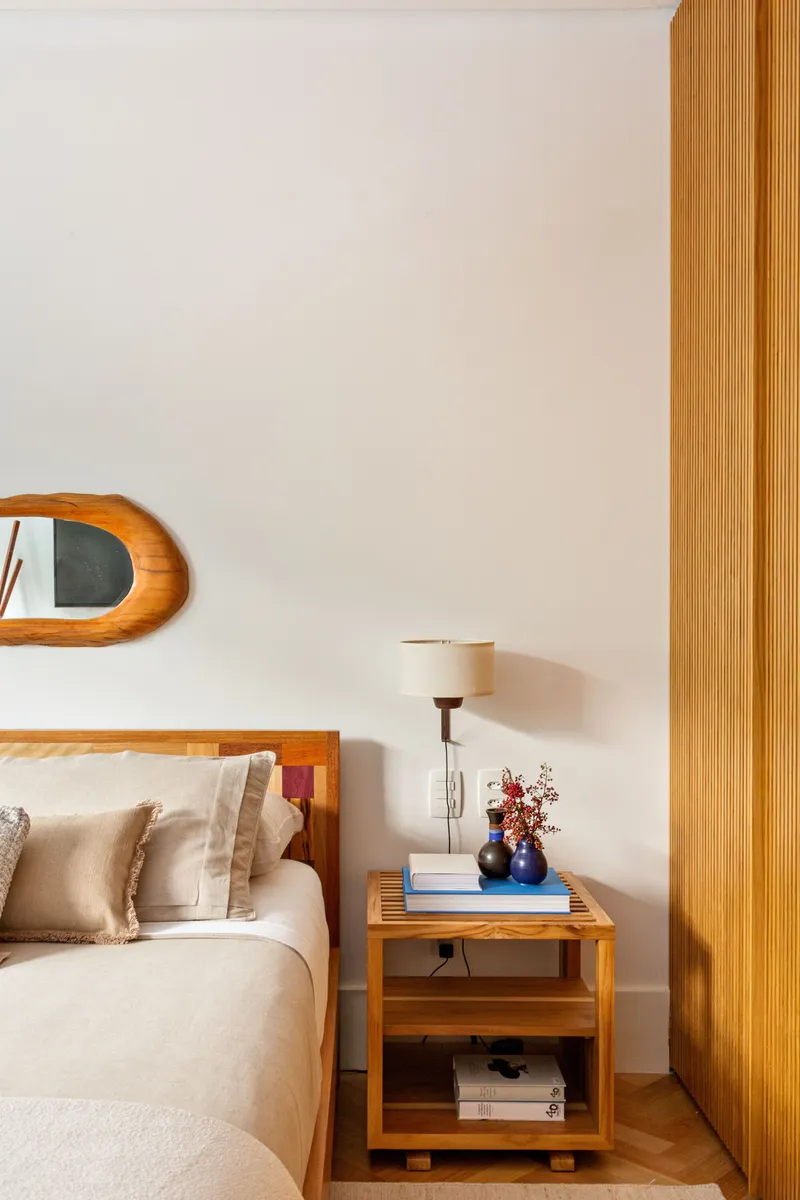
Across the apartment, a harmony is established between original and new elements. The roughness of exposed concrete complements the smoothness of wood. Neutral tones allow natural light to define color variations throughout the day. Textiles—rugs, upholstery, curtains—soften edges without overwhelming the room. Every change is measured; every addition respects the pre-existing structure.
The renovation does not chase trend or spectacle. Instead, it values longevity, refinement, and adaptable living. The result is an apartment that feels contemporary but grounded—updated without erasing history, minimal without sterility.
This is contemporary architecture that grows from what already exists.
Opening Rooms to Time and Light
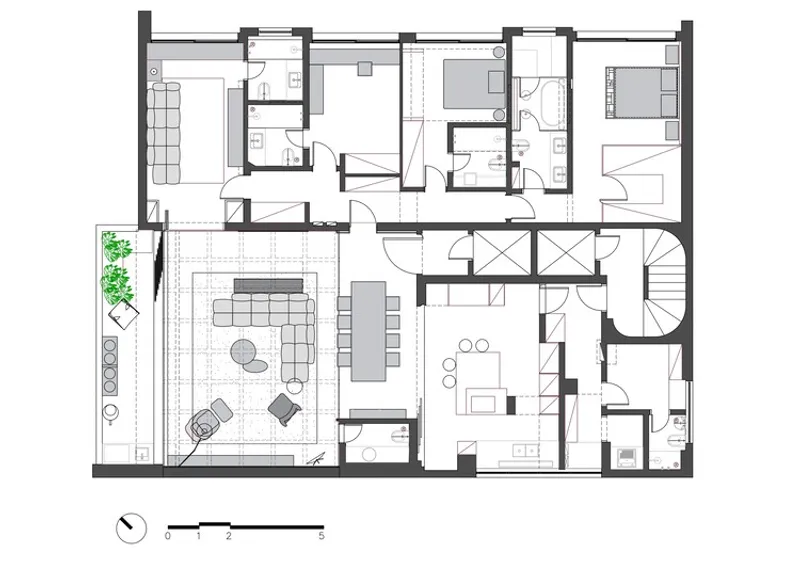
Spatial fluidity is central to the renewed plan. Circulation is intuitive and open; the layout enables residents to move naturally between living, kitchen, dining, and private areas. Lighting shifts gradually through the plan—bright and social in living spaces, subdued in intimate zones.
Where many renovations seek to cover, conceal, and replace, Franca Apartment uncovers, reveals, and integrates. To expose hidden concrete is to narrate past labor. To preserve wood textures is to allow material patina to speak. To adopt minimalist finishes is to amplify silence and clarity, not emptiness.
The spatial experience is therefore less about what has been added and more about what has been uncovered.
A Dialogue Between Inheritance and Future
Architecturally, the apartment operates at the intersection of three timelines:
• 1973 – the year the building was originally completed• 2021 – a phase of renovation introducing contemporary furniture and layouts• 2025 – Ana Sawaia Arquitetura’s intervention, merging past layers into a unified composition
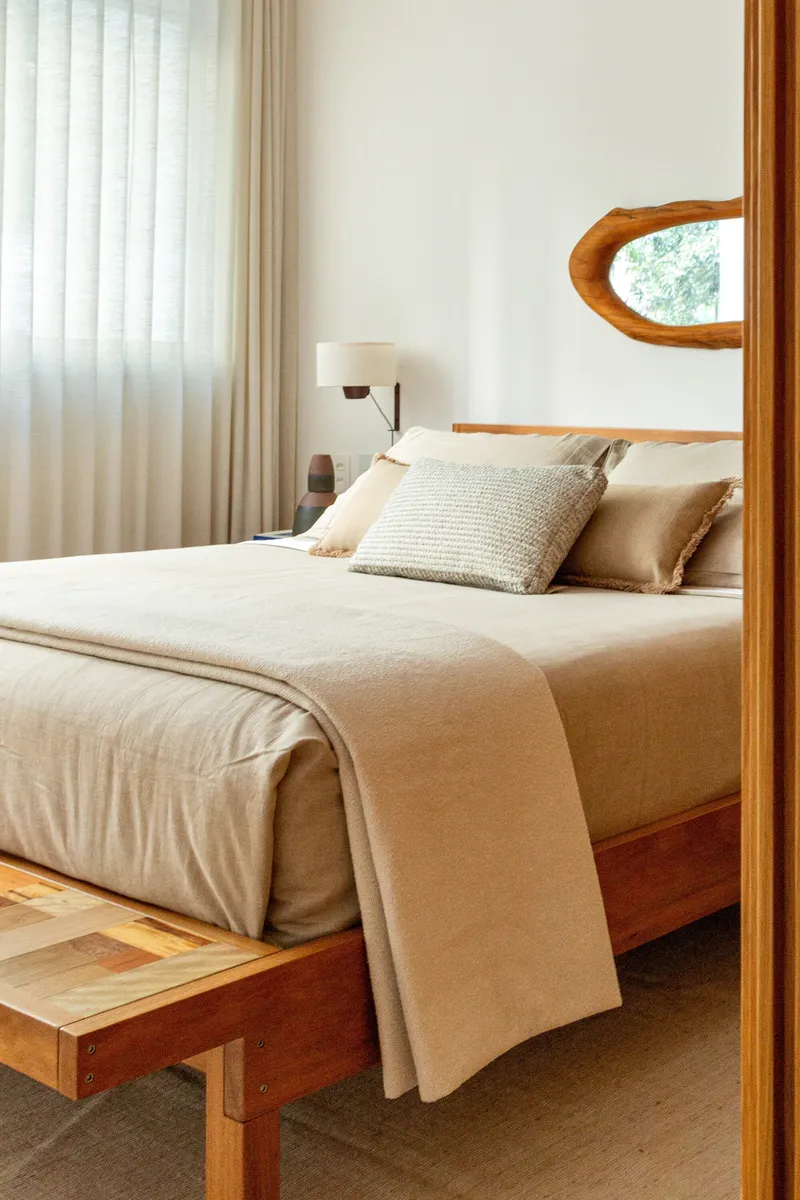
Rather than treating these phases as separate chapters, the design weaves them into a single narrative. Legacy becomes structure, prior renovation becomes foundation, and new intervention becomes interpretation. Material honesty bridges all three moments.
This balance between inheritance and future defines the essence of the project.
Final Reflection
Franca Apartment is more than a residential refurbishment; it is an architectural conversation. Light, structure, history, and habitation speak in quiet simultaneity. Concrete remembers the hands that cast it; wood remembers the years it has aged; new finishes bring clarity without noise. It is a living environment that breathes, that receives nature and daylight, and that understands home as an evolving story rather than a finished object.
This renovation teaches that architecture’s role is not only to shape space but to reveal meaning already present within it.




Popular Articles
Popular articles from the community


Co-life: Sustainable Architecture for Age-Friendly Community Living
Co-life reimagines sustainable architecture for seniors through courtyards, rammed earth, shared gardens, and spaces designed for belonging.

The Musturak Paradise: Senior Living Architecture for a Connected Future in Temara, Morocco
The Musturak Paradise reimagines senior living architecture in Temara via private homes, social spaces, culture, community, and shared care.

Play: Fragments of Their World
Familiar architecture becomes modular playground design, creating safe spaces where displaced children can learn, connect, imagine and play.

Co-Life: Senior Housing Design That Reconnects Older Adults With the City
Co-Life reimagines senior housing design through healing gardens, shared streets, workshops, and a sustainable community across generations.


Similar Reads
You might also enjoy these articles


Hodi-Mandai Geram
Project Function: Preservation and revitalization of the Intangible heritage and socio-spatial identity of the Hodi by Housing, Cultural Memory Center, Sacred Grove, landscape, local tourism economy


Olio Towers: A Mid-Rise for Performers That Fuses Housing, Rehearsal, and Stage
Located blocks from Houston's Theater District, this modular tower stacks living units around a central performance atrium.

Oasis: Modular Green Housing Carved into Dhaka's Urban Fabric
A shortlisted Plugin Housing entry reclaims unauthorized settlements in Dhaka with stepped concrete volumes, green roofs, and ventilation-driven design.

Black Hole: A Floating Megastructure for the Post-Physical Era
Emiliano Mazzarotto envisions a spherical, self-scaling arena where e-sports, digital hotels, and holographic stadiums replace traditional public space.


Explore Architecture Competitions
Discover active competitions in this discipline



Challenge to reimagine the Iron Throne


Photograph architecture without architects


Illustrate the lost glory of Angkor Wat - Render Challenge


Design challenge to reuse E-waste
Comments (0)
Please login or sign up to add comments
No comments yet. Be the first to comment!