
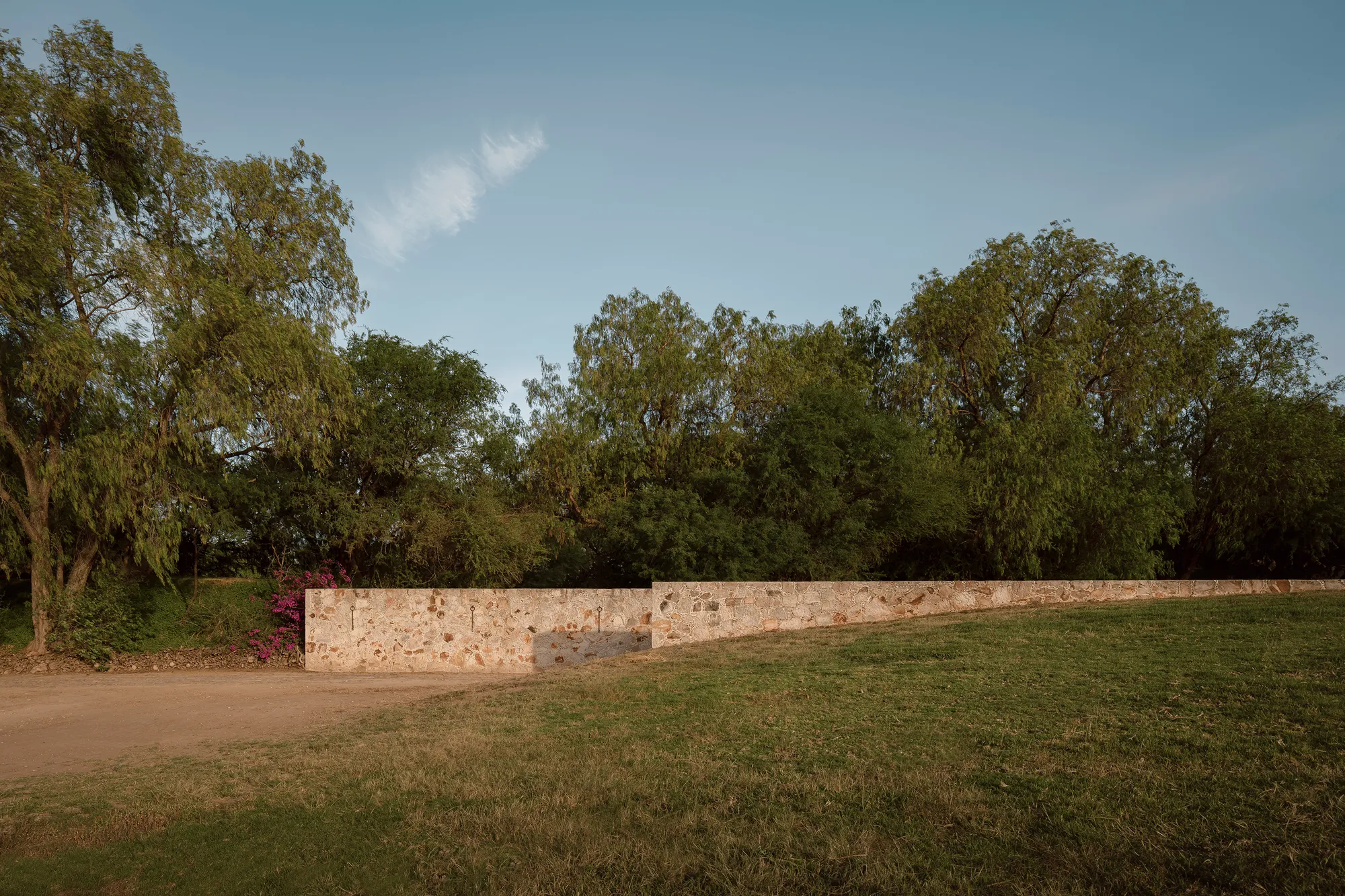
Ganadería Santillán By Cosmos
Ganadería Santillán blends arena, equestrian training, and landscape through earth-integrated design, creating a timeless, immersive ranching space rooted in tradition.


Ganadería Santillán in Tequisquiapan, Mexico, designed by Cosmos, is a powerful example of landscape-integrated architecture, where tradition, terrain, and contemporary design merge seamlessly. Completed in 2025, the project reinterprets the typology of a Plaza de Tientas and equestrian training facility, embedding it within the natural contours of the Mexican Bajío.
Architecture Rooted in Landscape
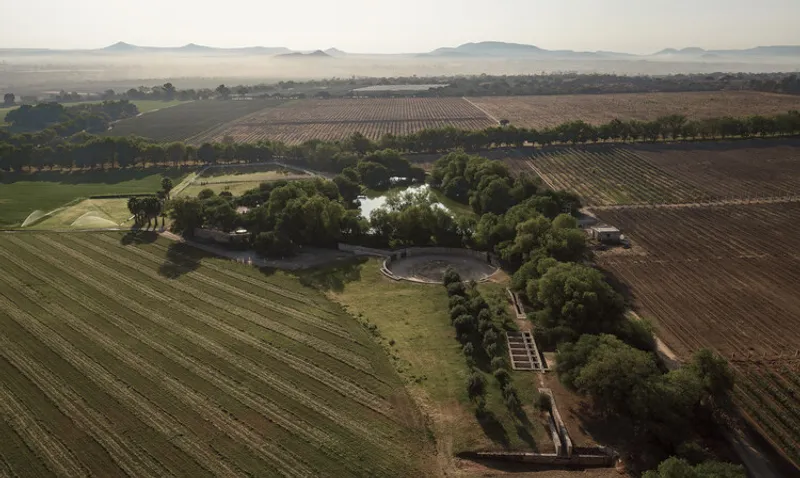
Set between Tequisquiapan and La Laja, a region known for its rich ranching heritage and landscapes reminiscent of classical Mexican paintings, the project embraces its context as a defining element. Rather than imposing a structure onto the site, the architects conceived the design as an extension of the terrain, allowing architecture and landscape to coexist harmoniously.
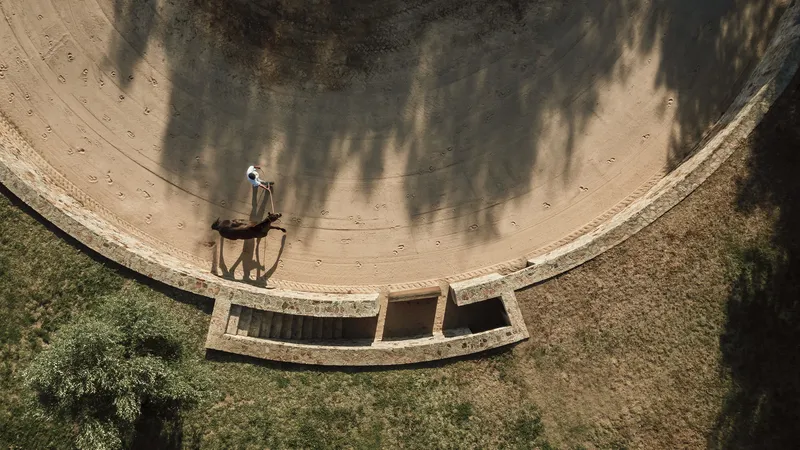
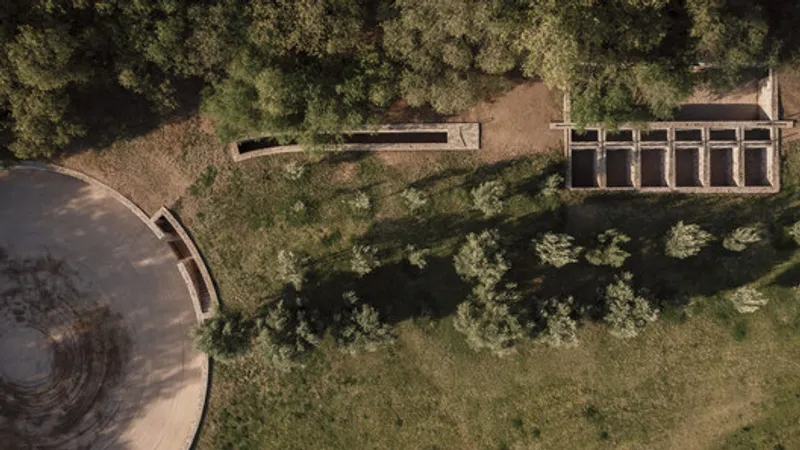
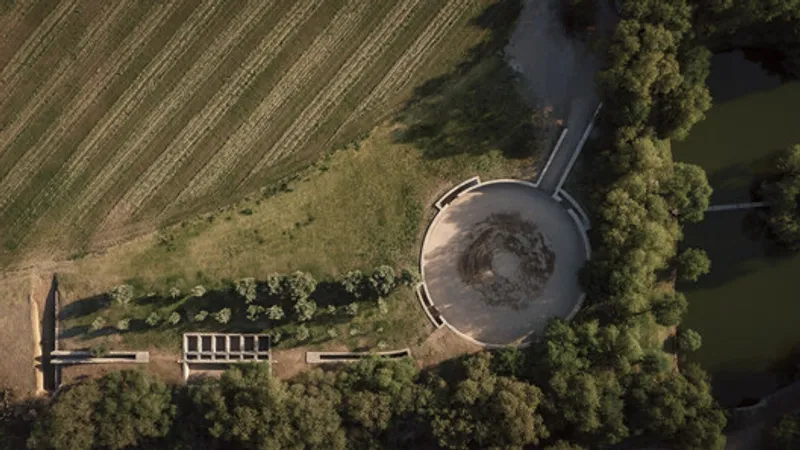
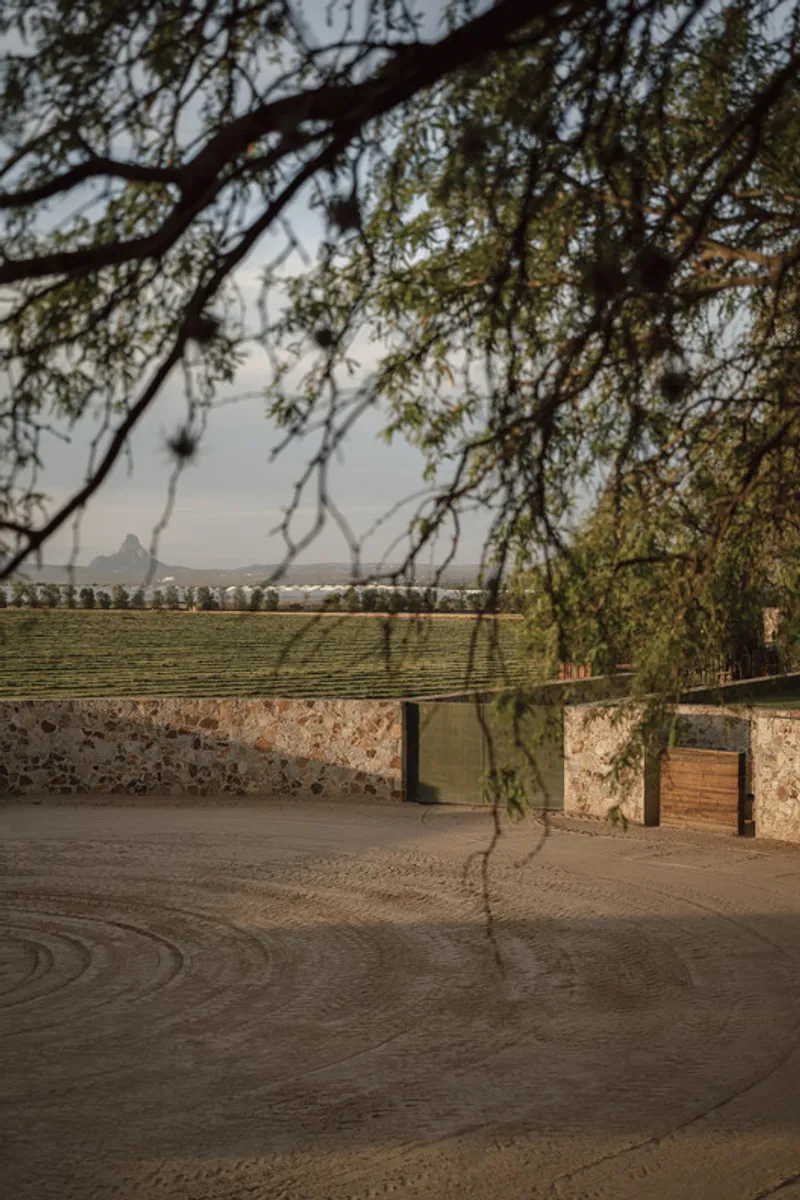
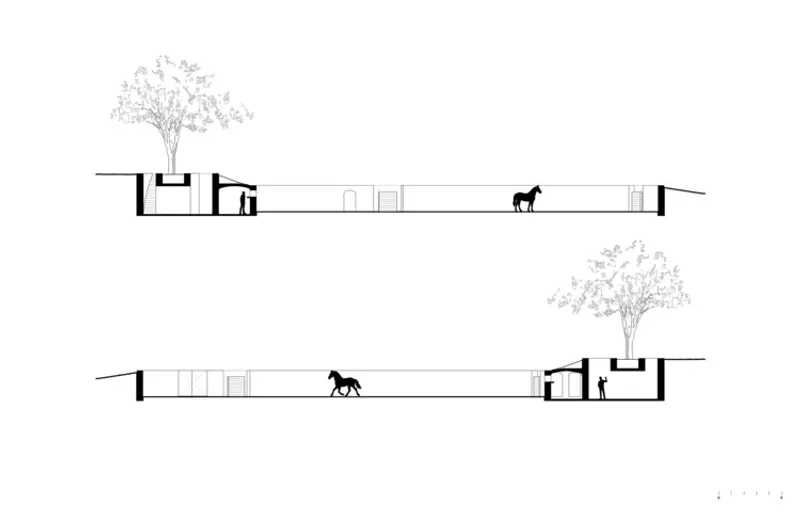
The arena is partially embedded into a natural slope, using the land itself to shape the form. The remaining portion is subtly integrated through a gentle topographic rise, creating a seamless transition between built form and surrounding meadow. This strategy reinforces the idea of earth-integrated architecture, minimizing visual impact while enhancing environmental connection.
Processional Entry and Spatial Experience
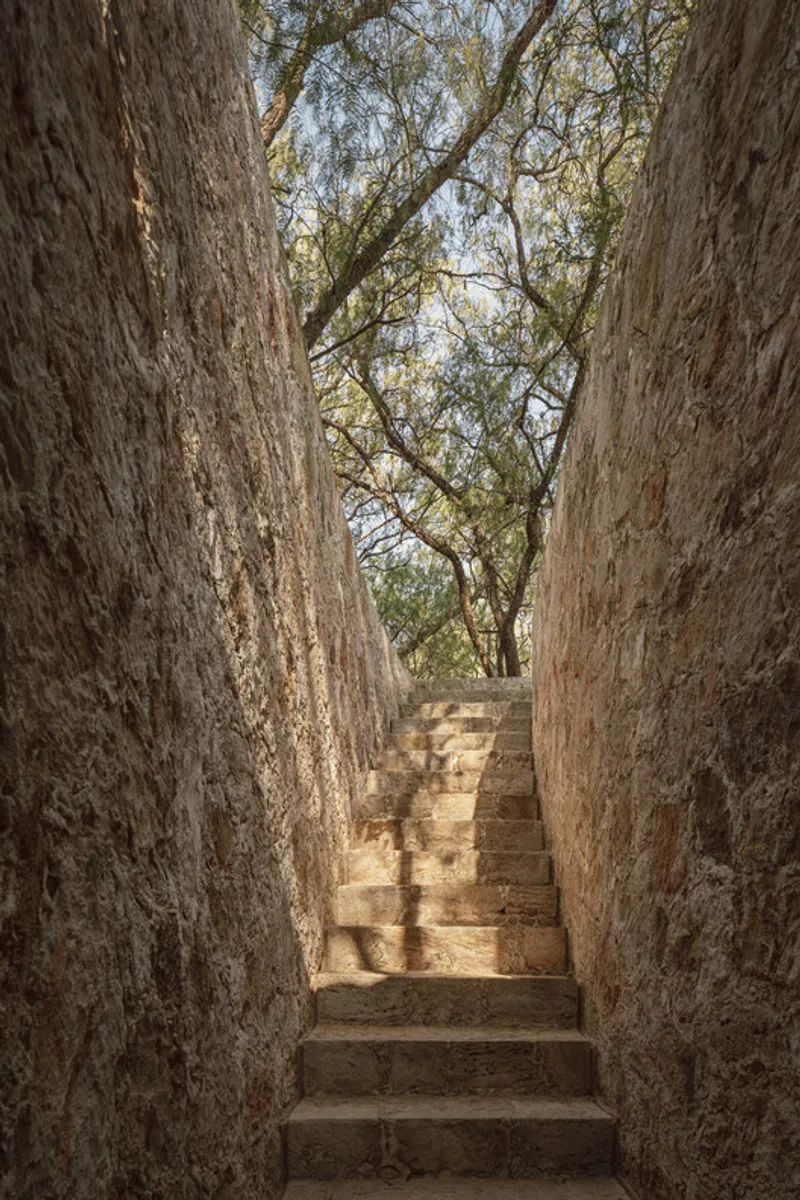
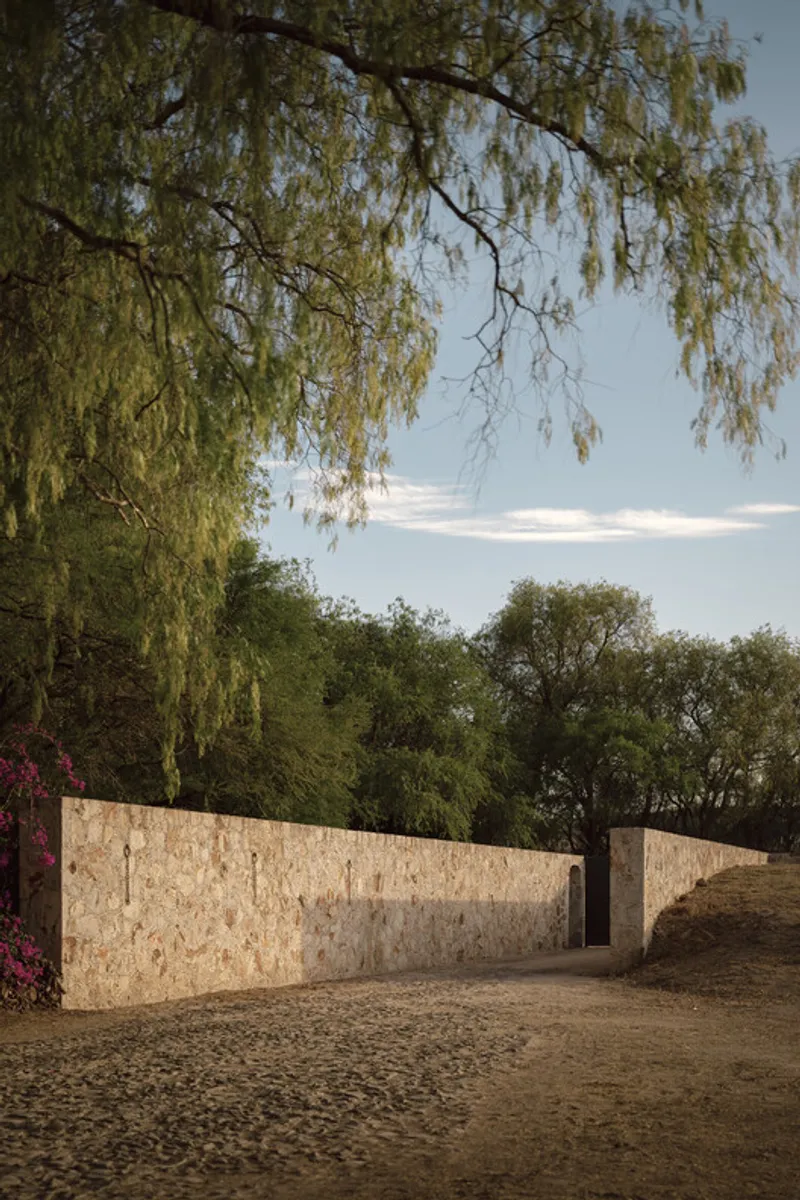
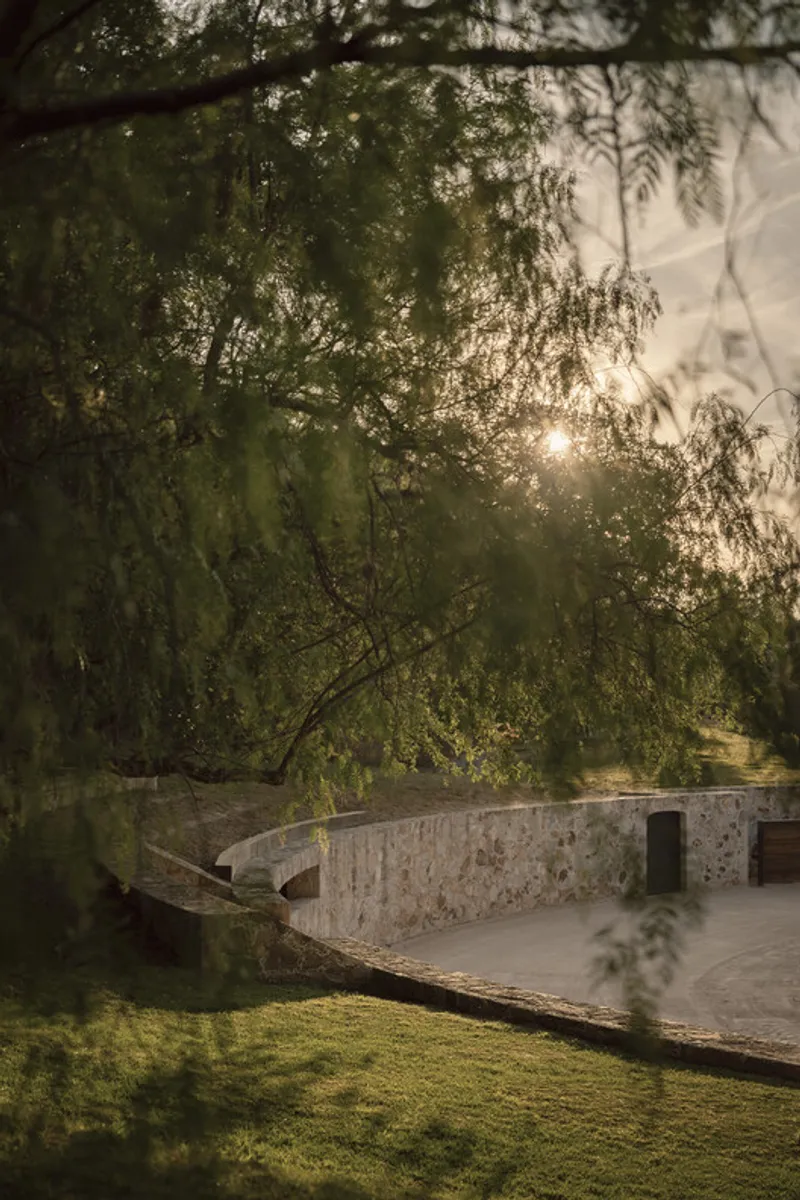
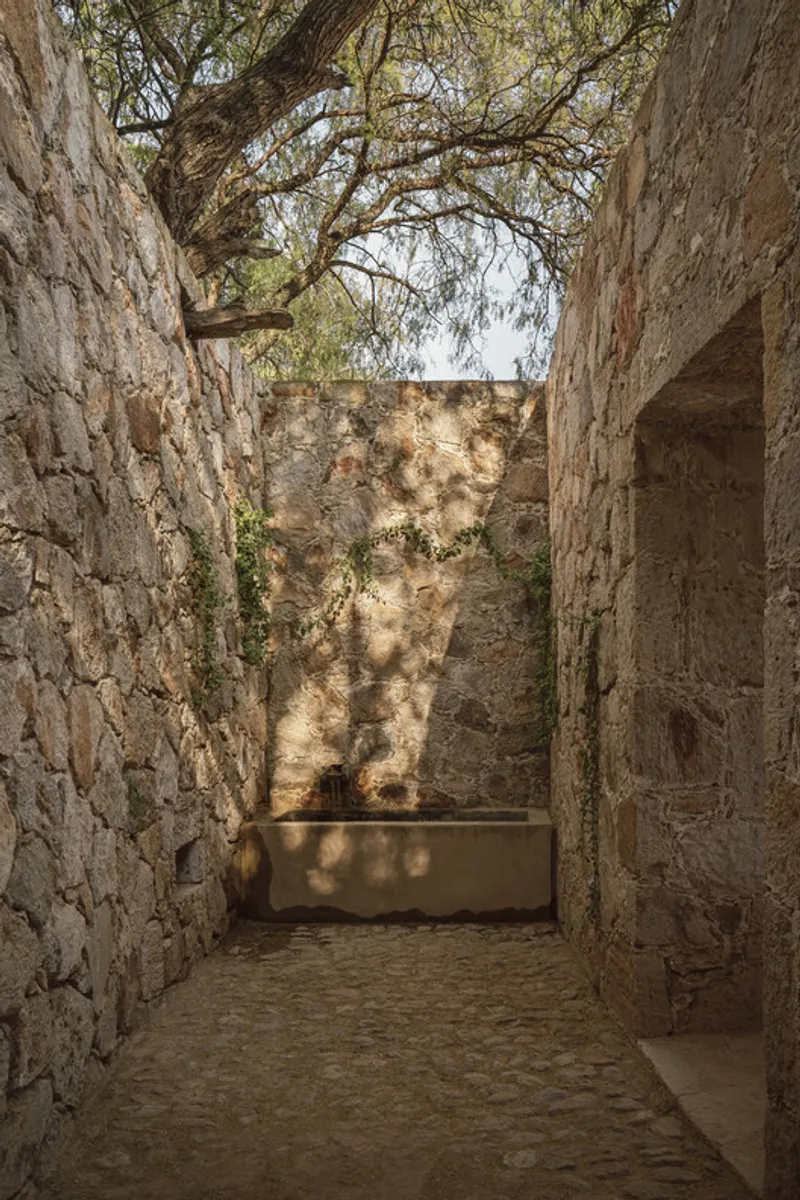
The arrival sequence plays a crucial role in shaping the user experience. Visitors descend along a curved stair that follows the geometry of the arena, gradually immersing them into the project. This path passes through a subterranean tunnel, carefully designed to preserve two existing mesquite trees—an important gesture of environmental respect.
The journey culminates in a semi-sunken courtyard shaded by these trees, where a small fountain provides a moment of calm before entering the main viewing space. This carefully choreographed sequence transforms arrival into a sensory and spatial narrative, blending architecture with nature.
Framing Views and Cultural Identity
From the Palco de Ganaderos, the central viewing and control space, the design frames a striking visual axis: the arena in the foreground and the iconic silhouette of Peña de Bernal in the distance. This intentional framing establishes a strong dialogue between architecture, landscape, and cultural identity.
Adjacent spaces, including a discreet wine cellar and access points to the arena, are seamlessly integrated, maintaining clarity while supporting the functional needs of ranching activities.
Functional Precision and Animal Movement
The design prioritizes efficiency and safety in the handling of animals. The arena includes a main burladero and three secondary ones, all strategically aligned to ensure smooth circulation. Subterranean holding areas (toriles) connect through a network of controlled pathways and tunnels, enabling organized and stress-free cattle movement.
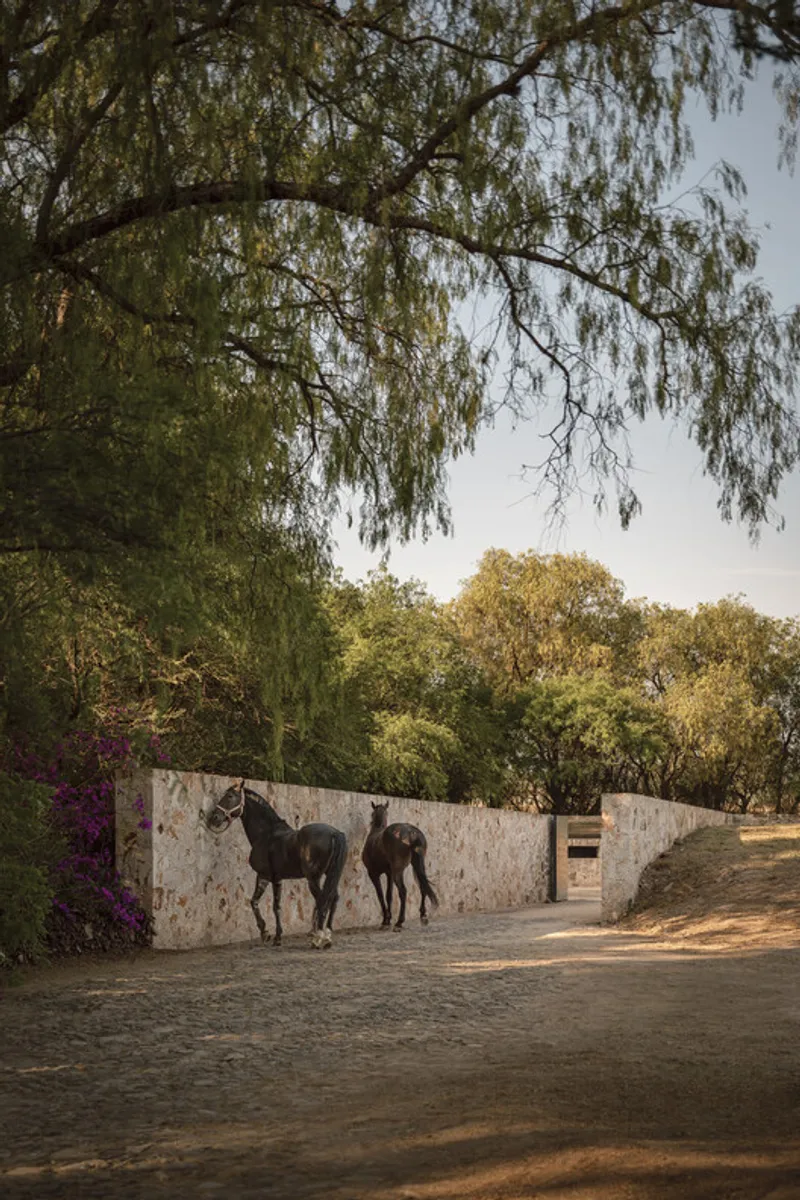
Horses access the arena through a dedicated Patio de Caballos, connected to stables and equipped with resting infrastructure. These carefully planned systems demonstrate a deep understanding of equestrian architecture and ranching operations.
Materiality and Timeless Expression
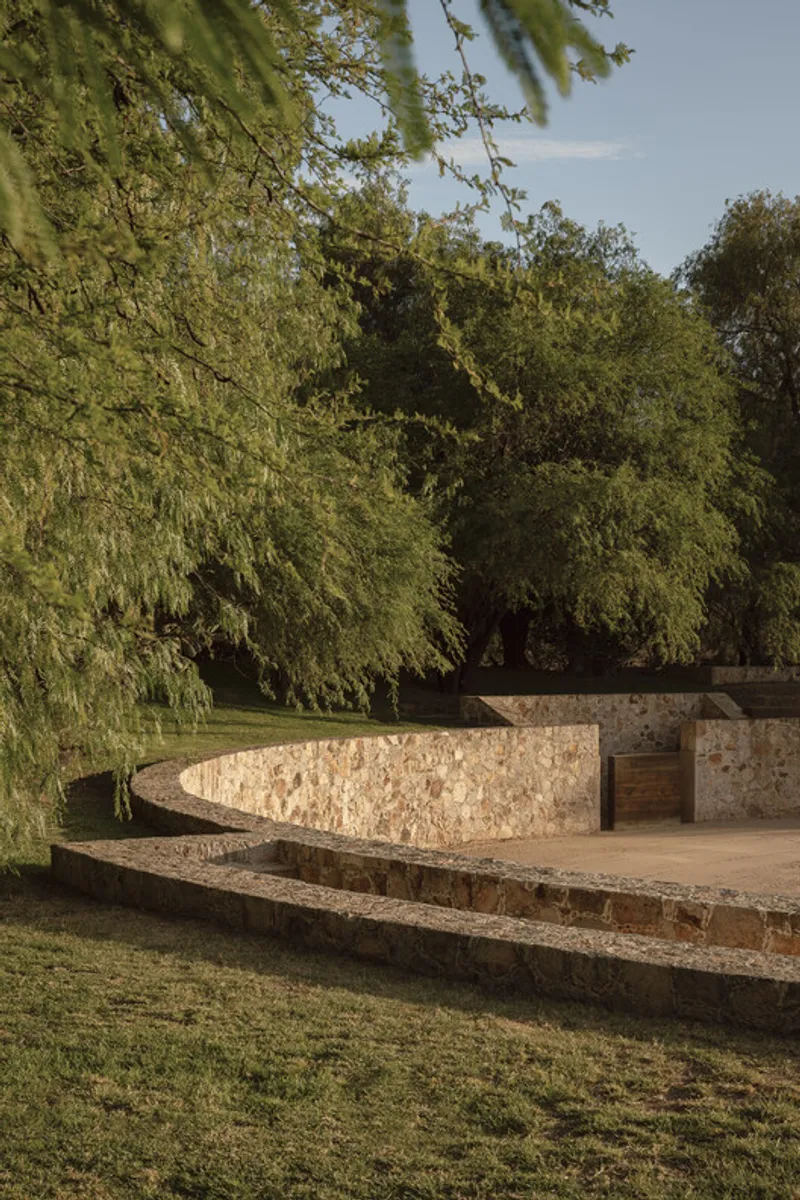
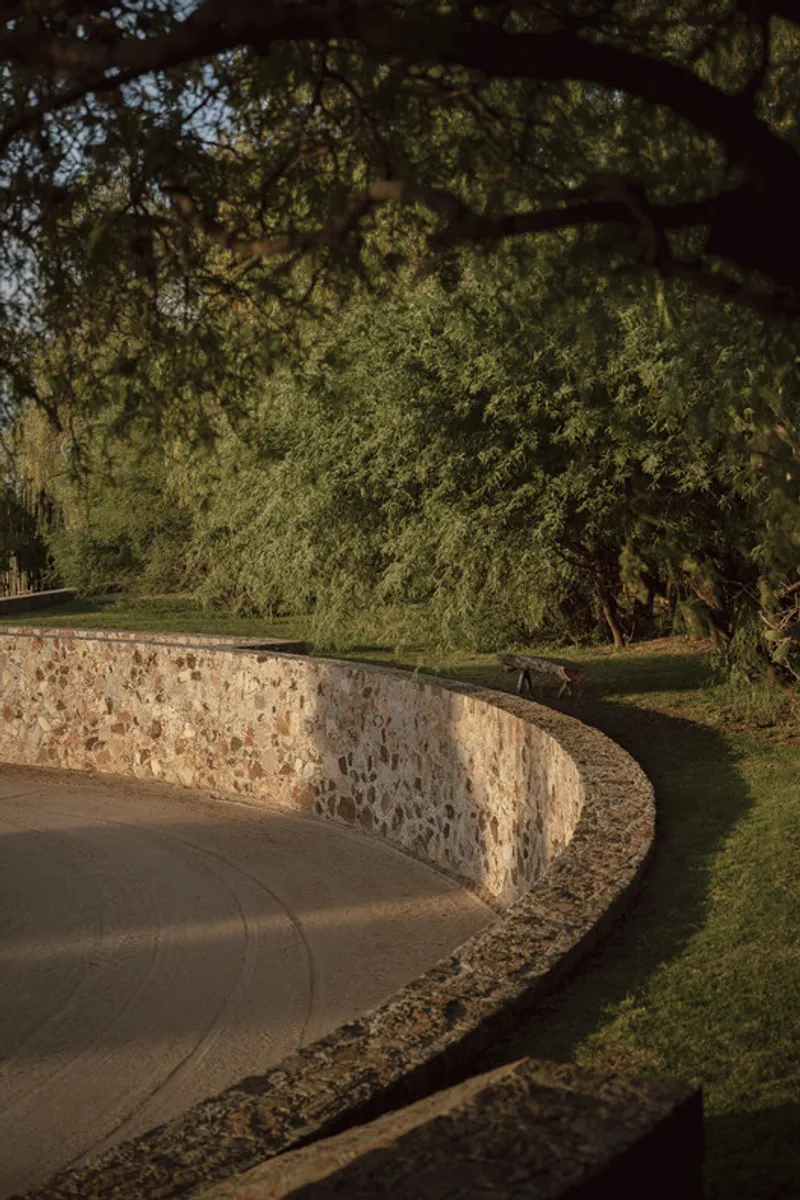
The project adopts a restrained material palette that enhances its connection to the land. Earth-toned finishes, natural textures, and minimal detailing contribute to a sense of permanence and authenticity. The architecture is conceived to age gracefully, evoking the presence of a “contemporary ruin”—a structure that feels both ancient and modern.
This timeless quality allows the focus to remain on the rituals, animals, and cultural practices that define the space, rather than the architecture itself.
Sustainable and Contextual Design Approach
Ganadería Santillán exemplifies sustainable architecture through minimal intervention. By embedding the structure into the terrain, preserving existing vegetation, and reducing the need for extensive construction, the project minimizes environmental impact.
Natural shading, earth insulation, and integration with the landscape contribute to a climate-responsive design, aligning with principles of ecological sensitivity and long-term sustainability.
All the photographs are works of
Cesar Béjar




Popular Articles
Popular articles from the community


Conexión: Biophilic Design Reimagines High-Rise Living in Hong Kong
Conexión reimagines high-rise living in Hong Kong through biophilic design, green facades, shared spaces, daylight, water and nature within.

The Earth Pod: 3D Printed Homes for Resilient Refugee Communities
The Earth Pod reimagines refugee housing through 3D printed homes made from clay, combining resilience, self-sufficiency, and rapid shelter.

The Musturak Paradise: Senior Living Architecture for a Connected Future in Temara, Morocco
The Musturak Paradise reimagines senior living architecture in Temara via private homes, social spaces, culture, community, and shared care.

Co-Life: Senior Housing Design That Reconnects Older Adults With the City
Co-Life reimagines senior housing design through healing gardens, shared streets, workshops, and a sustainable community across generations.


Similar Reads
You might also enjoy these articles

FAMM Arquitectura Organizes Ten Villas Around Courtyards and Jungle in Nosara, Costa Rica
El Molino pairs two elongated volumes with deep overhangs and timber louvers to build a compact coastal community five minutes from the beach.
Oscar Niemeyer's Ibirapuera Park Pavilions Define São Paulo's Cultural Identity in Concrete and Curve
A constellation of modernist volumes set within São Paulo's most important urban park, conceived for the city's 400th anniversary in 1954.
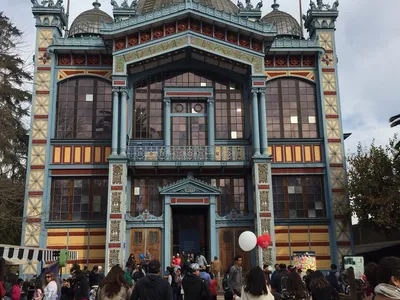
How Henri Picq's 1889 Paris Pavilion Traveled 11,000 Kilometers to Become Santiago's Artequín Museum
A prefabricated iron and glass pavilion built for the Paris Universal Exposition found a second life as a children's art museum in Chile.
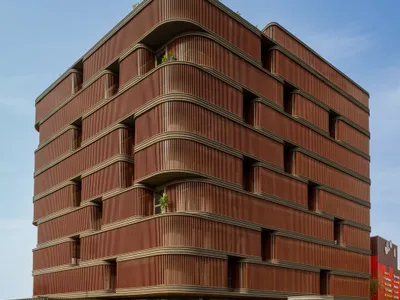
Sanjay Puri Architects Wraps a Jaipur Office Tower in Capsule-Shaped Green Buffers
A nine-level climate-responsive workplace near Jaipur Airport uses stacked planter terraces and aluminium screens to fight 40°C heat.


Explore Architecture Competitions
Discover active competitions in this discipline



Challenge to design a barrier free sports center


Challenge to design an outdoor ice-rink and park


Challenge to reimagine the Iron Throne


Photograph architecture without architects
Comments (0)
Please login or sign up to add comments
No comments yet. Be the first to comment!