

Studio Sacred Geometry Wraps a Hyderabad School in Patterned Brickwork and Green Courtyards
Genesis International School in Turkayamjal uses a U-shaped plan, perforated facades, and biophilic corridors to cool 50,000 square feet passively.


Hyderabad is expanding eastward fast, and the new neighborhoods springing up along its periphery need schools that do more than warehouse children in air-conditioned boxes. Genesis International School Turkayamjal, designed by Studio Sacred Geometry and completed in 2024, takes the opposite approach: a 50,000-square-foot elementary and middle school built almost entirely from locally sourced brick, organized around a central courtyard, and cooled largely by the wind it lets in rather than by machines.
What makes the project worth studying is the rigor with which it ties its climate strategy to its spatial plan. The U-shaped configuration is not decorative; it creates a courtyard that funnels prevailing breezes through corridors that double as thermal buffers. Perforated brickwork in stairwells and facades filters sunlight into dappled patterns while pulling hot air upward and out. And the intricate diamond and corbelled motifs on the facade are not applied ornament: they are the ventilation system, rendered in a craft tradition that local masons already know how to build.
A Facade Built from Pattern and Porosity
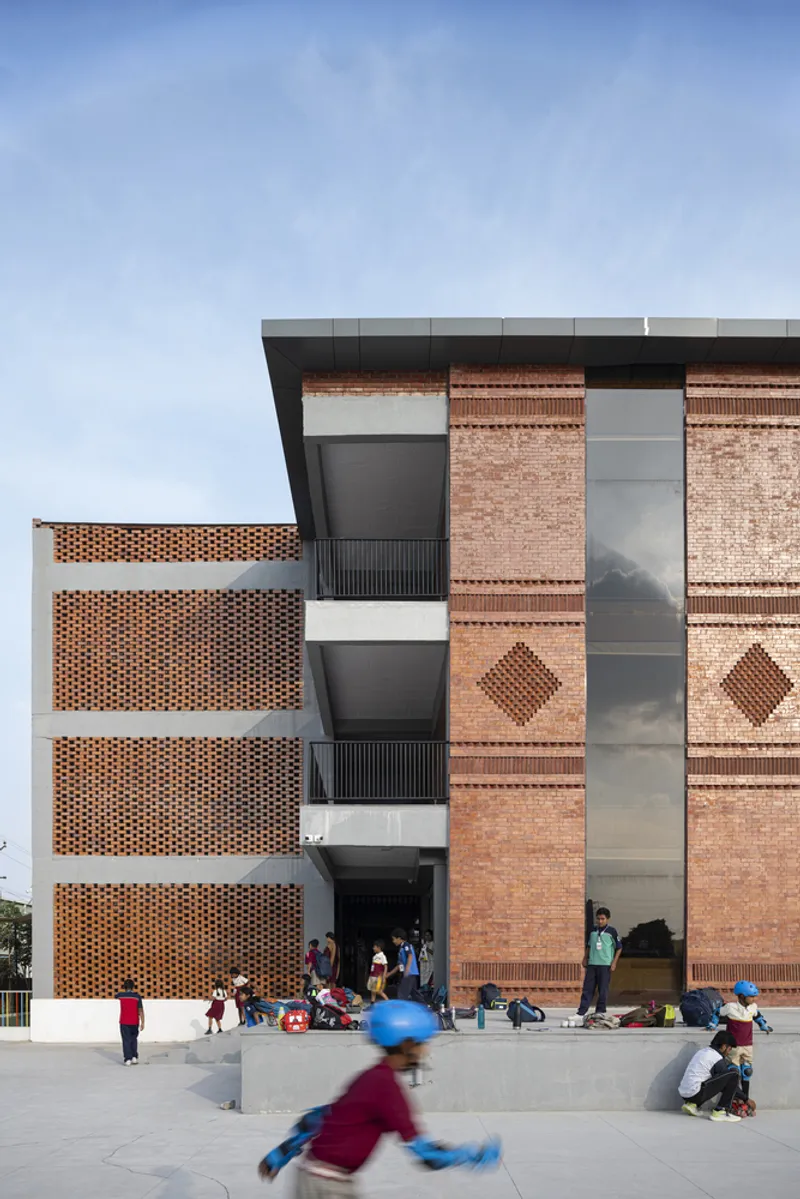
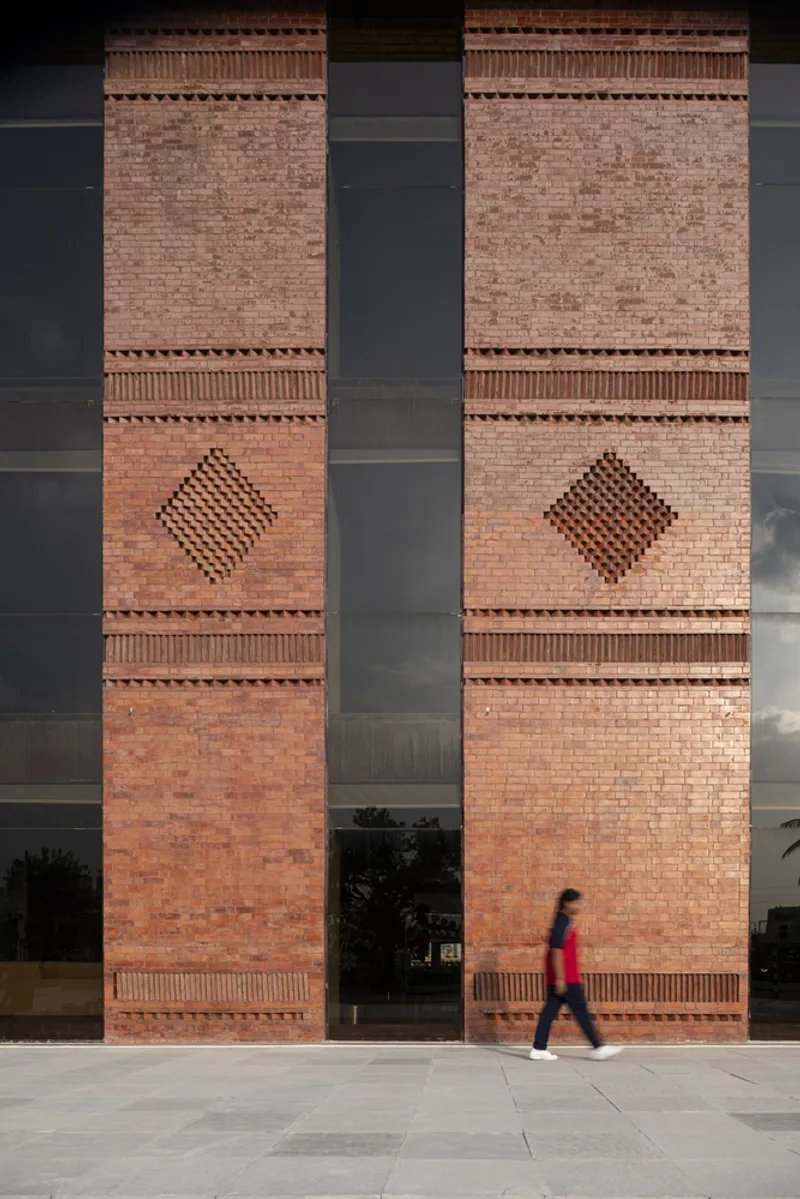
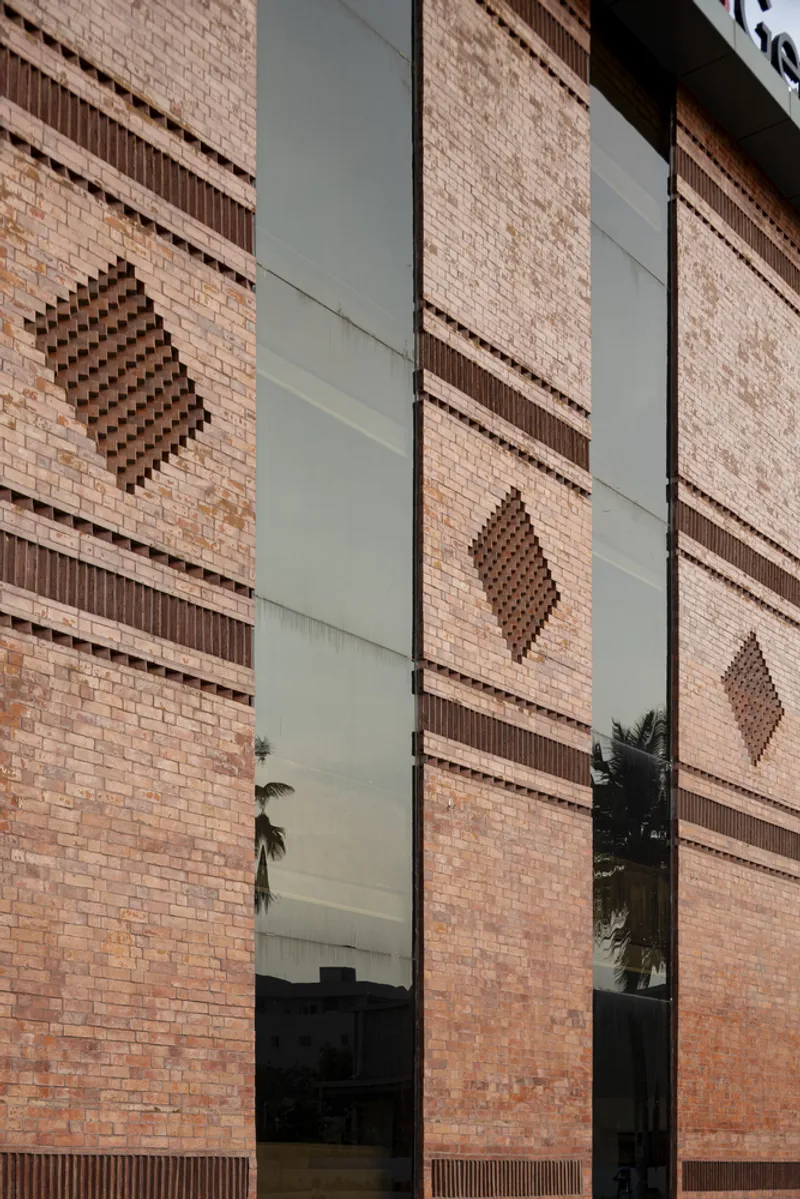
The street-facing elevation is the building's calling card, and it earns that role honestly. Tall brick towers are articulated with diamond-shaped geometric motifs formed by rotating standard wirecut bricks, a technique that requires skilled masons but no specialist materials. Between these patterned panels, narrow vertical glass slots admit light and frame views of courtyard palms, creating a rhythmic alternation between mass and transparency.
The corbelled columns visible at closer range reveal the structural logic behind the ornament. Each brick projection increases the surface area exposed to air movement, which helps dissipate heat from the wall assembly. The deep recesses at window openings do the same thing at a larger scale, shading glass from direct sun while allowing diffuse daylight to bounce inward. The result is a facade that performs thermally and reads culturally, grounding the building in Telangana's brick-building traditions without resorting to nostalgia.
The Courtyard as Climate Engine
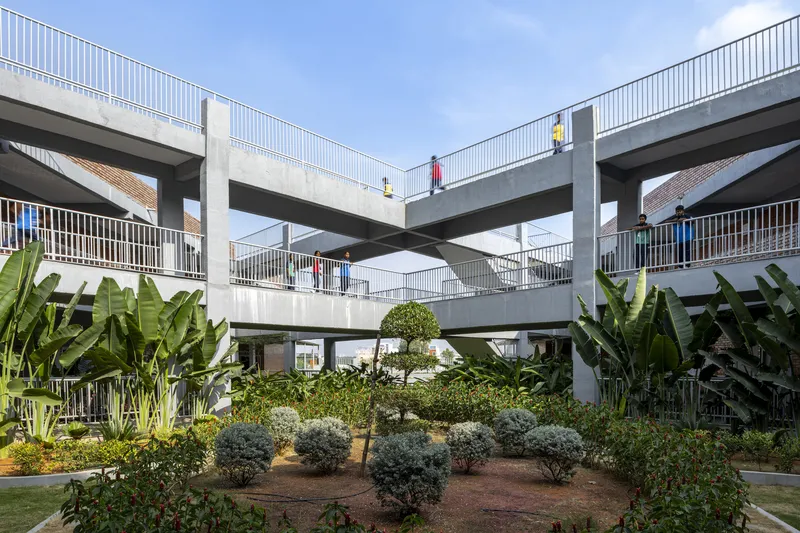
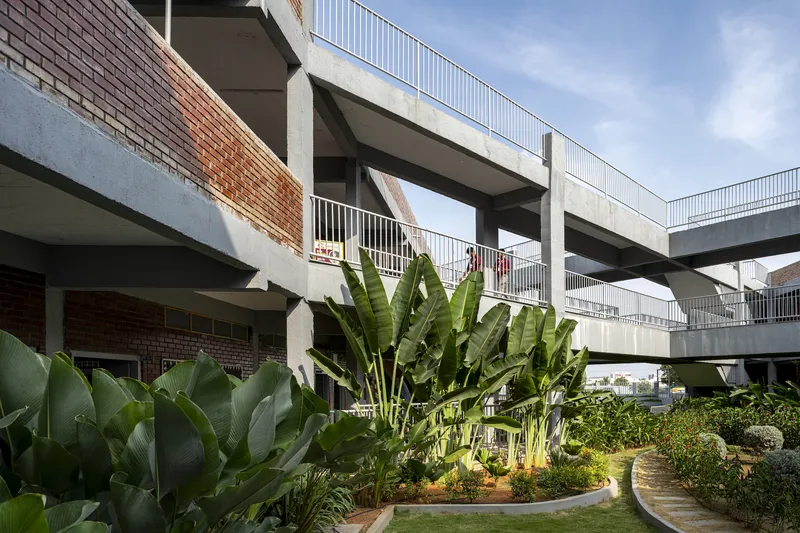
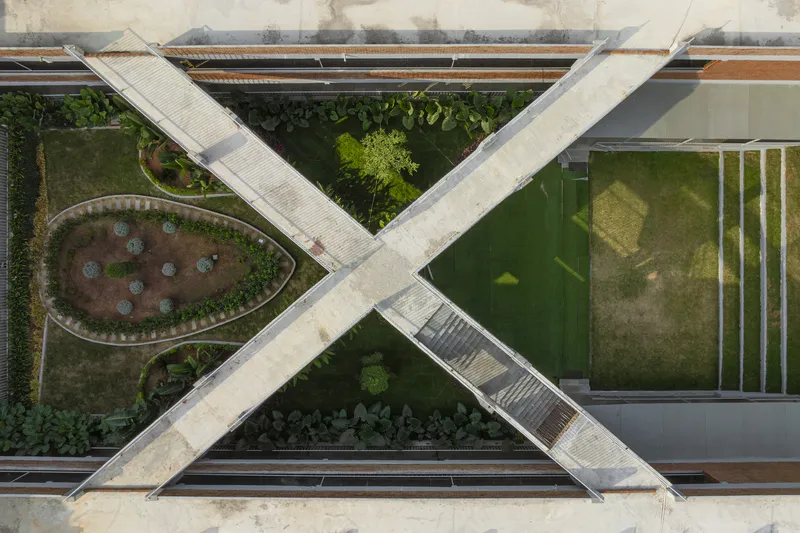
From the aerial view the organizational logic is immediate: two classroom wings bracket a central courtyard laced with diagonal walkways and planted beds. Banana palms, topiary shrubs, and young trees occupy the garden floor, creating a microclimate several degrees cooler than the surrounding asphalt. The courtyard is not a leftover space; it is the engine that drives the passive cooling strategy, pulling wind through the corridors that line its edges.
Concrete circulation bridges cross above the garden in an X pattern, connecting the upper floors of the two wings. These bridges double as shading devices for the courtyard below and as vantage points from which students can look down into the greenery. The layering of horizontal walkways, vertical brick walls, and canopy planting produces a section that changes character at every level, giving a 50,000-square-foot building an intimacy that plan alone cannot deliver.
Corridors That Work as Buffer Zones
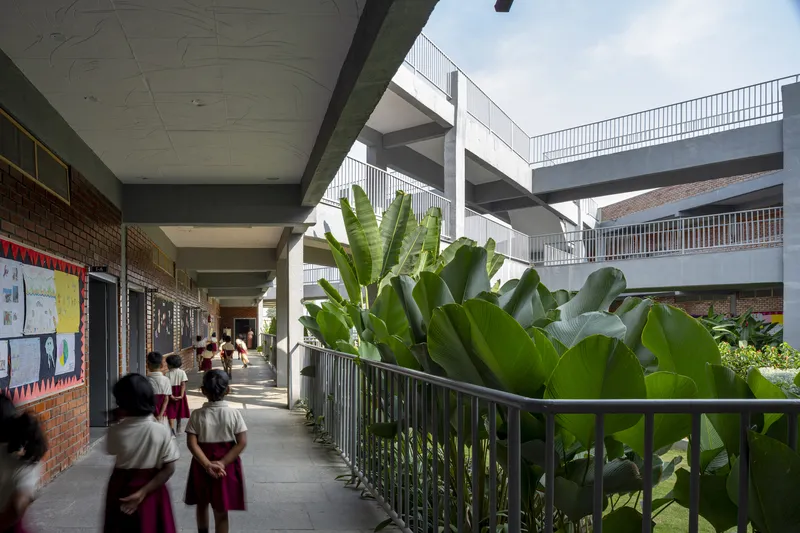
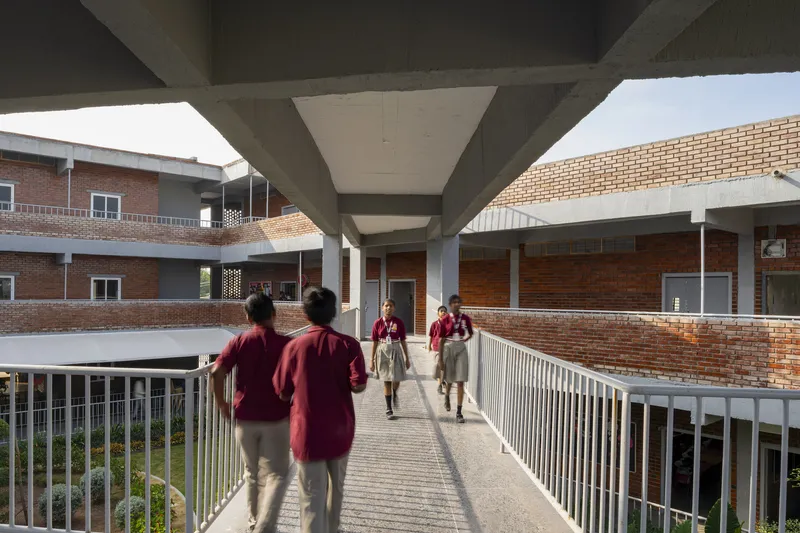
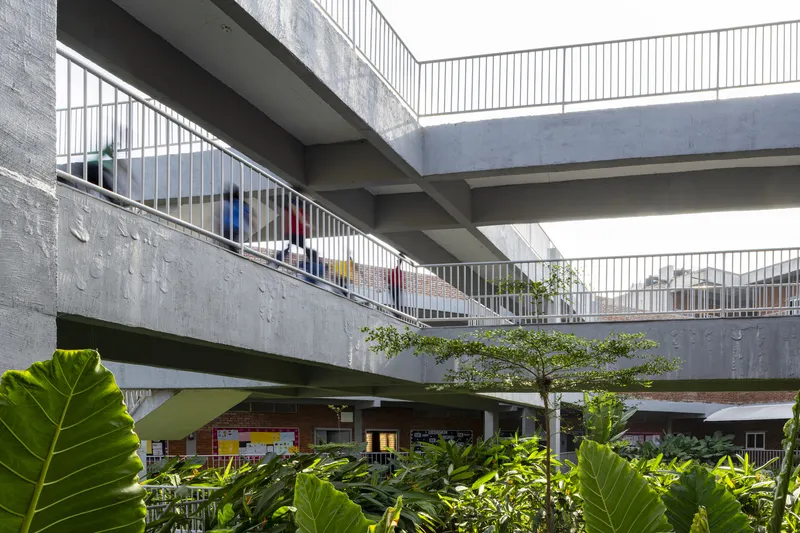
The corridors along each classroom wing are generous enough to feel like outdoor rooms. Lined with planters of banana plants and bounded by metal railings rather than solid walls, they intercept direct sunlight before it reaches classroom doors, reducing heat gain and glare. Air moves freely through them, so the temperature drop between courtyard and corridor is noticeable even on hot afternoons.
Elevated walkways on the upper levels extend this logic vertically. Exposed concrete beams and white metal railings keep the palette restrained, letting the brick walls of the classroom blocks carry the visual weight. Students crossing these bridges are always in contact with the courtyard below, a constant reminder that the school's architecture is organized around living landscape rather than sealed interior space.
Perforated Stairwells and Filtered Light
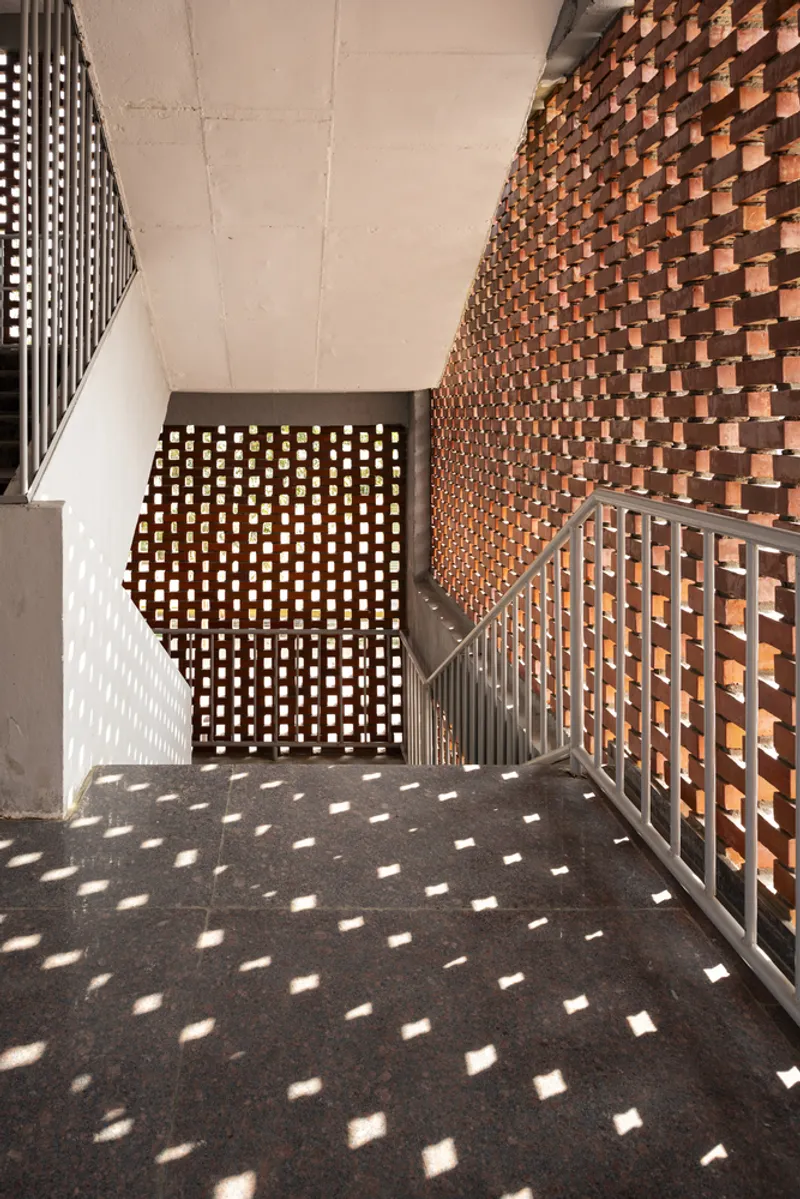
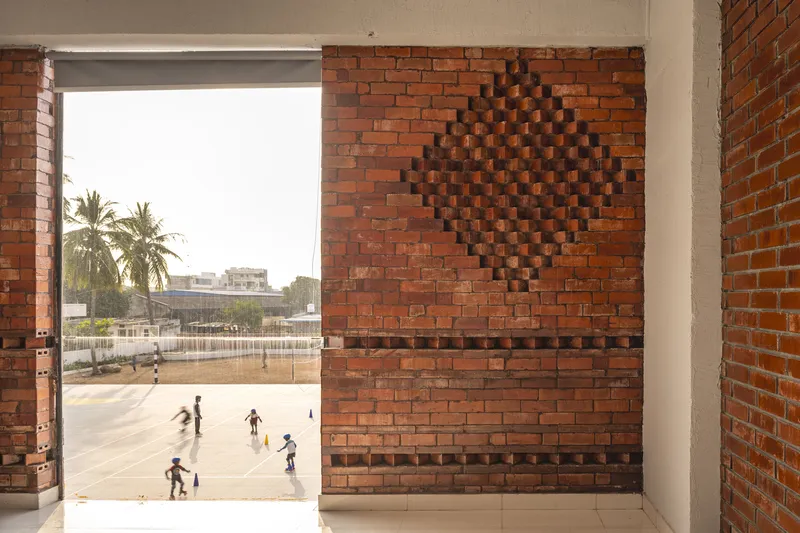
The stairwells are where the brick patterning becomes most theatrical. Perforated screens of rotated bricks cast geometric shadows across landings and treads, the pattern shifting as the sun moves. These screens eliminate the need for electric lighting during daytime while pulling warm air up through the stair shaft by stack effect, a low-tech ventilation strategy that costs nothing to operate.
Viewed from the corridors, these textured walls frame the courtyard beyond in a layered sequence of surfaces: brick pattern in the foreground, green canopy in the middle ground, sky above. It is a deliberate staging of depth that makes circulation through the building feel less like moving between rooms and more like moving through a garden.
Classrooms That Open to the Landscape
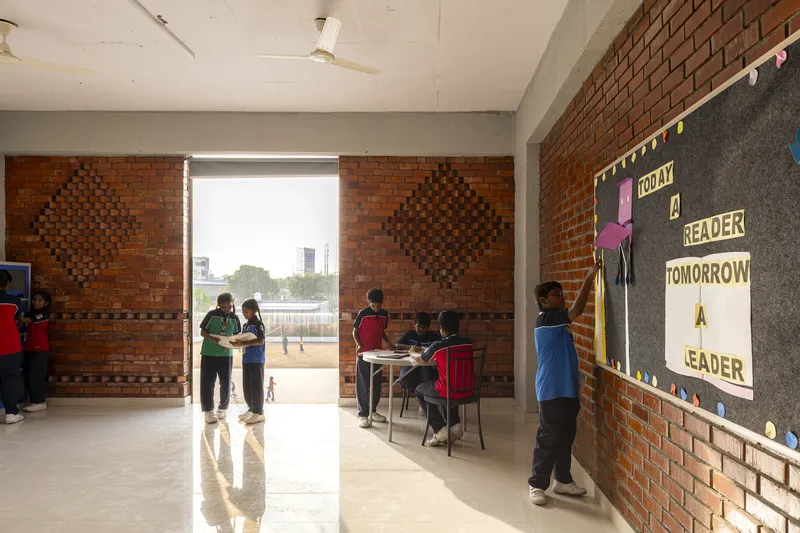
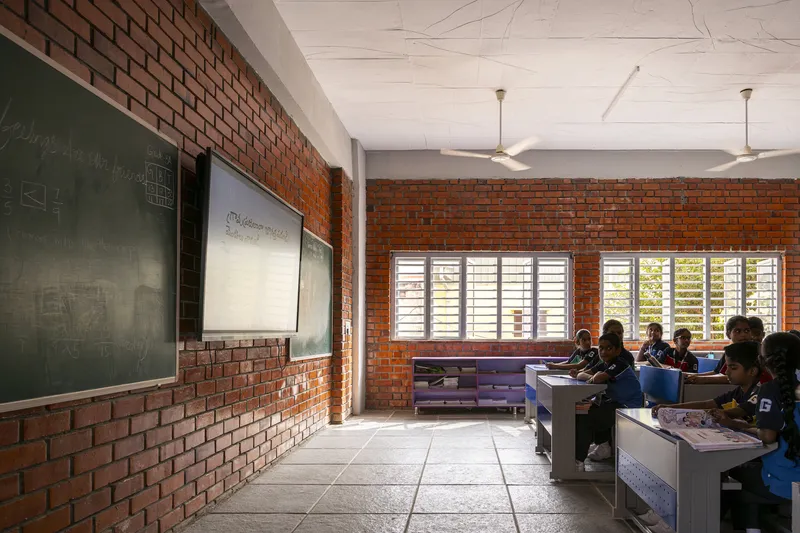
Inside the classrooms, the exposed red brick walls continue the language of the facade. White louvered windows on the outer wall regulate daylight and airflow, while large openings on the courtyard side bring in views of greenery and the sound of students crossing the bridges above. The rooms are simple in plan but effective in section: the combination of cross-ventilation from two sides and shading from the corridor buffer keeps them comfortable without heavy reliance on mechanical cooling.
The decision to leave brick exposed inside, rather than plastering and painting, is worth noting. It gives the rooms a tactile warmth that children respond to, and it eliminates a maintenance cycle that many Indian schools struggle to keep up with. The brick is the finish, the structure, and the thermal mass all at once.
Plans and Drawings
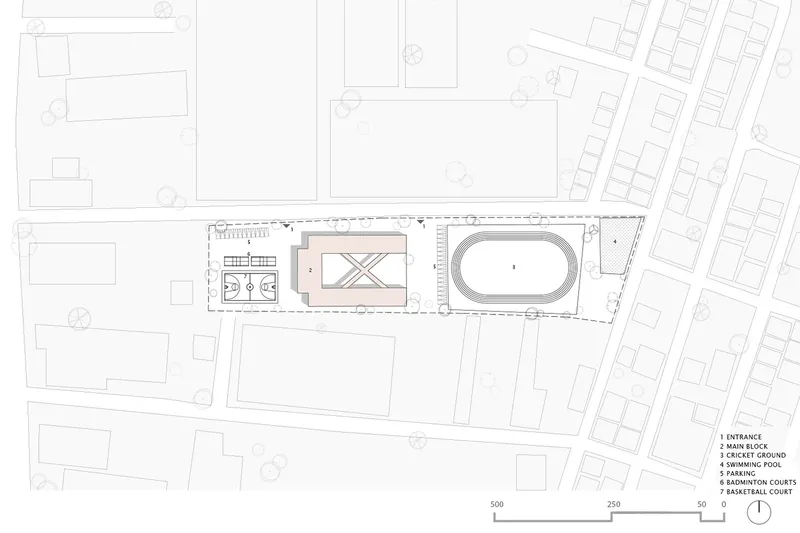
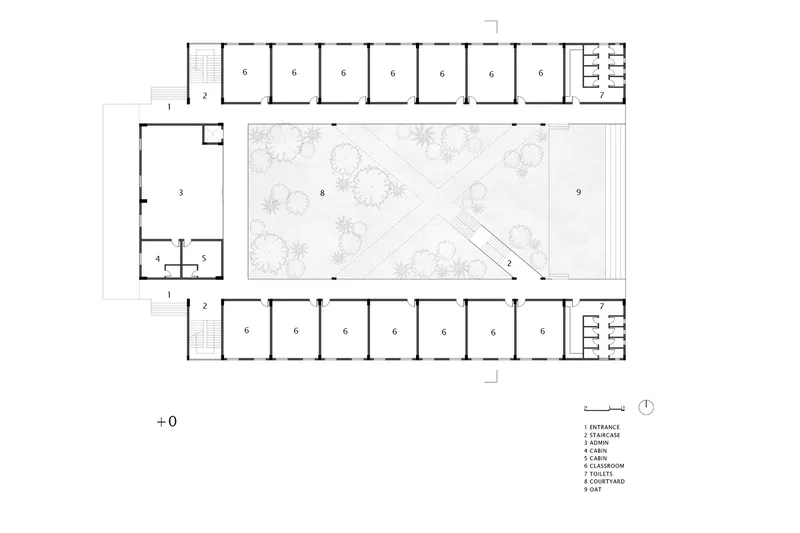
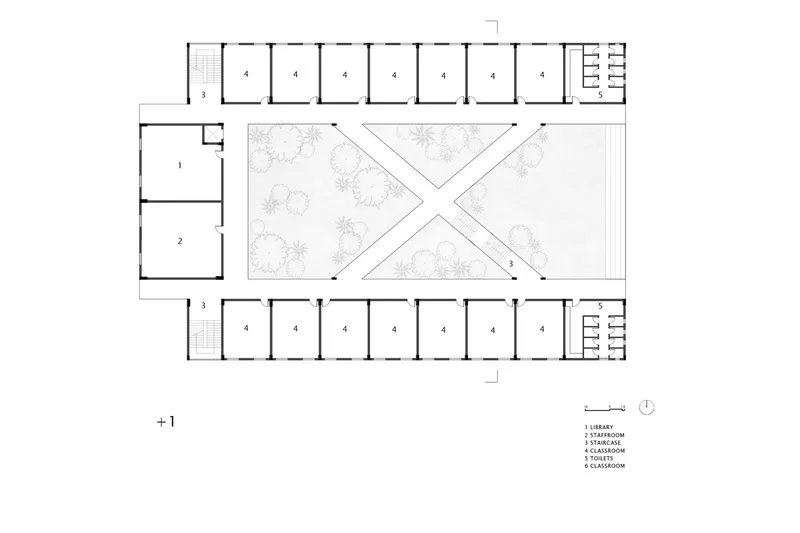
The site plan reveals the full extent of the campus: a linear building anchored by an oval sports field and rectangular courts along its length. The ground and first floor plans confirm the U-shaped classroom configuration and show how diagonal pathways cut through the central courtyard, creating multiple routes between wings and encouraging movement through the landscape rather than around it.
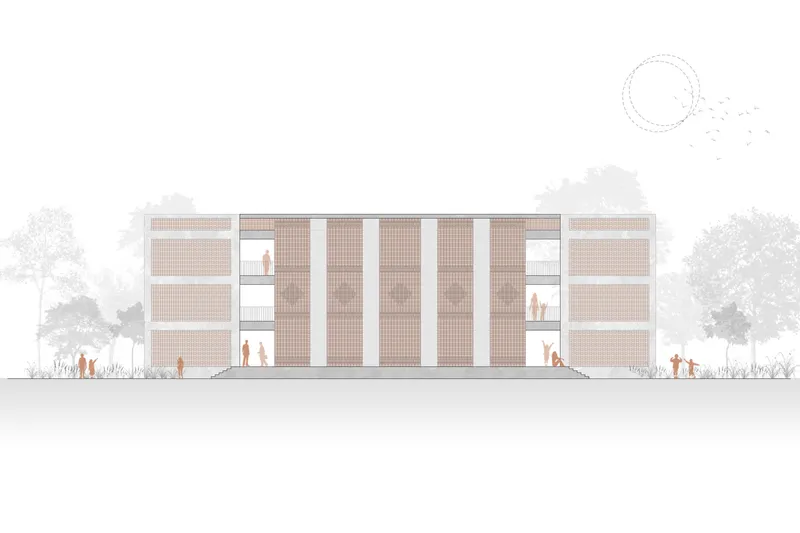
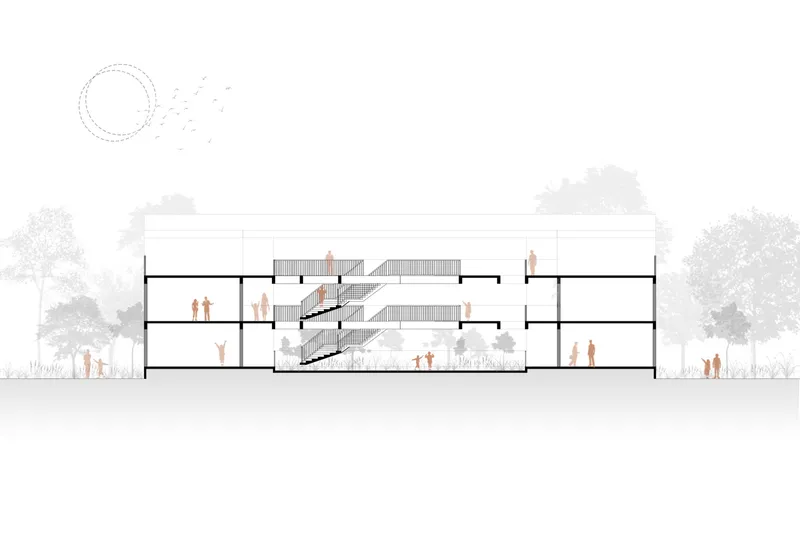
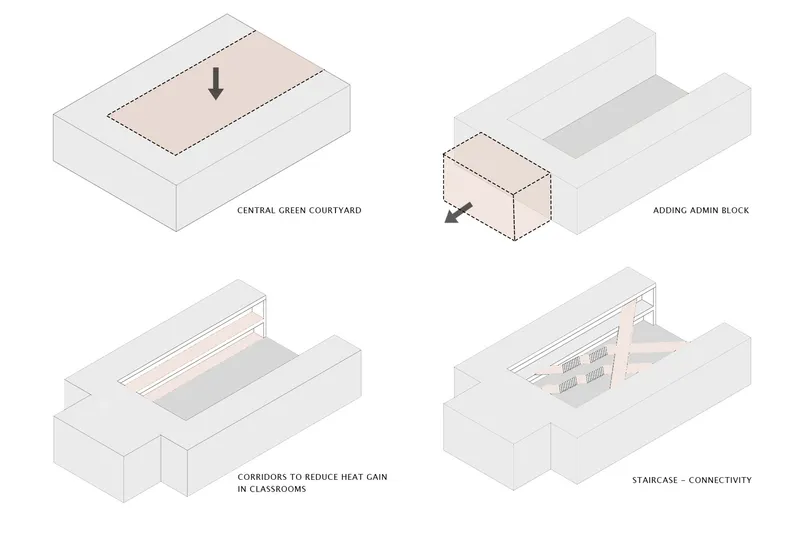
The elevation drawing makes the proportional system clear: red brick infill panels sit between tall vertical white openings in a regular rhythm that holds the facade together without monotony. The building section cuts through the central staircase and planted courtyards, showing how the stack effect works in section and how silhouetted figures at each level relate to the greenery. The axonometric diagram breaks the design into four legible steps, from courtyard insertion to circulation staircase, making the generative logic accessible.
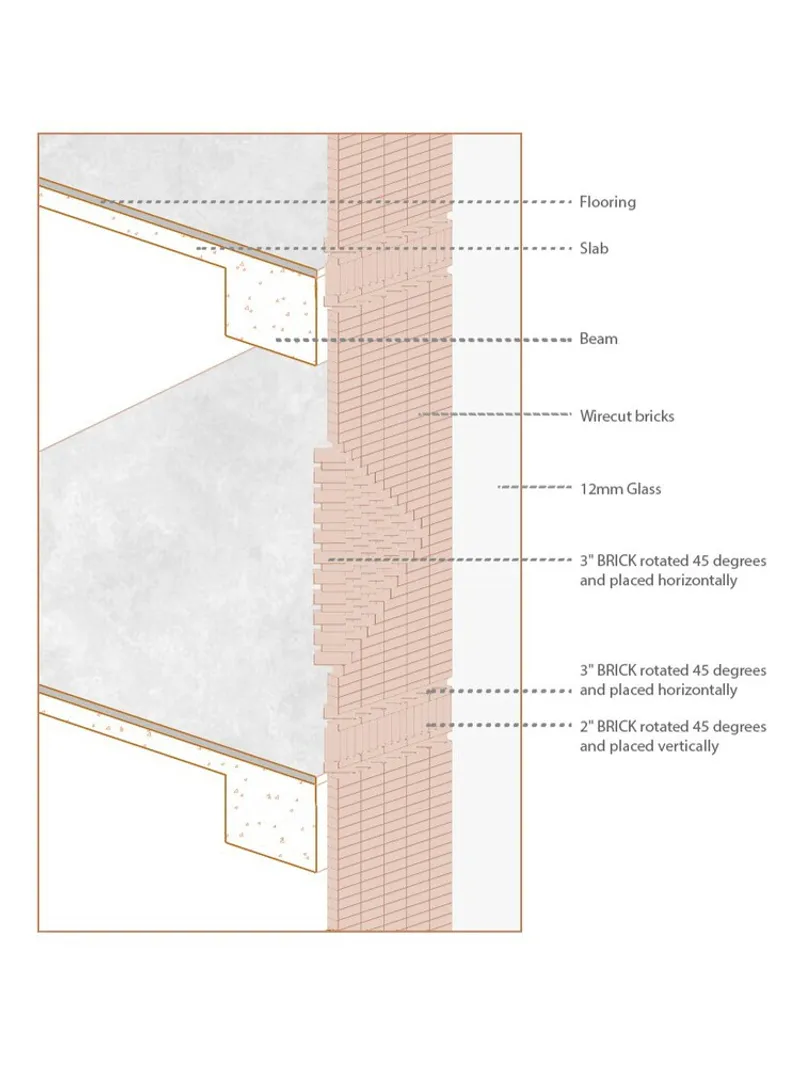
A construction detail drawing documents the wirecut brick facade assembly with rotated units and glass panel integration. This level of documentation is valuable because it shows that the patterned facades are buildable with standard materials and local labor, not dependent on specialist fabrication.
Why This Project Matters
School buildings in rapidly expanding Indian cities face a depressingly common fate: concrete frames, plastered walls, window-unit air conditioners, and a playground that is an afterthought. Genesis International School Turkayamjal demonstrates that a different model is not only possible but practical. The passive cooling strategies here are not experimental; they are drawn from centuries of regional building practice and adapted to a contemporary program. The locally sourced brick, the perforated screens, the courtyard plan are all proven techniques. What Studio Sacred Geometry has done is assemble them into a coherent architectural argument that works at the scale of a real school.
The project also matters as a piece of pedagogy in itself. Children who spend their days in buildings that breathe, that admit dappled light, that frame views of banana palms and sky, absorb a lesson about how architecture can work with climate rather than against it. That lesson may prove more durable than anything taught in the classrooms.
Genesis International School Turkayamjal by Studio Sacred Geometry (design: Paruchuri Sai Chand; drawing: Rao Sai Shruthi; execution: Sadhu Anurag Reddy). Turkayamjal, Hyderabad, India. 50,000 sq.ft. 2024. Photography by Vivek Eadara.
About the Studio
Share Your Own Work on uni.xyz
If projects like this are the kind of work you want to make, uni.xyz is a place to publish your own, find collaborators, and enter design competitions.


Popular Articles
Popular articles from the community


Opera by the Sea Estonia: Three Shells Dissolving Architecture into Tallinn's Coastline
A winning opera house proposal replaces monumental form with interconnected shells that blur the boundary between building, park and Baltic Sea.
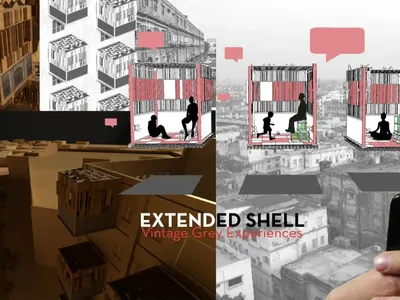
Extended Shell: Retrofitting Kolkata's Balconies as Living Urban Thresholds
A modular retrofit system recovers the social and environmental intelligence of Kolkata's historic verandas for contemporary Park Street residents.

The Amber Palace Opera: A Geological Fiction Surfaces on Tallinn's Baltic Waterfront
Pierre Brillard reimagines a Baltic legend as a public landscape, opera house, and waterfront promenade rooted in Tallinn's coastal identity.

Cloaked Colonization: A Mobile Underwater Habitat That Moves Like a Fish
Micah Abaya's shortlisted EHC Pacific entry reimagines ocean settlement as a dispersed network of self-sustaining architectural organisms.

Similar Reads
You might also enjoy these articles


Hodi-Mandai Geram
Project Function: Preservation and revitalization of the Intangible heritage and socio-spatial identity of the Hodi by Housing, Cultural Memory Center, Sacred Grove, landscape, local tourism economy


Olio Towers: A Mid-Rise for Performers That Fuses Housing, Rehearsal, and Stage
Located blocks from Houston's Theater District, this modular tower stacks living units around a central performance atrium.

Oasis: Modular Green Housing Carved into Dhaka's Urban Fabric
A shortlisted Plugin Housing entry reclaims unauthorized settlements in Dhaka with stepped concrete volumes, green roofs, and ventilation-driven design.

Black Hole: A Floating Megastructure for the Post-Physical Era
Emiliano Mazzarotto envisions a spherical, self-scaling arena where e-sports, digital hotels, and holographic stadiums replace traditional public space.

Explore Omdayal Architecture College Competitions
Discover active competitions in this discipline

Challenge to design public laboratory

Challenge to reimagine the Iron Throne

Photograph architecture without architects

Illustrate the lost glory of Angkor Wat - Render Challenge
Comments (0)
Please login or sign up to add comments
No comments yet. Be the first to comment!