
Haringey Brick Bungalow by Satish Jassal Architects: A Hidden Gem of Sustainable Urban Infill Architecture
A compact brick bungalow in London with pyramid green roofs, crafted interiors, and sustainable design by Satish Jassal Architects.


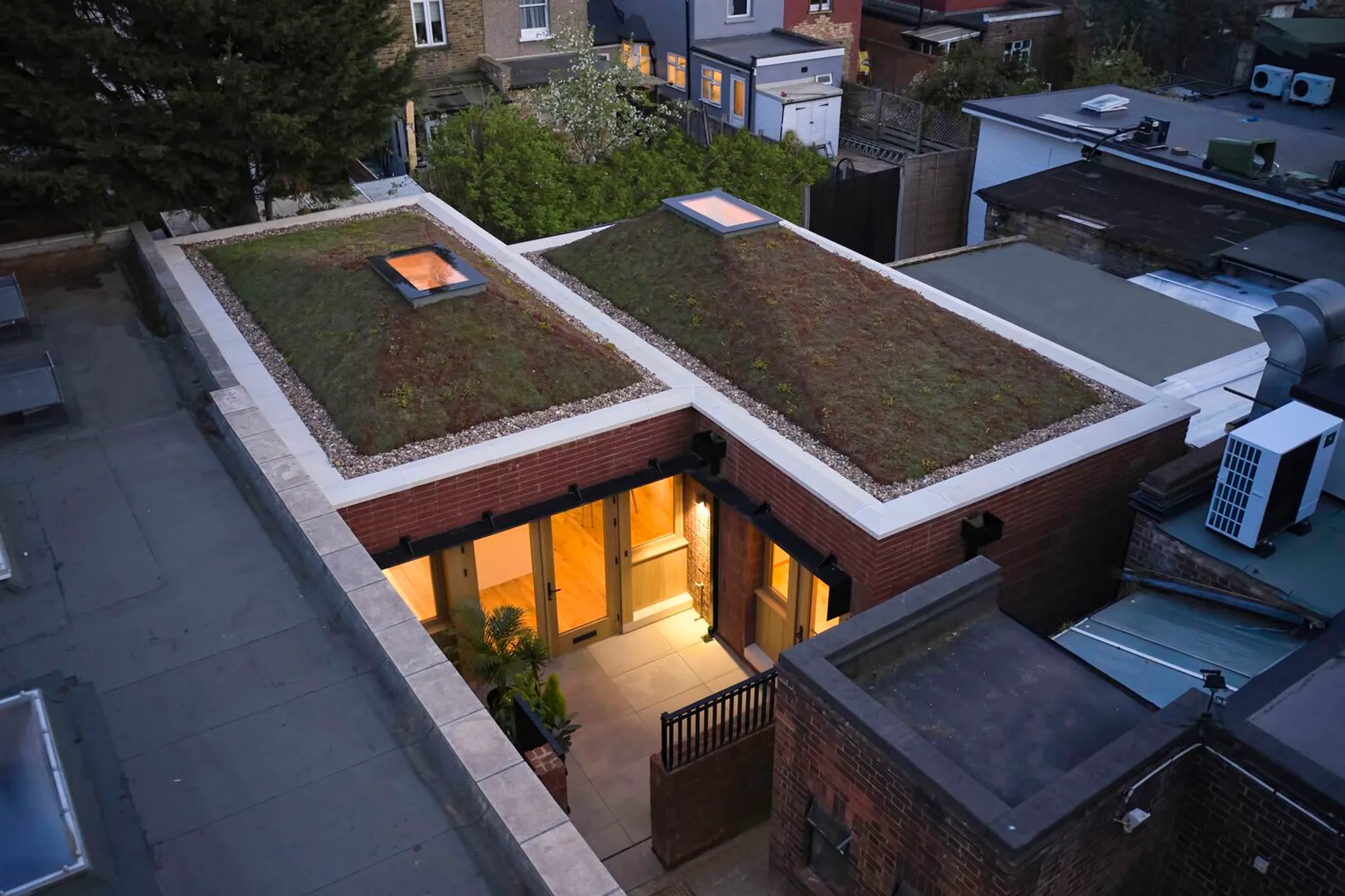
Tucked away behind a bustling butcher shop on Turnpike Lane in North London, Haringey Brick Bungalow by Satish Jassal Architects is a masterclass in navigating constrained urban plots through intelligent design. Completed in 2023, this 66-square-meter new-build residence redefines what’s possible on a backland site—achieving spatial richness, material honesty, and sustainable living despite formidable limitations.
Unlocking Potential on a Tricky Urban Plot
Accessed through a narrow 1-meter-wide alleyway between retail units, the project was, in the architect's words, "like building through a straw." Owned by a local family for over three decades, the overgrown 110sqm plot offered an open brief—“see what you can do”—which the team took from concept to completion, handling both the design and project management phases.
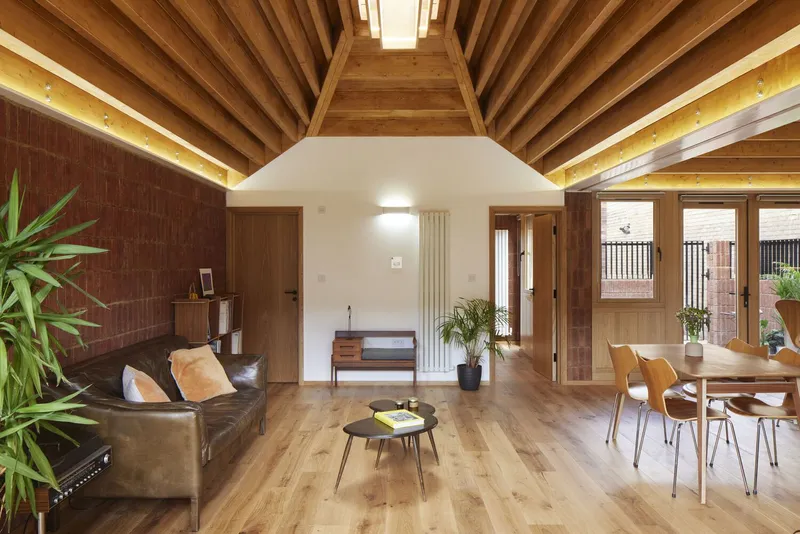
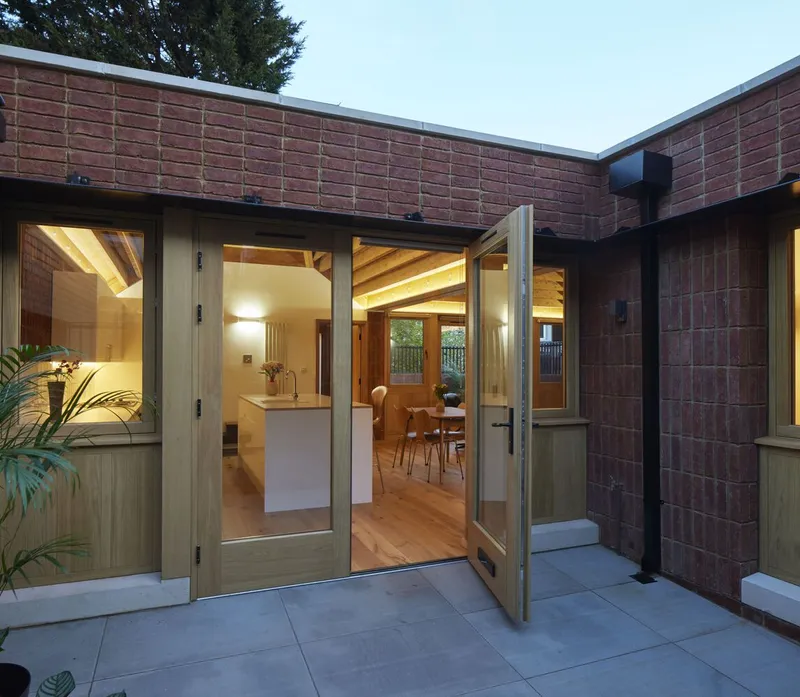
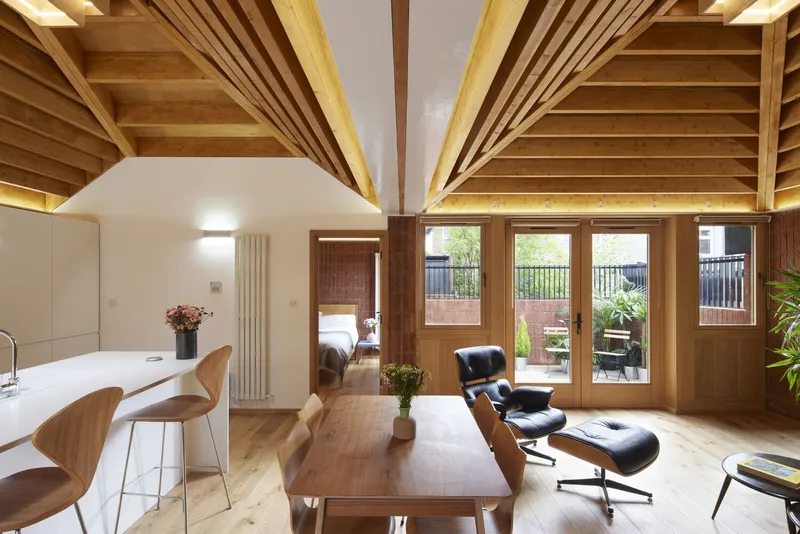
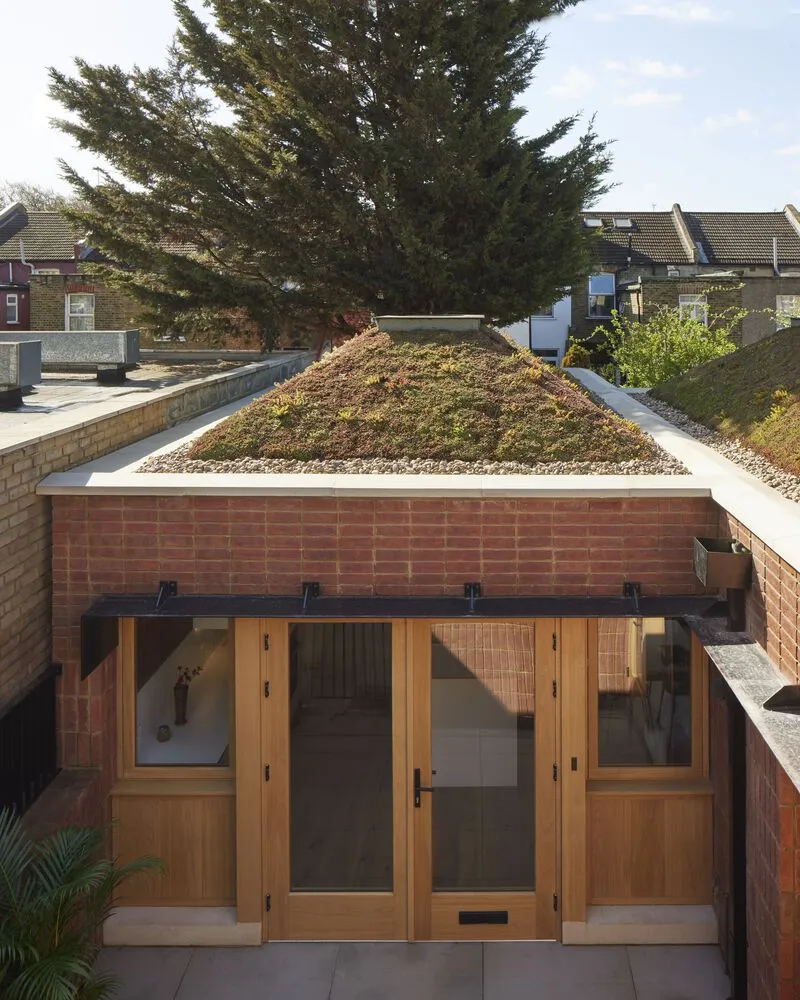
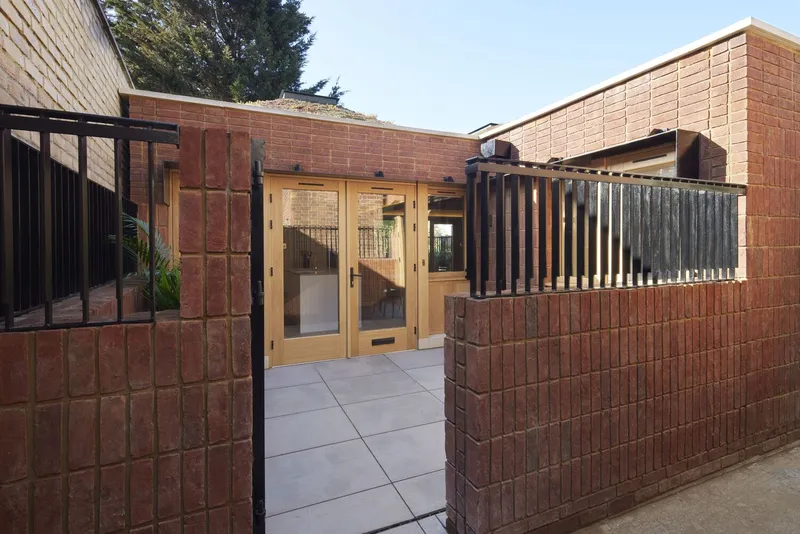
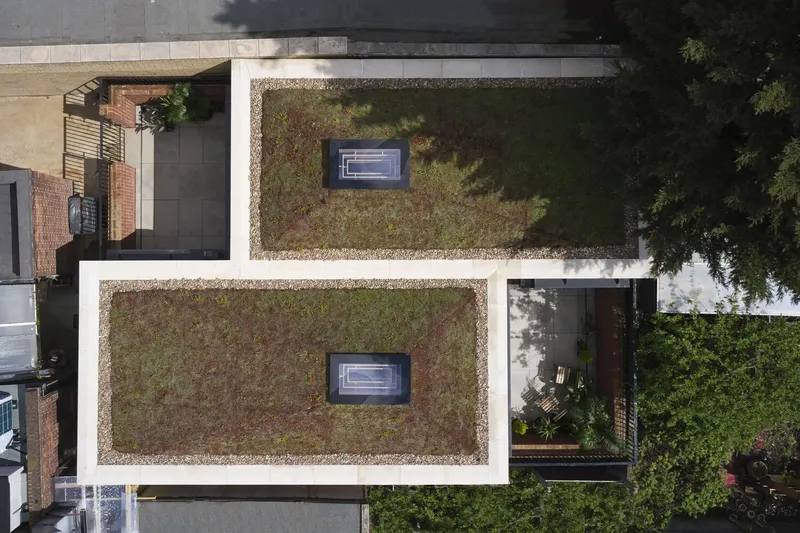
Satish Jassal Architects responded with a compact yet voluminous single-storey home organized around two offset brick volumes. These create a welcoming courtyard at the entrance and another secluded one at the rear, fostering an intimate indoor-outdoor flow. A central open-plan living, dining, and kitchen area anchors the plan, flanked by two bedrooms positioned diagonally for enhanced privacy and light penetration.
Thoughtful Forms, Sustainable Rooflines
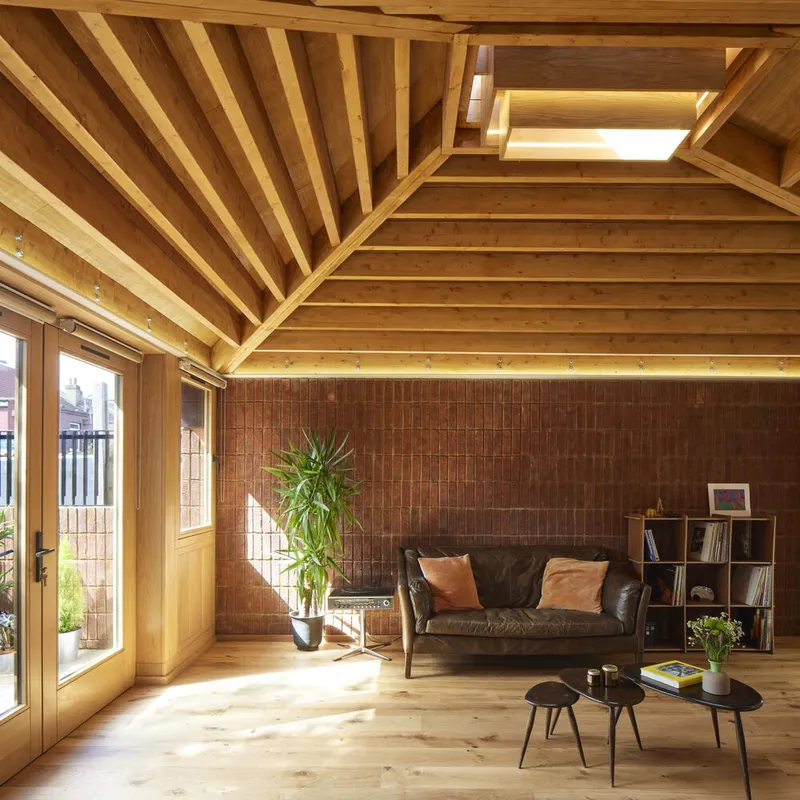
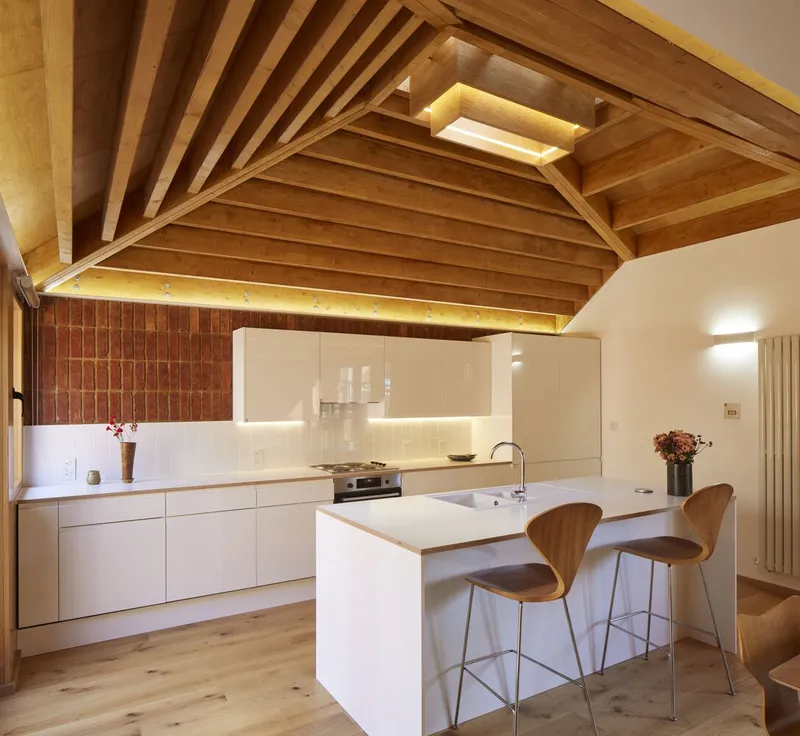
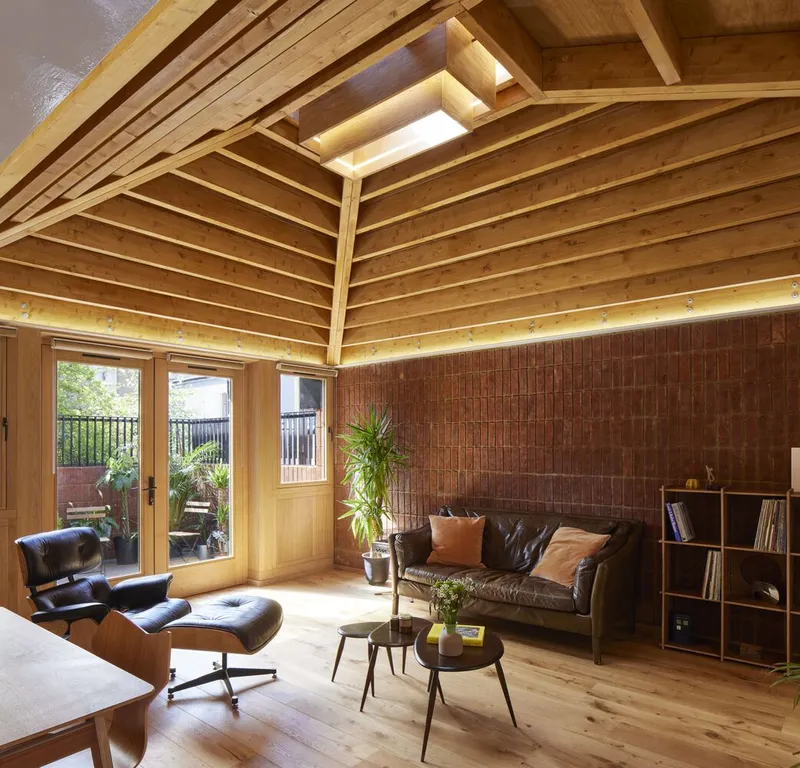
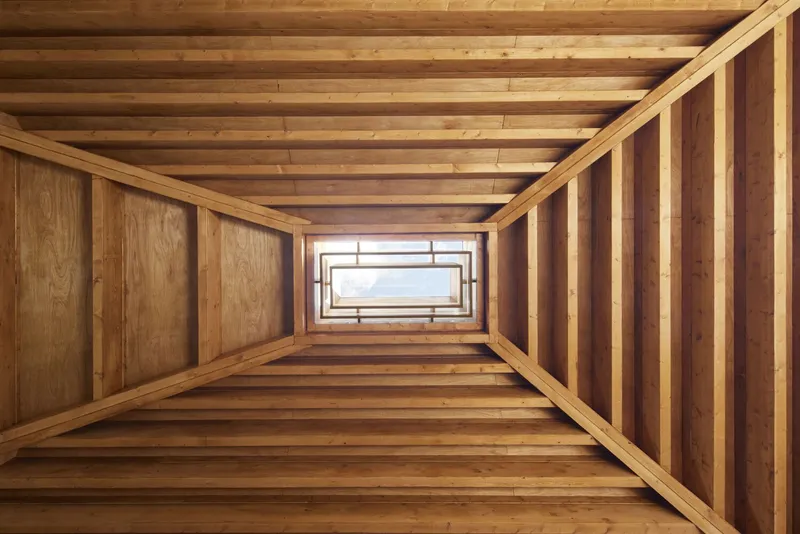
The home's sculptural character is enhanced by its distinctive asymmetrical pyramid-shaped green roofs, each topped with a central rooflight. These sedum-covered rooftops not only add to the project’s sustainability but also present a more visually appealing sightline for neighbors compared to the patchwork of extensions typical in the area. Inside, the roofs feature exposed glulam beam structures and coffered ceilings, ending in custom-designed timber light fixtures that act as modern chandeliers suspended beneath the skylights.
Brick as Craft and Context
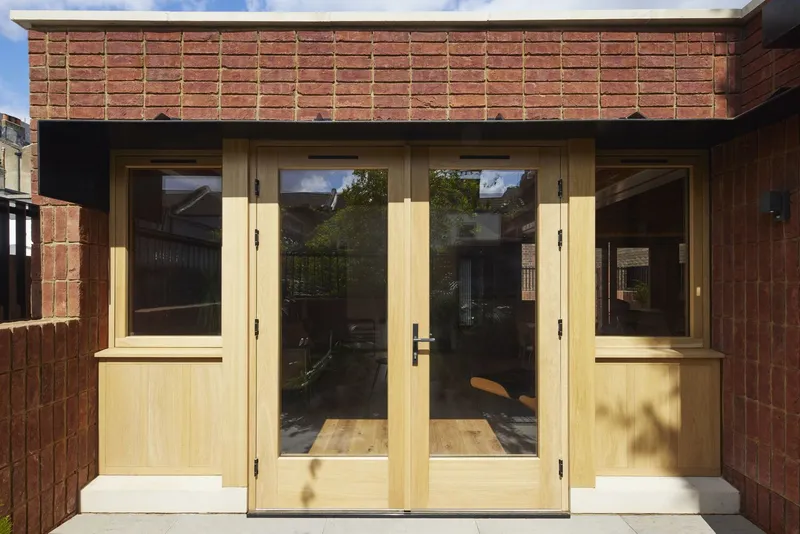
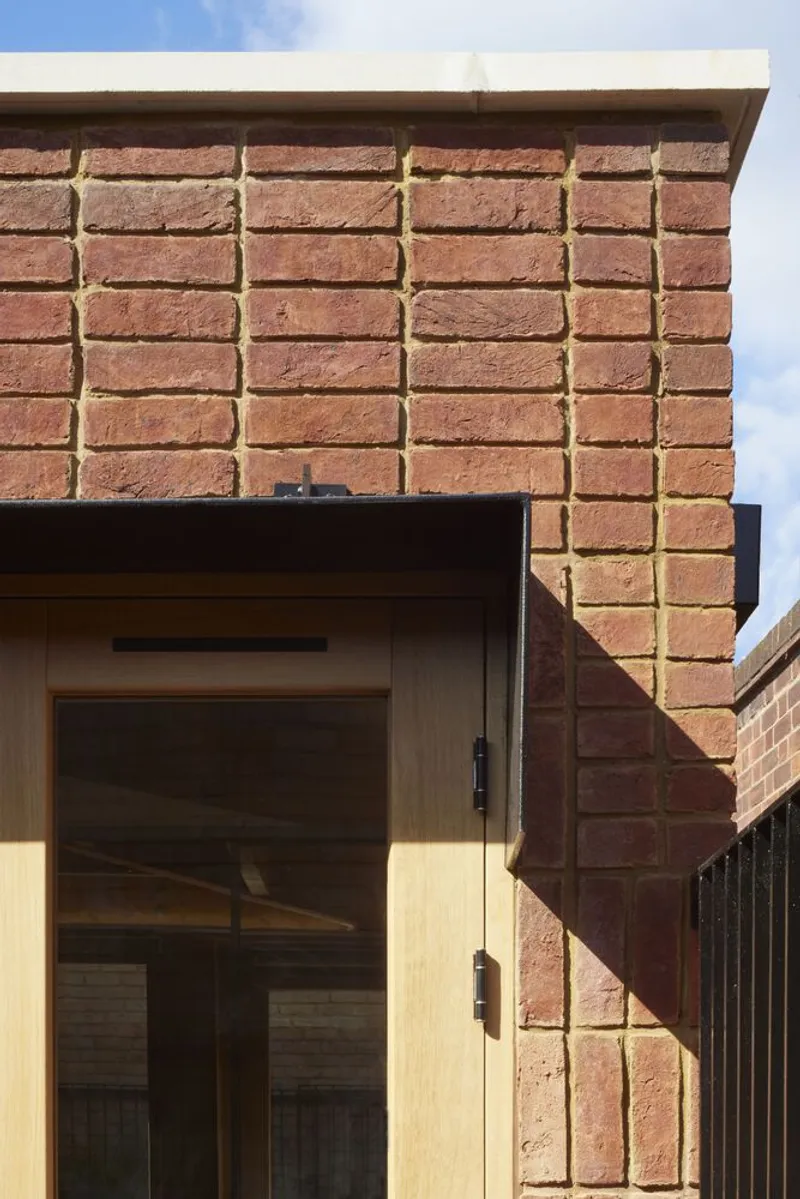
Externally, the building is defined by its materiality. Handmade bricks with a textured, imperfect finish are laid with recessed pointing to enhance their tactile quality. The façade features a dynamic interplay between vertical and horizontal stack-bonded brickwork, aligned to a precise brick module that governs the structure’s dimensions. Corners are neatly turned, and oak-framed glazing sits atop white stone sills, while black steel gates and brise-soleils over windows and doors punctuate the elevations.
This meticulous attention to brick detailing is a hallmark of Satish Jassal Architects, who are known for contemporary residential architecture that celebrates material depth and urban sensitivity.
A Warm, Honest Interior
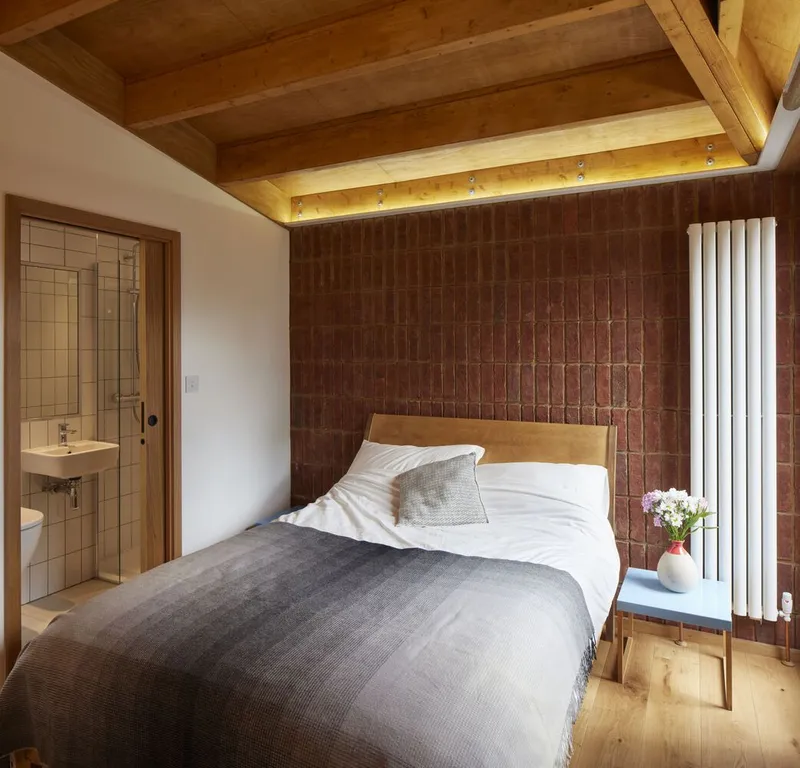
Inside, the material palette flows seamlessly from the outside in. Exposed brick walls, oak flooring, and integrated timber elements reinforce a warm and authentic ambiance. The glulam roof structures are readable, their expressiveness heightened by natural and artificial lighting strategies. Concealed LED strips trace the rooflines at night, creating dramatic silhouettes that emphasize the 3.5-meter-high ceiling apex and lend an airy spaciousness to the compact footprint.
Built for Sustainability and Longevity
The Haringey Brick Bungalow is not only a triumph of design but also a model of urban sustainability. In addition to its biodiverse green roof, the house is heated using an air-source heat pump, ensuring low energy consumption and reduced emissions. The use of small-format materials like bricks and the careful selection of construction methods allowed the team to work within the limitations of the site’s narrow access—delivering all materials via trolley and installing steel screw piles without a piling rig.
All Photographs are works of Richard Chivers




Popular Articles
Popular articles from the community


Riyadh For All: Intergenerational Urban Design for Active Aging in Rabat
Riyadh For All reimagines urban design in Rabat with intergenerational co-living, adaptive courtyards, and Moroccan cultural exchange today.

Co-life: Sustainable Architecture for Age-Friendly Community Living
Co-life reimagines sustainable architecture for seniors through courtyards, rammed earth, shared gardens, and spaces designed for belonging.

The Ocean Hive: Sustainable Architecture for a Self-Sufficient Civilization at Sea
The Ocean Hive imagines sustainable architecture at sea, where modular habitats, algae, wave power and ocean waste sustain a growing colony.

Co-Life: Senior Housing Design That Reconnects Older Adults With the City
Co-Life reimagines senior housing design through healing gardens, shared streets, workshops, and a sustainable community across generations.


Similar Reads
You might also enjoy these articles


Hodi-Mandai Geram
Project Function: Preservation and revitalization of the Intangible heritage and socio-spatial identity of the Hodi by Housing, Cultural Memory Center, Sacred Grove, landscape, local tourism economy


Olio Towers: A Mid-Rise for Performers That Fuses Housing, Rehearsal, and Stage
Located blocks from Houston's Theater District, this modular tower stacks living units around a central performance atrium.

Oasis: Modular Green Housing Carved into Dhaka's Urban Fabric
A shortlisted Plugin Housing entry reclaims unauthorized settlements in Dhaka with stepped concrete volumes, green roofs, and ventilation-driven design.

Black Hole: A Floating Megastructure for the Post-Physical Era
Emiliano Mazzarotto envisions a spherical, self-scaling arena where e-sports, digital hotels, and holographic stadiums replace traditional public space.


Explore Exposed Brick Competitions
Discover active competitions in this discipline


Challenge to design mud housing for contemporary communities


Challenge to reimagine the Iron Throne


Photograph architecture without architects


Illustrate the lost glory of Angkor Wat - Render Challenge
Comments (0)
Please login or sign up to add comments
No comments yet. Be the first to comment!