
Healing Trees: Sustainable Architecture Reconnecting Humans, Koalas, and Nature
A sustainable architecture project where timber spaces, healing landscapes, and koala habitats merge into a living ecological sanctuary.


Healing Trees by Hamid Shahi and Mohammad Abbasi
As climate-responsive architecture increasingly shifts toward ecological restoration and human wellness, Healing Trees by Hamid Shahi and Mohammad Abbasi proposes a compelling model for sustainable architecture rooted in coexistence. Designed as a healing environment for humans and koalas alike, the project transforms architecture into a living ecological framework where rehabilitation, education, and nature conservation operate together.
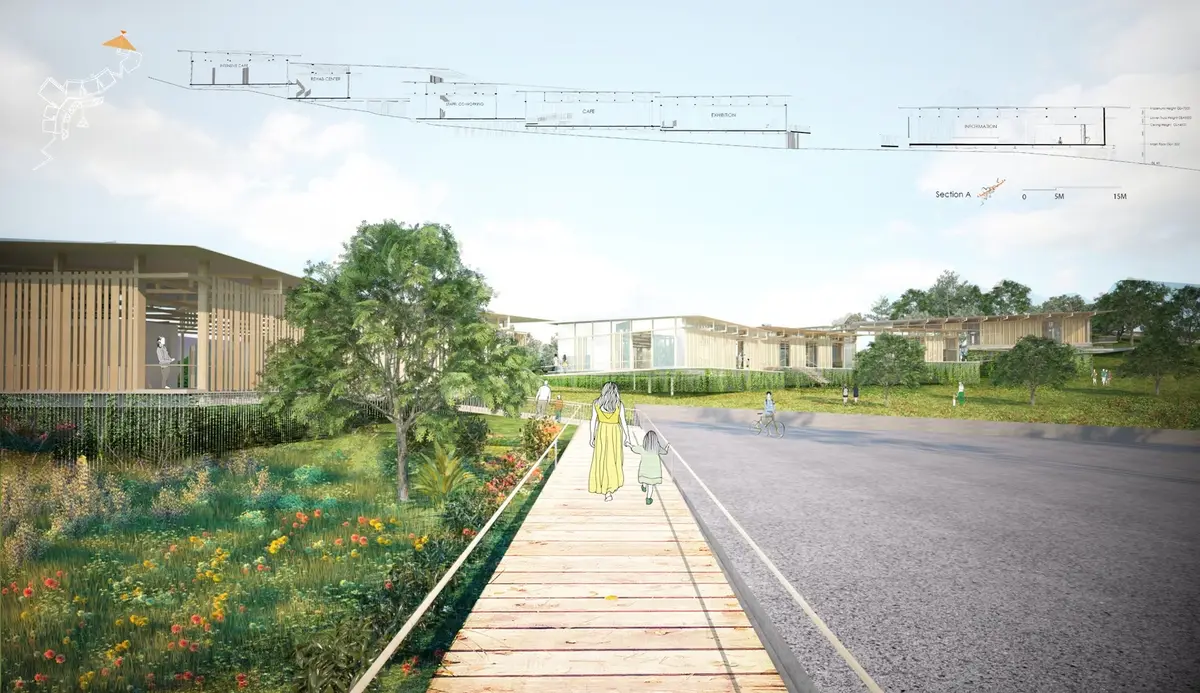
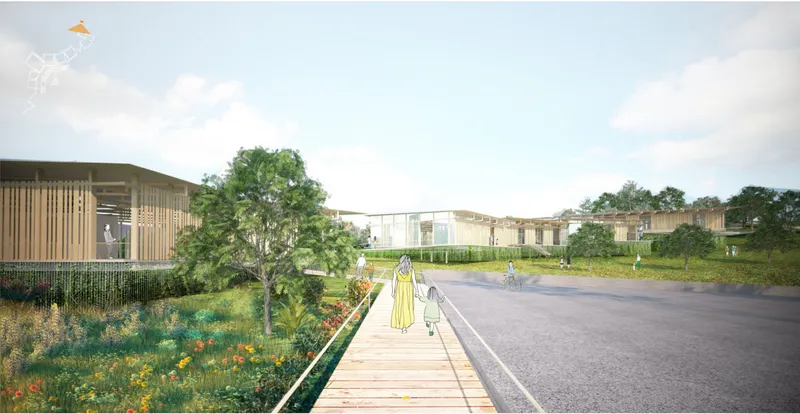
Set within a gently contoured landscape, the proposal establishes a seamless dialogue between built form and forest ecology. Instead of imposing architecture onto the terrain, the project carefully adapts to topography, preserving existing vegetation while creating interconnected pathways, outdoor havens, and elevated timber structures that float lightly above the site.
The result is an environmentally sensitive architectural vision that prioritizes biodiversity, wellness, and regenerative design.
Shortlisted entry of Haven 2020
Sustainable Architecture Rooted in Landscape
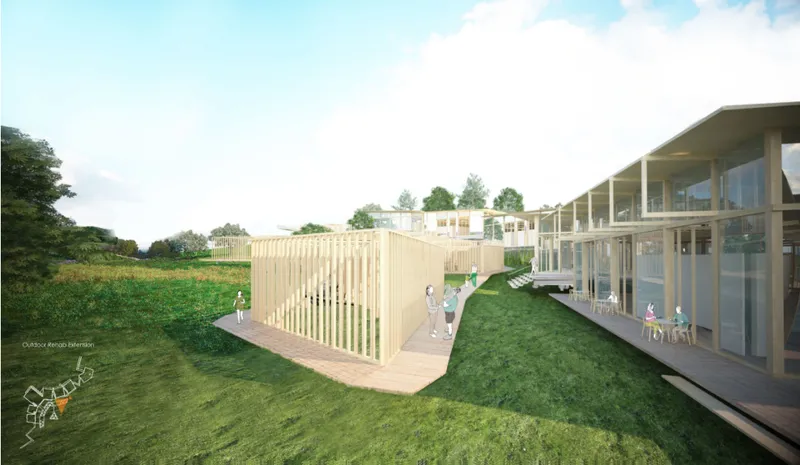
One of the strongest aspects of Healing Trees is its deep integration with the natural environment. The architecture follows the slope of the land and weaves between existing trees, creating a fluid circulation system inspired by the movement of koalas through forest canopies.
The masterplan demonstrates how sustainable architecture can operate with minimal disruption to ecosystems. Elevated pathways and lightweight foundations reduce impact on the terrain while preserving water flow and root systems. The arrangement of pavilions creates a porous spatial network that encourages natural ventilation, daylight penetration, and uninterrupted views across the landscape.
Rather than functioning as a singular enclosed building, the project behaves as a collection of interconnected ecological nodes. Each pavilion contributes to a broader healing environment where indoor and outdoor experiences constantly overlap.
Timber Architecture and Biophilic Design
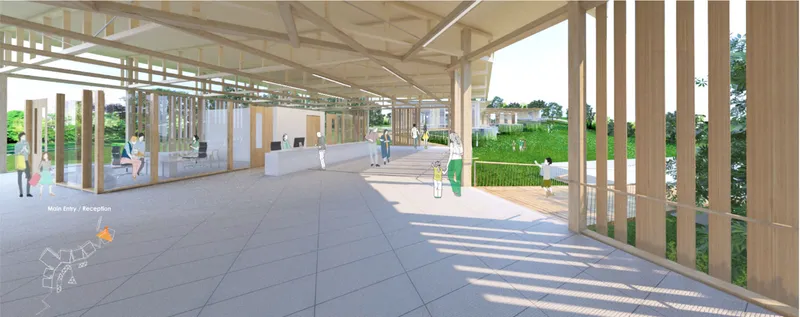
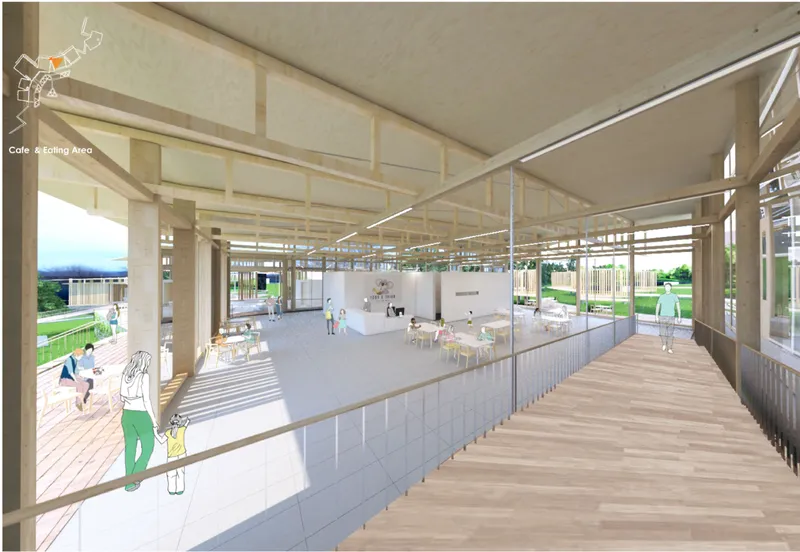
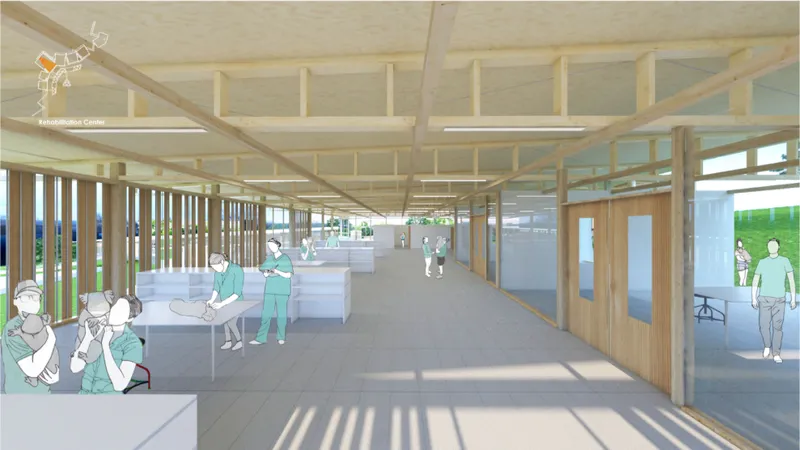
The project heavily relies on engineered timber systems, including Cross-Laminated Timber (CLT) and Glue-Laminated wood structures. This material strategy significantly reduces embodied carbon while creating warm and calming interior environments aligned with biophilic design principles.
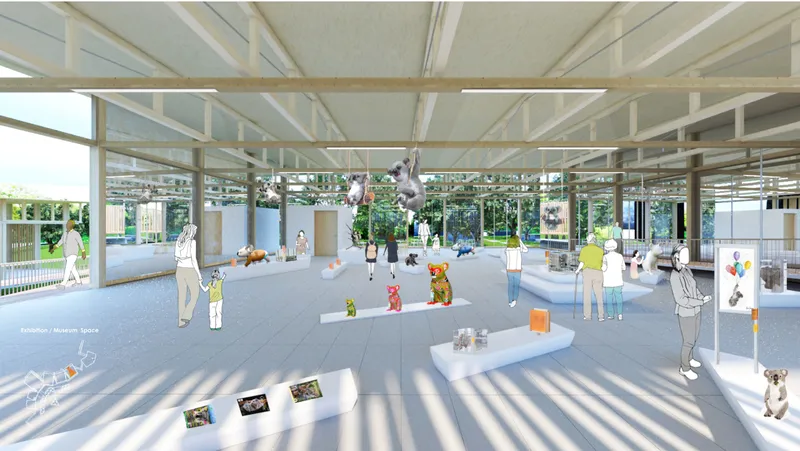
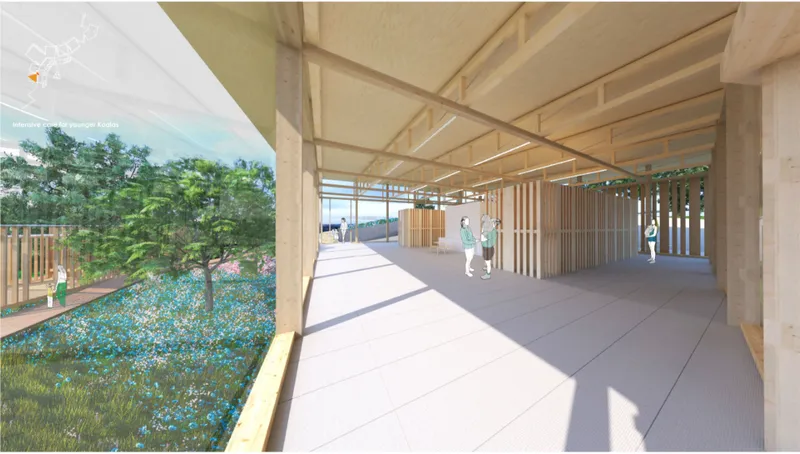
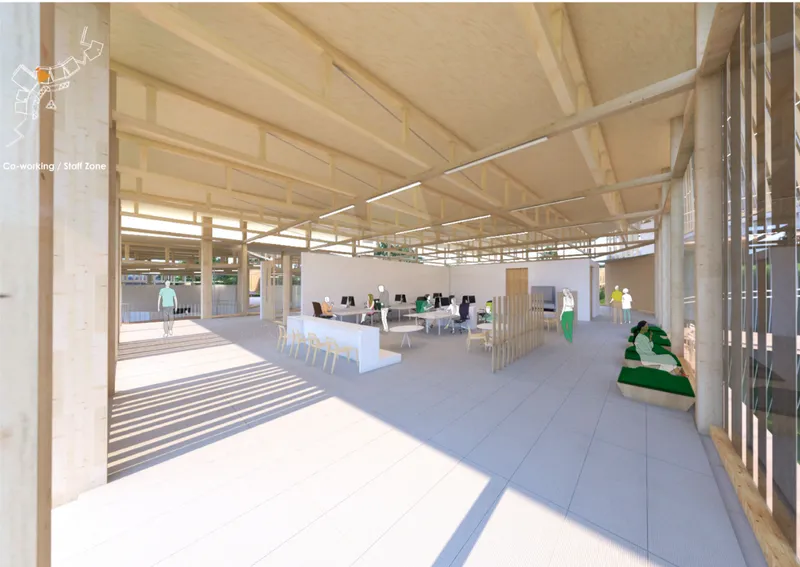
Large glazed openings, timber louvers, and open structural grids allow natural light to wash through the interiors while maintaining transparency toward surrounding greenery. The repetitive structural rhythm creates an atmosphere of softness and openness, reinforcing the project’s therapeutic character.
The timber framework also references the branching structures of trees, translating natural geometries into architectural form. Roof peaks inspired by mountainous landscapes optimize solar exposure, rainwater collection, and cross ventilation while giving the complex a distinctive visual identity.
Architecture for Rehabilitation and Community
Healing Trees is more than a wildlife rehabilitation center. It is conceived as a collaborative public environment that encourages interaction between visitors, researchers, volunteers, and wildlife caregivers.
The program includes:
- Rehabilitation spaces for koalas
- Educational exhibition zones
- Co-working and research areas
- Community gathering spaces
- Outdoor therapeutic gardens
- Viewing decks and elevated walkways
- Café and social interaction zones
The project carefully balances human occupation with wildlife recovery. Public circulation remains open and immersive while protected rehabilitation zones maintain privacy and controlled environments for animal care.
This duality creates a meaningful architectural narrative where education and conservation coexist naturally.
Green Architecture and Environmental Performance
Environmental responsiveness is embedded throughout the design strategy. The project integrates several passive and sustainable systems that strengthen its ecological performance:
- Cross ventilation through open circulation corridors
- Roof forms optimized for solar gain and rainwater harvesting
- Elevated structures minimizing ground disturbance
- Recycled and salvaged timber integration
- Daylight-maximizing façade systems
- Flexible modular construction for future adaptation
The project also emphasizes long-term lifecycle thinking through reusable building systems and adaptable spatial configurations. The architecture is designed not only for present functionality but also for future environmental resilience.
This approach positions Healing Trees within a broader discourse of regenerative architecture where buildings actively contribute to ecosystem recovery rather than simply reducing harm.
Spatial Experience and Emotional Atmosphere
The visual language of the project is intentionally calm and understated. Soft timber tones, filtered daylight, and open-air circulation create a meditative architectural atmosphere that aligns with the emotional goals of healing and restoration.
The elevated boardwalks become experiential journeys through the landscape. Visitors move gradually between enclosed and open spaces while remaining visually connected to nature at every moment.
Interior spaces maintain a sense of transparency and continuity, dissolving rigid boundaries between architecture and environment. This constant interaction with greenery reinforces psychological comfort and environmental awareness.
Reimagining Wildlife-Centered Architecture
Projects like Healing Trees demonstrate how architecture can evolve beyond human-centered functionality toward more inclusive ecological thinking. By designing for both wildlife rehabilitation and community engagement, Hamid Shahi and Mohammad Abbasi propose an architecture of coexistence.
The project challenges conventional institutional typologies by replacing isolated medical or educational facilities with a holistic ecological campus that nurtures relationships between species, people, and landscape.
In an era increasingly shaped by environmental crises, biodiversity loss, and mental health challenges, Healing Trees presents architecture as a restorative medium capable of reconnecting humans with nature through empathy, sustainability, and spatial intelligence.


Popular Articles
Popular articles from the community


Co-life: Sustainable Architecture for Age-Friendly Community Living
Co-life reimagines sustainable architecture for seniors through courtyards, rammed earth, shared gardens, and spaces designed for belonging.

The Musturak Paradise: Senior Living Architecture for a Connected Future in Temara, Morocco
The Musturak Paradise reimagines senior living architecture in Temara via private homes, social spaces, culture, community, and shared care.

Conexión: Biophilic Design Reimagines High-Rise Living in Hong Kong
Conexión reimagines high-rise living in Hong Kong through biophilic design, green facades, shared spaces, daylight, water and nature within.

Little Red Riding Hood: Architectural Design as a Journey Through Fear, Light, and Storytelling
Little Red Riding Hood reimagines the fairy tale through architectural design shaped by fear, light, scale, memory, uncertainty, and choice.

Similar Reads
You might also enjoy these articles

Eco Chapel: A Green Architecture Pavilion Designed in Symbiosis with the Forest
Eco Chapel uses green architecture to weave prayer, learning and reuse into a forest pavilion shaped by modular hexagonal canopies for life.
Kaffeebühnen: Coffee Shop Architecture Designed as a Civic Stage Between Vienna’s City and Park
Kaffeebühnen turns coffee shop architecture into a civic stage, linking Vienna’s park edge, urban life, warm timber yards, and coffee craft.
Healing Façade: Sustainable Architecture for Reforestation, Community, and Sacred Ecology in Ethiopia
Healing Façade reimagines sustainable architecture as a living wall that restores soil, catches water and renews Ethiopia's forest churches.


Urban Forest: A Vertical Ecosystem for 5,000 Workers in Singapore's Changi Business Park
Radially stacked pods and layered green decks turn a 7-acre plot into 47 acres of ecological workspace projected for 2040.


Comments (0)
Please login or sign up to add comments
No comments yet. Be the first to comment!