

Hometown House By MoDusArchitects
Contemporary alpine villa in Val di Non featuring black larch facade, porphyry stone interiors, V-shaped plan, and panoramic Dolomites views.


Set among the rolling apple orchards of Val di Non in northern Italy, Hometown House is a contemporary alpine residence designed by MoDusArchitects. Located near Lake Santa Giustina and framed by the majestic Brenta Dolomites, this 563 m² private villa reinterprets traditional mountain architecture through bold geometry, natural materials, and deep regional roots.
Built on the site of the client’s childhood home, the project represents both a personal return and an architectural dialogue with the landscape of Trentino. After decades abroad, the homeowner sought to reconnect with his origins: a gesture translated into a house that merges memory, hospitality, and contemporary design.
A V-Shaped Villa Rooted in Landscape
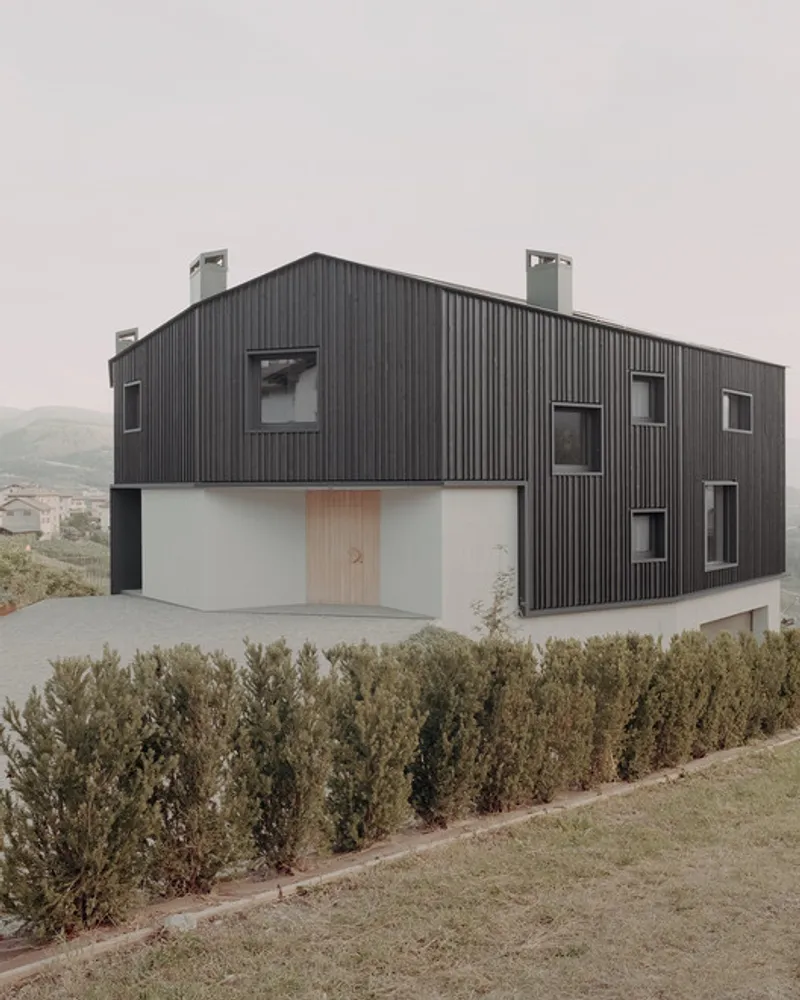
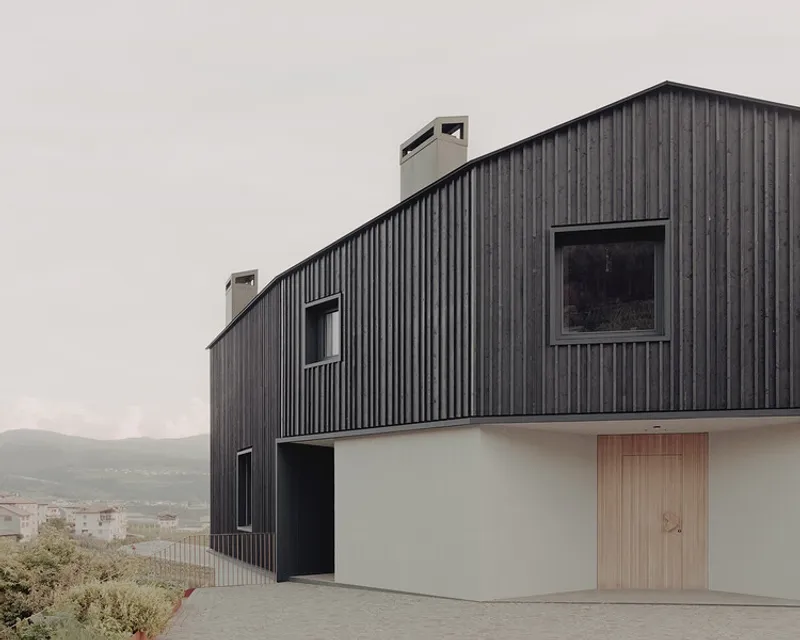
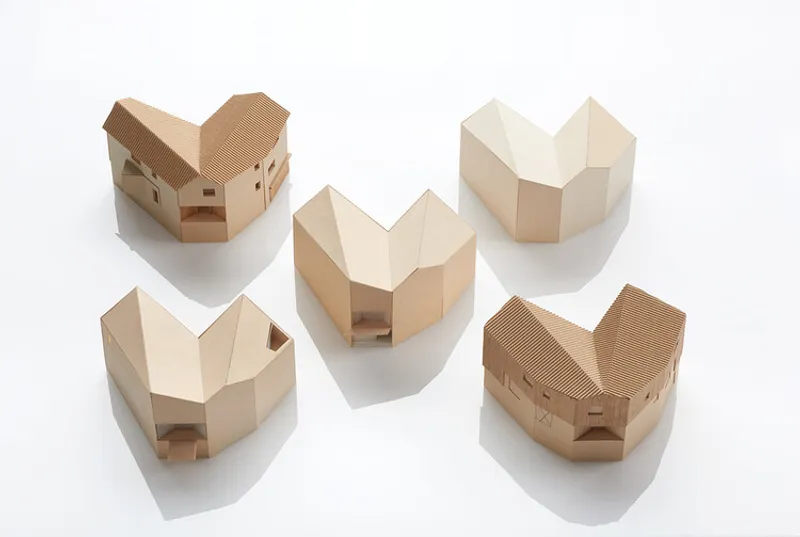
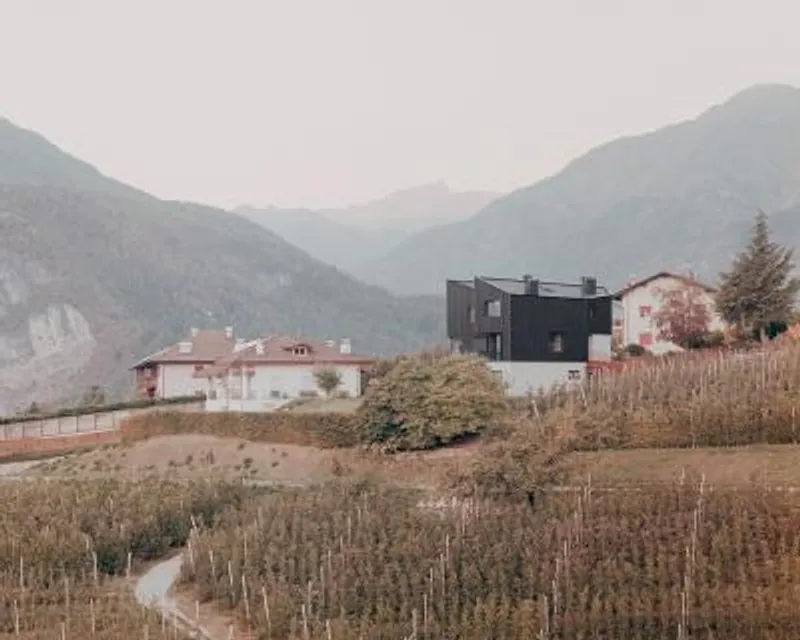
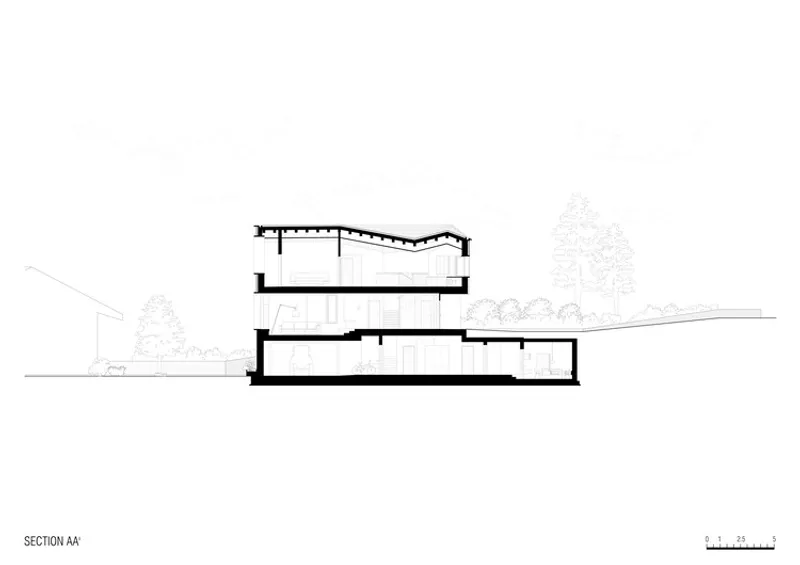
Hometown House is composed of two single-pitched volumes converging northward into a distinctive V-shaped plan that opens south toward the valley. This configuration maximizes solar exposure and frames panoramic views across orchards and alpine terrain.
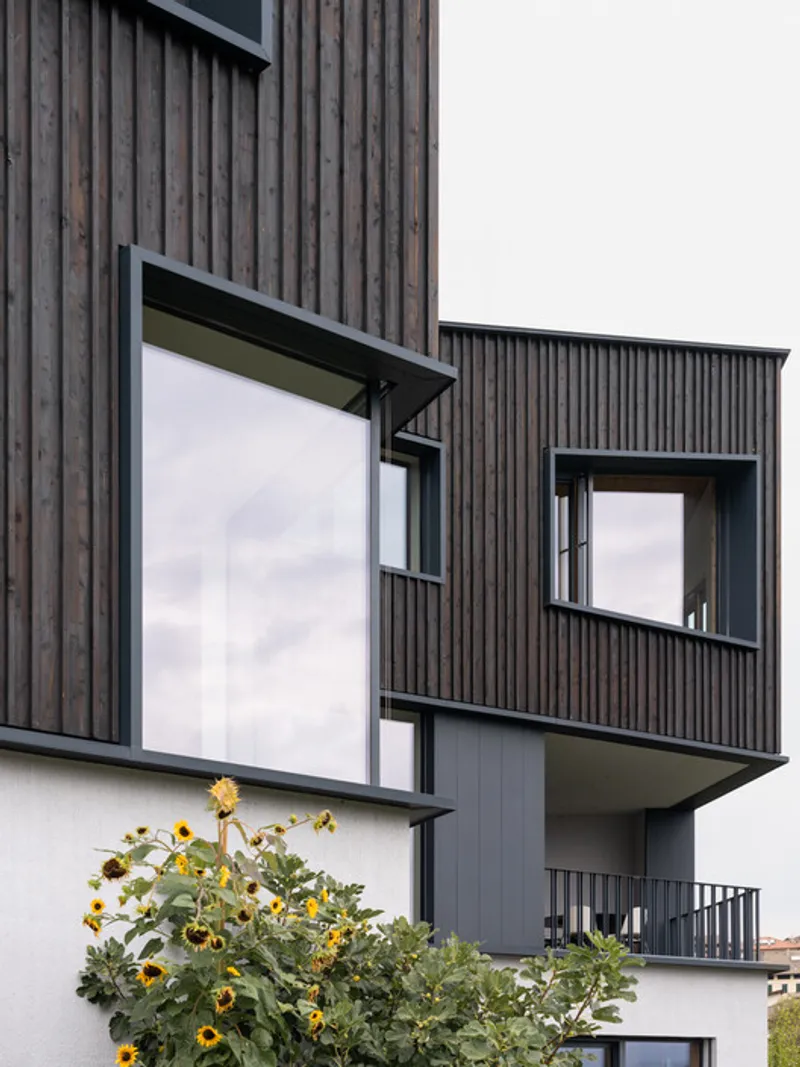
Emerging from a gently sloping rural site, the villa distinguishes itself from neighboring white plaster houses through a water-treated black larch wood façade. Vertical timber panels and 4x4 cm profiles create a rhythmic exterior, punctuated by large openings and oblique lines that introduce dynamic tension to the alpine setting.
The architecture balances contrast and continuity, contemporary in expression yet deeply grounded in local building traditions.
Material Authenticity and Local Craftsmanship
The material palette is intentionally restrained, reflecting the construction culture of Val di Non:
- Water-treated black larch wood cladding
- Grey porphyry stone from the nearby Cembra Valley
- Pine and cedarwood interiors
- Lime-based plaster with basalt, porphyry, and marble aggregates
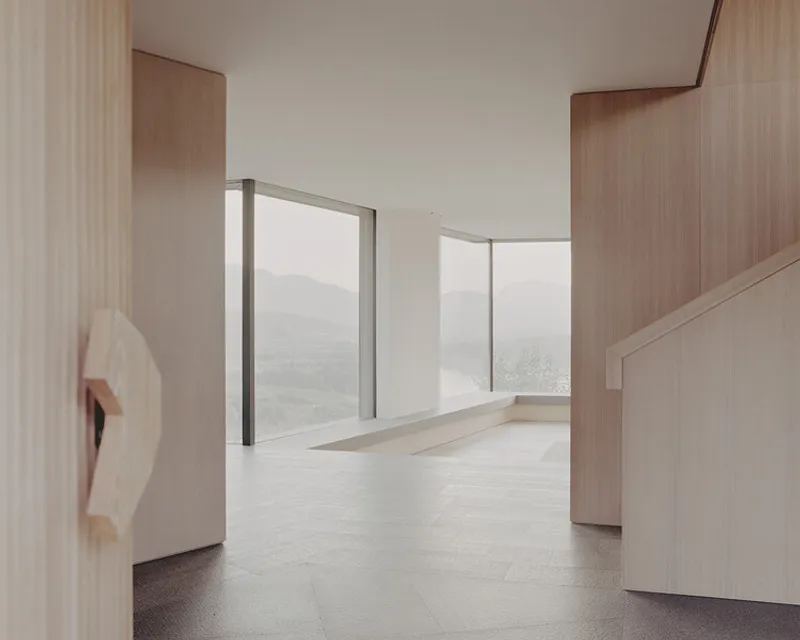
Local artisans and builders played a central role in the project’s realization, reinforcing the transmission of regional craftsmanship. Even the custom-designed solid larch door handle echoes the footprint of the house, a signature detail typical of MoDusArchitects’ residential work.
Hospitality at the Heart of the Home
Conceived as a gathering place for family and friends, Hometown House celebrates convivial alpine living. The entrance sequence begins with a porphyry cobblestone driveway leading to a panoramic forecourt overlooking orchards and a seasonal vegetable garden.
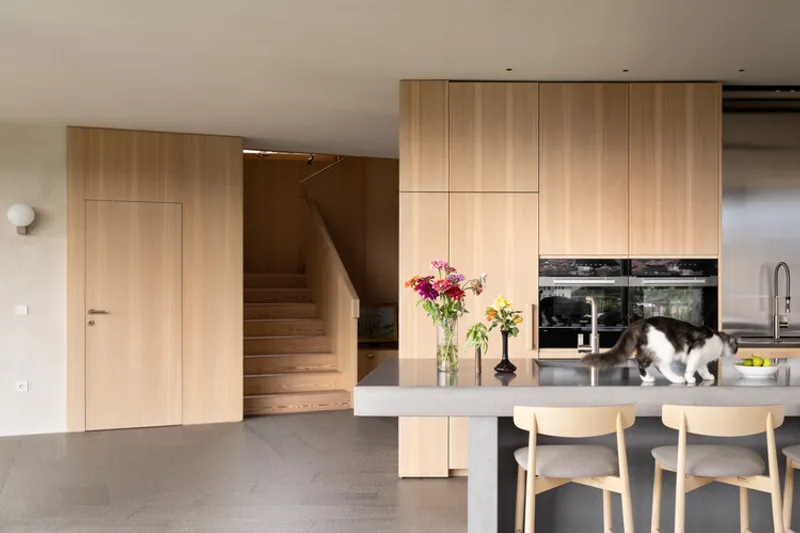
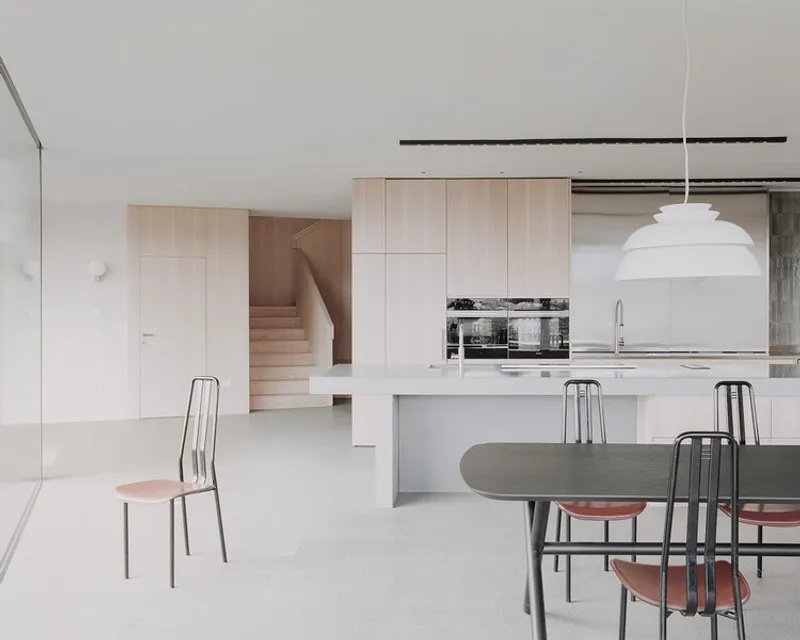
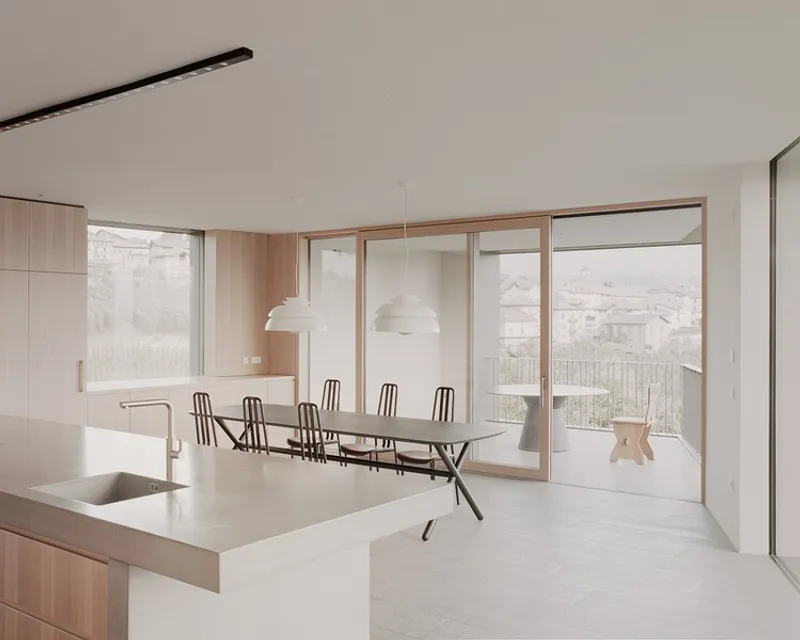
Inside, a vestibule introduces large-format grey porphyry slabs that guide visitors into the open-plan kitchen and dining area. The kitchen blends knotless vertical-grain larch paneling with a monolithic concrete island and stainless-steel countertops, creating a dialogue between warmth and industrial precision.
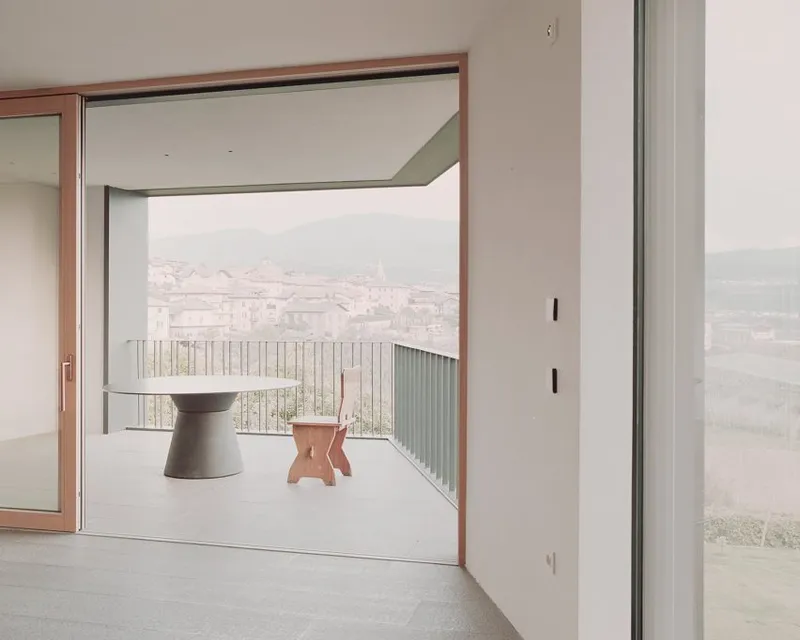
Large south-facing windows flood the living spaces with natural light while framing the surrounding valley.
Sunken Living Room and Alpine Warmth
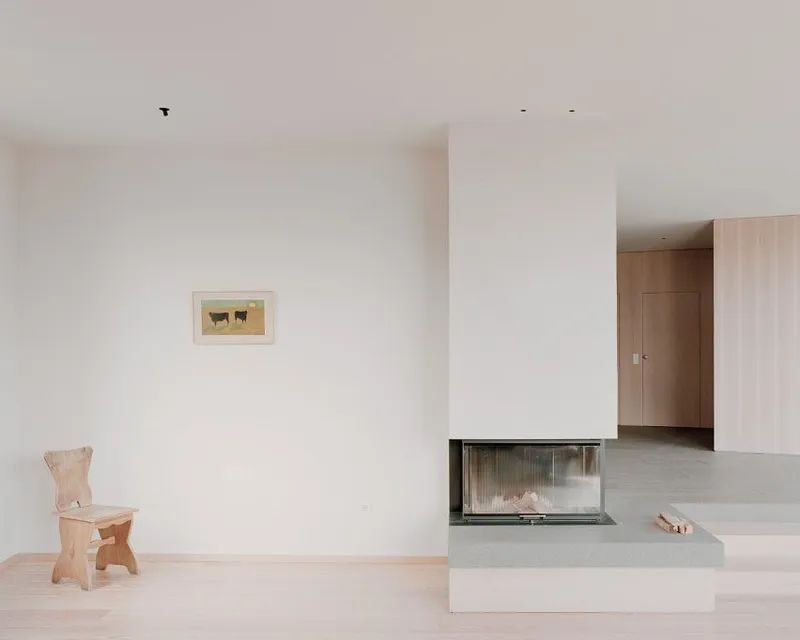
Two gentle steps descend from the vestibule into a sunken living room centered around a fireplace. A continuous porphyry windowsill lines the glass façade, doubling as seating and reinforcing the connection between interior and landscape.
Walls finished with textured lime plaster mixed with local stone aggregates add tactile depth. The interplay of stone, timber, and light creates a sensory environment rooted in alpine memory.
Private Quarters and Sensory Continuity
The upper level houses four double bedrooms, including a master suite with skylit wardrobe and bathroom. A smaller adjacent bedroom connects to the master, while two additional rooms share a covered terrace.
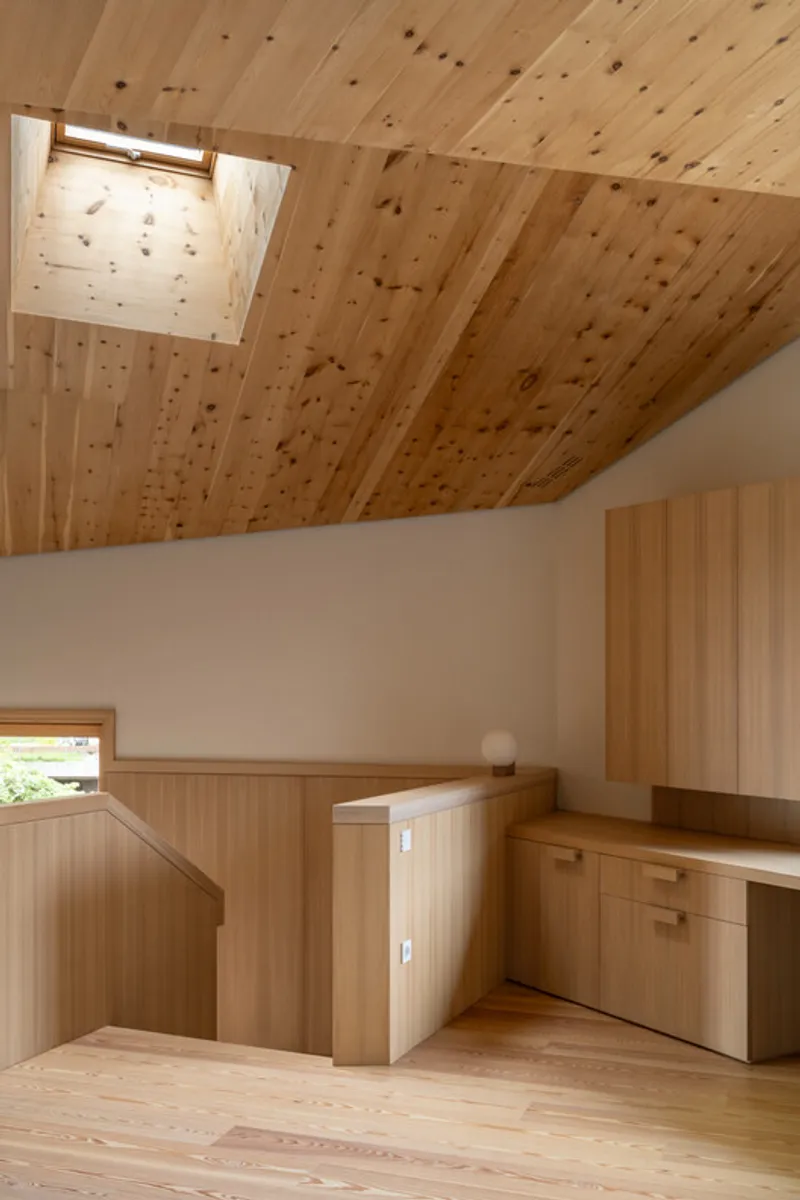
A cedarwood ceiling with its characteristic red-brown knots extends across the upper floor, infusing the space with the distinctive scent of Alpine timber, a subtle yet powerful reference to childhood memories and mountain life.
An airy study area with built-in desk continues the wood cladding of the staircase, ensuring material continuity throughout.
Tradition Reimagined: The Stube and Wine Cellar
On the lower floor, a traditional stube, a wood-paneled Alpine family room, opens onto the garden, preserving regional domestic heritage. Nearby are guest accommodations, service spaces, and garage access.
Fully underground lies the wine cellar and tasting room. Defined by a curved concrete wall, red brick flooring, and solid larch wood, this space anchors the residence physically and symbolically to the agricultural identity of Val di Non.
Sustainable Alpine Architecture in Italy
Hometown House exemplifies sustainable mountain architecture through:
- Locally sourced materials
- Passive solar orientation
- Thermal mass from stone surfaces
- Durable timber construction
- Collaboration with regional craftsmen
The project demonstrates how contemporary design can reinterpret alpine typologies without sacrificing authenticity.
All the photographs are works of Simone Boss, Juergen Eheim


Popular Articles
Popular articles from the community


U.GA Architects Wraps an Oval Rooftop Pool in Curved Board-Formed Concrete on Busan's Jeollidan-gil
In Busan's Jeonpo-dong, a 454 m² mixed-use block stacks a neighborhood facility, guest rooms and an oval rooftop pool inside spiraling concrete walls.

David Macias Steps a Doorless Stone and Plaster House Down a Tropical Colombian Hillside
In the humid hills of Colombia, Threshold House replaces the front door with an open void and terraces its 850 m² down the slope instead of fighting it.

Cube Design Draws an Ecological Corridor Between Two Shenzhen Hills with the Nankai Building
Beside Shenzhen's container docks, the Nankai Building pairs stacked balconies with a climbing green screen to connect two hillsides across its height.

Architekt Andreas Gruber Scatters 23 Dark Timber Chalets Across a South Tyrolean Forest Edge
In Molini di Tures, Amonti Chalets breaks a resort into a hamlet of gabled timber houses, with parking, storage and services pushed into the slope.

Similar Reads
You might also enjoy these articles

Gil Mello Arquitetura Tilts a Single Roof Toward the Waterfalls on a Plateau Above Aiuruoca, Brazil
In Aiuruoca, Minas Gerais, a 200 m² house of local labor and reclaimed poles pairs a low valley veranda with a tall mountain one.
U.GA Architects Wraps an Oval Rooftop Pool in Curved Board-Formed Concrete on Busan's Jeollidan-gil
In Busan's Jeonpo-dong, a 454 m² mixed-use block stacks a neighborhood facility, guest rooms and an oval rooftop pool inside spiraling concrete walls.

Felipe Hess Arquitetos Turns a Blind Stone Wall to the Street and Opens a Brazilian House onto a Courtyard and Canal
A canal-front house in Brazil hides behind painted stone and planting, then opens to an olive-tree courtyard, a reed-ceilinged porch and a curving pool.
David Macias Steps a Doorless Stone and Plaster House Down a Tropical Colombian Hillside
In the humid hills of Colombia, Threshold House replaces the front door with an open void and terraces its 850 m² down the slope instead of fighting it.
Explore Architecture Competitions
Discover active competitions in this discipline

Challenge to reimagine the Iron Throne

Photograph architecture without architects

Illustrate the lost glory of Angkor Wat - Render Challenge

Design challenge to reuse E-waste
Comments (0)
Please login or sign up to add comments
No comments yet. Be the first to comment!