
House for a Sculptor by Miles Thorp Architects: A Compact Domestic Gallery in Rozelle
Compact sculptor residence in Rozelle blending sustainable materials, recycled bricks, timber interiors, garden connection, and gallery-inspired living space.


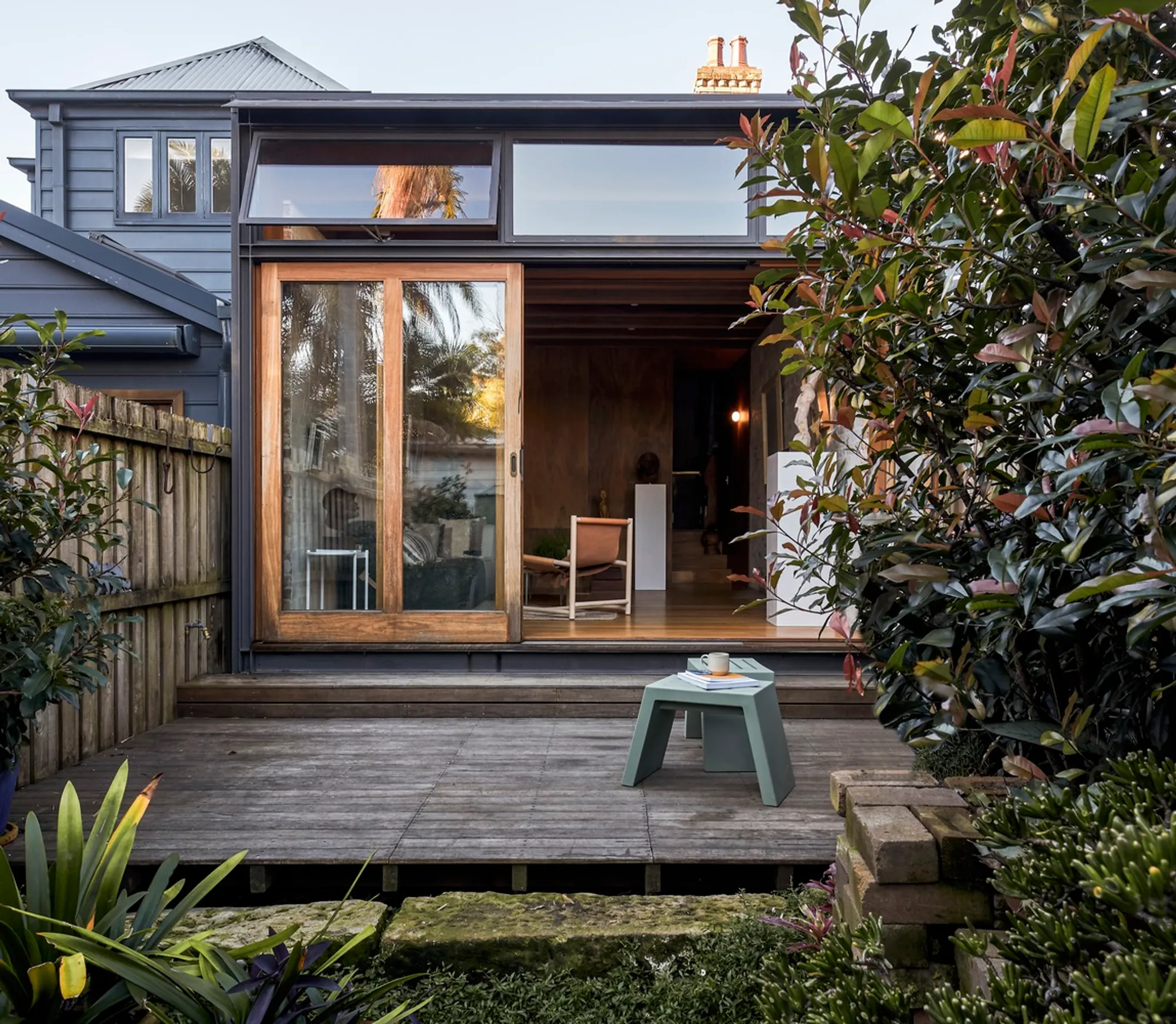
Located in the inner-city suburb of Rozelle, Australia, House for a Sculptor by Miles Thorp Architects is a thoughtful residential renovation that transforms a modest property into a compact domestic gallery and peaceful retreat. Completed in 2022, this 64-square-meter project demonstrates how architecture can merge artistic expression, sustainability, and memory within a limited urban footprint. The design reimagines the rear portion of a long-owned home, creating a refined space that supports both daily living and the creative lifestyle of its sculptor owner.
Reimagining an Inner-City Backyard Through Architectural Intervention
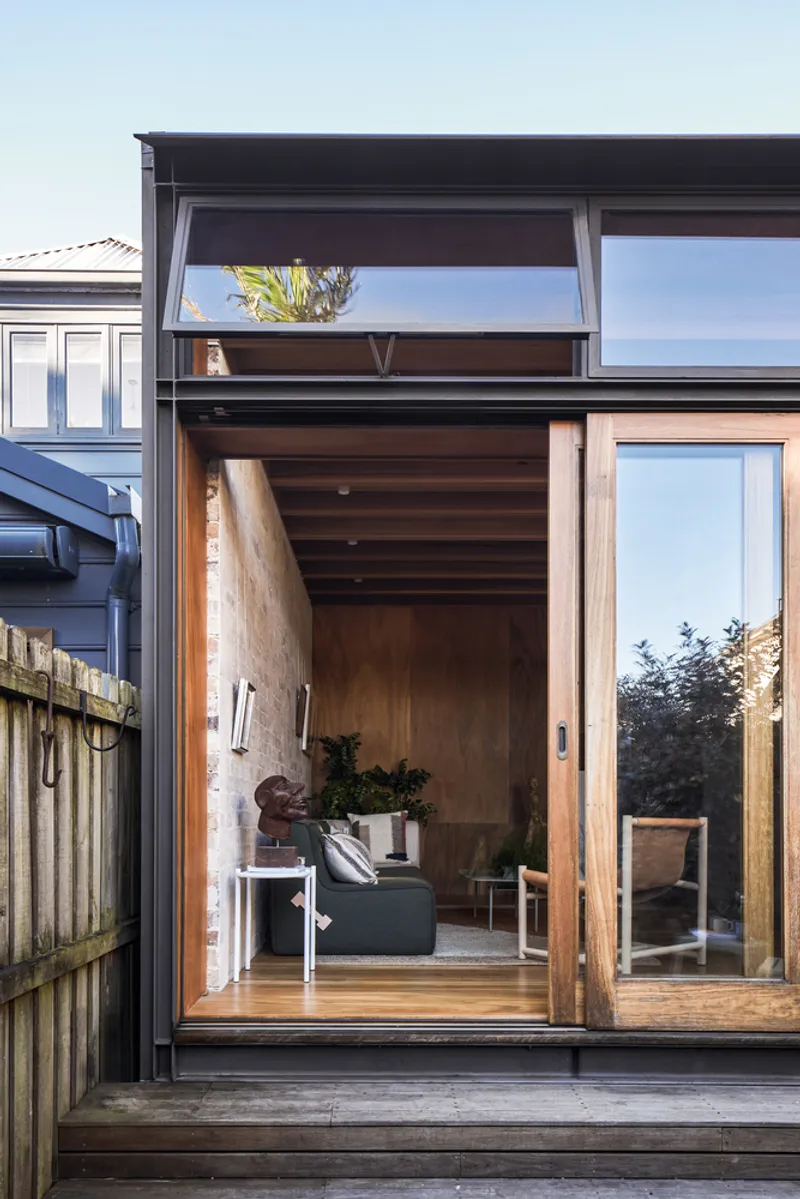
The clients had lived in the property for more than two decades before engaging Miles Thorp Architects to redesign the backyard structures. Over the years, a collection of temporary lean-to constructions had accumulated at the rear of the house, serving functional but informal purposes. The new architectural intervention replaces these improvised structures with a carefully designed addition that enhances spatial quality while preserving the site’s history.
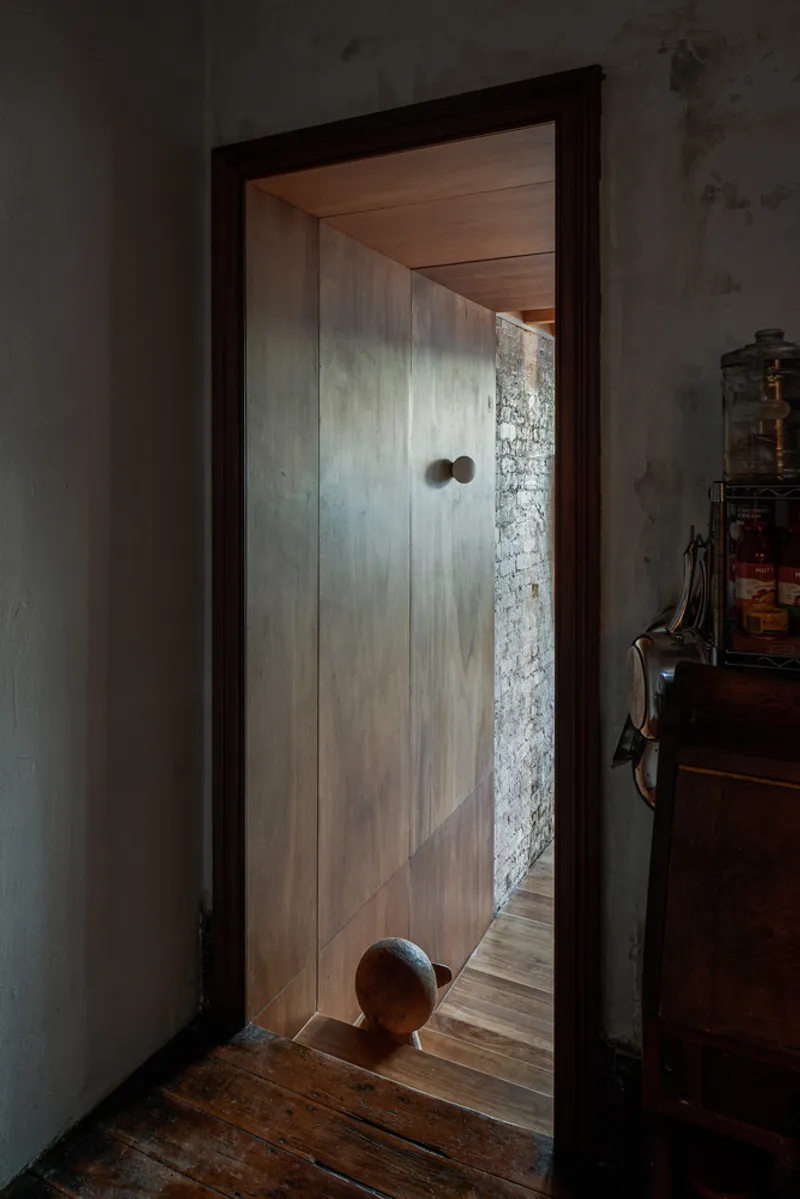
Rather than erasing the past, the architects sought to embed traces of the earlier environment into the new design. This approach reflects a sensitive strategy toward adaptive reuse and contextual continuity. By incorporating salvaged materials and preserving fragments of the previous structures, the project maintains a tangible connection between the past and present.
A Compact Architectural Volume That Maximizes Urban Space
At the heart of the project is a 28-square-meter metal-clad pavilion that replaces the former patchwork of structures. Despite its small footprint, this new volume performs multiple architectural functions. It acts as an extension of the original cottage, a living space, a display area for artwork, and a transitional threshold connecting the home to the garden.
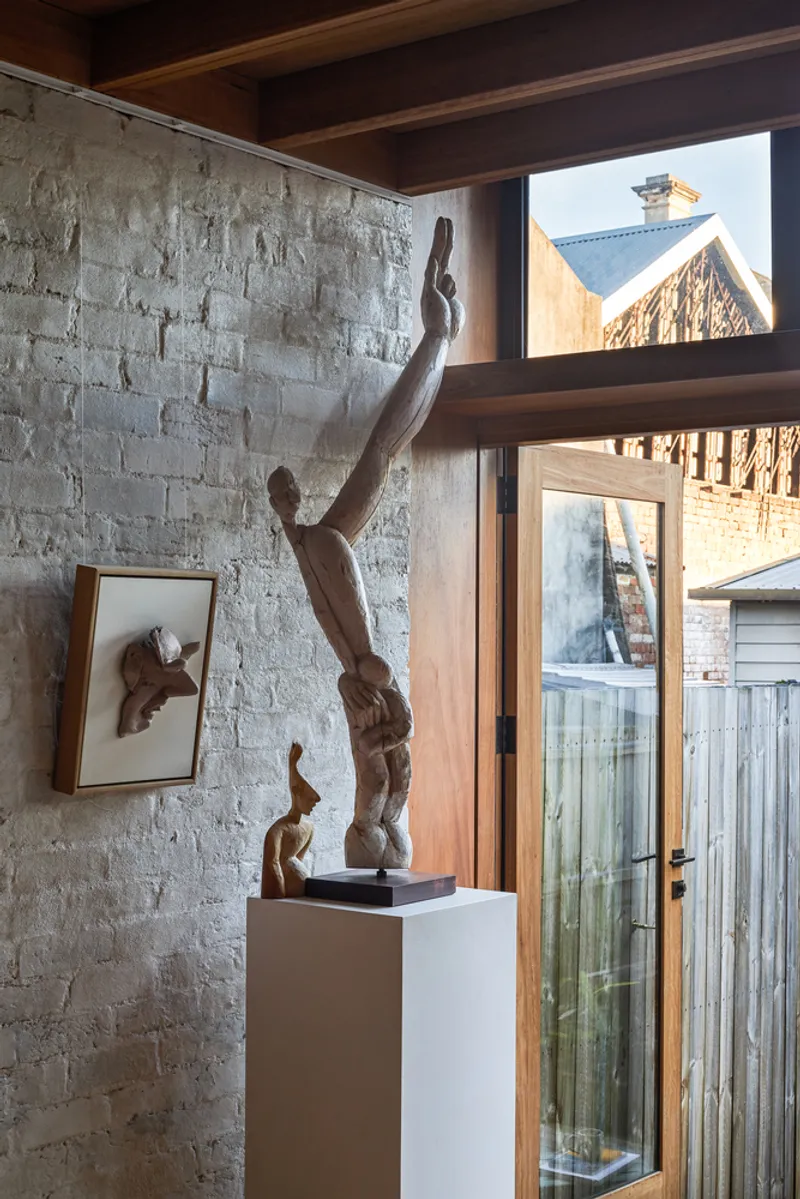
The compact addition is strategically positioned to maximize the potential of the constrained inner-city site. Large glazed doors open the interior toward the garden, creating visual continuity between indoor and outdoor environments. Awning windows placed above the doors allow for cross-ventilation and natural airflow, improving comfort while reducing reliance on mechanical systems.
The result is a flexible living environment where architecture and landscape interact seamlessly.
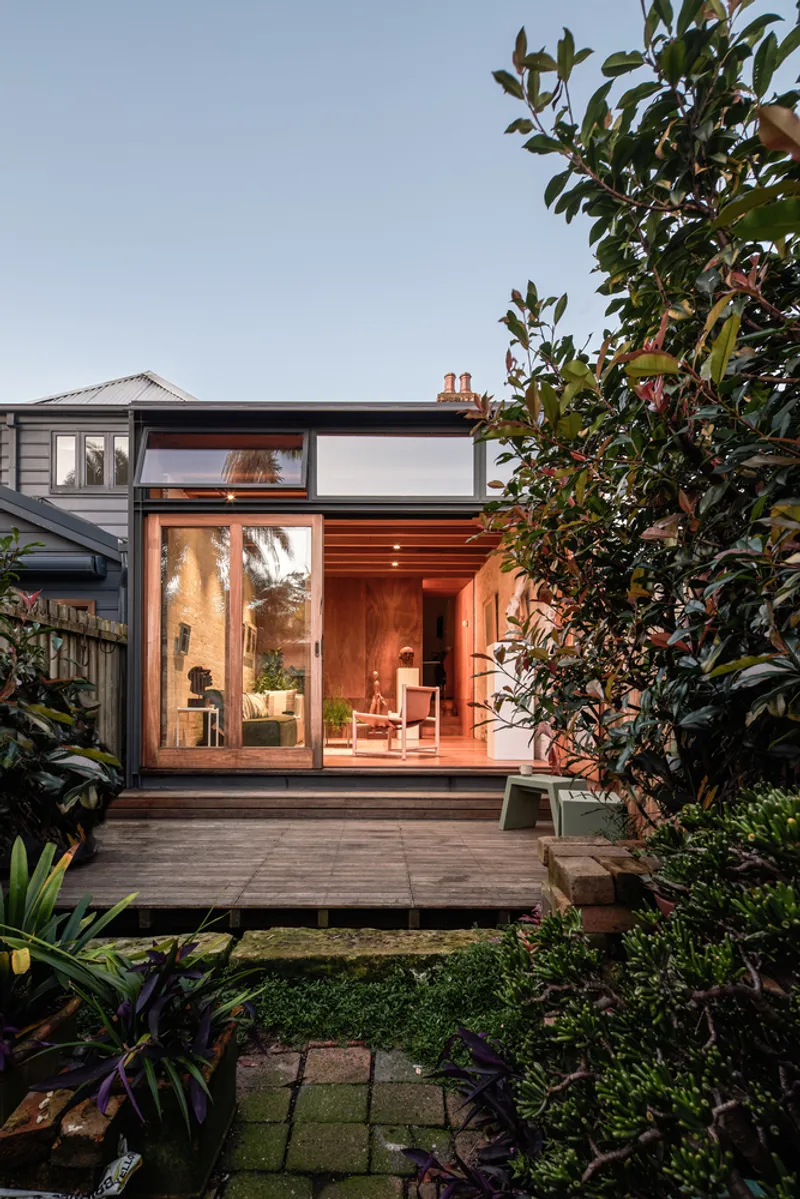
Designing a Domestic Gallery for a Sculptor’s Evolving Collection
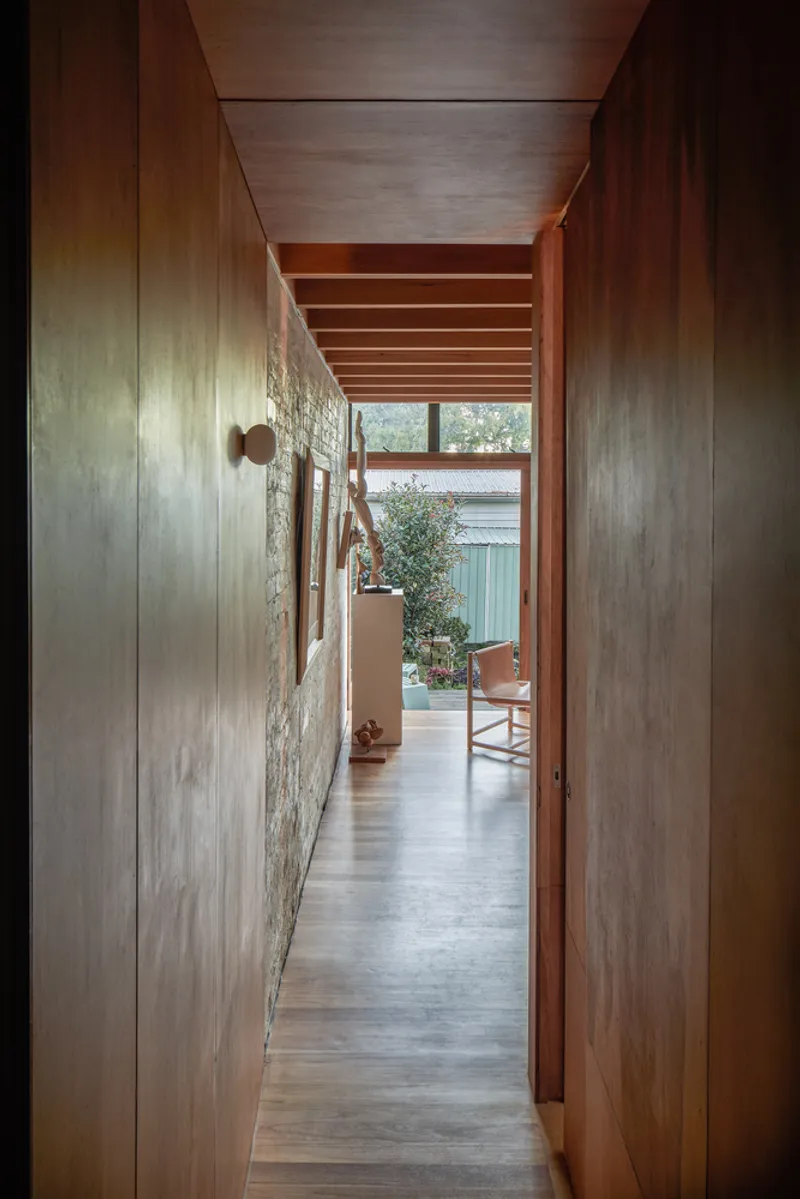
One of the central design goals of the project was to create a home that could also function as a domestic gallery. The sculptor client required spaces capable of displaying, storing, and interacting with artworks while maintaining the comfort of a residential setting.
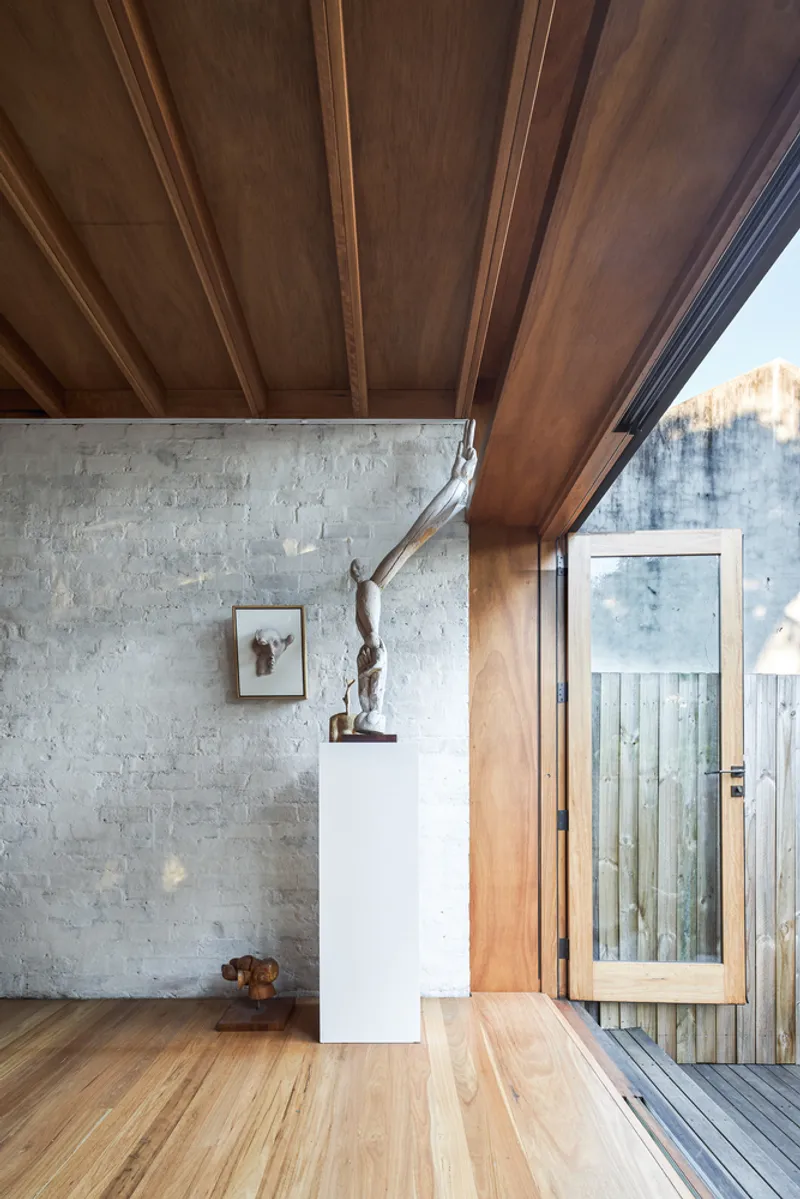
To achieve this balance, the architects developed an interior characterized by clarity, openness, and adaptable surfaces. The restrained spatial composition allows sculptures and artworks to become focal points within the architecture. Natural light entering through the large garden-facing glazing further enhances the experience of the artworks, creating changing atmospheres throughout the day.
This hybrid approach transforms the house into a living creative environment where art and everyday life coexist.
Sustainable Materials and Circular Construction Strategies
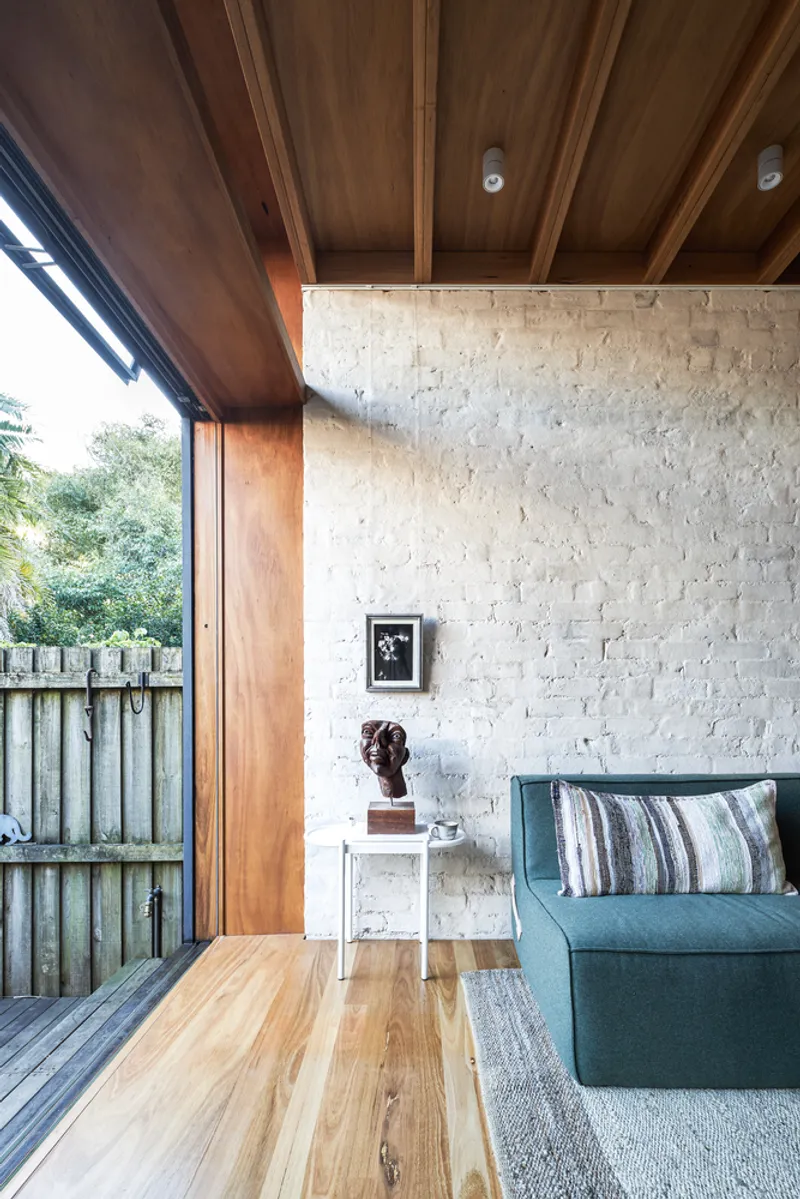
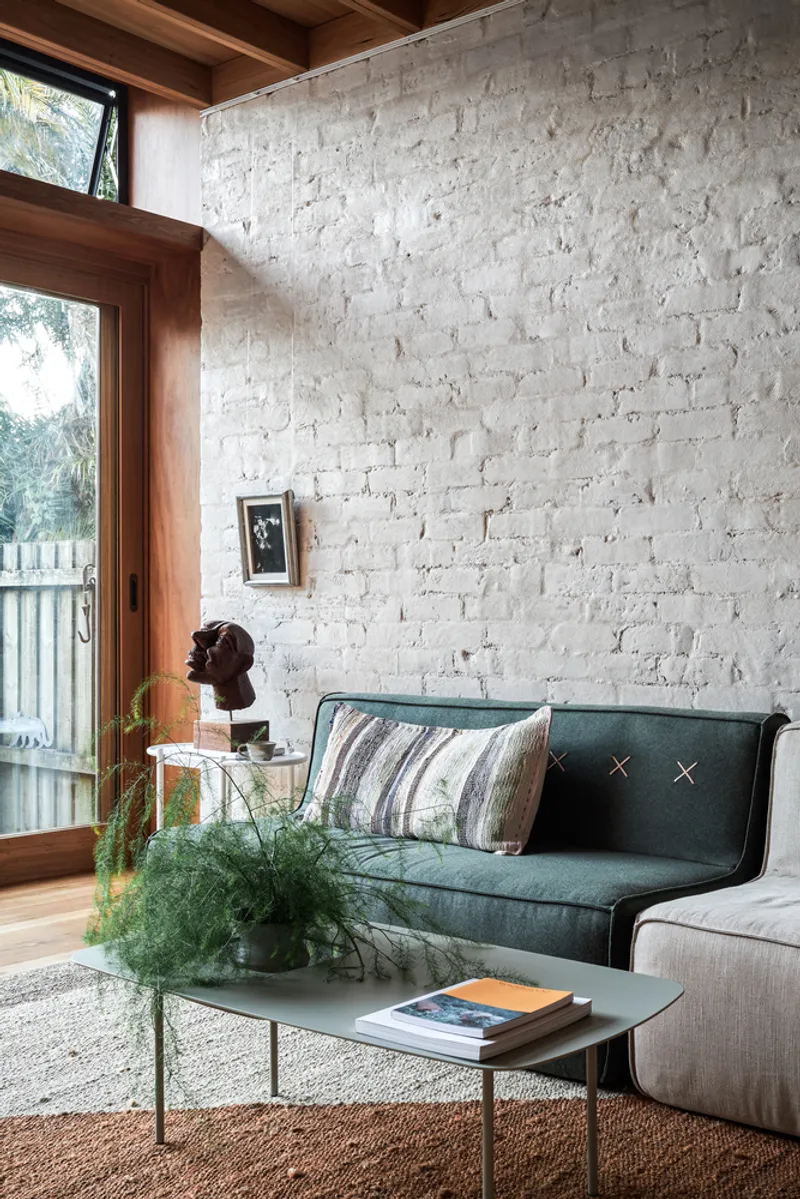
Sustainability played a significant role in shaping the architectural concept. Rather than discarding the materials from the demolished structures, the architects chose to recycle bricks directly on site. These reclaimed bricks are used in a reverse brick veneer system, creating visual continuity between the new addition and the original cottage.
This reuse strategy reduces construction waste while preserving the tactile memory of the previous structures. Additionally, original sandstone footings salvaged from the site have been repurposed as landscape elements within the garden, further reinforcing the narrative of material continuity.
Beyond material recycling, the project integrates passive design principles such as natural ventilation and daylight optimization. These strategies support a sustainable residential environment while maintaining architectural elegance.
A Refined Material Palette Inspired by Australian Timber
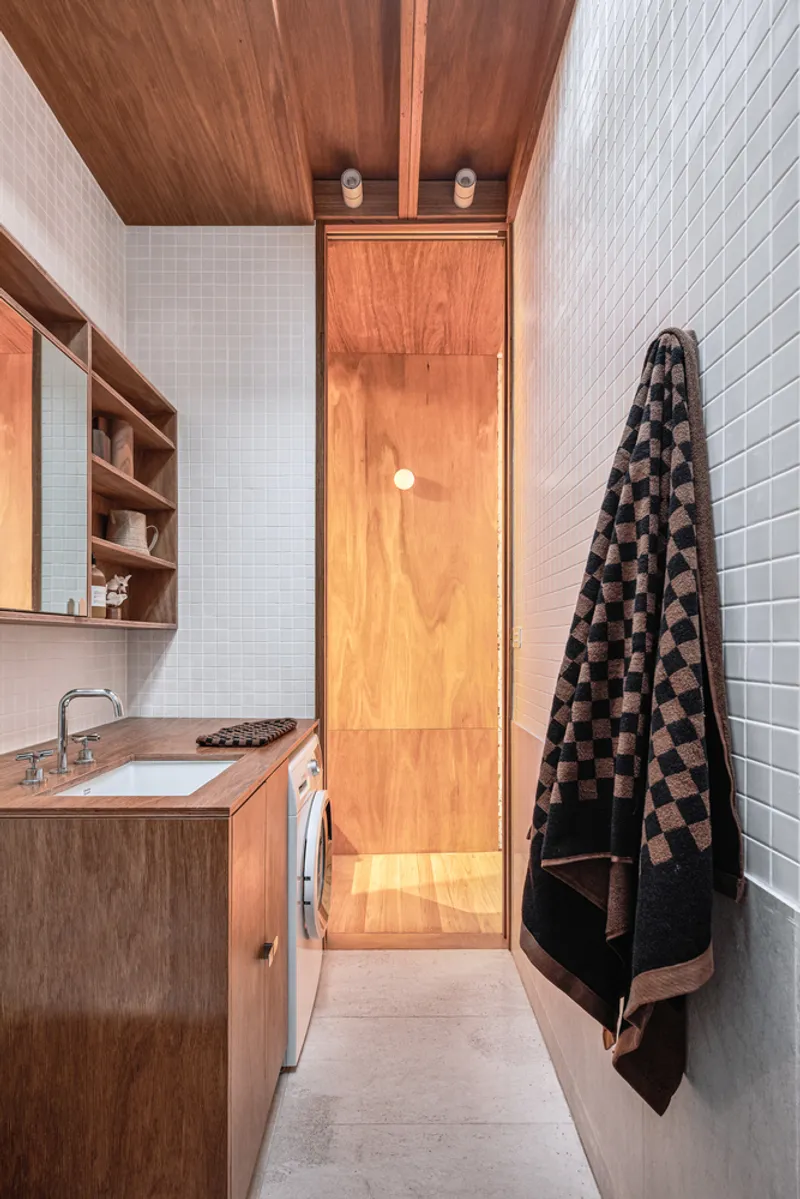
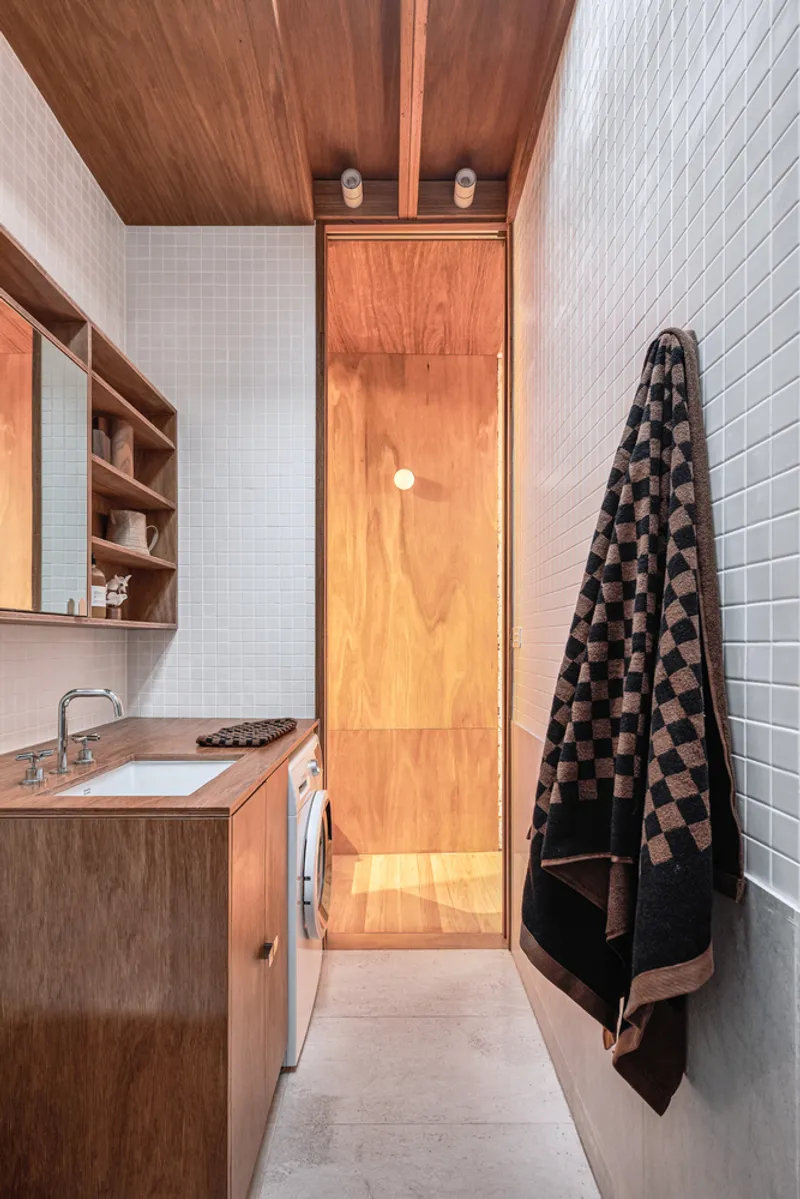
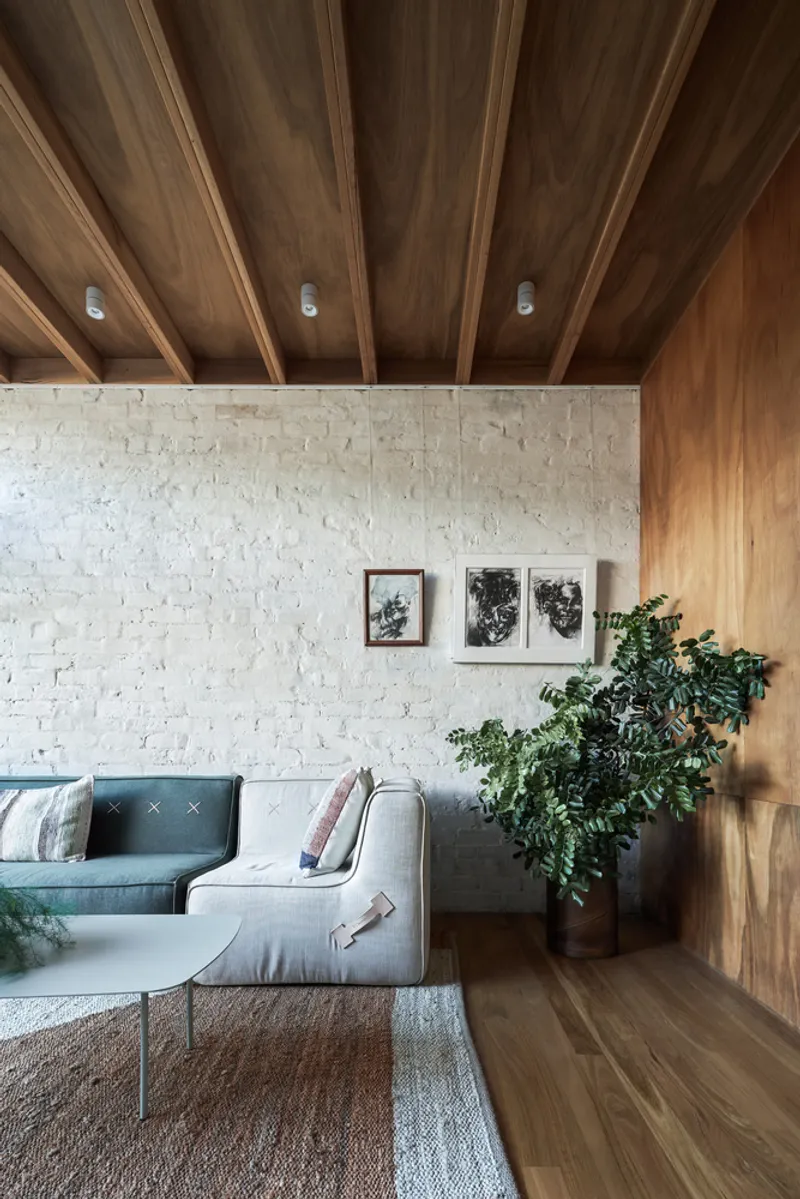
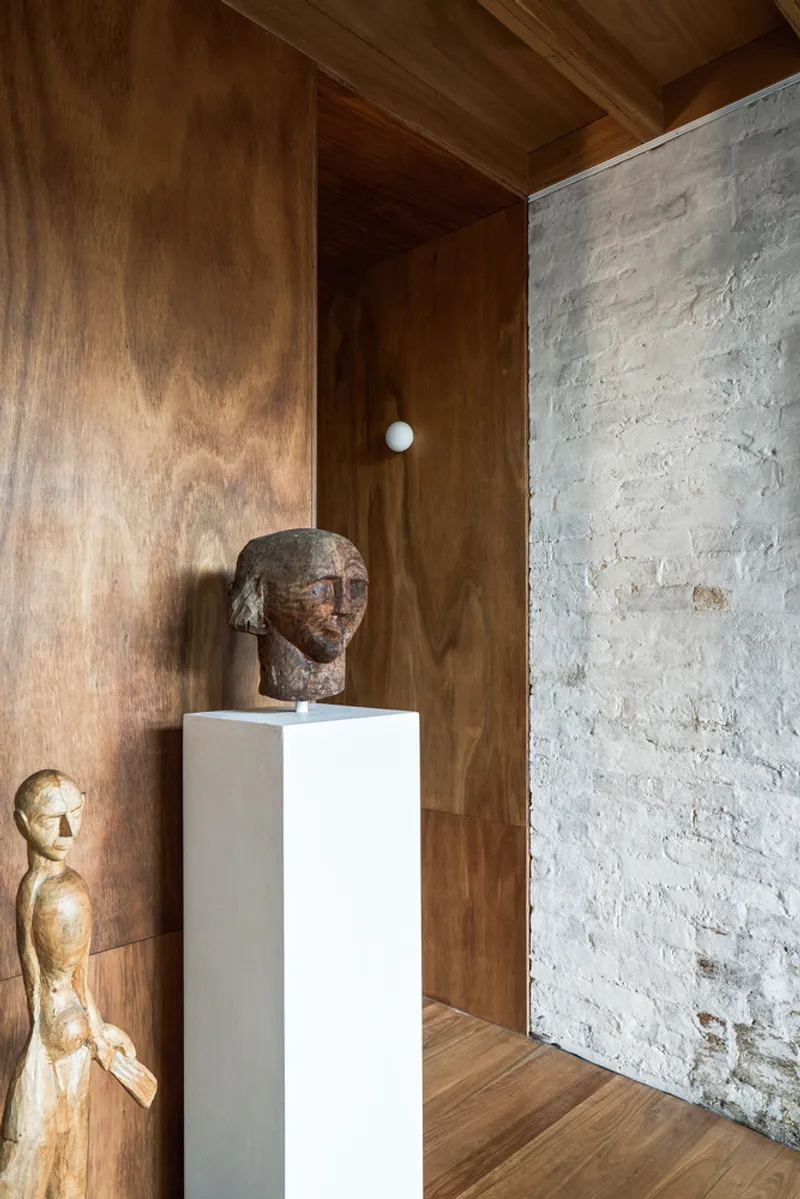
The interior design of the addition features a carefully selected palette that emphasizes warmth and simplicity. Blackbutt timber plays a prominent role throughout the space, appearing in flooring, ceiling panels, doors, and wall linings. Structural elements are also expressed in timber, contributing to a cohesive architectural language.
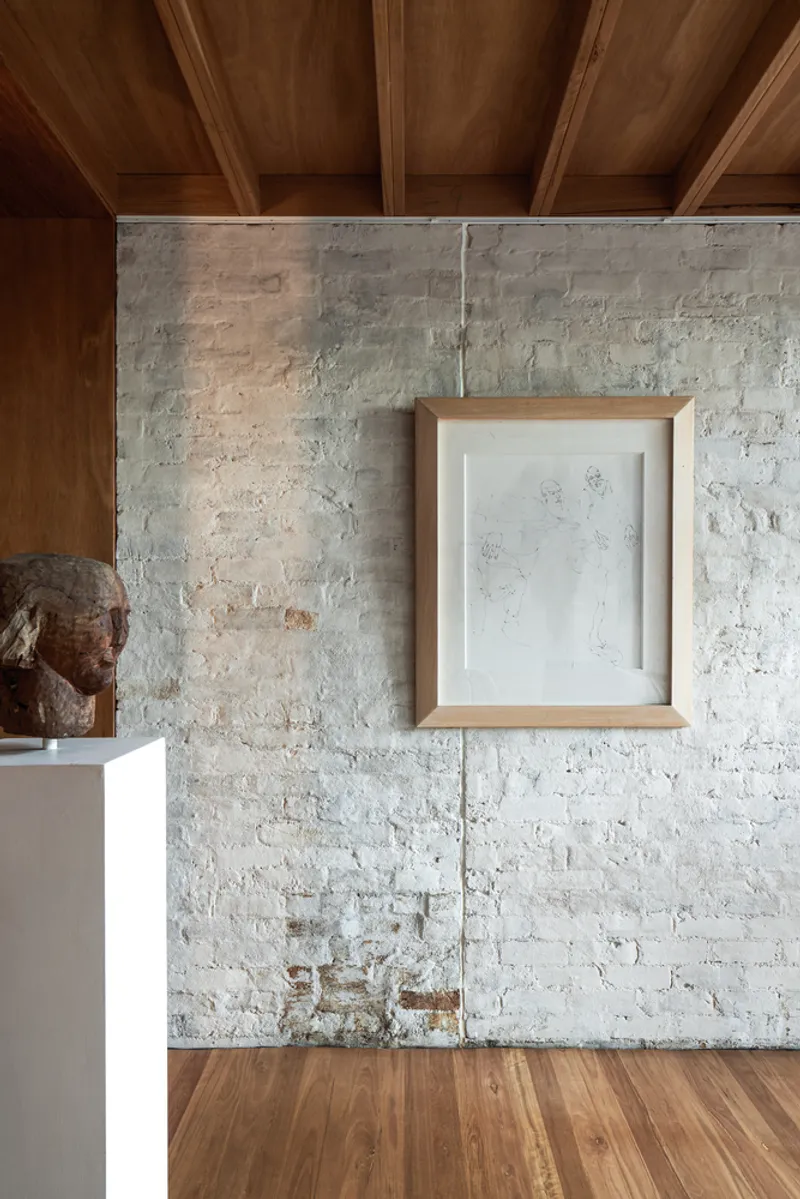
The natural tones of the wood contrast with the darker exterior metal cladding and the textured brick surfaces. This balance between warm natural materials and restrained finishes creates a calm and contemplative interior atmosphere, an ideal environment for both artistic work and relaxation.
The minimal material palette also allows the sculptures and artworks within the space to stand out without visual competition from the architecture.
Blurring Boundaries Between Architecture, Art, and Landscape
The connection between interior and exterior space is a defining feature of the project. The living area opens directly to the garden, allowing the sculptor’s works to extend into the landscape. This relationship transforms the backyard into an outdoor exhibition space while maintaining the intimacy of a private home.
Through careful spatial planning and material selection, Miles Thorp Architects have created a small yet powerful architectural intervention that demonstrates how thoughtful design can elevate everyday living environments.
A Model for Small-Scale Urban Renovation
House for a Sculptor illustrates how compact residential architecture can respond to complex design challenges. The project integrates sustainable construction, adaptive reuse, artistic functionality, and contextual sensitivity within a limited urban site.
Rather than relying on scale or monumental gestures, the design succeeds through precision, material honesty, and a deep understanding of the client’s lifestyle. It stands as a compelling example of how architecture can support creative practice while respecting the memory and character of an existing home.
In doing so, the project redefines the possibilities of small-scale renovation in dense urban environments.
All photographs are works of
Andy Macpherson




Popular Articles
Popular articles from the community


Conexión: Biophilic Design Reimagines High-Rise Living in Hong Kong
Conexión reimagines high-rise living in Hong Kong through biophilic design, green facades, shared spaces, daylight, water and nature within.

Co-life: Sustainable Architecture for Age-Friendly Community Living
Co-life reimagines sustainable architecture for seniors through courtyards, rammed earth, shared gardens, and spaces designed for belonging.

Co-Life: Senior Housing Design That Reconnects Older Adults With the City
Co-Life reimagines senior housing design through healing gardens, shared streets, workshops, and a sustainable community across generations.

The Ocean Hive: Sustainable Architecture for a Self-Sufficient Civilization at Sea
The Ocean Hive imagines sustainable architecture at sea, where modular habitats, algae, wave power and ocean waste sustain a growing colony.


Similar Reads
You might also enjoy these articles

FAMM Arquitectura Organizes Ten Villas Around Courtyards and Jungle in Nosara, Costa Rica
El Molino pairs two elongated volumes with deep overhangs and timber louvers to build a compact coastal community five minutes from the beach.
Oscar Niemeyer's Ibirapuera Park Pavilions Define São Paulo's Cultural Identity in Concrete and Curve
A constellation of modernist volumes set within São Paulo's most important urban park, conceived for the city's 400th anniversary in 1954.
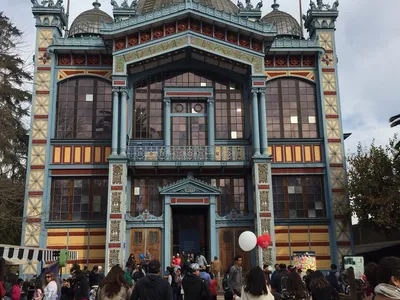
How Henri Picq's 1889 Paris Pavilion Traveled 11,000 Kilometers to Become Santiago's Artequín Museum
A prefabricated iron and glass pavilion built for the Paris Universal Exposition found a second life as a children's art museum in Chile.
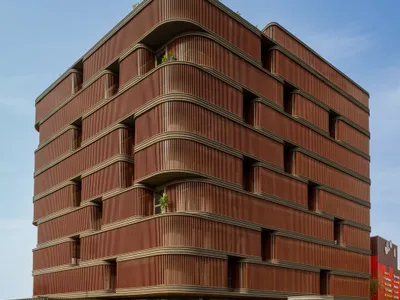
Sanjay Puri Architects Wraps a Jaipur Office Tower in Capsule-Shaped Green Buffers
A nine-level climate-responsive workplace near Jaipur Airport uses stacked planter terraces and aluminium screens to fight 40°C heat.

Explore Architecture Competitions
Discover active competitions in this discipline



Challenge to reimagine the Iron Throne


Photograph architecture without architects


Illustrate the lost glory of Angkor Wat - Render Challenge


Design challenge to reuse E-waste
Comments (0)
Please login or sign up to add comments
No comments yet. Be the first to comment!