
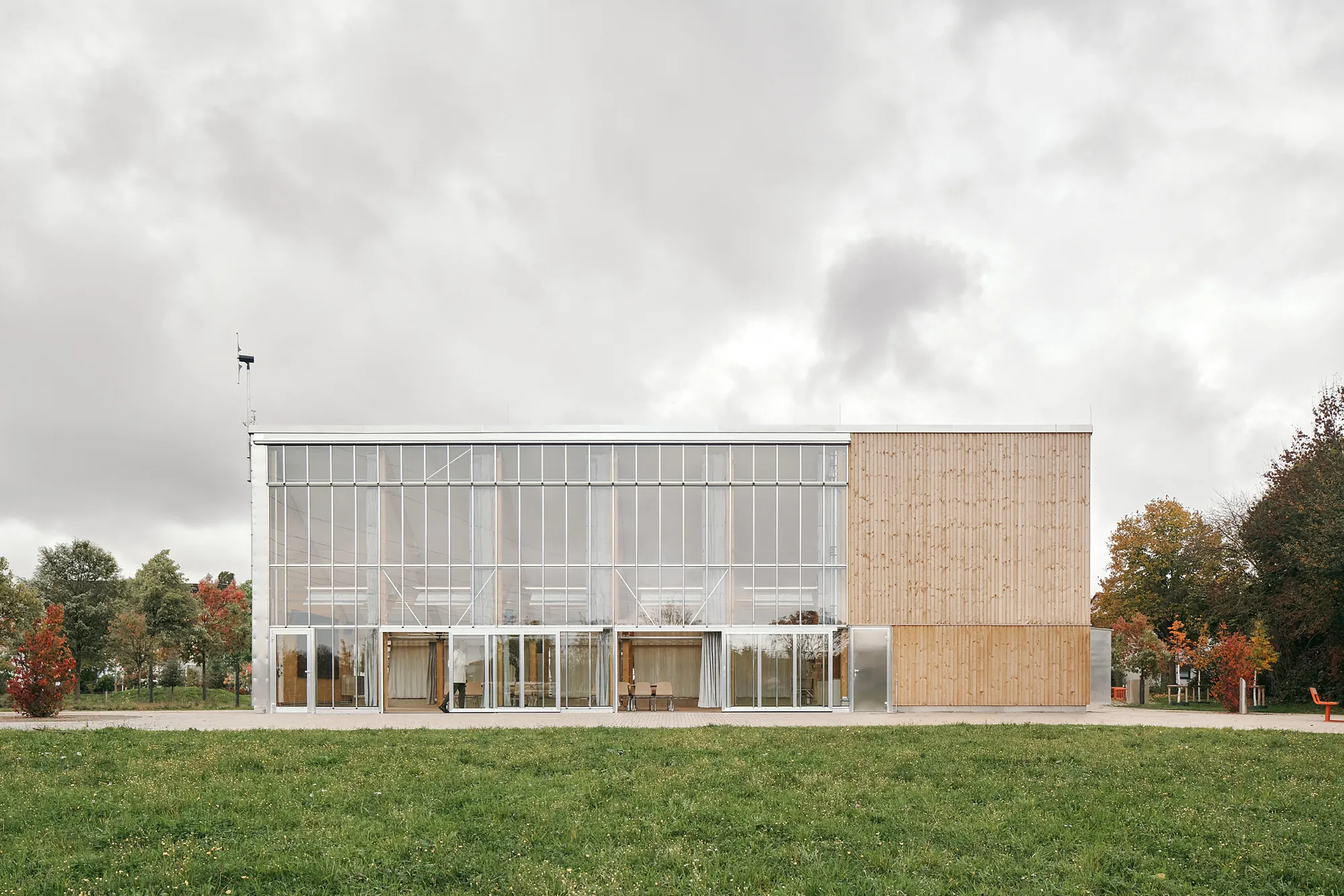
House of the Seasons By New Architekten + Jutta Albus Architektur
House of the Seasons is a climate-responsive pavilion using passive design, timber construction, and seasonal adaptability to create a sustainable community space.


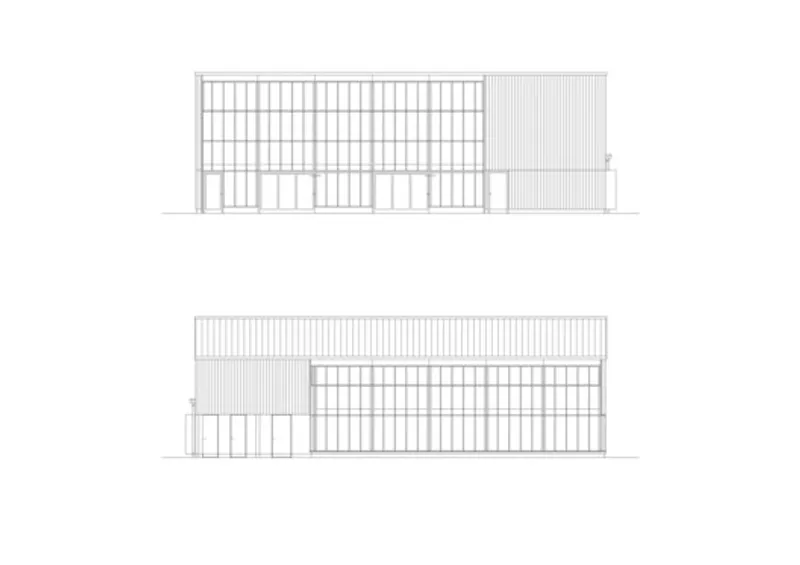
The House of the Seasons in Schwerte, Germany, designed by New Architekten in collaboration with Jutta Albus Architektur, stands as a compelling example of climate-responsive architecture and sustainable public design. Conceived as part of the Climate Garden for the International Garden Exhibition (IGA) Ruhr 2027, this pavilion redefines how buildings can interact with their environment through simplicity, adaptability, and ecological intelligence.
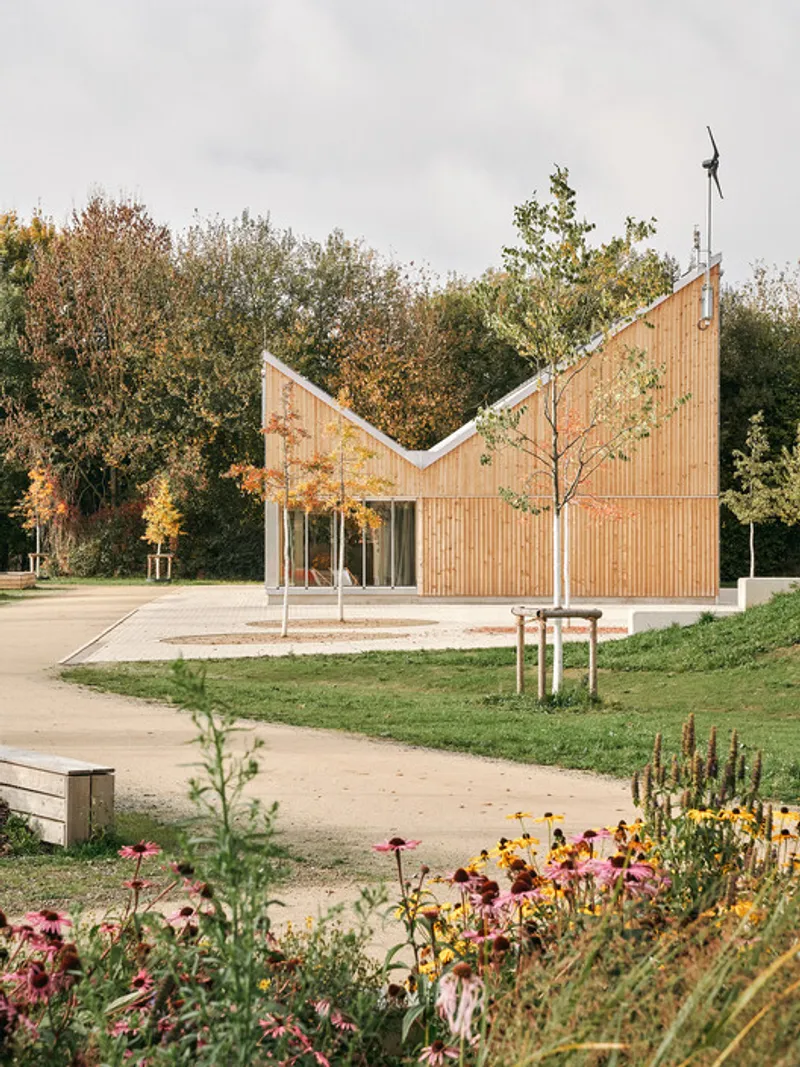
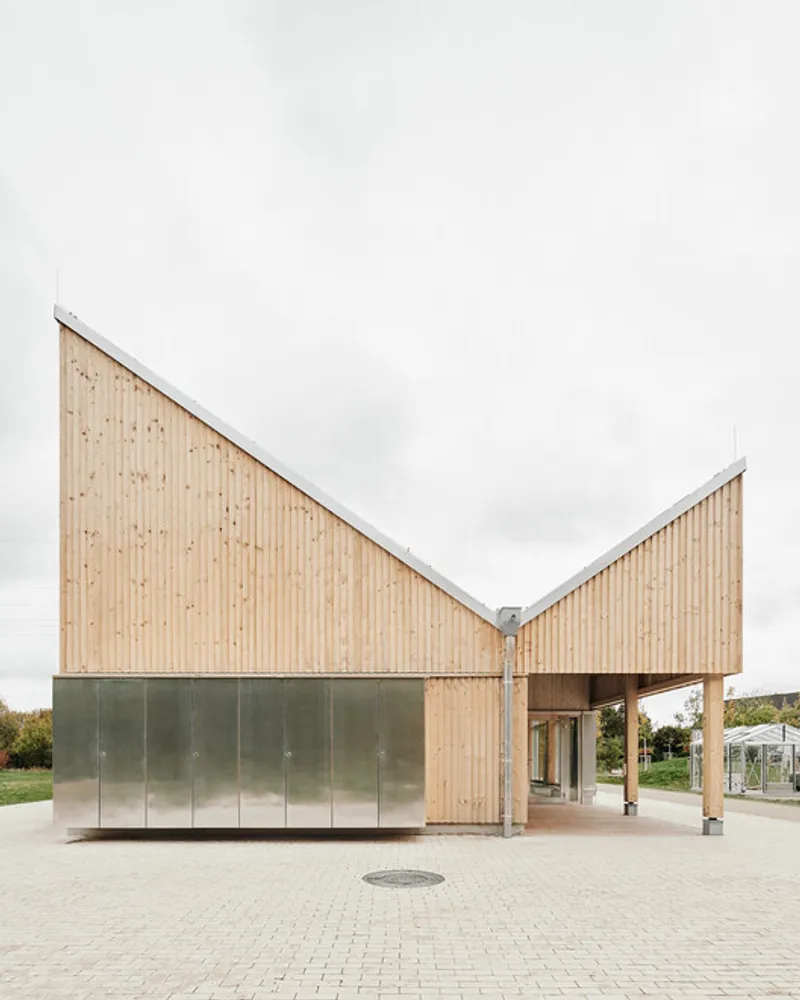
Spanning 235 square meters, the project is rooted in the principles of Germany’s “Building Type E” initiative, which promotes reduced technical complexity and resource-conscious construction. Rather than relying on mechanical systems to regulate indoor comfort, the pavilion embraces a passive design strategy—responding dynamically to seasonal changes through orientation, thermal mass, natural ventilation, and daylight optimization.
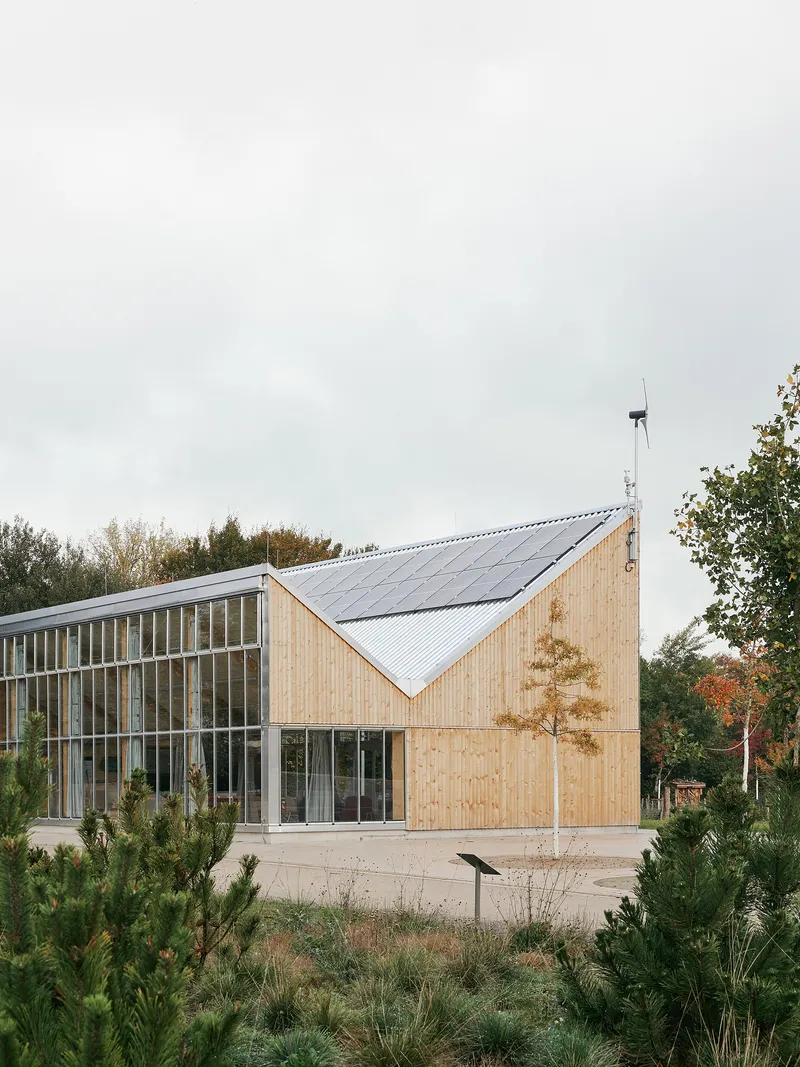
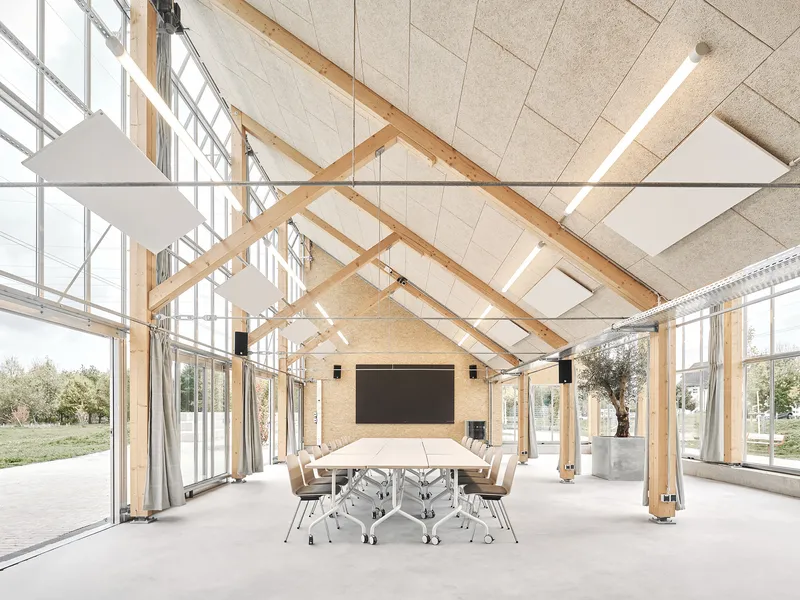
At its core, the House of the Seasons is an architectural experiment that dissolves the boundary between interior and exterior. The building does not isolate users from climate conditions; instead, it fosters a continuous dialogue with its surroundings. This approach creates an ever-evolving spatial experience, where temperature, light, and atmosphere shift naturally throughout the year.
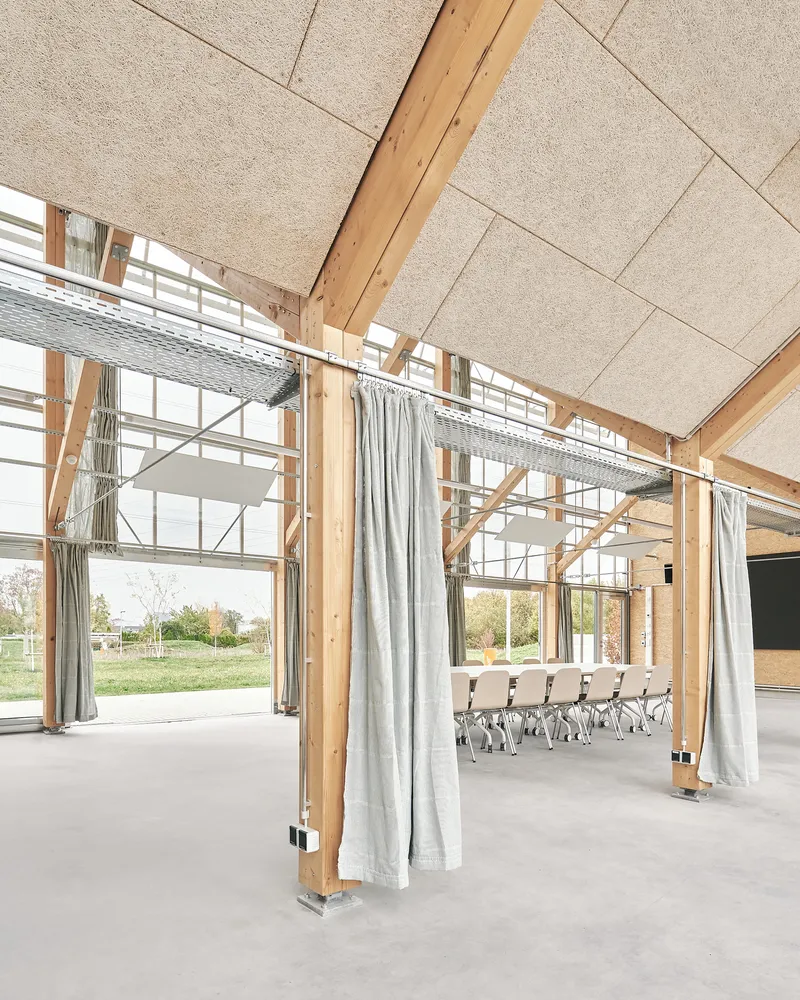
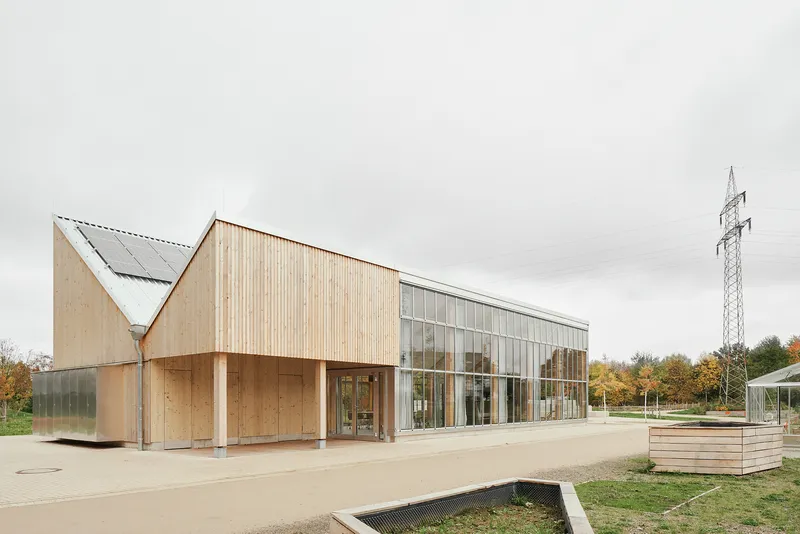
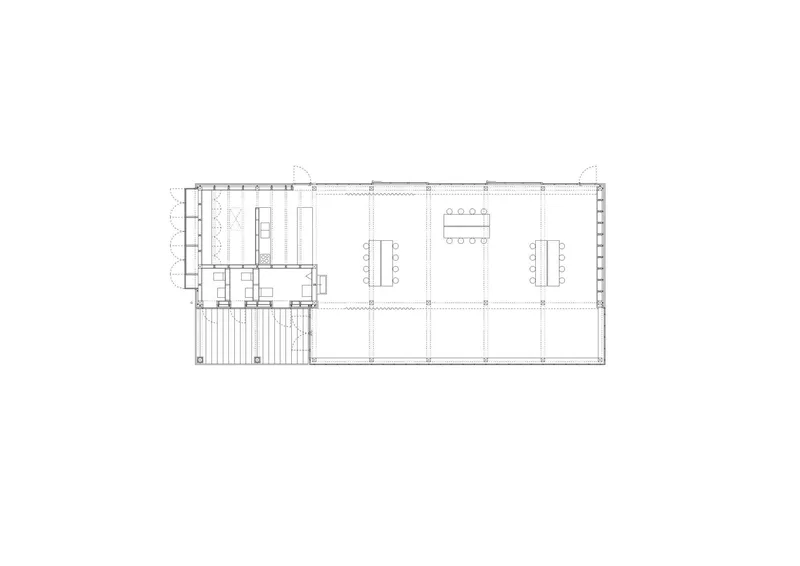
Functionally, the pavilion serves as a flexible public space designed for learning, gathering, and community engagement. In summer, it acts as a shaded educational venue within the garden, offering relief from heat while maintaining openness to the landscape. During winter, it transforms into a sheltered market hall or event space, demonstrating its adaptability across seasons and uses.
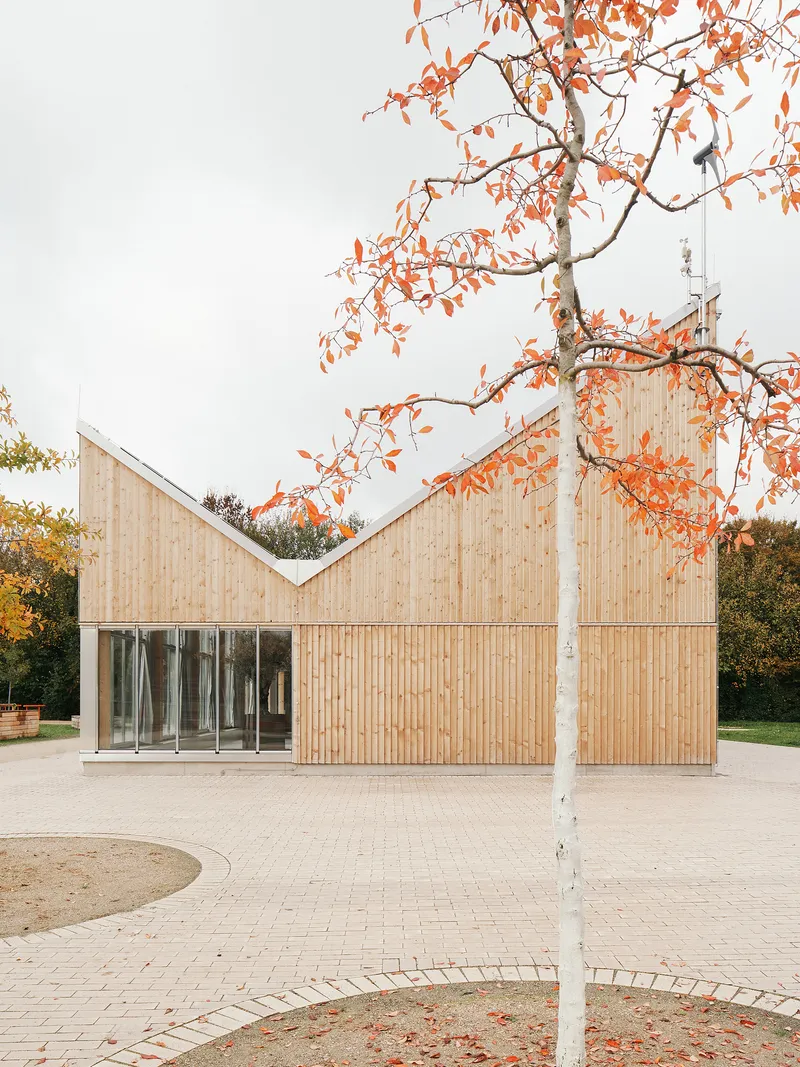
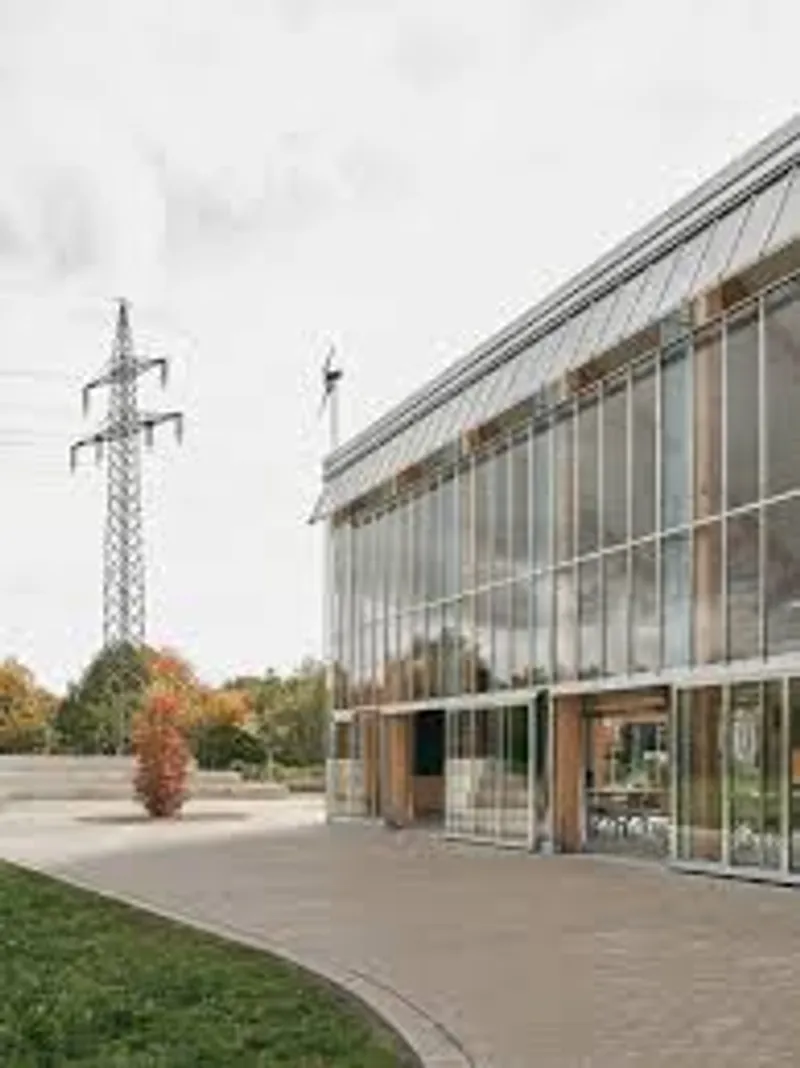
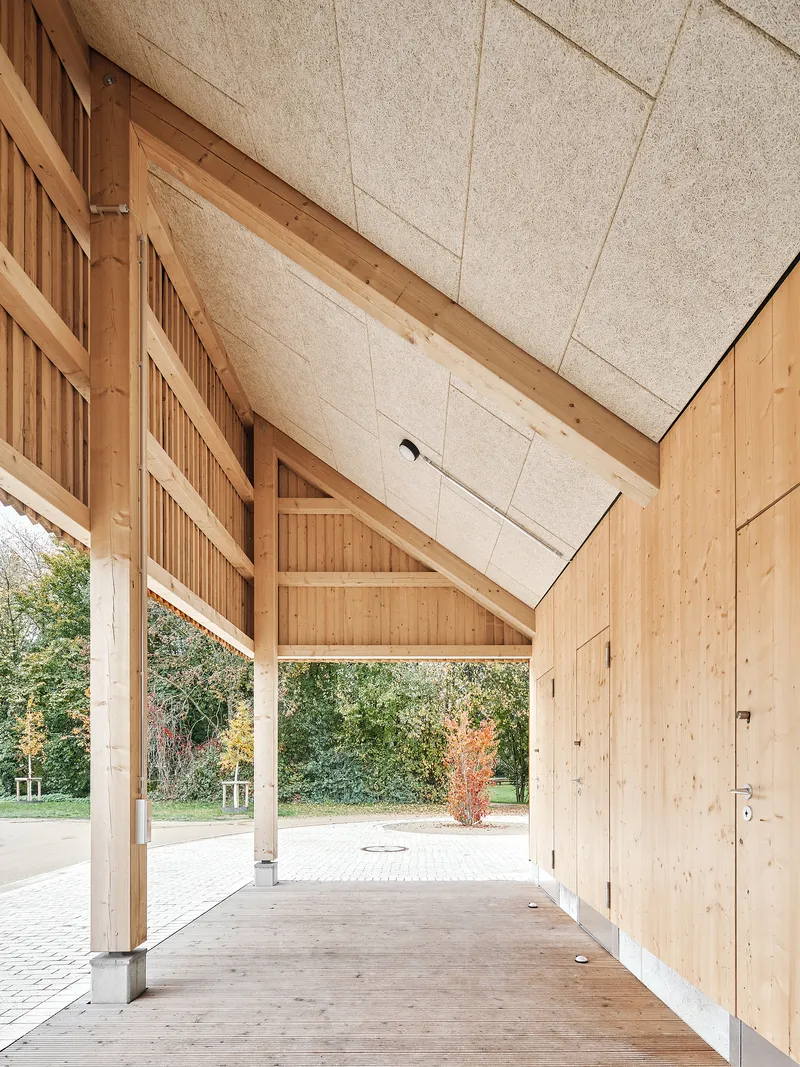
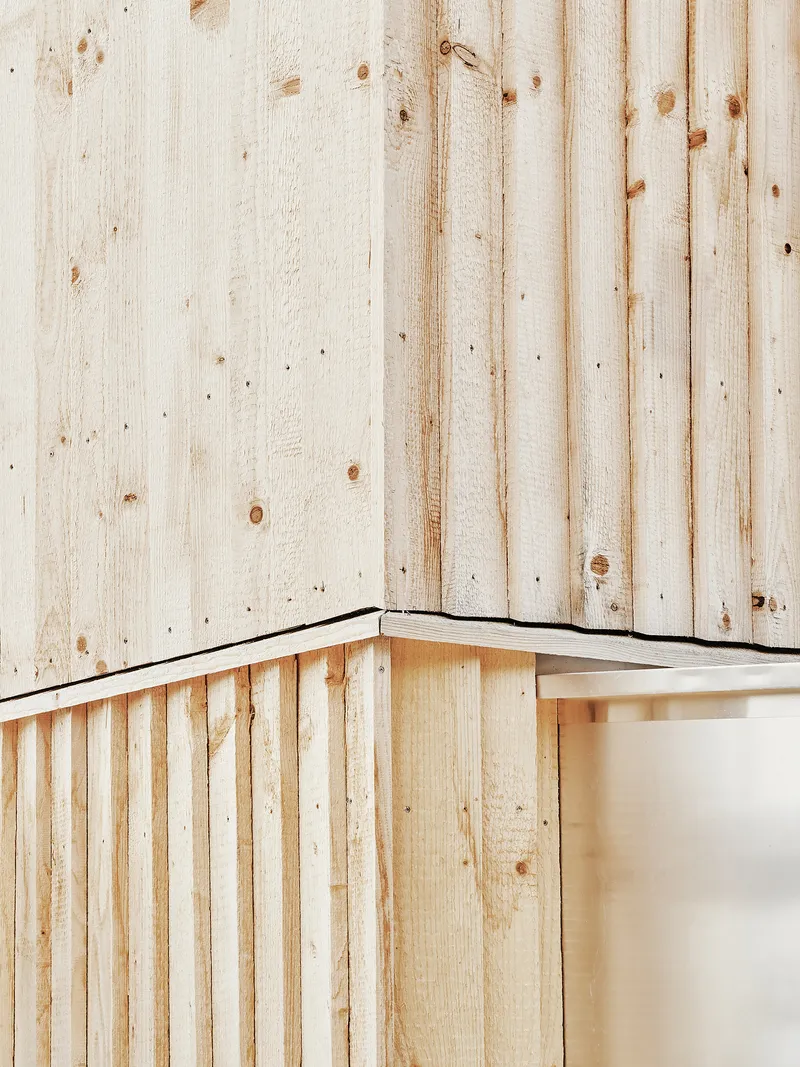
Materiality plays a significant role in expressing the project’s sustainable ethos. The structure is built primarily from locally sourced timber, including wood affected by bark beetle infestation—an intentional choice that addresses ecological challenges while reducing waste. Untreated solid wood defines the structural framework, while all materials are left in their natural state to age gracefully over time, developing a visible patina that reflects environmental exposure.
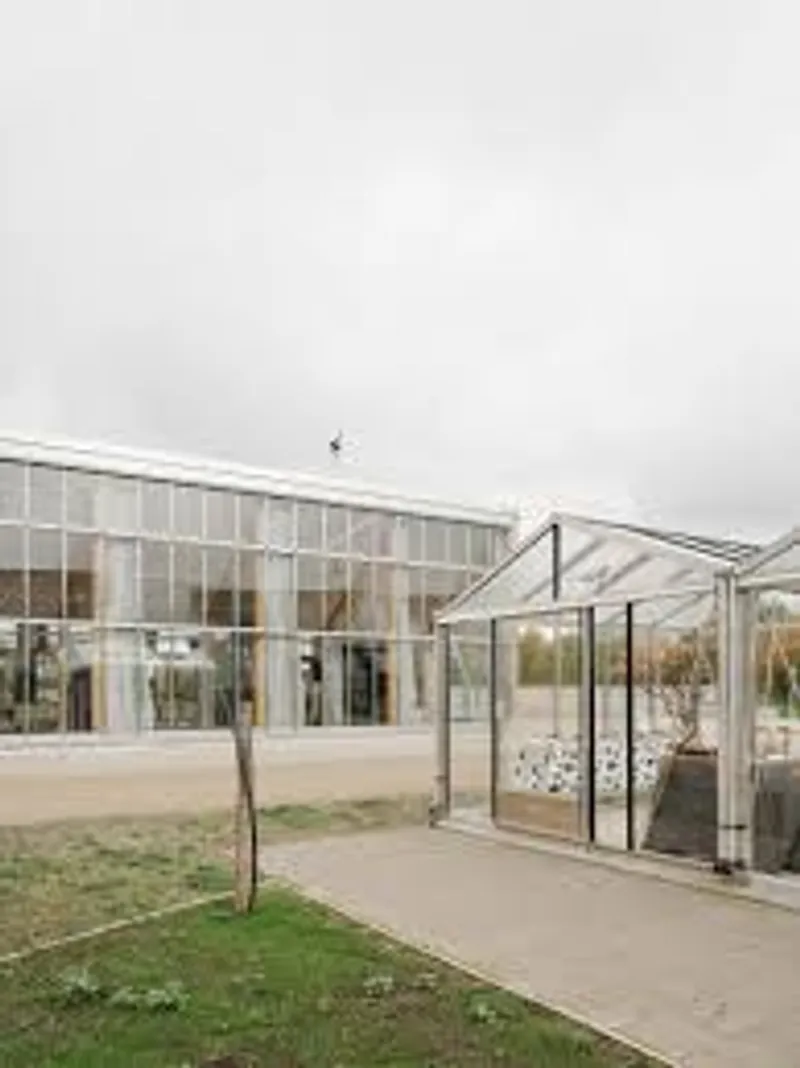
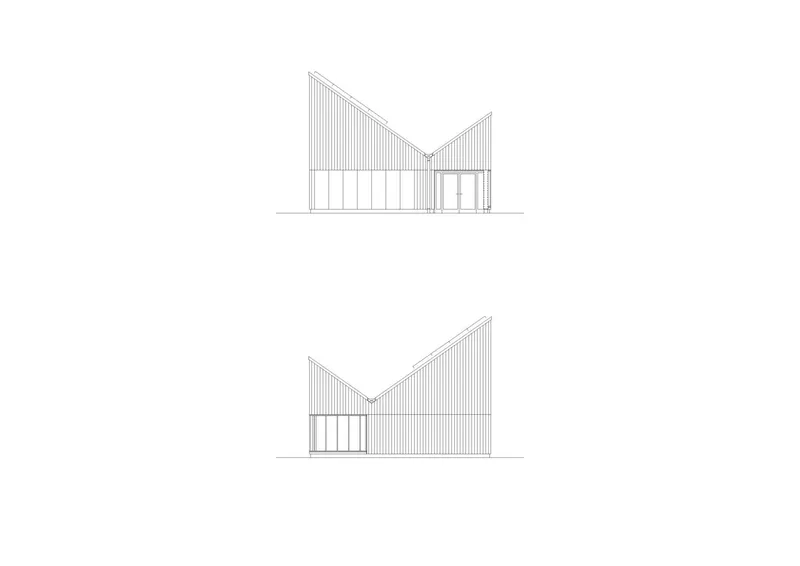
The façade system combines timber with greenhouse-inspired glazing, allowing for maximum transparency and connection to the surrounding Climate Garden. Large sliding glass doors open the pavilion entirely, enhancing cross-ventilation and blurring the threshold between indoor and outdoor space. This permeability reinforces the building’s identity as a seasonal, responsive environment rather than a static enclosure.
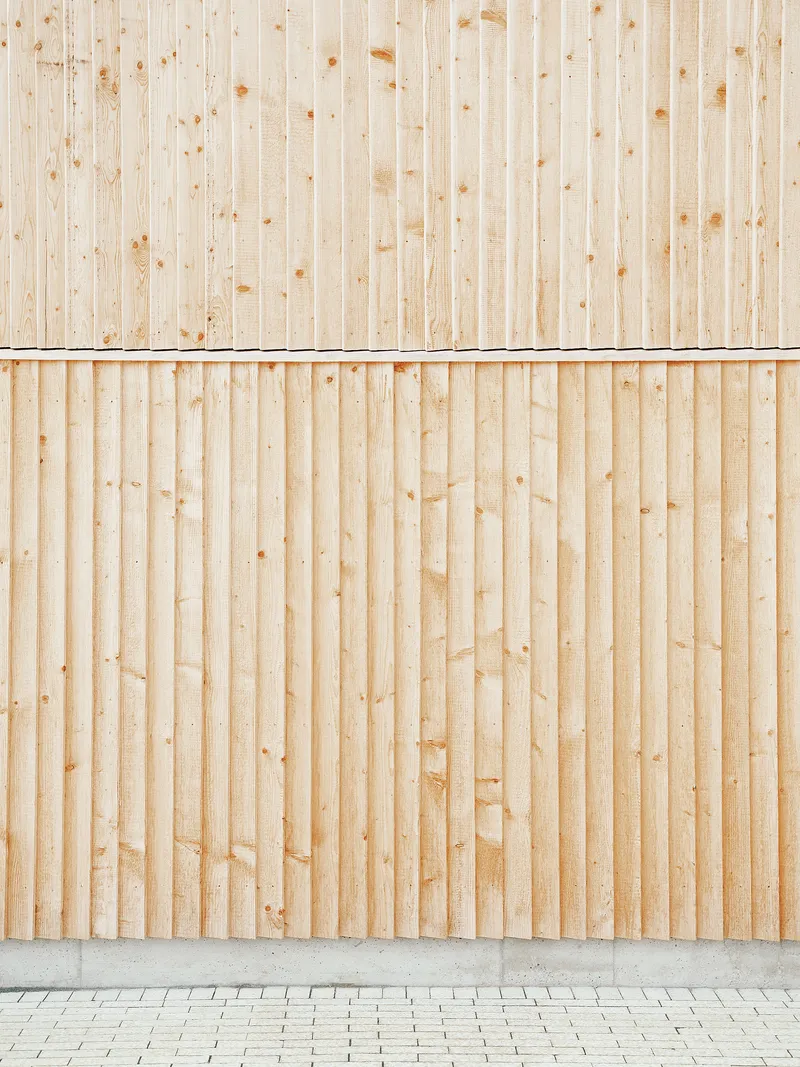
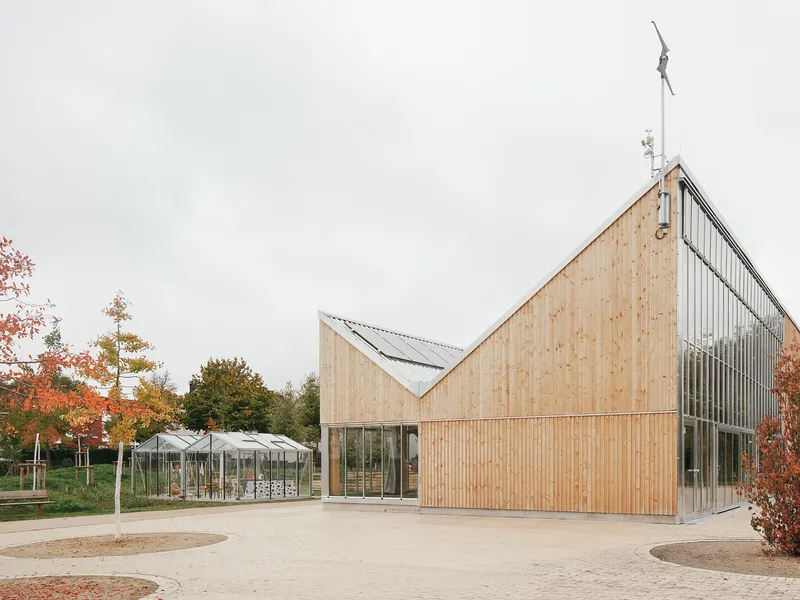
Construction techniques emphasize efficiency and sustainability. Prefabricated timber elements for walls and roof structures reduce construction time and material waste. Exposed building services highlight the project’s honest and minimal approach, while integrated systems such as rainwater collection support irrigation and non-potable water use. A cooperatively managed photovoltaic system further contributes to renewable energy generation, aligning the project with contemporary environmental standards.
Beyond its technical strategies, the House of the Seasons offers a broader vision for future public architecture. It demonstrates how buildings can achieve high spatial and experiential quality without excessive reliance on technology. By prioritizing sufficiency, resilience, and adaptability, the project challenges conventional expectations of comfort and encourages users to reconnect with natural rhythms.
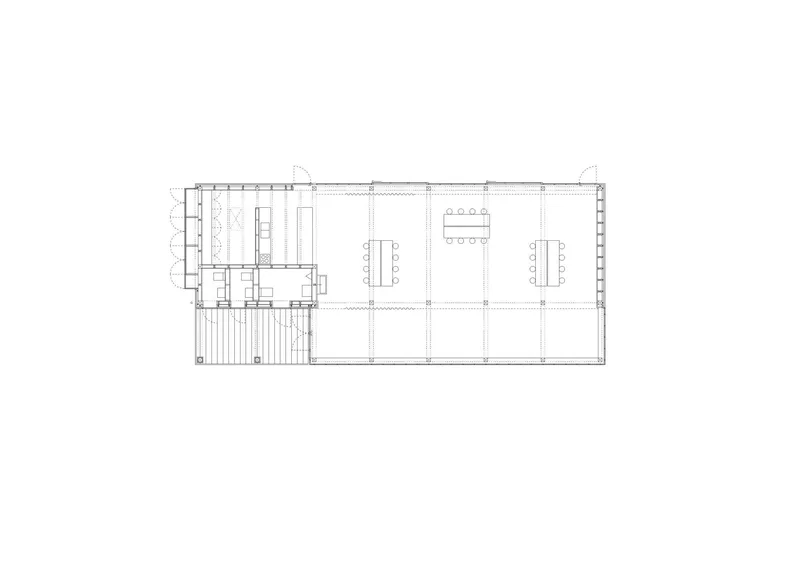
Ultimately, the pavilion is more than a functional structure—it is a living environment that evolves with time, weather, and human activity. As a central element of the Climate Garden in Schwerte, it becomes a place of exchange, education, and reflection, showcasing how architecture can harmonize with nature while fostering community interaction.
All the photographs are works of
Thilo Rohländer




Popular Articles
Popular articles from the community


Play: Fragments of Their World
Familiar architecture becomes modular playground design, creating safe spaces where displaced children can learn, connect, imagine and play.

Lunar Spiral: Space Architecture Shaped by the Mathematics of the Universe
Lunar Spiral reimagines space architecture through Fibonacci geometry, lunar regolith, levitating habitats, and self-sustaining Moon living.

Riyadh For All: Intergenerational Urban Design for Active Aging in Rabat
Riyadh For All reimagines urban design in Rabat with intergenerational co-living, adaptive courtyards, and Moroccan cultural exchange today.

The Earth Pod: 3D Printed Homes for Resilient Refugee Communities
The Earth Pod reimagines refugee housing through 3D printed homes made from clay, combining resilience, self-sufficiency, and rapid shelter.


Similar Reads
You might also enjoy these articles


FAMM Arquitectura Organizes Ten Villas Around Courtyards and Jungle in Nosara, Costa Rica
El Molino pairs two elongated volumes with deep overhangs and timber louvers to build a compact coastal community five minutes from the beach.
Oscar Niemeyer's Ibirapuera Park Pavilions Define São Paulo's Cultural Identity in Concrete and Curve
A constellation of modernist volumes set within São Paulo's most important urban park, conceived for the city's 400th anniversary in 1954.
How Henri Picq's 1889 Paris Pavilion Traveled 11,000 Kilometers to Become Santiago's Artequín Museum
A prefabricated iron and glass pavilion built for the Paris Universal Exposition found a second life as a children's art museum in Chile.
Sanjay Puri Architects Wraps a Jaipur Office Tower in Capsule-Shaped Green Buffers
A nine-level climate-responsive workplace near Jaipur Airport uses stacked planter terraces and aluminium screens to fight 40°C heat.


Explore Architecture Competitions
Discover active competitions in this discipline



Challenge to reimagine the Iron Throne


Photograph architecture without architects


Illustrate the lost glory of Angkor Wat - Render Challenge


Bring back Drive In's
Comments (0)
Please login or sign up to add comments
No comments yet. Be the first to comment!