
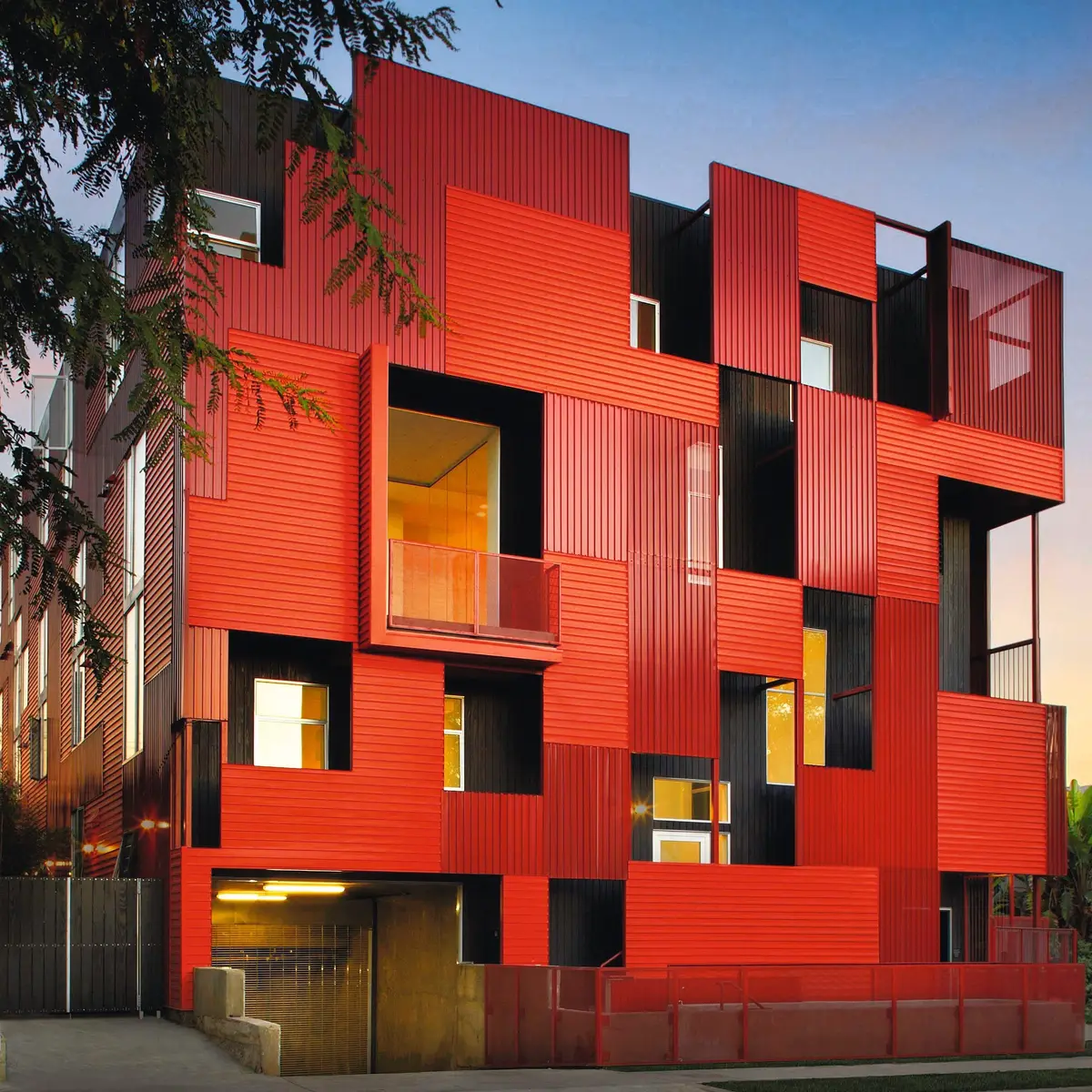
Housing Problems & Objectives
From analyzing the survey data & settlement patterns, the research findings can be sorted into defining specific problems and design objectives.

Problems:
Frequent Need for Expansion: The Harijan people live in extended families. Sometimes
there are three generations living in a small room using partitions. Scenarios like this, which
create inconvenience and lack of privacy, make social structure crumble. But most of the
time another family lives next to them, using a shared wall, and so there's no space to make
room for another living unit even though it's a much-needed necessity.
Limited Access to Amenities: Unlike normal people, the Harijans face stigma due to
their profession as well as the fact that their mere existence in society is stigmatized. They
don't have any land rights or access to amenities. They can't buy necessities from the local
stores due to social exclusion. So, the land government is providing to them in this thesis
is crucial to them.
Lack of Breathing Space: Most of the clusters lack breathing spaces at the household
and neighborhood scale. There is little to no green space for vegetation.
Linear Connections: The clusters are mostly connected in a linear connection by a
veranda. This leaves no space to support day-to-day activities.
Residential Segregation: Residents of the surrounding community do not interact with
the Harijan people. The Harijans are not allowed in their community. They are excluded
from every social or cultural event. The narrow alleys and dense clusters make the outlook
of the community more stagnant.
Lack of Ventilation: There's no scope for ventilation as clusters are developed in an
unplanned manner, one behind another, sharing walls and leaving no scope for ventilation.
The rooms often have no access to sunlight and are stagnant and narrow.
Objectives:
Community Sensitive Planning: The community lacks planned infrastructure
development according to the people's needs and requirements. The design approach has
to respect their settlement pattern and come up with a community-sensitive design
approach.
Participatory Design: The community should be able to adapt and personalize the design
solution as their own. It has to be a cost-effective solution.
Communal integration: The community planning should promote communal
integration and social cohesion to reduce social exclusion of the Harijans.
Adaptability: The design has to have a flexible solution to their frequent need for
expansion. The approach should be sustainable and adapt with time and must ensure cross
ventilation for built forms.


Popular Articles
Popular articles from the community


Jaramillo Van Sluys Arquitectura and Urbanismo Turn a Demolished Registry Lot in Quito into an Orchard Plaza
In Quito's Centro Histórico, a 2,800 m² plaza exposes the San Agustín convent wall and redraws its lost Augustinian orchard in volcanic stone.

GROUP A Strips a 1969 Rotterdam Harbor Headquarters to Its Frame and Wraps It in Timber Louvers
In Rotterdam's M4H harbor district, Ferro Offices reuses a 1969 frame, adds one timber storey and reaches BREEAM-NL Outstanding.

Architekt Andreas Gruber Scatters 23 Dark Timber Chalets Across a South Tyrolean Forest Edge
In Molini di Tures, Amonti Chalets breaks a resort into a hamlet of gabled timber houses, with parking, storage and services pushed into the slope.

U.GA Architects Wraps an Oval Rooftop Pool in Curved Board-Formed Concrete on Busan's Jeollidan-gil
In Busan's Jeonpo-dong, a 454 m² mixed-use block stacks a neighborhood facility, guest rooms and an oval rooftop pool inside spiraling concrete walls.

Similar Reads
You might also enjoy these articles

Yenisei Monitoring Center: A Sun-and-Moon Sphere Anchors a Research Campus on Siberia's Great River
In Krasnoyarsk, shifting square blocks, a glazed central sphere and descending window rhythms turn river science into a public spectacle on the Yenisei.
Andretta Artist's Village: A Node-Based Masterplan That Lets the Hills Write the Plan
A cultural landscape strategy for Palampur's artist colony threads studios, residences and stages along a porous spine shaped by the Dhauladhar terrain.
Street Children Rehabilitation Center: A Brick Campus That Eases Children From Street to Safety
A low-rise courtyard campus where learning streets, uthans and shaded verandahs stage a gradual passage from street into protective, family-scale life.
The NEON Culture: A Field of Pavilions Built for the 24-Hour City
Smaran Alva spreads galleries, stages, clubs and markets across a varied site, treating light, sound and ramped movement as the real building materials.

Explore Housing Competitions
Discover active competitions in this discipline


Challenge to reimagine the Iron Throne

Photograph architecture without architects

Illustrate the lost glory of Angkor Wat - Render Challenge

Design challenge to reuse E-waste
Comments (0)
Please login or sign up to add comments
No comments yet. Be the first to comment!