
Kinder Rain Kindergarten by AACM - Atelier Architettura Chinello Morandi
Vermilion kindergarten inspired by rural Casone Veneto, forming village-like classrooms with courtyards, warm materials, and luminous central agorà.


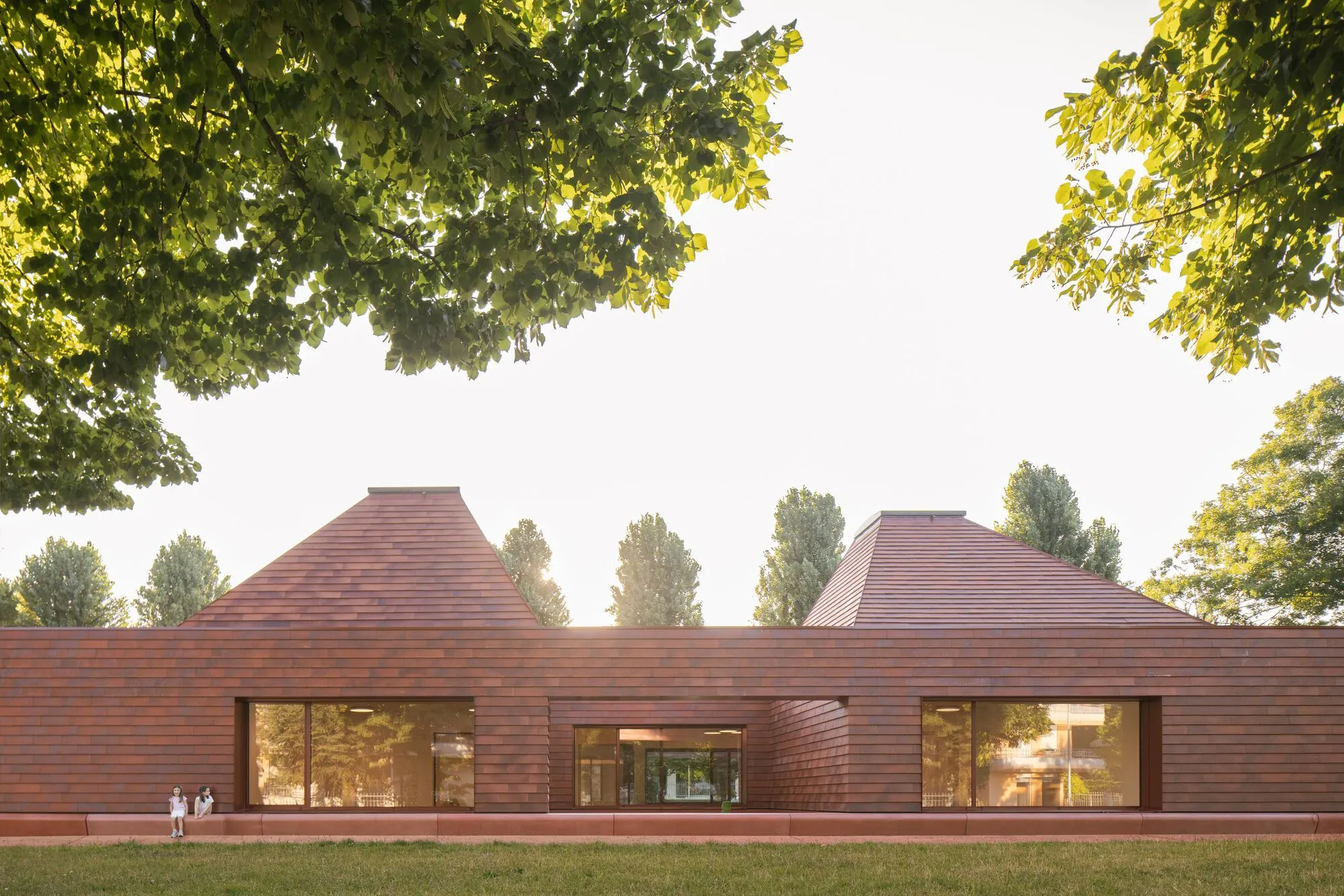
Kinder Rain Kindergarten is a visionary educational architecture project that redefines early childhood learning environments in Italy. Designed by AACM, Atelier Architettura Chinello Morandi, this 672-square-meter kindergarten in Piove di Sacco embodies a poetic dialogue between vernacular heritage and contemporary pedagogy.
Conceived as a “primordial village for children,” the project blends Italian rural architecture, sustainable school design, and innovative spatial planning to create a nurturing, imaginative, and safe learning environment. The architecture is both protective and dreamlike, a space where curiosity and creativity are encouraged through thoughtful design.
Inspired by the Casone Veneto: Tradition Reinterpreted
The kindergarten draws inspiration from the historic Casone Veneto, traditional rural dwellings of farmers and fishermen characterized by steep thatched roofs. Rather than replicating the archetype, AACM reinterprets it through a contemporary architectural language.
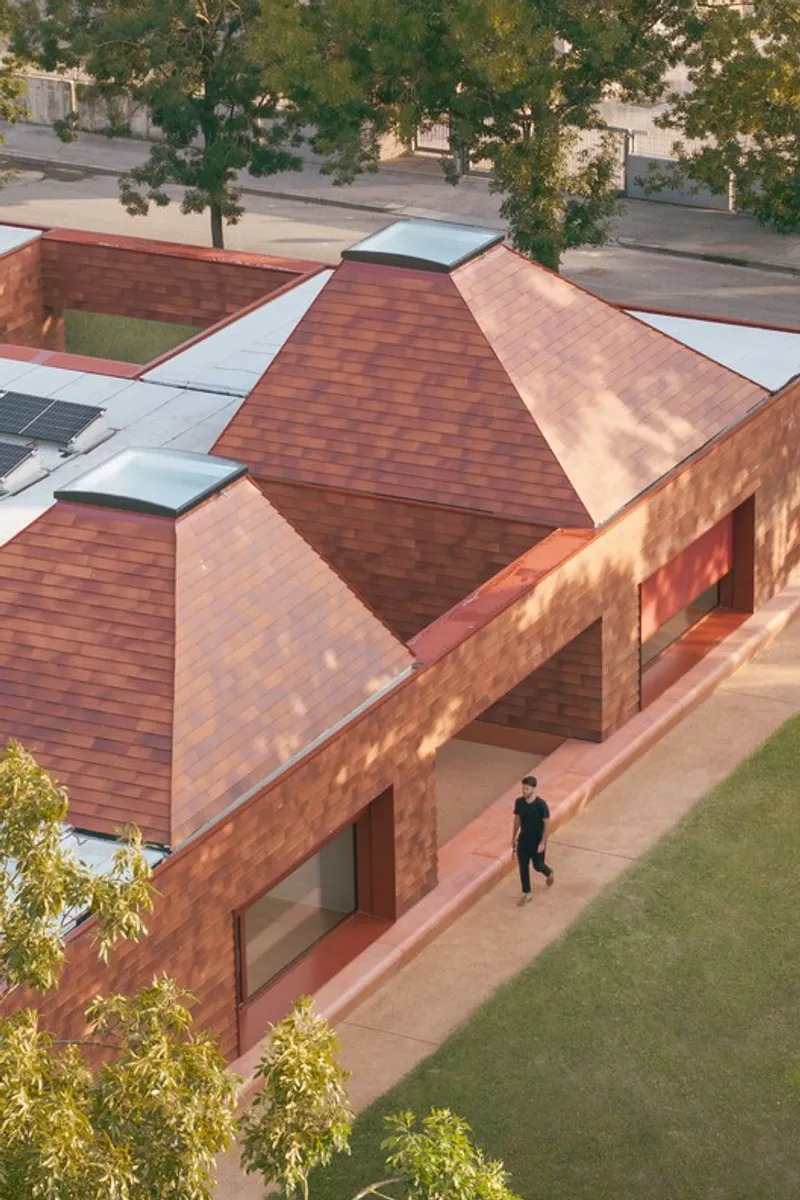
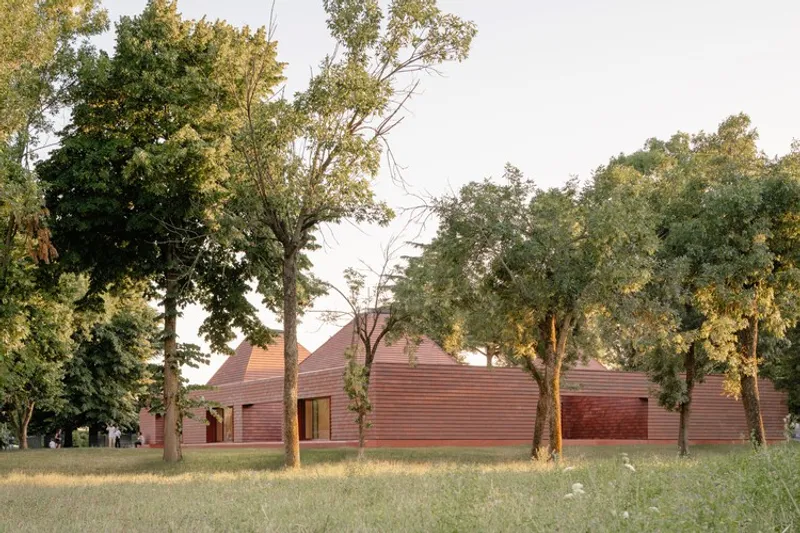
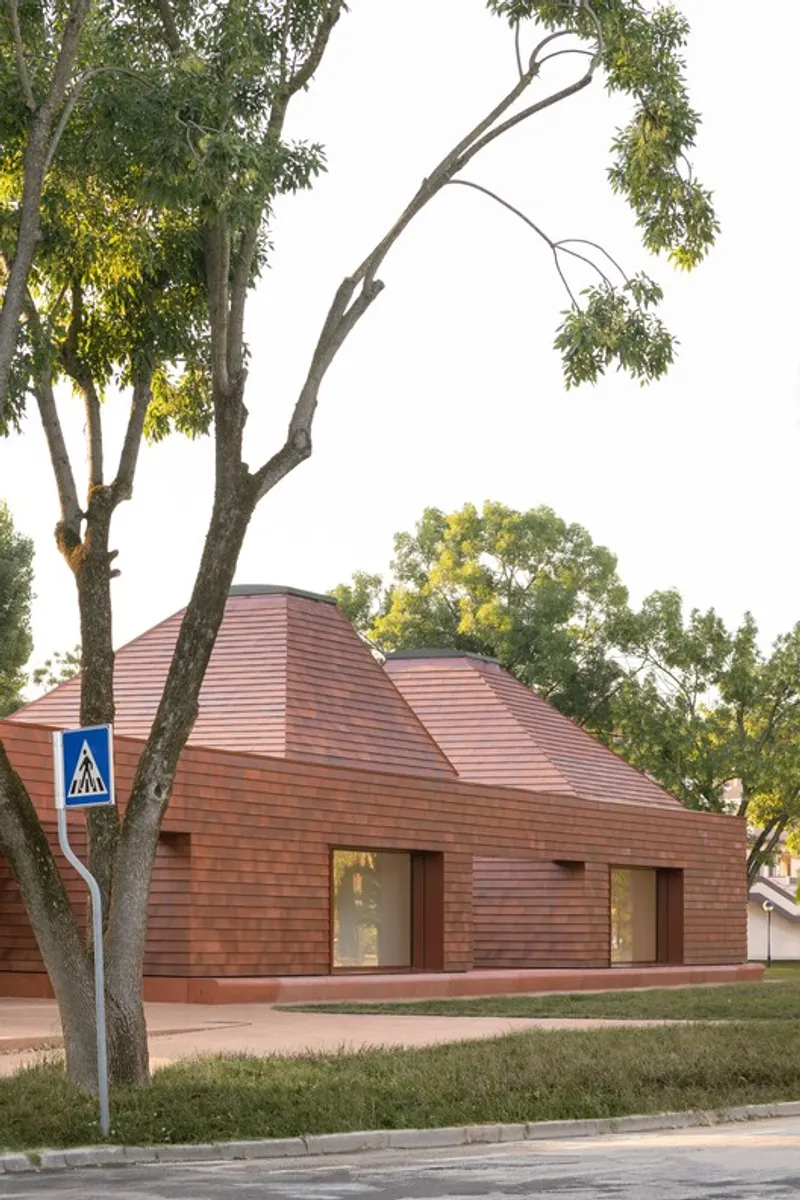
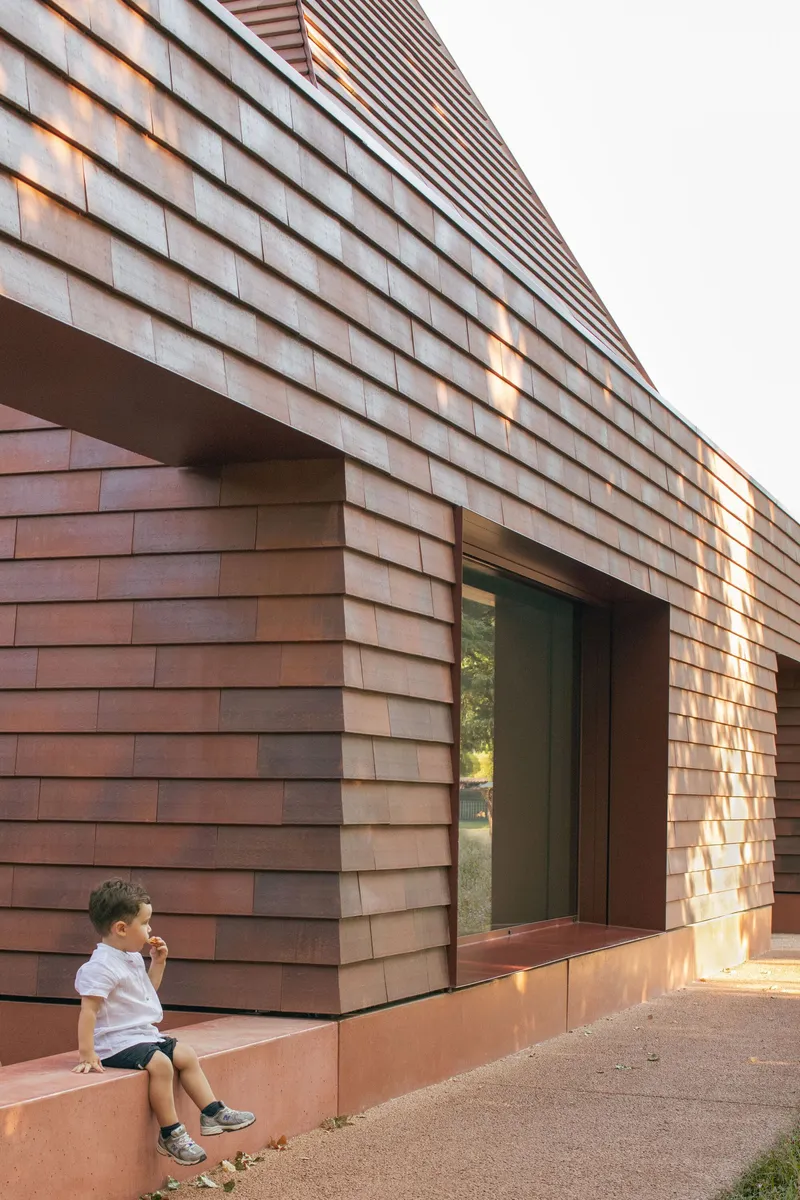
Three pyramidal classroom volumes rise as sculptural forms, wrapped in a continuous terracotta skin. This material choice evokes the warmth of clay construction and pitched tile roofs typical of Veneto’s architectural identity. The vermilion façade stands boldly among greenery, creating a vibrant yet contextual presence within the landscape.
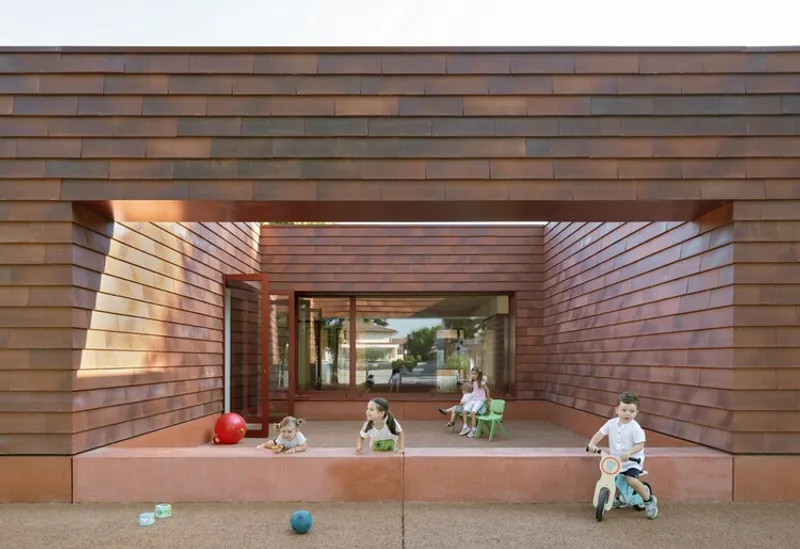
At ground level, a softly pigmented concrete bench merges seamlessly with the terrain. This element acts as urban furniture, a playful threshold, and a symbolic transition between indoor and outdoor learning spaces, encouraging interaction between structured education and spontaneous exploration.

A Kindergarten Designed as a Village
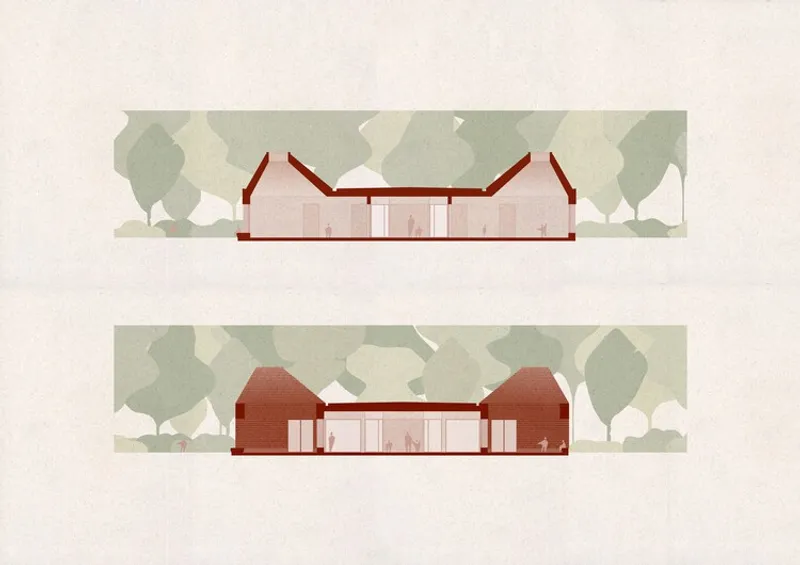
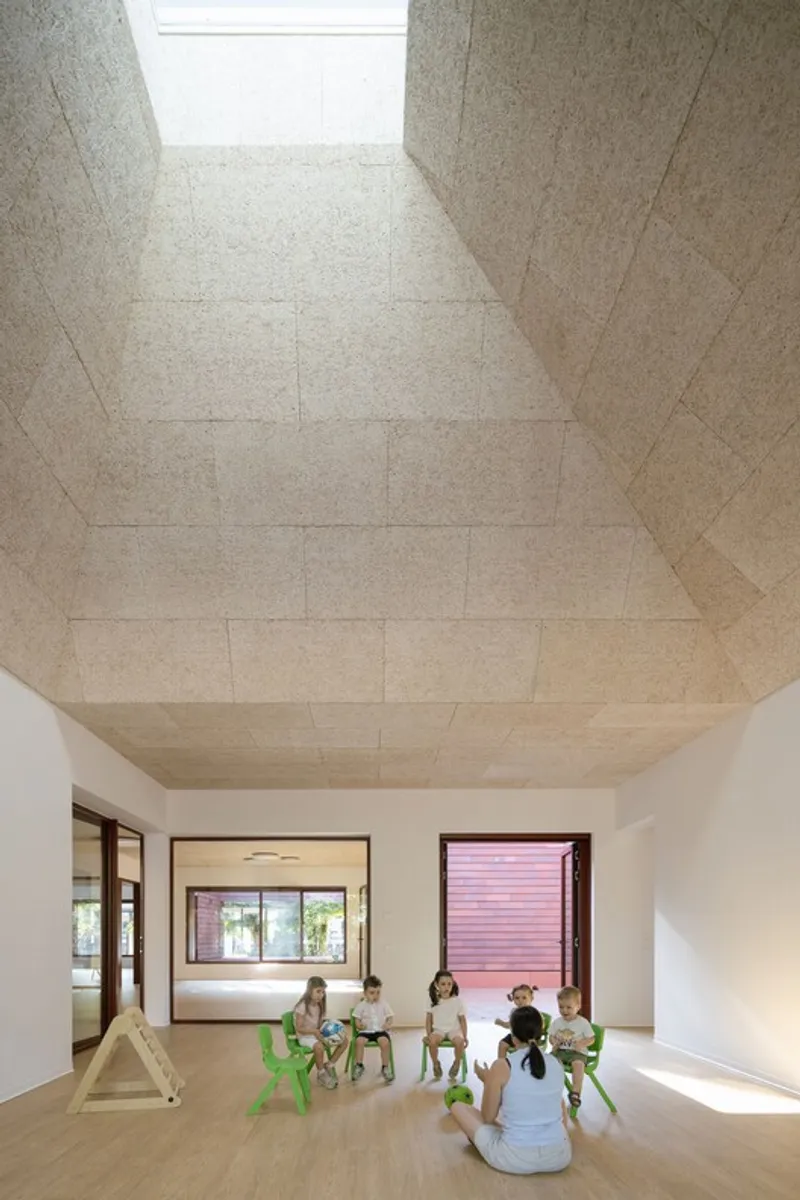
Kinder Rain is imagined as a small architectural village. The classrooms are arranged around a central shared agorà: a communal space dedicated to play, informal learning, and social interaction. Like houses surrounding a village square, the volumes face inward, strengthening relationships between children, teachers, and environment.
This spatial configuration enhances visibility and connectivity. From any classroom, the gaze extends outward toward private patios and gardens, and inward toward shared communal areas. The design fosters a continuous dialogue between interior and exterior spaces, a key principle in modern kindergarten architecture.
Each classroom opens into its own protected outdoor learning courtyard. These patios serve as extensions of the teaching space, reinforcing the importance of nature-based education and experiential learning.

Light, Materiality, and Atmosphere
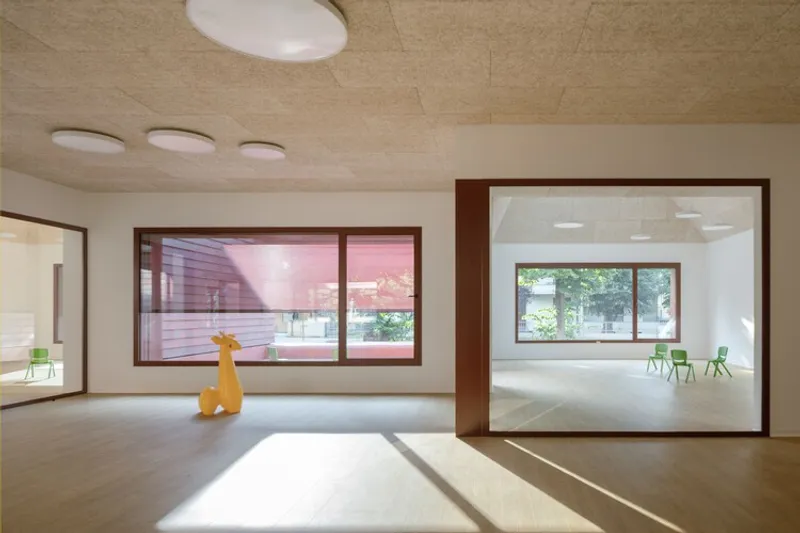
Natural light plays a central role in shaping the emotional quality of the space. A zenithal skylight crowns the central agorà, allowing sunlight to trace the passing hours like a sundial. As light grazes the textured wooden ceiling, it recalls the organic memory of thatched rural roofs, a subtle yet powerful architectural reference.
Inside, exposed brick and warm wood finishes create a tactile and welcoming environment. The material palette emphasizes durability, sustainability, and sensory richness, essential qualities in early childhood educational design.
The building’s apparent solidity conceals a sophisticated interplay of solids and voids. Courtyards, skylights, and openings carefully frame views of greenery, reinforcing the concept of the kindergarten as a “constructed landscape.”
Contemporary Educational Architecture in Italy
Kinder Rain Kindergarten stands as a model for innovative school design in Italy. It demonstrates how architecture can support pedagogical values through:
- Flexible learning environments
- Strong indoor-outdoor relationships
- Community-centered spatial organization
- Sustainable materials and construction
- Emotional and imaginative spatial experiences
By synthesizing rural memory with contemporary design strategies, AACM creates an architecture that is both rooted in place and forward-looking. The project transforms the kindergarten into more than a building, it becomes an imaginative village capable of nurturing creativity and wonder in its youngest inhabitants.

All the photographs are works of
Alex Shoots Buildings




Popular Articles
Popular articles from the community


Riyadh For All: Intergenerational Urban Design for Active Aging in Rabat
Riyadh For All reimagines urban design in Rabat with intergenerational co-living, adaptive courtyards, and Moroccan cultural exchange today.

The Ocean Hive: Sustainable Architecture for a Self-Sufficient Civilization at Sea
The Ocean Hive imagines sustainable architecture at sea, where modular habitats, algae, wave power and ocean waste sustain a growing colony.

The Earth Pod: 3D Printed Homes for Resilient Refugee Communities
The Earth Pod reimagines refugee housing through 3D printed homes made from clay, combining resilience, self-sufficiency, and rapid shelter.

Co-life: Sustainable Architecture for Age-Friendly Community Living
Co-life reimagines sustainable architecture for seniors through courtyards, rammed earth, shared gardens, and spaces designed for belonging.


Similar Reads
You might also enjoy these articles

FAMM Arquitectura Organizes Ten Villas Around Courtyards and Jungle in Nosara, Costa Rica
El Molino pairs two elongated volumes with deep overhangs and timber louvers to build a compact coastal community five minutes from the beach.
Oscar Niemeyer's Ibirapuera Park Pavilions Define São Paulo's Cultural Identity in Concrete and Curve
A constellation of modernist volumes set within São Paulo's most important urban park, conceived for the city's 400th anniversary in 1954.
How Henri Picq's 1889 Paris Pavilion Traveled 11,000 Kilometers to Become Santiago's Artequín Museum
A prefabricated iron and glass pavilion built for the Paris Universal Exposition found a second life as a children's art museum in Chile.
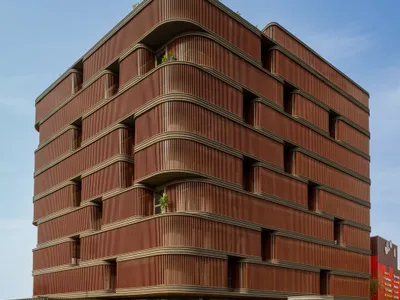
Sanjay Puri Architects Wraps a Jaipur Office Tower in Capsule-Shaped Green Buffers
A nine-level climate-responsive workplace near Jaipur Airport uses stacked planter terraces and aluminium screens to fight 40°C heat.


Explore Architecture Competitions
Discover active competitions in this discipline



Challenge to design public laboratory


Challenge to reimagine the Iron Throne


Photograph architecture without architects


Illustrate the lost glory of Angkor Wat - Render Challenge
Comments (0)
Please login or sign up to add comments
No comments yet. Be the first to comment!