

KING ONE Community Center by E+UV – Revitalizing Zhuhai’s Urban Heart Through Human-Centered Design
KING ONE Community Center transforms isolated buildings into a vibrant urban hub, uniting community, landscape, and daily life through inclusive design.


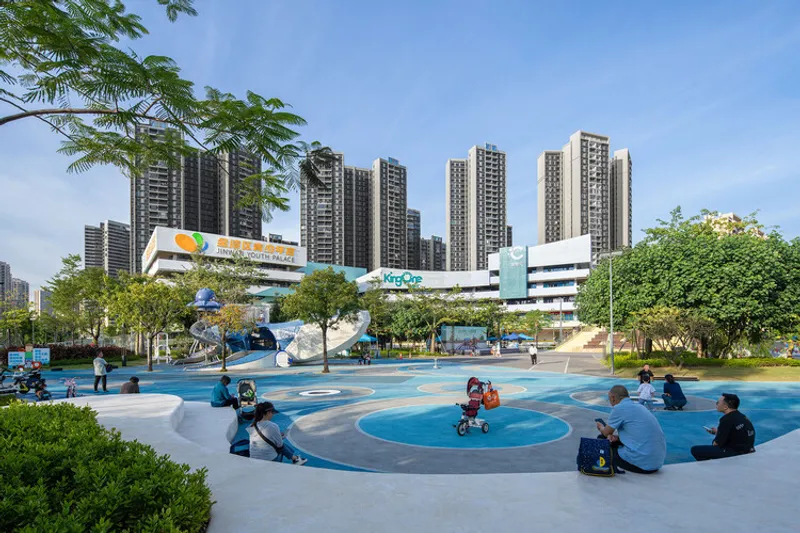
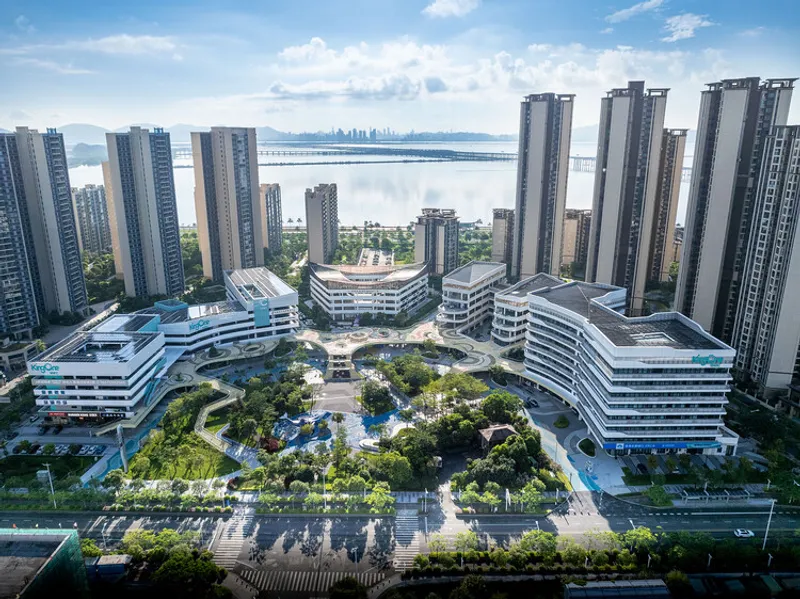
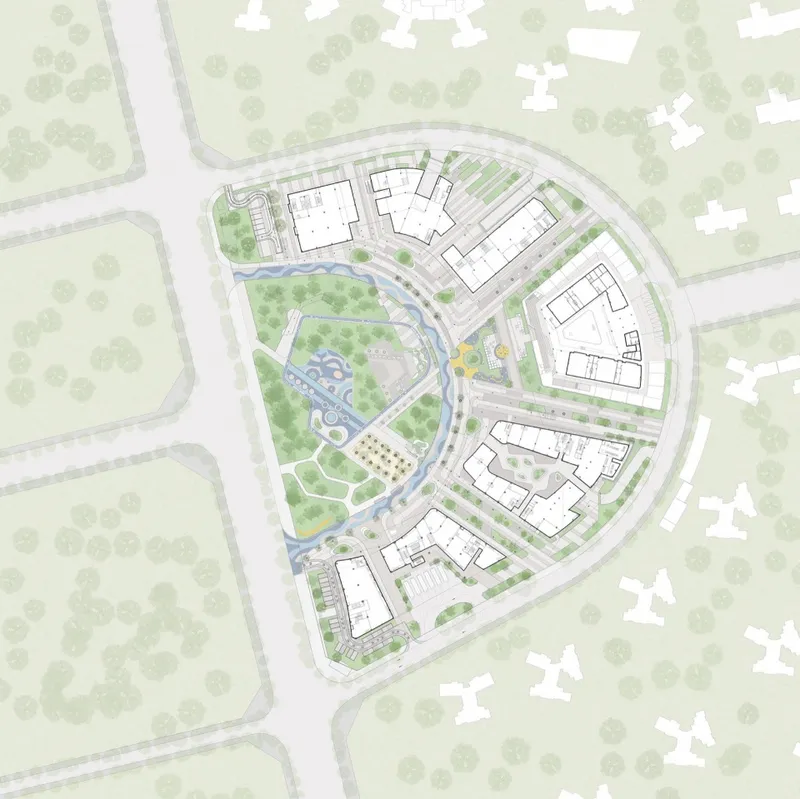
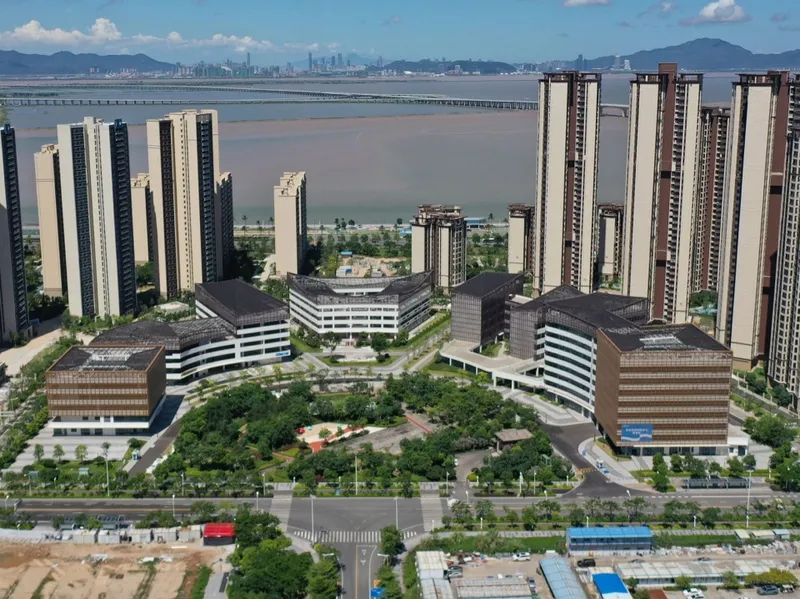
Located in the rapidly developing Jinwan Aviation New City of Zhuhai, China, the KING ONE Community Center by E+UV Architects redefines how urban public spaces can evolve with limited resources while achieving maximum social and spatial impact. Envisioned as a vibrant urban living room, the 56,589 m² project transforms four isolated, underperforming buildings into a dynamic, interconnected community hub centered around a municipal green park — a gesture that seamlessly integrates architecture, landscape, and community life.
Reimagining the Role of the Community Center
Originally designed as standalone service buildings, the site lacked connection, openness, and synergy. E+UV’s key insight was that revitalizing the area required more than façade renovation—it demanded a rethinking of the community’s spatial spirit. By turning the existing greenbelt into the heart of the design, the architects repositioned the project as a place of gathering, movement, and belonging.
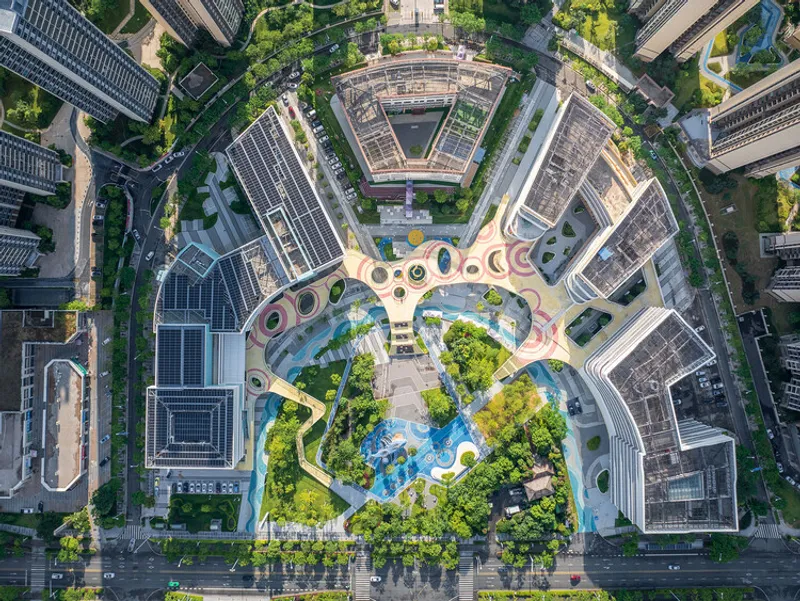
A sweeping second-level platform now unites the four buildings into one cohesive structure. This elevated circulation system creates visual and functional unity, while inviting residents to flow seamlessly between spaces. Beneath, shaded areas provide refuge from Zhuhai’s humid subtropical climate, transforming previously neglected sidewalks into comfortable social zones.
A Multi-Layered Social Landscape
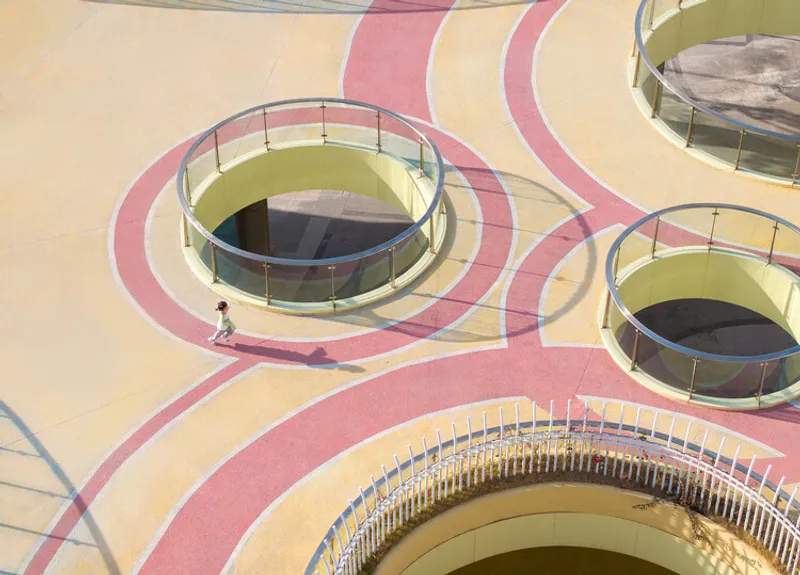
The new structure encourages community interaction on multiple levels. The ground level serves as a shaded public promenade, featuring circular cutouts that allow sunlight, trees, and playful elements—such as slides and tree pits—to animate the space. Children play freely while parents and seniors gather, fostering spontaneous social encounters.
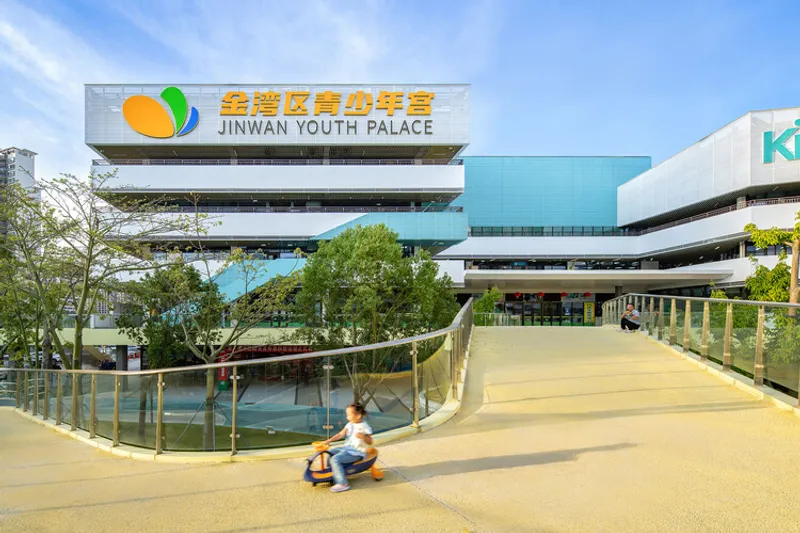
A gently curving ramp and stair system lead to the second-floor platform, where residents can enjoy breezes and views over the park. This upper level houses a fresh food market, community stage, and event spaces, designed for day-to-night activity. The elevated design not only enhances accessibility but also doubles the usable space for community gatherings, performances, and local markets.
At night, the platform and park transform into a lively night market, illuminated by soft lighting and filled with the aroma of local cuisine — symbolizing a renewed urban rhythm where architecture and life coexist harmoniously.
Adaptive Design Through Color and Economy
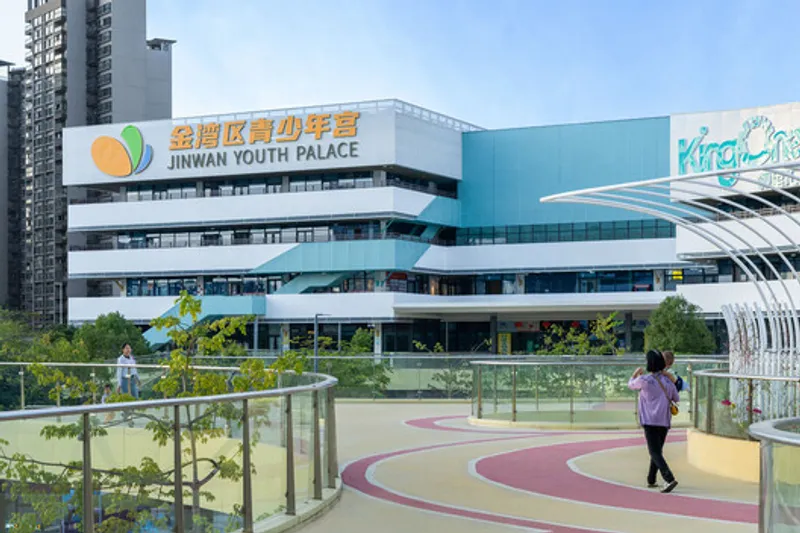
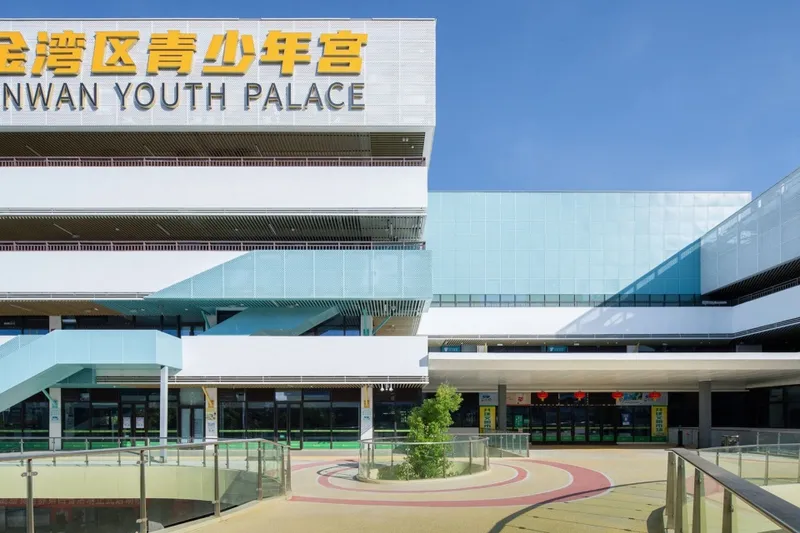
Working with a strictly limited budget, E+UV focused on strategic, low-cost interventions with high visual and emotional impact. Instead of demolishing or heavily reconstructing, they rejuvenated the existing structures with a bold color strategy. Each building received a distinct color theme reflecting its function — from youth and senior activity centers to government service offices and retail spaces — turning the facades into a vivid reflection of the community’s diversity.
Simple, clean horizontal white aluminum bands replaced outdated panels, refreshing the overall identity. The Youth Palace, with its new wraparound corridor and spiral staircases, adds movement and joy to the architecture — its animated façade now a lively stage for everyday life.
Sustainability Through Preservation and Inclusion
The design is rooted in environmental preservation and social inclusion. Not a single tree was removed; instead, the existing green canopy was integrated into the platform’s circular openings, merging architecture with nature. The under-canopy playground and performance stage create microclimates of comfort and engagement. The repurposed fire lane, transformed into an ocean-themed pathway, now serves as both circulation and an informal event space, enhancing nighttime activity without additional energy use.
A Living Model of Community Architecture
Since its opening, KING ONE Community Center has hosted nearly 100 public events, establishing itself as one of Zhuhai’s most beloved civic destinations. Residents gather here daily—to play, shop, rest, or celebrate—making it a genuine social landmark born from people’s participation rather than architectural monumentality.
The project exemplifies how low-cost, human-centered urban interventions can reshape entire neighborhoods, proving that meaningful architecture doesn’t require massive budgets—only empathy, creativity, and a deep understanding of place.
“When architects design for people, they cultivate life,” the project team notes. “KING ONE is not just a building—it’s a living, breathing story of its community.”


Popular Articles
Popular articles from the community

Faces of the Soviet Avant-Garde: Turning Moscow's Street Names into an Open-Air Museum
A network of sculptural installations across a Moscow residential district transforms forgotten architect names into spatial encounters with cultural memor
Opera by the Sea Estonia: Three Shells Dissolving Architecture into Tallinn's Coastline
A winning opera house proposal replaces monumental form with interconnected shells that blur the boundary between building, park and Baltic Sea.

Manzana Morphosis: Stretching Barcelona's Grid into a Living Landscape for 2050
A radical reworking of the Eixample manzana turns density into a tool for generous public space, vertical ecology, and environmental performance.
Extended Shell: Retrofitting Kolkata's Balconies as Living Urban Thresholds
A modular retrofit system recovers the social and environmental intelligence of Kolkata's historic verandas for contemporary Park Street residents.

Similar Reads
You might also enjoy these articles


Hodi-Mandai Geram
Project Function: Preservation and revitalization of the Intangible heritage and socio-spatial identity of the Hodi by Housing, Cultural Memory Center, Sacred Grove, landscape, local tourism economy


Olio Towers: A Mid-Rise for Performers That Fuses Housing, Rehearsal, and Stage
Located blocks from Houston's Theater District, this modular tower stacks living units around a central performance atrium.

Oasis: Modular Green Housing Carved into Dhaka's Urban Fabric
A shortlisted Plugin Housing entry reclaims unauthorized settlements in Dhaka with stepped concrete volumes, green roofs, and ventilation-driven design.

Black Hole: A Floating Megastructure for the Post-Physical Era
Emiliano Mazzarotto envisions a spherical, self-scaling arena where e-sports, digital hotels, and holographic stadiums replace traditional public space.

Explore Urban Design Competitions
Discover active competitions in this discipline

Challenge to reimagine the Iron Throne

Photograph architecture without architects

Illustrate the lost glory of Angkor Wat - Render Challenge

Design challenge to reuse E-waste
Comments (0)
Please login or sign up to add comments
No comments yet. Be the first to comment!