
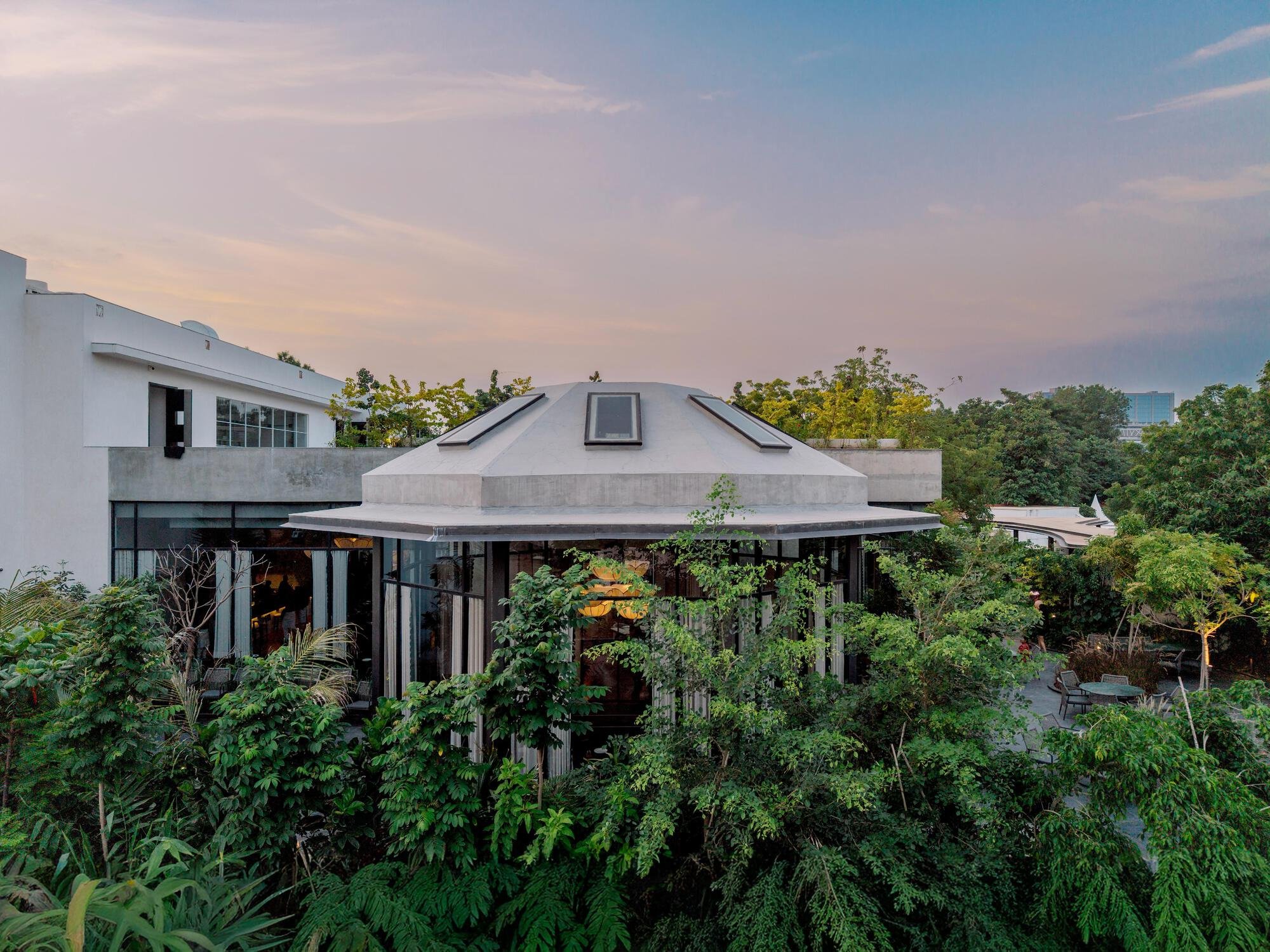
K’s Verandah by Hiren Patel Architects + Design — A Nature-Driven Restaurant Redefining Indoor–Outdoor Living in Ahmedabad
K’s Verandah blends indoor-outdoor architecture with natural materials, creating a calm, courtyard-focused dining experience inspired by the traditional Indian verandah.

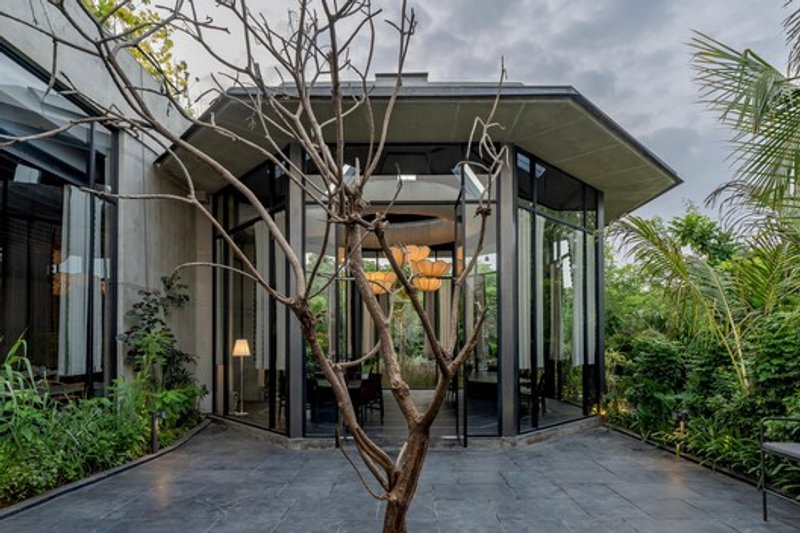
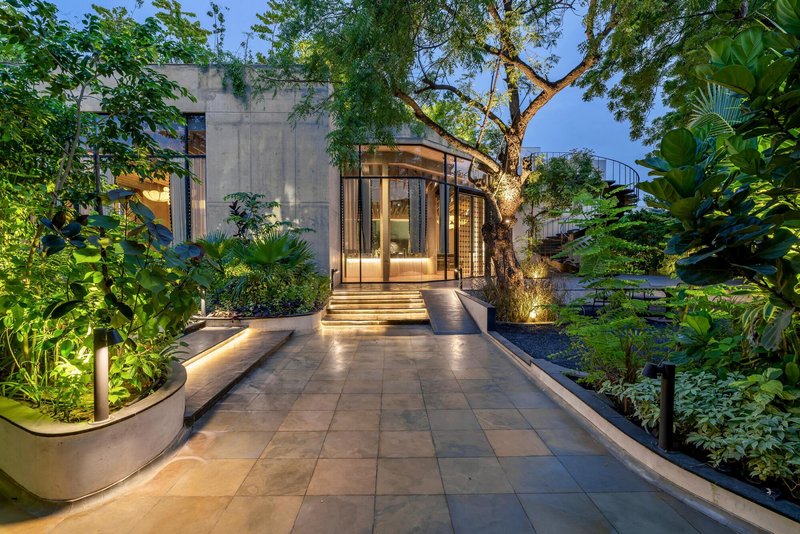
K’s Verandah, designed by Hiren Patel Architects + Design (HPAD), is a refined architectural extension of the well-loved K’s Charcoal restaurant in Ahmedabad. What was once an open lawn has been thoughtfully transformed into a serene, immersive dining space that celebrates Indian verandah culture, natural materials, and harmonious indoor–outdoor architecture.
The project represents HPAD’s philosophy of crafting places that breathe, balance, and belong. Rather than reading as an add-on, K’s Verandah emerges as a graceful architectural evolution, preserving the emotional warmth of its predecessor while introducing a new sensory language rooted in calmness and connection.
A Contemporary Interpretation of the Traditional Indian Verandah
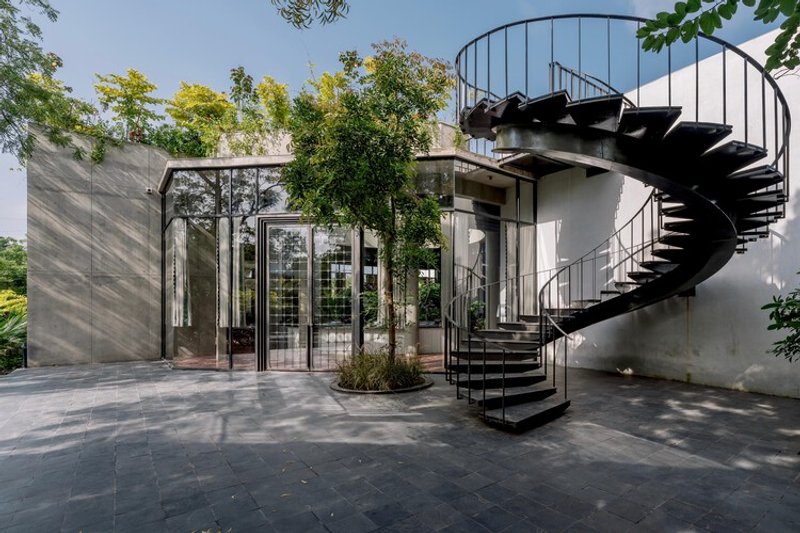
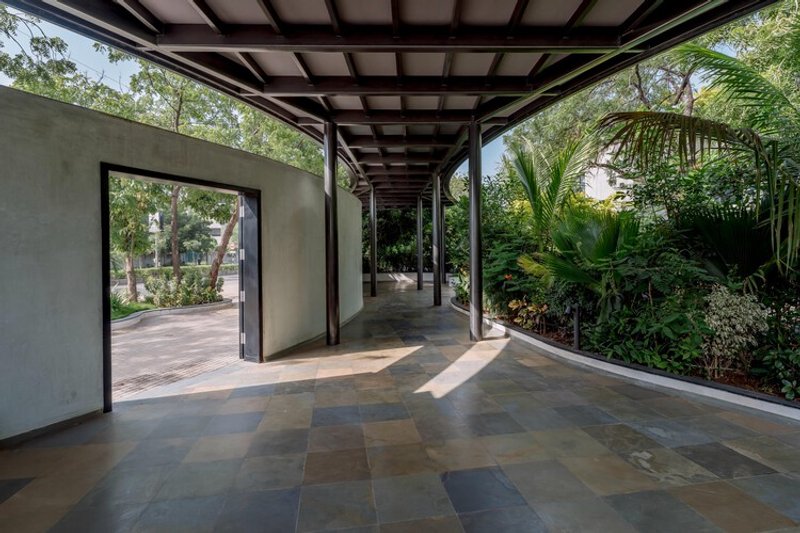
The design began with a simple vision: enhance the openness of K’s Charcoal while creating a space that feels more grounded, more intimate, and more attuned to its natural surroundings. The architects drew inspiration from the classic Indian verandah—a semi-open threshold where light, breeze, and human presence coexist effortlessly.
K’s Verandah encourages diners to slow down, observe the shifting daylight, and engage in a dining experience that extends beyond food. Architecture becomes a part of the atmosphere: tranquil, inviting, and rhythmically connected to nature.
Nature at the Heart of the Design
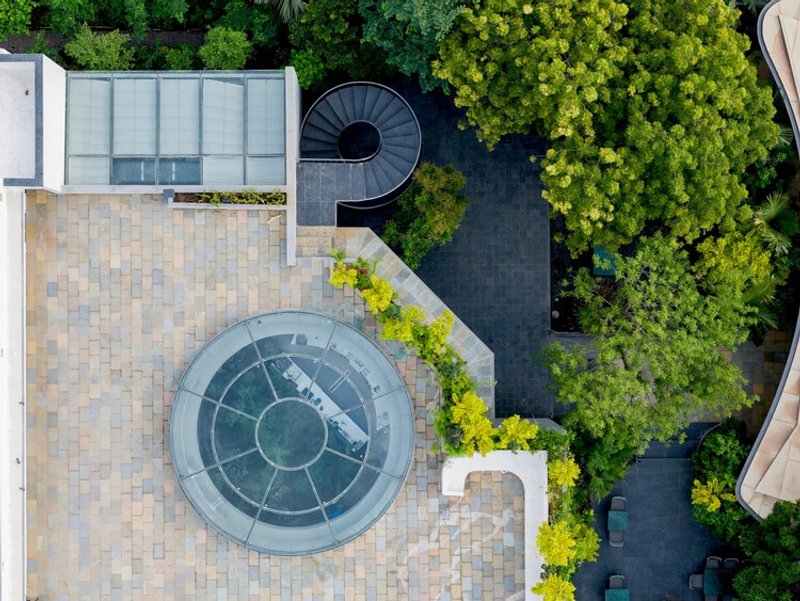
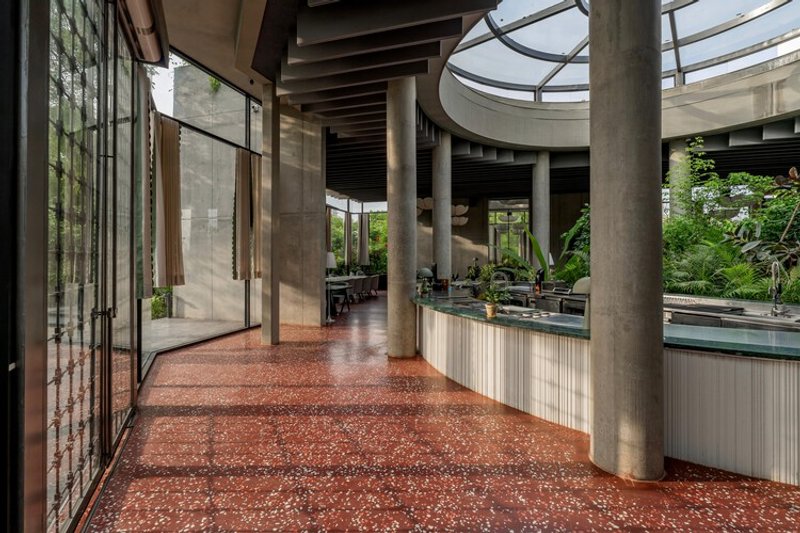
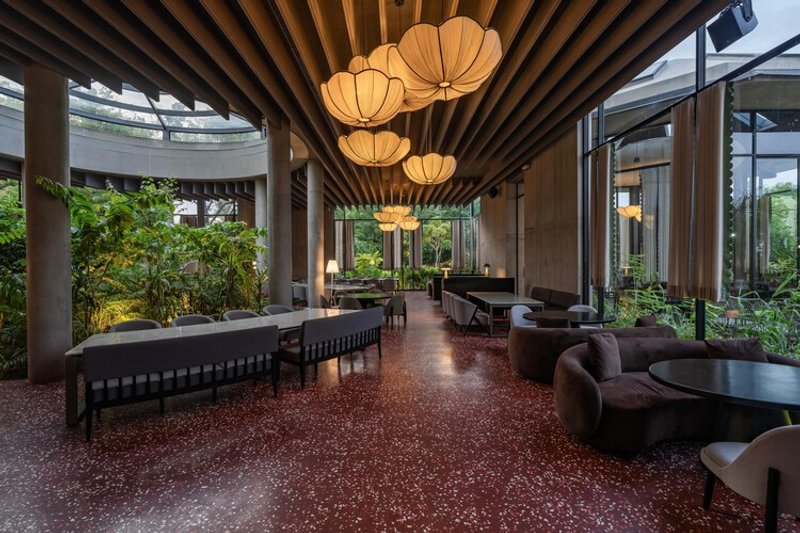
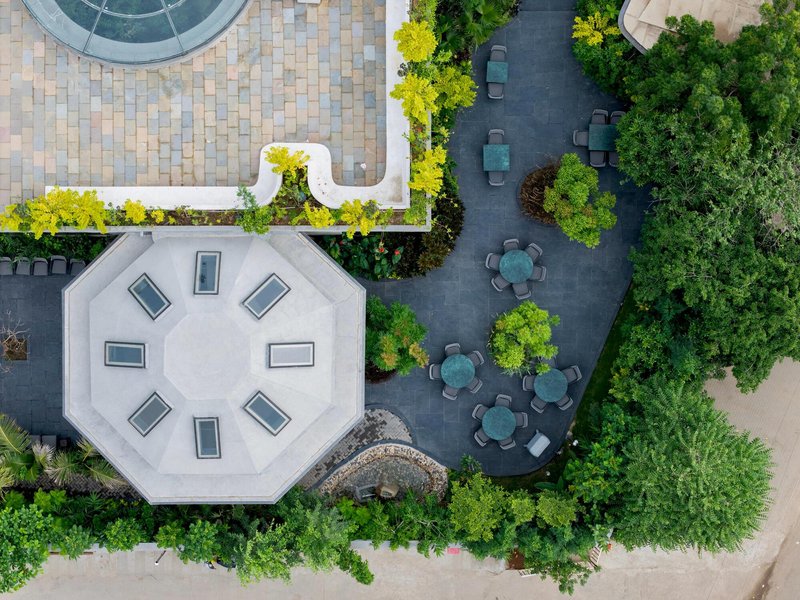
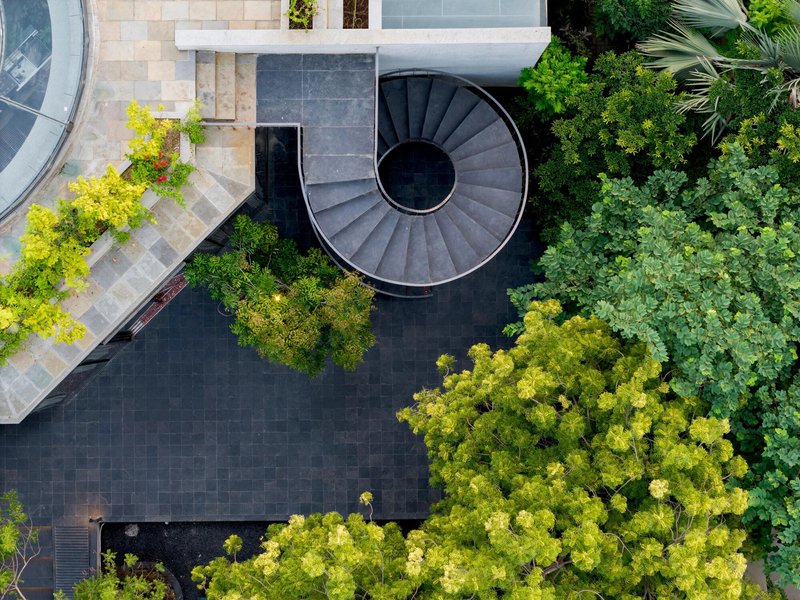
The central green courtyard, open to the sky, defines the spatial composition. Nature is not placed at the periphery—it becomes the anchor of the restaurant.
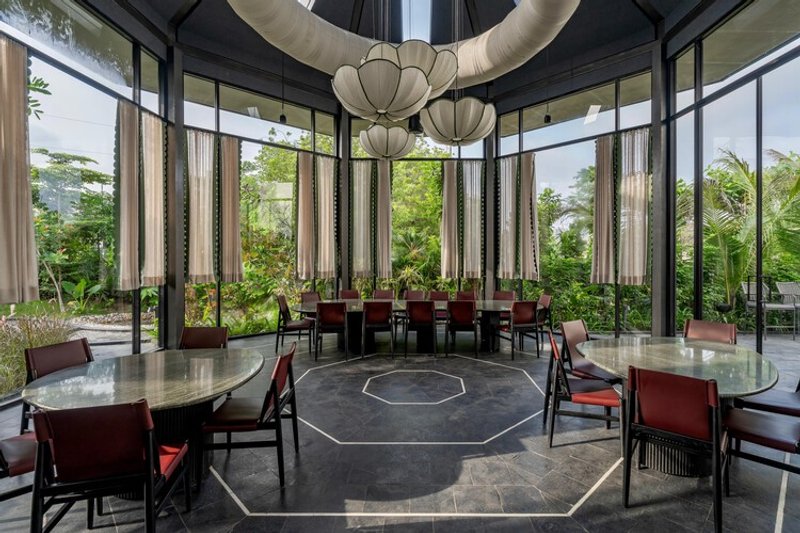
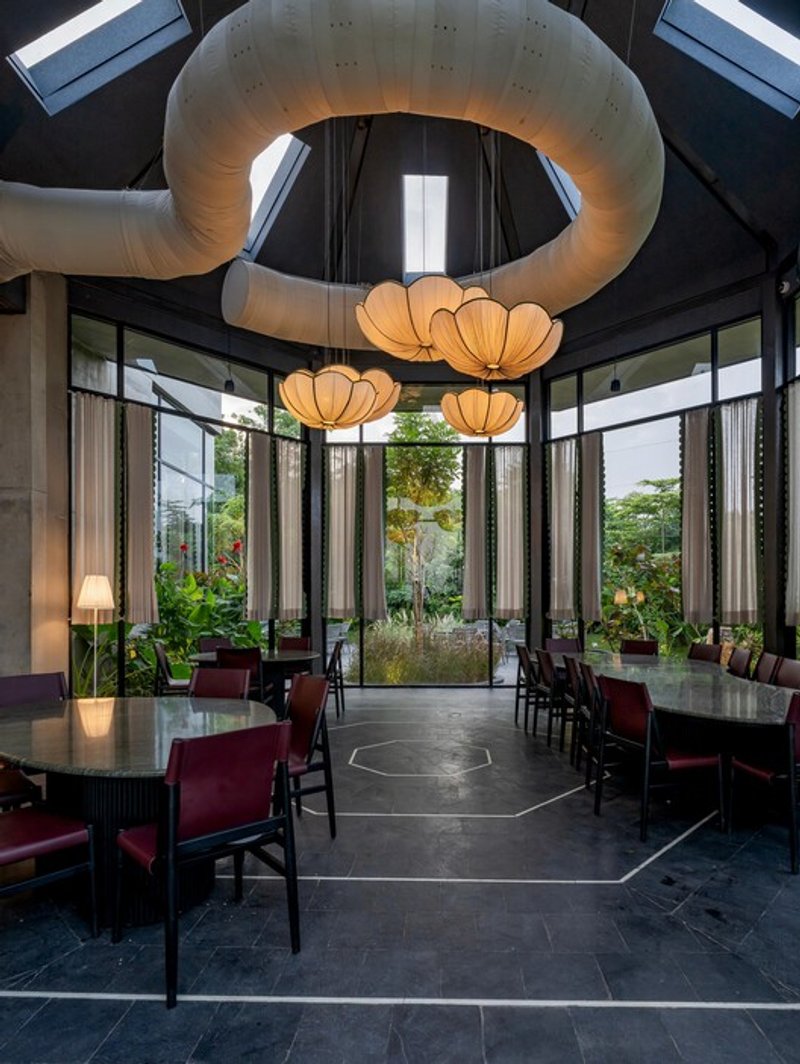
- Skylights and expansive glass panels bring ever-changing natural light into the interiors.
- Views of foliage soften the raw materials and introduce a soothing green palette.
- The space breathes with the cycle of the day—bright and airy by afternoon, warm and intimate by night.
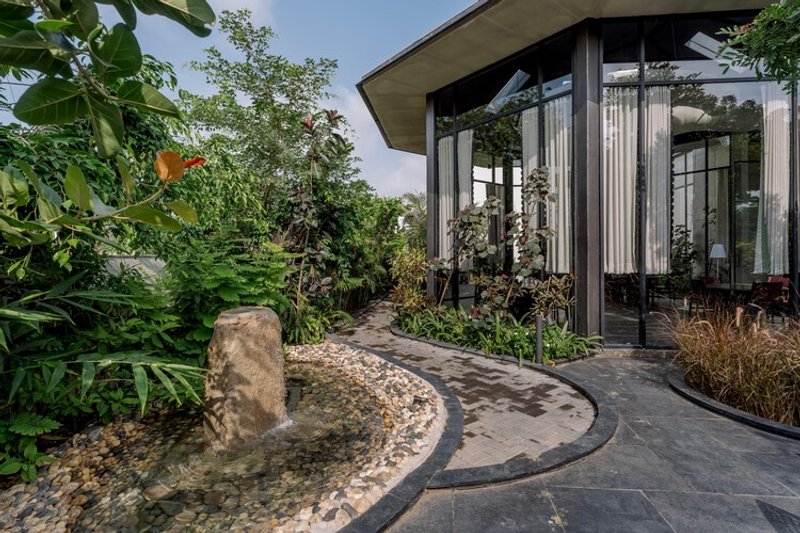
This seamless merging of architecture and landscape creates an immersive dining environment shaped by light, greenery, and openness.
A Calming Material Palette with Thoughtful Craftsmanship
The materials used in K’s Verandah offer a quiet elegance, balancing texture and warmth:
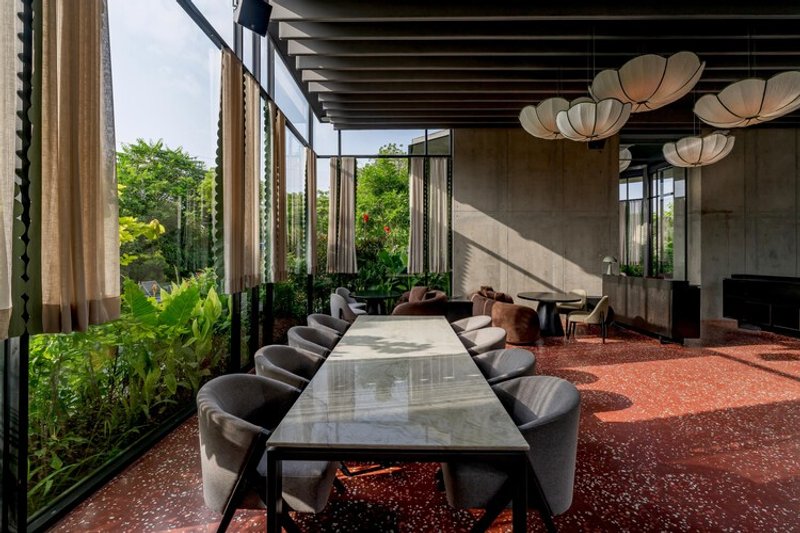
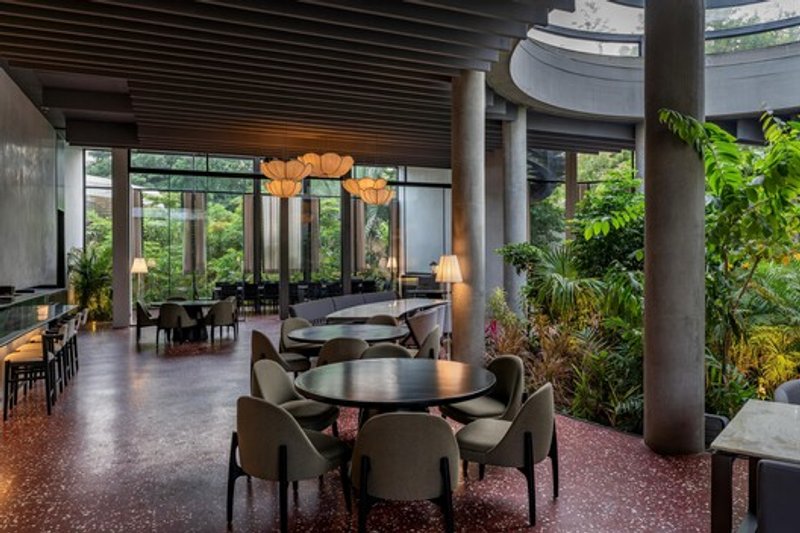
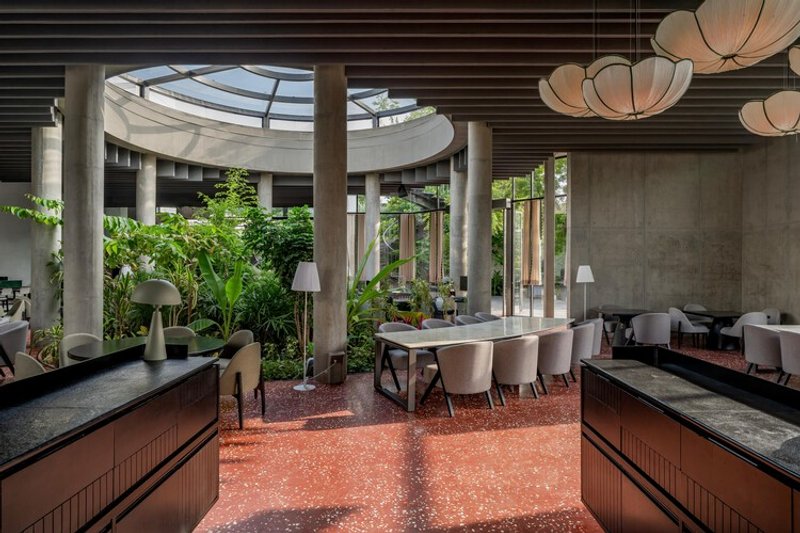
- Red terrazzo flooring adds a nostalgic warmth and a grounded foundation.
- Exposed concrete walls provide a tactile rawness that complements the natural palette.
- Black polished wood frames surfaces and enhances spatial depth.
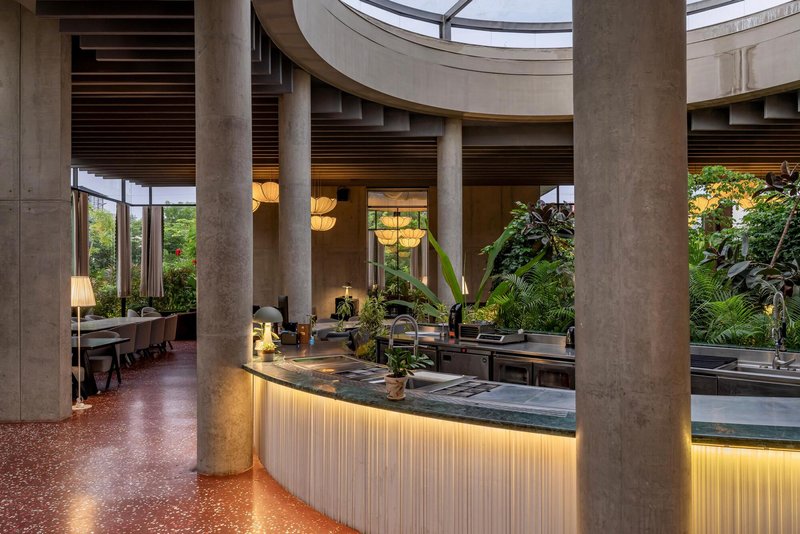
- Fluted cement surfaces on the sushi counter and bar elevate the visual rhythm of the interiors.
- The counters topped with Kesariyaji green marble echo the abundant greenery of the courtyard.
- A subtle metallic blue accent highlights the sushi counter, adding a refined contemporary detail.
Every material choice reinforces a sense of calm and visual coherence.
Details That Define the Experience
K’s Verandah shines in its attention to delicate, intentional detailing:
- The entrance door, inspired by traditional verandah jali patterns, reinterprets heritage through modern geometry.
- Curtains purposely stop short of table height, maintaining open sightlines across the space.
- Soft green accents in lamps and fabrics tie the interiors back to the courtyard’s color story.
- Seating layouts offer different ways to engage with the space—framed courtyard views, skylit corners, and the sculptural sushi counter.
These elements work together to create a dining atmosphere that feels balanced, gentle, and emotionally comforting.
A Dining Space That Nurtures the Mind
More than a physical extension of the restaurant, K’s Verandah cultivates a state of mindful presence. In a bustling urban city, it offers a quiet refuge where textures, light, and spatial rhythm blend to form an environment of tranquility.
Each dining experience differs subtly based on where one sits, ensuring that every guest finds their own personal moment within the space.
K’s Verandah by Hiren Patel Architects + Design stands as a sophisticated reinterpretation of the Indian verandah—a balance of nature, architecture, and thoughtful craft. Its blend of natural materials, open courtyards, sculptural detailing, and serene ambiance establishes it as one of Ahmedabad’s most refined architectural dining experiences.




Popular Articles
Popular articles from the community

20 Most Popular Furniture Design Projects of 2025
Modular street systems, parametric benches, and insect hotels: the furniture design projects that captivated architects on uni.xyz in 2025.
20 Most Popular Office Building Projects of 2025
From biophilic workspaces in India to net-positive energy offices in New Delhi, 20 office building projects that defined architecture in 2025.

YOAP Architects Round a Corner in Yeongcheon with a Cylindrical Community Hub
A 197-square-meter brick and ribbed-clad tower turns a forgotten alley corner in South Korea into a public garden with a low threshold.
Rojkind Arquitectos and Think Parametric Build a Glueless Pavilion from 67 Interlocking Panels
A serpentine fiber-cement installation in Chapultepec Park celebrates a decade of architectural media in Mexico City.


Similar Reads
You might also enjoy these articles
Olio Towers: A Mid-Rise for Performers That Fuses Housing, Rehearsal, and Stage
Located blocks from Houston's Theater District, this modular tower stacks living units around a central performance atrium.

Oasis: Modular Green Housing Carved into Dhaka's Urban Fabric
A shortlisted Plugin Housing entry reclaims unauthorized settlements in Dhaka with stepped concrete volumes, green roofs, and ventilation-driven design.

Black Hole: A Floating Megastructure for the Post-Physical Era
Emiliano Mazzarotto envisions a spherical, self-scaling arena where e-sports, digital hotels, and holographic stadiums replace traditional public space.
Compact & Sustainable Living in Piraeus: A Four-Level Family Home Built Around Light and Air
A narrow townhouse in one of Greece's densest port cities uses a central atrium and passive strategies to house three generations under one roof.


Explore Architecture Competitions
Discover active competitions in this discipline




The International Standard for Design Portfolios


The Global Benchmark for Architecture Dissertation Awards


The Global Benchmark for Graduation Excellence


Challenge to reimagine the Iron Throne
Comments (0)
Please login or sign up to add comments
No comments yet. Be the first to comment!