
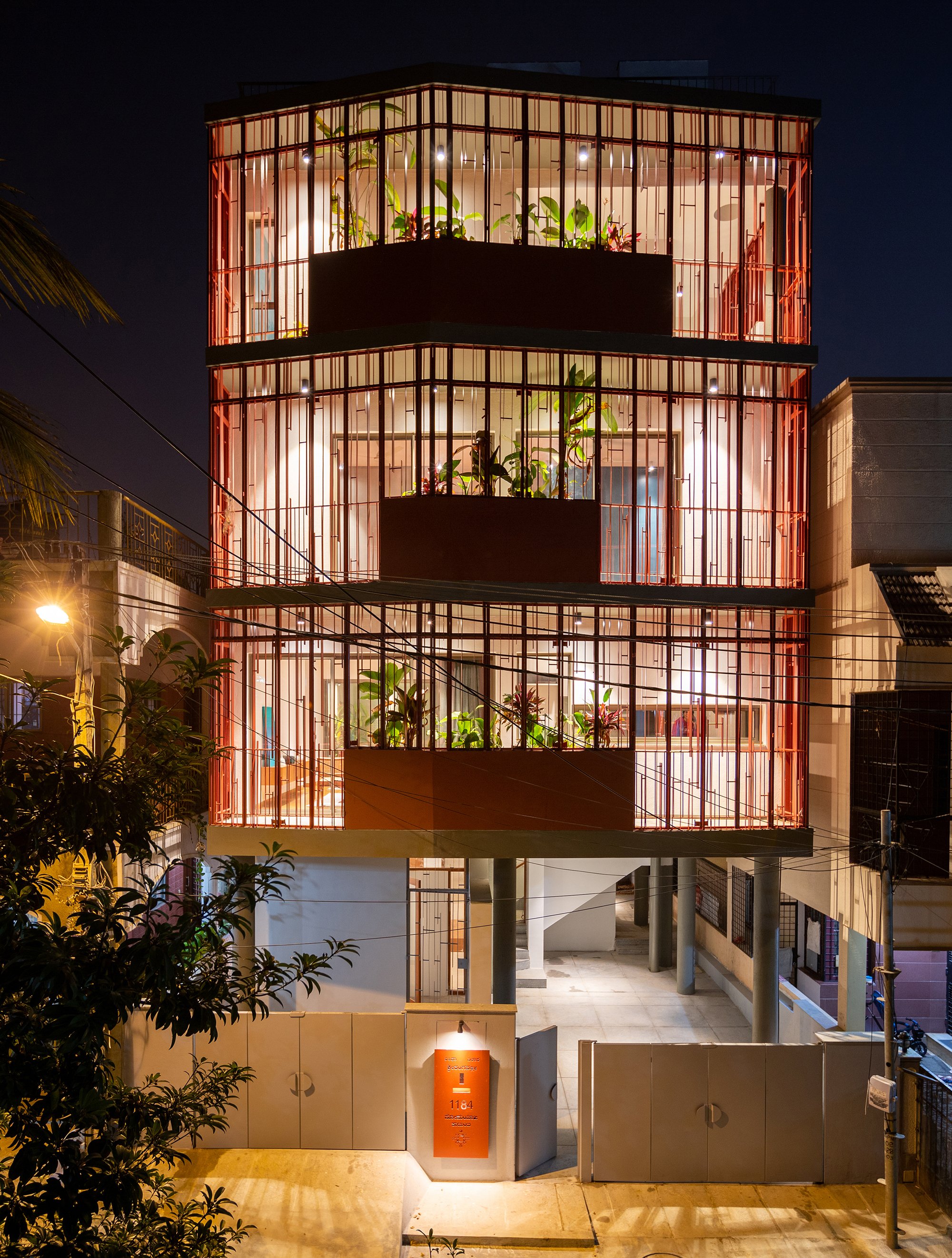
Kumar La Noce Wraps a Multigenerational Bengaluru House in a Terracotta Steel Exoskeleton
On a tight south Bangalore plot, mild steel fins and an open courtyard turn a 179 m² vertical house into a climate-responsive home for three generations.

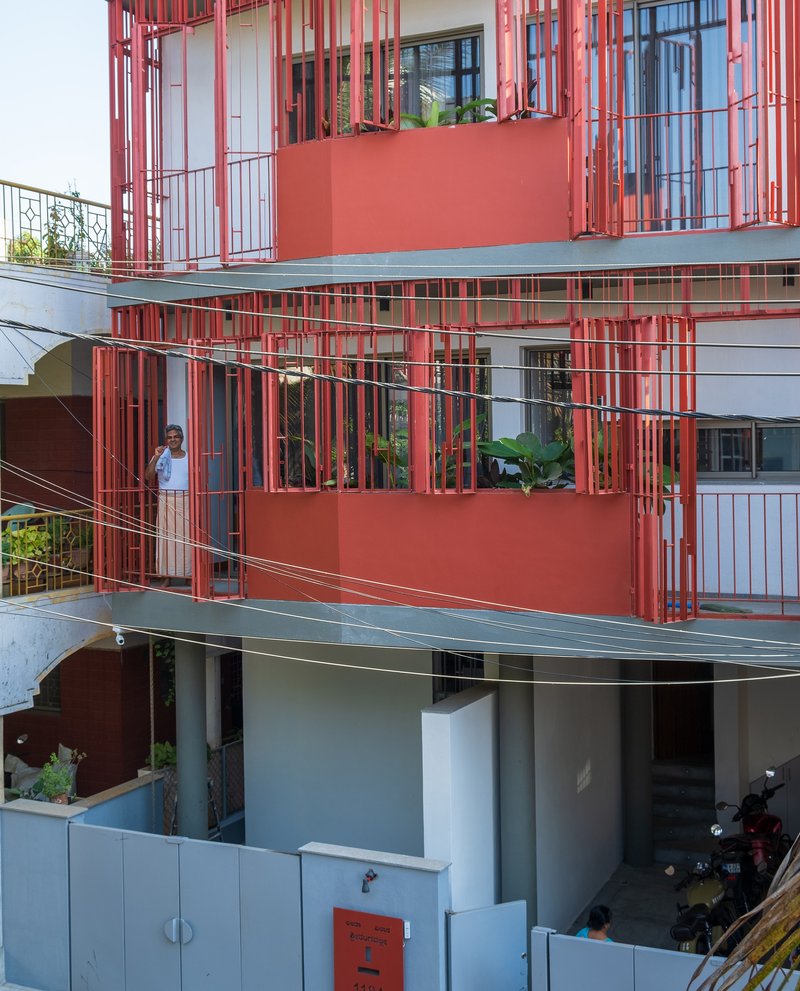
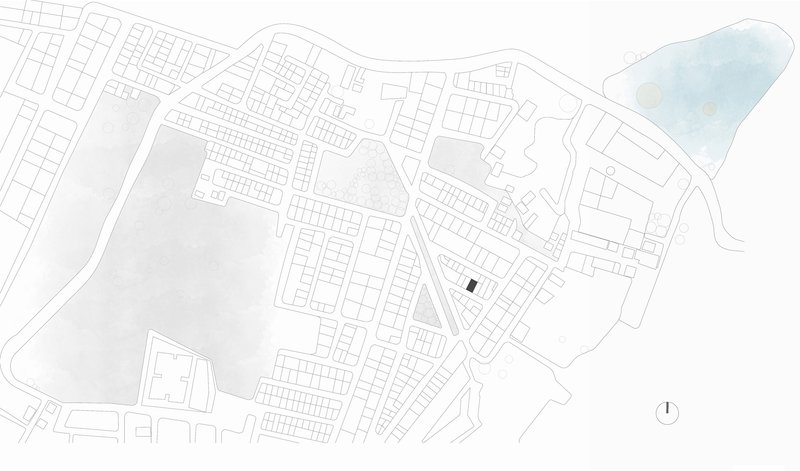
Density in south Bangalore rarely yields to generosity. Plots are tight, setbacks are minimal, and the pressure to stack floor area leaves little room for anything resembling outdoor life. House on 46, designed by Kumar La Noce, is a four-level residence that confronts these constraints head-on, wrapping itself in a deep reddish-terracotta screen of mild steel fins that simultaneously controls sunlight, secures privacy, and gives the street a distinct vertical rhythm. The house was completed in 2021 at a modest 179 m², yet it manages to feel substantially larger than those numbers suggest.
What makes this project genuinely interesting is not the screen itself, which has plenty of precedent in tropical and subtropical residential work, but the precision with which it negotiates between the needs of a multigenerational household and the realities of a narrow urban site. The screen is not decorative wallpaper: its panels vary in length and thickness to minimize material waste, it stiffens through its own pattern geometry, and certain sections are operable so that residents on different floors can modulate their own relationship to the city. Behind this exoskeleton, a central courtyard open to the sky introduces fresh air and daylight down through the section, connecting the family across four inhabited levels.
A Vertical Address on a Compressed Site
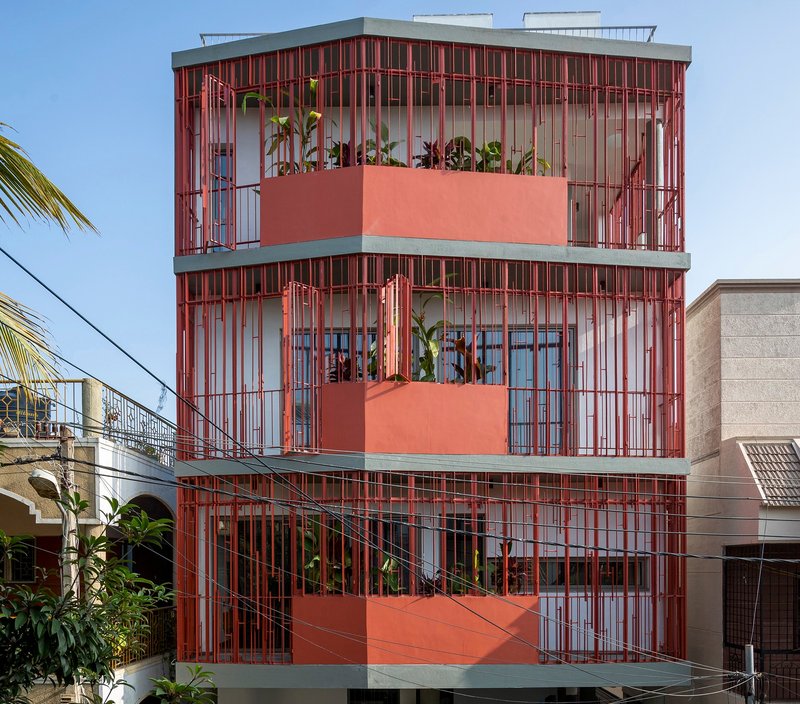
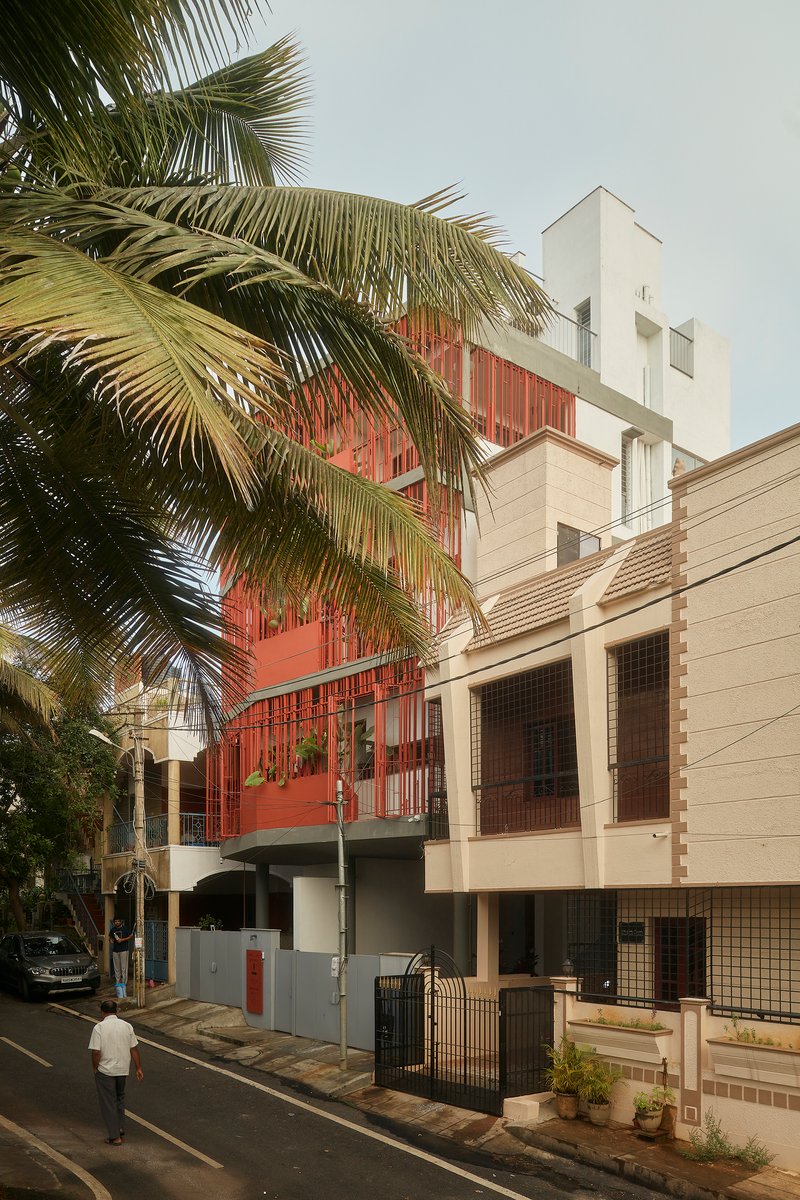
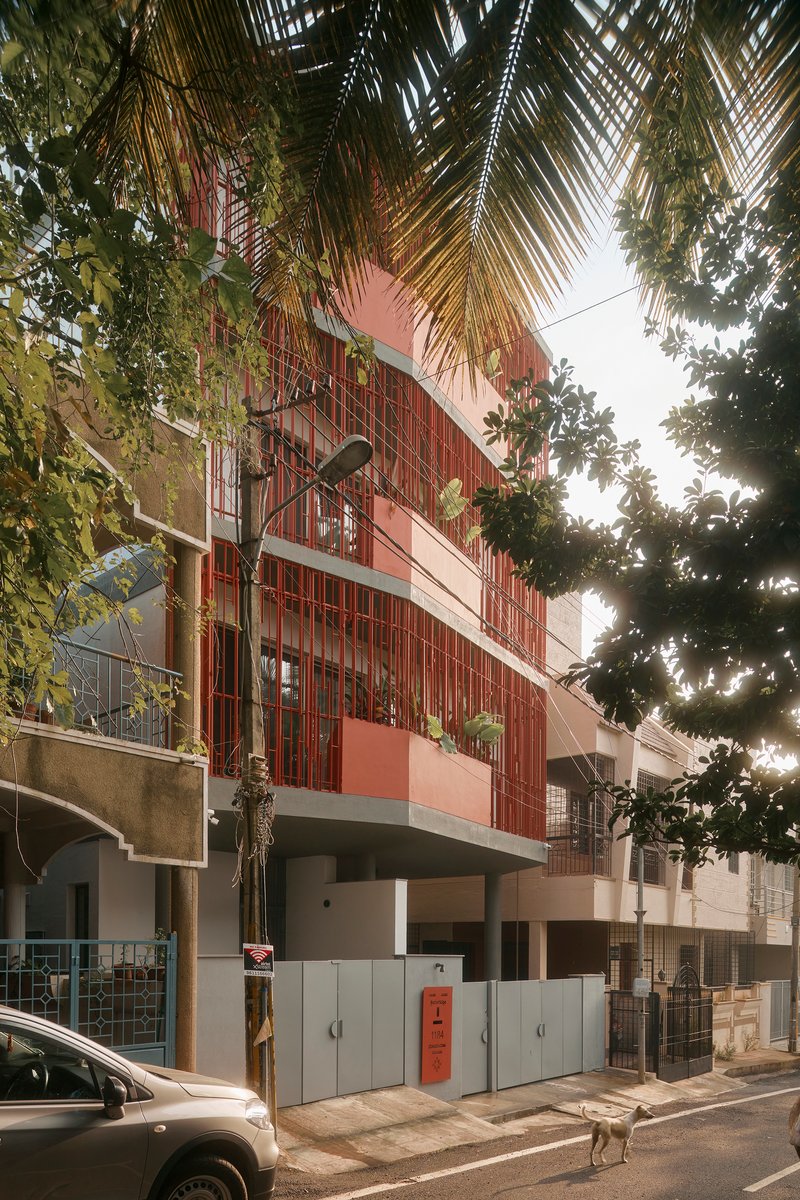
From the street, House on 46 announces itself without shouting. The terracotta-toned fins rise above neighboring rooflines and palm canopies, reading as a single, coherent volume rather than a collection of stacked floors. That coherence is key: in a fabric of ad-hoc construction, the house gains its presence not from scale but from material consistency. The screen runs uninterrupted from the ground floor to the terrace parapet, giving the facade a woven, textile quality that softens what could otherwise be an imposing box.
The color choice deserves attention. Rather than the raw silver of galvanized steel or the predictable black of powder-coated metal, the reddish-terracotta finish grounds the building in a palette associated with clay, earth, and regional craft traditions. The east-facing facade catches morning light and shifts tone throughout the day, a quality visible even from across the street. It is a building that changes mood without changing form.
The Screen as Climate Device
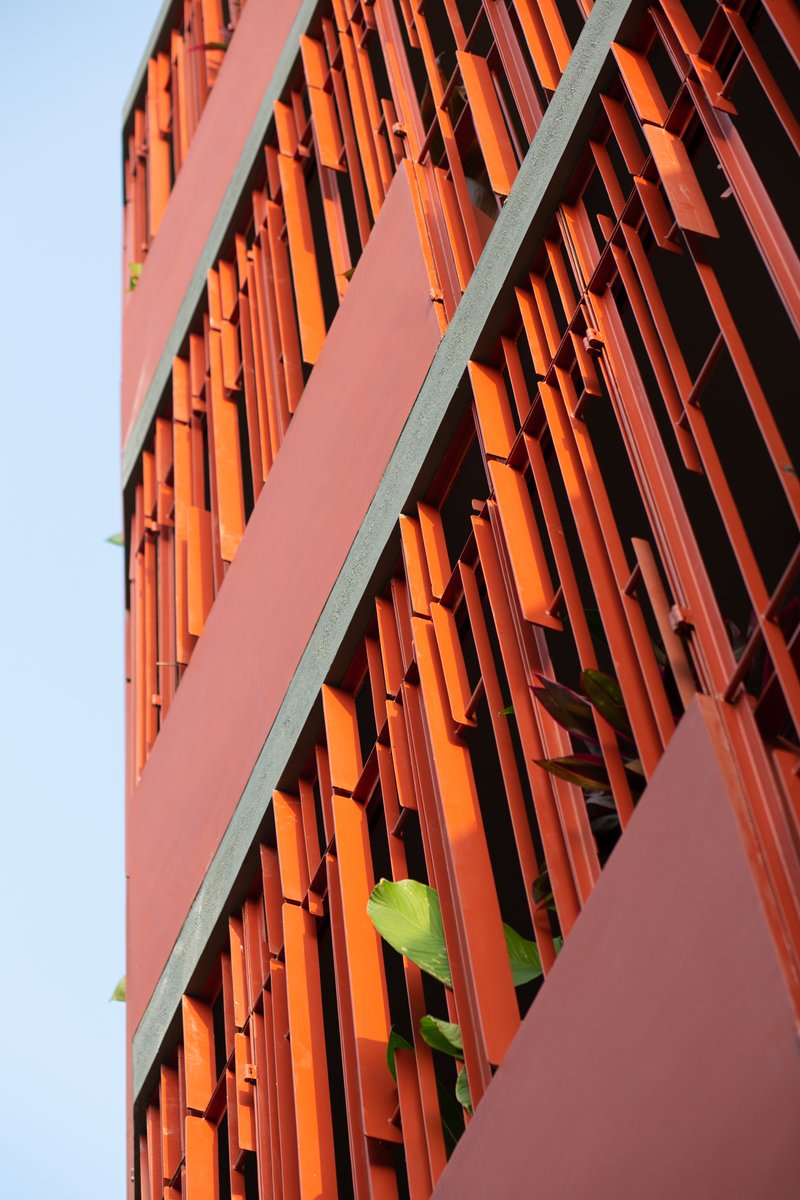
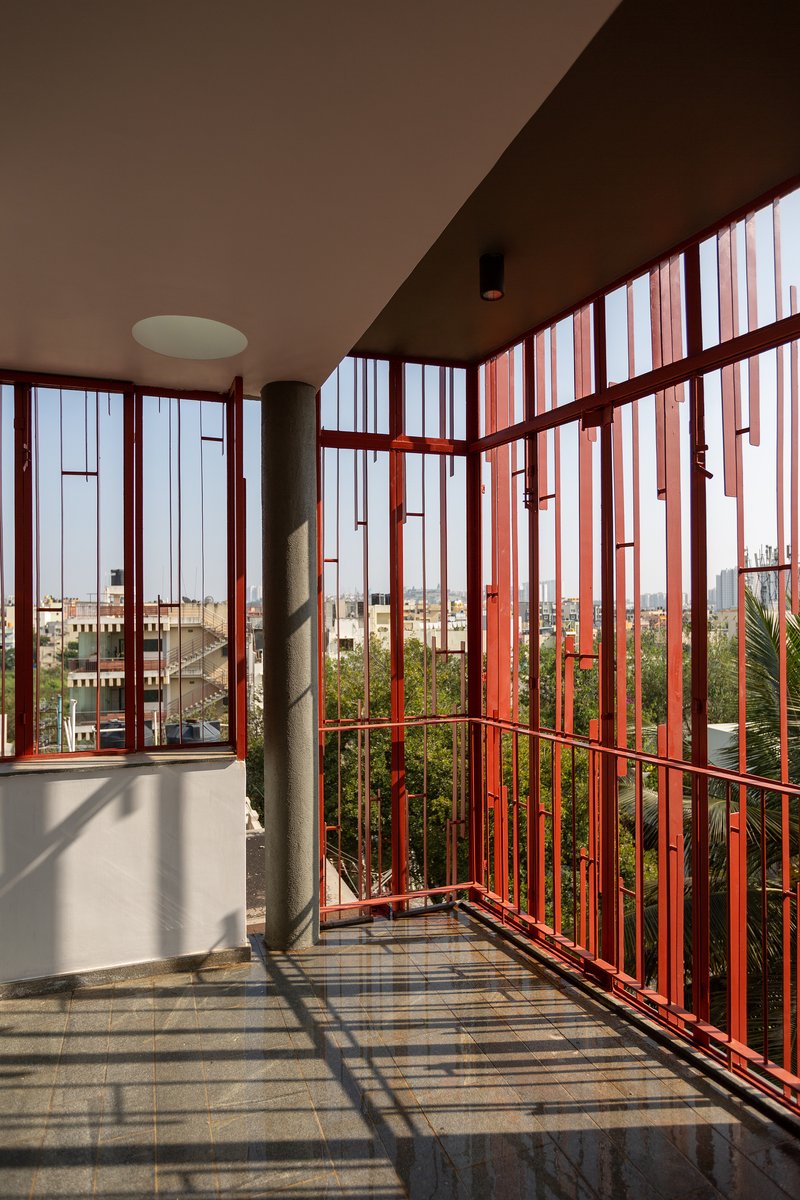
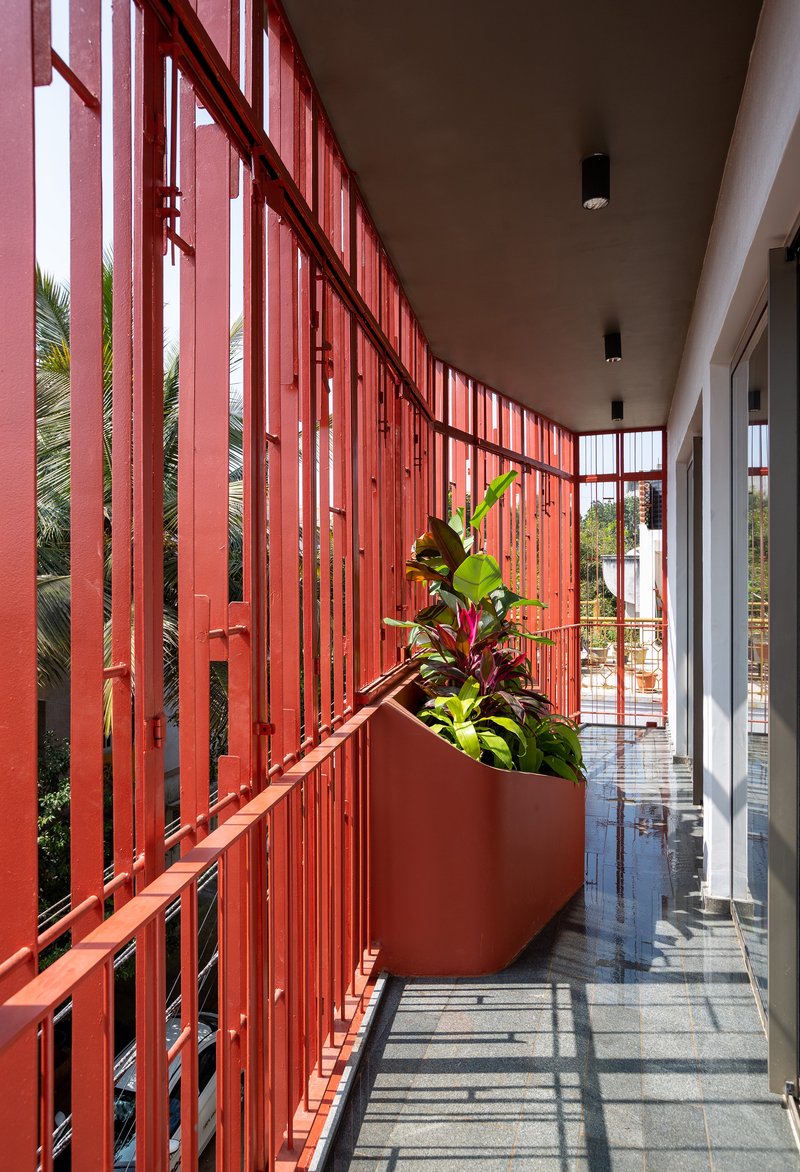
Screens and latticework are deeply embedded in Indian building traditions, from the jali screens of Rajasthan to the timber louvered verandas of colonial Bengaluru. Kumar La Noce updates the principle with industrially produced mild steel fins that filter harsh sunlight into dappled patterns across the interior floors and corridor walls. The effect is precise and photographic: stripes of light track across polished yellow limestone floors as the sun moves, animating rooms that would otherwise be static.
More critically, the screen tempers heat gain on the building's most exposed elevations, reducing reliance on mechanical cooling during Bangalore's hot summers. Enclosing the balconies with operable panels gives each generation the ability to open or close their connection to the outdoors. A grandmother wanting morning sun and a teenager wanting midday shade can both have what they need without redesigning the facade.
Light and Living Behind the Fins
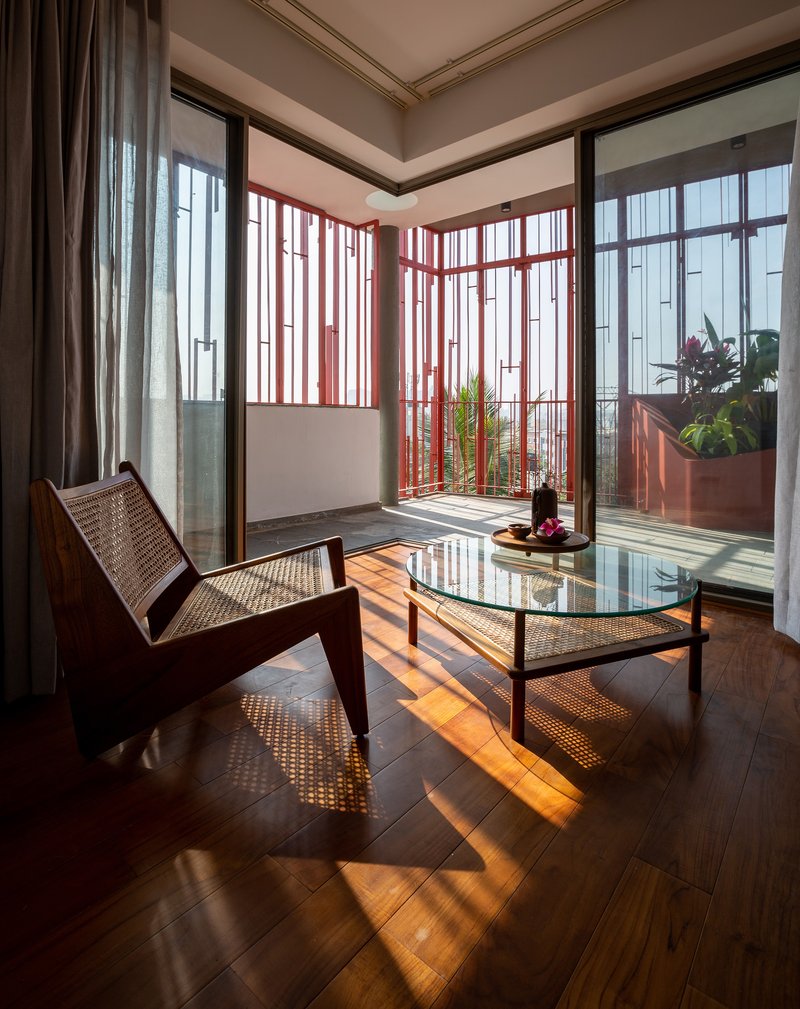
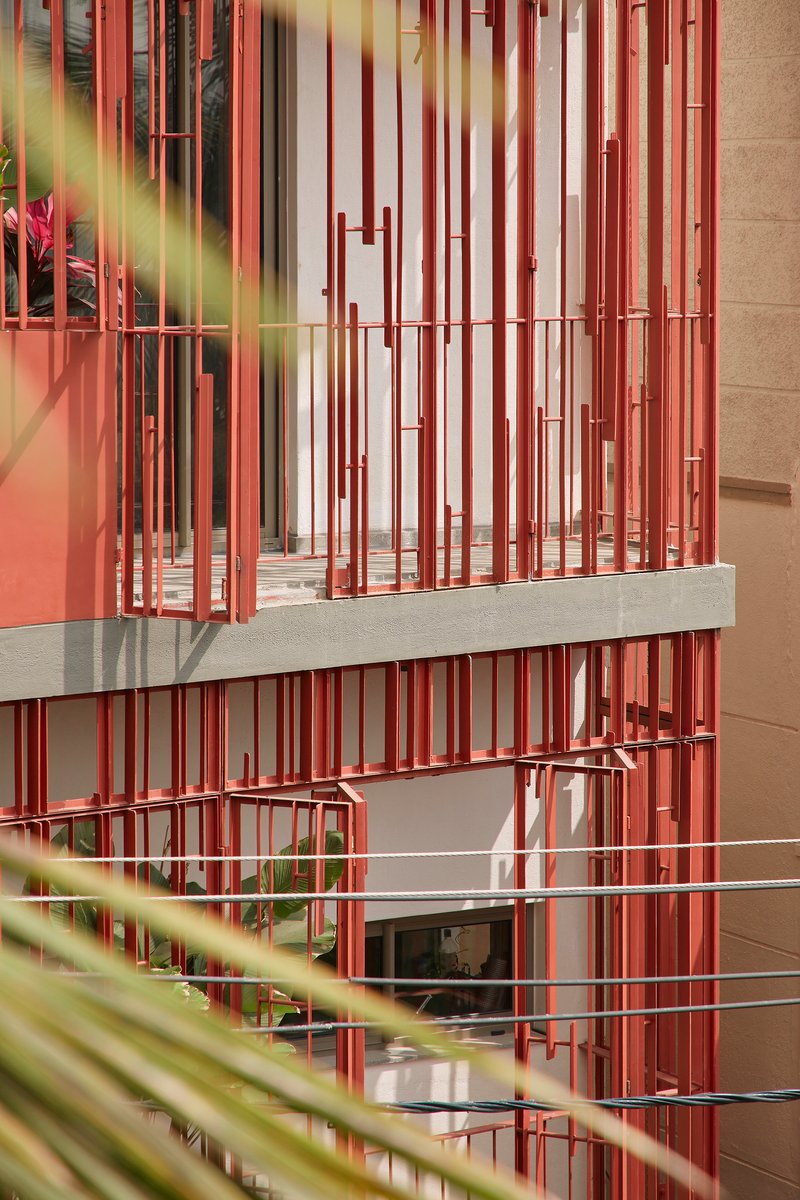
Inside, the material palette is deliberately restrained. White lime-rendered walls, yellow limestone floors, grey granite accents, and teak wood details create a warm neutral backdrop that lets the filtered light do the heavy lifting. The living space on the first floor, visible through the cane furniture and the striped shadow play, demonstrates how effective this strategy is: the room does not need a feature wall or a statement object because the light itself is the ornament.
The layered views through multiple planes of screen, foliage, and interior wall create a sense of depth that belies the building's compact footprint. Looking outward from any level, you see through at least two layers of steel fins and at least one layer of planting, which compresses the visual field in a way that makes the house feel embedded in landscape rather than stacked against a party wall.
The Courtyard Section
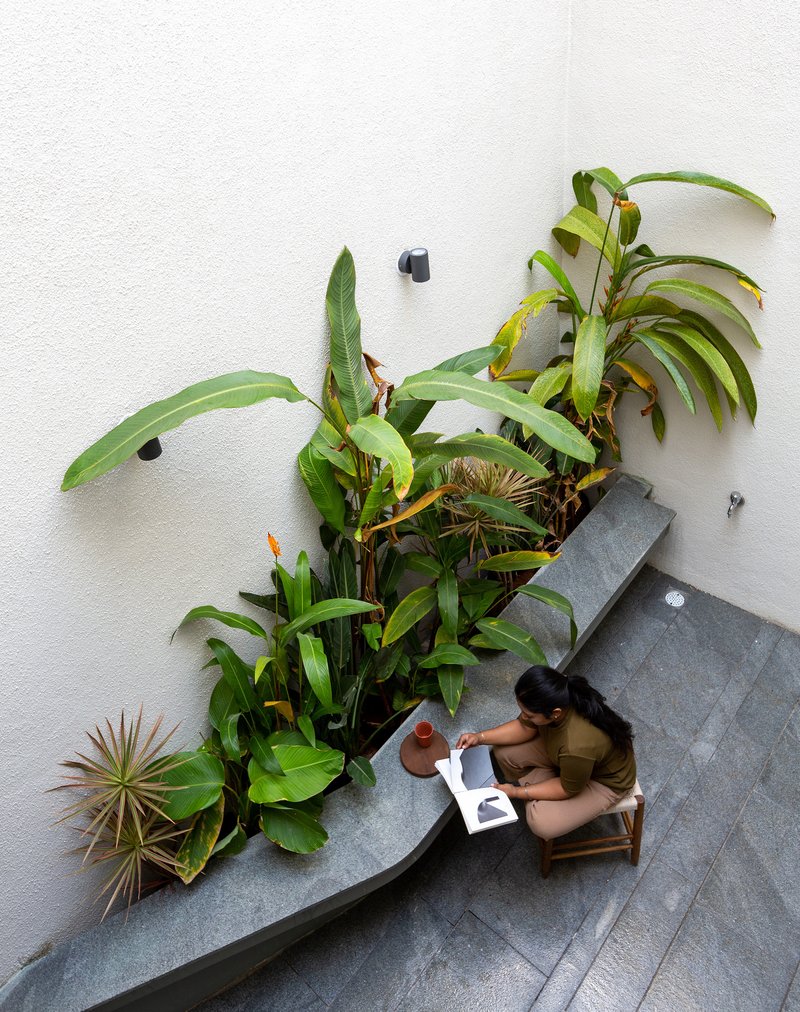
The open-to-sky courtyard on the first floor is the house's thermal and social engine. It pulls fresh air through the section during Bangalore's warm months and serves as a shared visual anchor visible from the stairwell and surrounding rooms. The overhead view of the stone bench and planted bed reveals how compact this void actually is: it occupies very little plan area, yet its vertical openness makes it feel like a room in its own right.
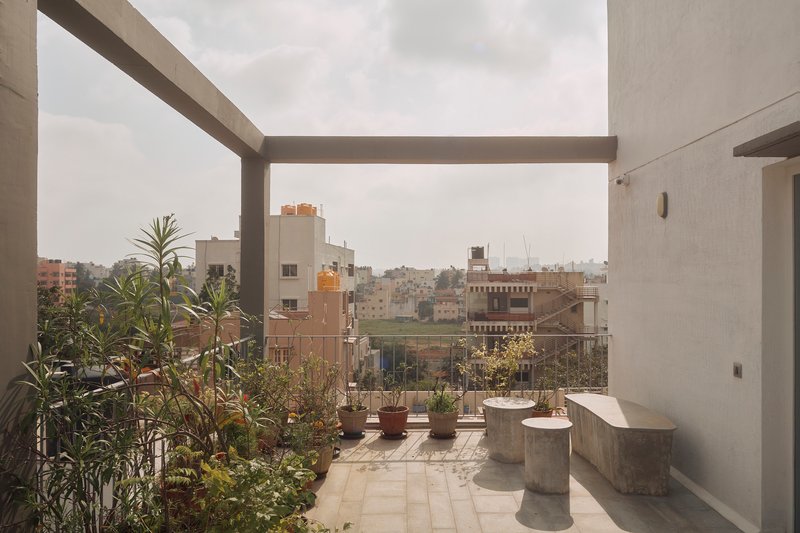
Up on the rooftop terrace, a concrete pergola frames sky and skyline. Large planter boxes soften the hard edges, and the accessible roof extends the usable open space of the house by a meaningful margin. For a multigenerational family navigating a dense neighborhood, these outdoor thresholds, the courtyard below and the terrace above, provide the breathing room that the plot itself cannot.
After Dark
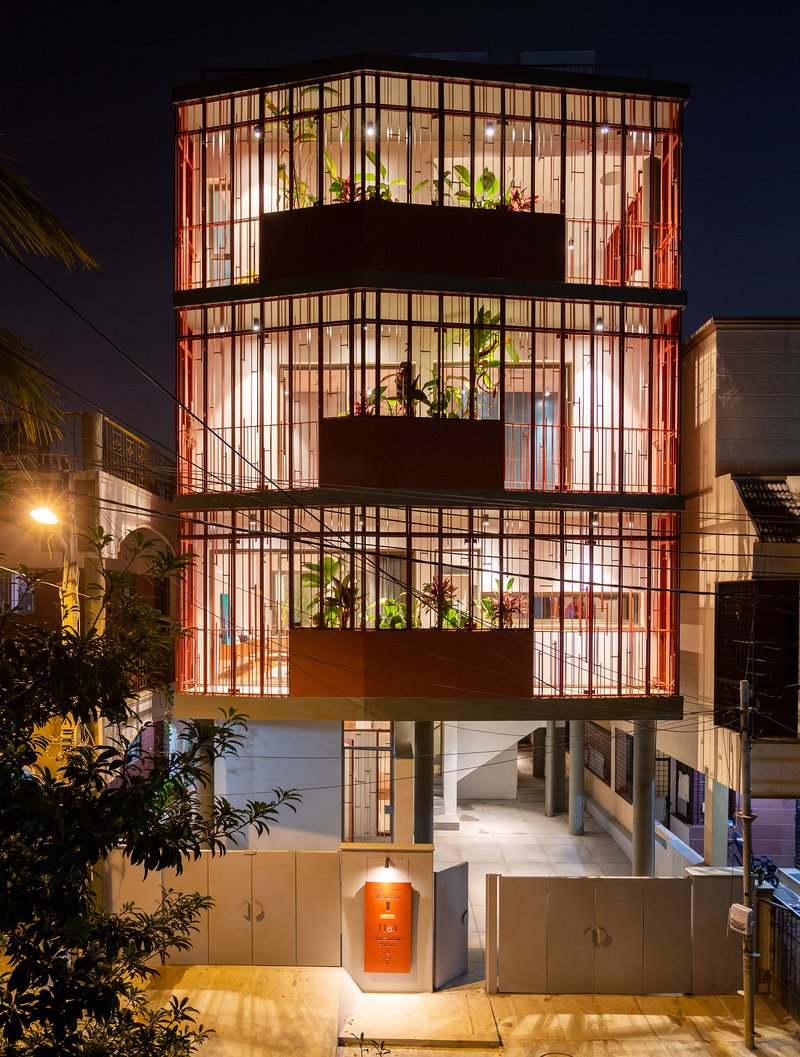
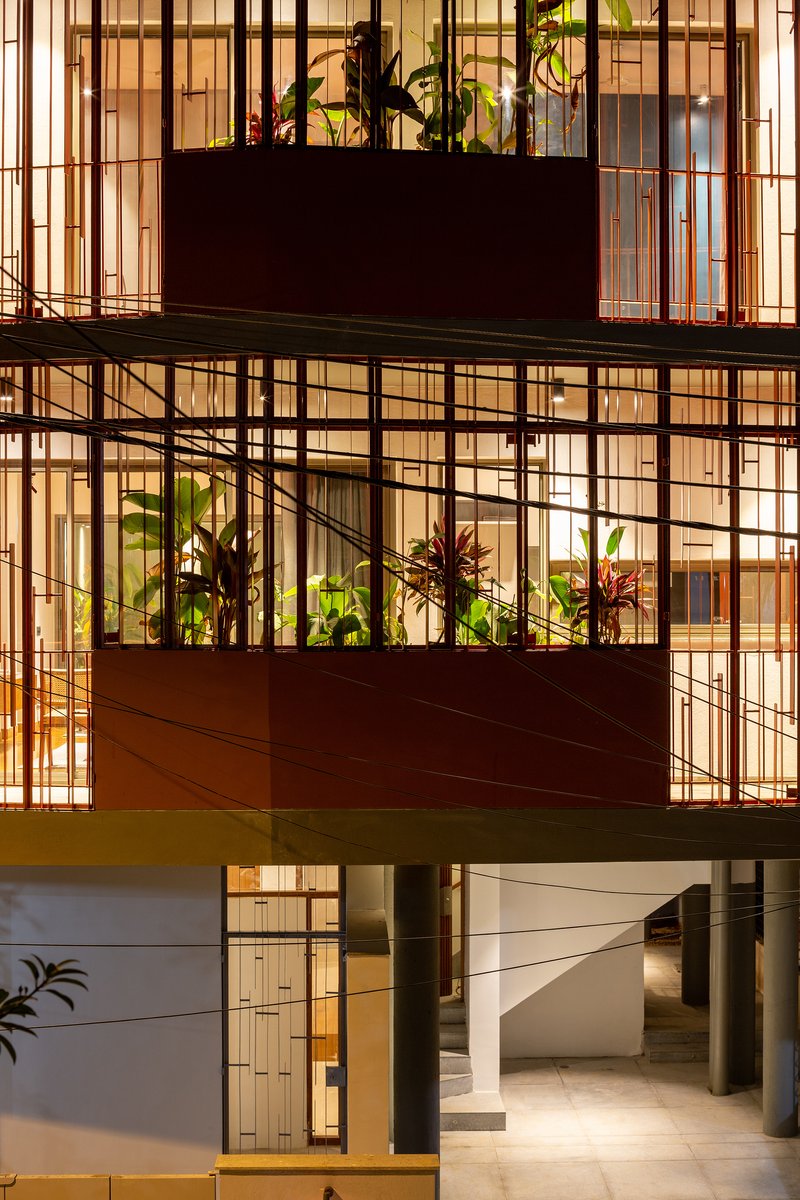
At night, the logic inverts. Interior light passes outward through the screen, turning the facade into a lantern of warm vertical lines. The planted balconies, backlit by ambient glow, register as dark silhouettes against the illuminated grid. It is a generous gesture toward the street, offering texture and warmth in a neighborhood that typically goes dark after sundown. The distinction between the fixed terracotta panels and the operable sections becomes subtly legible in this condition, revealing which floors are occupied and which are at rest.
Fabrication Logic
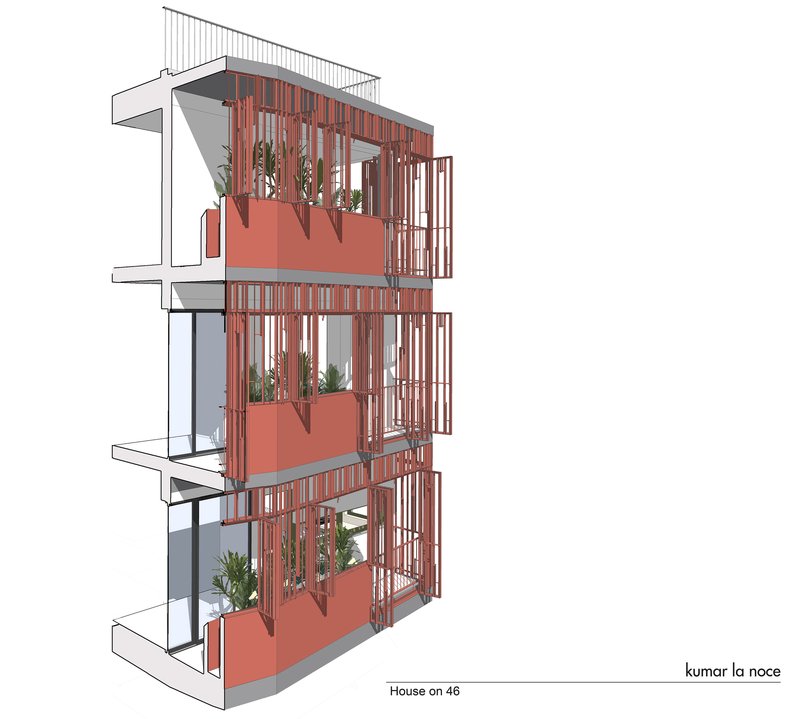
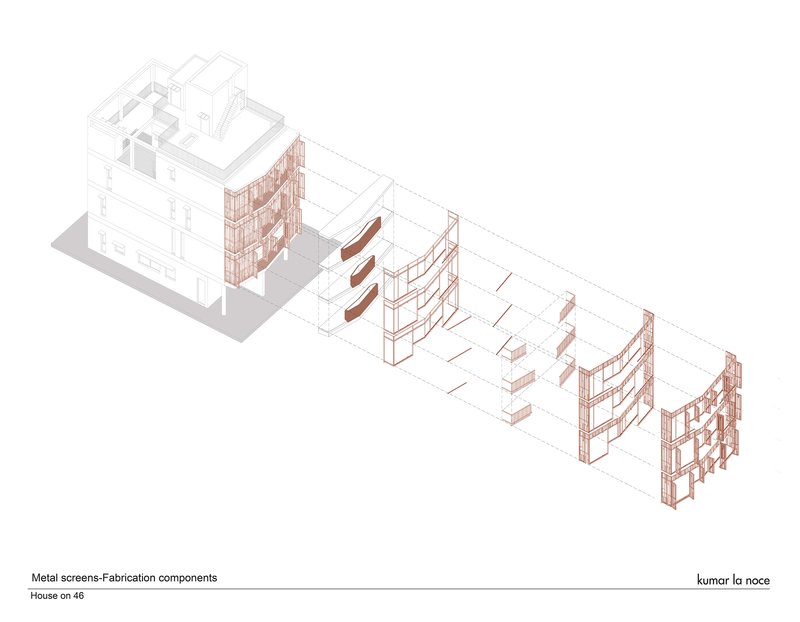
The axonometric and detail drawings clarify something that the photographs only hint at: the screen is not a uniform grid. Fin lengths and thicknesses vary according to structural requirements, solar angles, and a deliberate effort to minimize off-cut waste. The screen stiffens itself through its own pattern geometry, reducing the need for additional substructure. It functions as an exoskeleton, not an appliqué. The three-dimensional detail of the planted balcony boxes shows how the planter troughs are integrated directly into the screen assembly, rather than being afterthoughts bolted onto a finished facade.
Plans and Drawings
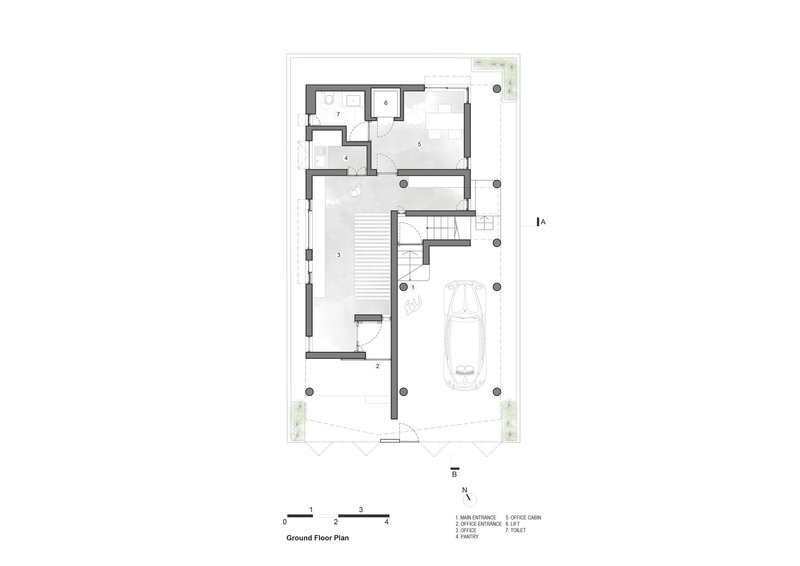
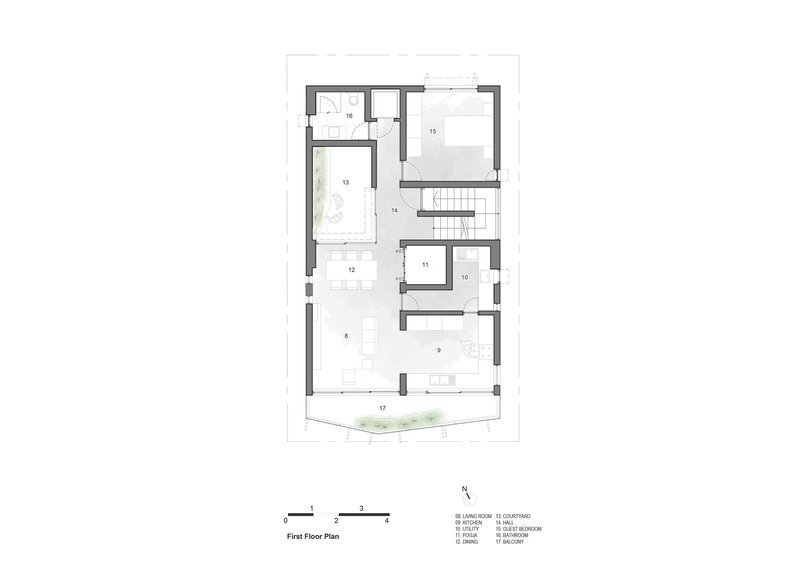
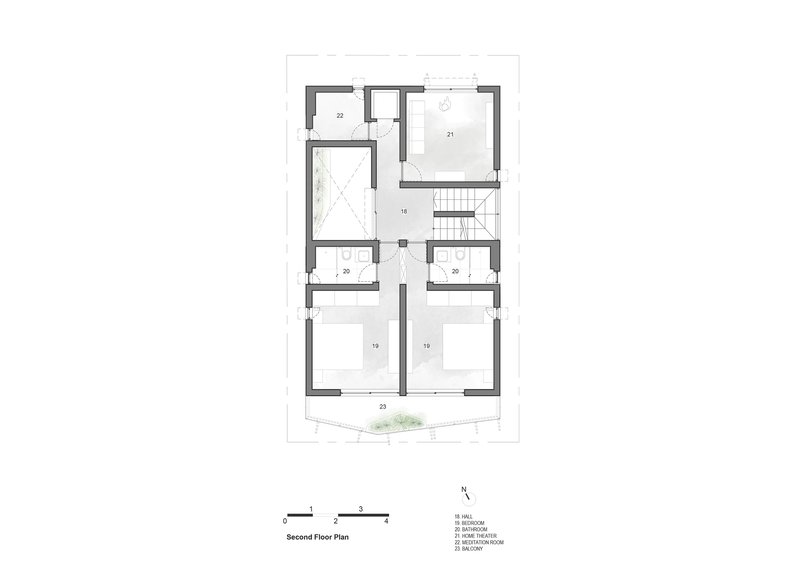
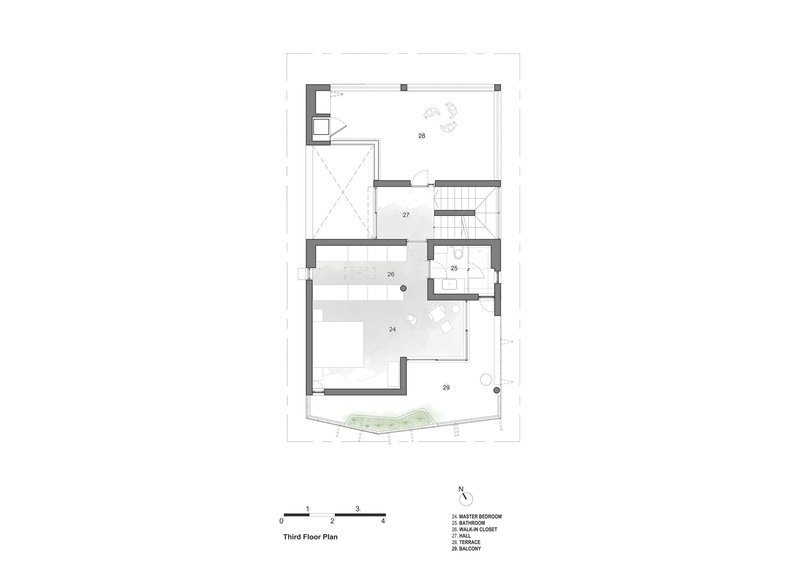
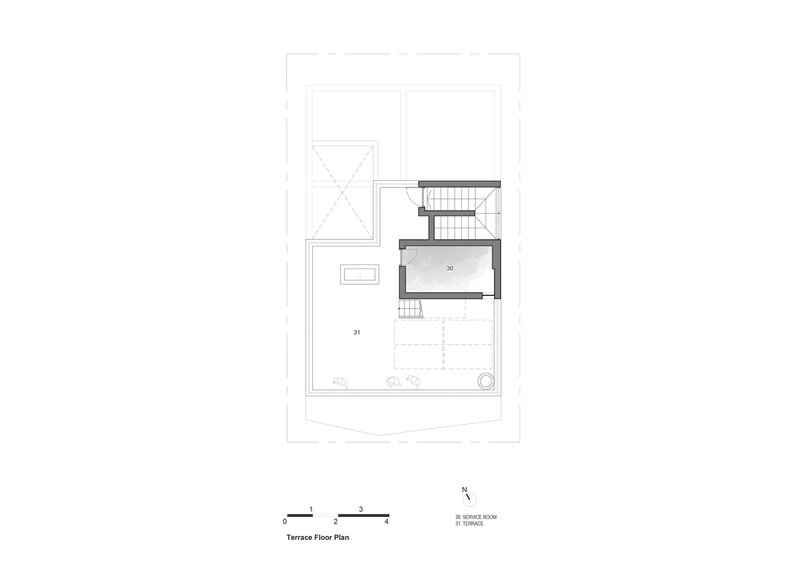
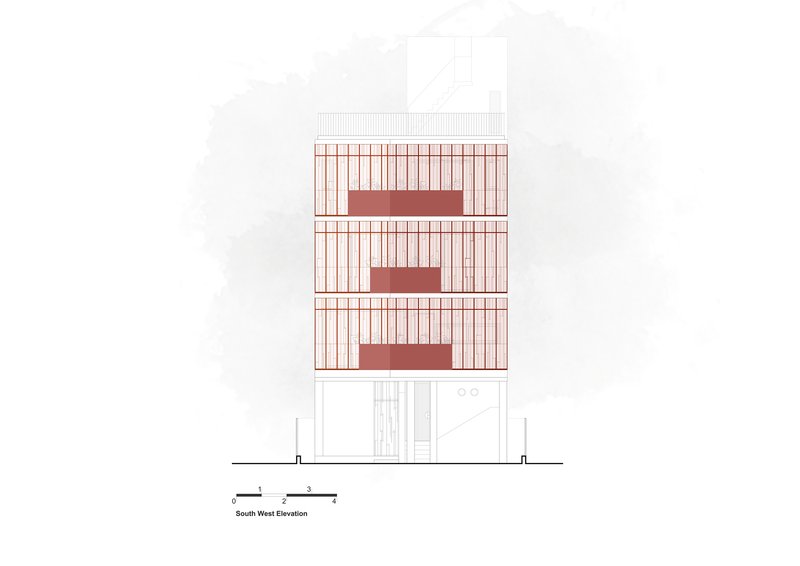
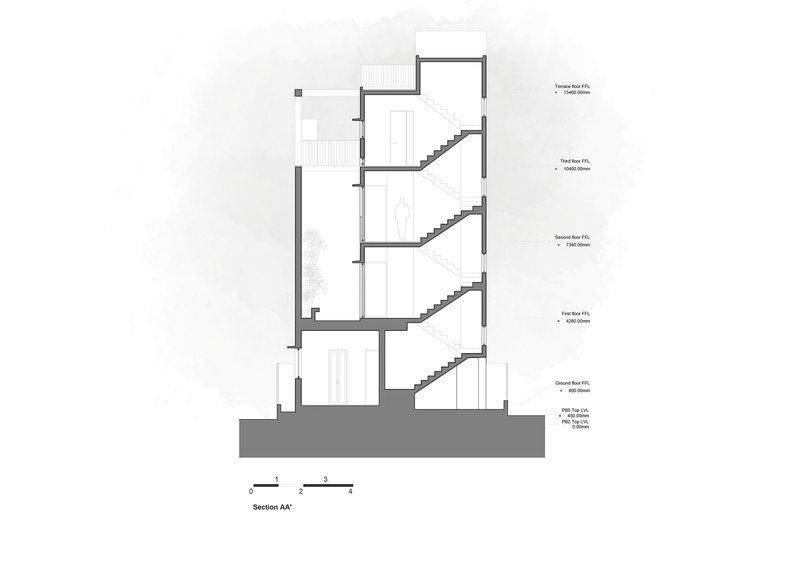
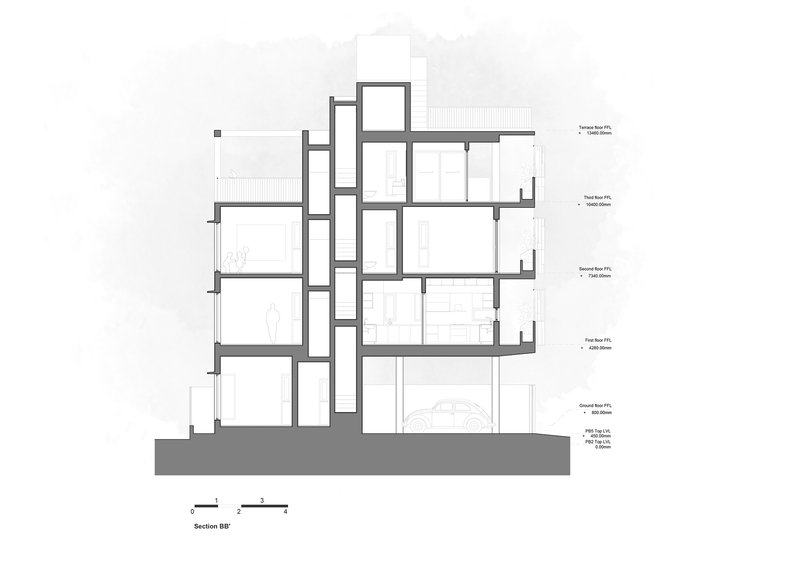
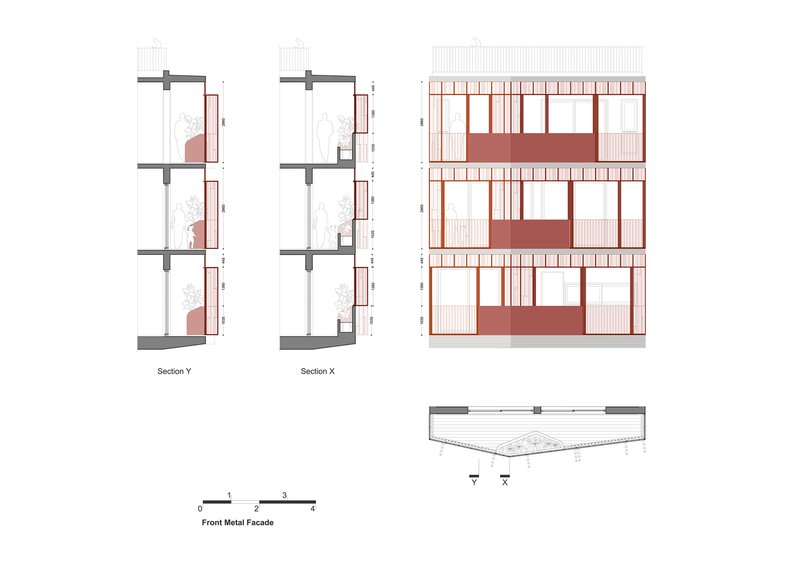
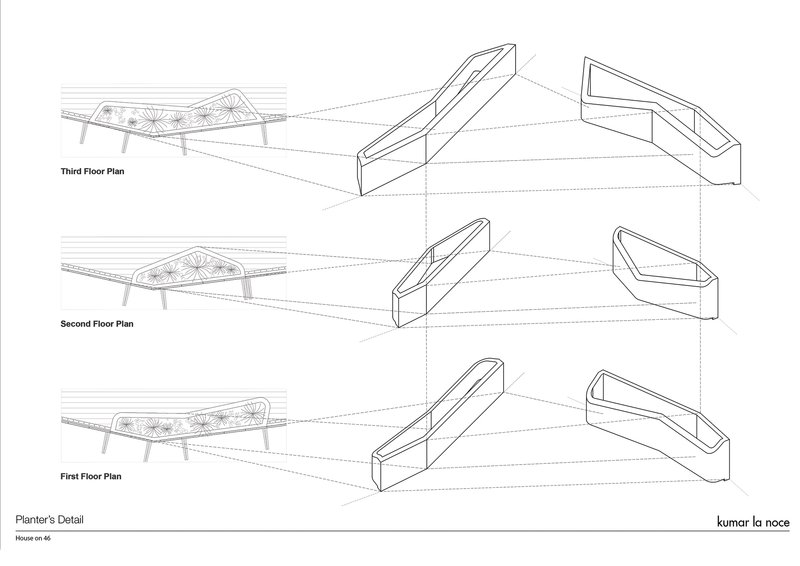
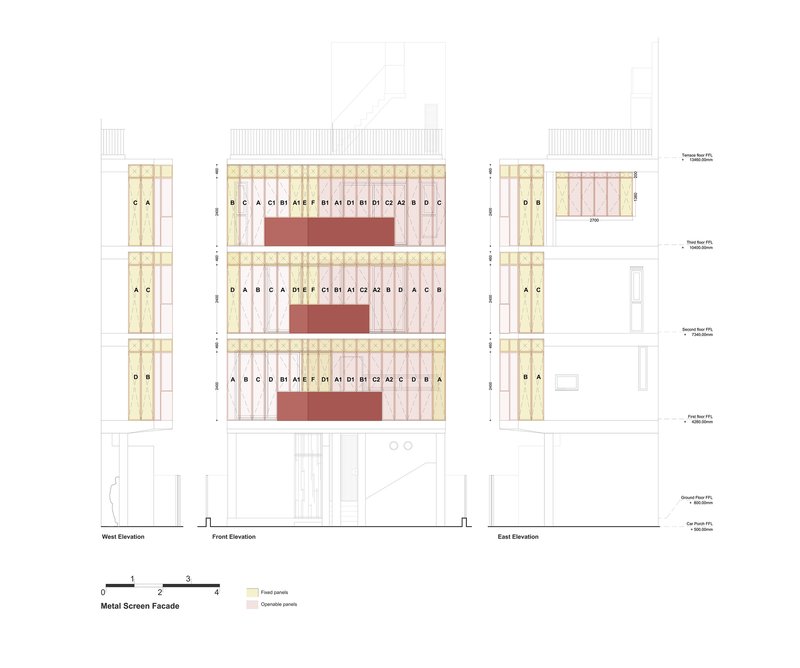
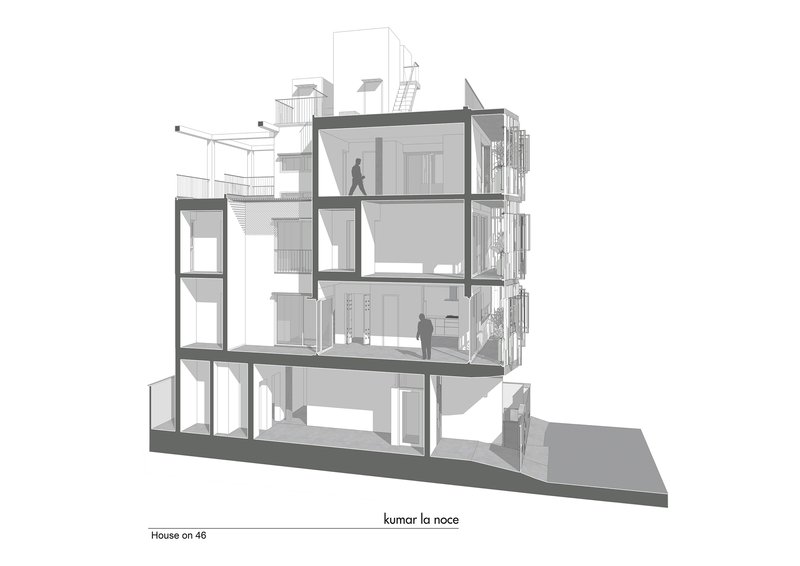
The drawing set reveals the house's vertical logic clearly. The ground floor accommodates a carport, entry stair, and a home office designed with the foresight to convert into an independent living unit, a sensible move for a family that may need to redistribute autonomy as it ages. The first floor consolidates the communal program: living, dining, kitchen, and the courtyard void. Bedrooms occupy the second and third floors, with the master suite and its walk-in closet taking the top level for maximum privacy. The roof terrace includes a lounge room and service area, effectively adding a fifth usable level.
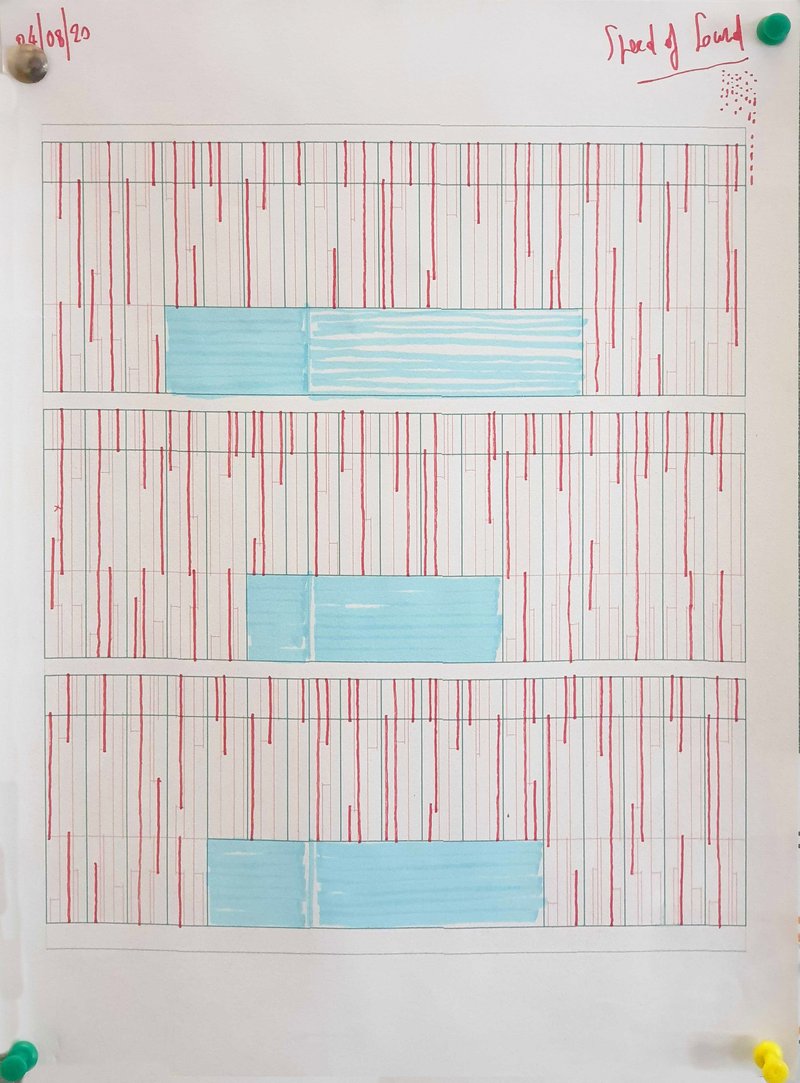
The sections show a subtle staggering of floor plates that introduces height variation across levels, avoiding the monotony of identical floor-to-floor dimensions. The hand-drawn facade study in red marker, visible among the drawings, is a refreshing reminder that the design emerged through sketching and material intuition rather than purely parametric logic. The elevation drawings distinguish between fixed yellow panels and operable pink panels, mapping the degrees of openness available to each room.
Why This Project Matters
House on 46 matters because it treats the screen not as a visual gimmick but as a genuinely integrated building system: structural exoskeleton, climate mediator, privacy filter, and streetscape contributor, all in one layer of mild steel. In a city where multigenerational living is the norm rather than the exception, the building offers a credible model for how vertical density on a small plot can still produce outdoor rooms, natural ventilation, and individual agency over one's own facade.
Kumar La Noce demonstrates that material economy and experiential richness are not competing goals. By varying fin sizes to reduce waste, designing the screen to self-stiffen, and using operable panels rather than a fixed mask, the practice achieves more with less. The lesson extends well beyond Bengaluru: wherever urban housing confronts heat, density, and the desire for domestic comfort, this kind of calibrated, climate-first thinking is exactly what the conversation needs.
House on 46 by Kumar La Noce. Bengaluru, India. 179 m². Completed 2021. Photography by Vivek Muthuramalingam, Aaron Chapman, and Kumar La Noce.
About the Studio
Share Your Own Work on uni.xyz
If projects like this are the kind of work you want to make, uni.xyz is a place to publish your own, find collaborators, and enter design competitions.




Popular Articles
Popular articles from the community

Francisco Cadau Converts a 1970s Corner House in Campana into Four Compact Dwellings
A light steel-and-timber upper volume lands on a brick base, turning a single Argentine home into a tectonic study in railroad vernacular.
LIQE arquitectura Wraps a Vigo Old Town Housing Reform in Folding Pine Screens
Perched between castle walls and the historic center, a timber-clad renovation filters estuary light through autoclave-treated slats.
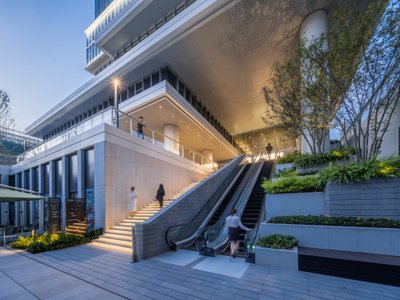
Superimpose Architecture Splits a Hangzhou Transit Hub into Valley and Cloud
A 72,000-square-meter mixed-use TOD complex near Alibaba's campus pairs human-scaled green terraces with serene tower volumes.
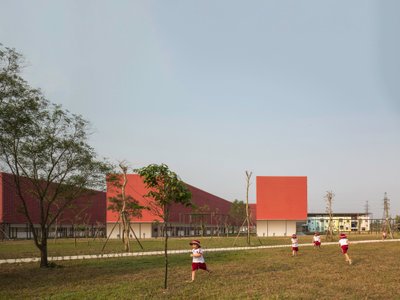
BHA Studio Wraps a 2,000-Student Campus in Terracotta Screens and Double-Layered Roofs in Central Vietnam
iSchool Quang Tri in Đông Hà uses perforated brick lattices and rainwater harvesting to keep 17,000 square meters cool and green.


Similar Reads
You might also enjoy these articles

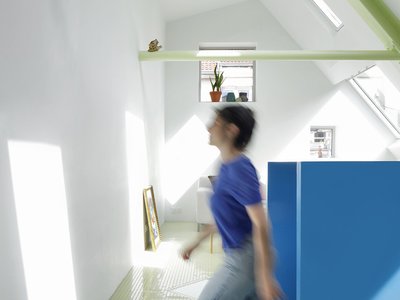
127af Flips a Tiny Bagnolet Rowhouse Upside Down with a Handcrafted Roof Extension
A 55-square-meter terraced house on the edge of Paris gains a luminous upper living floor through lightweight timber and steel.
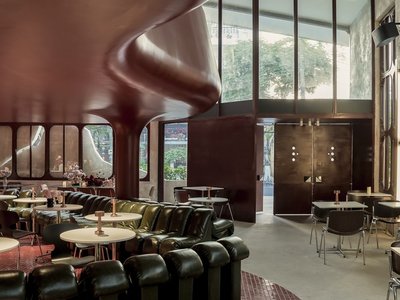
1.61 Design Workshop Wraps a 600-Square-Meter Café in Vietnam in Sculptural Burgundy Drama
Reden Café & Bistro pairs a helical staircase, mosaic floors, and deep red interiors to rethink Vietnamese hospitality space.

The Unbound Brain: A School Shaped by Cognitive Architecture
Cylindrical learning pods radiate like neurons from a central cortex, turning the floor plan into a spatial model of human thought.
Revival Vernacular Architecture: Rammed Earth Settlements for the Sahara
A modular desert community in Mauritania that fuses passive cooling techniques with earthen construction and local craftsmanship.


Explore Architecture Competitions
Discover active competitions in this discipline




The International Standard for Design Portfolios


The Global Benchmark for Architecture Dissertation Awards


The Global Benchmark for Graduation Excellence


Challenge to design mud housing for contemporary communities
Comments (0)
Please login or sign up to add comments
No comments yet. Be the first to comment!