

LÁ-SÁCH House by Atelier tho.A
Compact tropical tube house-library with polycarbonate louvers, flexible interiors, concrete core, crafted materials, and community-focused alley setback.


LÁ-SÁCH House is a compact yet innovative three-storey dwelling located at the end of a narrow alley in Ho Chi Minh City. Designed by Atelier tho.A, this 50-square-meter project reinterprets the traditional Vietnamese tube house typology, transforming it into a hybrid space that functions both as a private residence and a community-oriented library.
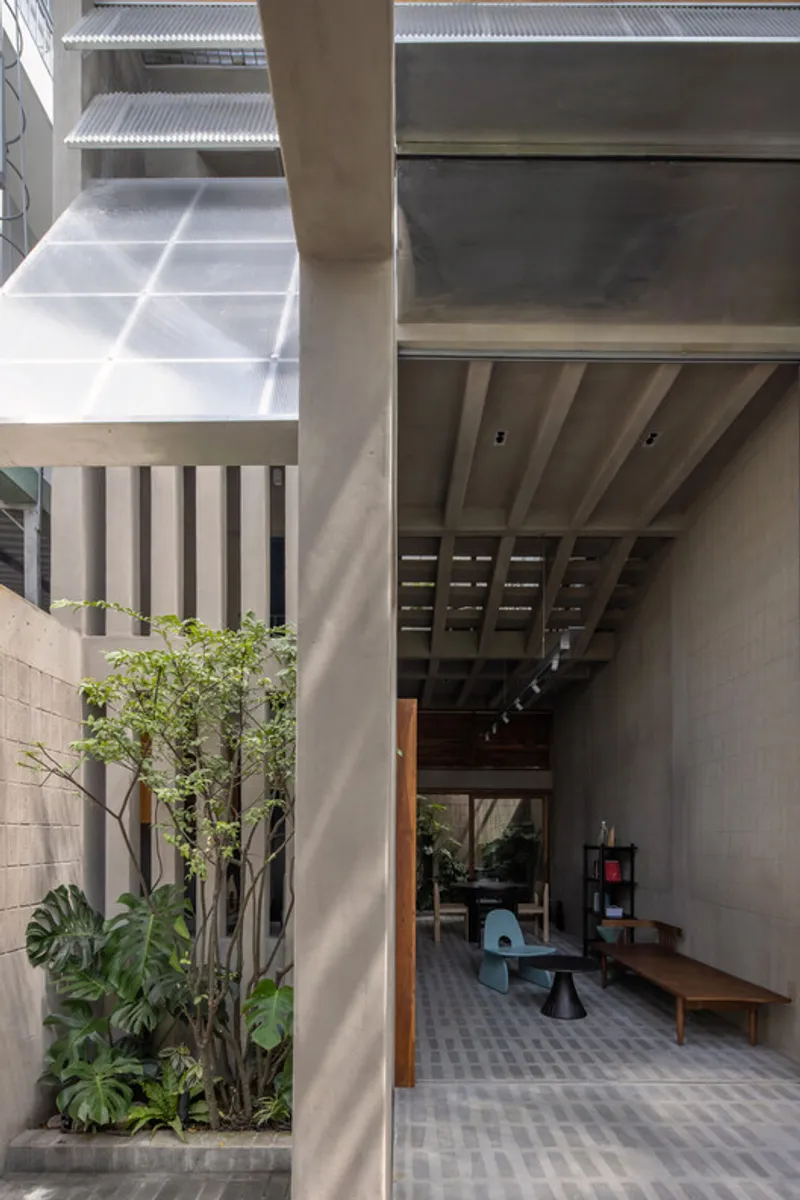
In the dense urban fabric of Ho Chi Minh City, where tightly packed homes line constricted alleys, the project introduces a refreshing architectural gesture. By setting the house slightly back from the alley’s edge, the architects create a rare pocket of openness, a subtle yet powerful contribution to the neighborhood’s spatial quality.
A Community-Focused Urban Intervention
The setback allows the dead-end lane to breathe. A reflective stainless-steel fence visually expands the narrow alley, mirroring light and movement. During community events, the fence can be fully opened, transforming the once-restricted passage into an informal gathering space for seminars, readings, and art film screenings.
This thoughtful intervention positions the house not only as a private sanctuary but also as a micro cultural hub. In doing so, Atelier tho.A demonstrates how small-scale residential architecture can meaningfully engage with its urban context.

Climate-Responsive Façade Design
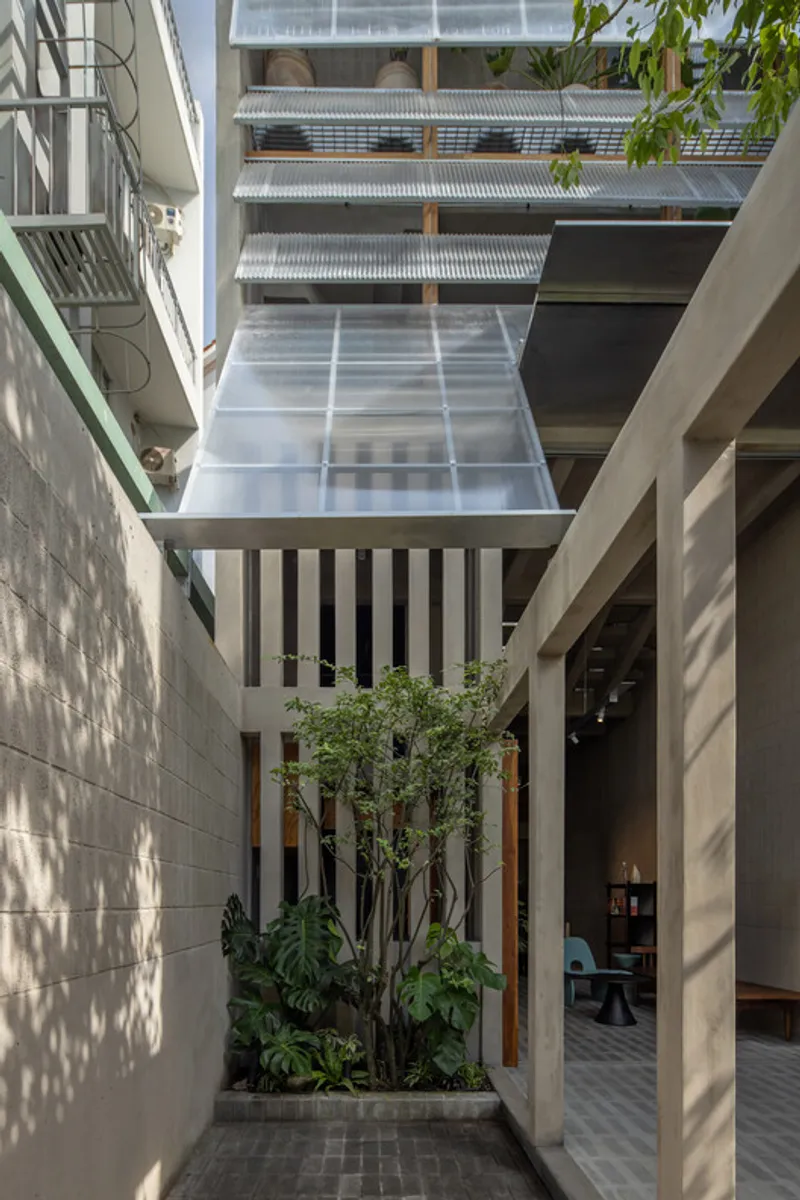
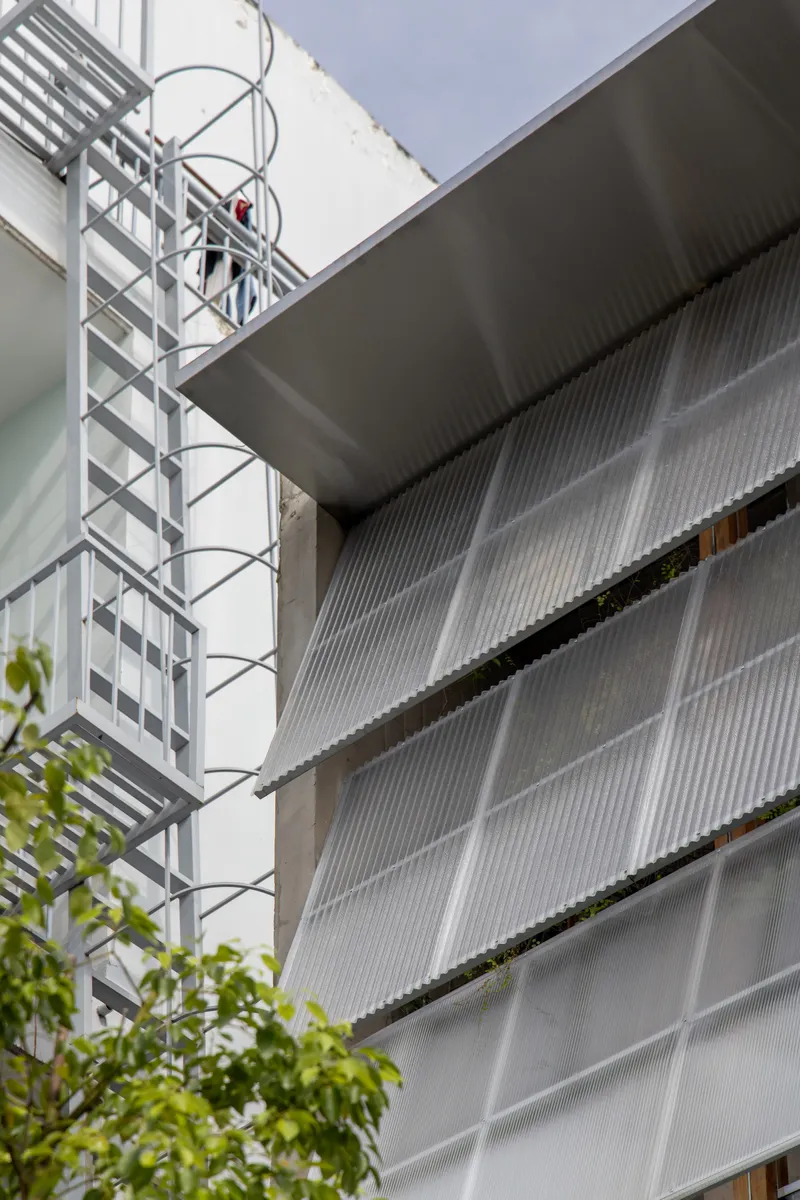
One of the defining features of LÁ-SÁCH House is its translucent polycarbonate louver façade. Patterned with wave-like motifs and tilted at varying angles, the double-layered envelope creates a soft, luminous glow at night, turning the house into a subtle lantern within the alley.
During the day, this façade system acts as a climate filter. It reduces tropical solar heat gain while maintaining natural ventilation, a crucial strategy in tropical architecture design. The louvers diffuse sunlight, allowing interior spaces to remain bright yet comfortable.
The project’s name carries layered meaning. “Lá-Sách” translates to both “leaf” and “book,” while also evoking “lá sách” (louver) in Vietnamese. This linguistic nuance reflects the architectural concept: layered, breathable, and intellectually open.

Efficient Spatial Organization and Flexible Interiors
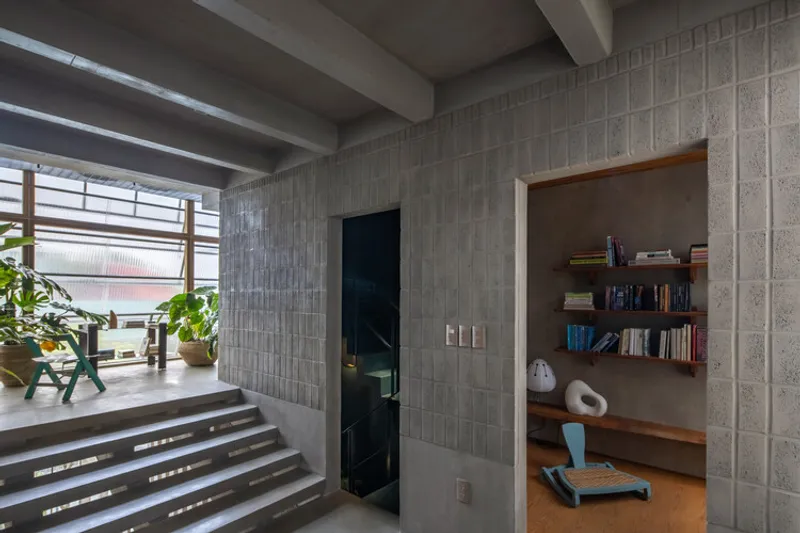
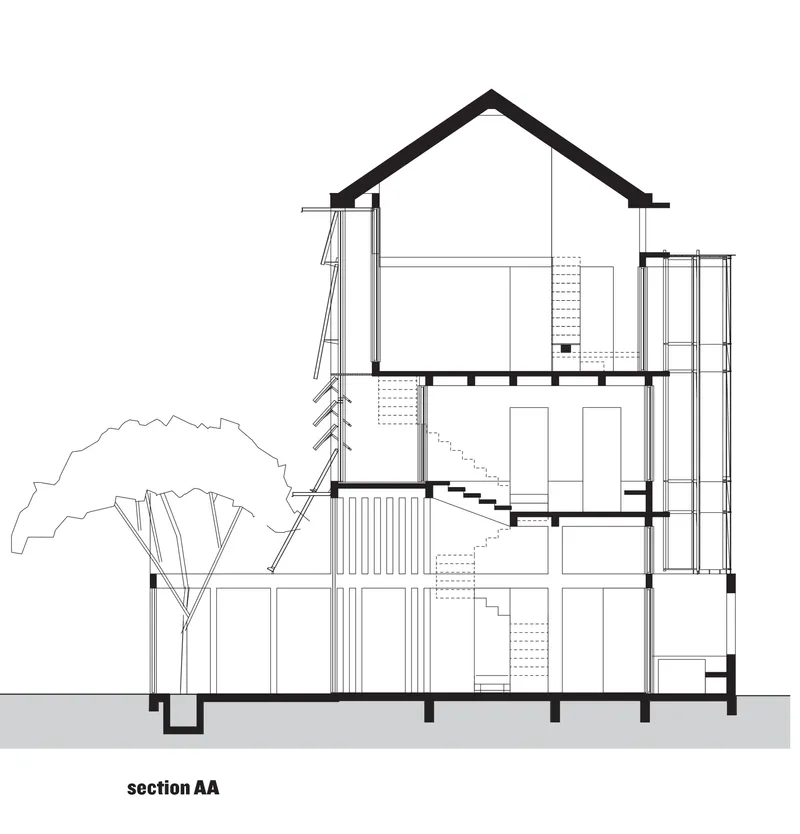
Given the site’s limited dimensions, spatial efficiency becomes paramount. All technical and service functions: including staircase, kitchen, toilets, and storage, are consolidated into a concrete core positioned along one side of the house.
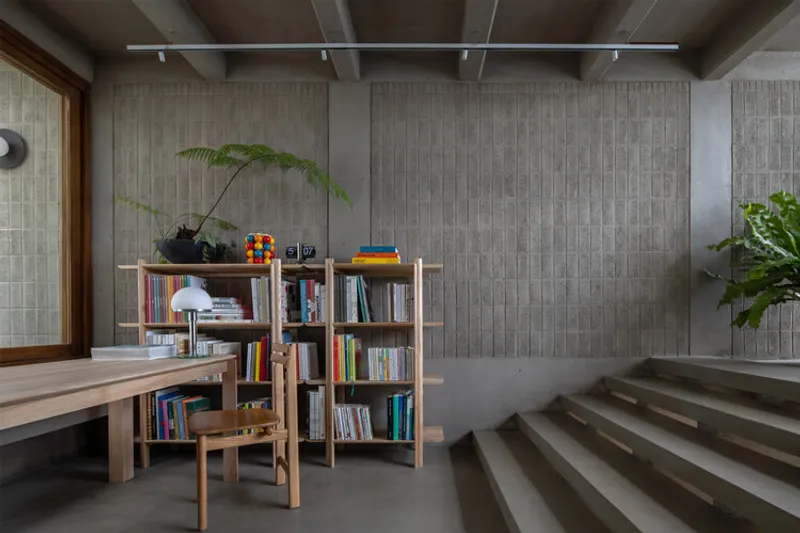
This strategic arrangement liberates the remaining floor area, allowing flexible use for living, resting, and reading. The open plan supports multiple functions without spatial clutter, an intelligent response to compact urban housing challenges.
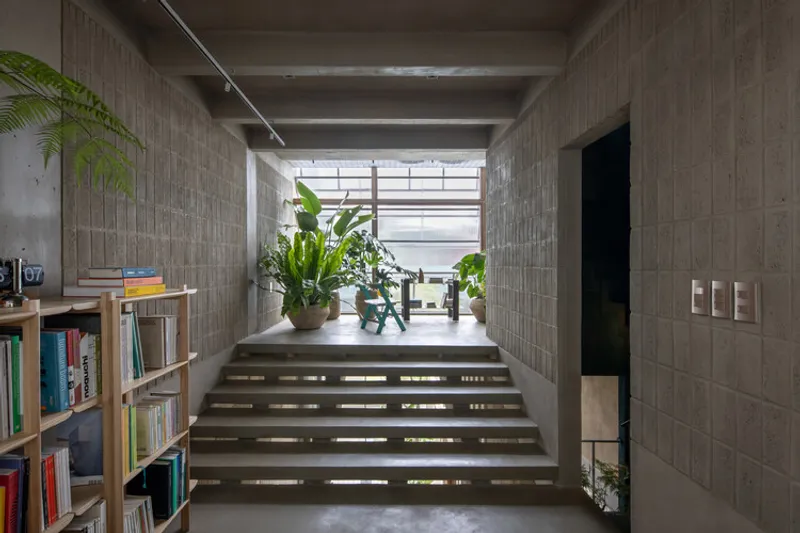
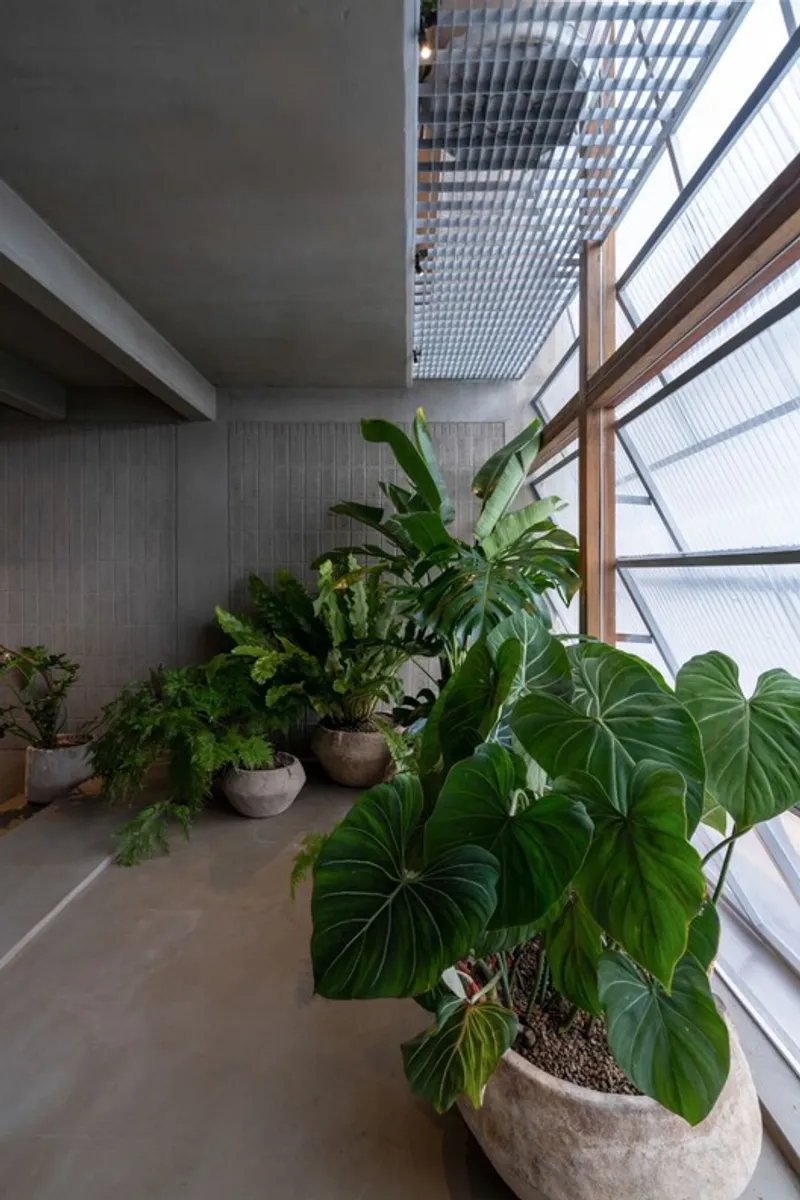
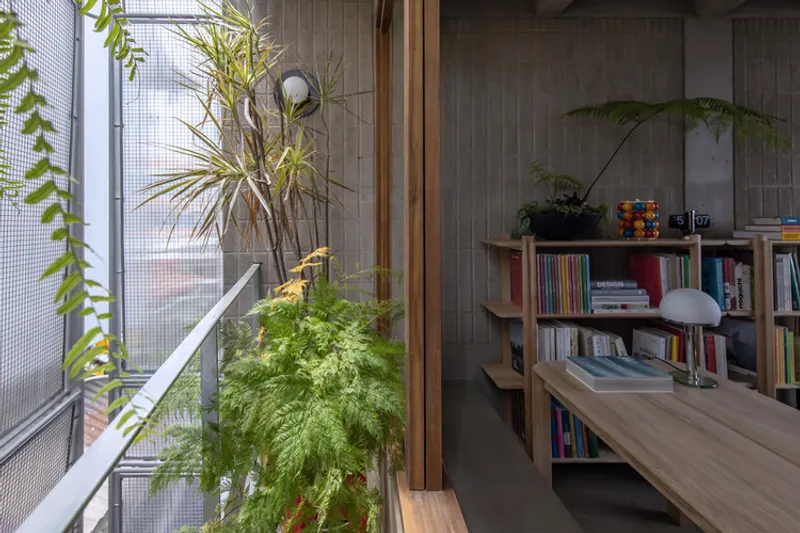
At the mezzanine level, stepped seating creates an intimate environment for seminars, workshops, and art film screenings. A small pantry complements this multifunctional space, which is enriched by natural light, indoor greenery, and cross-ventilation.
Craftsmanship and Material Honesty
Materiality plays a vital role in defining the house’s character. Low-cost, non-fired concrete bricks are carefully proportioned and arranged, showcasing meticulous craftsmanship. Terrazzo flooring, executed with patience and precision, adds durability while celebrating traditional construction techniques.
The dialogue between warm wood and industrial stainless steel further articulates the project’s conceptual duality: domestic intimacy meets public openness; tradition meets contemporary experimentation.
This balanced interplay reinforces Atelier tho.A’s craft-oriented ethos: an architectural approach rooted in detail, tactility, and contextual sensitivity.
Sustainable, Small-Scale Architecture in Ho Chi Minh City
Despite its modest footprint, LÁ-SÁCH House exemplifies key principles of sustainable residential design in Vietnam:
- Climate-responsive façade system
- Natural ventilation strategies
- Compact and efficient spatial planning
- Adaptive reuse of alley space for community interaction
- Emphasis on local craftsmanship and material honesty
By integrating living, reading, and gathering into a single compact structure, the project offers a compelling model for urban infill housing in rapidly densifying Asian cities.
A Modest House with an Open Spirit
LÁ-SÁCH House proves that impactful architecture does not depend on scale. Through intelligent design strategies, climate responsiveness, and community engagement, this small residence contributes meaningfully to its alleyway context in Ho Chi Minh City.
It stands as a thoughtful reinterpretation of the Vietnamese tube house: compact in size, generous in spirit, and quietly transformative in its urban presence.
All the photographs are works of
Chimnon Studio, Anh Chuong



Popular Articles
Popular articles from the community


AL-JANNAH: Sustainable Architecture and Permaculture for Afghan Widows
AL-JANNAH uses sustainable architecture and permaculture to create resilient oasis of housing, learning, work and renewal for Afghan widows.

The Ocean Hive: Sustainable Architecture for a Self-Sufficient Civilization at Sea
The Ocean Hive imagines sustainable architecture at sea, where modular habitats, algae, wave power and ocean waste sustain a growing colony.

Co-Life: Senior Housing Design That Reconnects Older Adults With the City
Co-Life reimagines senior housing design through healing gardens, shared streets, workshops, and a sustainable community across generations.

The Earth Pod: 3D Printed Homes for Resilient Refugee Communities
The Earth Pod reimagines refugee housing through 3D printed homes made from clay, combining resilience, self-sufficiency, and rapid shelter.


Similar Reads
You might also enjoy these articles

FAMM Arquitectura Organizes Ten Villas Around Courtyards and Jungle in Nosara, Costa Rica
El Molino pairs two elongated volumes with deep overhangs and timber louvers to build a compact coastal community five minutes from the beach.
Oscar Niemeyer's Ibirapuera Park Pavilions Define São Paulo's Cultural Identity in Concrete and Curve
A constellation of modernist volumes set within São Paulo's most important urban park, conceived for the city's 400th anniversary in 1954.
How Henri Picq's 1889 Paris Pavilion Traveled 11,000 Kilometers to Become Santiago's Artequín Museum
A prefabricated iron and glass pavilion built for the Paris Universal Exposition found a second life as a children's art museum in Chile.
Sanjay Puri Architects Wraps a Jaipur Office Tower in Capsule-Shaped Green Buffers
A nine-level climate-responsive workplace near Jaipur Airport uses stacked planter terraces and aluminium screens to fight 40°C heat.


Explore Architecture Competitions
Discover active competitions in this discipline



Challenge to reimagine the Iron Throne


Photograph architecture without architects


Illustrate the lost glory of Angkor Wat - Render Challenge


Design challenge to reuse E-waste
Comments (0)
Please login or sign up to add comments
No comments yet. Be the first to comment!