
LAI House by BROISSIN – A Terraced Architectural Masterpiece Shaped by Topography
LAI House by BROISSIN in Mexico City is a multi-level, terraced residence blending natural topography, biophilic design, and elegant contemporary materials.


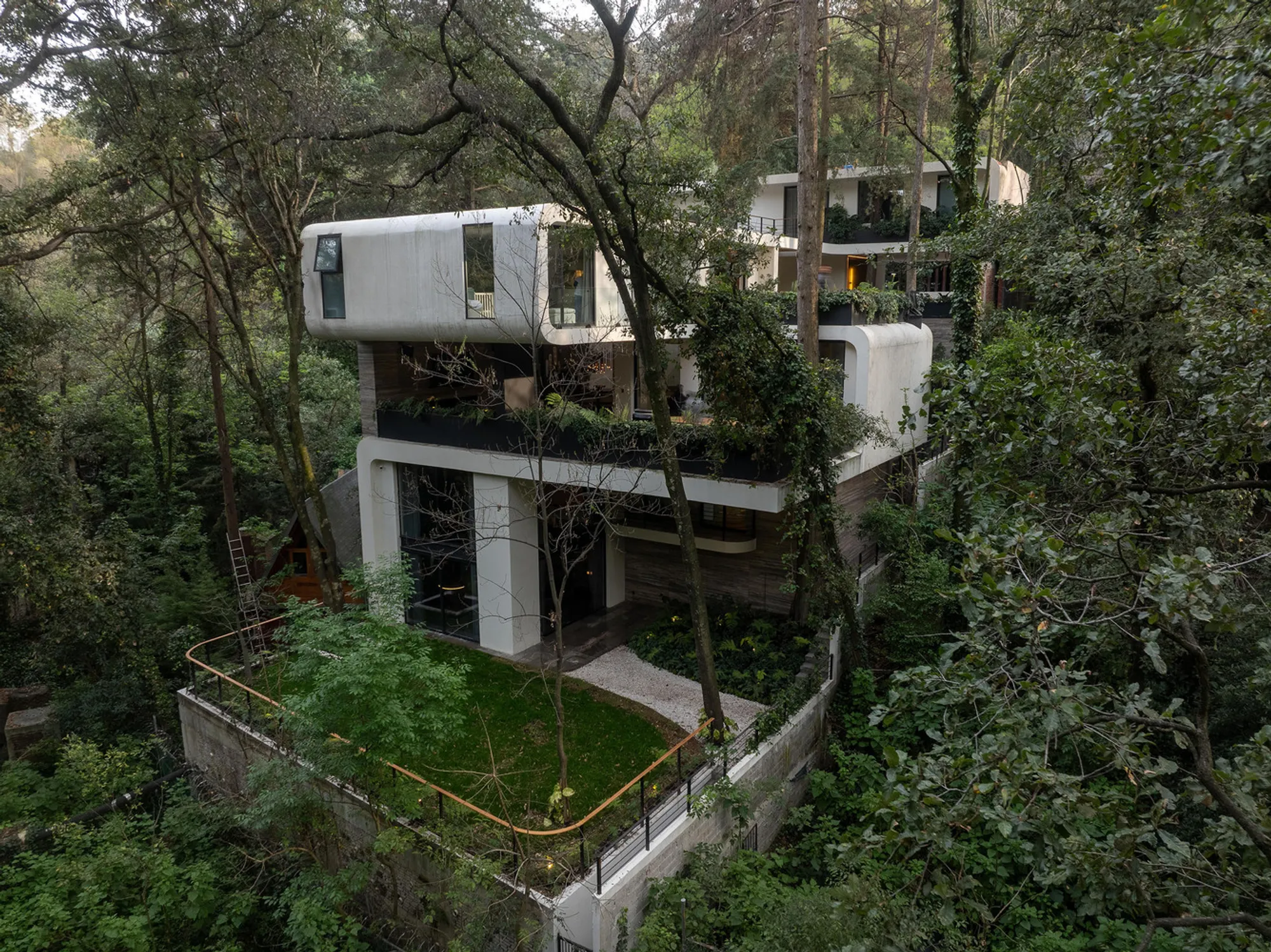
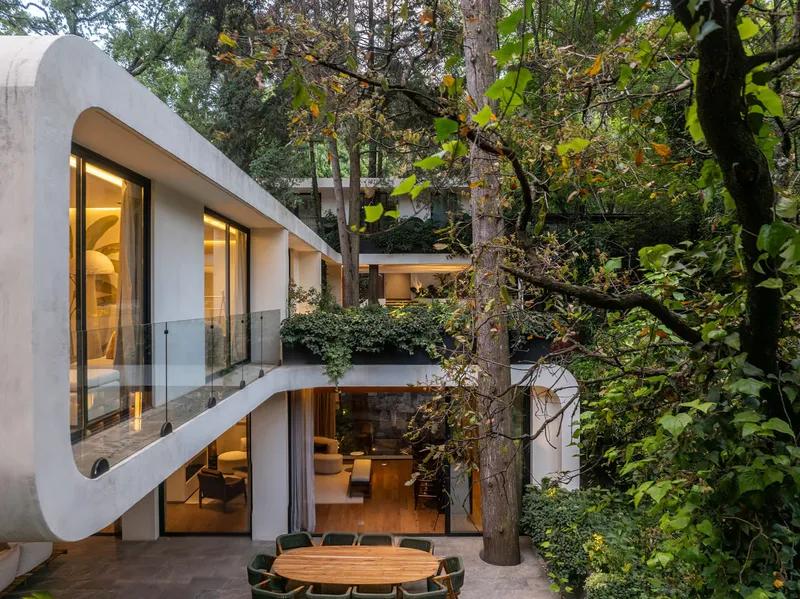
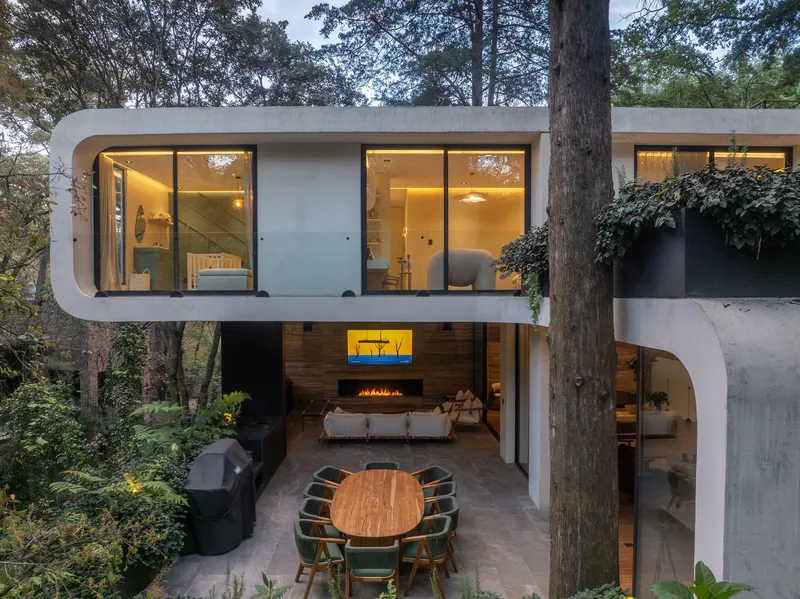
Designed by Mauricio Cristóbal of BROISSIN, LAI House (formerly Casa Tlapexco) is a striking 923 m² residence located in the Lomas de Vista Hermosa neighborhood of Mexico City. Built on a steeply sloped 678.85 m² site, the project transforms challenging topography into an architectural advantage. Through a bold stepped volumetry that descends across five interconnected levels, the home seamlessly integrates with the natural terrain while offering immersive views, generous daylight, and a continuous spatial flow.
A Sculptural Descent Through Landscape and Light
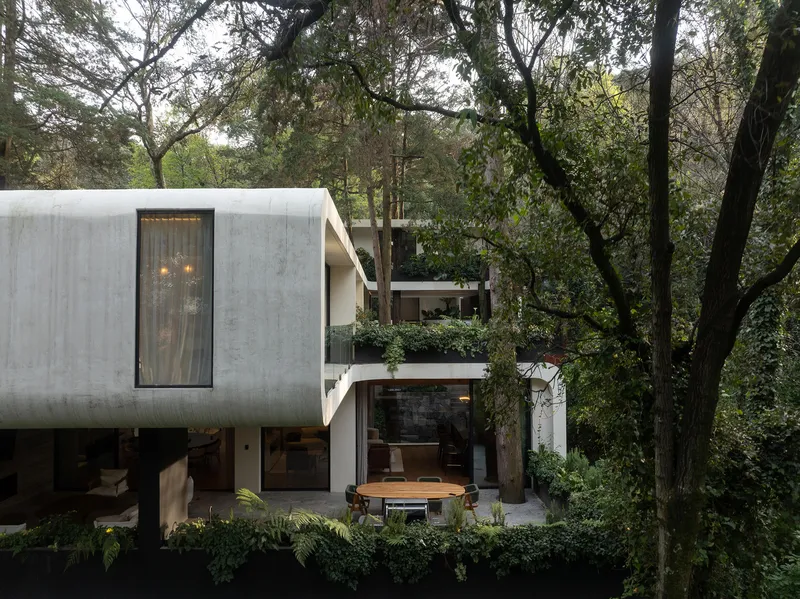
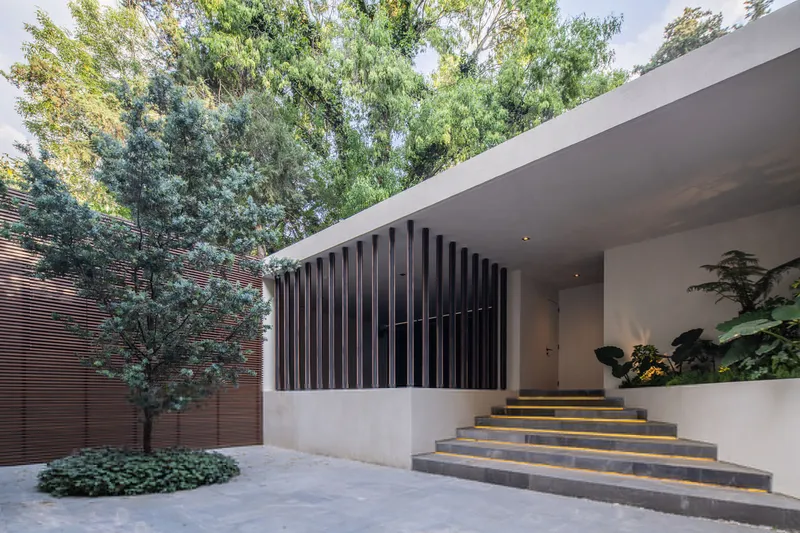
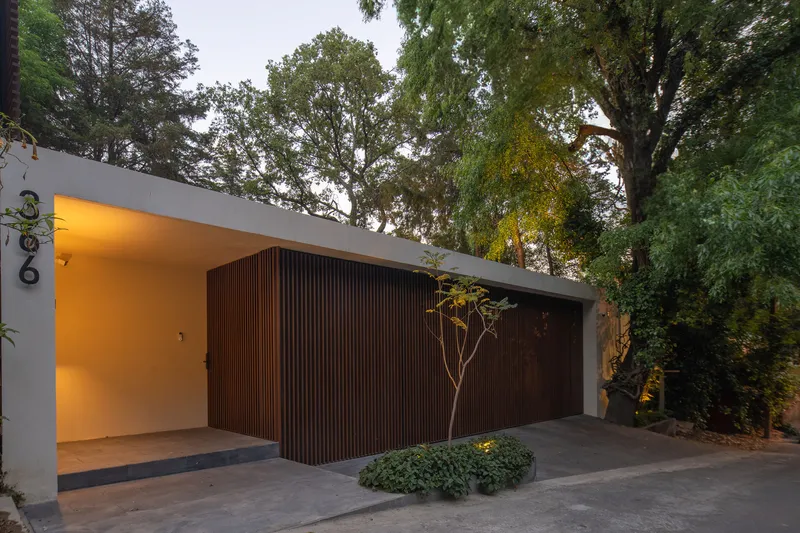
The house is experienced as a gradual architectural journey. From street level, only the uppermost volume is visible, housing the main entrance and parking area. As residents move downward through the structure, the home unfolds through shifting perspectives, framed views, and layered spatial programs that enhance its connection to the surrounding landscape.
The design strategy treats the steep slope not as a constraint but as a narrative device—each level introduces new visual relationships, natural light conditions, and social or private functions that reflect a thoughtful, topography-driven architectural logic.
Ground Floor: Welcoming Volume and Discrete Public Interface
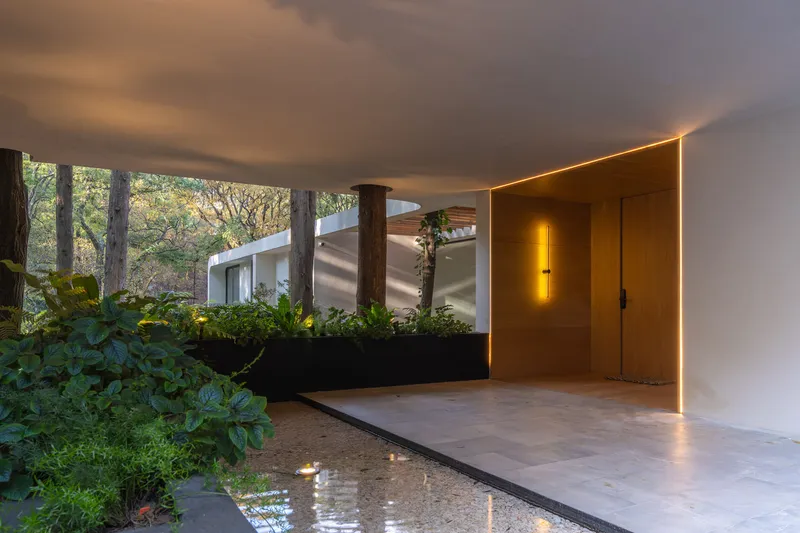
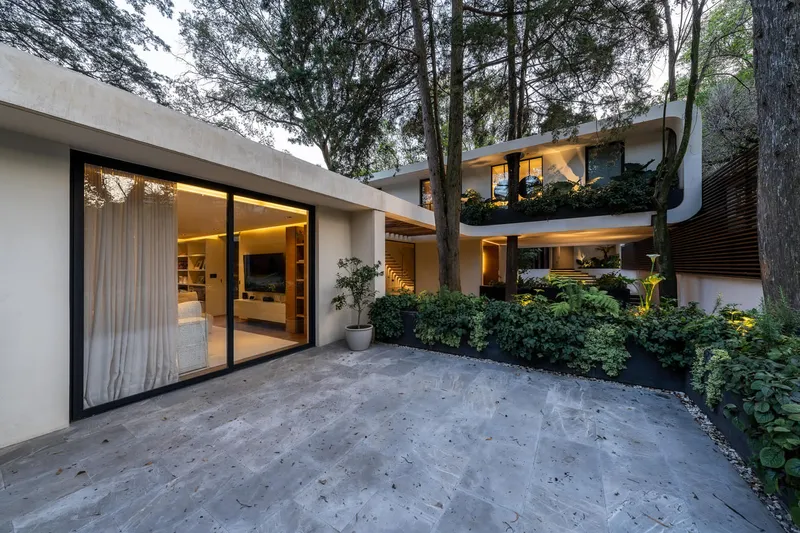
Spanning 324.63 m² with a 2.60 m ceiling height, the ground floor introduces visitors to the core residential spaces. The formal entrance leads into a foyer connecting to:
- A family room with direct terrace access
- Two secondary bedrooms with walk-in closets and en-suite bathrooms
- A uniquely programmed bakery room featuring independent street access, allowing the homeowners to operate a small commercial activity without compromising privacy
Internal circulation links this level to the social spaces below, while a landscaped terrace supports natural ventilation and visual continuity.
First Basement: The Social Heart of the Home
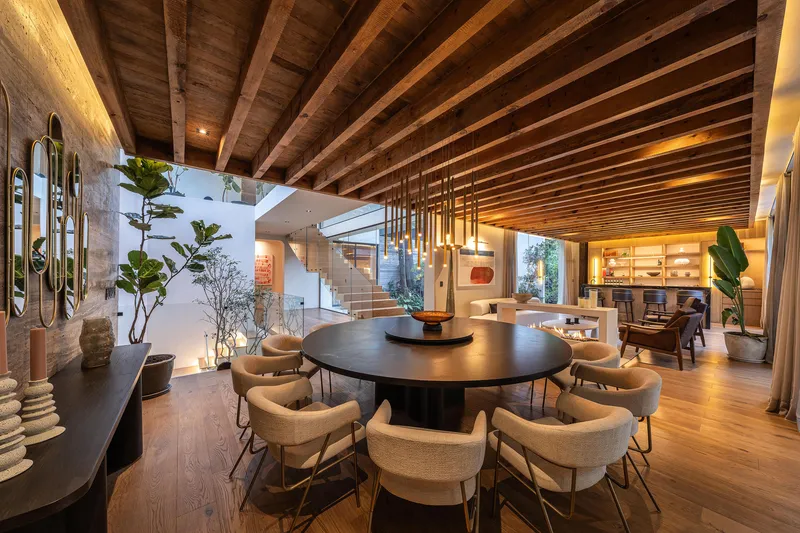
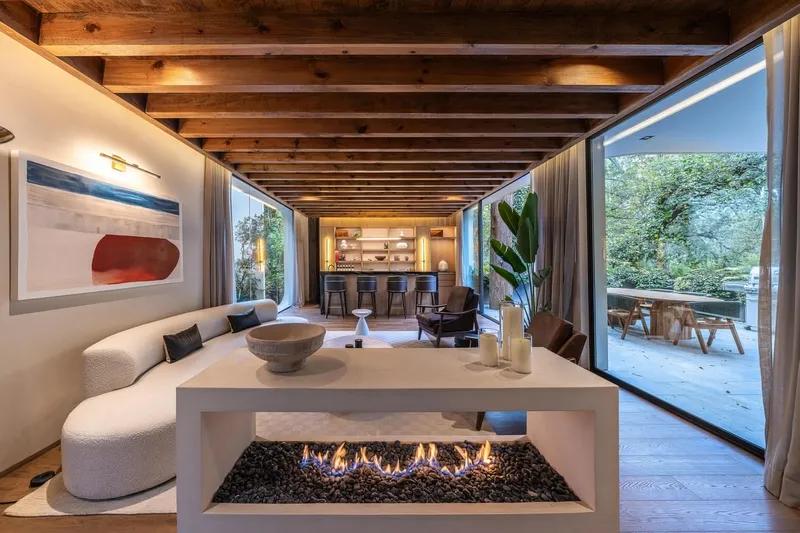
The first basement—258.45 m² with a 3.04 m ceiling height—functions as the social and communal nucleus of LAI House. Here, BROISSIN integrates openness, flexibility, and strong indoor–outdoor dialogue. This level accommodates:
- Main kitchen
- Dining and living rooms with full-height glazing
- Bar area
- Pantry and laundry spaces
- Service quarters
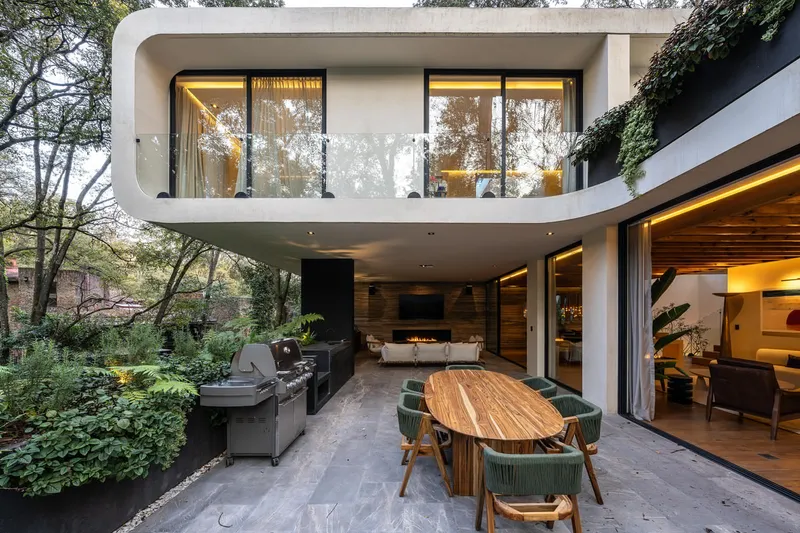
- A generous terrace connected to the garden
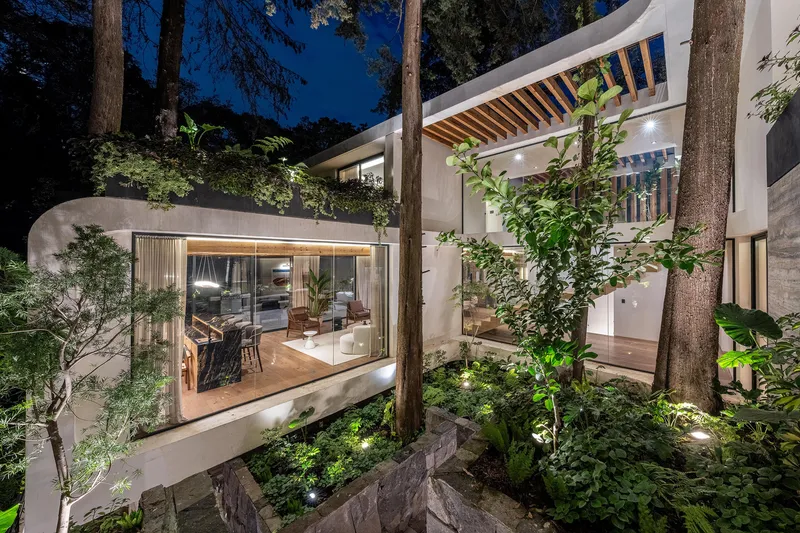
The glass façade visually dissolves the boundary between interior and exterior, allowing daylight to illuminate the spaces while extending views into the lower gardens.
Second Basement: A Quiet Sanctuary
Located 7.91 meters below street level, the second basement offers 163.34 m² of calm, private retreat. It features:
- A secluded guest suite
- A balcony overlooking the lower gardens
- Direct visual connection to vegetation for a serene residential experience
The natural grade reinforces a sense of privacy and tranquility, making this level ideal for guests or long-term stays.
Lowest Level: Double-Height Leisure and Landscape Immersion
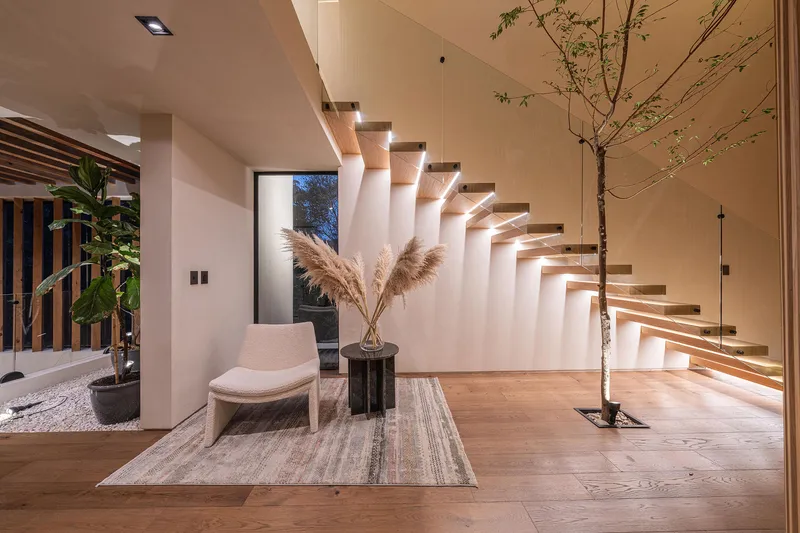
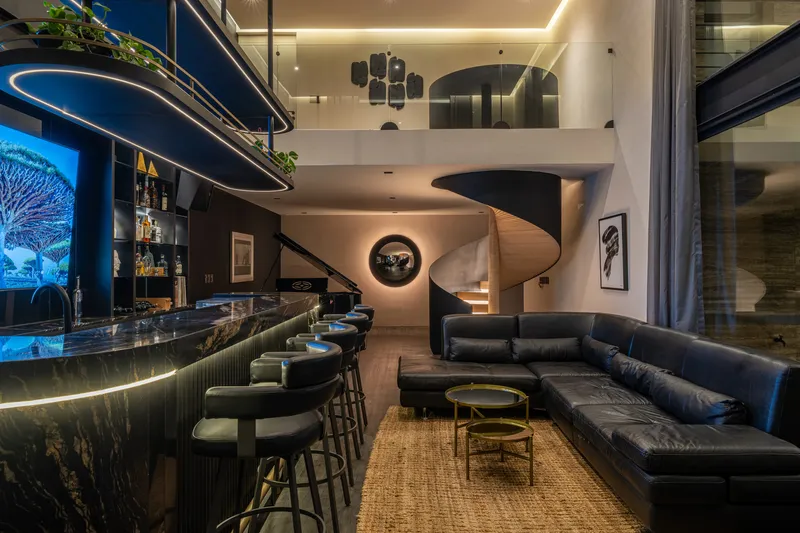
The lowest level—82.22 m²—hosts the dramatic sax room, a double-height leisure space that includes:
- Lounge area
- Fully equipped bar
- Two half-bathrooms
- Seamless access to a 146.21 m² landscaped garden
This zone embodies LAI House’s strongest expression of indoor–outdoor integration, offering a retreat-like environment where architecture dissolves into greenery.
Landscape Integration and Biophilic Experience
Across its lower levels, the residence incorporates 447.64 m² of green areas, including terraces, balconies, and gardens. These planted zones enhance thermal comfort, soften the visual mass of the stepped architecture, and reinforce the home’s biophilic design approach. Vegetation becomes an essential architectural element, framing views and creating a layered experience of nature.
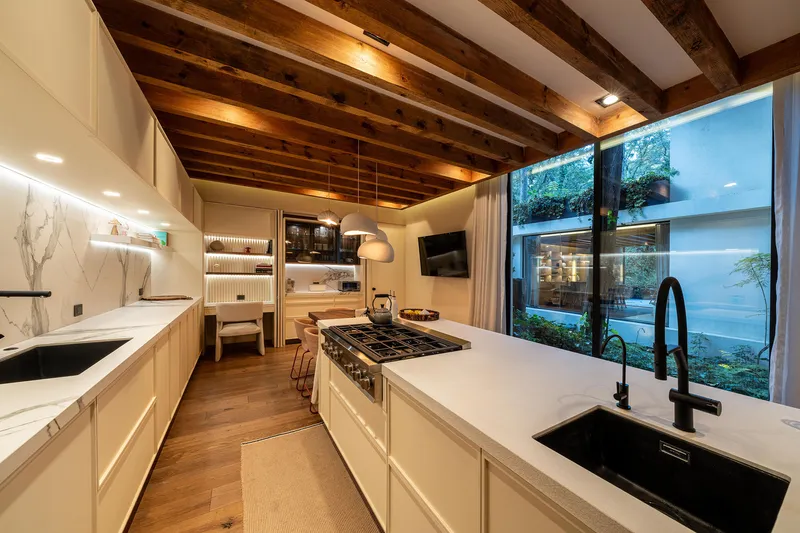
Materiality: Elegant, Warm, and Contemporary
BROISSIN employs a refined material palette to craft serene, contemporary interiors:
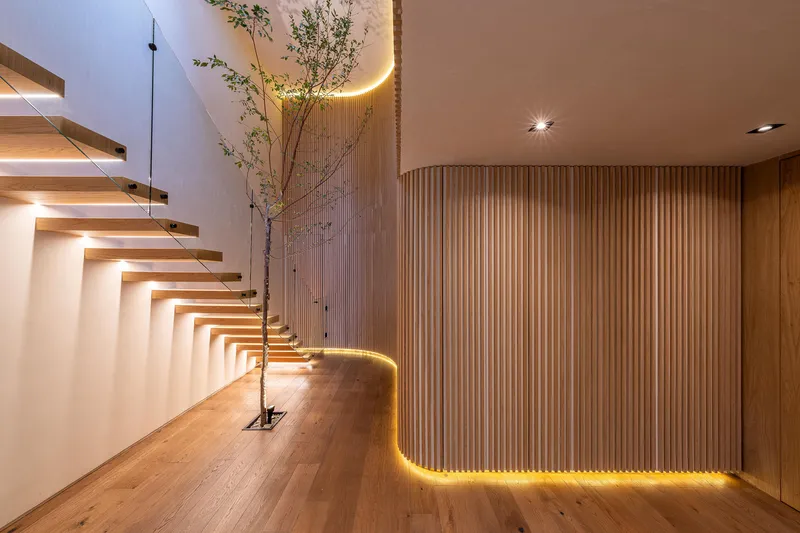
- Chukum plaster provides tactile warmth and organic texture
- Natural wood surfaces enhance comfort and harmony
- Black aluminum frames deliver clean, modern lines and expansive glazing
This combination produces a timeless, elegant atmosphere that balances urban sophistication with natural tranquility. Throughout the home, careful attention to natural light and circulation results in spaces that feel warm, open, and interconnected.
LAI House by BROISSIN is a masterful example of architecture shaped by topography. Through its stepped design, thoughtful spatial sequencing, lush landscaping, and refined material palette, the home creates a harmonious balance between built form and nature. More than a residence, it is an experiential journey—one that reveals its spaces, views, and textures gradually, inviting occupants to move through landscape, light, and architecture as one.
All photographs are works of Alexandre D La Roche



Popular Articles
Popular articles from the community


The Earth Pod: 3D Printed Homes for Resilient Refugee Communities
The Earth Pod reimagines refugee housing through 3D printed homes made from clay, combining resilience, self-sufficiency, and rapid shelter.

Co-Life: Senior Housing Design That Reconnects Older Adults With the City
Co-Life reimagines senior housing design through healing gardens, shared streets, workshops, and a sustainable community across generations.

The Ocean Hive: Sustainable Architecture for a Self-Sufficient Civilization at Sea
The Ocean Hive imagines sustainable architecture at sea, where modular habitats, algae, wave power and ocean waste sustain a growing colony.

The Musturak Paradise: Senior Living Architecture for a Connected Future in Temara, Morocco
The Musturak Paradise reimagines senior living architecture in Temara via private homes, social spaces, culture, community, and shared care.


Similar Reads
You might also enjoy these articles


Hodi-Mandai Geram
Project Function: Preservation and revitalization of the Intangible heritage and socio-spatial identity of the Hodi by Housing, Cultural Memory Center, Sacred Grove, landscape, local tourism economy


Olio Towers: A Mid-Rise for Performers That Fuses Housing, Rehearsal, and Stage
Located blocks from Houston's Theater District, this modular tower stacks living units around a central performance atrium.

Oasis: Modular Green Housing Carved into Dhaka's Urban Fabric
A shortlisted Plugin Housing entry reclaims unauthorized settlements in Dhaka with stepped concrete volumes, green roofs, and ventilation-driven design.

Black Hole: A Floating Megastructure for the Post-Physical Era
Emiliano Mazzarotto envisions a spherical, self-scaling arena where e-sports, digital hotels, and holographic stadiums replace traditional public space.
Explore Architecture Competitions
Discover active competitions in this discipline



Challenge to reimagine the Iron Throne


Photograph architecture without architects


Illustrate the lost glory of Angkor Wat - Render Challenge


Design challenge to reuse E-waste
Comments (0)
Please login or sign up to add comments
No comments yet. Be the first to comment!